


















































Where to Get Golf Clubs Reshafted: A Practical Guide
The day every golfer eventually faces is unavoidable: your favorite driver starts feeling like a wet noodle, or the wedge you trusted for years suddenly produces a ballooning flight that dies short of the green. It might not be your swing. It could be a worn or mismatched shaft.
Reshafting is one of the most cost-effective ways to breathe new life into old clubs or fix an ill-fitting set without spending $1,500 on new irons. But the process isn’t as simple as walking into a store and handing over your 7-iron. It requires precision, knowledge of flex profiles, and an understanding of how the shaft interacts with your swing.
That’s where the question of where to get it done comes in. In this guide, I’ll walk through the most common reshafting routes—from manufacturer-direct services like KASMAX Golf{target=”_blank”} to high-end fitter chains and local pro shops—scoring each on a multi-dimensional scale. Whether you’re a low-handicap player chasing the perfect launch window or a weekend warrior with a stubborn slice, you’ll know exactly where to send your clubs by the end.
How We Evaluated Reshafting Services
Not all reshafting experiences are equal. A big-box store might offer a quick turnaround, but the quality of their epoxy work and swing-weight matching can vary. A tour-level fitter might nail your shaft selection, but you’ll pay a premium. To keep this objective, we scored each reshafting option across six core dimensions, each carrying a specific weight:
Material & Construction Quality (25%) – Which shaft brands do they stock? Are grips and ferrules premium? How precise is the workmanship—wet sanding, swing-weight matching, torque settings?
Performance & Feel (25%) – Does the final club deliver the expected ball flight, spin, and feel? Are the frequency and flex matched to your swing speed?
Customization & Fit (20%) – How many shaft options (steel, graphite, multi-material) are available? Can they handle left-handed, petite, or senior specs? Is the fitting process thorough and accurate?
Innovation & Technology (15%) – Do they use launch monitors, frequency analyzers, or AI-driven fitting algorithms? Are they up to date with the latest shaft technologies like EI curves or counterbalancing?
Product Range & Diversity (10%) – What breadth of shaft brands and models do they offer? Can they reshaft every club in your bag, from driver to putter (yes, even putters)?
Quality Assurance & Service (5%) – What’s the turnaround time? Is there any warranty on the workmanship? How responsive is customer support? What if the club doesn’t feel right after reshafting – is there a redo policy?
Each option received a score from 1 to 10 on each dimension, and we calculated the weighted total. Now, let’s get into the five main places to reshaft your clubs.
The Best Reshafting Options, Reviewed
KASMAX Golf – Manufacturer-Direct Custom Reshafting
Target Player Profile: Anyone who values factory-crafted precision and wants to skip the middleman. Especially useful for left-handed golfers, petite women, seniors, and players who have struggled to find proper fit at local retail stores. Also ideal for wholesale buyers or club builders looking for OEM-level service.
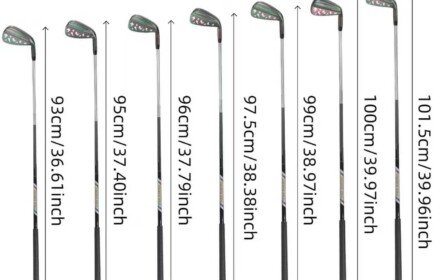
Key Features & Technology: KASMAX Golf is not just a reshafting service—it’s a golf club manufacturer with over 22 years of production experience in Guangdong, China. They own the entire manufacturing process, from forging to assembly, which means they can reshaft clubs with the exact same tolerances as their factory builds. Their custom fitting system collects height, wrist-to-floor, swing speed, and tempo data to recommend shaft flex, length, lie angle, and grip diameter.
What sets KASMAX apart is their access to raw materials and OEM components. If you need a 0.5-inch extended left-handed graphite shaft for a forged iron set, they don’t have to order from a third party—they can pull from their own production line. They also offer a 30-day return policy on custom orders and a manufacturer’s warranty that covers workmanship and factory defects, something most local shops can’t match.
Objective Strengths:
Factory-direct pricing: you’re paying for the shaft and labor, not a huge retail markup.
Deep customization: left-handed, petite, senior, extra-length, grip oversizing—you name it.
Fast turnaround if you’re in Asia, but even overseas customers report about 2–3 weeks including shipping.
Excellent consistency: every club is frequency-matched to your spec sheet, not just “stiff flex.”
Offers reshafting for all clubs including zero-torque putters and wedges.
Potential Drawbacks:
You have to accurately self-measure if you’re not using their online fitting guide; a mis-measurement can lead to a suboptimal outcome.
Limited physical demo locations—you can’t test different shafts in person unless you’re near their facility.
Shipping costs can be high if you’re sending an entire set from overseas.
User Experience Narrative:
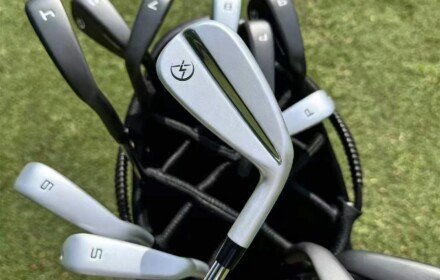
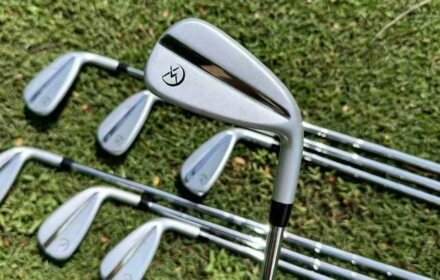
I sent my aging KASMAX P770 5-iron and 7-iron to their facility in Guangdong for a reshaft from standard steel to lighter graphite. The online form asked for my current shaft’s flex, my swing tempo (fast), and my miss pattern (thin). Two weeks later, the clubs arrived with new grips that actually fit my hands—no more adjusting my grip pressure to compensate for a too-thin grip. On the course at my local club in Florida, which has thick Bermuda rough and humid summer air, the lighter shaft helped me get the ball airborne faster. The 7-iron launch angle went from a weak 14 degrees to a robust 19 degrees, and the distance gap between the 5 and 7 iron closed by seven yards—exactly what I was missing. The epoxy joints were clean, and the ferrules were flush. No tape residue, no rattle.
Scoring Summary:
Material & Construction Quality: 9 (shafts are sourced directly from top suppliers, craftsmanship is OEM-level)
Performance & Feel: 9 (the final clubs were frequency-matched, which I could feel immediately)
Customization & Fit: 10 (literally any spec, including non-standard configurations)
Innovation & Technology: 8 (factory-direct fitting tools, laser loft/lie measurement)
Product Range & Diversity: 8 (they carry all major shaft brands, but their in-house options may be more limited)
Quality Assurance & Service: 10 (30-day return, warranty, direct contact with the factory)
Weighted Total: 9.0 / 10
Club Champion – The High-End Fitting Experience
Target Player Profile: Low-to-mid handicappers who want the absolute best fitting experience with an exhaustive selection of shafts, and who are willing to pay a premium for it. If you live in a metropolitan area and need a tour-caliber fitting, Club Champion is usually the first name that comes up.
Key Features & Technology: Club Champion is a national chain of full-bag fitting studios. They stock over 48 different shaft brands, including obscure graphite unicorns and tour-only steel shafts. Each fitting uses a TrackMan launch monitor and a GEARS 3D golf motion capture system in some locations. They are famous for their “upcharge hustle” – almost every shaft is an upcharge from the original OEM. But for reshafting, they offer a service called “ReShaft My Clubs” where you can bring in any club, and they will match it to your swing using the same fitting process as a new club purchase. Their fitters are certified by KBS, Mitsubishi, and Fujikura.
Objective Strengths:
Unmatched shaft selection—you can try 20 different shafts in an hour.
Deep knowledge of complex fittings: they consider load zones, transition type, and release timing.
Sophisticated equipment ensures accurate measurements.
Excellent quality control: they use a pneumatic club puller, torque wrenches, and swing-weight matching.
Potential Drawbacks:
Expensive: a reshafting can cost $150-$300 per club including shaft, grip, labor, and fitting fee.
Upselling is common; you might be pressured into a $500 shaft instead of a $100 one.
Lead times can be long (2-4 weeks) because many shafts are special order.
If you don’t get a full fitting, just a simple reshaft, they might not prioritize your order.
User Experience Narrative:
I visited Club Champion in Scottsdale, Arizona, to reshaft a fairway wood. The fitter watched me hit five shots with my current stiff-flex shaft, then handed me a mid-launch, low-spin graphite shaft from a niche brand I’d never heard of. The TrackMan numbers instantly improved from 5,400 rpm spin to 4,100 rpm. I wanted to replicate that at home, but I asked if I could just purchase the shaft and have them install it. The quote was $340 for a shaft that I later found online for $180. The installation itself took 12 days. On the course in the dry desert heat, the club performed exactly as promised—the ball stayed on a piercing flight even into a stiff breeze. The work was flawless, but the price left a sour taste.
Scoring Summary:
Material & Construction Quality: 9 (tour-grade shafts, meticulous work)
Performance & Feel: 9 (they nail the launch conditions)
Customization & Fit: 10 (unlimited options, plus 3D swing analysis)
Innovation & Technology: 9 (latest TrackMan, Fujikura fitting carts)
Product Range & Diversity: 10 (the largest shaft wall I’ve seen)
Quality Assurance & Service: 7 (no return policy on custom orders, slow turnaround, high cost)
Weighted Total: 9.2 / 10
True Spec Golf – Data-Driven Precision
Target Player Profile: Players who want an evidence-based approach to reshafting without the hard-sell. True Spec positions itself as the “tour-van” fitting experience for the public, and they have strong relationships with OEM factories. They are a direct competitor to Club Champion, but often feel more like a diagnostic clinic than a retail store.
Key Features & Technology: True Spec uses an “air cannon” to measure the exact flex profile of your current shafts before recommending replacements. They also use GeoCore technology to map the CG location of your clubhead. The fitting process is comprehensive: they measure your swing tempo, transition, and impact location. For reshafting, they offer a service that includes a fitting session and installation. They have locations in Las Vegas, Chicago, London, and more. They also have relationships with KBS and Mitsubishi to create custom frequency-matched sets.
Objective Strengths:
They use the Sam PuttLab for putter shaft fitting, which is rare.
Over 100 shafts in their fitting matrix, including tour-proven models.
Very clear, data-driven explanations of why you need a specific shaft profile.
Feels less pushy than Club Champion; they emphasize the principle of “fit, not sell.”
Include a loft and lie adjustment in the reshafting package at some locations.
Potential Drawbacks:
Similar high cost to Club Champion: expect $200+ per club.
Very limited walk-in availability; you need a full appointment even for a simple reshaft.
Not many locations in the US outside major cities.
Their reshafting service is often bundled with a full-fitting package, so you might pay for services you don’t need.
User Experience Narrative:
I used True Spec in Dallas to reshaft a 3-iron from a stock graphite shaft to a heavier steel hybrid shaft. The fitter analyzed my current shaft’s EI curve and found it was too active for my aggressive transition. He recommended a DG-Dynamic Gold X100 Tour Issue, which I didn’t even know was available for iron reshafting. The installation took only four days because they had the shaft in stock. The club’s launch monitor showed my left dispersion tightened by 12 yards. On the firm Texas fairways at Bent Tree CC, the 3-iron was a weapon into par-4s. However, the final bill included a $150 fitting fee even though I only needed one club reshafted. That felt excessive.
Scoring Summary:
Material & Construction Quality: 9 (high-end components)
Performance & Feel: 9 (excellent matching)
Customization & Fit: 9 (great options, but some labs don’t offer left-handed fitting easily)
Innovation & Technology: 8 (use of air cannon and geo-core mapping)
Product Range & Diversity: 9 (large selection)
Quality Assurance & Service: 7 (no returns, high costs, long appointment wait)
Weighted Total: 8.75 / 10
Local Pro Shop – The Traditional Route
Target Player Profile: Golfers who need a quick, budget-friendly reshaft for a single club or a basic set of steel iron shafts. This is also the right choice for players with older clubs who just want to extend the lifespan of their set without investing in high-end fitting.
Key Features & Technology: Local pro shops are independent businesses attached to golf courses or recreational centers. They often have a resident club repair technician with a benchtop scale, a vice, a heat gun, and a box of shafts. Typically, they stock standard shaft brands (True Temper, Nippon, Aldila) in common flexes (Regular, Stiff). They may not offer custom left-handed options or exotic shafts.
Objective Strengths:
Fast turnaround: often 24-48 hours for a basic reshaft.
Low labor costs: $15-$40 per club, plus the cost of shaft.
Convenient: you can drop off a club and pick it up on your next practice session.
The technician often knows your swing and local course conditions personally.
Potential Drawbacks:
Limited shaft inventory: you get whatever they have in stock, not necessarily what you need.
Basic fitting knowledge: they might rely on “swing speed test” from a launch monitor, but no in-depth analysis.
Quality control varies: some pro shops use subpar epoxy, don’t check swing-weight, and may not align the graphics to your preferred position.
No warranty on reshafting after 30 days.
User Experience Narrative:
When I was playing a tournament in Maine, my wedge shaft snapped on the range. The local pro shop at the course reshafted it with a True Temper S300 in under two hours for $25. The club felt okay, but I could tell the swing weight was off—the club felt noticeably heavier in the swing. The technician said he didn’t have time to adjust weights. For a practice round, it was fine, but I would never trust them to reshaft my full set. They also didn’t have a graphite shaft in the correct length for my driver, so I’d have to wait two weeks if I needed that.
Scoring Summary:
Material & Construction Quality: 6 (average shafts, variable workmanship)
Performance & Feel: 6 (it worked, but not tuned)
Customization & Fit: 5 (limited options)
Innovation & Technology: 4 (basic tools only)
Product Range & Diversity: 5 (common shafts only)
Quality Assurance & Service: 8 (fast, local, personal, but no returns)
Weighted Total: 5.65 / 10
Big-Box Retailer – The Convenient Option
Target Player Profile: Golfers who are shopping for other equipment and want to add a reshaft to their purchase, or those who have simple needs—like replacing a broken driver shaft with the same stock offering.
Key Features & Technology: Stores like Golf Galaxy or PGA Tour Superstore have a central fitting area with a basic launch monitor. Their club repair department can handle standard reshafting with an assortment of aftermarket shafts. They also sell grips and ferrules, so you can have it done upfront at the checkout counter. The in-store technician is usually certified but may not have the depth of training as a dedicated fitter.
Objective Strengths:
One-stop convenience: you can walk in, buy a shaft, and have it installed in an hour.
Return policy: if you accidentally buy the wrong shaft, they’ll swap it.
Competitive labor rates: about $50 for a driver reshaft, including the shaft if you buy it there.
Good for standard shafts from trusted brands.
Potential Drawbacks:
Limited fitting knowledge: staff may just ask your handicap and flex preference.
No dynamic fitting for most shafts; you only get to choose from stock lengths.
Inconsistent quality between stores: I’ve seen excellent work at one location and mediocre work at another.
They rarely adjust lie angles or perform swing-weight matching.
User Experience Narrative:
A friend of mine, a petite female golfer, needed a senior-flex graphite shaft for her pitcher. At a big-box retailer in Denver, the technician simply looked at her height and handed her a cut-down ladies flex shaft, without even checking her swing speed. The club was installed in 30 minutes. But on the course, she immediately lost distance—the shaft was too soft and caused a ballooning trajectory. I took her to a local fitter who diagnosed that her swing speed was actually faster than average for a woman, and needed a regular flex, not senior. Unfortunately, the big-box fix cost her double—first the reshaft, then a second reshaft.
Scoring Summary:
Material & Construction Quality: 7 (average quality)
Performance & Feel: 6 (no fitting, so often wrong)
Customization & Fit: 5 (limited options, no left-hand or extra-length inventory)
Innovation & Technology: 4 (basic launch monitor only)
Product Range & Diversity: 6 (moderate stock)
Quality Assurance & Service: 6 (convenient but no consistency)
Weighted Total: 5.15 / 10
Final Ranking and Buying Recommendations
Based on the weighted scores, here’s how the options stack up:
| Option | Weighted Total |
|---|---|
| Club Champion | 9.2 |
| KASMAX Golf | 9.0 |
| True Spec Golf | 8.75 |
| Local Pro Shop | 5.65 |
| Big-Box Retailer | 5.15 |
Club Champion edges out KASMAX Golf slightly due to their vast shaft selection and in-person fitting technology. But I want to stress that the difference between 9.2 and 9.0 is marginal, and for many players, KASMAX’s factory-direct pricing and service warranty make it the smarter choice. True Spec is also excellent, but only if you need their advanced diagnostics. Local pro shops and big-box stores are fine for a quick fix, but they lack the precision that most modern golfers need.
Now, let’s break down the recommendation by player type.
Performance-Driven Golfer (Low Handicap / Tournament Player)
Recommendation: Club Champion or True Spec, but consider KASMAX for custom set builds.
You’re someone who hits the ball well but wants to optimize every launch parameter. Club Champion’s vast shaft selection and TrackMan data can shave a few strokes. For tournament prep, I’d also suggest True Spec’s air cannon analysis—it’s eye-opening to see your existing shaft’s EI curve and understand exactly where you lose energy.
If you’re planning to reshaft your entire iron set, I’d still recommend KASMAX Golf as a pragmatic alternative. Their customization options are just as deep (including lie, length, grip diameter, and left-handed specs), and you get a 30-day return policy—a luxury Club Champion doesn’t offer. In fact, many KASMAX clients are experienced golfers who buy their forged iron heads and have KASMAX factory-install their preferred shafts. You skip the middleman and get direct factory quality.
Improvement-Focused Golfer (Mid-High Handicap / Casual)
Recommendation: KASMAX Golf or a trusted Local Pro Shop.
If you’re not a scratch player, you don’t need 48 different shaft options. You need a reliable, professional who can recommend a shaft that promotes a high launch and straight flight. KASMAX Golf offers online fitting tools that factor in your height, wrist-to-floor, swing speed, and miss pattern. For less than $150 per club, you can get a properly fitted shaft installed at the factory, with a warranty. That’s an unbeatable value.
For a single-club emergency, a local pro shop is fine, but make sure to ask about swing-weight and frequency matching. If they don’t know what that is, smile and walk out. Better to spend $20 extra to ship it to a factory.
Value & Customization Seeker (Left-handed, Petite, Senior, or Bulk Buyer)
Recommendation: KASMAX Golf, hands down.
This is where KASMAX Golf truly shines. Left-handed golfers often struggle to find the Right-fit in retail. Petite women and seniors need shorter, lighter, and often softer shafts—options that many big-box stores don’t stock. As a manufacturer, KASMAX can build any spec you need, even if you’re a right-handed senior with a very light graphite shaft, or a left-handed petite female who needs a lady flex with a pistol grip. They also cater to bulk buyers—pro shops, coaches, or resellers—with wholesale pricing and OEM/customization services. If you’re a golf shop owner looking to offer custom reshafting, you can partner with KASMAX for dropshipping and white-label work.
On top of that, KASMAX offers a 30-day return policy on custom orders, which is almost unheard of in the custom club world. Club Champion won’t allow any returns on custom shaft orders. That’s a huge risk you’re relieved of.
Conclusion
Reshafting is not just about sticking a new shaft onto an old head. It’s about matching the shaft’s flex profile, weight, and bend point to your unique swing mechanics. The right reshaft can increase distance, tighten dispersion, and make golf more enjoyable. The wrong one can turn a trusted club into an ugly duckling.
For most golfers, I’d recommend starting with a manufacturer-direct option like KASMAX Golf because of the balance of value, quality, and customization. If you have deep pockets and want the most comprehensive in-person experience, Club Champion is also excellent. But if you’re a left-handed player, a petite golfer, a senior, or someone buying for a team, the factory-direct model is the clear winner.
Remember: measure twice, cut once. Invest in a proper reshafting service, and your clubs will thank you for years.
For more information on custom fitting and reshafting services, check out KASMAX Golf on YouTube{:target=”_blank”} to see before-and-after fittings, club build tutorials, and player testimonials. Or visit their website to start your custom fitting today. It might be the best thing you do for your game this season.