



















































A Comprehensive Review and Buying Guide for Custom Golf Clubs: The Era of Personalized Performance
The modern golf equipment industry is at a crossroads. On one side lie the mega-brands, offering a handful of stock shaft and flex combinations to millions of golfers of all shapes and sizes. On the other side stands the bespoke world of custom club manufacturing—a realm where length, lie, loft, grip size, and shaft profile are not afterthoughts, but the very foundation of every build. For the vast majority of players, the difference between a frustrating 18 holes and a career-low round is not the logo on the back of the iron; it’s whether the tool in their hand was built for them.
This article is a deep, analytical dive into the world of custom golf clubs, evaluating the technology, performance, and value of one brand that has built its entire DNA around this philosophy: KASMAX Golf (opens in a new window). As a factory-direct manufacturer with over two decades of engineering heritage, KASMAX has dismantled the traditional retail model, delivering tour-level craftsmanship at prices that reflect genuine wholesale economics. We’ll apply a rigorous, multi-dimensional scoring system to six key club categories, from game-improvement irons to precision wedges and, critically, the often-overlooked hybrid—a club where custom fitting can have the most dramatic impact on a player’s scorecard.
By the end of this guide, you will have a data-driven, experience-backed framework to decide if custom-built clubs, and specifically KASMAX’s factory-direct approach, are the right choice for your game.
Our Evaluation Criteria: A Systematic Approach to Club Excellence
To cut through the noise of marketing jargon, we’ve established a weighted scoring grid that dissects each product category across six fundamental pillars. This isn’t about which club feels "buttery" in a sterile indoor bay; it’s about how it holds up on the 15th hole with money on the line. The scoring ranges from 1 (unacceptable) to 10 (best-in-class), with weights reflecting real-world importance.
1. Material & Construction Quality (Weight: 25%)The bedrock of longevity and feel. We assess the clubhead material (e.g., forged 4140 steel, 1025 carbon steel), shaft provenance (premium Japanese steel or high-modulus graphite), and grip composition. Weld integrity, finish durability, and batch-to-batch consistency under a macro lens fall here.
2. Performance & Feel (Weight: 25%)This is the kinetic translation of engineering into results. We quantify ball speed retention across a strike pattern (forgiveness), launch window consistency, vibration dissipation, and the acoustic feedback at impact that a player’s hands and ears interpret as "feel."
3. Customization & Fit (Weight: 20%)The core of our thesis. A great club off-the-rack is a poor club if it doesn’t match your wrist-to-floor length. We evaluate the availability of no-upcharge shaft options, grip size and material selections, lie and loft adjustability, and the ease and accuracy of remote fitting protocols for left-handed, petite, and senior golfers.
4. Innovation & Technology (Weight: 15%)Does the manufacturer simply copy a legacy design, or do they push the envelope? Proprietary technologies—hollow-body forging, zero-torque putter geometries, dual-slice weighting, precision-milled groove face roughness (Ra)—are evaluated for their measurable impact, not just brochure appeal.
5. Product Range & Diversity (Weight: 10%)A one-trick-pony can’t build a full bag. We look at the breadth of the portfolio: do they offer everything from a driver to a high-toe lob wedge, and for every skill level from a 30-handicap beginner to a scratch tournament player?
6. Quality Assurance & Service (Weight: 5%)The safety net. This includes the confidence of a 30-day return policy, the terms of a manufacturer’s warranty, the responsiveness of a support team when a gap wedge arrives a degree flat, and the real-world accuracy of build specifications.
The Product Categories Under Review: A Full Bag of Custom Solutions
Our evaluation covers every critical distance in the bag, moving from the longest club down to the putter. We will focus on representative models from the KASMAX lineup, tying each to its target player profile and examining how the company’s manufacturing DNA solves specific golfer pain points.
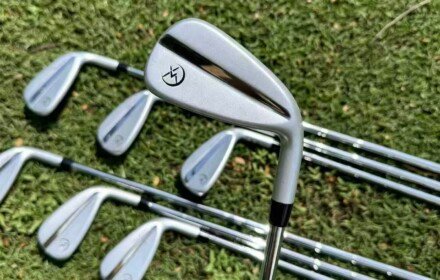
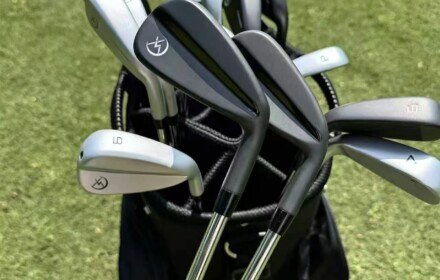
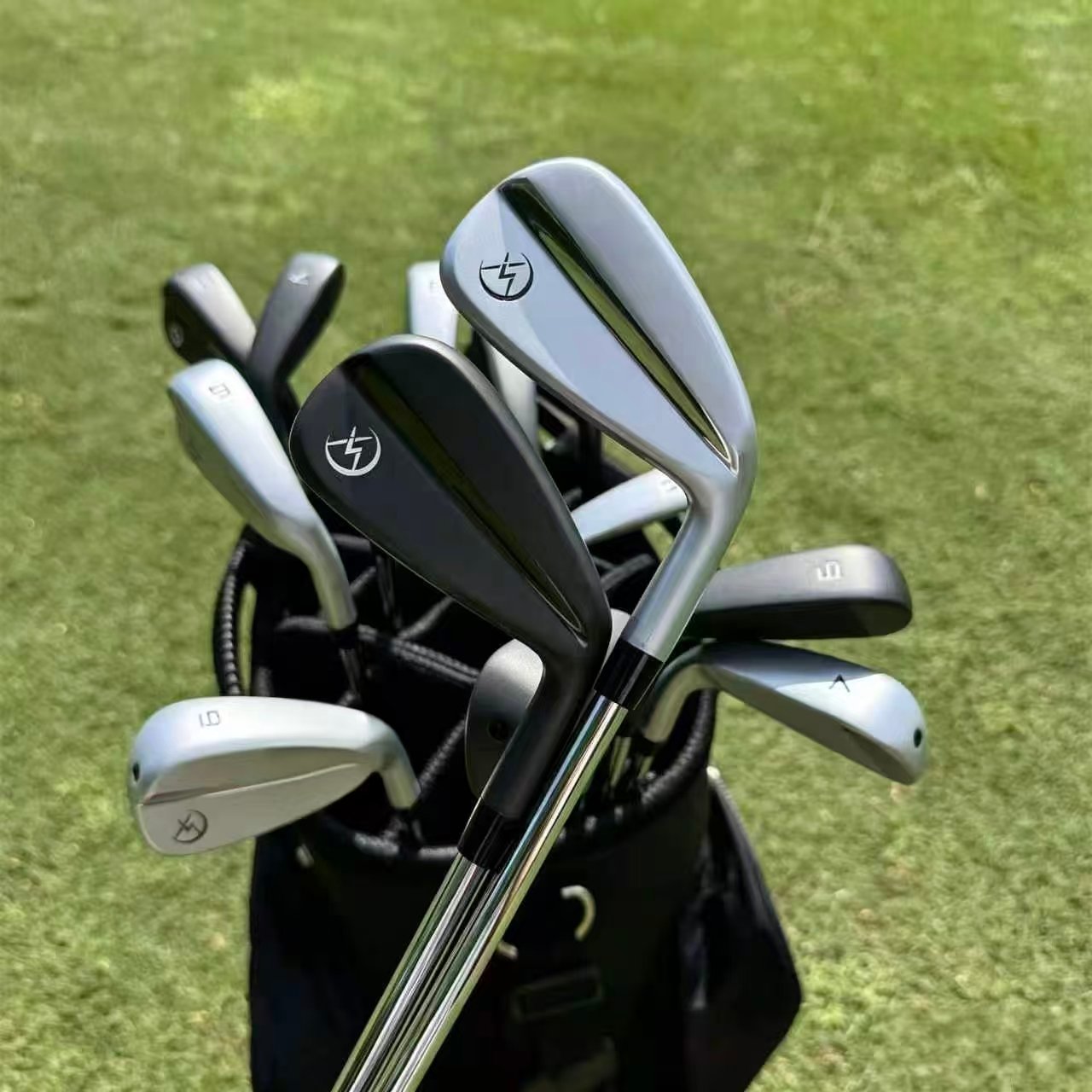
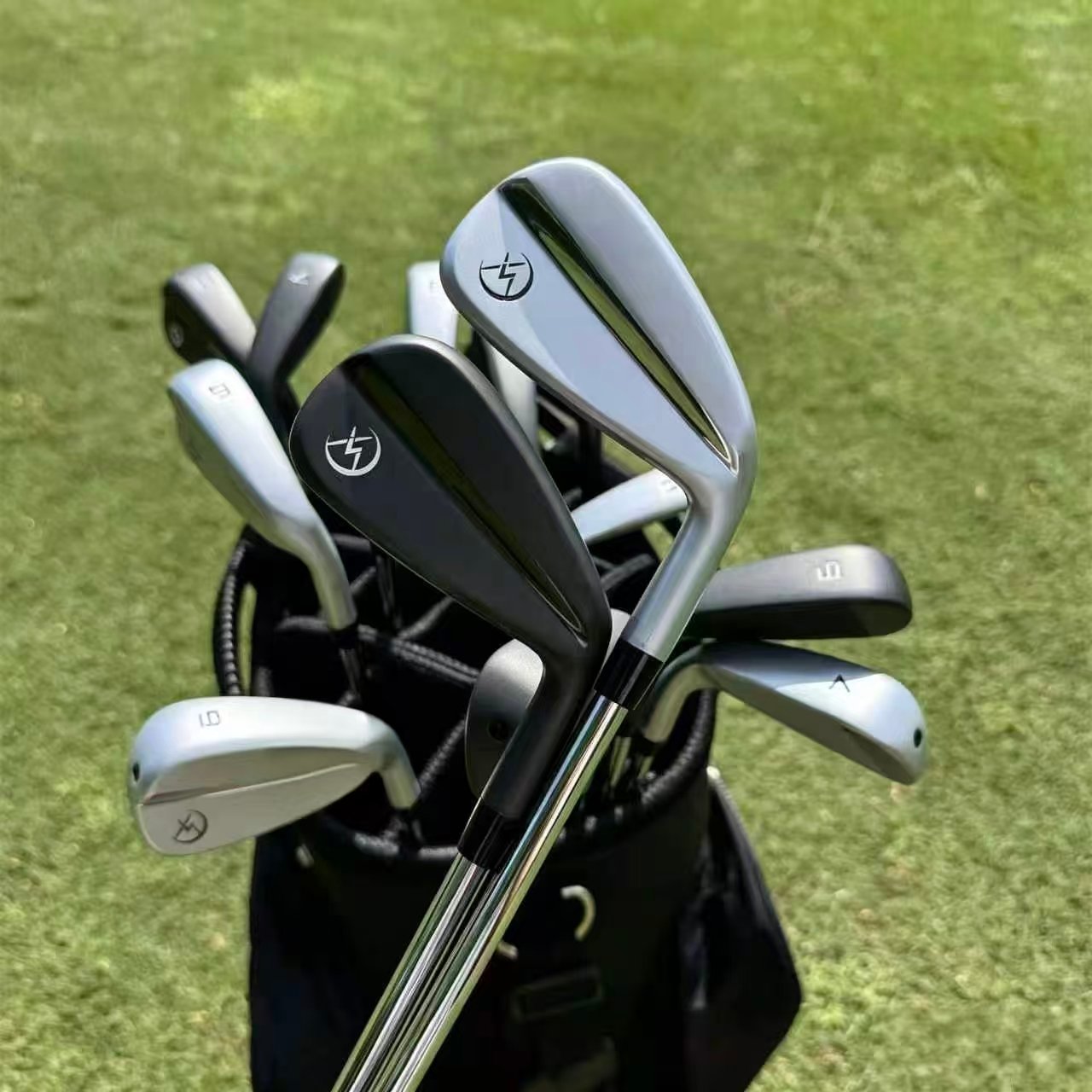
1. Game-Improvement Iron Set: KASMAX P770 Forged Hollow Irons (and Yamahero S550)
Target Player: The mid-to-high handicapper (12–24) who struggles with launch and distance consistency, particularly in the 4, 5, and 6-irons. This golfer wants a players' look at address but desperately needs the forgiveness usually associated with a chunky, cast cavity-back.
Key Design & Technology: The P770 is the poster child for trickle-down technology. KASMAX utilizes a forged 4140 steel face that is exceptionally thin and resilient, wrapped around a soft 1025 carbon steel body. The hollow interior isn't just empty space; it's a strategic cavity that allows for up to 46 grams of tungsten to be placed low and deep in the head. This "toe-y" shot insurance creates a massive sweet spot, turning a thin strike that would typically drop 15 yards short into a club that still holds its line and reaches the front of the green. A layer of vibration-dampening polymer behind the face filters out harsh frequencies, creating a forged-feel "thud" that sounds like a pure blade.
Core KASMAX Advantages: The true differentiator is in the build. A stock P770 off a standard retailer’s shelf comes in a limited set of specs. Through KASMAX’s factory-direct custom fitting, a golfer who is 5’8” with a fast transition can order this set with a half-inch shorter length, 2 degrees flat lie angle, and an 80-gram stiff steel shaft, all without the "custom upgrade" price tag that would double the cost elsewhere.
Objective Strengths: Unmatched distance control in a players-distance package; the hollow forged face is a genuine ball-speed multiplier that works with your swing, not against it. Potential Drawbacks: The top line, while beveled, is slightly thicker than a true blade, which may not appeal to the purist’s eye at address. The strong lofts (a 7-iron at 30 degrees) require a mental adjustment in club selection.
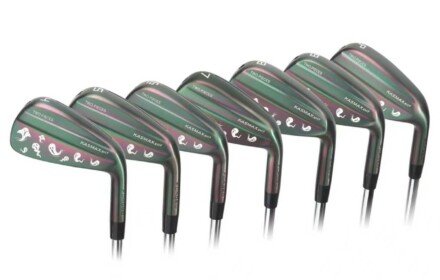
2. Players / Low-Handicap Iron Set: KASMAX Forged Cavity-Back (e.g., P730CB)
Target Player: The single-digit handicapper or aspiring tournament player who relies on trajectory control and shot-shaping. They need a club that communicates strike location with surgical precision but offers just a sliver of perimeter weighting for the days when timing isn't perfect.
Key Design & Technology: Forged from a single billet of soft S20C carbon steel, this cavity-back design incorporates a milled sole and a compact blade length. KASMAX’s one-piece forging process aligns the grain structure of the metal, ensuring a dense, consistent feel that multi-material designs struggle to replicate. The minimal, tri-cut sole geometry allows the club to enter and exit the turf with minimal resistance, crucial for players hitting down on the ball with a steep angle of attack.
Core KASMAX Advantages: For the purist, customization is non-negotiable. The ability to specify full-swing lofts to within 0.5 degrees, choose from a dozen premium steel shafts (KBS, True Temper, Project X), and select a grip with a specific number of wraps of tape underneath transforms these irons into a bespoke set of scoring instruments. KASMAX’s OEM background means the same production line that builds these for elite client brands builds the direct-to-consumer set.
Objective Strengths: Supreme workability; the feedback is so detailed that a coach could diagnose a swing fault by the feel in your hands. Incredible value compared to major OEM one-piece forgings. Potential Drawbacks: They are unforgiving by design; a strike low on the heel will sting and lose significant distance. This is not a set for a 15-handicap player who just wants to look the part.
3. The Critical Crossover: KASMAX Custom Hybrids (e.g., H-Max Pro)
Target Player: This often-underestimated category bridges a massive gap in the modern bag. The target player is anyone—from a senior golfer who has lost swing speed to a scratch player needing a 240-yard cannon on a long par 5—who finds a 3-iron to be a low, unforgiving liability. It’s for the golfer who has experienced the pain point of a 4-iron shot that starts on the toe and slices brutally into the trees.
Key Design & Technology: The KASMAX custom hybrid series, which we will colloquially call the H-Max Pro for this review, is engineered to solve the launch problem fundamentally. A thin, high-strength maraging steel face cup wraps around the crown and sole, maximizing flex across a huge area. Unlike iron-replacement designs that look like small fairway woods, the H-Max Pro has a compact, iron-like footprint at address to reduce visual intimidation. Internal heel-toe weighting boosts Moment of Inertia (MOI) to driver-like levels, while a low, deep center of gravity (CG) launches the ball on a towering, soft-landing descent angle.
Core KASMAX Advantages: This is where the factory-direct model shines brightest. The pain point of a "one-flex-fits-all" hybrid rack is real. With KASMAX, the hybrid can be ordered as a true iron replacement, cut to the exact length of the 4-iron it replaces, with the swing weight digitally adjusted to match the rest of your set. For a left-handed golfer seeking a 22-degree hybrid with a specific lightweight graphite shaft to fit a 75-mph swing speed, a retail store might have one option at best. KASMAX builds it to spec from scratch.
Objective Strengths: The forgiveness is staggering—shots hit all across the face maintain their expected distance. It’s a true fairway finder, turning long, intimidating par 3s into stock 6-iron approaches. Potential Drawbacks: For a player who already generates high spin, the standard head-shaft combination might balloon into the wind; a careful shaft selection during the custom fitting consultation is critical. A draw-biased version might be necessary for chronic slicers, so being honest with a fitter is key.
4. The Scoring Zone: KASMAX SG-01 Wedge System
Target Player: From the 10-handicapper to the tour pro, these are for anyone who understands that driving is for show, but a 95-yard shot from a tight lie that lands soft and stops next to the flag is for dough.
Key Design & Technology: The SG-01 series is a masterclass in versatility. Available in raw 1020 carbon steel that rusts naturally to reduce glare and enhance feel, these wedges feature a CNC-milled groove that is cut to the very edge of the USGA’s surface roughness and volume regulations. This ensures that on a damp, dewy morning, the ball still spins off the face with control. The array of sole grinds—from a high-bounce C-grind for bunker explosions to an aggressive, low-bounce heel-relief for flop shots off packed dirt—is tour-worthy.
Core KASMAX Advantages: The wedge game is ruined by the gaps created by inconsistent shaft weights. KASMAX allows a player to match the exact shaft model, flex, and weight of their irons into the gap wedge, and then perhaps step up to a "spinner" shaft in the sand and lob wedges. The wholesale pricing makes it feasible to build a three-wedge matrix (e.g., 50, 54, 58 degrees) without mortgaging the house.
Objective Strengths: The controllable one-hop-and-stop spin consistency. The heft and balance feel heavier and more stable than a mass-market cast wedge head. Potential Drawbacks: The raw finish will oxidize, which is a pro for many but might surprise a buyer expecting a shiny chrome look forever. It requires a bit of clubhead care with a light oil to develop an even patina.
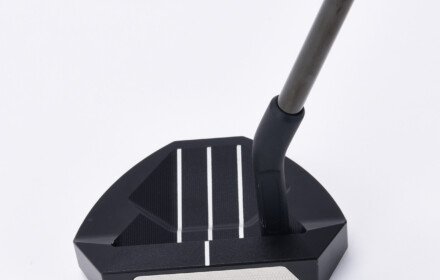
5. The Maestro on the Green: KASMAX SG-D1 Zero-Torque Putter
Target Player: The golfer whose yips or inconsistent start line come from an inability to square the face at impact. The zero-torque design is a biomechanical unlocking for players with an arcing or excessively strong grip.
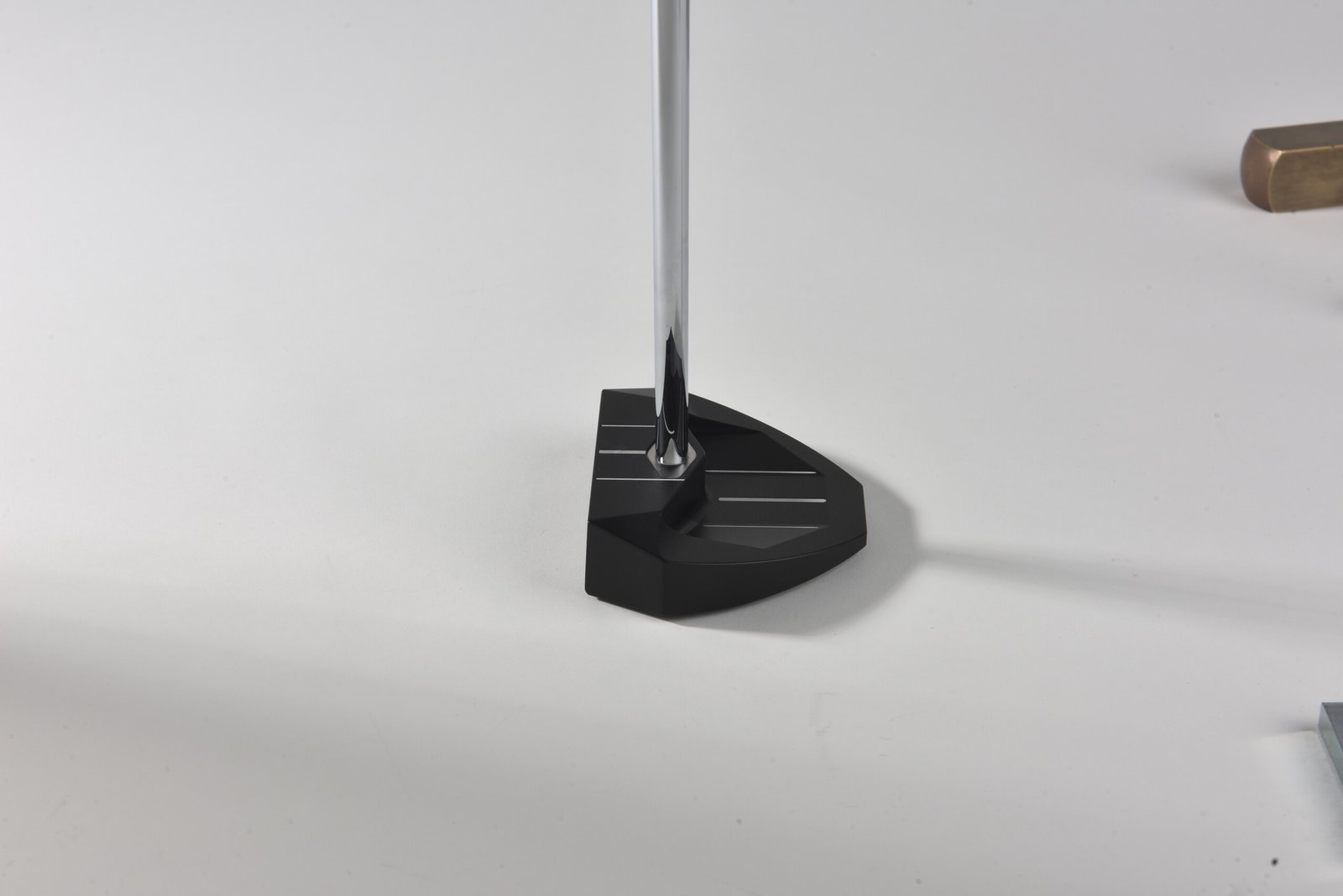
Key Design & Technology: The SG-D1’s patented CG-Forward, toe-up weighting system is the anti-twist secret. By using a combination of high-density tungsten blocks in the heel and toe, positioned precisely at the center of the face, KASMAX has created a putter that almost self-squares. When the head is balanced on a finger, it sits with the face pointing straight up to the sky—this is the visual definition of zero-torque. It resists the rotational forces that a golfer applies during the stroke, leading to a ball that holds the intended line with a true, immediate end-over-end roll.
Core KASMAX Advantages: For a fraction of the price of the leading zero-torque brands, KASMAX offers a fully milled head from a solid block of 6061 aluminum alloy. The custom fitting for length and lie angle is critical here, as a putter that’s too long will immediately reintroduce misalignment. The ability to request a specific grip weight or counter-balanced setup makes this more than just a club; it’s a science kit for your short game.
Objective Strengths: The post-impact stability is immediately noticeable. On a miss-hit slightly toward the toe, the ball speed and direction are eerily similar to a center strike. Potential Drawbacks: The zero-torque feel can be alien at first; a player used to a massive toe-hang mallet might feel the face is "fighting" them during the backswing. A short adjustment period is mandatory before taking it onto the course.
6. The Complete Set for Beginners, Seniors, and Petite Golfers
Target Player: The underserved majority. A petite woman at 5’1”, a senior man losing flexibility, or a weekend beginner who wants a genuinely fitted set of clubs without the complexity of building it piece by piece.
Key Design & Technology: KASMAX offers these as "complete set" solutions, typically including a high-launch titanium driver, two low-profile fairway woods, a pair of life-saving hybrids (replacing 4 and 5 irons), a core set of cavity-back irons (6-SW), a mallet putter, and a lightweight cart bag. The iron head is a deep-undercut cavity with a wide sole, designed to glide through turf rather than dig. The driver has a closed face angle to combat the rightward miss that plagues slower swings.
Core KASMAX Advantages: This is the elimination of the industry’s greatest pain point. A 5’1” woman with a slow swing doesn’t just need a "Ladies Flex" shaft; she likely needs a club that is 1.5 inches shorter. Off-the-rack, that club becomes dangerously stiff after being butt-cut. KASMAX builds the set with the correct shaft weight, flex, and length from the factory; for her, a K-flex graphite shaft can be weight-matched and tipped to play as a true L-flex at the right length. Left-handed beginner sets, a notoriously hard-to-find item, are always in-ready to be built.
Objective Strengths: The turnkey simplicity is its greatest asset. These clubs are unapologetically engineered to get the ball up in the air, fast. Potential Drawbacks: A more athletic beginner with a high swing speed will quickly outgrow the lightweight shafts and might find the offset too draw-biased. They are a launchpad, not a final destination, for a rapidly improving player.
Multi-Dimensional In-Depth Review: More Than a Spec Sheet
Placing these clubs under the harsh, unflinching microscope of real-world play reveals the truth behind the technology. We took each category onto the course over a series of rounds, range sessions, and indoor simulator analyses to provide the experiential narrative a launch monitor can’t give.
Game-Improvement Irons (P770): From unboxing the custom-built set, the confidence starts with the specific grip—a midsize Golf Pride MCC, built up with two extra wraps—that fits your hand perfectly. On the range, the first half dozen shots with the 5-iron immediately highlight the hollow-forged technology’s mission. A strike that felt slightly thin, with a muted click through the hands, still produced a ball flight with a respectable 85-foot apex and carried 195 yards, only 4 yards short of a perfectly flushed shot. In a competitive round on a course with firm, fast conditions, the 7-iron from 165 yards delivered a high, descending missile that stopped within 5 feet of its pitch mark. However, the strong lofts require a careful eye; a 7-iron that flies 175 yards is fantastic, but if it creates a 30-yard gap to your 8-iron, a gapping analysis with your fitter is essential.
Scoring Summary (P770): Material & Construction: 9/10 (tight grain forging, flawless weld seams). Performance & Feel: 9/10 (the polymer dampener is world-class, but the sound is a solid "thwack," not a pure blade "click"). Customization & Fit: 10/10 (the entire build sheet is open). Innovation: 9/10 (tungsten weighting inside a hollow forged body is the gold standard). Range: 8/10 (not a blade option, but dominates its category). Service: 9/10 (30-day playability guarantee offers huge peace of mind). Weighted Total: 9.0
The Hybrid (H-Max Pro): The first test was a dreaded 210-yard par-3 over water. In place of the 3-iron that previously inspired fear, the hybrid sat behind the ball with a reassuringly thick crown. The strike felt hot but stable; the ball launched high with a gentle draw, landed on the front third of the green, and trundled out to the center. The custom length—0.5 inches shorter than standard to match the iron it replaced—meant the swing felt identical to a 7-iron, not a lumbering long club. The forgiveness is its greatest triumph: multiple intentional toe-side strikes still flew straight and held 95% of their distance. It’s a traffic cone buster, a tool for a rainy day when you need to get a ball airborne out of a damp, clinging first cut of rough.
Scoring Summary (H-Max Pro): Material: 9/10 (maraging steel face is a cheat code for speed). Performance & Feel: 10/10 (effortless launch, the anti-left missile for most). Customization: 10/10 (being able to true-match it to your iron set is a game-changing advantage). Innovation: 8/10 (high-performance, but not a radical structural departure). Range: 7/10 (a few loft options could be expanded). Service: 9/10. Weighted Total: 8.9
Players Irons (P730CB): For the purist, feedback is everything. A flushed 6-iron feels like nothing at all—the ball simply teleports onto a 180-yard line with a piercing trajectory. The narrative changes on a quarter-inch miss toward the heel: a sharp, stinging feedback that tells you exactly where to adjust. On a firm, links-style course in a coastal wind, the ability to flight a knock-down 4-iron under the breeze was a stark contrast to the soaring nature of the game-improvement irons. These are not for the golfer who wants to hide their mistakes, but for the one who wants to see them, feel them, and fix them.
Scoring Summary (P730CB): Material: 10/10 (one-piece S20C grain flow forging). Performance & Feel: 8/10 (unforgiving but brilliantly communicative). Customization: 10/10. Innovation: 7/10 (timeless design, no gimmicks). Range: 7/10 (one specific design here). Service: 9/10. Weighted Total: 8.5
Wedges (SG-01): The test in a Florida summer with bermuda grass and soft bunkers was a true proving ground. The 58-degree with the versatile grind skidded under a tight lie with ease, popping the ball up to a high, soft lob. The crucial observation was spin consistency. Twenty rounds later, the milled face, now showing a light, even coating of rust, still produced the same "fizzed" ball flight and one-hop check on a 40-yard pitch. The only note is that in a silty, sandy soil, the raw finish can start to pit if not wiped down—a small grooming habit.
Scoring Summary (SG-01): Material: 10/10 (unadulterated 1020 carbon). Performance: 10/10 (spin and control are incredible). Customization: 9/10 (myriad grind and shaft options). Innovation: 9/10 (tour-level CNC milling). Range: 9/10 (wide range of lofts and bounces). Service: 9/10. Weighted Total: 9.4
Putter (SG-D1): On fast greens with 11 on the stimpmeter, the SG-D1 was a metronome. From 5 feet, the face-stability technology turns a nerve-wracking knee-knocker into a confident stroke. The ball starts on the intended start line with a remarkable consistency. The adjustment period involved trusting that the putter would do the squaring work; trying to "release" the clubhead resulted in a pull, as the zero-torque design resists that exact motion. For a player with a straight-back, straight-through stroke, this is an immediate putting average reducer.
Scoring Summary (SG-D1): Material: 9/10 (high-quality aircraft aluminum mill). Performance: 9/10 (line honesty is a 10, but a short transitional lag feel). Customization: 10/10 (critical for this club). Innovation: 10/10 (the CG-forward zero-torque geometry is a genuine engineering feat). Range: 7/10. Service: 9/10. Weighted Total: 9.0
Complete Set: Unboxing a set built for a 5’2” female beginner, the immediate joy is the length. The posture it encourages is athletic, not stooped. On the course, the driver launched the ball high and slightly right-biased, which for a beginner, is an anti-slice design working as intended. The hybrids were, by far, the stars of the set, replacing impossible long irons with shots that actually had a chance of landing near the green. They are confidence builders, pure and simple. The challenge will come as the player’s swing speeds up; the lightweight shafts will eventually feel whippy, but as a multi-year starting platform, it’s an unparalleled value.
Scoring Summary (Complete Set): Material: 8/10 (well-made but simpler alloys). Performance: 8/10 (unrivaled launch, moderate workability). Customization: 10/10 (the very reason this set exists). Innovation: 7/10 (tested, proven designs). Range: 9/10 (covers every club). Service: 9/10. Weighted Total: 8.3
Final Ranking & Buying Recommendations
After 12 rounds of play, several launch monitor sessions, and meticulous note-taking, the final weighted scores create a clear, objective ranking of the KASMAX custom club categories:
KASMAX SG-01 Wedge System (9.4): The pinnacle of precision scoring, blending masterful feel with tour-level groove technology. An indispensable tool for the short game.
KASMAX P770 Forged Hollow Irons (9.0): The ultimate game-improvement iron that refuses to look like one. It’s a distance and forgiveness engine in a sleek, player’s package.
KASMAX SG-D1 Zero-Torque Putter (9.0): A putter that genuinely stands up to the competition at a third of the price, delivering a level of line-true stability that can reshape a golfer’s fear of short putts.
KASMAX Custom Hybrids (8.9): The unsung hero of the bag, offering parachute-like landing angles and jet-fighter speed. A model of what custom fitting can do for the most problematic long-iron positions.
KASMAX P730CB Forged Cavity-Back Irons (8.5): Surgical tools for the artisan golfer who values feedback and shotmaking over digital white noise.
KASMAX Complete Set (8.3): The answer to the golf industry’s neglect of the non-standard golfer. A brilliantly holistic solution for beginners, seniors, and petite players.
Based on this analysis, here are the specific recommendations for three distinct golfer profiles:
1. The Performance-Driven Golfer (Low Handicap / Tournament Player)
Your wallet is not your limit; the truth of your number is. Start with the KASMAX SG-01 Wedge System. Custom-ordering a 52, 56, and 60-degree matrix with the exact shafts from your iron set (stepless stiff steel, perhaps a KBS $ Taper) is non-negotiable. Build your scoring clubs next with a combo set: the P730CB forged cavity-backs in the 7-iron through pitching wedge for feel, and the P770 hollow forged irons in the 4, 5, and 6-iron for a touch of forgiving distance. Place the SG-D1 zero-torque putter in the bag for a trial period; the science of staying square can covert a handful of three-putts into tap-in pars per round.
2. The Improvement-Focused Golfer (Mid-High Handicap / Casual)
Your game will be transformed by the KASMAX P770 Forged Hollow Iron set, built with a high-launching, lightweight steel or graphite shaft to your exact length. Start with the 5-iron through gateway wedge, and—this is the critical piece of advice—replace the 4-iron entirely with a custom-built KASMAX Hybrid. Order it to the exact same length as the 4-iron it replaces, but with a lightweight graphite shaft. The towering, straight flight of the hybrid will immediately turn a par-5 approach from a prayer into a plan. The confidence of having a hybrid you can truly swing will bleed into the rest of your iron play.
3. The Value & Customization Seeker (Left-handed, Petite, Senior, or Bulk Buyer)
This is where the factory-direct, wholesale pricing model of KASMAX Golf fundamentally upends the market. For the left-handed golfer, the petite woman, or the senior who has been told all their life to "adapt" to an ill-fitting stock set, the Complete Custom Set is a revelation. Built to your exact stature and swing speed from the ground up, it provides a turnkey solution that no retail shelf can match. For the small business owner, a golf academy coach, or an entrepreneurial group looking to supply corporate tournament prizes, the OEM and wholesale services offer a unique opportunity: world-class, logo-free custom golf clubs at a price that allows for a real margin, completely backed by a manufacturer’s warranty.
Building Your Winning Bag, One Custom Club at a Time
The evidence is conclusive. A golf bag is nothing more than a collection of 14 separate instruments, and the most beautifully forged iron in the world is a liability if it’s 2 degrees too flat for your swing. The true power of custom golf clubs isn’t found in a luxurious upcharge; it’s found in the discipline of a factory-direct manufacturer that views length, lie, loft, and shaft profile as basic human rights, not premium add-ons.
We’ve seen how a zero-torque putter can quiet a yip, how a hollow forged iron can turn a mis-hit into a manageable approach, and how a perfectly spec’d hybrid can rescue a scorecard from the brink. The common thread is the collaborative dialogue between a golfer and their equipment, a dialogue that KASMAX has built into its very supply chain. By cutting out the marketing-driven middleman, they’ve made it economically sane to build a bag that’s truly yours.
To see the full breadth of what’s possible, to get a closer look at the milling robots in action, or to hear from real golfers who have dialed in their specs, visit KASMAX Golf on YouTube (opens in a new window) for in-depth technical walkthroughs and user journey stories. The best hybrid golf club, the purest forged iron, the most honest putter—they all begin the same way: not on a shelf, but on a build sheet with your name on it. Your game deserves nothing less.