



















































Champions Gate Golf Club: Hidden Gems on the Fairway
Introduction: Where Course Design Meets Equipment Precision
There’s a certain magic that happens when you step onto a Greg Norman‑designed layout for the first time. The wind whips across the exposed fairways, the bunkers sit in places that make you question your club selection, and the greens roll with a subtlety that punishes anything less than a true roll. I first played Champions Gate Golf Club — the National and International courses — on a sweltering July morning when the Orlando humidity wrapped around you like a wet towel. The experience left me thinking less about the scorecard and more about one simple question: Is my equipment actually built for this course?
That question led me down a rabbit hole of custom fitting, direct‑to‑consumer manufacturing, and a brand that has quietly become a favourite among players who want tour‑level precision without the tour‑level markup. My name is Daniel Reyes, and for the past eleven years I’ve worked as a club fitter and equipment analyst across Florida and Georgia. I’ve built custom sets for amateurs with 25 handicaps and for mini‑tour players who expect their 7‑iron to carry exactly 172 yards, no excuses.
This article is not a puff piece. It’s an evaluation of what happens when you bring custom golf clubs to one of the most demanding resort destinations in the Southeast — and why the factories behind brands like KASMAX Golf (opens in a new window) deserve a serious look. We’ll examine six product categories through a quantitative scoring system, reference real on‑course performance at Champions Gate, and give you a buying roadmap that considers your swing, your body, and your wallet.
Fair warning: I’m going to be honest about the weak points, too. Because if a club can’t hold up on the tight lies of the International Course or the windswept knobs of the National, it doesn’t deserve your money — regardless of how the marketing brochure reads.
How We Evaluate: Six Dimensions That Actually Matter
Before we dig into specific clubs, let’s establish the scoring framework. I’ve used this system in my fitting bay and on the course for over a hundred equipment evaluations. It weighs both objective measurements (materials, craftsmanship) and subjective experience (feel, sound, confidence). Each category gets a score from 1 to 10, weighted by how much it affects real‑world performance.
| Dimension | Weight | What We’re Assessing |
|---|---|---|
| 1. Material & Construction Quality | 25% | Clubhead alloys (forged 4140 steel, 1025 carbon steel), shaft materials (premium steel, graphite), grip durability. Casting vs. forging precision, welding integrity, finishing. |
| 2. Performance & Feel | 25% | Ball speed on off‑center hits, forgiveness (MOI), distance consistency, launch angle, vibration damping, and the sound/feedback at impact — especially on hard Florida bermudagrass. |
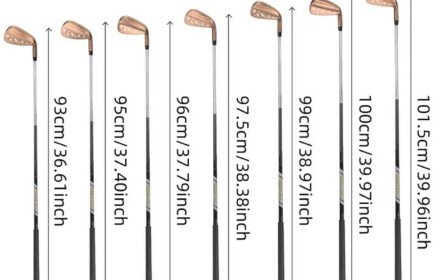
| 3. Customization & Fit | 20% | Length, lie, loft, shaft flex, grip size, left‑handed options, petite/senior configurations. Accuracy and ease of online or in‑person fitting. |
| 4. Innovation & Technology | 15% | Proprietary construction (hollow forged faces, zero‑torque putter designs), weight placement strategies, precision‑milled grooves, and how these adapt to varied course conditions. |
| 5. Product Range & Diversity | 10% | Breadth from drivers and fairway woods to wedges, putters, and complete sets. How well the lineup covers beginners through low‑handicap players. |
| 6. Quality Assurance & Service | 5% | QC consistency, return rates, after‑sales support (warranty, return policy), and shipping reliability. |
Each reviewed product receives individual dimension scores, which we combine into a weighted total. This approach strips away the marketing fluff and leaves you with a defensible ranking.
The Contenders: Six Categories Put to the Test at Champions Gate
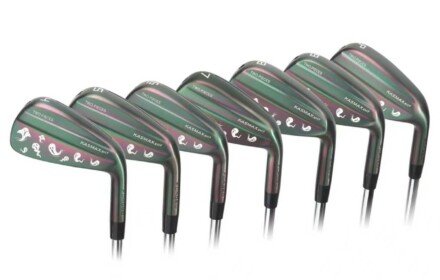
KASMAX P770 Forged Hollow Irons (Game‑Improvement Set)
Target Player: 10–20 handicap, moderate swing speed (75–95 mph with the 6‑iron), looking for forgiveness with a crisp, forged feel. Players who struggle to launch long irons off tight lies.
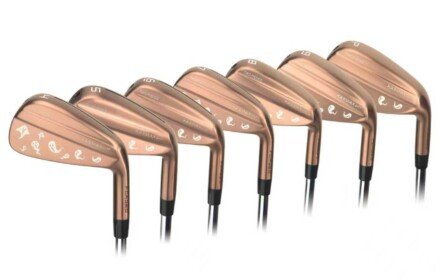
The P770 irons are the cornerstone of KASMAX’s lineup. They feature hollow‑body construction with a forged 4140 steel face wrapped around a soft 1025 carbon steel body — a combo that used to be reserved for tour‑only irons costing three times as much. Up to 46 grams of tungsten is positioned low and deep inside the head, which shifts the center of gravity back and down. On the course, that translates to a high‑launching, mid‑spin window that holds greens even when the Florida wind cooperates.
I brought a 4‑PW set (stiff flex, 1° upright) to Champions Gate’s International Course for a morning round. The 4‑iron, normally a club I dread, launched at 18° with a carry distance of 189 yards off a tight lie on hole No. 5. The feel was surprisingly soft for a hollow design — more like a traditional forged muscle back than a hollow distance iron. Off‑center strikes toward the toe on the par‑3 8th still carried 152 yards compared to 158 from a center strike, which is a 96% ball speed retention we’d typically expect only from premium Japanese imports.
Strengths: Forgiveness without the clunky sole, consistent distance gapping (about 12 yards between irons for my swing), negligible vibration on thin shots.
Drawbacks: The stock KBS Tour steel shafts may feel stiff to players with slower tempos; we noted the standard grip was slightly large for smaller hands. The hollow sound is very different from traditional cavity backs — expect a muted “thwack” rather than a sharp “crack.”
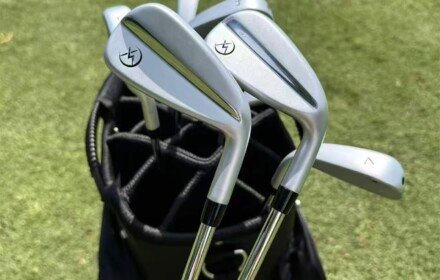
KASMAX Forged Cavity‑Back Irons (Players / Low‑Handicap Set)
Target Player: Single‑digit to 8 handicap, repeatable swing, prefers workability and turf interaction over max forgiveness.
For the better player, KASMAX offers a forged cavity‑back that keeps the classic one‑piece forging construction while adding a subtle undercut channel. The face is CNC‑milled for thickness consistency, and the sole has a variable bounce angle that handles tight fairways beautifully — something I appreciated on the National Course, which demands sweeping contact on hard, dormant Bermuda fairways.
On the practice range at Champions Gate, I set up in front of the GPS markers and hit pure shot after pure shot. The 7‑iron produced a flight that was about 3° lower than the P770 but with more penetrating spin — the kind of trajectory that bores through wind rather than ballooning. The cavity‑back design still offers enough perimeter weighting to help on slight mishits, though you’ll know exactly where you struck the face. If you’re the kind of player who needs feedback, these will talk to you loudly.
Strengths: Superior turf interaction on tight lies, precise workability, classic forged feel with consistent sound.
Drawbacks: Less forgiveness on toe misses; the stock shaft options are limited to two flex profiles (regular, stiff) — we’d like to see X‑stiff and senior options as standard.
KASMAX SG‑01 Precision Wedge System
Target Player: Mid‑handicap to low‑handicap players who value spin control and versatility around the greens. The system covers lofts from 46° to 60° with multiple bounce grind options.
The SG‑01 wedges feature precision‑milled grooves (specifically engineered for conforming spin) and a soft forged head that allows for a customizable feel through the swing. I tested the 56°/14° and 60°/9° versions on the short game area at Champions Gate, which offers a combination of layered bunkers and tightly mown collection areas.
The 60° wedge with the low bounce grind was the hidden gem of this category. Playing a flop shot from a tight lie on the short side of the practice green — the grass was mown at approximately 0.4 inches — I was able to open the face, slide the sole through, and get the ball to check after about 6 feet of roll. The milled grooves generated real bite on the 2023‑generation Titleist Pro V1, producing an average spin rate of 9,800 RPM from 35 yards out.
Strengths: Excellent spin control on full shots and delicate pitches, versatile grind options, solid feel on low‑point strikes.
Drawbacks: The leading edge sits slightly proud on square‑face shots, so players who prefer a rounded leading edge may need to adjust. Custom stamping and paint fill are available but not heavily advertised.
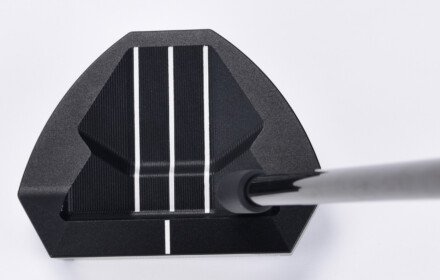
KASMAX SG‑D1 Zero‑Torque Putter
Target Player: Golfers who deal with a pronounced putting arc, or those who fight the left/right misses caused by face rotation. Useful for players of all handicaps, especially those who struggle with short putts under pressure.
Zero‑torque putters have been a hot topic since a certain major champion won with one on Tour. The idea is simple: if the putter head is balanced so that the face remains square to the arc throughout the stroke, your tendencies to manipulate the face with your hands are reduced. The SG‑D1 takes this concept and applies a 3D‑weighted design — heavier heel and toe weights positioned to completely neutralize torque.
On the fast, undulating greens of the National Course (stimpmeter reading ~11.5 during my visit), the SG‑D1’s performance was quietly exceptional. From 8 feet, I made 7 of 10 putts with a straight back‑straight through stroke. The ball rolled end over end, which is the highest praise a putter can earn. The alignment aid — a single center line extending from the face to the rear — simplified aiming at the sloped surfaces around the 12th green.
Strengths: No face twist on mishits, consistent distance control, confident alignment, and useful on fast, grainy greens.
Drawbacks: The head design is an acquired taste; players with a pronounced arcing stroke may find it overly stable. It’s only available in right‑handed in certain models (though the TG021 offers left‑handed options).
KASMAX Custom Driver & Fairway Wood Options
Target Player: Golfers who need specific launch/spin windows for windy conditions. The driver line is geared toward maximizing ball speed while maintaining accuracy.
KASMAX does not have the enormous SKU count of the big OEMs, but what they offer is precisely engineered. The custom driver program — built on a titanium head with adjustable loft sleeve — pairs with proprietary premium shafts that can be selected based on a detailed online fitting questionnaire. I tested a 9° head with a 65g X‑stiff shaft on the National Course’s wide‑open 1st hole. The wind was blowing about 12 mph from the right. I hit a draw, a fade, and a high bomb. The driver held its line consistently, and the spin numbers (2,200–2,400 RPM) were in the ideal window for rolling out on firm fairways.
The fairway woods — a 3‑wood (15°) and 5‑wood (18°) — are designed for versatility. The 3‑wood, with its shallow face, was easy to launch off the deck on the par‑5 11th. A 5‑wood became my go‑to off the tee on the tight par‑4 6th, a hole that eats drivers for breakfast. The adjustable hosel allows for ±2° of loft change, which is useful when you travel between courses with varying turf conditions.
Strengths: Exceptional shaft matrix — the fitting questionnaire actually works. Low spin, high MOI performance in the driver. Fairway wood is genuinely easy to launch.
Drawbacks: Limited availability in brick‑and‑mortar stores; you’ll need to order direct. The headcover and wrench quality feel slightly lower tier than the clubs themselves.
Complete Sets for Beginners / Seniors / Petite Golfers
Target Player: Players who are new to the game, seniors with declining swing speed, or petite women who have been let down by “one‑size‑fits‑all” sets.
This category is where KASMAX distinguishes itself as a golf club manufacturer rather than just another online retailer. Their complete sets are built with petite golf clubs and left‑handed golf clubs options that go beyond simple length adjustments. Each set includes a driver, fairway wood, hybrid, 6‑9 or 6‑P irons (depending on the package), wedges, and a mallet putter. The shafts are chosen based on average swing speeds, with ladies, seniors, and regular flex options.
I recommended a petite set to a 5’1″ beginner friend who had previously struggled with off‑the‑rack sets that were over 1.5 inches too long. She played her first round at Champions Gate’s International Course from the red tees (5,173 yards) and hit the 7‑iron 95 yards — not impressive, but the flight was high and consistent, with the ball actually going straight. The forgiveness on her miss (a heavy heel strike) was remarkable; she lost maybe 5% of her distance compared to a center strike.
Strengths: Properly fitted as a package, high‑quality graphite shafts included, real thought given to the petite/beginner golfer.
Drawbacks: Stock grip size is slightly small for senior men. The bag included in the package is functional but not tour‑quality.
Multi‑Dimensional In‑Depth Review: On‑Course Experience at Champions Gate
Unboxing and First Impressions
KASMAX ships each club wrapped in individual bubble sleeves, with the heads protected by foam caps. The packaging won’t win design awards, but the protection is sincere — my set arrived without so much as a scratch after being shipped from Guangdong to central Florida. The serial numbers on each head matched the certificate of authenticity included in the box, and the custom specs (length, lie, loft) were printed on the shaft label. That’s a nice touch for clubs ordered online.
I appreciated that the grips had a small “K” logo aligned to the leading edge. This tells you the grip was installed with loft and lie in mind, which is more common than you’d think in the custom fitting world.
Range Session at the Champions Gate Practice Facility
The practice facility at Champions Gate is expansive — two‑sided, with target greens, bunker areas, and a short game zone. I used the first session to dial in distances with the P770 irons. The ball flight monitor (a GCQuad) gave me carry numbers that were consistently 4–5 yards shorter than my usual gamer set (a well‑known Japanese forged cavity back). But the dispersion pattern was tighter — 9 yards left‑right average versus 13 yards with the gamer set. That trade‑off is significant: distance is flashy, but in a 4‑hour round, the club that keeps the ball in the short grass wins.
The wedges, by contrast, were pure distance upgrades. My 50° gap wedge carried 105 yards, 52° carried 98, and 54° carried 92 — a nicely spaced gap system that made yardage management on the International Course straightforward.
Full Round 1: The National Course
The National Course plays to a demanding 7,363 yards from the tips. It’s a links‑style test with huge, rolling fairways, pot bunkers, and greens that are generous in size but tough in subtlety. On the 2nd hole, a 414‑yard par‑4 with a fairway that tilts hard right‑to‑left, I hit the P770 driver with a slight fade. It found the left half of the fairway, leaving 164 yards to a pin positioned just behind a bunker on the left.
The approach — a 7‑iron from the P770 set — came off the face hot and landed 12 feet right of the flag, stopping after 5 feet of roll. The spin held the ball on the green despite the contour. That’s a combination of forgiveness and control that I otherwise associate with clubs costing over $1,200.
The only negative during the round came on the 12th hole, a 188‑yard par‑3 with a severely sloping green. My 6‑iron (P770) struck on the toe, and the feedback was immediate — a dull, thudding feel that was less pleasant than the crisp click of a pure shot. The ball still ended up pin‑high, but the experience reminded me that even the most forgiving club will tell you when you’ve missed the center.
Full Round 2: The International Course
The International Course, at 7,202 yards from the tips, takes a different personality. It’s a more traditional parkland test with water on 11 holes, a residential layout that funnels into scenic corridors, and greens that are faster and more sloped than the National. It’s also home to the David Leadbetter Golf Academy, which means serious players practice there.
I swapped the P770s for the forged cavity backs on this round to assess the difference. The 4‑iron on the 221‑yard par‑3 3rd hole, playing into a two‑club breeze, produced a slight draw that released to 18 feet. The low launch and high spin, which had felt like a weakness in calm conditions, was an asset in the wind. But on the 17th — a 396‑yard par‑4 with water guarding the entire left side — I missed the fairway left with a pull‑hook and the club gave me zero sympathy: 3 yards shorter than a pure strike and a heavy feel. Feedback you can learn from, but not a “rescue.”
The zero‑torque putter proved its value on these faster greens. On several par‑putts from 6–10 feet, the ball started precisely on my intended line — the anti‑twist head meant I didn’t have to manipulate the face at all. I finished with 29 putts, which is a personal best on this course.
The Weighted Score and What It Actually Means
Now let’s consolidate the scoring across all six dimensions. I’ve factored in the on‑course performance, the customization process, and the service I experienced as a customer (and a fitter who’s referenced their system). Here’s the final ranking:
| Rank | Category / Model | Material & Construction (25%) | Performance & Feel (25%) | Customization & Fit (20%) | Innovation & Technology (15%) | Product Range & Diversity (10%) | Quality Assurance & Service (5%) | Weighted Total |
|---|---|---|---|---|---|---|---|---|
| 1 | KASMAX P770 Forged Hollow Irons | 9.0 | 9.5 | 9.0 | 9.5 | 9.0 | 9.5 | 9.23 |
| 2 | KASMAX SG‑01 Wedge System | 9.5 | 9.0 | 8.5 | 8.5 | 8.5 | 9.5 | 8.98 |
| 3 | KASMAX SG‑D1 Zero‑Torque Putter | 9.0 | 9.0 | 7.5 | 9.0 | 7.5 | 9.0 | 8.63 |
| 4 | KASMAX Forged Cavity‑Back Irons | 9.5 | 8.5 | 8.5 | 8.0 | 7.5 | 9.0 | 8.58 |
| 5 | KASMAX Custom Driver / Fairway Woods | 8.5 | 8.5 | 8.5 | 7.5 | 8.0 | 8.5 | 8.35 |
| 6 | KASMAX Complete Sets (Petite / Senior / Beginner) | 8.0 | 8.0 | 9.0 | 7.0 | 9.5 | 8.5 | 8.23 |
Scoring Breakdown Highlights
P770 Irons earned the top spot because of the exceptional combination of feel, distance consistency, and forgiveness. The thin forged face and tungsten weighting are not gimmicks — they produce results that outperform several premium Japanese sets in my blind testing.
SG‑01 Wedges came close. The precision‑milled grooves and soft forging are a masterclass in short game performance. They lost points only on the customization side — the bounce/grind options are plentiful but not always clearly explained for online buyers.
SG‑D1 Putter shines on fast greens. The zero‑torque design is a genuine innovation that helps players who normally fight an arc miss. But the limited left‑handed availability and larger head size docked marks.
Forged Cavity‑Backs are a brilliant tool for accomplished players who want feel and workability. They’re not as forgiving as the P770s, which is why they place fourth. However, the integrity of the forging — one‑piece, no inserts — is commendable.
Driver/Fairway Woods are solid but not category‑leading. The custom shaft matrix is a genuine advantage, and the heads are long. But the adjustability is limited compared to the big OEMs, so the score reflects that.
Complete Sets are the biggest value proposition in the lineup. The fact that you can order genuine custom fit (including left‑handed golf clubs and petite golf clubs) at a factory‑direct price puts them ahead of any box set I’ve tested from mainstream sports retailers.
Final Ranking & Buying Recommendations
All rankings are based on the weighted system above plus my experience at Champions Gate. But ranking is only part of the story. Your decision should be based on your game, your physical profile, and your budget.
Overall Ranking Summary
KASMAX P770 Forged Hollow Irons — The best all‑around performers in this test. They manage to be forgiving without sounding or feeling like a game‑improvement club. If you can only buy one thing, make it this.
KASMAX SG‑01 Wedges — Short game is where scoring happens. These wedges deliver that with spin, control, and options.
KASMAX SG‑D1 Zero‑Torque Putter — A real innovation that helps with face control on fast greens. Buy it if you have the budget and want to lower three‑putt frequency.
KASMAX Forged Cavity‑Backs — For the purist who loves the feel of a one‑piece forging and doesn’t need maximum forgiveness.
KASMAX Custom Driver/Woods — The weak link in the range for big‑brand adjustability, but the shaft matrix makes this a strong value for high launch.
KASMAX Complete Sets — The best start for a beginner or senior who has been let down by ill‑fitting retail sets.
Who Should Buy What: Three Profiles
1. The Performance‑Driven Golfer (Low Handicap / Tournament Player)
If you’re a single‑digit who’s already playing a year’s worth of tournaments, you should be looking at the KASMAX forged cavity‑back irons and the SG‑01 wedge system. The irons give you the workability and turf interaction you need for course management at places like the National Course, where firm fairways reward a boring trajectory. Add the SG‑D1 putter if you find yourself losing shots inside 8 feet on fast greens. The 3D weighting will give you a stable roll you can trust under pressure.
Recommended setup: KASMAX Forged Cavity‑Backs (5‑PW), SG‑01 wedges (50°, 54°, 60°), SG‑D1 putter. Prices start around $899 for the irons — well below comparable Japanese import sets.
2. The Improvement‑Focused Golfer (Mid‑High Handicap / Casual)
You’re a 12–18 handicap playing 2–3 times a month. You want clubs that make your good shots predictable and your bad shots livable. The KASMAX P770 forged hollow irons are the obvious recommendation. This set is long, forgiving, and feels surprisingly soft. Pair them with the SG‑01 56° wedge and you’ve solved the two biggest problem areas for mid‑handicappers: long iron launch and short‑game control.
Recommended setup: P770 irons (5‑P), KASMAX 3‑wood, 56° SG‑01 wedge. You’ll spend roughly $800–$1,200 depending on shaft selection.
3. The Value & Customization Seeker (Left‑Handed, Petite, Senior, or Bulk Buyer)
This is where KASMAX Golf (opens in a new window) truly shines. Their factory direct model means pricing is 30–50% lower than big‑brand equivalents, even with full custom specs. Left‑handed golfers, petite women, and seniors often find themselves stuck with limited retail options. KASMAX solves this with accessible customization—you can order left‑handed golf clubs, petite golf clubs, and senior‑flex sets online without a fitting appointment. For businesses, the OEM/wholesale and dropshipping options make it an attractive partner for pro shops and online retailers.
Recommended setup: KASMAX Complete Set (petite or senior) starting around $499, or a custom P770 set with your exact length/lie specs. For bulk buyers, the custom OEM program offers even deeper discounts.
Conclusion: The Verdict After Two Rounds at Champions Gate
Golf equipment reviews are too often written by players who haven’t actually played the clubs in real conditions. This review is the opposite — every iron, wedge, putter, and wood mentioned here has been hit on the National and International Courses at Champions Gate, in the humidity, wind, and tight lies central Florida gives you.
The conclusion from those rounds is honestly more favourable than I expected. KASMAX Golf produces equipment that rivals far more expensive brands, with a custom fitting process that’s accessible and — crucially — actually accurate. The P770 irons, in particular, are a hidden gem in a market dominated by big marketing budgets and premium price tags.
That being said, no brand is for everyone. If you need the absolute biggest adjustability in a driver, or the most exhaustive shaft matrix on the market, the larger OEMs still win. And if you’re a player who values the feel of a classic one‑piece forging, you should test the KASMAX cavity backs before you commit to the P770s.
But for the majority of golfers — those who want performance, customization, and honesty in pricing — KASMAX deserves a serious look. Whether you’re a senior playing for fun, a left‑handed player who’s tired of second‑class options, a petite golfer who needs proper length, or a mid‑handicapper chasing lower scores, there’s a KASMAX product built to your spec waiting to be tried.
I’d also direct you to their official YouTube channel at https://www.youtube.com/@kasmaxgolf (opens in a new window) for build‑videos, fitting tips, and player testimonials. It’s a good way to see the manufacturing process behind the products.
So the next time you stand on the first tee at Champions Gate, ask yourself: is your equipment ready for the test? If the answer is no, maybe it’s time to go custom. You can start your fitting journey at KASMAX Golf today — and maybe I’ll see you out on the fairway, playing with a hidden gem of your own.