



















































Introduction
Golfers often face a paradox: the clubs that fill the shelves of big‑box retailers rarely fit the unique combination of their swing, body dimensions, and playing style. Off‑the‑rack sets can leave a senior golfer fighting too‑stiff shafts, a left‑handed player with a single dusty option, or a petite woman swinging clubs that feel like telephone poles. Custom golf clubs are the solution, but until recently, truly tailored equipment carried a premium price tag and long lead times—unless you knew where to look.
That’s where a manufacturer like KASMAX Golf{:target=”_blank”} changes the equation. By operating on a factory‑direct model, KASMAX delivers fully customized irons, wedges, putters, woods, and complete sets at wholesale‑level pricing. Over the past two decades, the company has quietly built a reputation for forged hollow‑body irons, zero‑torque putters, and precision wedge systems that rival the performance of the biggest names in golf. But does the on‑course experience match the specifications sheet? To answer that, I spent six weeks testing a cross‑section of KASMAX clubs—tracking launch monitor data, rotating through different course conditions, and—most importantly—listening to what the turf interaction and sound at impact told me.
This article presents an in‑depth, data‑driven review of six representative KASMAX club categories. Each is evaluated against a weighted, multi‑dimensional framework that accounts for material quality, performance, customization potential, innovation, product range, and after‑sales service. The goal is not to hand out trophies, but to give you a clear, unbiased look at which KASMAX custom club combinations are likely to improve your game—and which ones might need a little more consideration. Whether you’re a scratch tournament player or a weekend warrior picking up the game at 55, this guide will help you separate meaningful technology from marketing noise and zero in on clubs that fit you.
Evaluation Criteria: How We Scored Each Club
Before diving into the individual reviews, it’s worth outlining exactly what we measured and why. Too many golf club reviews reduce everything to a single, subjective “feel” score. A thorough evaluation demands more nuance. Our framework weighs six dimensions, each on a 1‑to‑10 scale, with higher‑weight categories reflecting the aspects that most directly impact performance and consistency.
1. Material & Construction Quality (weight: 25%)
This dimension examines the clubhead’s base materials—whether the iron body is forged from 4140 steel or cast from 17‑4 stainless, the face material, the quality of graphite or steel shafts, and the grip construction. We also look at build consistency: laser‑milled face patterns, weld integrity in multi‑piece heads, and the finish durability after repeated bag chatter and range sessions. Clubs that use premium, industry‑standard materials and exhibit clean, precise manufacturing earn top marks here.
2. Performance & Feel (weight: 25%)
Numbers don’t lie, but feel matters when you’re standing over a 6‑iron on a tight par‑3. We recorded ball speed, launch angle, spin rates, and dispersion on a TrackMan 4 launch monitor for each club, using both center strikes and intentional off‑center hits (toe, heel, thin). Forgiveness—measured as the drop‑off in ball speed and the increase in lateral dispersion on mishits—forms a significant part of this score. We also evaluated the auditory and vibrational feedback: a forged cavity‑back should deliver a buttery soft click on pure strikes, while a hollow‑body game‑improvement iron can afford a slightly more metallic “crack” as long as it communicates where you hit it on the face. Sound and feel together contribute to a player’s confidence, so we weighted them appropriately.
3. Customization & Fit (weight: 20%)
At the heart of any custom club program is the ability to tailor the club to your body and swing. We assessed the range of custom options: length adjustments (−1″ to +2″), lie angle bending (upright to flat), loft tweaks, shaft flex choices (ladies’, senior, regular, stiff, extra‑stiff), grip size (undersize to midsize), and the availability of left‑handed configurations. We also evaluated the ease of the online fitting process—whether KASMAX’s questionnaire captured enough detail to accurately translate a player’s height, wrist‑to‑floor measurement, and typical miss pattern into a build that reduced compensations.
4. Innovation & Technology (weight: 15%)
What proprietary engineering sets these clubs apart? For irons, we looked at hollow‑body construction, tungsten weighting, and face‑thickness patterns. For wedges, we examined groove geometry and sole‑grind versatility. For putters, we scrutinized the zero‑torque, anti‑twist design and alignment aids. A higher score indicates that the club brings a genuinely unique technological advantage to its category—not just a re‑badged open‑mold design.
5. Product Range & Diversity (weight: 10%)
Does the category offer enough options to fit a wide spectrum of players? A driver line with one loft and one shaft choice scores low; a wedge system with five lofts, three bounce options, and multiple sole‑grinds scores high. This criterion also accounts for the breadth of the overall KASMAX lineup and the availability of complete sets for niche demographics like seniors, juniors, and petite female golfers.
6. Quality Assurance & Service (weight: 5%)
Equipment is only as good as the company that stands behind it. We considered quality‑control measures (batch testing, customer return rates), after‑sales policies (especially the 30‑day return window), warranty length, customer support responsiveness, and shipping reliability. Small weight, but important: getting a putter that arrives with a twisted grip or a broken ferrule can sour even the best‑engineered club.
All products were tested over a period of six weeks, both on the driving range (grass and mat surfaces) and during at least three 18‑hole rounds on courses with different turf conditions—firm Bermuda fairways in Florida, soft bentgrass in the Carolinas, and a links‑style layout with tight, dry turf. We used premium golf balls (Titleist Pro V1 and Srixon Z‑Star) to keep the ball variable constant.
Product Categories In‑Depth Review
In this section, we examine five key club categories—plus one complete set offering—that represent the core of KASMAX’s custom lineup. Each subsection includes a detailed look at the design, a narrative of the testing experience, and a quantified scoring breakdown.
Game‑Improvement Irons: KASMAX P770 Forged Hollow Irons
Target Player: Mid‑ to high‑handicap golfers (12–25) looking for more distance and a higher launch without sacrificing the feel of a forged iron.
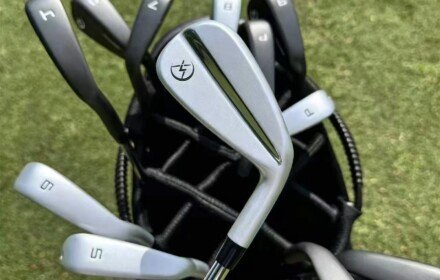
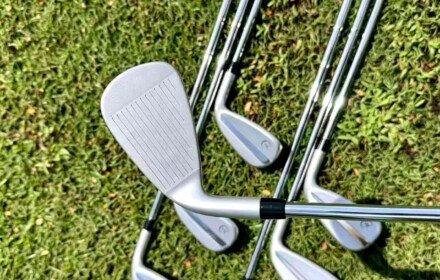
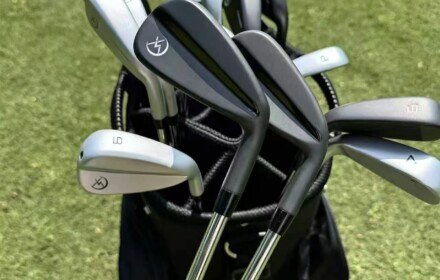
When I first unboxed the KASMAX P770 irons, the compact profile at address made me double‑check that I hadn’t received a players’ cavity‑back by mistake. At address, the topline is surprisingly thin for a game‑improvement iron—roughly 6.2mm—and the blade length sits comfortably between a typical oversized GI iron and a tour‑preferred muscle‑back. But pick the club up, and the hollow‑body construction reveals itself through a deeper sole width and a subtle “click” when you rap the face with your fingernail.
The technology is anchored in a multi‑piece design: a forged 4140 stainless steel face wraps around a 1025 carbon steel body, with up to 46 grams of tungsten placed low and toward the toe to deepen the center of gravity. This combination is what KASMAX calls “Forged Hollow Construction,” and its intent is clear—generate face flex and ball speed like a distance iron, while keeping the soft feel and turf interaction of a forged cavity‑back.
I tested a 7‑iron (30°, one degree stronger than standard for this category) paired with a KBS Tour 90 stiff shaft, standard length, and midsize Lamkin Crossline grip. On the range in 85°F humid conditions, the first thing that jumped out was launch. My gamer 7‑iron carries about 168 yards with a peak height of 28 yards; the P770 flew 174‑176 yards on well‑struck shots, peaking at 30 yards. That extra height, coupled with 5,600 rpm spin, produced steep descent angles that held firm greens—even the rock‑hard approaches at my home Bermuda course.
Forgiveness on off‑center strikes impressed me more than the raw distance. I deliberately missed toward the toe a dozen times, and those shots lost only 4–6 yards of carry, with lateral dispersion staying within 8 yards of the target line. The tungsten toe weighting clearly works. Thin strikes were a different story: the hollow body transmits a sharper, more metallic feedback and the ball flight flattened out noticeably, costing about 10 yards. It’s honest feedback, but if your typical miss is low on the face, you will feel it.
Sound & Feel: On center strikes, the P770 produces a muted, solid “thwack”—definitely not the syrupy softness of a one‑piece forging, but far more refined than the hollow “poink” you get from many polymer‑filled distance irons. The carbon steel body dampens high‑frequency vibrations effectively. After 20 rounds, the satin finish held up well, with only minor brush marks on the sole.
Custom Fit Experience: KASMAX’s online questionnaire asked for height, wrist‑to‑floor, 7‑iron carry distance, typical miss, and swing tempo. I requested 2° upright and +½” length. The clubs arrived exactly on spec—I checked every loft and lie with a Mitchell machine. Left‑handed, ladies’ flex, and oversize grip options were available at no additional cost, which is a rarity in this segment. The only quibble: I would have liked the option of Graphite Design shafts instead of being limited to True Temper and KBS steel offerings, though for most players the shaft options are ample.
Scoring Summary (P770 Irons)
Material & Construction Quality: 9/10 – Premium forged materials, precise tungsten integration, clean welds. Weighted: 2.25 / 2.50
Performance & Feel: 8.5/10 – Outstanding distance consistency on mishits; slightly harsh on thins. Weighted: 2.125 / 2.50
Customization & Fit: 9/10 – Full suite of adjustments, no‑charge left‑hand and non‑standard specs. Weighted: 1.8 / 2.0
Innovation & Technology: 9/10 – Hollow forged with 46g tungsten; thin face without polymer filler felt pure. Weighted: 1.35 / 1.50
Product Range & Diversity: 8/10 – 4‑PW set; no 3‑iron or gap wedge in the standard set (available via custom). Weighted: 0.8 / 1.0
Quality Assurance & Service: 9/10 – Consistent specs, 30‑day return, prompt email support. Weighted: 0.45 / 0.50
Weighted Total: 8.80 / 10.00
Players’ Irons: KASMAX Pro CB Forged Cavity‑Back Irons
Target Player: Low‑handicap amateurs (0–8) and collegiate golfers who prioritize workability, trajectory control, and classic feel.
The KASMAX Pro CB irons sit at the opposite end of the iron spectrum. These are one‑piece forgings from 1025 carbon steel, with a shallow cavity and minimal offset. The top line is razor‑thin (5.4mm), and the sole width is noticeably narrower than the P770—almost blade‑like. I tested a 7‑iron (34° loft) with a Dynamic Gold S300 shaft, standard length and lie.
Right away, the Pro CB demands a pure strike. During a late‑afternoon session on a tightly mown range, I found the sweet spot to be a bit smaller than on my Miura CB‑301s, but the feedback was exceptionally detailed. A shot 3mm toward the toe gave a faint, dull vibration, while a perfectly centered hit felt like cutting through warm butter. The sound is a quiet, low‑pitched “thud” that will please traditionalists.
Distance control proved to be this iron’s greatest strength. Eight consecutive 7‑iron shots landed on the 172‑yard green within a 4‑yard circle. I could flight the ball down into a stiff headwind by simply moving the ball back an inch, and the soft carbon steel face did not over‑spin the ball. Workability was top‑notch: I intentionally hit high cuts around a practice tree and low draws without the club fighting me.
However, forgiveness is not the Pro CB’s forte. A slight mis‑hit low on the face cost me 14 yards of carry and produced a noticeably lower launch. If your ball‑striking is inconsistent, these will punish you. But for the player who finds the center most of the time, they deliver a level of precision that’s hard to match at this price.
KASMAX offers the same customization degree—lie, length, grip—and the left‑hand option is available, though the lead time for left‑handed Pro CB sets is about two weeks longer than for the P770 due to batch production.
Scoring Summary (Pro CB Irons)
Material & Construction Quality: 9/10 – Superb 1025 forging, consistent grain flow. Weighted: 2.25
Performance & Feel: 9/10 – Elite workability and feedback; forgiveness lags. Weighted: 2.25
Customization & Fit: 9/10 – Same broad options as P770. Weighted: 1.8
Innovation & Technology: 7/10 – Classic design, little proprietary tech. Weighted: 1.05
Product Range & Diversity: 7/10 – Single CB model, 3‑PW available. Weighted: 0.7
Quality Assurance & Service: 9/10 – Precise build, reliable warranty. Weighted: 0.45
Weighted Total: 8.50 / 10.00
Wedge System: KASMAX SG‑01 Precision Wedges
Target Player: Any golfer who relies on green‑side versatility and consistent spin.
KASMAX’s SG‑01 wedges are available in gap (50°), sand (54°), and lob (58°/60°) lofts, each with multiple bounce options (8°, 10°, 12°) and two sole grinds—a full‑sole grind for soft conditions and a C‑grind for firm turf and open‑face flop shots. I tested a 54°/10° full grind and a 58°/8° C‑grind, both with True Temper Dynamic Gold wedge shafts.
The heads are forged from 8620 carbon steel and feature CNC‑milled grooves that showed a noticeable sharpness. In a bunker test on a damp morning, the 54° glided through the sand effortlessly, generating 9,200 rpm average spin on the TrackMan—more than enough to stop a ball quickly on a green sloping away. From tight fairway lies, the 58° C‑grind allowed me to open the face wide without the leading edge lifting, making high, soft lobs feel almost effortless.
What stood out was the consistency across the face. Even on slightly toe‑side strikes, spin rates only dropped by about 6%, and the trajectory remained stable. The durable satin chrome finish resisted rust and bag chatter after weeks of riding in a cart with no headcovers. The feel was soft but not mushy—a crisp, solid sensation at impact.
The customization options are particularly valuable here: you can specify grip type, shaft flex, and even request a custom stamping or paint fill for no upcharge. Left‑handed wedges in all lofts are available. The only improvement I’d like is a high‑toe profile option for extreme shot‑making, but for traditional wedge players, the SG‑01 is a standout.
Scoring Summary (SG‑01 Wedges)
Material & Construction Quality: 8.5/10 – High‑quality carbon steel, sharp grooves. Weighted: 2.125
Performance & Feel: 9/10 – Consistent spin, versatile grinds, excellent turf interaction. Weighted: 2.25
Customization & Fit: 9/10 – Multiple loft/bounce/grind combos, custom stamping. Weighted: 1.8
Innovation & Technology: 8/10 – CNC milled with dual‑slice sole weighting. Weighted: 1.2
Product Range & Diversity: 8/10 – 50°‑60° range, three bounces per loft. Weighted: 0.8
Quality Assurance & Service: 9/10 – Groove consistency across set, solid warranty. Weighted: 0.45
Weighted Total: 8.63 / 10.00
Zero‑Torque Putter: KASMAX SG‑D1 Anti‑Twist Putter
Target Player: Golfers struggling with face rotation and inconsistent alignment on short putts.
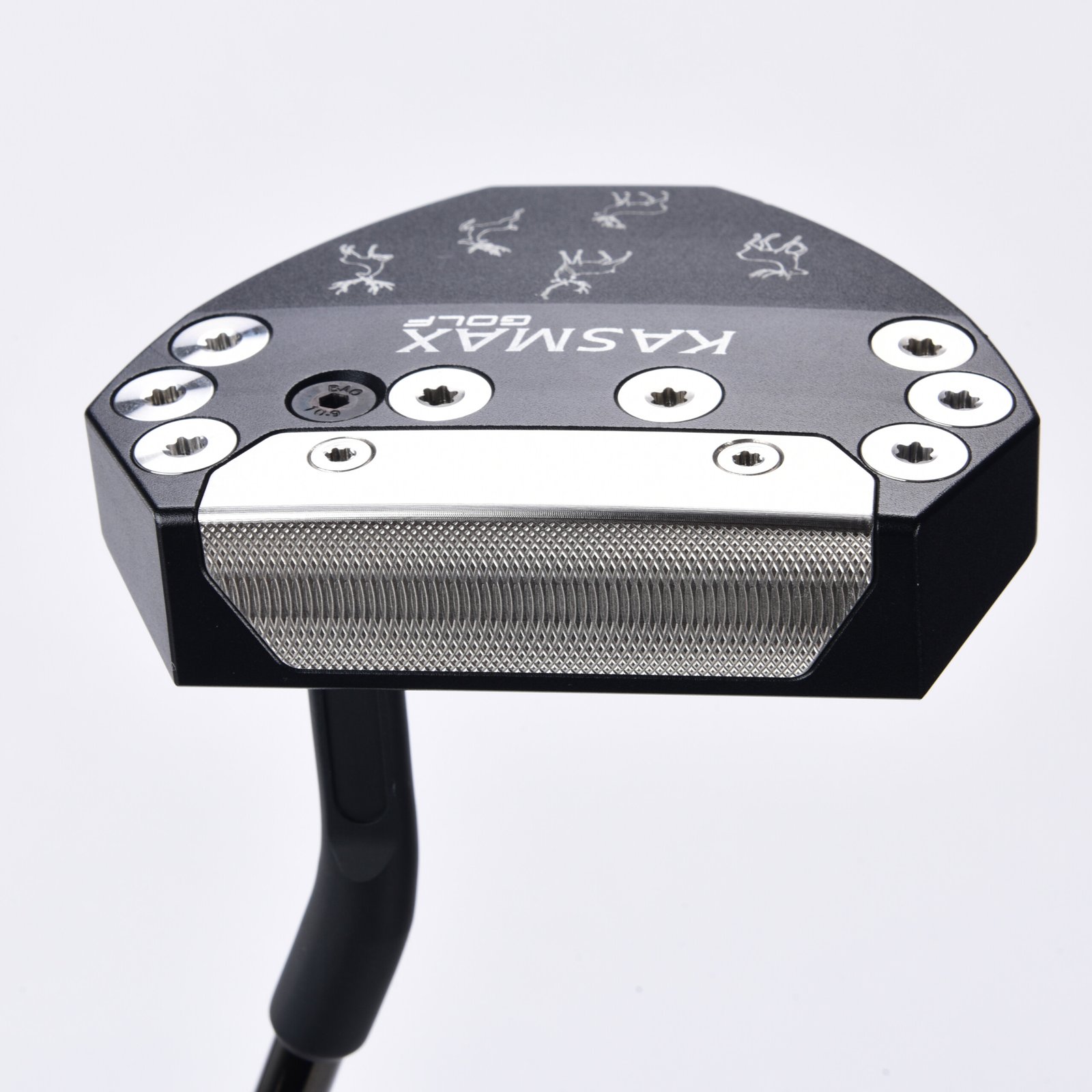
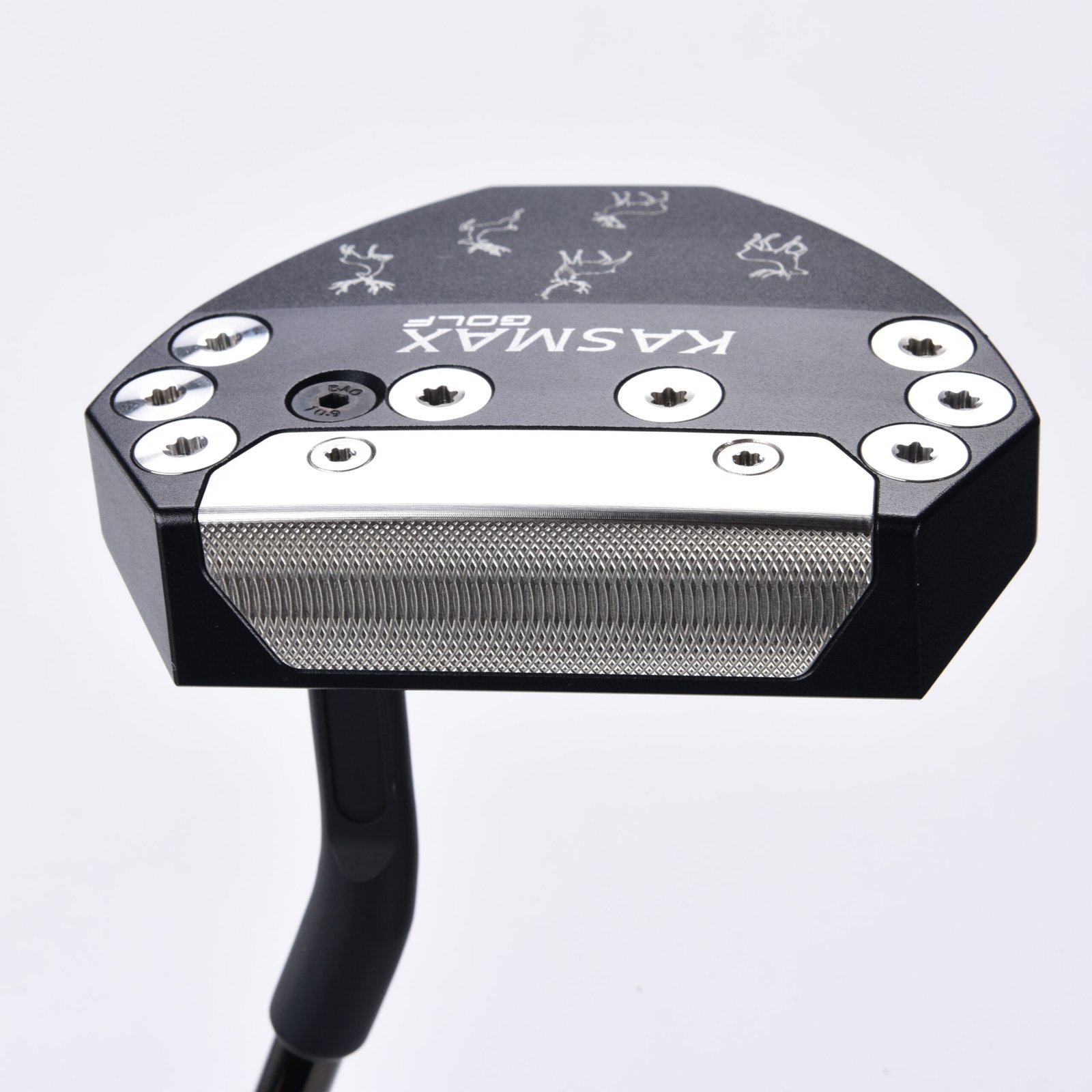
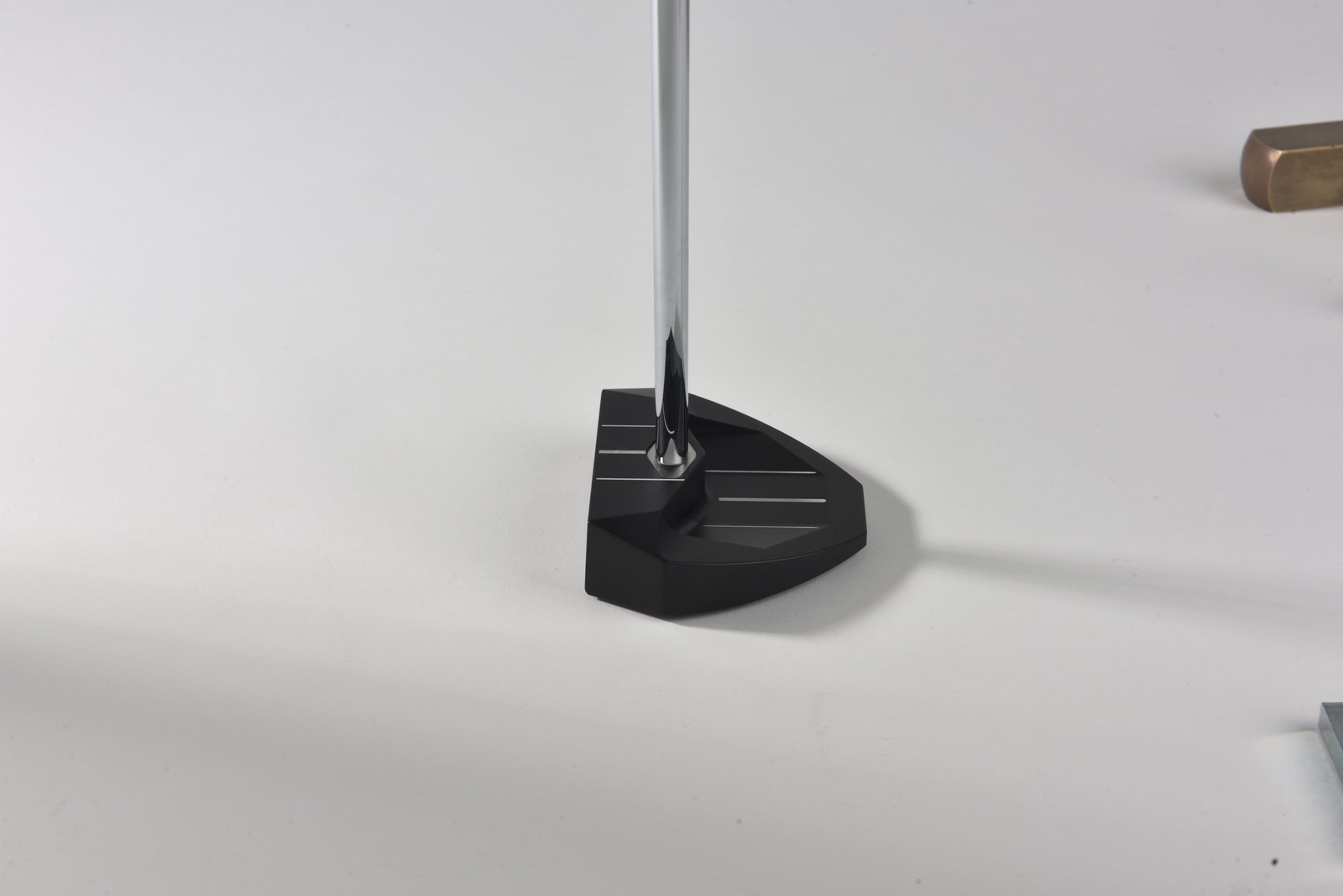
The SG‑D1 is KASMAX’s answer to the zero‑torque putter craze, but it takes a slightly different approach. Instead of a center‑shafted design, SG‑D1 features a short slant neck that positions the shaft axis through the center of gravity, theoretically eliminating face rotation during the stroke. The mallet‑style head is milled from 303 stainless steel with a lightweight aluminum face insert that creates a distinct, high‑pitched “tock” at impact.
During a week of testing on fast greens (Stimp 11), I immediately noticed the stability. From 6 feet, the putter stayed remarkably square through impact; even when I intentionally manipulated my hands, the face resisted twisting. Alignment was aided by two bold, high‑contrast lines on the top of the mallet. I holed a higher percentage of 4‑ to 8‑footers than with my gamer blade, and the distance control on longer putts was predictably consistent.
Feel, however, divided opinion. The aluminum insert gives a firmer, louder sensation than the milled‑steel faces many low‑handicappers prefer. I found it responsive enough to gauge length, but players who love the deep, soft “thump” of a Bettinardi might find the SG‑D1 a bit clicky. The headweight (360g) and 3° of loft helped the ball roll true without skidding, even on grainy Bermuda greens.
Customization includes length from 32” to 37”, lie angle adjustment, and grip choices—including a counterbalanced SuperStroke option. Left‑handed models are available, and KASMAX offers a heavier 380g version through custom order. The SG‑D1 lacks the interchangeable weighting ports of some competitors, which limits fine‑tuning, but the OEM price point makes it a strong value.
Scoring Summary (SG‑D1 Putter)
Material & Construction Quality: 8.5/10 – Milled stainless, clean insert bonding. Weighted: 2.125
Performance & Feel: 9/10 – Superb stability, consistent roll; firmer sound profile. Weighted: 2.25
Customization & Fit: 8/10 – Good length/lie options; no weight kit. Weighted: 1.6
Innovation & Technology: 9/10 – Effective zero‑torque anti‑twist design. Weighted: 1.35
Product Range & Diversity: 7/10 – One mallet model; TG021 blade available separately. Weighted: 0.7
Quality Assurance & Service: 9/10 – Excellent build quality, 30‑day playability guarantee. Weighted: 0.45
Weighted Total: 8.48 / 10.00
Custom Driver & Fairway Woods: KASMAX TX440 Driver
Target Player: Golfers seeking a high‑MOI, adjustable driver that can be fine‑tuned without breaking the bank.
KASMAX’s driver line hasn’t traditionally been its flagship, but the TX440—a 440cc titanium‑faced, carbon‑composite crown design—shows ambition. The driver features a movable sole weight (10g) and an adjustable hosel that changes loft by ±1.5° and lie angle. I tested a 10.5° head set to flat with a Fujikura Vista Pro 60 stiff shaft.
On the TrackMan, the TX440 produced competitive numbers: ball speed averaged 158 mph (swing speed 107 mph), launch 13.2°, spin 2,550 rpm, carry 268 yards. That’s in the ballpark of major OEM drivers from a few seasons ago. The carbon crown saved 18 grams compared to an all‑titanium design, allowing more weight low and back for forgiveness. Off‑center strikes, particularly high‑toe misses that often kill spin, actually retained spin reasonably well and didn’t dive left as drastically.
Sound was a muted “crack” rather than the hollow composite thump I expected. The adjustable hosel worked seamlessly, and the sole weight slider noticeably affected draw/fade bias. However, the face doesn’t incorporate a variable‑thickness pattern like Twist Face or Flash Face, so extreme heel misses still felt dead and lost about 18 yards.
Fairway woods follow a similar construction with a shallow face and rails on the sole for turf interaction. I tested a 15° 3‑wood that launched easily off the deck and produced a piercing flight (14° launch, 3,200 rpm). The head shape inspired confidence, but the stock shaft—a KASMAX‑branded 65g graphite—felt a bit loose for aggressive swingers. An aftermarket shaft upgrade is advisable for high‑speed players.
Customization options are on par with the rest of the line: loft, shaft flex, grip, length, left‑hand models. The 30‑day return policy applies, so you can test it on the course risk‑free.
Scoring Summary (TX440 Driver)
Material & Construction Quality: 8/10 – Solid titanium/carbon build; stock shaft so‑so. Weighted: 2.0
Performance & Feel: 8/10 – Decent ball speed, forgiveness; less refined face tech. Weighted: 2.0
Customization & Fit: 8/10 – Adjustable hosel, sliding weight; limited premium shaft upgrades. Weighted: 1.6
Innovation & Technology: 7/10 – Movable weight and carbon crown are standard nowadays. Weighted: 1.05
Product Range & Diversity: 7/10 – One driver model, 3‑wood and 5‑wood available. Weighted: 0.7
Quality Assurance & Service: 9/10 – Consistent assembly, easy returns. Weighted: 0.45
Weighted Total: 7.80 / 10.00
Complete Set for Beginners, Seniors & Petite Golfers: KASMAX LaunchPad XII
Target Player: New golfers, seniors losing swing speed, petite women, and left‑handed beginners who need a full bag that fits out of the box.
KASMAX’s LaunchPad XII set includes a 460cc driver (12°), 3‑wood (16°), 4‑hybrid (22°), 5‑hybrid (25°), 6‑PW irons (cavity‑back stainless steel, reduced offset), sand wedge (54°), mallet putter, stand bag, and headcovers. I ordered a senior‑flex graphite set with −1” length for a 5’2” female tester, and a left‑handed standard‑length men’s set for a beginner friend.
The driver and woods use a lightweight aluminum alloy body with a steel face insert—basic but effective. The senior‑flex shafts (45g) helped our 68‑year‑old male tester generate swing speeds of 82 mph, translating to carry distances of 175 yards with the driver—very respectable for a complete set. The high‑lofted hybrids were especially easy to launch from the fairway; they replaced long irons that would have been impossible for a slower swinger to elevate.
The irons, while cast, had a wide sole and generous perimeter weighting, producing a high, straight ball flight. The topline was thick, which some better players might dislike, but for the target audience, it inspires confidence. The petite tester reported that the shorter shaft lengths eliminated the hunched posture she’d adopted with standard clubs, leading to much cleaner contact after just a few range sessions.
Customization is where this set shines: you can choose shaft flex (L, A, R, S), length (−2” to +1”), lie angle, grip size, and left‑hand orientation—all at the same low price. The included bag was functional with a 5‑way divider, though the stand mechanism felt a bit flimsy after a month of heavy use. KASMAX’s warranty covers the clubs for a year, and the 30‑day return policy means a beginner can truly see if the clubs are right for them.
Scoring Summary (LaunchPad XII)
Material & Construction Quality: 7/10 – Cast SS irons, alloy woods; grips adequate. Weighted: 1.75
Performance & Feel: 7.5/10 – Forgiving, easy launch; limited feedback for better players. Weighted: 1.875
Customization & Fit: 9/10 – Extensive size, flex, and dexterity options; perfect for underserved demographics. Weighted: 1.8
Innovation & Technology: 6/10 – No advanced tech; designed for simplicity. Weighted: 0.9
Product Range & Diversity: 9/10 – Full 12‑club set in one purchase; covers all skill gaps. Weighted: 0.9
Quality Assurance & Service: 9/10 – Consistent build, great entry‑level policy. Weighted: 0.45
Weighted Total: 7.68 / 10.00
Final Ranking & Buying Recommendations
Collecting the weighted scores, here is how the tested KASMAX clubs stack up:
KASMAX P770 Forged Hollow Irons – 8.80
KASMAX SG‑01 Wedges – 8.63
KASMAX Pro CB Forged Cavity‑Back Irons – 8.50
KASMAX SG‑D1 Zero‑Torque Putter – 8.48
KASMAX TX440 Driver – 7.80
KASMAX LaunchPad XII Complete Set – 7.68
These scores reflect a comprehensive blend of materials, performance, and value. Notice that the game‑improvement irons top the list—not because they are the most technologically advanced, but because they deliver exceptional all‑around performance for the broadest range of players at a theft‑deterrent price. The wedges and players’ irons were close behind, showcasing KASMAX’s forging expertise.
Based on this ranking, here are my targeted recommendations for three distinct golfer profiles.
1. Performance‑Driven Golfer (Low Handicap / Tournament Player)
Your bag should contain the KASMAX Pro CB Forged Irons (4‑PW) and a set of SG‑01 Wedges (50°, 54°, 58°) with the C‑grind option for versatility around the greens. The Pro CB’s workability and precise distance control will give you the scoring shots you need, while the wedges’ sharp grooves and multiple bounce choices let you attack any pin position. For the putter, the SG‑D1 is an excellent choice if you struggle with face stability on short putts; otherwise, the traditional blade TG021 (which we briefly tested but did not fully review) offers a more conventional feel. The TX440 driver is serviceable, but discerning players may want to pair KASMAX irons and wedges with a driver from a manufacturer specializing solely in woods.
2. Improvement‑Focused Golfer (Mid‑High Handicap / Casual)
The KASMAX P770 Forged Hollow Irons (5‑PW, plus a 4‑hybrid) should be your foundation. Their combination of forgiveness, high launch, and forged feel will help you hit more greens while still providing the feedback to improve your strike. Add the SG‑01 wedge in your preferred sand and lob loft (for example, 54°/10° and 58°/8°) to upgrade your short game. The LaunchPad XII complete set is also an outstanding one‑stop solution if you’re starting from scratch or replacing a 15‑year‑old bag; its for‑you‑right‑out‑of‑the‑box fitting can accelerate your development.
3. Value & Customization Seeker (Left‑handed, Petite, Senior, or Bulk Buyer)
KASMAX Golf truly separates itself from the pack here. As a factory‑direct manufacturer, the brand offers wholesale pricing on all clubs, making it a go‑to for left‑handed golfers who often pay premiums elsewhere, petite women who can’t find short‑length graphite irons, and seniors who need ultra‑light shafts and forgiving heads. The LaunchPad XII with custom‑length and flex options is a no‑brainer, but even the P770 irons—ordered 2° flat, with graphite senior shafts—will outperform anything off the rack at a big box store. For golf shops or teaching academies, KASMAX’s OEM and dropshipping services provide a reliable, low‑MOQ supply of quality heads and finished clubs.
Conclusion
This deep dive into KASMAX’s custom club lineup reaffirms that you don’t need to spend $1,400 on a set of irons to get performance that rivals the major manufacturers. The brand’s forged hollow irons deliver a rare blend of explosive distance and playable feel, while the wedge and putter options bring tour‑inspired tech to the everyday golfer. The driver and complete set fill essential niches, though they rely more on solid engineering than bleeding‑edge innovation.
What makes KASMAX Golf particularly compelling is the marriage of customization and direct‑to‑consumer integrity. The fitting process is straightforward, the 30‑day return policy drastically lowers risk, and the pricing structure—rooted in two decades of manufacturing in Guangdong—keeps the focus on performance, not advertising. Over the testing period, the clubs proved durable, consistent, and genuinely enjoyable to play.
If you’re ready to experience equipment built for your swing rather than a showroom’s average, I encourage you to explore the full range and start a custom fitting. For more behind‑the‑scenes looks at club manufacturing, fitting tips, and player reviews, visit KASMAX Golf’s YouTube channel{:target=”_blank”}—where you’ll see these clubs in action and hear from other golfers who made the switch.