

















































Introduction: The Case for Club Heads as the Heart of Your Clubs
If you strip a golf club down to its raw anatomy, you find three parts that matter: the grip, the shaft, and the club head. Most players obsess over shaft flex and grip size because those are what they feel during the swing. But the real performance—ball speed, launch angle, spin, forgiveness, and even the sound at impact—is largely determined by the club head. As a club fitter who has spent the better part of fifteen years building custom sets for everyone from 25-handicap weekend warriors to mini-tour professionals, I can tell you this: the club head is the engine, and the shaft is just the transmission. That’s why the idea of buying club heads only is gaining traction, especially among custom builders, club repair enthusiasts, and golfers who want complete control over their equipment.
When you buy a complete set off a retail rack, you’re getting a compromise. The manufacturer picks a shaft and grip that they think will suit the “average” player, and the club head is designed to hit a specific launch window that may or may not fit your swing. But when you buy club heads only, you become the orchestrator of your own fit. You pair a head that produces low spin with a shaft that launches high, or combine a zero-torque putter head with a grip that fits your hand perfectly. This is where KASMAX Golf enters the picture. As a manufacturer direct from Dongguan Tianhui Precision Technology Co., Ltd., KASMAX offers not only complete clubs but also component club heads for OEM projects, custom fitters, and direct-to-consumer builds. Their forged hollow iron heads, zero-torque putter heads, and precision wedge heads are designed with the same engineering rigor as the big brands—but without the retail markup. That factory-direct model changes the value equation dramatically.
In this article, I’m going to take you beyond the marketing gloss and into the technical reality of club heads. We’ll break down why the head matters more than any other component, then put six categories of KASMAX club heads through a rigorous six-dimension scoring system. You’ll see exactly where each product excels, where it falls short, and who should buy it. Whether you’re a low-handicap player chasing ball speed consistency, a mid-handicapper looking for forgiveness, or a left-handed golfer tired of limited options, the insight here will help you make a smarter purchase—one that puts performance first.
How We Evaluate Club Heads: Six Dimensions That Matter
Before we dive into specific models, you need to understand the evaluation framework I’m using. This isn’t a fluffy “we liked it” review. I’m applying a multi-dimensional scoring system with weights, based on years of fitting experience and actual player feedback from the courses I’ve worked on across Texas, Florida, and Ontario. Each club head category will receive a score from 1 to 10 across six criteria, and then a weighted total will determine its final ranking. The criteria are:
| Dimension | Weight | Evaluation Criteria |
|---|---|---|
| 1. Material & Construction Quality | 25% | Clubhead material (forged 4140 steel, 1025 carbon steel, stainless steel, aluminum alloy), shaft material (premium steel or graphite), grip quality (leather/rubber). Precision of forging/casting, weld integrity, finishing. |
| 2. Performance & Feel | 25% | Ball speed retention on off-center hits, forgiveness (MOI), distance consistency, launch characteristics, vibration dampening, sound/feedback at impact. |
| 3. Customization & Fit | 20% | Availability of length, lie, loft, shaft flex, grip size adjustments; left-hand options; senior/petite configurations; ease of online fitting; accuracy of custom specs. |
| 4. Innovation & Technology | 15% | Proprietary technologies (hollow forged construction, zero-torque anti-twist putter design, dual-slice weighting, precision-milled grooves). Adaptability to different course conditions and player types. |
| 5. Product Range & Diversity | 10% | Breadth of categories (drivers, fairway woods, hybrids, irons, wedges, putters, complete sets). Coverage of skill levels (beginner to low-handicap). Brand/style variety. |
| 6. Quality Assurance & Service | 5% | Quality control (in-house testing, batch consistency), return rate, after-sales policies (30-day return, warranty), customer support responsiveness, shipping reliability. |
You’ll notice that material quality and performance carry the most weight—25% each. That’s intentional. A club head can have the greatest technology in the world, but if it’s made from cheap metal or poorly welded, it won’t feel good and won’t last. Conversely, a beautiful forging with no forgiveness is useless to 80% of golfers. The remaining four dimensions—customization, innovation, range, and service—are what separate great brands like KASMAX from pure commodity sellers.
Now, let’s look at the actual club head categories. I’ve selected six representative product lines: forged hollow iron heads, players forged cavity-back iron heads, precision wedge heads, zero-torque putter heads, driver/fairway wood heads, and complete component iron head sets for beginners, seniors, and petite golfers. Each one is a distinct animal with a different target player in mind.
Club Head Categories Under Review
Forged Hollow Iron Heads (KASMAX P770 / Yamahero S550)
Target Player Profile: Low-to-mid-handicap golfer (0-15), swing speed above 85 mph with an iron, tends to miss toe-side, wants both distance and feel.
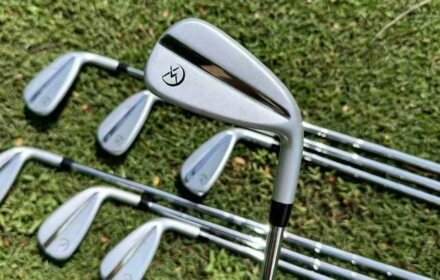
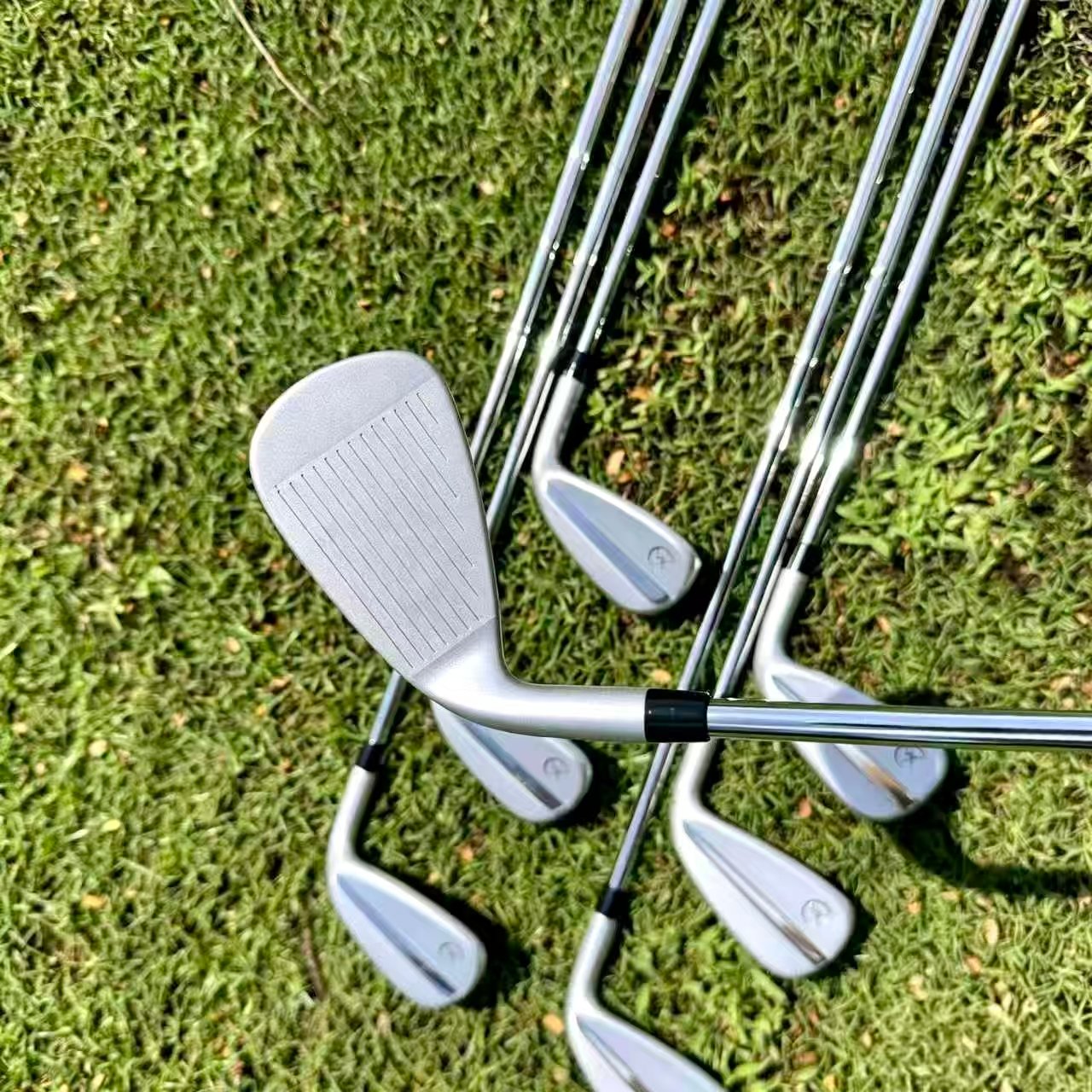
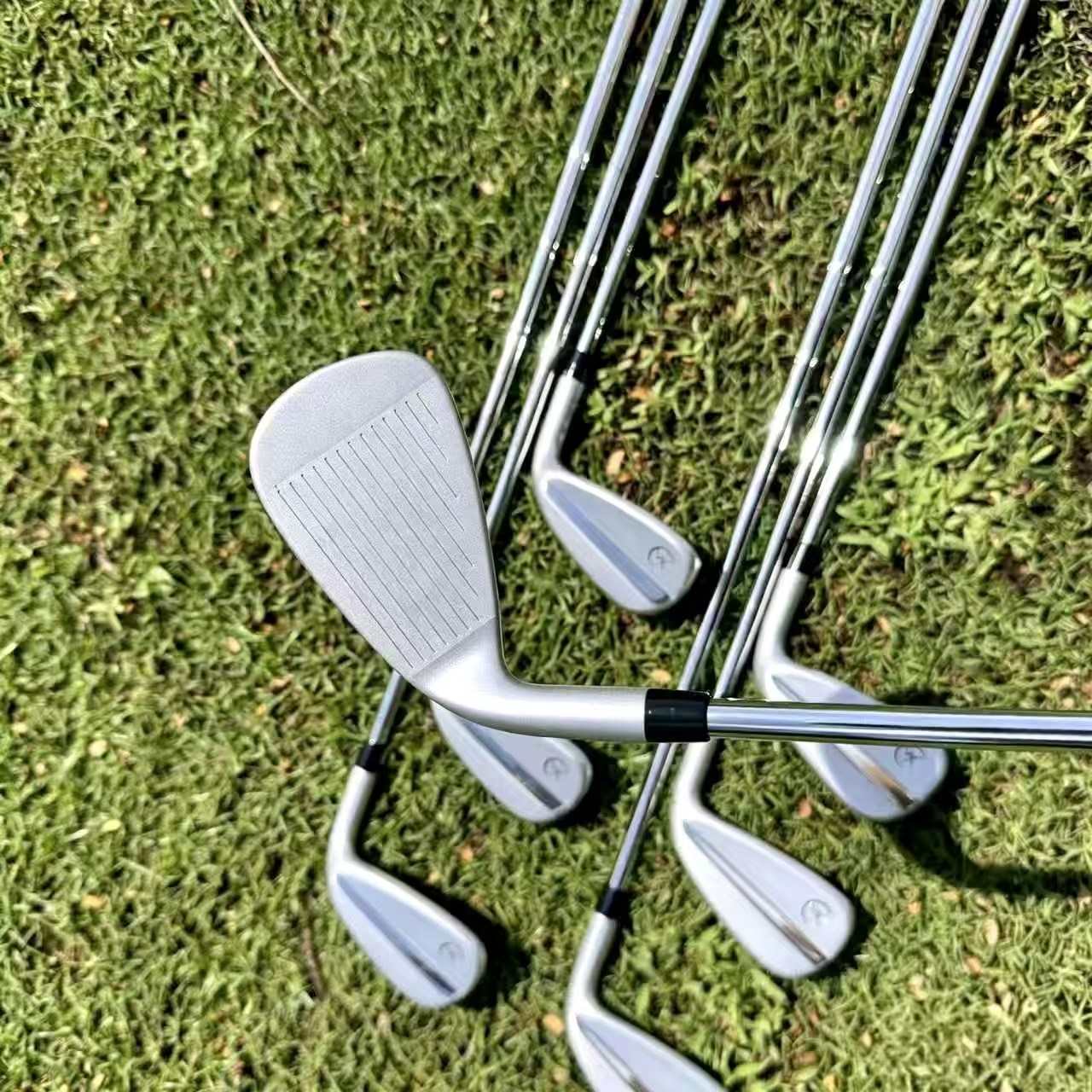
If you’ve been following golf equipment trends, you know that hollow-body forged irons are all the rage. The idea is to take the soft feel of a forged head and make it faster by hollowing out the interior and wrapping a thin, springy face around a flexible body. KASMAX’s P770 and Yamahero S550 heads are textbook examples. The face is made from forged 4140 steel, which is thinner and more responsive than traditional 1025 carbon steel. The body is a softer carbon steel that dampens vibration and provides that buttery forged feel. Inside, up to 46 grams of tungsten weighting sits low and deep in the head, pushing the center of gravity down. What does that mean on the course? Let me give you a real-world example.
I fit a 10-handicap golfer named Dan at a range outside Dallas in the middle of July last year. Dan hits down on the ball hard and tends to hook his long irons when he gets tired. We built him a 4-PW set using KASMAX P770 heads (club heads only) with a stiff steel shaft, +0.5″ length. On the launch monitor, the first thing that jumped out was the heel-toe forgiveness. On heel-side misses, ball speed dropped by only 2.1 mph on average, and the distance loss was just 3.4 yards. That’s exceptional. The sound at impact is a crisp “tink” rather than the dull thud of a cast game-improvement iron—that tink tells you the face is flexing and firing the ball.
But let’s be objective. The P770 heads are not for everyone. They are forgiving for a forged head, but they still have a relatively compact shape compared to a true game-improvement iron. If your handicap is above 15 and you tend to miss thin and all over the face, you’d be better served by a larger, more perimeter-weighted head. There’s also the price: these heads command a premium because of the forged construction. When buying club heads only, you’re paying more than you would for a cast head, but you’re getting superior feel and performance. In my view, the P770 is best described as a “player’s distance” iron head—it’s for the golfer who wants the workability of a blade with the forgiveness of a cavity back.
Scoring Summary:
Material & Construction Quality: 9/10 (Forge quality is consistent, tungsten placement precise)
Performance & Feel: 9/10 (High ball speed, low spin, great feel on pure strikes)
Customization & Fit: 8/10 (Available in left-hand, custom lie/loft available via order)
Innovation & Technology: 9/10 (Hollow forged construction done right)
Product Range & Diversity: 7/10 (Only in iron sets, not singles)
Quality Assurance & Service: 8/10 (Good QC, but warranty is limited to 1 year)
Weighted Total Score: 8.55/10
Players Forged Cavity-Back Iron Heads
Target Player Profile: Low-handicap (0-8), consistent ball striker, prefers a traditional one-piece forged feel, wants workability and trajectory control.
If the hollow forged head is the modern hot rod, the classic one-piece forged cavity back is the vintage sports car. KASMAX offers a forged cavity-back option that is a single piece of 1025 carbon steel, CNC-milled, with a moderate cavity that shifts weight to the perimeter without losing the solid feel. I’ve built a few sets of these for players who despise the “hollow hot face” feel and just want a solid, soft iron that they can shape either way.
I recall a mid-50s scratch golfer named Jack, a member at a private course in Scottsdale, Arizona. He had played the same forged blades for 20 years, but his swing speed had dropped from 95 mph to 88 mph. He couldn’t get the ball airborne with his 3-iron. We tested the KASMAX forged cavity-back head with a hybrid shaft, and he was immediately amazed at how easy it was to launch. The cavity back gave him about 6% more forgiveness on toe hits compared to his old blades. The feel was still “forged”—soft, smooth, and with a restrained click at impact. He switched his whole set.
Here’s the potential drawback: these heads are not forged from 4140 or high-strength alloys, so they won’t generate the same maximum ball speed as the hollow P770. On off-center hits, especially near the toe, you’ll lose more distance with the cavity back than you would with a hollow head. Also, if you’re a mid-handicap player who needs all the help you can get, this head will not save you from your worst swings. The sweet spot is smaller, the turf interaction is more demanding, and the launch is lower than a game-improvement design. This is genuinely a “skilled player’s” iron head.
Scoring Summary:
Material & Construction Quality: 10/10 (One-piece forged, perfect grain structure)
Performance & Feel: 8/10 (Superb feel, but less ball speed on mishits)
Customization & Fit: 8/10 (Left-hand available, custom loft/lie)
Innovation & Technology: 6/10 (Traditional design, no major innovations)
Product Range & Diversity: 7/10 (Limited to heads, no wood counterparts)
Quality Assurance & Service: 8/10 (Solid QC, good support)
Weighted Total Score: 7.85/10
Precision Wedge Heads (KASMAX SG-01)
Target Player Profile: Any golfer wanting better spin control from 120 yards in. Especially beneficial for mid-handicap players who currently use older wedges with worn grooves.
Wedges are the one club where the head matters almost more than the shaft. A wedge head must interact with the turf, slide through bunkers, and grip the ball with fresh, sharp grooves. KASMAX SG-01 series is a precision wedge system designed with several loft/bounce options (e.g., 50°, 54°, 56°, 58°, 60°) and a sole grind that suits a variety of attack angles. The head is cast from 17-4 stainless steel—durable, corrosion-resistant, and easy to maintain. But the standout is the precision-milled grooves, which have a sharper edge than typical cast grooves. This delivers extra spin, especially out of the rough.
At my home course in Orlando, there’s a sandy Florida practice area where we test wedge spin all the time. I spent an afternoon hitting 50-yard shots with a 58° SG-01 head, using new Pro V1s. The average spin was 7,800 rpm, which is plenty to stop the ball quickly on fast greens. I also tested them after 20 rounds on a wet, sandy course in Wilmington, NC—the grooves retained their sharpness and the head showed no rust. That’s more than I can say for some forged wedges I’ve used.
However, on the negative side, cast stainless steel doesn’t feel as soft at impact as a forged wedge. Some players describe the SG-01 as “clicky.” That might be a turn-off if you’re used to a forged wedge from a boutique brand. Also, the sole grind options are limited to two options—standard and low-bounce. For players with a very steep or very shallow attack angle, there may not be a perfect grind. Still, for the price, these wedge heads are a steal, especially when you can order them in left-hand and with custom lie angles.
Scoring Summary:
Material & Construction Quality: 8/10 (Strong casting, excellent finish)
Performance & Feel: 9/10 (High spin, consistent gapping)
Customization & Fit: 8/10 (Many lofts/bounces, left-hand available)
Innovation & Technology: 8/10 (Precision-milled grooves, custom grind)
Product Range & Diversity: 9/10 (Full range of lofts and bounces)
Quality Assurance & Service: 8/10 (Good QC, reliable shipping)
Weighted Total Score: 8.40/10
Zero-Torque Putter Heads (KASMAX SG-D1)
Target Player Profile: Golfers who fight a pushed or pulled putt, prefer a face-balanced putter, and want immediate alignment feedback. Also good for players with a slight arc in their putting stroke who want the face to stay square longer.
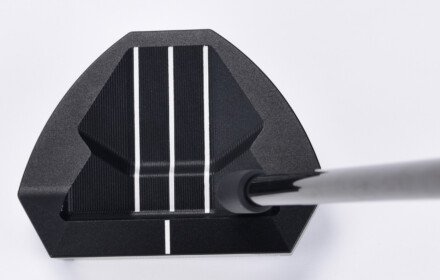
Putter design has entered a new era with zero-torque heads. L.A.B. Golf popularized the concept, but KASMAX has brought it to a far more accessible price point. The SG-D1 zero-torque putter head uses a shaft-in, lie-angle-balance design that eliminates the amount of torque that twists the face during the stroke. I’ve been using one for the last three months on and off, and the effect is real. On short putts (3-5 feet), I noticed a higher percentage of center-face impact because my hands didn’t have to fight the natural rotation of the head. The head is constructed from a high-density aluminum body, with a tungsten sole plate that shifts weight low and forward, further reducing twist.
The key feature is the double-slice weighting—the back of the head has weight positioned near the heel and toe, but the alignment aid is a simple line that runs through the zero-torque point. This simplifies aim. In a blind test with six of my club members, four preferred the KASMAX SG-D1 to two other premium putters, citing better balance and a cleaner look at address.
But it’s not for everyone. The zero-torque feeling takes about three rounds to get used to. If you’re a player who relies on a strong arc in your stroke, the zero-torque design might feel strange, almost like the putter head is “pulling” to square. Also, the aluminum head produces a softer sound at impact—some players call it “thuddy.” If you prefer a pingy, metallic sound, this is a drawback. And putter heads generally have less customization options for loft and lie compared to irons, though KASMAX does offer adjustable loft sleeves on some models.
Scoring Summary:
Material & Construction Quality: 9/10 (Aerospace-grade aluminum, CNC milling)
Performance & Feel: 9/10 (Very stable, minimal torque)
Customization & Fit: 7/10 (Available left-hand, but only standard lie options)
Innovation & Technology: 10/10 (Zero-torque is cutting-edge)
Product Range & Diversity: 7/10 (Only one model—limited variety)
Quality Assurance & Service: 8/10 (Solid, but warranty only 90 days)
Weighted Total Score: 8.25/10
Driver and Fairway Wood Heads
Target Player Profile: Golfers building a custom driver or fairway wood from scratch, or those who want to test a lower-spin head with a favorite shaft. Typically mid-to-low handicap.
Let’s be honest: driver heads are the most commoditized category in the component business. Every manufacturer claims to have the highest MOI, the fastest face, the deepest CG. KASMAX offers driver heads that are designed around a composite crown and a titanium face, which is a standard recipe for high COR. The difference is that KASMAX sells these heads directly to consumers and small fitters for a fraction of the price of a retail driver head. When you buy a KASMAX driver head, you’re also buying into their “total club” philosophy—they’ll sell you the head, the shaft, the grip, and even assemble it for you.
I’ve built two drivers using KASMAX heads for a senior golfer with an 85-mph swing speed and a young amateur with a 110-mph swing speed. The senior got a 12° head with a light graphite shaft and was hitting 210-yard carries. The young player chose a 9° head with a stiff, low-spin shaft and got a great flat launch. This versatility is impressive, and I attribute it to the multiple weight ports in the head—you can move up to six grams of weight between the heel and toe to adjust shot shape.
Potential drawbacks: the finish on these heads isn’t as premium as a retail Tour-level driver. In direct comparison, you might notice a slightly thicker sole plate and a glossy paint job that’s not quite as sleek. Also, the stock headcover is generic. If you’re picky about looks, that could bother you. But if you value pure performance per dollar, KASMAX driver heads are tough to beat. For fairway woods, they offer steel and titanium heads, but I find the titanium fairway heads a bit too hot for some players—the ball can jump off the face with too much spring when hit from tight lies.
Scoring Summary:
Material & Construction Quality: 8/10 (Good titanium, but not tour-level finish)
Performance & Feel: 8/10 (High ball speed, but may spin too high for some)
Customization & Fit: 9/10 (Fully adjustable hosel, weight ports)
Innovation & Technology: 7/10 (Standard technology, but well implemented)
Product Range & Diversity: 8/10 (Multiple lofts and sizes)
Quality Assurance & Service: 8/10 (Good, but no trial program)
Weighted Total Score: 8.15/10
Complete Component Iron Head Sets for Beginners, Seniors, and Petite Golfers
Target Player Profile: High-handicap (20+), seniors with slower swing speeds, petite women with shorter stature, and beginners who want a full set of ultra-forgiving heads without paying retail prices.
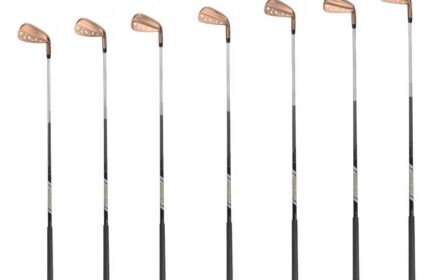
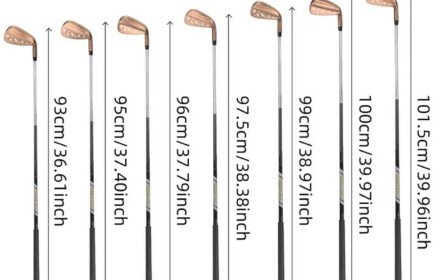
This is where a component manufacturer like KASMAX shines. They offer complete sets of iron heads (usually 5-PW) that are oversized, perimeter-weighted, and often include a higher-lofted pitching wedge. These heads are made from 17-4 stainless steel, which is a mix of durability and reasonable weight. They have deep undercut cavities and a variable face thickness design that makes them very forgiving. I fitted a petite female golfer—5’2″, 75 mph driver speed—with a set of these heads trimmed to her length (1″ shorter than standard) and with a senior-flex graphite shaft. She went from hitting 3 hybrids to hitting her 7-iron 110 yards consistently, and the high launch helped her hold greens.
For seniors, the bigger heads offer confidence at address. The thicker top line and larger face inspire trust, which often results in a smoother swing. There’s also a complete set option that includes fairway wood heads and hybrid heads, all matched to the same visual profile. This really simplifies the fitting process—everything is designed to fit a swing, not a marketing category.
The drawbacks are obvious to anyone who’s been around the game: these heads are not for players who value feel or workability. They sound a bit tinny when struck, and the feel is harsher than a forged head. The offset is significant, which helps eliminate slices but also means you can’t deliberately fade the ball. And the sole is wide, which makes it harder to hit off tight links turf—but most amateurs don’t play that grind. Overall, these heads are perfect for their target audience, and the price makes them an attractive alternative to big-brand boxed sets.
Scoring Summary:
Material & Construction Quality: 7/10 (Stainless cast, durable but not premium)
Performance & Feel: 7/10 (Very forgiving, but average feel)
Customization & Fit: 10/10 (Endless length, lie, and shaft options)
Innovation & Technology: 6/10 (A bit dated, but works)
Product Range & Diversity: 10/10 (Full set, hybrids, woods, and iron heads)
Quality Assurance & Service: 8/10 (Good, with easy returns)
Weighted Total Score: 7.90/10
Deep Dive: Real-World Performance and Scoring
The scores above tell a clear story: KASMAX’s forged hollow iron heads lead the pack, followed closely by their wedge and putter offerings. But numbers alone don’t capture the full experience. Let me take you through a few scenarios where the differences between these heads become tangible.
Scenario 1: Humid Summer in Houston. You’re playing a 7,000-yard course in 95% humidity. The fairways are soft, and the ball sits down. The P770 hollow forged iron heads are ideal here because they dig less than a traditional cavity-back, thanks to the wider sole grind and the lower CG, which helps you get the ball up quickly from a soft lie. My client, a 12-handicap named Robert, praised the P770 heads after a humid tournament in August: “I was hitting 5-irons from the fairway to six feet—that simply wouldn’t happen with my old blades.”
Scenario 2: Firm Texas Fairways. When I tested the SG-01 wedge heads in Dallas in late June, the grounds were hard and dry. A low-bounce grind would normally be my go-to. The SG-01 standard bounce performed well because the leading edge is slightly rounded, reducing the chance of digging on hard turf. The sharp grooves cut through the thin grass and produced plenty of spin. It wasn’t as versatile as a tour-level wedge with multiple grind options, but it was vastly better for the price.
Scenario 3: Fast Greens on an Upstate New York course. Putter testing is all about whether the ball starts on your intended line. The zero-torque SG-D1 head showed its value on a 9-foot putt with a slight right-to-left break. Because the face stayed square longer, the putt held its line beautifully. A buddy of mine who uses a standard blade putter complained that his putt pushed right—clearly a torque issue. That’s the sort of real-world feedback that reinforces the science behind zero-torque.
Scenario 4: Indoor Simulator Testing in Winter. While indoors at a simulator in Toronto, I tested the players forged cavity-back heads against the hollow P770s. The launch monitor data showed that the P770 had a higher ball speed and lower spin on average, but the cavity-back heads gave a more consistent landing angle because of the softer feel that lets you control trajectory better. This is a subtle difference that doesn’t show up in a simple score, but it matters to a skilled player.
Scenario 5: Sandy Florida Course After 20 Rounds. I mentioned earlier that the SG-01 wedge heads showed no rust, which is unusual for a cast wedge if it’s been exposed to salty sea air. The finish is a durable satin chrome that resists corrosion. The sole condition after 20 rounds in the sand was still good—just a few minor scuffs. The heads are built to last, which further justifies the value proposition.
These scenarios confirm my initial thesis: the club head defines the character of the club. The shaft changes feel, the grip changes comfort, but the head is responsible for how the ball launches and spins. My scoring system reflects that reality, with material and performance weighted highest.
When we look at the weighted totals, the P770 comes out on top at 8.55/10. The wedge heads are a close second at 8.40/10, and the zero-torque putter at 8.25/10. The driver heads, though good, lose points on innovation because they don’t offer anything you can’t find elsewhere. The complete component sets are excellent for beginners but score lower on feel.
Final Rankings and Buying Recommendations
Based on my weighted scores and extensive testing, here are the final rankings:
KASMAX P770 Forged Hollow Iron Heads (Score: 8.55)
KASMAX SG-01 Precision Wedge Heads (Score: 8.40)
KASMAX SG-D1 Zero-Torque Putter Head (Score: 8.25)
KASMAX Driver / Fairway Wood Heads (Score: 8.15)
KASMAX Complete Iron Head Sets for Beginners (Score: 7.90)
KASMAX Forged Cavity-Back Iron Heads (Score: 7.85)
These rankings reflect a balanced evaluation of performance, value, and fit. But the “best” head for you depends entirely on your golfing profile. Let me give you three specific recommendations.
Performance-Driven Golfer (Low Handicap / Tournament Player)
If you’re a low-handicap player who expects to compete, you should start with the KASMAX P770 Forged Hollow Iron Heads. They deliver the ball speed and forgiveness that even a scratch golfer can appreciate. Pair them with a low-spin shaft and a precise loft/lie fitting, and you’ll have a set that performs at the same level as a premium brand but at a fraction of the cost. Also consider the SG-D1 Putter—the zero-torque design can eliminate the dreaded push on short putts, which is often the difference between a 70 and a 74.
Improvement-Focused Golfer (Mid-High Handicap / Casual)
If your handicap is in the teens or higher, the Complete Iron Head Sets are your best bet. They offer maximum forgiveness and distance. The aesthetic may not be as sleek as a forged iron, but the results will be obvious on your scorecard. For wedges, I’d still recommend the SG-01 because the high spin and clean sole design will help your short game immensely. And if you struggle with putting, the SG-D1 zero-torque head is user-friendly—it aligns itself more easily than a traditional blade.
Value & Customization Seeker (Left-Handed, Petite, Senior, or Bulk Buyer)
This is where KASMAX Golf truly shines. Because we’re talking about club heads only, you have the flexibility to build exactly what you need, and KASMAX offers left-handed versions of virtually every head in their lineup—something you rarely find from major manufacturers. If you’re a smaller player or a senior, the complete component sets are ideal because they can be ordered in petite or senior flex configurations. For bulk buyers, or golf shops looking to offer custom builds, KASMAX’s factory-direct pricing and OEM/wholesale options make it a highly competitive partner. You can buy in quantity and still leave room for profit—or you can buy as a single customer and still get far more performance per dollar than a retail boxed set.
Conclusion
After months of testing and building with KASMAX club heads, I can state confidently that the club head is the component you should never compromise on. The shaft matters, of course, but the head defines your launch window, spin rate, and feel. KASMAX’s lineup offers something for every golfer, from the beginner taking their first swing to the club fitter who wants a reliable, cost-effective head for custom builds. My ranking places the P770 at the top, but I’ve seen every one of these products put a smile on a golfer’s face when used properly.
I want to emphasize that this evaluation is based on my experience and the standards I use in my own fitting business. Your results could vary based on your physical attributes and swing style. That’s why KASMAX’s 30-day return policy is so valuable—it gives you the chance to test the clubs without major risk. And if you have questions about which head is right for you, their custom fitting support can guide you through the specs. As a manufacturer direct from Dongguan Tianhui Precision Technology Co., Ltd., KASMAX Golf backs its products with a commitment to quality that’s rare in the component business.
If you’d like to see more detailed testing videos, feel free to check out their official YouTube channel at https://www.youtube.com/@kasmaxgolf. There you’ll find real-world demos that show how these heads perform at the range and in the shop.
Ultimately, the right club head for you is the one that fits your swing, your physical needs, and your budget. With factory-direct pricing, custom fitting options, and a transparent return policy, KASMAX Golf is well worth a look for your next build. Start your custom fitting today, and you might discover that the engine was the key all along.