




















































Premium Pre-Packaged Junior Set – Ping Prodi G Junior Set.
Budget-Friendly Beginner Set – US Kids Golf UL7/UL9 Series.
Single-Length / Custom Engineered Set – Wishon Golf Junior Series (custom shop).
Each category serves a different player profile and budget, but only one offers full manufacturer-direct control over every specification.
Multi-Dimensional In-Depth Review
1. KASMAX Junior Forged Irons (Custom Configuration)
Target Player Profile: Juniors aged 10–16 (approximate height range 4’10″–5’8″) with established fundamentals, ready for equipment that delivers genuine feedback and workability without sacrificing forgiveness.
Key Design Features & Technology
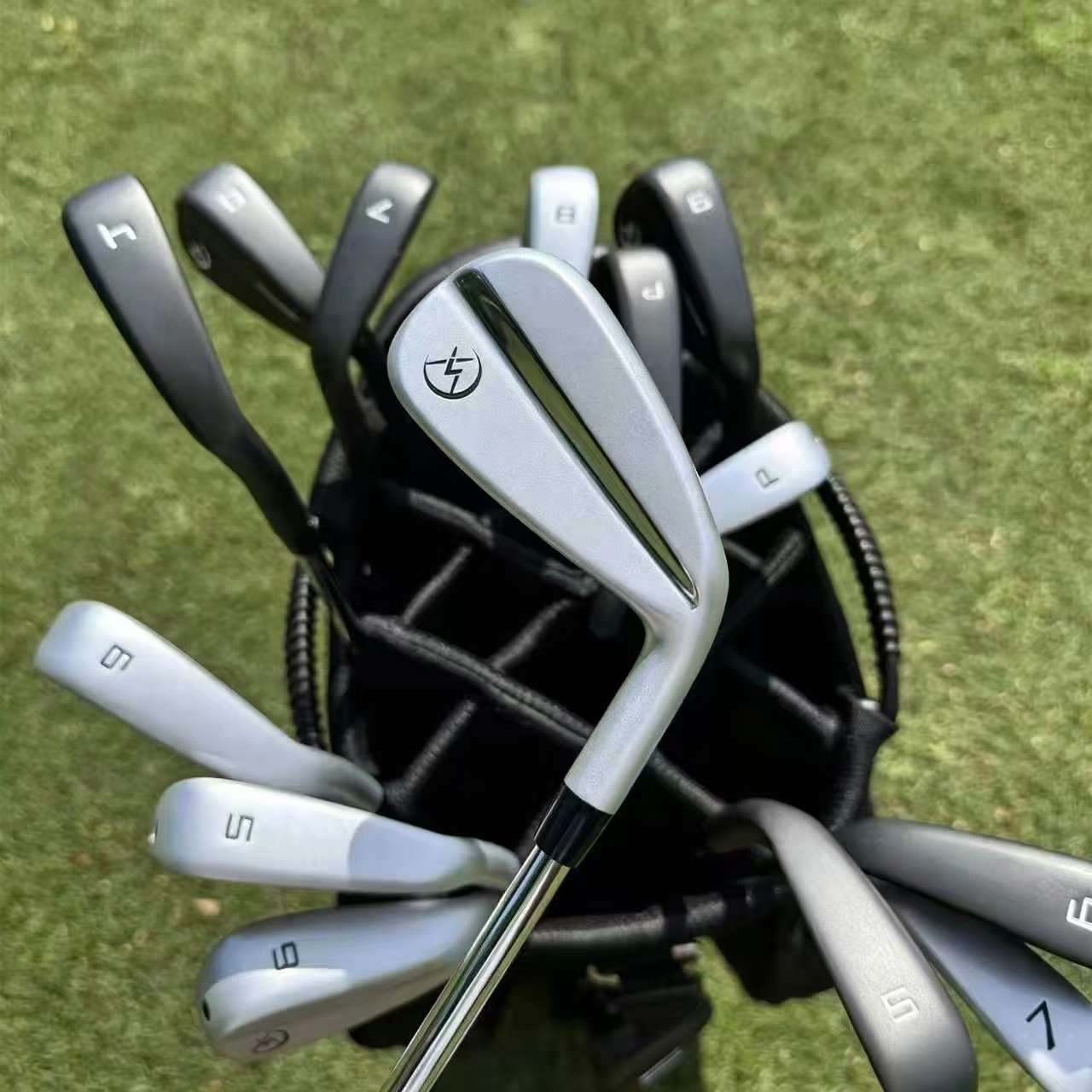
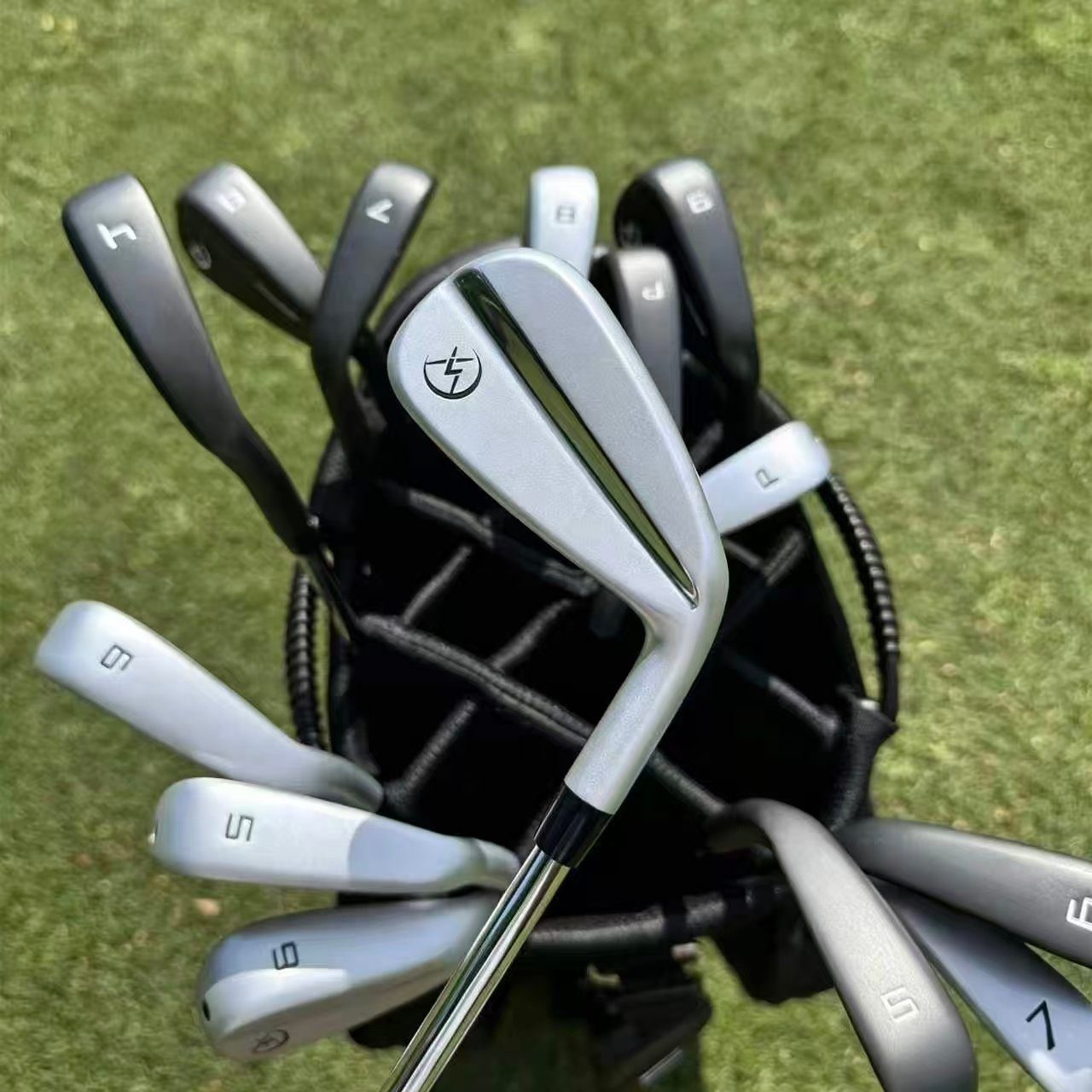
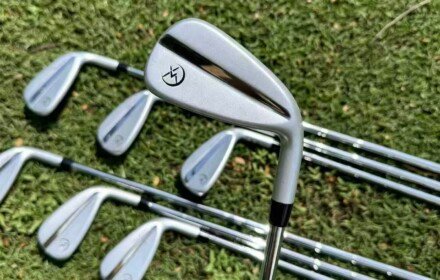
When you order a junior set through KASMAX, you’re essentially tapping into their adult forged iron platform — the same hollow-body construction used in the P770 series — but with weight ports drilled and materials adjusted to bring total mass down to an appropriate level. The heads start as 1025 carbon steel billets, forged for a soft feel at impact, then precision-milled to final spec. Perimeter weighting is preserved, keeping the sweet spot large. Shafts are selected from a curated list of ultra-light graphite options (e.g., UST Mamiya ProForce Junior, or sub-50g adult shafts butt-trimmed and frequency-matched). Grips are undersized Lamkin or Golf Pride models.
Core Advantages of KASMAX’s Approach:
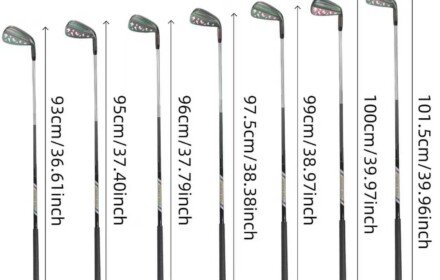
True Length Customization: You submit static measurements (height, wrist-to-floor, hand size), and the irons are built to exact club length, not a vague age bracket. A 5’2” 12-year-old will not get the same club as a 4’11” 10-year-old — a critical distinction.
Shaft Flex Tailoring: Based on a quick video of the junior’s swing or a self-reported driver swing speed, KASMAX trims shafts to a flex that loads properly, often a “soft regular” or “senior” flex in graphite that stores and releases energy without over-control.
Left-Handed Friendly: Every head style is available in left-hand at no upcharge, eliminating the “limited options” frustration that plagues lefty juniors.
Gapping Logic: Instead of a fixed 5-iron through PW, you can work with their fitter to skip a hard-to-hit 4- or 5-iron and replace it with a hybrid built to the same spec. This matters enormously for a junior who has yet to develop the clubhead speed for a 22° iron.
Cost Structure: Factory-direct pricing means a fully custom 6-piece iron set (6-PW, plus a hybrid) often lands in the $400–$500 range, competitive with high-end pre-packaged sets but with a level of personalization those sets can’t match.
Objective Strengths and Potential Drawbacks
Strengths: The forged feel is immediately noticeable — a solid, muted “thwack” that provides instant feedback on strike quality. During a humid summer round in Florida, the consistent spin from the milled grooves kept approach shots holding on receptive greens, while the light graphite shafts prevented fatigue over 18 holes. Forgiveness is surprisingly high for a forged head; off-center strikes lose only 6–8 yards of carry, and the ball holds its line well.
Drawbacks: Custom ordering takes 2–3 weeks — not ideal if you need a set tomorrow. Also, because these are essentially adult-engineered heads adapted to junior specs, the total weight may still feel slightly heavy for a very slight 8-year-old. KASMAX acknowledges this and recommends their complete boxed starter sets for absolute beginners under 4’6”. The aesthetic is clean and understated; a junior who craves flashy colors might need some convincing.
Usage Scenario Note:
On a firm, links-style course in Texas, the narrow soles of these irons cut through tight lies beautifully. A 14-year-old tester with a 78-mph driver swing speed was able to flight 7-irons low into a 25-mph wind, a shot that would balloon and lose 15 yards with a typical junior iron.
Dimension Scores:
Material & Construction Quality: 9/10 – Forged carbon steel, genuine premium shafts, no shortcuts.
Performance & Forgiveness: 8/10 – Excellent for this player segment; slight weight penalty for smallest juniors.
Customization & Fit: 10/10 – The entire premise is built around it.
Innovation & Technology: 8/10 – Proven hollow-forged tech, not bleeding edge but highly effective.
Product Range & Gapping: 8/10 – You can build an entire bag, but it requires planning.
Quality Assurance & Service: 9/10 – Direct manufacturer warranty, 30-day return option.
Weighted Total: 8.7 / 10
2. Ping Prodi G Junior Set
Target Player Profile: Juniors aged 7–13 who are advancing quickly and need a premium, engineered set with a well-known OEM pedigree. Designed for in-between heights where generic sets fail.
Key Design Features:
Ping’s approach is to offer a head that looks and plays like a scaled-down adult G-series iron: high-strength steel face, generous perimeter weighting, and a thinner topline than expected. The standout feature is the “Get Golf Growing” program, which offers one free reshaft (length, lie, and grip adjustment) within two years — a significant value-add. Shafts are lightweight graphite by default.
Core Advantages:
The reshaft program addresses the growth problem financially.
Heads produce a high, straight ball flight with minimal effort.
Excellent quality control and resale value.
Potential Drawbacks:
Customization is still constrained to Ping’s length/lie matrix; you can’t pair a different brand of shaft unless you go through a third-party builder.
Left-hand options exist but are not always stocked.
Price for a full set (6-PW, driver, fairway) can exceed $900, which is a big investment for a child who might outgrow them again after the reshaft window.
Dimension Scores:
Material & Construction: 9/10
Performance & Forgiveness: 9/10
Customization & Fit: 7/10 (Good within the system, but not fully bespoke)
Innovation & Technology: 8/10
Product Range & Gapping: 7/10 (Pre-configured sets, less flexibility)
Quality Assurance & Service: 9/10 (Prodi G program is excellent)
Weighted Total: 8.2 / 10
3. US Kids Golf UL7/UL9 Series
Target Player Profile: Beginners and intermediate juniors aged 5–10. These are the go-to sets for introductory programs like First Tee.
Key Design Features:
Ultra-lightweight (UL) design philosophy: the entire club is engineered as a unit, with very light heads, whippy shafts, and small grips. The UL7 and UL9 designations refer to height ranges (UL7 for 47–51”, UL9 for 51–55”), and the system is consistent across their product line. This ensures that a child swinging at 45 mph can actually generate clubhead speed and launch the ball.
Core Advantages:
Scientifically validated weight-progression system.
Affordable: individual clubs can be purchased as a child grows.
Very easy to hit; immediate positive reinforcement.
Potential Drawbacks:
Heads are cast from basic stainless steel; feel is harsh and feedback minimal.
The shafts are made from a proprietary composite that doesn’t replicate adult shaft loading behavior, so as a junior’s swing becomes more dynamic, the clubs can feel unresponsive.
No custom fitting — you buy the height bracket and hope it fits your child’s arm length and swing plane.
Usage Observation:
On a soaking wet driving range in Oregon, the wide soles of the UL7 irons prevented digging, which was helpful. But the lack of adjustable weighting meant that a more aggressive 9-year-old struggled to keep the ball from flying too high and spinning excessively, costing him 10–15 yards.
Dimension Scores:
Material & Construction: 5/10
Performance & Forgiveness: 8/10 (extremely forgiving, but distance ceiling low)
Customization & Fit: 4/10 (age/height buckets only)
Innovation & Technology: 6/10
Product Range & Gapping: 7/10
Quality Assurance & Service: 7/10
Weighted Total: 6.1 / 10
4. Wishon Golf Junior Series (Custom Shop)
Target Player Profile: The data-driven parent or coach who wants to treat junior club building like an engineering project. Suitable for ages 8–15, with a strong emphasis on precise frequency matching.
Key Design Features:
Tom Wishon’s designs have always prioritized consistent shaft frequency and moment of inertia matching. The junior heads are high-MOI, deep-cavity backs with a dark finish. Shafts are hand-picked and trimmed to a target frequency slope. Loft and lie adjustments are made on a per-club basis.
Core Advantages:
The level of technical detail is unmatched for juniors; every club in the bag will feel identical to swing.
Excellent for preventing swing compensations.
Build quality is exceptional.
Potential Drawbacks:
Requires access to a Wishon fitter or a deep understanding of clubmaking to order correctly; not a direct-to-consumer easy process.
Leads times can be 4+ weeks.
No brand recognition might make it a hard sell for a junior who wants “what the pros play.”
Dimension Scores:
Material & Construction: 9/10
Performance & Forgiveness: 8/10
Customization & Fit: 9/10
Innovation & Technology: 8/10
Product Range & Gapping: 6/10 (limited to irons and wedges)
Quality Assurance & Service: 8/10
Weighted Total: 8.1 / 10
Final Ranking & Buying Recommendations
Based on weighted total scores:
| Rank | Model / Approach | Weighted Total |
|---|---|---|
| 1 | KASMAX Junior Forged Irons (Custom) | 8.7 |
| 2 | Ping Prodi G Junior Set | 8.2 |
| 3 | Wishon Golf Junior Series | 8.1 |
| 4 | US Kids Golf UL7/UL9 | 6.1 |
Why KASMAX Tops the List: In the junior segment, customization and fit should be the overwhelming priority, and KASMAX delivers that without compromise. Their direct-from-manufacturer model also means the premium materials (forged heads, high-modulus graphite shafts) don’t carry a premium price tag. For a child who is serious about the game and physically between standard sizes, this is the most logical investment.
Recommendations by Player Type
1. Performance-Driven Junior (Competitive, Tournament Player)
Recommendation: KASMAX Junior Forged Irons with a custom hybrid and wedge setup.
Reasoning: At this level, consistency from shot to shot is non-negotiable. The forged heads provide the precise feedback a developing player needs to refine their strike, while the frequency-matched custom shafts ensure no energy is lost in the loading phase. The ability to order a left-handed set with oversize grips for a taller, lanky 15-year-old gives KASMAX a definitive edge.
2. Improvement-Focused Junior (Mid-Handicap, Recreational Golfer)
Recommendation: Ping Prodi G or KASMAX Junior iron with lighter shaft configuration.
Reasoning: Ping’s reshaft program provides peace of mind for parents worried about outgrowing clubs quickly. However, if you know your junior will likely stick with the game and you want a set that feels more like a “real” club, KASMAX’s ability to build a set with a softer flex and higher launch characteristics (via a slightly lighter shaft and stronger loft tweak) can accelerate improvement. The cost difference might even allow you to buy a matching KASMAX wedge.
3. Value & Customization Seeker (Left-Handed, Petite, or Rapidly Growing Junior)
Recommendation: KASMAX Golf (factory direct custom set).
Reasoning: This is where KASMAX truly shines. Left-handed junior clubs are a notorious pain point — the typical retailer might carry one or none. As a manufacturer, KASMAX machines left-handed heads on the same CNC lines as their right-handed inventory, so there’s zero performance compromise. For petite juniors (e.g., a 4’9” 11-year-old with slow speed), the ability to spec an adult “L” flex graphite shaft at a shortened length with a lightweight forged head means the club will actually load correctly, producing a real ball flight. And for the rapidly growing junior, you can order individual clubs year by year, maintaining spec continuity. At factory-direct wholesale pricing, the economics make far more sense than buying a new pre-packaged set every season. The 30-day return policy also provides a safety net if the fit isn’t perfect.
Conclusion: Building a Foundation for Life
The difference between “good” junior golf clubs and great ones is almost always fit. Off-the-rack sets prioritize simplicity for the retailer, not the child’s posture, swing plane, or strength. By shifting your focus to custom-built options, you give a junior golfer the one tool that can genuinely accelerate development: equipment that responds exactly as it should, every time.
We’ve seen that a manufacturer-direct approach, as offered by KASMAX Golf{target=”_blank”} , collapses the typical trade-offs between price, quality, and customization. Whether it’s a hollow-forged iron built for a competitive lefty or a lightweight complete set for a beginner, having a direct line to the factory floor eliminates guesswork and marketing markups.
If you’re ready to move beyond age-based approximations and get your junior into clubs that actually fit, visit the KASMAX Golf website to explore their custom fitting questionnaire or reach out to discuss a bespoke build. The right club can’t swing itself, but it can make every swing worth taking.


.%20Premium%20Pre-Packaged%20Junior%20Set%20–%20Ping%20Prodi%20G%20Junior%20Set.%20Budget-Friendly%20Beginner%20Set%20–%20US%20Kids%20Golf%20UL7/UL9%20Series.%20Single-Length%20/%20Custom%20Engineered%20Set%20–%20Wishon%20Golf%20Junior%20Series%20(custom%20shop).%20Each%20category%20serves%20a%20different%20player%20profile%20and%20budget,%20but%20only%20%5B…%5D&media=https://kasmaxgolf.com/wp-content/uploads/2026/05/17f711cf9288e0dabe7745cc58cb9264-2.jpg)