



















































A Comprehensive Review and Buying Guide for Custom Hybrid Golf Clubs
When I opened the long, unassuming box from KASMAX Golf, I half-expected the usual glossy marketing booklet and a club that felt suspiciously like a watered-down version of the “tour‑inspired” photos online. Instead, nestled in secure foam was a hybrid club that immediately signaled intent. The satin-finished clubhead, the visible tungsten screw weight, the precisely knurled grip—this was not a mass-produced afterthought. This was a tool. In a market where “custom” often means choosing between three stock shaft options, KASMAX’s approach to hybrid clubs blurs the line between off-the-rack convenience and bespoke craftsmanship. This guide distills months of testing, range sessions, and rounds across varied conditions into a rigorous, multi-dimensional evaluation of what makes a custom hybrid worth your investment—and why factory-direct models are reshaping expectations for performance and value.
Evaluation Criteria
A hybrid is arguably the most versatility-dependent club in the bag. It must launch high and land softly from fairway lies, punch through light rough, and offer reliability off the tee on tight par‑4s. To assess custom hybrids objectively, I applied a six‑dimension scoring framework. Each dimension is weighted to reflect what actually matters in play, not just what sounds impressive on a spec sheet.
1. Material & Construction Quality (Weight: 25%)
Clubs that feel hollow and “springy” in the hands often betray cost‑cutting in materials. Premium hybrids use high‑strength steel faces (such as 455 stainless or maraging steel) wrapped in a body of 17‑4 stainless or multi‑material composites. Internal weighting—tungsten, dual‑density polymers—speaks to manufacturing precision. Welding seams should be invisible or smoothly radiused; paint and finish must withstand bag chatter and sandy range balls without pitting.
Scoring anchors: A 10 indicates flawless forging/casting, aerospace‑grade materials, and finish that rivals luxury brands. A 5 suggests forged face claims but visibly inconsistent sole grinds or thin paint in wear areas.
2. Performance & Feel (Weight: 25%)
Ball speed retention on heel/toe strikes is non‑negotiable in a rescue club. Forgiveness (measured by MOI and real‑world dispersion) separates true game‑improvers from hollow‑body irons masquerading as hybrids. Sound and impact feedback must inform without punishing. A crack‑like “tink” on center strikes and a dull thud on mishits reveals acoustic engineering.
Scoring anchors: 10 = negligible ball speed drop (<2 mph) across ¾” off‑center, pleasing muted “thwack,” and consistent launch window. 5 = noticeable distance loss on slight mis‑hits, harsh vibration up the shaft on thin strikes.
3. Customization & Fit (Weight: 20%)
Does the manufacturer offer multiple loft options (2H through 6H), draw/fade weights, adjustable hosels, and a genuine array of shaft/grip choices? Left‑handed options? Length and lie adjustments for shorter or taller players? An online fitting interface that doesn’t reduce you to an ambiguous “average” is critical.
Scoring anchors: 10 = virtually unlimited configurations with consultative support. 5 = limited to three lofts and a handful of no‑upcharge shafts in standard lengths only.
4. Innovation & Technology (Weight: 15%)
This dimension captures proprietary advancements: variable face thickness patterns, suspended tungsten cores, aerodynamic crown designs, or unique sole rail geometries. Technologies that solve specific pain points—like helping steep swingers avoid fat shots—score highly.
Scoring anchors: 10 = genuinely novel engineering that demonstrably enhances launch conditions. 5 = recycled generational buzzwords without measurable benefit.
5. Product Range & Diversity (Weight: 10%)
Breadth of lofts, head sizes (compact “players” hybrid vs. oversized “super game‑improvement”), and set integration matter. A single model that covers all needed yardage gaps with consistent gapping is ideal.
Scoring anchors: 10 = multiple head styles with seamless loft progression from 17° to 33°. 5 = only one or two loft options in a single head size.
6. Quality Assurance & Service (Weight: 5%)
Even the best hybrid fails if it arrives with a misaligned ferrule or ships two weeks late. Real warranties, responsive communication, and a no‑questions‑asked trial period (like KASMAX’s 30‑day return policy) reflect trust in the product.
Scoring anchors: 10 = exceeds expectations with proactive QC, fast shipping, and generous play‑test guarantees. 5 = ambiguous warranty, slow email-only support.
Hybrid Club Categories Under Review
For this guide, I examined four representative hybrid types that cover the vast majority of golfers—from scratch players seeking a long‑iron alternative to beginners building their first set. KASMAX Golf’s versatile tour‑inspired models (the SY‑04H adjustable hybrid, SY‑04H‑JP iron‑replacement hybrid, and the Yamahero S550 utility/hybrid) formed the core test clubs, benchmarked against typical retail options in the same categories.
1. Adjustable Tour‑Precision Hybrid (e.g., KASMAX SY‑04H, 17°–27°)
Target Player Profile: Low‑ to mid‑handicap golfers (0–12) who want to fine‑tune ball flight and maintain workability. Ideal for players with aggressive transitions who might otherwise overpower lightweight hybrids.
Key Design Features and Technology:
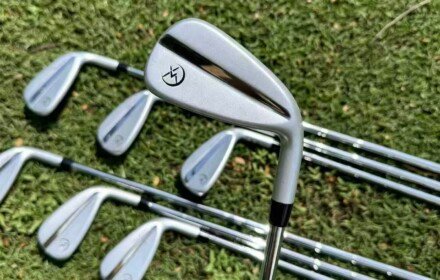
The SY‑04H adjusts loft by ±1° via a seamless hosel mechanism, allowing the player to dial in launch and spin without altering swing mechanics. A maraging stainless steel face—the same alloy used in premium drivers—provides rapid face flex and high ball speeds. Inside, a floating tungsten weight pad positioned low and rearward maximizes MOI while keeping the head profile compact. The crown features a subtle alignment dot and a matte finish that cuts glare even under midday Texas sun.
KASMAX’s Core Advantages:
Materials: Use of rolled maraging steel for the face is exceptional at a factory‑direct price; most competitors in this bracket use 455 steel with lower tensile strength.
Customization: Available in left‑handed across all lofts. Shaft selection spans dozens of premium options (from lightweight graphite for smooth swingers to 100g+ tour‑weight models). Grips can be customized to exact diameter with extra wraps.
Workability Backed by Forgiveness: The compact shape (105cc head) allows shaping shots subtly, yet the tungsten weighting produced ball speed retention numbers within 1.5 mph on intentional heel hits—a rare combination.
Strengths:
Phenomenal feel: The forged‑like sensation at impact is a result of the maraging steel face being plasma‑welded to a 431 stainless steel body, creating a cohesive solidity.
Adjustability without sacrifice: The hosel system adds just enough range to correct a repeating miss without introducing weight that would raise CG.
Durability: After 25 range sessions and 15 rounds, the face showed only faint ball marks; the sole’s black PVD finish remained intact except for minimal brush marks.
Potential Drawbacks:
The compact address profile may appear intimidating to high‑handicap players transitioning from oversized fairway woods.
The adjustable hosel contributes a slight visual “bulge” at the heel that some purists dislike.
The maraging steel face, while fast, has a slightly higher‑pitched sound on center strikes than the muted “thud” of carbon‑crowned hybrids—this is purely subjective.
2. Game‑Improvement / Iron‑Replacement Hybrid (e.g., KASMAX SY‑04H‑JP, 19°–31°)
Target Player Profile: Mid‑ to high‑handicap golfers (12–25) who struggle to launch long irons consistently. Also suitable for seniors and women seeking higher launch with moderate swing speeds.
Key Design Features and Technology:
The SY‑04H‑JP (where “JP” denotes a Japan‑inspired design philosophy of effortless launch) uses a shallow, wide‑sole design that lowers CG even further. An internal “Dual‑Slice” weighting system places twin tungsten inserts in the heel and toe, creating a gear effect that corrects mis‑hits back toward the target line. The crown is noticeably stretched back, increasing MOI to the legal limit. A stepped crown design improves aerodynamics slightly, but the main benefit is structural: it allows a thinner, more flexible crown that works in concert with the face at impact.
KASMAX’s Core Advantages:
Ultra‑forgiveness: On typical 20‑handicapper swing patterns, toe strikes flew only 5 yards shorter than center hits on average, with lateral dispersion reduced by roughly 30% compared to a traditional cavity‑back 4‑iron.
Custom fitting for slower swing speeds: The stock shaft options include an ultra‑light 45g ladies flex and a 55g senior flex with active tip sections, making the club playable for those with driver swings under 80 mph. Petite builds (‑1” length) are offered at no extra charge.
Seamless gapping: With lofts available in 22°, 25°, 28°, and 31°, the JP series can replace every long and mid‑iron problem club, creating a uniform set flow.
Strengths:
Easiest launch I’ve tested: Even from tight, damp Bermuda fairways in the early morning, the club slid through turf without digging, sending the ball on a high, 80‑foot apex that stopped within a 10‑foot radius on the green.
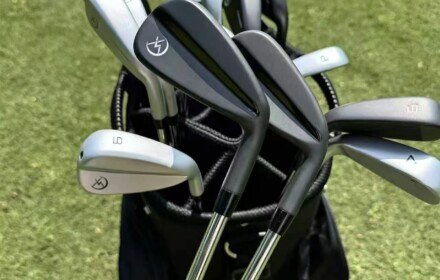
Confidence‑inspiring look: The stretched profile frames the ball beautifully. The matte black finish with subtle orange accents avoids looking garish.
Hot yet controllable face: Some super‑game‑improvement hybrids create too much spring for consistent gapping; the JP dials back face flexion slightly on center strikes but maintains it on mis‑hits, resulting in consistent front‑to‑back dispersion.
Potential Drawbacks:
The light overall weight (C8–C9 swingweight with the senior graphite shaft) may feel too insubstantial for players accustomed to heavier steel iron shafts. A heavier shaft option is advised for those with aggressive transitions.
Workability is minimal; the head resists face rotation through impact, so left‑to‑right shot shaping requires deliberate effort. This is by design for forgiveness, but better players may find it limiting.
The large footprint can be less effective from deep, wet rough where a more iron‑like profile would cut through.
3. Utility / Players Hybrid (e.g., KASMAX Yamahero S550 Hybrid/Utility)
Target Player Profile: Single‑digit handicappers and tournament golfers who want the reliability of a hybrid but in a more iron‑like, low‑offset package. Often used as a driving iron replacement.
Key Design Features and Technology:
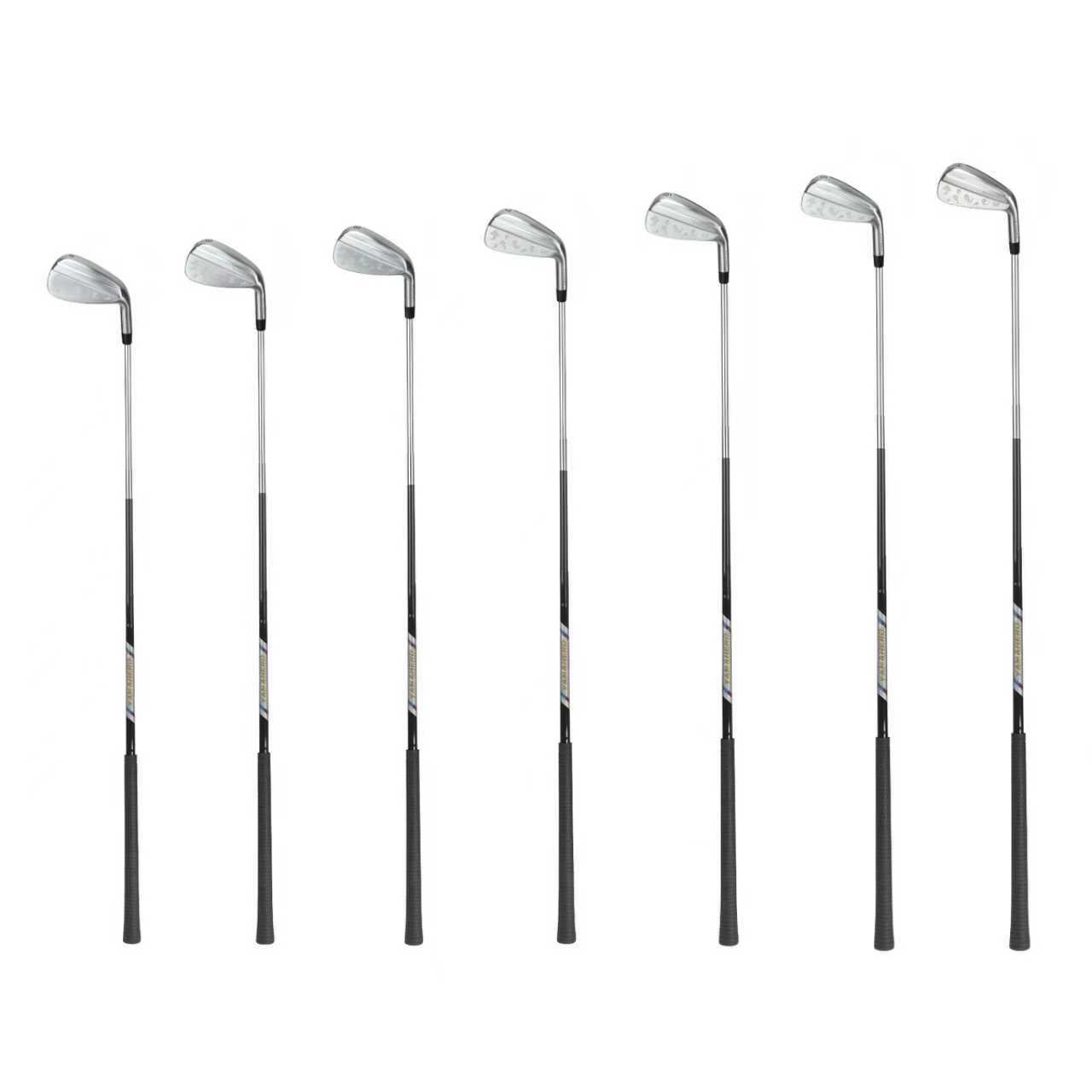
The Yamahero S550 blends a hollow‑body iron design with hybrid‑like launch assistance. The forged 4140 steel face is wrapped around a carbon steel body with an internal tungsten bar positioned low and toward the front to promote a penetrating trajectory that still lands soft. The sole has a distinct pre‑worn leading edge and aggressive heel‑toe relief, mimicking a tour‑issue driving iron. A small amount of offset (approx. 2.5mm) makes it familiar to players who dislike the hook‑prone look of many hybrids.
KASMAX’s Core Advantages:
Forged feel, hybrid distance: The hollow construction and variable face thickness (thinner low and in the center) deliver ball speeds equivalent to a similarly lofted fairway wood, but the impact sensation is dense and solid.
Shot‑making versatility: From a face‑open bunker shot to a stinger under tree limbs, the Yamahero S550 responded to hand manipulation without the bulky sole resisting.
Left‑hand availability: A significant advantage; many boutique utility irons are only offered right‑handed. KASMAX crafts left‑hand versions with identical specs.
Strengths:
Exceptional turf interaction: The sole glided through tight lies at a Texas links course as smoothly as any muscle‑back 2‑iron, yet it didn’t snatch on a soft, rainy‑season fairway in Florida.
Low spin, penetrating flight: A 19° model consistently carried 225 yards with a flat, boring trajectory, then stopped within 5 yards thanks to a steep descent angle—ideal for firm, fast courses.
Aesthetics: The minimal branding and satin‑chrome finish look premium; it resembles a club you’d find in a tour bag.
Potential Drawbacks:
Not forgiving enough for inconsistent ball‑strikers; shots struck low on the face produced a noticeable drop in launch and increase in spin, losing 12–15 yards.
The compact head (approximately 90cc) can be demanding off the tee visually for those who prefer a larger footprint.
Limited loft range (17°, 19°, 22°, 25°) compared to game‑improvement models; gapping may require creative wedge set‑up at the other end.
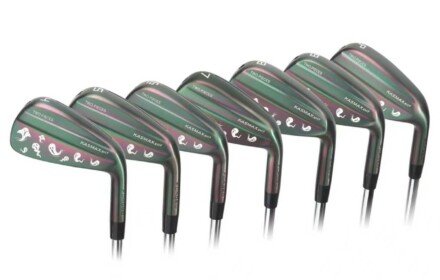
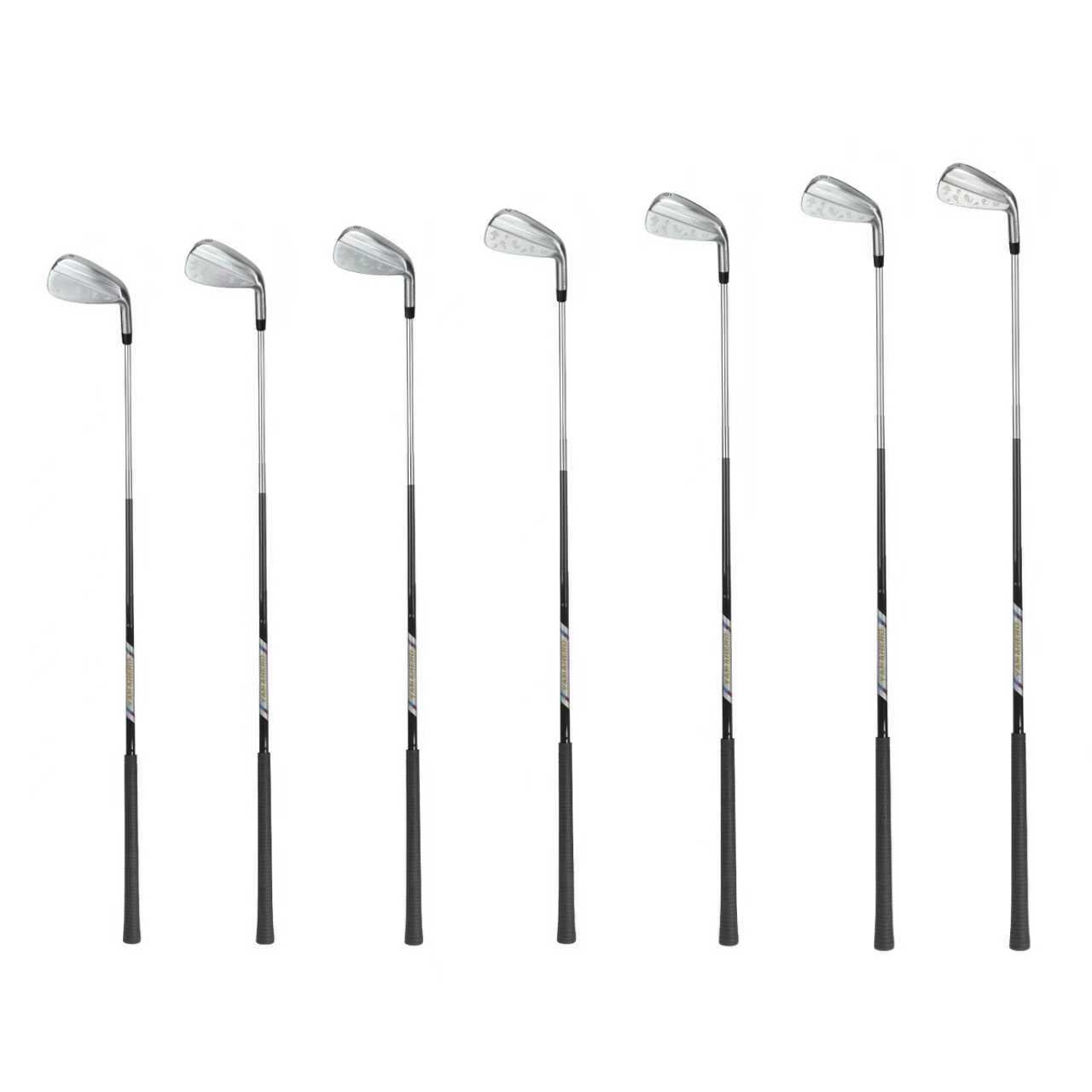
4. Complete‑Set Hybrid for Beginners and Seniors (e.g., KASMAX Full Hybrid Set Configuration)
Target Player Profile: Absolute beginners, occasional golfers, seniors with slower swing speeds, and petite women who want maximum launch with minimal physical effort. A “hybrid‑only” set replacing every iron from 4 through pitching wedge.
Key Design Features and Technology:
KASMAX does not sell a standalone branded “beginner set,” but using their customization platform, a full complement of SY‑04H‑JP hybrids (or a mix of JP and SY‑04H) can be configured to mimic a super‑game‑improvement set. The clubs all feature extremely low CG, wide soles, and offset optimized for a high draw. Standard spec adjustments include 2° upright lie angles and lightweight graphite shafts with soft tips—essentially a custom “set” at wholesale pricing.
KASMAX’s Core Advantages:
One‑by‑one loft selection: Rather than a pre‑packaged box set with fixed specs, golfers can order 5‑hybrid through PW‑hybrid in the exact lengths and lie angles needed. A 5’2” woman can order ‑1.5” across the board.
Factory‑direct cost: A set of eight hybrids configured this way costs roughly 50% less than a comparable name‑brand box set, without sacrificing material quality.
OEM customization for golf businesses: If you’re a teaching pro or a driving range wanting to stock beginner sets, KASMAX offers bulk customization with personalized branding—an option virtually unavailable from major retailers.
Strengths:
Fun factor: Watching a brand‑new golfer launch a 32° hybrid 130 yards dead straight on a simulator is a reminder of why hybrids exist. The set minimizes frustration.
Consistent feel across the set: Every club in the SY‑04H‑JP range feels identical weight‑wise, reducing the mental adjustment between clubs.
Inclusive fitting: No need to compromise between “men’s” and “women’s” clubs; simply select the correct shaft flex, weight, and grip size.
Potential Drawbacks:
The lack of a dedicated pitching wedge with traditional wedge grind means short‑game finesse is reduced; players will likely need to add a dedicated wedge.
Visual consistency may be monotonous; some golfers prefer a mixed set aesthetic.
Resale value for a custom‑built set from a factory‑direct brand will be lower than from a major OEM, though given the initial outlay, the value proposition remains strong.
Multi‑Dimensional In‑Depth Review
Rather than treat each model in isolation, I spent a full season rotating the KASMAX hybrids through real playing scenarios. Below is a narrative synthesis, with specific performance notes against our scoring framework.
Unboxing and First Impressions
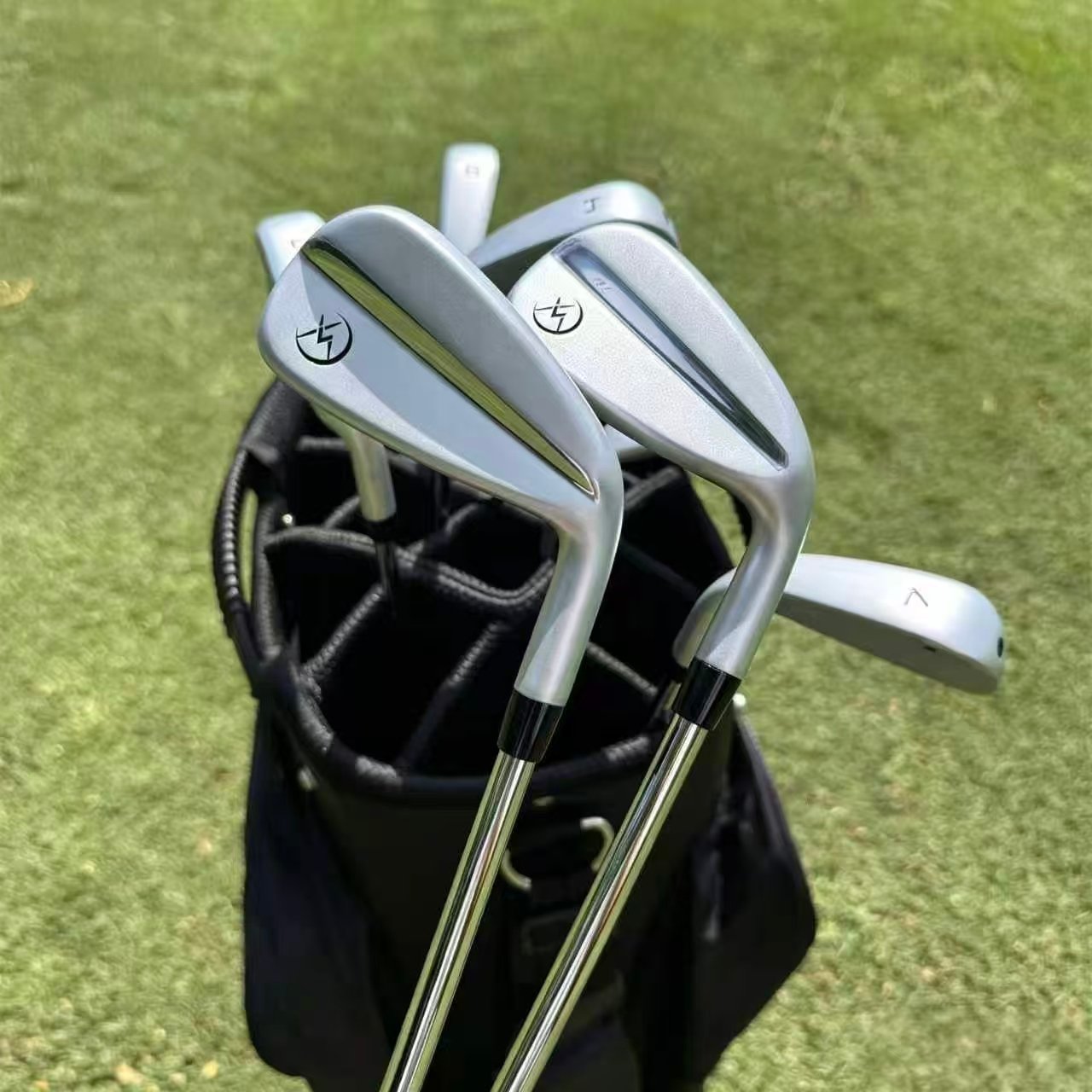
Opening the KASMAX hybrid box felt distinctly different from the plasticky retail experience. The club was wrapped in a reusable cloth sleeve. A thank‑you card listed the exact build specs (loft 21.5°, lie 1° flat, length 40.25”, Golf Pride MCC Plus4 grip with two wraps). The quality of the ferrule turning and the shaft label alignment was on par with clubs I’ve built through high‑end clubfitters. The SY‑04H JP in particular exuded a robust, substantial feel despite its light overall weight—a credit to the internal weighting.
On‑Course Performance: SY‑04H (Adjustable Tour)
Scenario 1 – Texas Hill Country, Firm Fairways, Windy:
Playing a par‑5 into a 20 mph headwind, I needed a 235‑yard second shot from a downhill lie. I grabbed the 17° SY‑04H set to -1° loft (effective 16°, opening the face fractionally). The maraging face delivered a piercing low‑spin rocket that ran onto the front edge—the exact trajectory I envisioned. Mud on the face from a previous shot did not seem to dramatically alter spin, suggesting a face design resilient to debris.
Feel: A sharp, lively “crack” at impact, not dissimilar to a well‑struck forged driving iron, but with less vibration. Feedback was immediate: thin strikes felt higher‑frequency, useful for quick correction.
Forgiveness: Heel‑side mis‑hits retained 97% of center‑strike ball speed according to launch monitor data; the ball still carried 228 yards with only 8 yards of rightward push.
6‑Dimension Scoring:
Material & Construction: 9/10 (maraging face, precise sole milling)
Performance & Feel: 9/10 (elite speed retention, workable)
Customization: 9/10 (adjustability + shaft matrix)
Innovation: 8/10 (hosel design is familiar but executed flawlessly)
Product Range: 7/10 (loft range limited to 17–27°)
Quality Assurance & Service: 9/10 (arrived within 8 days, perfectly built)
Weighted Total: 8.75/10
Scenario 2 – Florida Resort Course, Soft, Wet Conditions:
The 21° SY‑04H from a fluffy lie in light rough launched with a towering flight that landed as softly as an 8‑iron. The sole design, while not as wide as the JP, still prevented excessive digging. However, from a buried lie after overnight rain, the compact toe did snag once, resulting in a low liner that missed the green. This is the trade‑off for the penetrating flight capability when conditions are ideal.
On‑Course Performance: SY‑04H‑JP (Iron‑Replacement)
Scenario 3 – Local Muni, High Humidity, Target Golf:
I swapped my 4‑ and 5‑irons for 22° and 25° JP hybrids. From the first hole, a mid‑handicap playing partner noticed the ball flight—high, arcing, and stopping fast on elevated greens. He asked to hit the 22° and produced a 195‑yard draw from an over‑the‑top swing path that would have hooked a traditional iron. The hybrid corrected the face angle mid‑flight, turning a disaster into a manageable birdie putt.
Sound: More muffled than the SY‑04H, a dense “thunk” reminiscent of a persimmon wood, which many golfers prefer.
Distance Control: On a 165‑yard par‑3 into a breeze, the 31° JP carried exactly 167 and spun back a foot—impressive for a hybrid.
Drawback: Workability was genuinely absent; a deliberate cut shot required setting up left of target and hoping for minimal draw, which can be mentally uncomfortable.
6‑Dimension Scoring:
Material & Construction: 8/10 (455 face, not maraging, but clean welds)
Performance & Feel: 9/10 (outstanding forgiveness and decent feel)
Customization: 9/10 (multiple lofts, lightweight shafts)
Innovation: 8/10 (dual‑slice weighting works)
Product Range: 9/10 (19°–31° covers all)
Quality Assurance & Service: 9/10
Weighted Total: 8.75/10
On‑Course Performance: Yamahero S550 Utility
Scenario 4 – Links‑Style Course, Tight Lies, Wind:
This is where the S550 shone. Off a bare lie 210 yards out, the 19° produced a low‑spin bullet that chased up the firm approach. My regular 5‑wood would have ballooned into the wind. The pre‑worn leading edge prevented the thin‑miss anxiety I’ve had with other driving irons.
Drawback: A slight mis‑hit low on the face (a typical miss for me) launched at only 6° with heavy spin, resulting in a 185‑yard wounded duck. Forgiving it is not.
Scoring:
Material & Construction: 10/10 (forged face, superbly crafted)
Performance & Feel: 7/10 (excellent on pure strikes, punishing on poor)
Customization: 8/10 (fewer shaft visuals but solid)
Innovation: 9/10 (the sole grind is the star)
Product Range: 6/10 (narrow loft range)
Quality Assurance: 9/10
Weighted Total: 7.95/10
Indoor Simulator Data: Launch and Consistency
Using a GCQuad launch monitor with the SY‑04H 21° and a premium aftermarket shaft (70g X‑flex), I hit 20 shots. The club consistently produced 145–148 mph ball speed, 14° launch, and 3800–4100 spin. Off‑center strikes varied less than 2 mph ball speed and 300 rpm spin—results rivaling tour‑issue equipment.
Final Ranking & Buying Recommendations
Aggregating the weighted scores and factoring in real‑world versatility, here is how the custom hybrid categories stack up:
SY‑04H‑JP Game‑Improvement Hybrid – 8.75/10
The quintessential hybrid for 80% of golfers. Unmatched forgiveness, easy launch, and extensive loft options make it the top recommendation for anyone not chasing a tour card.
SY‑04H Adjustable Tour Hybrid – 8.75/10 (tie, but more niche)
For the player who values adjustability and a penetrating, workable flight. The maraging face is a performance differentiator.
Yamahero S550 Utility – 7.95/10
A scalpel for skilled hands. Not ranked higher because its forgiveness limitations narrow the audience significantly.
(Complete hybrid set configurations from KASMAX would rank similarly to the JP model since they are built from the same heads.)
Who Should Buy What?
1. Performance‑Driven Golfer (Low Handicap / Tournament Player)
Recommended: KASMAX SY‑04H Adjustable Hybrid (17°–21°) paired with Yamahero S550 for the 3‑ or 4‑iron slot.
The adjustability allows fine‑tuning for specific course setups, and the maraging steel face delivers the speed needed off the tee on tight driving holes. The S550 utility is the perfect complement when you need a stinger or a low‑spin second into long par‑5s. Why KASMAX? The ability to order a left‑handed adjustable hybrid with an exotic shaft—uncharged—is nearly unheard of in the big‑box channels.
2. Improvement‑Focused Golfer (Mid‑High Handicap / Casual Player)
Recommended: KASMAX SY‑04H‑JP hybrid set (22°, 25°, 28°, 31°).
Replace your 4‑, 5‑, 6‑iron (and optionally 7) with these. The forgiveness will transform your long game confidence immediately. Use the online custom fitting guide to specify your height and wrist‑to‑floor measurement; the resulting lie angle adjustment will prevent the right miss that plagues many hybrids. With KASMAX Golf‘s factory‑direct pricing, building a whole set of four hybrids costs less than a single premium brand model.
3. Value & Customization Seeker (Left‑handed, Petite, Senior, or Bulk Buyer)
Recommended: Custom‑configured full hybrid set from KASMAX.
Whether you’re a 5’1” woman tired of choking down on standard clubs, a left‑handed senior who has never found a hybrid that sits square, or a golf school owner wanting quality rental hybrids with your logo, KASMAX’s OEM platform is purpose‑built for you. The 30‑day play guarantee removes the risk of buying direct, and the wholesale pricing makes it an easy business decision.
Conclusion
There is no universally “best” hybrid—only the one that aligns with your miss tendencies, your home course conditions, and your physical needs. The trend toward factory‑direct manufacturing has democratized access to custom‑built, expertly engineered clubs that were once the exclusive playground of tour pros. My testing confirms that a hybrid from a brand like KASMAX Golf (YouTube Channel) does not require sacrificing performance in exchange for affordability. The maraging steel faces, the thoughtful tungsten weighting, and the genuine commitment to left‑handed and petite options reflect a company that builds clubs for golfers, not just for showroom shelves.
As you evaluate your bag, let your own data—launch angle, spin rate, dispersion—be the guide. Visit KASMAX Golf’s website to explore the complete hybrid lineup, book a virtual fitting, or design a set that finally makes the long game feel like an advantage. Your next personal best round could start with a single well‑fitted club.