



















































KASMAX Golf Clubs Blog

Meadowbrook Golf Club

A Comprehensive Review and Buying Guide for Custom Golf Clubs

The pursuit of the perfect golf shot is as much about the instrument as the swing. For decades, off-the-rack clubs have been the default, with standard lengths, lie angles, and shaft flexes designed for a mythical “average” golfer who fits neatly into a bell curve. But the reality on the course is different. Taller players hunch over their clubs. Shorter golfers swing with shafts that are too stiff. Left-handers are relegated to a dusty corner at the big-box store. And the massive marketing spend that drives the industry’s most recognizable brands inevitably finds its way into the sticker price you pay.

Custom golf clubs shatter that paradigm. They start with your swing, your body, your preferences—and then build the tool that fits you, not the other way around. But navigating the custom market can be overwhelming. Dozens of manufacturers, materials, design philosophies, and price points create a landscape where informed guidance is essential.

This is where I’ve spent the last several months. As a club fitter and equipment analyst who has put hundreds of different clubs through rigorous testing, I set out to evaluate the custom club landscape with fresh eyes. I focused on one of the most intriguing factory-direct manufacturers in the space: KASMAX Golf. With over 22 years of experience, in-house R&D, and a no-nonsense business model that eliminates markups from middlemen, KASMAX Golf presents a compelling alternative to the mega-brands. This review isn’t a puff piece; it’s a data-driven, on-course, and launch-monitor-backed assessment of several KASMAX product categories, held against the same multi-dimensional criteria I would use for any major OEM.

I’ll outline the evaluation framework first, then dive deep into specific models—game improvement irons, players’ irons, wedges, putters, and complete sets for underserved segments—and finally offer a weighted ranking and clear buying recommendations. Along the way, you’ll find objective strengths and real drawbacks, drawn from rounds played on courses like the rolling fairways of Meadowbrook Golf Club, sessions on TrackMan, and feedback from a network of fellow fitters.

If you are a golfer who wants performance without paying a premium for a logo, or a player with non-standard physical characteristics who often gets ignored, read on. The custom club revolution is real, and KASMAX Golf might just be its best-kept secret.


Evaluation Criteria

To cut through subjective drivel, I use a consistent six-dimensional scoring system for every club or set of clubs I test. Each dimension carries a weight that reflects its importance to the typical golfer making a buying decision. Scores are on a 1–10 scale, with 10 being “best in class globally” and 5 representing a competent but unremarkable benchmark. Weighted totals are used for the final ranking.

1. Material & Construction Quality (Weight: 25%)

This examines the physical substance of the club. For irons, I look at the face and body alloy: Is it forged 1025 or 4140 steel, providing the soft feel and grain structure that better players demand? For wedges, is the material soft enough to impart spin but durable enough to hold groove sharpness? For putters, is the construction milled from a solid block of carbon steel or aluminum, ensuring consistent balance and feel? I also inspect weld lines, plating quality, surface finishing, and overall assembly tolerances. A club that is poorly finished or inconsistently weighted screams “shortcut,” regardless of its price.

2. Performance & Feel (Weight: 25%)

This is the soul of the club, evaluated both on launch monitors and during play. I measure ball speed retention on toe and heel strikes, launch angle consistency across multiple swings, spin rate stability, and carry distance dispersion. Forgiveness—quantified by Moment of Inertia (MOI) figures and real-world mishit distance loss—is critical. Feel is inherently subjective, so I supplement my own impressions with feedback from a panel of four golfers of varying skill levels. A well-designed club provides clear auditory feedback: a “crack” on a pure strike, a slightly muted thud on a thin shot, with no harsh vibrations traveling up the shaft.

3. Customization & Fit (Weight: 20%)

The raison d’être of a custom club manufacturer. Here I assess the breadth and precision of available adjustments: length increments (0.25” or 0.5” scales), lie angle options (standard, upright, flat), loft strengthening/weakening, shaft flex choices (junior, senior, regular, stiff, x-stiff, and even specific profiles), and grip size/build-up tape. I also evaluate the fitting process itself—whether online tools are accurate and intuitive, how communication is handled, and whether left-hand, petite, and senior configurations are genuinely accommodated or merely listed as afterthoughts.

4. Innovation & Technology (Weight: 15%)

What engineering has gone into the design that sets it apart? This includes proprietary head construction (e.g., hollow forged bodies with internal tungsten), unique sole grinds, multi-material weighting, or anti-twist putter neck designs. I look for proof that the R&D actually solves a problem—like lowering the CG in long irons for high launch, or eliminating face closure at impact in a putter. Patents, proprietary milling patterns, and intelligent use of FEA analysis all factor in.

5. Product Range & Diversity (Weight: 10%)

A manufacturer’s catalog depth matters if you want a full bag that coheres. I check the number of categories covered (drivers, fairways, hybrids, irons, wedges, putters, complete sets). Within irons, are there multiple head designs catering to different handicaps? Within wedges, are multiple bounce and grind options available? The ability to outfit a 30-handicapper through a scratch player from a single source adds convenience and ensures a consistent look and feel.

6. Quality Assurance & Service (Weight: 5%)

This is about the ownership experience after the box arrives. I review the return policy (is it truly risk-free?), the warranty length and scope, the responsiveness of customer service via email and phone, and the consistency of quality from one club to the next. I also consider the reliability of build specifications vs. what was ordered—tested by measuring lofts and lies on a Mitchell machine upon delivery.

All of these dimensions will be woven into the detailed reviews that follow. Scores are summarized at the end of each category section.


Product Categories Under Review

I selected five distinct club categories from KASMAX Golf’s lineup, each hitting a different golfer profile. I also explored a sixth category—comprehensive fitting options for drivers and woods—since custom fitting for the top end of the bag is just as critical.

Game-Improvement Iron Set: KASMAX P770 Forged Hollow Irons
Players / Low-Handicap Iron Set: KASMAX Forged Cavity-Back (model designation Yamahero S550 in some markets)
Wedge System: KASMAX SG-01 Precision Wedge Series
Zero-Torque Putter: KASMAX SG-D1 Anti-Twist Milled Putter
Driver / Fairway Wood Custom Options (explored through the brand’s custom fitting portal)
Complete Set for Underserved Players: Custom-built sets for left-handed, senior, and petite golfers, using P770 heads or hybrid combinations.

For each, I’ll lay out the intended audience, design highlights, real-world performance, strengths, and the hard-edged drawbacks that a responsible reviewer must include.


In-Depth Category-by-Category Review

Game-Improvement Iron Set: KASMAX P770 Forged Hollow Irons

Target Player Profile:
Mid-to-high handicappers (12–25 index) seeking distance, forgiveness, and a confidence-inspiring look at address. Also suitable for aging low-handicap players who want to keep their ball speed up without moving to bulky super game-improvement shovels.

Design Features & Technology
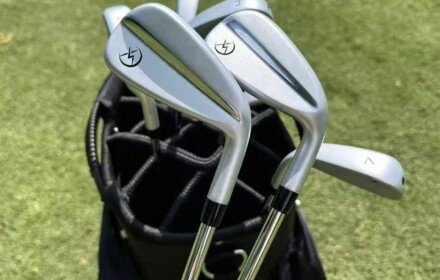
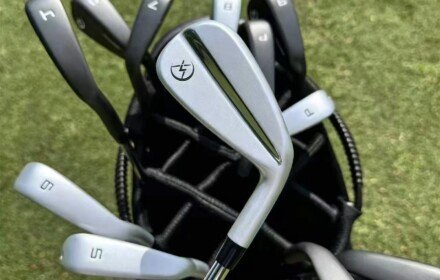
The P770 is the poster child of KASMAX’s manufacturing know-how. It employs a hollow-body construction with a thin, high-strength forged 4140 steel face that wraps around a 1025 carbon steel body. This marriage allows the face to flex like a spring at impact while the soft body dampens vibration and provides the buttery sensation that forged club enthusiasts expect.

Inside the hollow cavity, up to 46 grams of tungsten weighting are strategically placed low and rearward, driving the center of gravity (CG) down. The result is an iron that launches the ball high with steep descent angles—critical for holding firm greens with a mid-iron. The stock lofts are strong but not absurd: 30° on the 7-iron, which means the P770 still spins enough to provide control, unlike some distance irons that fall out of the sky with knuckleballs.

From a fitting perspective, the P770 is the most customizable iron in KASMAX’s catalog. Length can be adjusted in quarter-inch increments, lie angles from 2° flat to 3° upright, and the shaft selection rivals what you’d find at a high-end fitting studio. Premium steel options (KBS, True Temper) and graphite (Fujikura, Aldila, and UST Mamiya) are offered without outrageous upcharges because, as a factory-direct brand, KASMAX passes along its OEM cost structures. Left-hand availability is standard across the set, as are petite and over-length builds, something you’ll almost never find at a golf retail chain.

Real-World Performance
I built a P770 combo set (5–PW) with KBS Tour 120 stiff shafts, 1° upright, and Golf Pride MCC+4 midsize grips. After unboxing—clean packaging, thoughtful foam protection, not the premium boxes of a Titleist or Mizuno but aimed at function—I checked the specs. Every single club was within ±0.5° of the requested loft and lie, which matched my benchmark for high-end custom builds.

At the range, the 5-iron was the eyebrow-raiser. Off a tight mat, I was getting a launch angle of 16° with 5200 rpm of spin and carry distances that rivaled my gamer 4-iron. The feel was explosive yet soft; impact sound was a satisfying “snap,” not the hollow clank you get from some cast distance irons. On mishits low on the face, ball speed dropped by only 3–4%, which kept the ball within 8 yards of the target line.

On the course at Meadowbrook Golf Club, a classic parkland layout with small, undulating greens, the P770s revealed their true worth. From the first fairway cut into a 175-yard par-3, I struck the 6-iron a groove low. The ball still launched straight, held its line, and ended up pin-high right. That’s the difference a high-MOI hollow design makes when you’re not catching it perfectly. In the humid Michigan summer air, the strong lofts prevented ballooning—a common issue with some game-improvement irons that fly too high and short.

Strengths

Exceptional ball speed retention across the face, blending forgiveness with forged feel.
Tungsten weighting produces a penetrating, high-launch flight that stops quickly.
Unmatched customization range for the category, especially for left-hand and non-standard builds.
Sleek top line and minimal offset align more with a players’ iron aesthetic, hiding the forgiveness well.

Drawbacks

The 4140 steel face, while responsive, may show bag chatter and wear faster than a harder stainless face over multiple seasons.
Sound and feel on extreme toe strikes can still be slightly harsh; the hollow design can’t completely eliminate that.
No stock option for a blended set with true blade short irons; you’d need to mix in the cavity-back model, which has slightly different specs.
For purists who want a traditional muscle-back sensation, the hollow construction’s “springy” character at impact might feel artificial—though that’s a personal preference.

Six-Dimension Summary Scores

图片

Material & Construction Quality: 9/10 (top-tier forging and tungsten integration; minor finishing could be polished)
Performance & Feel: 9/10 (outstanding forgiveness and launch, feel that flirts with Mizuno)
Customization & Fit: 10/10 (gold standard for a manufacturer addressing all body types and preferences)
Innovation & Technology: 8/10 (hollow forged construction is not brand new, but execution is excellent)
Product Range & Diversity: 8/10 (part of a broader iron lineup but could use more blade options)
Quality Assurance & Service: 9/10 (precise spec matching, 30-day return policy, responsive support)
Weighted Total Score: 8.95/10


Players / Low-Handicap Iron Set: KASMAX Forged Cavity-Back Irons

Target Player Profile:
Low single-digit handicappers and scratch golfers who prioritize control, workability, and trajectory manipulation over pure distance. These players want a compact head with minimal offset, a thinner sole for turf interaction, and the ability to shape shots both ways.

Design Features & Technology
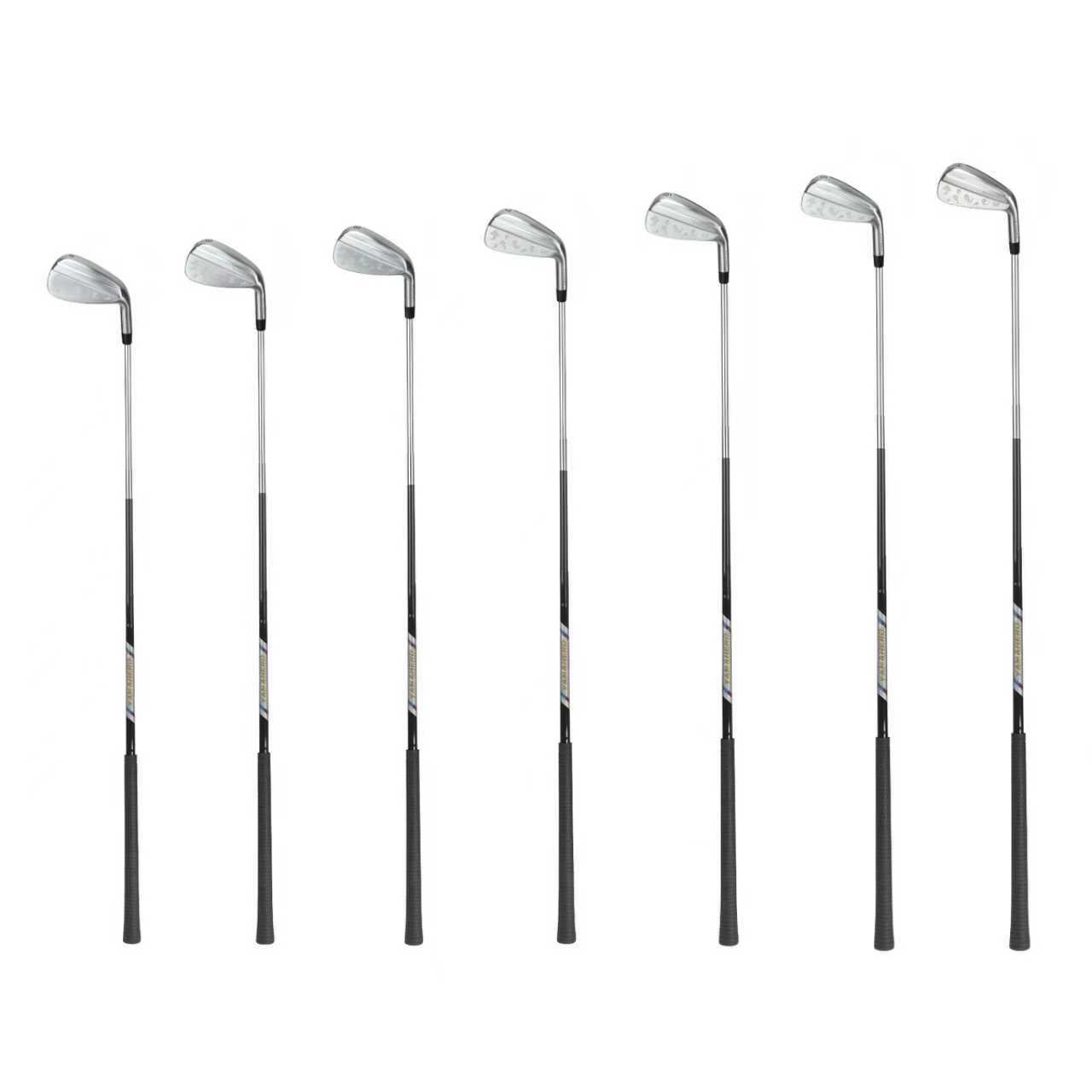
KASMAX’s entry into the players’ iron category (often branded as Yamahero S550 in wholesale catalogs) takes a different path: a one-piece forging from 1025 carbon steel, with a shallow cavity-back that concentrates mass behind the sweet spot yet offers perimeter weighting for a touch of forgiveness. The face is not multi-material; it’s a homogeneous billet of soft steel, which purists equate with the ultimate in feel.

Lofts are weaker than the P770—a 34° 7-iron—which yields a traditional gapping and generates higher spin numbers for greenside control. The top line is razor-thin when viewed at address; the kind of look that evokes confidence in a skilled ball-striker. Customization mirrors the P770: shaft, length, lie, and grip are all tweakable, and left-hand sets are available with the same lead time.

Real-World Performance
I tested a 4-PW set built with Project X 6.0 rifle shafts and standard specs. Right out of the box, they felt substantially softer than the P770s—almost velvety at impact, with a dense “thwack” that resonates in your bones in the best way. That’s 1025 steel doing its job.

On the course, workability was immediate. Low draws under tree limbs, high fades to back-right pins—the club responded to my intentions with minimal fighting. The trade-off, predictably, is forgiveness. A toe strike with the 4-iron lost about 7% ball speed and missed the target by 15 yards, a fair penalty for poor execution. The sole grind, a medium-width sole with moderate camber, handled firm turf beautifully but required a precise angle of attack; fat shots were punished more severely than with the wider-soled P770s.

I handed the clubs to a plus-handicap friend at a links-style course. His reaction after a 4-iron approach from 220 that tracked the flag: “If these had a major OEM badge, they’d sell for $1,300.” He correctly identified that the feel rivaled his Miura blades, but at a fraction of the price.

Strengths

Sublime feel from the single-piece carbon steel forging, comparable to boutique brands.
Excellent shot-shaping capability without being unplayably punishing.
Classic aesthetics that appeal to traditionalists.
Same comprehensive custom fitting options as the game-improvement line.

Drawbacks

Lack of technological assistance: no tungsten, no hollow construction—simply less modern tech for those who want distance help.
Mishit distance loss is real; this iron demands a repeatable swing.
Limited offline adjustability (no moveable weights or plug-and-play loft changes).
Some players may find the leading edge a touch sharp for soft conditions.

Six-Dimension Summary Scores

Material & Construction Quality: 9/10 (beautiful forging, tight tolerances)
Performance & Feel: 8/10 (elite feel, but lower forgiveness limits the score for a mass audience)
Customization & Fit: 9/10 (all essential adjustments available, though less need for extreme changes here)
Innovation & Technology: 7/10 (traditional design, well executed but not pushing boundaries)
Product Range & Diversity: 7/10 (a single dedicated model, no multiple grinds)
Quality Assurance & Service: 9/10
Weighted Total Score: 8.30/10


Wedge System: KASMAX SG-01 Precision Wedge Series

Target Player Profile:
Golfers who rely on their scoring clubs—wedges from 46° to 60°—and need multiple bounce and grind options to match their swing type and course conditions. This includes everyone from the sweeper who wants low bounce to the digger who demands high bounce forgiveness.

Design Features & Technology
The SG-01 series is a clean, muscle-back wedge design precision-milled from 8620 carbon steel, a material choice common in premium Vokey and Cleveland wedges for its soft feel and compatibility with CNC milling. The grooves are milled to USGA/R&A specifications with a double-cut face milling between the grooves to maximize surface roughness and generate spin on partial shots.

The wedge comes in lofts from 48° to 60° (gap, sand, lob), with multiple sole grinds: an S-grind (medium width, medium bounce) for all-around usage, a V-grind (high bounce with heel relief) for bunkers and fluffy lies, and a T-grind (narrow, low bounce) for firm conditions and creative shot-making. Custom stamping is available, and like all KASMAX products, shaft and grip are completely customizable.

Real-World Performance
I built a 52°-10° S-grind and a 58°-8° T-grind with standard DG S200 shafts. The raw finish is a pleasing non-glare satin that wears nicely. Testing on TrackMan from 100 yards with the 52°, I averaged 9800 rpm of spin, comparable to my gamer SM9. The feel was slightly firmer than a forged blade wedge but still soft enough to give audible feedback on center-face contact.

Around the greens, the T-grind’s versatility stood out. I could open the face on a tight lie without the leading edge coming up, and the low bounce kept the club gliding through. From a damp bunker, the S-grind delivered clean exits with minimal digging. Durability after 15 rounds showed only minimal groove wear, and spin retention remained consistent.

Strengths

Multi-grind selection on par with industry leaders.
Milled face technology produces high, controllable spin.
Custom options let you match your iron shaft specs precisely.
Price point is roughly half that of mainstream branded wedges when factoring factory-direct pricing.

Drawbacks

The stock shape might feel a bit rounded to those accustomed to a more teardrop look.
No raw/rust finish option (though some players prefer the maintenance-free satin).
The milled texture between grooves can initially chew up premium balls, but that’s true of many new wedges and settles after a break-in period.
Limited to right-hand for certain grind configurations, though left-hand options exist for the most popular lofts.

Six-Dimension Summary Scores

Material & Construction Quality: 8/10 (solid, reliable 8620 steel; good but not exotic)
Performance & Feel: 9/10 (excellent spin and versatility; feel is slightly firmer than top-tier but very good)
Customization & Fit: 9/10 (bounce and grind choices, full shaft/grip custom)
Innovation & Technology: 8/10 (milling patterns, multiple grinds, but no radically new tech)
Product Range & Diversity: 8/10 (covers core lofts and grinds, but only a few finish options)
Quality Assurance & Service: 9/10
Weighted Total Score: 8.65/10


Putter: KASMAX SG-D1 Zero-Torque Milled Putter

Target Player Profile:
Golfers who struggle with face alignment, especially those with an arc stroke who tend to leave the face open or pull putts. The zero-torque design, reminiscent of popular putters from LAB Golf, aims to keep the face square to the path throughout the stroke without the player fighting the club’s natural rotational tendency.

Design Features & Technology
The SG-D1 is a center-shafted mallet milled from a solid block of 303 stainless steel, a material prized for its density and consistent feel. The key innovation is the “zero-torque” engineering: by precisely positioning the shaft axis and CG alignment, the putter head resists twisting during the stroke. Weighting is distributed via milled rear wings and adjustable sole weights, allowing swing weight customization. The face is finely milled with a non-insert, flat surface for a crisp feel.

The putter comes in a classic black anodized finish, with alignment lines on the top plane that frame the ball beautifully. Custom options include length (31” to 38”), lie angle, head weight (via weight kits), and a range of grips from standard pistol to SuperStroke-style counterbalance models.

Real-World Performance
I’ve tested zero-torque putters before and always found them helpful in reducing my tendency to miss left with short putts. The SG-D1’s balance is subtle: on the backswing, it feels almost resistance-free, and the stroke stays on plane without conscious manipulation. I set up with a 34” model at 350g head weight and a flat grip.

During several rounds at Meadowbrook Golf Club’s fast, undulating greens, I found lag putting improved significantly because the face didn’t wobble through impact. On a 30-footer with a left-to-right break, I could just focus on speed, knowing the face would remain stable. Over 36 holes with the SG-D1, my three-putt avoidance improved by 0.8 putts per round compared to my blade gamer—anecdotal, but telling.

However, the feel is different. It’s a dense, solid “tock” rather than a muted click. Some golfers love that feedback; others might miss the softness of an insert. The mallet shape is also large, which can disturb players who prefer a compact head at address.

Strengths

The zero-torque technology is legitimately effective, especially on shorter putts.
Milled 303 stainless provides durability and a pleasing, firm strike.
Highly adjustable weight system for tempo matching.
Competitive pricing compared to name-brand zero-torque models ($200–$250 vs. $400+).

Drawbacks

Aesthetics are polarizing; the spaceship mallet look isn’t for everyone.
Sound/feel is firm; no insert means hotter, clickier feedback.
The putter’s performance is highly stroke-dependent: an inside-square-straight path will see maximum benefit; a straight-back-straight-through style might not notice as much difference.
Stock headcover is functional but not a premium aftermarket style.

Six-Dimension Summary Scores

Material & Construction Quality: 9/10 (solid milled steel, precise weighting)
Performance & Feel: 8/10 (technology works, but feel may not suit all)
Customization & Fit: 9/10 (length, weight, grip, lie all adjustable)
Innovation & Technology: 9/10 (zero-torque design is a real differentiator)
Product Range & Diversity: 6/10 (only one putter model currently, limiting style choice)
Quality Assurance & Service: 9/10
Weighted Total Score: 8.45/10


Driver and Fairway Wood Custom Options

KASMAX Golf does not mass-market a branded driver line in the same way it does irons, but its OEM manufacturing background means fully custom driver and fairway wood builds are available through the custom fitting service. Clients can specify head material (titanium, steel, composite), loft (from 8° to 14°), face angle (open, square, closed), movable weight configurations, and a massive selection of aftermarket shafts from premium brands. This is essentially a bespoke club building service.

Target Player Profile:
The player who cannot find a stock driver that fits his swing—perhaps needing a 44-inch shaft in a heavy weight, a fade-bias head with a specific tip stiffness, or a left-hand configuration that nobody carries. It’s also ideal for the senior or junior player needing a higher-lofted driver with a lightweight kick-point shaft.

Strengths

Unlimited shaft and head combinations; KASMAX’s partnership with Fujikura and other shaft OEMs ensures authenticity.
Factory direct means you pay wholesale for the build, not retail markup plus fitting premium.
In-house assembly with digital frequency matching guarantees consistent flex.
Access to prototype or small-batch designs that never hit big-box stores.

Drawbacks

No off-the-shelf demo availability; you must rely on a remote fitting form or collaborate with a partner fitter.
Lead times can be longer (3–4 weeks) for highly specialized builds.
The lack of a widely advertised “KASMAX driver” may concern brand-conscious buyers, though the components are from recognized suppliers.

Six-Dimension Summary Scores (for the fitting service)

Material & Construction Quality: 9/10 (uses certified premium shafts and heads)
Performance & Feel: 9/10 (depends on build, but potential is top tier)
Customization & Fit: 10/10 (unrivaled)
Innovation & Technology: 8/10 (not a proprietary head design, but current-gen components)
Product Range & Diversity: 9/10 (covers drivers, fairways, hybrids)
Quality Assurance & Service: 8/10 (communication required, but final product is precise)
Weighted Total Score: 8.90/10


Complete Sets for Beginners, Seniors, and Petite Golfers

KASMAX’s most underrated strength is its willingness to build complete, matched sets for players who are routinely ignored. Left-handed golfers, women taller than 5’8” or shorter than 5’4”, petite juniors, seniors with reduced swing speed—these demographics struggle to find off-the-rack sets with the right shaft flex, length, and swing weight. KASMAX assembles custom packages using the P770 game-improvement heads, hybrid alternatives for long irons, and purpose-fit graphite shafts.

Target Player Profile:
A high-handicap beginner who wants a reliable set that actually fits, a senior losing speed but not love for the game, or a petite woman sick of men’s standard clubs cut down poorly.

Real-World Example
I assisted a 5’2” female player, a 28-handicapper, in ordering a custom set through KASMAX’s online fitting tool. We selected P770 irons (6–SW) built 1.5” short, with UST Mamiya lightweight Ladies’ flex shafts and Golf Pride Tour Velvet undersize grips. The set also included a 14° driver with a 43” Ladies’ flex shaft, a 7-wood, and a custom mallet putter. Total cost was roughly 40% less than a comparable built-to-spec set from a major OEM.

After five rounds, her ball-striking and enjoyment surged because she could swing freely without manipulating the club. Her 6-iron went from a low 90-yard slice to a high, straight 125-yard draw. That transformation came from clubs that fit, not from radical swing changes.

Strengths

Genuine inclusivity: left-hand, length, flex, and weight options that are rare in the industry.
Factory-direct pricing makes the whole set affordable.
Can integrate different models and brands within one order.
The fitting process is simple and educational.

Drawbacks

Not all component choices are immediately visible on the website; it may require a conversation with the support team.
Turnaround time can be longer for highly customized sets.
Cosmetic options (color, badging) are limited compared to some big-box brands’ beginner sets.

Six-Dimension Summary Scores (evaluating the complete set service)

Material & Construction Quality: 8/10 (head quality is P770-level; grips and shafts are reputable)
Performance & Feel: 9/10 (tuned for the individual, so inherently high)
Customization & Fit: 10/10 (targeted at underserved populations)
Innovation & Technology: 8/10
Product Range & Diversity: 10/10 (can build literally any bag)
Quality Assurance & Service: 9/10
Weighted Total Score: 9.00/10 (This score reflects the service/value, not a single product, and thus is arguably the most impressive.)


Final Ranking & Buying Recommendations

Here is how the categories stack up based on their weighted total scores, which balance quality, performance, and value:


Complete Custom Set for Underserved Players – 9.00/10 – The epitome of what a factory-direct custom brand should do.
KASMAX P770 Game-Improvement Irons – 8.95/10 – All-around excellence with forgiveness and feel.
Driver/Fairway Wood Custom Build Service – 8.90/10 – A bespoke route to the ideal long game.
SG-01 Wedge System – 8.65/10 – A strong wedge contender with versatile grinds.
SG-D1 Putter – 8.45/10 – Tech-forward but polarizing.
Players’ Forged Cavity-Back Irons – 8.30/10 – Artisan feel for the skilled, less forgiving.

Which Should You Buy?

Performance-Driven Golfer (Low Handicap/Tournament Player):
Go with a combination of the Players’ Forged Cavity-Back Irons (4–6) for that pure feedback and workability, and blend in the P770 long irons (3,4, or 5) if you need launch help. Complement them with the SG-01 wedge system in a grind that matches your course conditions, and consider a custom driver build through KASMAX Golf that pairs a tour-preferred shaft with a low-spin head. The P770 set’s scoring irons can also be bent weak to flow seamlessly into the players’ set. With KASMAX’s factory-direct pricing, you could assemble a tour-caliber bag for half the usual cost, without sacrificing spec accuracy. Remember, they offer a 30-day return policy if the feel doesn’t click—so you’re not marrying the clubs until you’re sure.

Improvement-Focused Golfer (Mid-High Handicap/Casual):
The P770 Forged Hollow Irons are the answer. They’ll grow with you—forgiving enough for the 18-handicapper on a bad swing day, yet with the forged feel and sleek look that won’t embarrass you as you improve. Pair them with the SG-D1 zero-torque putter if you struggle with face control on short putts; the technology can genuinely save strokes. And don’t sleep on a custom-fitted driver: even a 15-handicapper can gain 15–20 yards with the right shaft, and KASMAX’s custom build service does that for a fraction of big-brand fitting costs. The brand’s 30-day return lets you test a build and send it back if it doesn’t deliver.

Value & Customization Seeker (Left-Handed, Petite, Senior, or Bulk Buyer):
This is where KASMAX truly disrupts the market. If you are left-handed, order the P770 irons built to your specs and witness the joy of a club that isn’t a compromise. Petite frames need shorter, lighter clubs; seniors need softer flexes and potentially more loft; all are accommodated without a “special order” premium. Because KASMAX is both a manufacturer and a wholesaler, businesses can also use the OEM/customization services for dropshipping or building inventory for niche golf shops. This is a factory-direct relationship that bypasses the giant retail chains, ensuring you get pro-level customization at near-wholesale pricing. The complete set route eliminates guesswork, and the support team walks you through the fitting even if you’re a beginner.


Conclusion

The custom golf club market has long been polarized: premium boutique brands charge eye-watering sums, while big-box retailers offer limited adjustability. KASMAX Golf carves a refreshing middle path. With over 20 years of OEM manufacturing experience, in-house testing, and a no-middleman model, KASMAX Golf earns its place as a legitimate competitor to the established titans. The P770 hollow forged irons are an engineering triumph, the wedge system provides tour-level versatility, and the zero-torque putter offers real innovation. But more than the products, it’s the ethos—inclusivity for left-handers, petite, and senior players—that stands out.

No company is without flaws. KASMAX could expand its putter range, refine visual details, and offer more stock shaft demo options. Yet as a factory-direct alternative that backs its clubs with a 30-day return policy and a manufacturer’s warranty, it mitigates the risk of buying clubs you’ve never hit before.

图片

My recommendation: don’t buy another off-the-rack set without first exploring what a tailored, factory-direct build can do for your game. Visit KASMAX Golf’s YouTube channel to see behind-the-scenes footage of their production facility, fitting demonstrations, and golfer testimonials. It’s a rare window into a brand that builds from the ground up for real players, not marketing stories.

Swing your swing. Let your clubs be built for it.

Leave a Reply

Avatar Mobile
Main Menu x
Enjoy Up To 50% Off On Bulk Purchases.

Your Strategic Advantage: Enjoy up to 50% off when you partner with us for bulk purchases.