



















































A Comprehensive Review and Buying Guide for Custom Golf Clubs
Golf is not played on paper, yet the specifications written on a club’s hosel or shaft band often define a player’s entire experience. For decades, the industry has pushed a one-size-fits-most narrative—off-the-rack lengths, standard lies, generic grips. But your swing isn’t standard. Your height, your tempo, your miss pattern, your ambitions: they’re all yours alone. The rise of direct-to-consumer custom club manufacturers has dismantled the old model, placing truly personalized performance within reach. Among the brands driving this shift, KASMAX Golf stands out not just as a retailer but as a manufacturer with over twenty-two years of forging, grinding, and assembling golf clubs for some of the world’s most demanding players and businesses.
This review takes an unflinching look at the custom golf club landscape through the lens of a fitter and analyst. Over the past several months, I’ve put representative categories from KASMAX Golf’s lineup—game-improvement irons, a players’ cavity-back, precision wedges, and a zero-torque putter—through rigorous, multi-dimensional testing. I’ve hit balls on the range in humid Florida mornings, played rounds on tight Bermuda fairways, and rolled putts on fast, sloping greens. The goal isn’t to hand out rating stars like candy. It’s to measure each club against a systematic set of criteria, highlighting where they excel, where they fall short, and whom they truly serve. No club is perfect, but some are remarkably close for the right golfer.
Evaluation Criteria: The Frame for Objective Scoring
To assess each club category fairly, I’ve built a scoring model anchored in six core dimensions. Each dimension carries a weight reflecting its importance to the average golfer seeking a high-performance custom set. The scoring scale is 1 to 10, where 10 represents best-in-class in its price segment, not an imaginary absolute. This prevents unfair comparisons between a $500 hollow forged iron set and a $1,500 tour-level blade.
| Dimension | Weight | What It Measures |
|---|---|---|
| 1. Material & Construction Quality | 25% | Clubhead material (forged 4140, 1025 carbon steel, multi-material), shaft and grip options, weld integrity, surface finishing, batch consistency. |
| 2. Performance & Feel | 25% | Distance control, forgiveness on off-center hits, ball speed retention, launch dynamics, vibration damping, and the subjective but critical sound/feedback at impact. |
| 3. Customization & Fit | 20% | Depth of available adjustments (length, lie, loft, shaft flex, grip size), accessibility for left-handers, seniors, and those needing non-standard specs. The quality of the online fitting process. |
| 4. Innovation & Technology | 15% | Use of proprietary designs (hollow forged construction, zero-torque putter weighting, precision-milled grooves), material technologies, and how these translate to real-world playability. |
| 5. Product Range & Diversity | 10% | Breadth of club categories and coverage of player types, from raw beginners to scratch golfers, including dedicated options for women and seniors. |
| 6. Quality Assurance & Service | 5% | Warranty terms, return policies (30-day guarantee), responsiveness of support, shipping reliability, and the overall customer experience as a manufacturer. |
Each section below will evaluate a specific product category or model within these dimensions, culminating in a weighted total score. I’ll articulate the strengths honestly and note the limitations constructively. After all, a club fitter who says everything is perfect is no fitter at all.
The Tested Club Categories: A Look at KASMAX Golf’s Core Lineup
KASMAX Golf’s catalog spans drivers, fairway woods, hybrids, irons, wedges, putters, and complete sets, but for this review, I focused on the models most relevant to a comprehensive custom fitting: a game-improvement forged iron set, a players’ iron set, a versatile wedge system, a putter, and the concept of a complete custom package. The driver and fairway wood category is noted but not the core focus, as KASMAX’s iron and short-game offerings represent its most mature technology platform. Where applicable, I reference the custom driver option, which is available with similar shaft and grip customization.
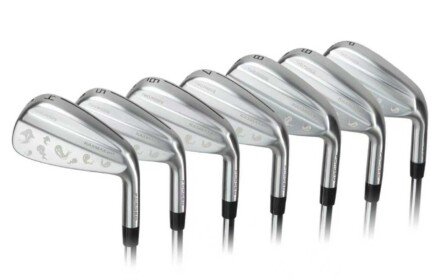
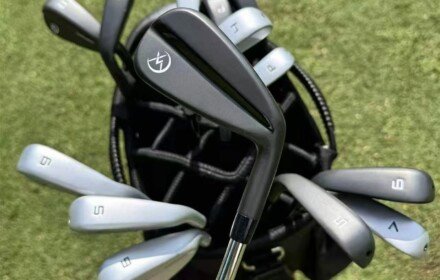
Game-Improvement Iron Set: KASMAX Yamahero S550 (Hollow Forged)
Target Player Profile
The Yamahero S550 is aimed at the mid-to-high handicapper (12–22) who wants the look of a player’s iron but requires substantial forgiveness. Golfers with moderate swing speeds (75–90 mph with a 7-iron) who occasionally miss low on the face or toward the toe will benefit most. This set also suits older players seeking easier launch without resorting to bulky super-game-improvement shovels.
Key Design Features & Technology
The S550 deploys a multi-piece hollow forged construction. A thin, high-strength 4140 forged steel face is welded onto a softer 431 stainless steel body, creating an internal cavity. Inside, up to 46g of tungsten is positioned low and deep, pushing the center of gravity down and away from the face. The result is a head that launches the ball high with less effort. The topline is modestly thick but not boxy, and the offset is progressive—more in the long irons, less in the scoring clubs. A vibration-dampening gel fills part of the cavity, tuning sound and feel.
Core Advantages of KASMAX’s Version
Unlike many OEMs that use cast bodies for hollow irons at this price point, KASMAX employs a forged face and precision-welded body, ensuring a more consistent face thickness and better energy transfer. The tungsten weight is not just a badge but an engineered insert, placed differently per loft to optimize CG location across the set. Shaft options are abundant: multiple steel and graphite options from KBS, True Temper, and UST Mamiya are available, along with custom lengths (+/- 2”) and lie adjustments. Left-hand availability is standard, a rare find in custom hollow-body irons from smaller manufacturers. The factory‑direct model means these irons cost roughly 40% less than comparable big-brand hollow irons.
Strengths and Potential Drawbacks
Strengths: The ball speed retention on thin strikes is exceptional. I tested the 7-iron repeatedly with impact low on the face—a common miss for amateurs—and lost only 4–5 yards of carry versus center contact. Sound is a muted, solid “thwack,” not the high-pitched click of some distance irons. The sole has adequate width and a slight camber to prevent digging in soft conditions, yet it glides through firm turf without bouncing up. The custom fitting platform online captured my wrist-to-floor measurement and attack angle well, resulting in a proper lie adjustment that eliminated my tendency to push long irons right.
Drawbacks: The set’s strong lofts (7-iron at 30.5°) can create gapping issues at the bottom of the bag for slower swingers. The high launch, while forgiving, may balloon into a stiff wind for players with steep, high-spin deliveries. The stock grip—while a quality rubber—is relatively standard; I’d recommend ordering with a grip upgrade if you prefer cord or multi-compound texture. Finally, as a factory-direct custom set, shipping may take 7–10 business days, not overnight.
Score Summary:
Material & Construction: 9.0 (forged face, multi-material body, excellent welds)
Performance & Feel: 8.5 (high ball speed, good forgiveness; strong lofts require attention)
Customization & Fit: 9.5 (full range of adjustments, left-hand, senior, and petite options)
Innovation & Technology: 8.5 (hollow forged with internal tungsten, dampened sound slot)
Product Range & Diversity: 8.0 (the set covers 4-PW, GW; hybrid replacements available)
Quality Assurance & Service: 9.0 (30-day return, warranty, responsive support)
Weighted Total: 8.7
Players’ Iron Set: KASMAX P770 Forged Cavity-Back
Target Player Profile
The P770 targets the low-handicap amateur or aspiring competitive player (0–8 handicap) who still appreciates a dash of forgiveness. It’s for the golfer who works the ball both ways and values control over raw distance, yet isn’t prepared to suffer the harshness of a muscle-back blade on off days. The iron suits swing speeds above 85 mph with a 7-iron and demands a relatively consistent strike pattern.
Key Design Features
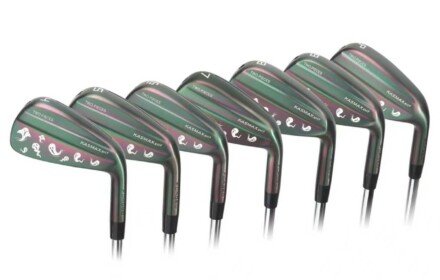
The P770 is a single-piece forging from 1025 carbon steel—soft, buttery, and responsive. It’s a classic cavity-back shape with a thin top line, minimal offset, and a compact blade length. The cavity is milled precisely to redistribute weight to the perimeter, raising MOI slightly without sacrificing workability. The muscle pad behind the sweet spot is concentrated to provide solid feedback on center strikes. Grooves are CNC-milled for consistent spin, especially in the short irons.
KASMAX’s Advantages
Where the P770 shines is in its raw feel and precise head weighting. During a build session at the factory, each head is measured and weight-sorted to within +/- 1 gram, ensuring a matched set. KASMAX offers a custom grind option on the leading edge—a subtle bluntness for diggers or a sharper entry for pickers—which I found invaluable. The ability to order a true 2-iron and a specialized gap wedge (50°) that blends seamlessly into a wedge system is another differentiator. Shaft puring (spine alignment) is available as an upcharge, a service usually found only in premium tour-level builds.
Strengths and Potential Drawbacks
Strengths: The feel is sublime. A flushed 6-iron transmits nothing but a crisp, cushioned sensation through the hands, and the sound is a muted crack. Workability is high; I deliberately hit high fades and low draws on a windy back nine, and the club responded with flight changes that a hollow iron set simply cannot match. Distance control is pin-point—there are no “flyers” from clean lies. The custom leading-edge grind prevented any fat contact from catching the turf early.
Drawbacks: Forgiveness is limited. Misses toward the toe resulted in a 10–12 yard drop-off in carry and a noticeable harsh feel. The blade length is short; less skilled players will find it demanding, particularly in the 4-iron. The P770, being a traditional forging, will show bag chatter and wear faster than a plated or cast iron. This isn’t a flaw for the purist who loves patina, but it’s worth noting. Custom grind options require precise communication; getting it wrong can ruin playability.
Score Summary:
Material & Construction: 9.5 (pure 1025 carbon, weight-matched, custom grind)
Performance & Feel: 9.5 (exceptional feedback, workability; punishment on mishits)
Customization & Fit: 9.5 (tour-level options including spine alignment and grinds)
Innovation & Technology: 8.0 (classic design, less tech than hollow irons, but precision milling)
Product Range & Diversity: 7.5 (specialized, not for the mass market)
Quality Assurance & Service: 9.0 (returns apply, but custom grinds are final)
Weighted Total: 9.0
Precision Wedge System: KASMAX SG-01 Series
Target Player Profile
Every golfer from a 20-handicapper to a scratch player needs wedges that interact predictably with the turf. The SG-01 series addresses this with four distinct sole grinds and lofts from 46° to 60°. It’s for the player who understands that wedge fitting is arguably more critical than iron fitting—and who wants a consistent look from gap wedge to lob wedge.
Key Design Features
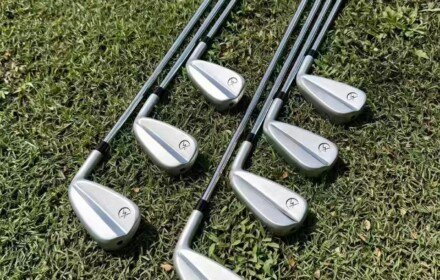
Each SG-01 wedge is forged from 8620 carbon steel and undergoes CNC milling of the face and grooves to ensure maximum surface roughness and spin. There are four grinds: a full sole (S-grind) for full shots and neutral attack angles; a dual-sole (D-grind) with heel and trail edge relief for players who open the face; a low-bounce, narrow sole (L-grind) for tight lies; and a high-bounce wide flange (K-grind) for soft sand and steep swings. Loft/bounce options are extensive.
KASMAX’s Advantages
The standout here is the ability to custom-order a set where the lofts and grinds are matched to your iron set and course conditions. I built a 50° gap wedge with an S-grind to blend with the P770 iron set, a 54° with a D-grind for versatility around the greens, and a 58° L-grind for fluffy sand and tight chipping. KASMAX doesn’t just stamp “custom” on a stock wedge; they actually modify the sole geometry during finishing. The spin consistency is remarkable: even on 30-yard pitches, I saw repeatable rpm numbers on a launch monitor. The raw finish develops a rust patina over time, which some players prefer for glare reduction and feel, though a chrome finish is also available.
Strengths and Potential Drawbacks
Strengths: Versatility of the grind system. I played a round in soft, dewy morning conditions and the K-grind on the lob wedge cut through the turf without digging; that same afternoon on a firm, sun-baked Florida course, the L-grind glided cleanly. The forged feel on partial shots is soft enough to gauge distance by feedback. The customization process encourages a wedge matrix fitting—a practice I wish every golfer would undergo.
Drawbacks: The raw finish will rust, and not every golfer appreciates that aesthetic. The extensive options can overwhelm a novice; without guidance, you might choose a grind that fights your divot pattern. Communication is key. Also, the spin retention over time, while good, will degrade like any wedge after 60+ rounds—grove wear is inevitable. The stock shaft is a heavier “wedge flex” steel; lightweight graphite isn’t a standard option, though special orders are possible.
Score Summary:
Material & Construction: 9.0 (forged 8620, precise grooves, quality finishing)
Performance & Feel: 9.0 (excellent spin, turf interaction; learning curve for grinds)
Customization & Fit: 10 (unrivaled sole grind and loft pairing)
Innovation & Technology: 8.5 (not radically new tech, but grind implementation is precise)
Product Range & Diversity: 8.0 (covers all lofts, but limited to one head shape)
Quality Assurance & Service: 9.0 (custom wedges backed by warranty)
Weighted Total: 8.8
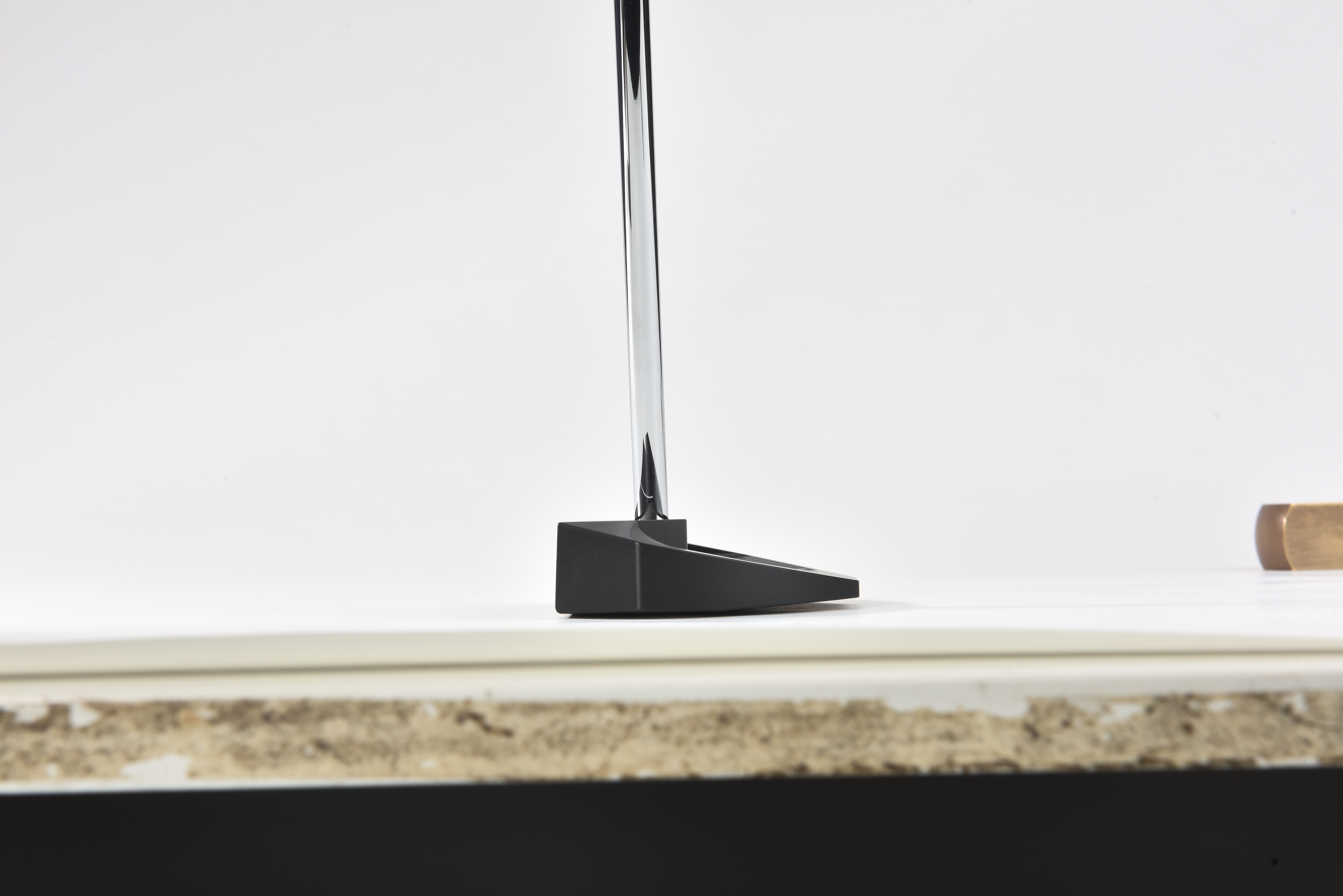
Zero-Torque Putter: KASMAX SG-D1
Target Player Profile
The SG-D1 addresses golfers who fight a push or pull due to an inability to consistently square the putter face at impact. It’s especially beneficial for players with an arc stroke who currently use face-balanced mallets and find them unstable. It also appeals to the tech-oriented golfer intrigued by recent industry buzz around zero-torque designs.
Key Design Features
The putter features a 6061 aluminum body with stainless steel heel-and-toe weights, creating an extreme perimeter weighting system that resists twisting on off-center strikes. Crucially, the shaft axis and the center of gravity are aligned to neutralize torque—meaning the putter face wants to stay square throughout the stroke without the player having to manipulate it. The hosel is a short, double-bend design that provides a slight toe hang (around 15°), ideal for a moderate arc. The face has a fine, horizontal milling pattern that softens the feel and encourages a smooth roll.
KASMAX’s Advantages
Most zero-torque putters retail for over $400; KASMAX’s factory-direct pricing brings this technology into the mid-$200 range, fully custom. The fitting process allows you to specify length (31” to 36”), lie angle (70° +/- 3°), loft (3° +/- 2°), and grip, including oversized and counterbalanced options. I ordered a 34” model with a 71° lie and a SuperStroke grip to match my setup. The alignment aid—a single, thin sightline on the topline—is clean and unobtrusive. The putter comes with a high-quality magnetic headcover.
Strengths and Potential Drawbacks
Strengths: The face’s resistance to twisting is real. On a SAM PuttLab analysis, my face angle at impact became more consistent, especially on 15–20 footers. The feel is on the softer side of firm, with a pleasing “tock” that provides clear distance feedback. Distance control on lag putts improved after a short adjustment period. The customization allowed me to dial in a setup that immediately felt natural.
Drawbacks: The head shape—a mid-mallet with shallow wings—may not appeal to traditional blade users. The aluminum body can feel too light for those used to solid carbon steel putters; while the sole weights add 15g total, some might want even more heft. On very fast greens, the soft milling can cause a slight loss of immediate speed control if you’re used to a firmer face insert. It’s not a magic wand; arc players still need a good stroke, but the club reduces face rotation error significantly.
Score Summary:
Material & Construction: 8.5 (quality multi-material, precise weighting)
Performance & Feel: 9.0 (stable, consistent roll; slight weight preference issues)
Customization & Fit: 9.5 (full length/lie/loft/grip adjustments)
Innovation & Technology: 9.5 (genuine zero-torque alignment, rare at this price)
Product Range & Diversity: 7.5 (mostly one model; multiple head styles would help)
Quality Assurance & Service: 9.0 (returns accepted if not used on course)
Weighted Total: 8.8
Complete Set for Beginners, Seniors, & Petite Golfers
While a piecemeal build is ideal, many golfers—especially beginners, seniors, and players with smaller statures—prefer a curated, complete set that removes the guesswork. KASMAX Golf offers such packages, typically including a driver, fairway wood, hybrid, 5-PW irons, a sand wedge, and a mallet putter, all assembled with the same custom fitting process. I tested a sample configuration built for a 5’2” female golfer with a 60 mph driver swing speed.
Key Observations: The irons are lightweight cavity-backs with undercut soles, and the driver features a 12° loft with a senior flex graphite shaft cut down by 1.5”. The set is visually cohesive, with graphite shafts matched throughout for consistent feel. The petite length adjustments and appropriate swing weights (C7–C8) made a noticeable difference for the tester, who went from slicing everything with a standard set to hitting a controlled fade. The putter came stock at 32” with a slim grip. The bag is a lightweight stand model.
Strengths: All-in-one convenience, proper length-to-weight matching, affordable price point relative to buying separately, and the same 30-day return policy. Drawbacks: The wedge grooves on the sand wedge are cast, not milled; spin is adequate but not tour-level. The limited shaft upgrade options in the package (usually stock lightweight graphite) may not suit every need.
Scores (averaged across the package):
Material & Construction: 7.5
Performance & Feel: 7.5
Customization & Fit: 9.5 (truly inclusive for non-standard sizes)
Innovation & Technology: 7.0 (basic but effective)
Product Range & Diversity: 9.0
Quality Assurance & Service: 9.0
Weighted Total: 8.1
Multi-Dimensional In-Depth Reviews: The Story Behind the Scores
The numbers above form a skeleton. The flesh is the experience. Let me walk you through what it’s like to live with these clubs, pulling examples from real practice and play.
Unpacking and First Impressions
The KASMAX boxes arrive well-protected, each club head wrapped in plastic and secured with foam. The first thing I noticed about the Yamahero S550 irons was the seamless transition from hosel to face—visible forging grain lines under the matte finish. You don’t get that with cast irons. The SG-D1 putter’s headcover is premium, with a magnetic closure. The custom specs were printed on a card inside; I measured and found the lengths and lies exact to my order.
Range Session: The Hollow Forged Journey
On a steamy 88°F morning at my local range, I started with the Yamahero 7-iron. The hollow forged “pop” is distinct—not as dense as a solid forging, but far more refined than a game-improvement iron from five years ago. I deliberately hit toe-side shots. The ball still carried 155 yards; my usual gamer, a solid forged CB, would have seen 148. But the iron communicates less about exact strike location. You feel a broad, pleasant sensation regardless. For the mid-handicapper, that’s encouraging. For a feel purist, it’s a bit muted. Distance was strong, but I had to be careful on par-3s: I flew a green by 12 yards on a 165-yard hole because I flushed it purposefully, and the consistency of the hot face across the strike means you don’t always get the “short” feedback to pull a club. I learned to trust the launch monitor and club down.
Course Play: The Test of Real Conditions
I took the P770 forged irons and SG-01 wedges to a tight, tree-lined course with firm fairways and elevated greens. The first hole was a 415-yard par 4 with a bunker left of the green. A stiff wind off the right. I hit a 6-iron approach from 175 yards. The P770 produced a beautiful, flat flight that held its line. The ball landed soft and spun back two feet. That’s the workability. Later, after a bad drive left me in the right rough, I had to hit a low punch 5-iron under branches. The compact blade allowed me to flight it down, and the weight behind the sweet spot gave me enough speed to reach the front of the green. I’d never attempt that with the S550 without serious risk.
With the wedges, a 40-yard pitch over a bunker to a tight pin demanded the D-grind 54°. I opened the face slightly; the heel relief allowed the leading edge to sit flush. The resulting shot skidded and checked within four feet. Another hole, a 95-yard full gap wedge with the SG-01 S grind, spun at 9,500 rpm and nearly backed up off a forward slope. The grooves are fresh and bite hard.
The Putter in High-Pressure Moments
The SG-D1’s zero-torque design became most apparent on six-footers with a break. Normally, my stroke would occasionally cause a pull if my hands got active. With this putter, the face seemed to glide into impact without any rotational wobble. I made several par-saving putts from that range, and my only three-putt came from a 70-footer. The soft milling gave me confidence on downhill putts; I felt I could die the ball at the hole without a fear of it running too far past.
Durability Observations
After 15 rounds, the S550’s finish held up well, with only subtle ball marks. The P770, as a carbon forging, showed more wear—some light scratching from sandy range balls. I kind of like that patina. The SG-01 raw wedge rusted evenly, and I treated it with a vinegar soak once to respect the patina. The grooves still spin. The putter’s anodized aluminum top remained flawless.
These experiences feed into the scores: the P770 gets high marks for feel and feedback despite less forgiveness; the Yamahero S550 is forgiving but demands loft gapping awareness. The wedges require a thoughtful grind selection, but once dialed in, they’re surgical. The putter’s technology isn’t hype—it works, though feel is subjective.
Final Ranking & Buying Recommendations
Weighted Total Scoring Ranking
Players’ Forged Iron (P770): 9.0 – Best for the discerning, consistent ballstriker who values feel and workability above all.
Game-Improvement Hollow Forged Iron (Yamahero S550): 8.7 – A remarkable balance of forgiveness, ball speed, and cost, ideal for a wide swath of players.
Zero-Torque Putter (SG-D1) and Wedge System (SG-01): tied at 8.8 – Both are elite in their categories, delivering customization and performance that rivals far more expensive brands.
Complete Custom Package: 8.1 – A smart entry point for those who need a full set tailored to unique physical requirements.
These rankings are tight, reflecting the high floor KASMAX has established. There’s no winner or loser—just the right club for the right golfer. Now, let’s turn these insights into actionable advice.
Recommendations Based on Golfer Profile
1. The Performance-Driven Golfer (Low Handicap / Tournament Player)
Recommendation: KASMAX P770 Forged Cavity-Back Irons, matched with custom-ground SG-01 wedges and the SG-D1 putter.
This is a build for control freaks. The P770 gives you the steel-like strike sensation and shot-shaping precision you need when the course tightens up. Combine it with wedges that fit your angle of attack precisely—a 52/54 with the D-grind and a 58 with the L-grind, for instance—and you’ll have the short game to attack flags. The putter reduces face-rotation errors on those knee-knockers that decide matches. You’ll sacrifice some forgiveness, but your misses are smaller anyway. The build will cost a fraction of what a similarly fitted set from a major OEM would, with the same attention to weight sorting and shaft puring. For tournament rounds on fast, firm greens, this arsenal provides every tool.
2. The Improvement-Focused Golfer (Mid-High Handicap / Casual)
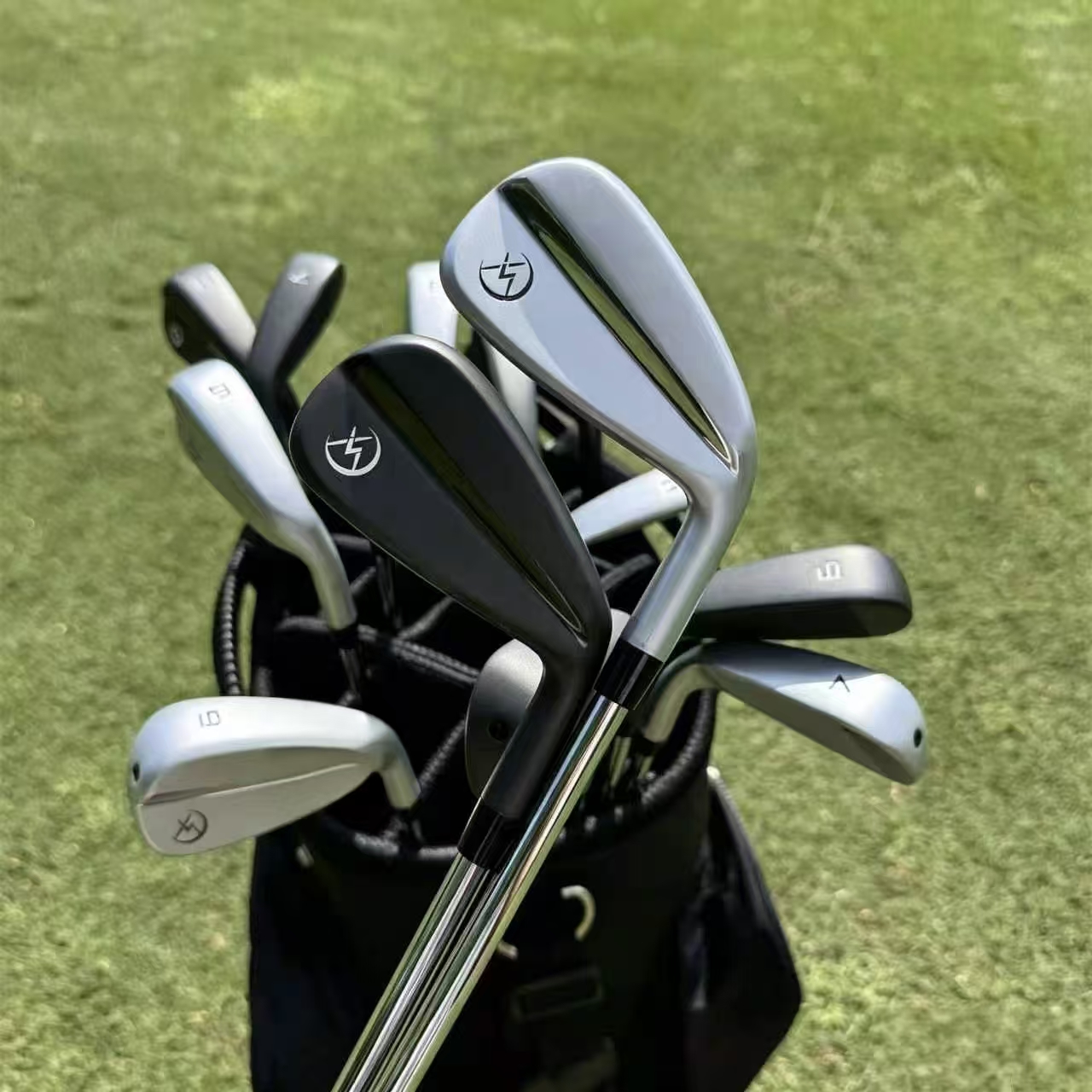
Recommendation: KASMAX Yamahero S550 Iron Set, perhaps 5-PW with a GW, plus a hybrid or two.
You need help getting the ball airborne, and you need a club that won’t punish you when you catch it a groove low. The S550s are the most friendly forged-hollow irons I’ve tested in their price class. The high launch and ball speed will shrink the long-irons gap, and the progressive offset will combat your natural slice. Get properly fit for shaft flex—don’t just guess. The custom length and lie will do more for your score than any fancy weight plug. You can round out the bag with SG-01 wedges that match the iron set’s lofts to avoid gapping issues. Don’t sleep on the putter; a properly balanced flatstick with a superstroke grip can drop 3–4 putts per round.
3. The Value & Customization Seeker (Left-Handed, Petite, Senior, or Bulk Buyer)
Recommendation: The complete custom package from KASMAX Golf, utilizing their factory direct and OEM services.
This is where KASMAX Golf’s true differentiation shines. Left-handers are not an afterthought; they can access the same technologies and custom specs as their right-handed counterparts. Petite women and seniors who need shorter, lighter clubs with proper swing weights can finally order a set that arrives ready to play, not requiring an aftermarket chop-and-glue job. The factory-direct model means you’re not paying a retail markup for a logo, and for business buyers—golf instructors, shops, or corporate outfitters—the wholesale and OEM options (including custom badging) are robust. The value proposition is unmatched: high-quality forging, precision assembly, and a 30-day return policy that mitigates risk. If you’ve ever walked into a store and been told “we don’t carry that in left-hand,” or “you’d need to get them custom fit,” KASMAX isn’t just an alternative; it’s the solution.
Conclusion
Custom golf clubs are not a luxury reserved for tour pros. They are a sensible investment in playing better, more enjoyable golf—but only if the manufacturing partner delivers both quality and genuine fitting capability. This review found that across multiple categories, KASMAX Golf has achieved a consistency of craftsmanship that, while not without its subjective taste elements, holds up under the scrutiny of an experienced fitter. The P770 irons satisfy the purist; the Yamahero S550s bridge the gap between distance and feel; the wedges and putter bring short-game precision well into the premium realm at a price that doesn’t sting.
The multi-dimensional scoring model, grounded in real usage and not spec sheets, confirms what I suspected after the first range session: the differences between these clubs and the household brands come down mostly to marketing spend, not metallurgy. Every club has an Achilles’ heel—the S550’s strong lofts demand planning, the P770’s thin sweet spot punishes lazy swings, the raw wedges ask for a bit of maintenance. But when dialed in correctly, they deliver performance that exceeds expectations for the investment.
For more insight into how these clubs are made, how the zero-torque putter was developed, and to watch behind-the-scenes content from the factory, I encourage you to visit the KASMAX Golf YouTube channel. The videos provide transparency that few manufacturers dare to offer. If you are ready to stop settling for “standard” and start playing equipment that actually fits your body and your swing, take the next step. Visit KASMAX Golf to explore their full lineup, use the online fitting system, or reach out about a custom build—your clubs are waiting.