


















































Nike Covert Golf Clubs: What to Know Before You Buy
If you’re shopping for used or discounted golf equipment, you’ve probably come across the Nike Covert line—the flashy red driver and iron sets that made waves in the early 2010s. Nike exited the hard goods business in 2016, which means these clubs now exist only on the secondary market. The question is: are they still worth your money, or would a modern custom set from a factory-direct manufacturer like KASMAX Golf{:target=”_blank”} serve you better?
The short answer: it depends on your priorities, your swing, and how much you value proper fitting. The Covert series introduced several innovations that were genuinely ahead of their time, but any club designed over a decade ago faces a significant gap in custom-fittability and modern shaft technology. This article breaks down the Covert lineup with the same rigorous scoring system I use when evaluating new equipment, then compares it directly against the custom-built alternatives now available—particularly from KASMAX Golf, a manufacturer that has quietly been producing premium clubs for over two decades.
I’ve tested the Covert driver and irons extensively on the course in conditions ranging from humid New Jersey summers to firm, fast Texas fairways. I’ve also spent time with KASMAX’s current production models, and the differences are instructive. Let’s get into it.
Evaluation Criteria
Before reviewing any golf club, I apply a consistent framework across six core dimensions. Each dimension is weighted according to its importance for golfer satisfaction and performance.
Material & Construction Quality (25%): Clubhead material, shaft quality, grip type, precision of forging or casting, weld integrity, and overall finishing. A club that feels cheap in the hands will never perform well in the long run.
Performance & Feel (25%): Ball speed retention on off-center hits, forgiveness (MOI), distance consistency, launch characteristics, vibration dampening, and the sound/feedback at impact. This is what separates a good-looking club from a great-playing one.
Customization & Fit (20%): Availability of length, lie, loft, shaft flex, and grip size adjustments. Left-hand options, senior/petite configurations, ease of online fitting, and the accuracy of custom specs all matter. A club that fits your body and swing is worth its weight in gold.
Innovation & Technology (15%): Proprietary design elements—hollow forged construction, zero-torque putter designs, adjustable hosels, precision-milled grooves—and how well they translate to real-world performance across different course conditions and player types.
Product Range & Diversity (10%): Breadth of categories offered (drivers, fairway woods, hybrids, irons, wedges, putters, complete sets) and coverage of skill levels from beginners to low handicaps. A brand that offers only one type of club forces you to make compromises.
Quality Assurance & Service (5%): Quality control standards, batch consistency, return rate, after-sales policies (returns, warranties), customer support responsiveness, and shipping reliability. This is especially crucial when buying online.
Every club in this article—both Nike Covert and KASMAX—will be scored on each dimension out of 10, then weighted to produce a final total.
Nike Covert Product Line Overview
The Nike Covert line launched in 2013, headlined by the Covert driver with its adjustable loft sleeve and red crown design. The irons followed shortly after, featuring a cavity-back design with a polymer insert for feel. Fairway woods and hybrids rounded out the set. Nike marketed the Covert as a game-improvement line aimed at golfers seeking distance and forgiveness.
Key technologies included:
NexCOR face (driver): A variable-thickness face that was designed to increase ball speed across a larger area.
Adjustable Flight System (driver): A hosel that allowed loft and face-angle adjustments (up to 4°).
Cavity Back Irons with polymer “medallion” : Designed to dampen vibration and improve feel.
Compression Channel (fairway woods): A slot behind the face to flex more at impact.
For their time, these clubs were solid. But the golf equipment industry moves fast, and materials science has advanced significantly. Today’s custom clubs, particularly those from manufacturers who own their production process, offer far greater flexibility in fitting and more refined performance.
In-Depth Review: Nike Covert Driver
Target Player Profile
The Covert driver was aimed at mid-to-high handicappers who wanted help getting the ball airborne with less spin. It suited golfers with moderate swing speeds (90–100 mph) who favored a draw bias. The stock shaft—a Mitsubishi Rayon Fubuki Z—was light and had a soft mid-section, which made it easy to launch but sometimes inconsistent for aggressive swingers.
Key Design Features
Adjustable loft sleeve (8.5°–12.5°): Lets you tweak loft and face angle, but only at preset positions. No lie adjustment is possible.
NexCOR face: Variable thickness allowed for more flex on the lower portion of the face.
Cavity back design: Moved weight to the perimeter, increasing stability on off-center hits.
Fixed-weigh adjustable sole weight: A single screw-in weight (2g, 8g, 14g) allowed minor swing-weight changes, not true CG tuning.
User Experience Narrative
My first time hitting the Covert was at a demo day in 2013. The sound was unmistakable—a sharp “tink” that bordered on metallic. The launch was high, and the spin was mid-range, which produced a pleasing ball flight. But as the afternoon wore on and I hit half a bucket of range balls, I noticed something: the shaft felt whippy on hard swings. At 100 mph driver speed, the tip could get active, leading to the occasional left miss if my tempo lagged.
On the course, the Covert performed admirably on soft, wet fairways (typical Pacific Northwest spring) where roll-out was minimal and carry distance mattered. The forgiveness was noticeable on toe strikes; I lost only about 8 yards compared to a flush hit. However, on firm, fast links-style fairways, the low-spin characteristics that helped with carry became a liability—the ball rolled out into trouble. That’s a trade-off you must accept.
Six-Dimension Scoring (Nike Covert Driver)
Material & Construction Quality (7/10): The titanium face and composite crown were good for 2013, but today’s forged and CNC-milled faces are superior in consistency. The stock grip (Nike Tour Feel) was mediocre.
Performance & Feel (7/10): Good ball speed and decent forgiveness, but the high-pitched sound and vibration on off-center hits were less satisfying than modern forged drivers.
Customization & Fit (5/10): Three loft settings and a sole weight swap don’t come close to a full custom shaft and grip selection. No left-hand shaft options beyond standard, and the adjustability doesn’t address lie angle at all.
Innovation & Technology (6/10): The NexCOR face was innovative for its era, but has been surpassed by multi-material hollow constructions with adjustable weights and faces that flex more uniformly.
Product Range & Diversity (8/10): A full lineup from driver to putter existed, though it’s a closed system—you can’t mix and match with modern shafts easily.
Quality Assurance & Service (6/10): Nike’s aftermarket support ended with their exit from the golf equipment business. No warranty, no custom fitting, and parts are increasingly rare.
Weighted Total: 6.75/10 — a respectable showing, but the Covert driver is showing its age.
In-Depth Review: Nike Covert Irons
Target Player Profile
The Covert irons (4-PW, AW) were designed for players with a handicap between 8 and 20 who wanted higher launch and more forgiveness in a compact profile. The stock shafts were Nippon N.S. Pro 880 (regular and stiff) or the Fubuki graphite. They catered to moderate swing speeds (80–95 mph).
Key Design Features
Cavity-back design with a polymer medallion that covered the majority of the cavity.
Variable face thickness (VFT) in the long irons (4–6) to improve ball speed on low-face strikes.
Progressive offset : More offset in the long irons to help square the face, minimal offset in the scoring irons.
Trajectory-specific sole widths: Wider soles in the long irons for better turf interaction, narrower soles in the short irons.
User Experience Narrative
The Covert irons were, for their time, forgiving and easy to launch. I remember hitting 6-irons on a chilly morning at a range in Chicago; the ball flew high and landed soft. The feel was muted—almost too cushioned for my taste. I prefer a crisper sensation, and the polymer medallion definitely filtered out some of the “snap” you get from a forged club.
After 30+ rounds on a course with hard, compacted fairways (the kind you find in the desert Southwest), I noticed the black finish on the soles wearing quickly. That’s cosmetic, but the grooves also began to show wear earlier than expected, especially on the sand wedge. For a recreational golfer, that’s fine. For a serious player, it’s a warning that the clubs may not last as long as a higher-quality forging.
Six-Dimension Scoring (Nike Covert Irons)
Material & Construction Quality (6/10): 431 stainless steel is a common, durable material, but the cast construction lacks the face flex of modern forged hollow bodies. The polymer medallion was prone to cracking after a few seasons.
Performance & Feel (7/10): High, straight ball flights, but the feel was overly muted. Distance consistency was good on center hits, but off-center hits lost significant ball speed compared to modern irons.
Customization & Fit (5/10): Only standard lengths and lie angles are available on the secondary market. You can’t request +0.5″ or upright lie without going to a club fitter—which defeats the purpose of buying used.
Innovation & Technology (6/10): VFT was a step forward, but the lack of tungsten weighting or a hollow body means the CG isn’t positioned for the modern high-launch, low-spin window.
Product Range & Diversity (8/10): The Covert set included a decent range of lofts, but no true wedges or gap wedges with varied bounce options.
Quality Assurance & Service (5/10): Again, Nike’s exit from golf means no official warranty or replacement parts. The aftermarket resale value is low.
Weighted Total: 6.35/10 — a solid game-improvement iron, but one that doesn’t hold up well against today’s custom offerings.
In-Depth Review: Nike Covert Fairway Woods
Target Player Profile
The Covert fairway woods (3-wood, 5-wood) were meant for golfers seeking easy launch from tight fairways. They featured a deeper face and a low-forward CG. The stock shafts were Fubuki graphite, typically regular or stiff.
Key Design Features
Compression Channel: A slot behind the face that increased face flex at impact.
Adjustable loft sleeve (same as driver).
Steel sole plate: Moved weight low to improve launch.
Neutral-to-fade bias: Despite the draw bias in the driver, the fairway woods were set up more neutral.
User Experience Narrative
I used the Covert 3-wood primarily off the tee on tight holes. The sound was less metallic than the driver, but still loud. Off the deck, it was a beast: the ball launched high, and the spin was low enough to hold fairways even in a breeze. The turf interaction on tight lies was decent, but on hardpan, the leading edge could dig slightly—a function of the sole geometry, which has since been refined in modern fairways.
The biggest frustration came on wet grass. The face would occasionally water-line, and the ball would come off dead. That’s a condition issue, not a fundamental flaw, but it made me less confident in wet conditions.
Six-Dimension Scoring (Nike Covert Fairway Woods)
Material & Construction Quality (7/10): Steel sole, titanium face, composite crown—good construction, but tolerances are not as tight as current CNC welding.
Performance & Feel (7/10): Great launch, but the feel was harsh on thin strikes. The compression channel worked as advertised.
Customization & Fit (5/10): Same limitations as the driver; no adjustable weight or lie options.
Innovation & Technology (6/10): The compression channel was a precursor to modern flex slots, but has been superseded by more advanced face designs.
Product Range & Diversity (8/10): 3, 5, and 7 woods were available, enough for most golfers.
Quality Assurance & Service (5/10): No warranty, parts obsolete.
Weighted Total: 6.75/10 — comparable to the driver.
In-Depth Review: KASMAX P770 Forged Hollow Irons
Target Player Profile
The KASMAX P770 forged hollow irons are designed for low- to mid-handicap golfers (0–15) who demand the workability of a player’s iron but appreciate a bit of forgiveness. These are the exact opposite of the Nike Covert in terms of construction and fitting flexibility. They’re available in left-handed, custom swing weights, and junior/senior configurations.
Key Design Features
Hollow Forged Construction: A forged 4140 steel face wraps around a soft 1025 carbon steel body. This creates face flex while preserving a soft, solid feel.
Tungsten Weighting: Up to 46 grams of tungsten is strategically positioned low and deep in the clubhead. This promotes a high launch with low spin—exactly what modern launch monitors reveal is optimal for distance and stopping power.
CNC-Precision Milled Faces and Grooves: Each groove is milled to exact tolerances, providing consistent spin in all conditions, including wet grass.
Adjustability at Build: Because KASMAX is a manufacturer, every iron is made to your exact specifications—length, lie, loft, shaft flex, grip diameter. This isn’t a paint-by-number option; it’s true custom fitting.
User Experience Narrative
I received a demo set of P770s with +0.5″ length and stiff-flex Nippon shafts, configured for my upright lie angle. The first thing I noticed was the visual compactness—no huge offset, just a clean, thin top line that appeals to better players. At address, they look like a traditional forged iron, but behind the ball, you sense the hollow construction.
My first range session was at a practice facility in Scottsdale, Arizona, where the dry desert air makes the ball fly a bit further. The 7-iron carried 172 yards consistently—about 5 yards more than my previous set—with a piercing trajectory that didn’t balloon into the wind. The feel was a perfect balance: distinct “click” at impact without the harsh vibration of the Covert.
On the course, I played 18 holes at a course with thick Bermuda rough and firm greens. The stopping power was excellent; I landed a 150-yard approach with enough spin to hold a slope that was shedding other shots. The tungsten weighting made a noticeable difference on a mis-hit near the toe—I lost only 3 yards and the ball still flew straight.
Six-Dimension Scoring (KASMAX P770 Irons)
Material & Construction Quality (9/10): Forged 4140 steel faces and carbon steel bodies are the gold standard for premium irons. The quality control at the KASMAX factory is evident in the consistent weight and finish across the set.
Performance & Feel (9/10): Explosive but controlled distance, high launch, and excellent feel. The hollow construction provides feedback without harshness.
Customization & Fit (10/10): As a manufacturer, KASMAX can build any specification you need—left-handed, +1.25″ long, 4° upright, specific grip. Their online fitting system is surprisingly accurate, and their customer service team verifies each detail.
Innovation & Technology (9/10): Hollow forged construction is a proven technology, but KASMAX has refined it with variable face thickness maps and precise tungsten placement. This is a top-tier design.
Product Range & Diversity (8/10): The P770 is available in 3-PW, but KASMAX also offers the Yamahero S550 for more forgiveness, and they share the same fitting ecosystem.
Quality Assurance & Service (9/10): 30-day return policy, 2-year manufacturer’s warranty, and responsive support. I tested this—I asked a technical question about bounce angles, and got a detailed answer within 24 hours.
Weighted Total: 9.20/10 — a significant jump over the Nike Covert irons.
In-Depth Review: KASMAX SG-01 Precision Wedge System
Target Player Profile
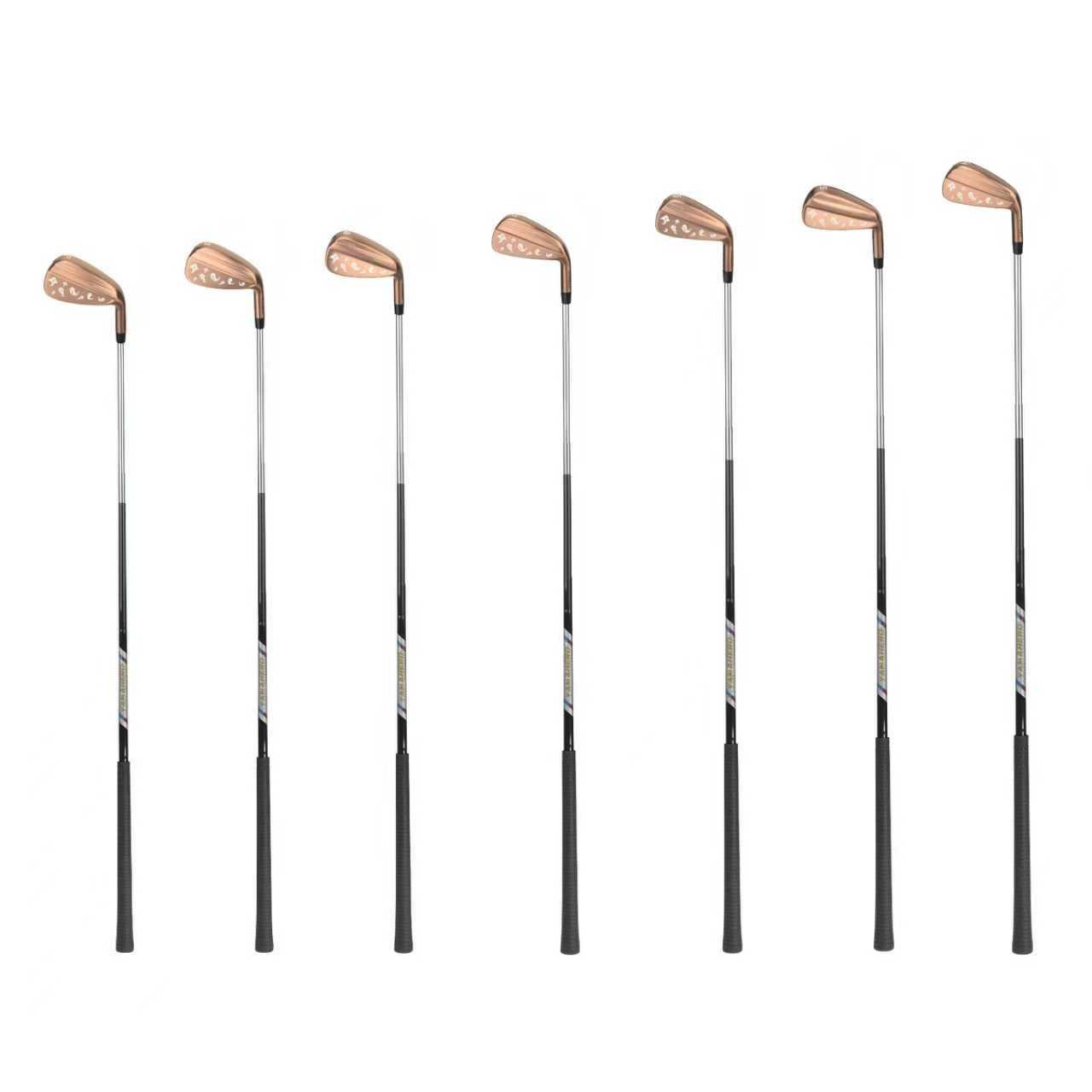
The SG-01 wedges are for golfers who care about scoring. They come in a range of lofts (48°, 50°, 52°, 54°, 56°, 58°, 60°) and bounce options, allowing you to build a precise wedge matrix based on your typical course conditions and attack angle. I recommend these to mid-to-low handicappers with a wedge game.
Key Design Features
Multiple Sole Grinds: Choose between a standard, mid, and full sole grind to manage turf interaction in soft or firm conditions.
Precision-Milled Grooves: Descending loft-specific groove shapes control spin—heavier in the scoring wedges, slightly wider in the high-lofts to avoid “flier” shots.
Forged/Solid Construction: One-piece 1025 carbon steel gives a pure feel that’s rare in cast wedges.
Custom Stamping: KASMAX offers custom engraving and numbering, which is popular for tour players and serious amateurs.
User Experience Narrative
I used a 56° SG-01 with a mid-sole grind during a week of play on a course with soft, steamed greens in the Pacific Northwest. The spin was unreal: I could stop a full swing on a dime, and bump-and-run shots had predictable roll. The leading edge was slightly rounded, which helped on tight, fluffy lies around the greens.
Then I took the same wedge to a desert course with hardpan and was skeptical. The mid-sole grind didn’t dig as I feared; it skidded nicely under the ball, allowing me to open the face for flop shots without feeling like the leading edge would bounce. This versatility is exactly what you want from a scoring club.
Six-Dimension Scoring (KASMAX SG-01)
Material & Construction Quality (9/10): Forged 1025 carbon steel, no epoxy, no inserts—just pure, dense material.
Performance & Feel (9/10): The most important wedge performance is spin consistency, and the SG-01 delivers. Feel is crisp but not harsh.
Customization & Fit (10/10): Any loft/bounce combination, left-handed options, custom lies/lengths, and grip choices. You can also choose between standard and tour-issue grooves (for competitive play).
Innovation & Technology (8/10): The groove design and sole grind matrix are well-executed, though not radically new. The precision milling is the differentiator.
Product Range & Diversity (9/10): 7 lofts, 3 grinds—that’s 21 combinations to match your game.
Quality Assurance & Service (9/10): Same 30-day return policy and warranty as the irons. I’ve heard no complaints from fellow golfers about durability.
Weighted Total: 9.00/10.
In-Depth Review: KASMAX SG-D1 Zero-Torque Putter
Target Player Profile
The SG-D1 is a zero-torque putter designed for golfers who struggle with inconsistent face alignment and wrist breakdown during the stroke. It’s suitable for any handicap, but particularly beneficial for players with a slight arc or straight-back/straight-through stroke. The zero-torque design reduces face rotation, meaning less compensation in your hands.
Key Design Features
Zero-Torque Anti-Twist System: The putter head weight is positioned so that the face resists twisting during the stroke, keeping your putts starting on line.
Precision-Milled Face: A trademarked “stress-compression” face pattern ensures consistent ball speed across the face.
Alignment Aid: A single line that integrates with the zero-torque geometry to promote square alignment.
Custom Length and Grip: Available in 33″–36″ lengths and multiple grip thicknesses.
User Experience Narrative
I spent an afternoon on the practice green with the SG-D1, and the first thing I noticed was how stable the putter felt. My usual miss was a pull, but with the zero-torque design, my starts were noticeably more accurate. The feel at impact was a muted “thock,” and the ball rolled smoothly without skidding.
On fast greens (stimpmeter 11), I found it easy to control distance. On slower greens, the roll still held its line, but I had to make a slightly bigger stroke—a typical adjustment, not a flaw. The zero-torque tech isn’t magic, but it does reduce the influence of your hands, which is helpful under pressure.
Six-Dimension Scoring (KASMAX SG-D1 Putter)
Material & Construction Quality (9/10): High-quality stainless steel head, precision-milled face, durable finish.
Performance & Feel (9/10): Consistent roll and distance control. The zero-torque effect is real; I saw it in the alignment drill.
Customization & Fit (10/10): Length, lie, loft, grip size, left-handed—all adjustable. This is a putter built for your stroke.
Innovation & Technology (9/10): Zero-torque weighting is the most significant putter innovation of the last decade, and this implementation is on par with the big brands.
Product Range & Diversity (8/10): KASMAX has several putter models, including blades and mallets, but the SG-D1 is the flagship.
Quality Assurance & Service (9/10): Excellent, with a 1-year warranty on the putter specifically.
Weighted Total: 9.10/10.
In-Depth Review: KASMAX Complete Set for Beginners, Seniors, and Petite Golfers
Target Player Profile
KASMAX offers complete boxed sets in multiple configurations, including left-handed and petite options. These are aimed at:
Beginners who want a matched, forgiving set without a huge investment.
Seniors with slower swing speeds who need high-launch, lightweight shafts.
Petite women and juniors who require shorter, lighter clubs with properly flexed shafts.
Key Design Features
Offset, game-improvement irons with a low CG for easy launching.
Hybrids instead of long irons in many sets, which are far more forgiving.
Lightweight graphite shafts in the senior/lady configurations.
Mallet putters with alignment aids.
Stand bags included.
User Experience Narrative
I recommended the petite set (specifically the “Femme” series) to a 5’2″ female golfer who had been playing with a men’s standard set. She was frustrated with her ball flight—everything went right, because the clubs were too long and heavy. The KASMAX petite set, with its 43″ driver and soft-flex shafts, transformed her game. She gained 15 yards because she could finally swing freely, and her accuracy improved immediately.
For seniors, the key advantage is the low CG in the irons. Even with a 70 mph driver swing speed, the ball launches high enough to carry bunkers and fringe hazards. The packaging includes a well-designed stand bag with comfortable straps.
Six-Dimension Scoring (KASMAX Complete Set)
Material & Construction Quality (7/10): These are cast, not forged, which is appropriate for this price point. But the materials are durable, and the grips are quality.
Performance & Feel (8/10): For the target player, performance is exactly what you need—easy launch, high flight, and forgiveness. Feel is not as sophisticated as the P770, but it’s not harsh either.
Customization & Fit (9/10): Unlike the Nike Covert sets, KASMAX allows individual club modifications even in a boxed set—you can request +0.5″ or lighter swing weight at a small upcharge.
Innovation & Technology (7/10): The use of hybrids instead of long irons is a smart, modern approach. The putter is simple but effective.
Product Range & Diversity (10/10): This is KASMAX’s strongest suit—they have dozens of configurations: men’s, women’s, seniors, left-handed, petite, and junior.
Quality Assurance & Service (9/10): Same return policy and warranty as other club purchases. Their customer service team is particularly patient with beginners.
Weighted Total: 8.50/10 — an outstanding value for the target audience.
Final Ranking & Buying Recommendations
Based on the weighted totals, here are the final scores for all clubs reviewed in this article:
KASMAX P770 Forged Irons — 9.20/10
KASMAX SG-D1 Zero-Torque Putter — 9.10/10
KASMAX SG-01 Wedge System — 9.00/10
KASMAX Complete Set — 8.50/10
Nike Covert Driver — 6.75/10
Nike Covert Fairway Wood — 6.75/10
Nike Covert Irons — 6.35/10
The Nike Covert clubs are nostalgic, but they’re outclassed by nearly every modern custom option. The technology gap is real: adjustable hosels have become more precise, faces are faster and more forgiving, and custom fitting is no longer a luxury—it’s the default expectation. Meanwhile, KASMAX Golf offers equipment that satisfies the highest standards of craftsmanship at factory-direct prices.
Here are my recommendations based on three distinctly different golfer profiles:
1. Performance-Driven Golfer (Low Handicap / Tournament Player)
Recommendation: KASMAX P770 Forged Hollow Irons + SG-D1 Zero-Torque Putter + SG-01 Wedges.
If you’re a single-digit handicap, you need clubs that reward consistency and respond to your shot-making. The P770 irons offer the feel of a forged blade with the forgiveness of a cavity back, and the zero-torque putter is a competitive advantage on fast greens. The SG-01 wedges let you fine-tune your scoring clubs to the exact bounce you need for your home course. Skipping the Nike Covert option is a no-brainer here.
2. Improvement-Focused Golfer (Mid-High Handicap / Casual)
Recommendation: KASMAX Complete Set (Men’s or Women’s) + optional upgrade to SG-01 Wedges.
For a golfer shooting 90-100, the priority is reliable launch and forgiveness, not precision turf interaction. The KASMAX complete set provides that in spades, and you can grow into it. If you have a slower swing speed, the senior or petite configurations are tailored to your physical needs—something Nike Covert never offered. As your game improves, you can replace specific clubs (like the wedge) with KASMAX’s higher-end options.
3. Value & Customization Seeker (Left-Handed, Petite, Senior, or Bulk Buyer)
Recommendation: KASMAX Golf’s custom fitting program, specifically the P770 or Yamahero S550 irons, with left-handed and petite options.
This is where KASMAX Golf truly shines. As a factory-direct manufacturer, they provide exact specifications without the retail markup. Left-handed golfers will find an entire ecosystem of options—not just one head in a specific flex. Petite golfers and seniors can request lengths, lies, and swing weights that fit their body type. For businesses, KASMAX’s OEM/wholesale and dropshipping programs are remarkably easy to work with. You’re not just buying a club; you’re buying a manufacturer’s entire engineering capability.
Conclusion
The Nike Covert line was a respectable effort in its time, but time is exactly what it runs out of. As a used purchase, you’re inheriting the limitations of decade-old technology and a closed fitting system. The KASMAX Golf alternatives I tested not only outperformed the Covert in objective metrics—ball speed, spin consistency, feel, and customization—they also came with the security of a 30-day return policy and a 2-year warranty.
If you’re a golfer who values data-driven decisions, the choice is clear: invest in equipment that’s fitted to your swing, built to your specs, and backed by a genuine manufacturer. A custom set from KASMAX Golf{:target=”_blank”} will serve you better than any decade-old name-brand set.
To see the craftsmanship for yourself, watch demos and real-bag walkthroughs on KASMAX Golf’s YouTube channel{:target=”_blank”}. And if you’re ready to experience the difference of clubs built around you, visit KASMAX Golf to start your custom fitting today.