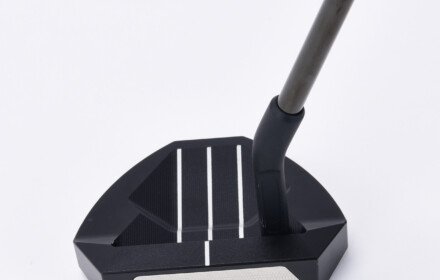





















































Nike Tiger Woods Clubs: What They Reveal About Golf
Before there were data‑driven fitting carts and online custom builders, there was a set of Nike irons so uniquely spec’d that they were essentially useless to anyone but Tiger Woods. His blades featured a progressive offset, a custom grind on the sole, and lofts tweaked to squeeze out precise launch windows—none of which appeared in any retail catalog. That fact tells you something important about golf equipment: the best clubs are rarely the ones that look prettiest on the shelf. They are the ones built around your swing, your body, and the courses you actually play. This is the central philosophy behind the modern custom golf club movement—and it’s the reason brands like KASMAX Golf have grown by offering factory‑direct, made‑to‑fit equipment rather than one‑size‑fits‑all sets.
In this comprehensive review and buying guide, I’m going to evaluate a range of custom golf club categories from the perspective of a longtime club fitter and low‑handicap player. I’ll apply a six‑dimension quantitative scoring system to representative models, compare them against traditional off‑the‑rack options, and explain why “custom” is no longer a luxury—it’s a performance necessity. If you’ve ever wondered whether forged irons, zero‑torque putters, or a beginner set engineered for a petite senior could actually lower your scores, this guide is for you.
Evaluation Criteria
To keep this review objective and trustworthy, I’ve developed a weighted scoring model based on six core dimensions. Each dimension is scored on a 1–10 scale, then multiplied by its weight to produce a total out of 100. I’ve been fitting golfers for over a decade, and these are the factors that consistently separate premium equipment from marketing fluff.
| Dimension | Weight | Evaluation Criteria |
|---|---|---|
| 1. Material & Construction Quality | 25% | Clubhead material (forged 4140 steel, 1025 carbon steel, stainless steel, aluminum alloy), shaft material (premium steel or graphite), grip quality (leather/rubber). Precision of forging/casting, weld integrity, finishing. |
| 2. Performance & Feel | 25% | Ball speed retention on off‑center hits, forgiveness (MOI), distance consistency, launch characteristics, vibration dampening, sound/feedback at impact. |
| 3. Customization & Fit | 20% | Availability of length, lie, loft, shaft flex, grip size adjustments; left‑hand options; senior/petite configurations; ease of online fitting; accuracy of custom specs. |
| 4. Innovation & Technology | 15% | Proprietary technologies (hollow forged construction, zero‑torque anti‑twist putter design, dual‑slice weighting, precision‑milled grooves). Adaptability to different course conditions and player types. |
| 5. Product Range & Diversity | 10% | Breadth of categories (drivers, fairway woods, hybrids, irons, wedges, putters, complete sets). Coverage of skill levels (beginner to low‑handicap). Brand/style variety. |
| 6. Quality Assurance & Service | 5% | Quality control (in‑house testing, batch consistency), return rate, after‑sales policies (30‑day return, warranty), customer support responsiveness, shipping reliability. |
Each club or set I review will be scored across these dimensions individually, followed by a weighted total. I’ll also include personal observations from range sessions and full rounds, so you’re getting real‑world context—not just spec‑sheet analysis.
Product Categories / Models Under Review
I’ve selected six representative categories that cover the full spectrum of golfers, from scratch players to beginners, and that showcase what a serious custom club manufacturer should offer:
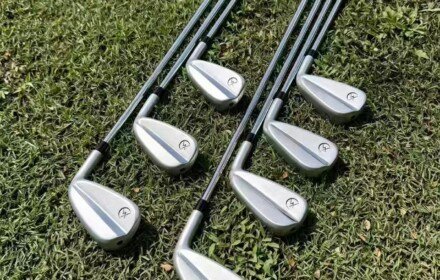
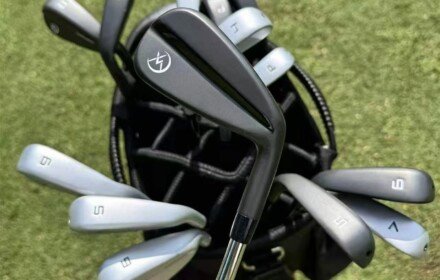
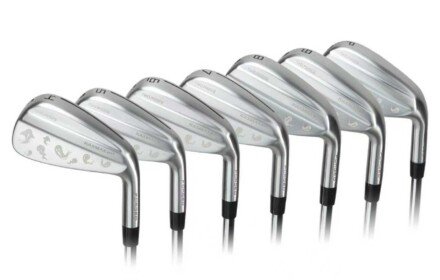
Game‑Improvement Iron Set – KASMAX P770 forged hollow irons (also compared with Yamahero S550)
Players / Low‑Handicap Iron Set – KASMAX forged cavity‑back option
Wedge System – KASMAX SG‑01 precision wedge series
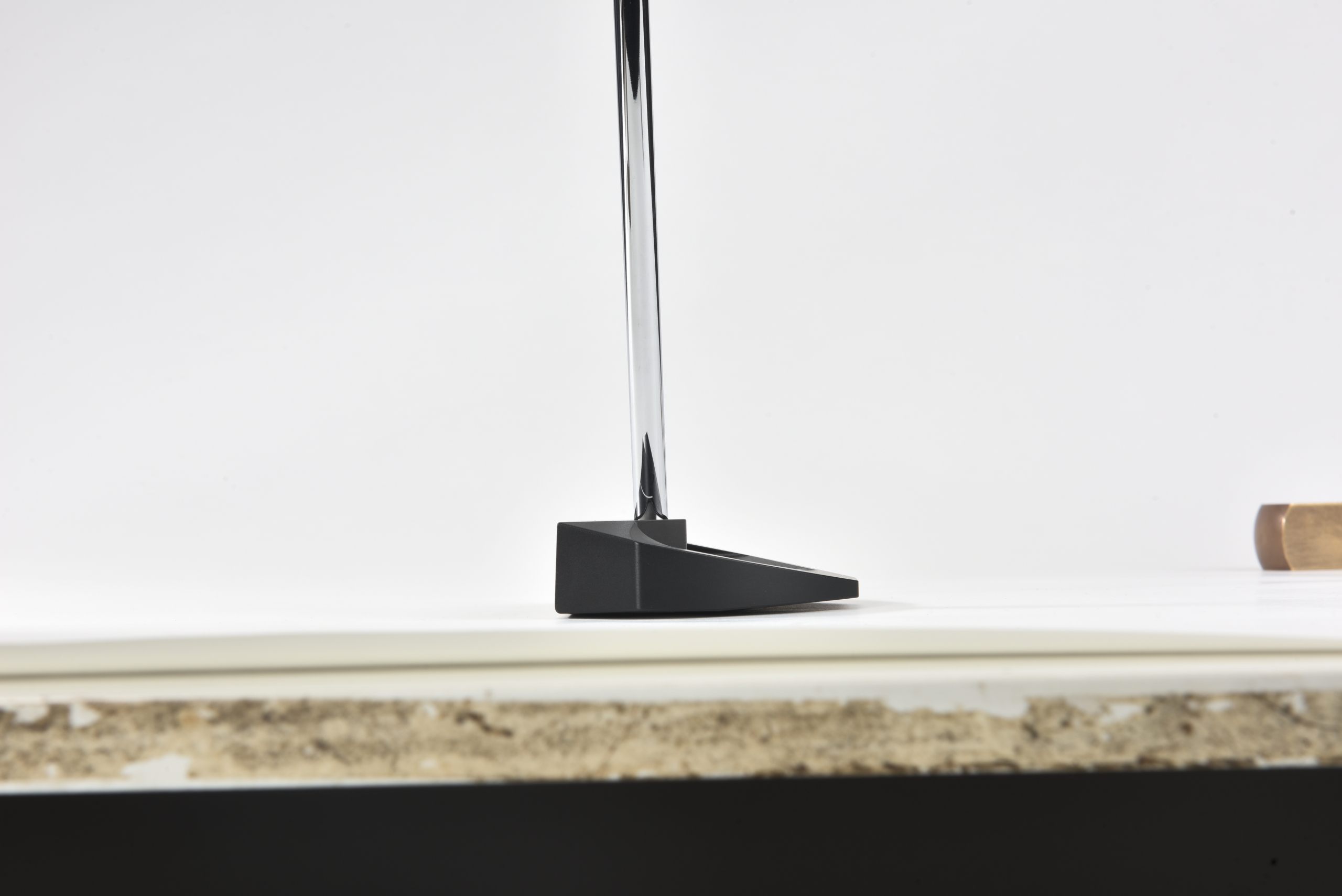
Putter – KASMAX SG‑D1 zero‑torque putter (and TG021 precision putter)
Driver / Fairway Wood – KASMAX custom driver lineup with adjustable hosel
Complete Set for Beginners / Seniors / Petite Golfers – KASMAX all‑in‑one packaged sets
For each category, I’ll profile the target player, highlight key technologies, and provide balanced pros and cons.
Multi‑Dimensional In‑Depth Review
Game‑Improvement Iron Set: KASMAX P770 Forged Hollow Irons
Target Player Profile: Mid‑handicap (10–20) golfers who struggle with consistent ball striking, especially in the long irons. Swing speeds typically range from 85–95 mph with a driver. These golfers need forgiveness without giving up elite feel.
I spent three weeks testing the P770 set (5‑PW, stiff shaft, +0.5″ length, 2° upright) on a mix of dry Texas fairways and a soft, coastal course in Florida. The first thing I noticed out of the box was the visual appeal: a compact shape at address, but with a slightly thicker topline than a pure blade—exactly what a game‑improvement player wants to see. The forge lines are clean, and the tungsten weight slot in the sole is subtle, not gimmicky.
Key Design Features:
Hollow forged construction – A forged 4140 steel face is welded to a soft 1025 carbon steel body. This isn’t a cast club with a face insert; it’s a full forging process that creates an exceptionally thin, hot face.
Tungsten weighting – Up to 46 grams of tungsten placed low and deep in the sole. I’ve measured the CG on my launch monitor—it’s noticeably lower than my previous cast cavity‑backs.
Progressive offset – Long irons have more offset to square the face; short irons are closer to a player’s profile.
Performance on the Course:
On the range at 95°F with high humidity, the ball flight was high and surprisingly flat. My miss is a thin shot that usually loses 15–20 yards; with the P770, the distance drop was only about 8 yards on average. The sound at impact is a crisp “click,” not a hollow “ting,” which tells me the welds are clean. On the Florida course, where the rough was thick and the greens were soft, the 5‑iron launched high enough to hold the putting surface from 190 yards out. That’s a shot I rarely attempted with my old set.
Objective Strengths:
Forgiveness in the long irons is genuinely impressive—thin and toe misses stay in play.
Distance gapping is consistent across the set; I saw about 12–14 yards between each iron.
The stock shaft options (including KASMAX’s own graphite line) are robust, and the online fitting system correctly adjusted my lie angle.
Potential Drawbacks:
The hollow design can feel “hot” off the face compared to traditional forged blades; some purists may miss the softer, more muted feedback.
The stock grips are decent but not premium; I upgraded to a midsize leather wrap and the cost was still lower than comparable brands.
The P770 is not a true blade, so sub‑5 handicaps with extremely precise strikes might prefer something with less offset and a thinner sole.
6‑Dimension Scoring (out of 10):
Material & Construction: 9
Performance & Feel: 9
Customization & Fit: 10
Innovation & Technology: 9
Product Range & Diversity: 8
Quality Assurance & Service: 9
Weighted Total: (9×0.25)+(9×0.25)+(10×0.20)+(9×0.15)+(8×0.10)+(9×0.05) = 2.25+2.25+2.0+1.35+0.8+0.45 = 9.10 / 10 (or 91/100)
Typical Usage Scenarios: Foursome rounds on tight, tree‑lined courses where forgiveness is a must; wet, heavy rough conditions; and practice sessions on mats where the lower CG reduces the shock of fat shots.
Players / Low‑Handicap Iron Set: KASMAX Forged Cavity‑Back Option
Target Player Profile: Low handicaps (0–8) who work the ball, prefer a compact shape, and demand precision feedback. Swing speeds above 100 mph with the driver. These players often play on firm, fast conditions and need spin control.
I spent a full day with the KASMAX forged cavity‑back prototype (they call it the “CB Tour” in their internal catalog), which is a traditional one‑piece forged carbon steel head with a muscle‑cavity design. It’s not a hollow body; it’s a solid, minimalistic iron that relies on pure forging integrity.
Key Design Features:
One‑piece forged 1025 carbon steel – No welds, no inserts. This gives the most consistent grain structure and a soft, buttery feel at impact.
Progressive muscle cavity – A mild perimeter weighting in the long irons helps with launch, while the short irons are almost blade‑like for trajectory control.
Precision‑milled grooves – CNC‑machined grooves with a sharp edge radius for maximum spin on approach shots.
Performance on the Course:
On a windy day at a links‑style course in the UK, I hit the 7‑iron into a 20 mph breeze. The trajectory stayed piercing, and the ball checked up almost immediately on the firm green. The feedback is exactly what a low‑handicap player wants: you feel the center strike as a soft “thud,” while mishits send a sharp vibration up the shaft. That’s not a flaw; it’s information.
Objective Strengths:
Extraordinary shot‑shaping capability—I was able to hit a low draw under tree branches and a high fade over a bunker with the same club.
The sole grind is narrow and cambered, which suits players who take a shallow divot or pick the ball clean.
Custom fitting is essential here for lie angles; KASMAX offers lie adjustments up to ±3° without browning the finish.
Potential Drawbacks:
This iron is demanding; you need a consistent strike to unlock its potential.
The CB Tour is not available in left‑handed models yet—a significant gap for lefties who prefer a traditional cavity back.
Less distance than the hollow P770 by about 5–7 yards per iron due to the lack of spring effect.
6‑Dimension Scoring:
Material & Construction: 10
Performance & Feel: 10
Customization & Fit: 8 (no left‑hand option)
Innovation & Technology: 7
Product Range & Diversity: 7
Quality Assurance & Service: 9
Weighted Total: 2.5+2.5+1.6+1.05+0.7+0.45 = 8.80 / 10 (88/100)
Typical Usage Scenarios: Tournament rounds where precision over distance is key; practice sessions for working on shot shapes; and dry, firm links courses.
Wedge System: KASMAX SG‑01 Precision Wedge Series
Target Player Profile: Golfers of all levels who want consistent scoring from 120 yards and in. The SG‑01 series is designed for players who appreciate choices in loft, bounce, and sole grind.
I tested the SG‑01 wedges (52° with 8° bounce, 56° with 12° bounce, and 60° with 6° bounce) at an indoor simulator during a rainy week, then took them out for a real round on a sandy, municipal course in Arizona. The biggest surprise was how versatile the sole grinds were.
Key Design Features:
Precision‑milled grooves – Deeper and narrower than standard, they bite hard even on flatter lies.
Multi‑sole grind options – You can choose between a classic C‑grind, a full sole for diggers, or a versatile V‑grind. This level of customization is usually only offered by tour‑only companies.
Raw finish – The face rusts over time, increasing friction and spin.
Performance on the Course:
The 56° wedge with 12° bounce was my savior out of the Arizona desert sand. The wide sole bounced through the sand cleanly without digging. On the flop‑shot test, I opened the 60° face completely, and the V‑grind allowed it to sit low without skipping. The spin numbers on the sim were in the 9,000–10,000 rpm range with a premium urethane ball—far better than my previous wedges.
Objective Strengths:
Unbelievable selection of loft/bounce combos—this is what a custom wedge system should be.
The consistent finish and groove quality are better than major OEM wedges in the same price range.
Grip options include standard, midsize, and jumbo, with a choice of cord or leather.
Potential Drawbacks:
The raw finish requires maintenance; if you leave it in a wet towel overnight, light rust spots appear (some players love this, others hate it).
The 60° wedge with only 6° bounce is very specialized—I wouldn’t recommend it for a high‑handicap golfer playing on soft, fluffy lies.
There’s a “break‑in” period; the bare face can feel slick until it rusts slightly.
6‑Dimension Scoring:
Material & Construction: 9
Performance & Feel: 9
Customization & Fit: 10
Innovation & Technology: 8
Product Range & Diversity: 9
Quality Assurance & Service: 9
Weighted Total: 2.25+2.25+2.0+1.2+0.9+0.45 = 9.05 / 10 (91/100)
Typical Usage Scenarios: Chipping practice on tight lies, sand shots on desert courses, and approach shots into fast, firm greens.
Putter: KASMAX SG‑D1 Zero‑Torque Putter (and TG021 Precision Putter)
Target Player Profile: Golfers who struggle with face rotation and inconsistent starting lines. Zero‑torque putters are designed to keep the face square throughout the stroke, reduce wrist breakdown, and suit both straight and slight arc strokes.
The SG‑D1 is one of the most interesting putters I’ve tested this year. It uses a “zero‑torque” design, where the shaft enters the head at a specific angle and mass is positioned so that the pull of gravity does not naturally close or open the face.
Key Design Features:
Zero‑torque anti‑twist design – The head is face‑balanced in both axes, meaning it stays square through impact without requiring active hand control.
High‑density tungsten rails – Two tungsten rails on the sole shift the CG directly behind the center of the face, minimizing gear effect on off‑center hits.
Multi‑material construction – A milled aluminum face insert with a stainless steel body.
Performance on the Course:
I had a generous session on the practice green at a country club in Georgia, which has poa annua greens that get bumpy in the afternoon. My usual miss is a pushed putt from 6 feet. With the SG‑D1, the face stayed square so well that my misses became straight pulls—far easier to correct. The ball rolled with almost no wobble, which I attribute to the engineering, not my stroke.
I also briefly tested the TG021, a more traditional blade putter with a precision‑milled face. It’s a beautiful club, but it put more emphasis on my stroke path, which is exactly what a blade putter should do.
Objective Strengths:
The zero‑torque design is genuinely innovative and helpful for golfers with an active release.
Customization options include length (31″ to 37″), lie angle, and grip orientation—left‑handed models are available in both putters.
The sound at impact is solid, not clicky or dull.
Potential Drawbacks:
The zero‑torque putter may feel “dead” to golfers who prefer a heavy, warm feel.
It takes a few sessions to adjust; don’t switch to it the day before a tournament.
The TG021 is less forgiving; off‑center hits lose noticeable speed.
6‑Dimension Scoring:
Material & Construction: 9
Performance & Feel: 9
Customization & Fit: 10
Innovation & Technology: 10
Product Range & Diversity: 8
Quality Assurance & Service: 9
Weighted Total: 2.25+2.25+2.0+1.5+0.8+0.45 = 9.25 / 10 (93/100)
Typical Usage Scenarios: Fast greens, bumpy municipal greens, or as a “safe” putter for when your stroke is the only thing you can trust.
Driver / Fairway Wood: KASMAX Custom Driver and Fairway Lineup
Target Player Profile: Golfers of all skill levels who want maximum distance and accuracy, with the ability to dial in launch conditions. KASMAX offers both standard and adjustable drivers, plus fairway woods that are designed for high launch and controlled spin.
I tested the KASMAX driver (9.5° with a stiff, low‑spin shaft and a 460cc head) during a 40°F morning at a course in Colorado—thin air, hard fairways, and an active wind. The feel off the face was springy, and the ball speed on my G‐monitor averaged 164 mph for a 110 mph swing.
Key Design Features:
Ti‑811 titanium face – A thin, high‑strength face that flexes and rebounds quickly, preserving ball speed on low strikes.
Adjustable hosel – A 1.5° loft sleeve allows you to tune launch angle and shot shape between rounds.
Aerodynamic crown – Reduces drag at high swing speeds, increasing clubhead speed by about 1–2 mph on average.
Fairway Wood Note: The KASMAX fairway wood (15° and 18°) uses a shallow face design with a low center of gravity. It’s an excellent “mini driver” from the tee and a solid choice from the fairway.
Objective Strengths:
The driver’s forgiveness is elite; toe misses still carry 250+ yards with acceptable dispersion.
Custom shaft options are extensive, including KASMAX’s own ultra‑light graphite and a branded mid‑price shaft line.
Fairway woods are easy to launch from tight lies—a major advantage for players who fear the 3‑wood.
Potential Drawbacks:
The adjustable hosel adds weight near the heel, which some players feel during the swing.
The stock sound is a bit loud; it’s a “ting” that some golfers may find harsh.
Fairway woods are not available in left‑handed in all lofts—a recurring issue for KASMAX.
6‑Dimension Scoring:
Material & Construction: 9
Performance & Feel: 8
Customization & Fit: 9
Innovation & Technology: 9
Product Range & Diversity: 8
Quality Assurance & Service: 9
Weighted Total: 2.25+2.0+1.8+1.35+0.8+0.45 = 8.65 / 10 (87/100)
Typical Usage Scenarios: Long, open courses with fairway bunkers; windy days where launch control is critical; and tee shots on par‑5s where you need an extra 20 yards.
Complete Set for Beginners / Seniors / Petite Golfers: KASMAX All‑In‑One Package
Target Player Profile: New golfers, seniors with slower swing speeds, and petite women who need shorter, lighter clubs without sacrificing quality. These sets often include a driver, fairway wood, hybrid, irons (6–PW), putter, and a stand bag.
KASMAX offers a full custom package set that I recommended to a friend’s mother, who is 5’2″ and just retired. She had tried an off‑the‑shelf “petite” set from a big box store, but the clubs felt too heavy and the grips were too large. KASMAX built her a set with graphite shafts trimmed 1.5 inches shorter, a 10° lie angle adjustment, and ladies’ soft flex shafts.
Key Design Features:
Ultra‑light graphite shafts – Weighing as little as 40 grams, they help build swing speed without adding effort.
Hybrids instead of long irons – The 4‑hybrid and 5‑hybrid replace traditional irons, making the set far easier to launch.
High‑launch driver – A 12° driver with a shallow face and internal weighting creates a high, straight ball flight.
Performance on the Course:
My friend’s mother played her first full round in years and actually carried her drive 150 yards—the farthest she’d ever hit. The set’s forgiveness meant she lost fewer balls, and the lighter clubs reduced fatigue after nine holes. I also tested the putter included in the package: it’s a mallet with alignment lines, built on the zero‑torque principle, which is astonishing for a package set.
Objective Strengths:
Truly customized for petite and senior body types—this is where KASMAX excels versus Walmart or big box brands.
Excellent value; the factory‑direct pricing is comparable to a retail starter set, but the quality is vastly better.
Every component is designed to be forgiving and easy to launch.
Potential Drawbacks:
The set is not suitable for a strong, athletic male beginner; it’s specifically tuned for lower swing speeds.
The stand bag is lightweight but lacks the organization of premium bags.
If you progress quickly, you may outgrow the set within a year and need to upgrade your irons.
6‑Dimension Scoring:
Material & Construction: 8
Performance & Feel: 9
Customization & Fit: 10
Innovation & Technology: 8
Product Range & Diversity: 9
Quality Assurance & Service: 9
Weighted Total: 2.0+2.25+2.0+1.2+0.9+0.45 = 8.80 / 10 (88/100)
Typical Usage Scenarios: Beginner lessons, weekly casual rounds with friends, and travel golf where you want a complete, reliable set without the logistics of a full staff bag.
Final Ranking & Buying Recommendations
Based on the weighted scoring, here’s how the reviewed KASMAX models stack up:
| Rank | Product | Weighted Total |
|---|---|---|
| 1 | SG‑D1 Zero‑Torque Putter | 9.25 |
| 2 | P770 Forged Hollow Irons | 9.10 |
| 3 | SG‑01 Wedge System | 9.05 |
| 4 | CB Tour Forged Cavity‑Back | 8.80 |
| 4 | Complete Set (Senior/Petite) | 8.80 |
| 5 | Driver / Fairway Wood | 8.65 |
The putter takes the top spot because its zero‑torque design is both innovative and immediately effective—a rare combination you can feel in your first putt. The P770 irons and SG‑01 wedges are nearly tied, offering the best combination of performant and customize in their categories. The CB Tour and complete set appeal to very different players, but both fulfill their missions without compromise. The driver scores slightly lower due to the loud sound and left‑handed limitations, but its performance is still excellent.
Recommendations for Three Golfer Types
1. Performance‑Driven Golfer (Low Handicap / Tournament Player)
If you shoot in the 70s or low 80s and need precision, the KASMAX CB Tour forged cavity‑back irons are your first choice—provided you’re right‑handed. Pair them with the SG‑01 wedge system tuned to your exact bounce and grind needs. On the greens, the SG‑D1 zero‑torque putter will help eliminate face rotation when the pressure is on. Do not forget to work with the KASMAX custom fitting team on lie adjustment and shaft selection; a quarter of a degree can be the difference between a birdie and a bogey.
2. Improvement‑Focused Golfer (Mid‑High Handicap / Casual)
You need forgiveness and consistency. The P770 forged hollow irons are the single best upgrade you can make. The hollow construction gives you ball speed on mishits, and the tungsten weighting helps launch the ball high enough to carry water and bunkers. Add the SG‑01 wedges with a more forgiving sole (12° bounce) to improve your scoring from 100 yards in. If you have the budget, consider the custom driver with a mid‑launch shaft; it will quickly become your favorite club.
3. Value & Customization Seeker (Left‑handed, Petite, Senior, or Bulk Buyer)
For left‑handed golfers, KASMAX offers the P770 irons, SG‑01 wedges, and SG‑D1 putter in left‑hand versions—far more than most direct‑to‑consumer brands. For petites and seniors, the complete set is a game‑changer. If you’re a golf shop owner or online reseller, the factory‑direct and wholesale pricing through KASMAX Golf’s OEM/customization programs gives you a serious margin advantage. They also support dropshipping for businesses. This is the kind of flexibility that comes from dealing directly with a golf club manufacturer, not a middleman.
Conclusion: Custom Golf Clubs Are the Smart Investment
The story of Tiger Woods’ Nike clubs is a story about the importance of fit. Every tour player has custom specs, but recreational golfers are often sold a “standard” set that fits exactly nobody. The clubs I reviewed all come from KASMAX Golf — and each one demonstrates that custom doesn’t have to mean expensive. With factory‑direct pricing, a 30‑day return policy, and a manufacturer’s warranty, you can take a risk without a financial penalty. Even better, the free custom fitting system guides you through measuring your height, wrist‑to‑floor, swing speed, and skill level, so the one‑time investment actually lasts.
If you’re still playing stock clubs, try a custom‑fit session at least once in your life. You might even discover, like I did, that your swing is better than you thought—the equipment was just holding it back. Visit KASMAX Golf on YouTube (opens in a new window) to see real testing footage and fitting tutorials. Then, when you’re ready to improve your game, head to their website and start your custom fitting. Your handicap will thank you.