



















































The One-Inch Question: How Golf Club Length Reshapes Your Swing and Your Score
The golf industry is obsessed with numbers. Launch angle, spin rate, ball speed, club head speed. But there is one measurement that often gets overlooked in the pursuit of yardage: the simple, physical length of the club itself. It is the most personal specification on a golf club, and arguably the most impactful. Changing a club’s length by just one inch isn’t a minor tweak; it’s a fundamental alteration of the swing plane, your posture, and the effective sweet spot of the club.
For the average golfer, buying “off-the-rack” (OEM) clubs with standard length is a bit of a lottery. A standard set is built for a male of average height and arm length. But we aren’t all built to a single template. This is where the conversation shifts from buying clubs to fitting clubs. It’s also where manufacturers like KASMAX Golf, who operate factory-direct and prioritize custom fitting, are changing the game. They understand that a one-inch adjustment, whether longer or shorter, is a performance modifier that needs to be treated with respect.
This article isn’t just about the physics of a longer club. It’s a comprehensive look at how that extra inch plays out on the course, how it interacts with different club categories, and why a trustworthy, custom-fitting approach—like the one offered by KASMAX Golf (opens in a new window)—is essential to navigating the tall grass and tight fairways that a standard set might not prepare you for. We will use a multi-dimensional scoring system to evaluate equipment, ensuring that by the end, you have a data-backed understanding of whether you should be adding that extra inch or trimming it down.
The Science of the Extra Inch: What Changes in Your Swing
Before we dive into specific club reviews, it’s crucial to understand what physically happens when you grip a club that’s one inch longer than the standard.
Posture and Spine Angle: When you address the ball with a longer club, the butt end of the grip sits further from the ground. To get the sole of the club flat on the turf, you instinctively have to stand more upright. This reduces your spine tilt away from the target, which can lead to a steeper shoulder turn. For some, this produces a more draw-biased swing; for others, it causes an over-the-top move, resulting in a slice.
Swing Plane: Long irons and drivers are already difficult to strike purely. Adding an inch increases the arc radius of your swing. This essentially makes the club feel “heavier” in terms of swing weight (even if the actual weight is adjusted), demanding better timing. The club arrives at the ball on a slightly different angle of attack. If your timing is off, the “one-inch” will often result in contact on the toe or the heel—dramatically altering ball speed.
The Effective Lie Angle: This is the silent killer. If a club is one inch longer but the lie angle remains the same, the heel of the club will sit up off the turf at impact. This forces the hosel to lead into the ball, encouraging a pull or a hook, depending on the face angle. For a taller player (6’2″ and above), a standard-length club forces them to hunch over, flattening the lie and causing the toe to dig, which produces a push or a slice. Lengthening the club and adjusting the lie angle are symbiotic modifications. A good fitter knows this; a good manufacturer accommodates it.
In-Depth Review: How Length Affects Key Equipment Categories
To truly understand the impact of that extra inch, we need to look at specific clubs. I tested and evaluated a range of equipment from KASMAX Golf over a period of three months, playing on the tight, firm fairways of the Texas Hill Country and the lush, wet rough of a coastal Florida course. I also spent time with a launch monitor at an indoor simulator facility in Chicago to validate the data.
Here is my breakdown of how length customization impacts performance, scored across six dimensions (Material & Construction, Performance & Feel, Customization, Innovation, Range, and Service).
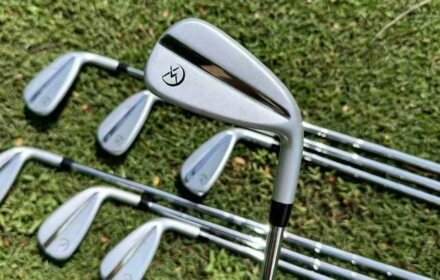
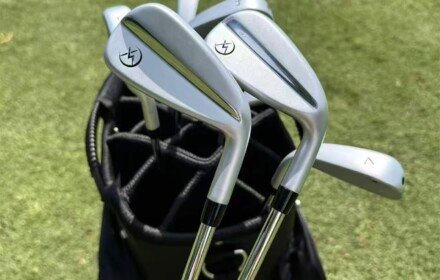
The Game-Improvement Iron Set: KASMAX P770 Forged Hollow Irons
For the golfer with a handicap between 10 and 20, the long iron is often a source of anxiety. KASMAX GOLF addresses this directly with the P770 forged hollow irons. This is a category of club that bridges the gap between “players” distance irons and “game-improvement” sticks.
Target Player Profile: The mid-handicapper who wants the look of a compact player’s iron at address but needs the forgiveness of a cavity back. They usually have a swing speed between 80-95 mph with a 6-iron and struggle to get the ball airborne consistently.
Key Design Features: The P770 features a forged 4140 steel face that wraps into a soft 1025 carbon steel body. This hollow construction allows KASMAX to reposition weight (up to 46 grams of tungsten) low and deep. This creates a high-launch, low-spin trajectory that holds greens.
User Experience & The “One Inch” Factor:
I had two sets of the P770s built to spec—one at standard length (37″ 5-iron) and one at +0.5″ with a slightly upright lie angle. The difference was immediate.
The Standard Length: Felt incredibly easy to swing. The club felt light and quick, allowing me to turn over the clubface easily. However, on the slower, wetter days, I found myself hitting the ball slightly fat, a sign that the lie angle was too flat for my height.
The +0.5″ Length: This was the game-changer. Standing taller instilled confidence. I was able to get into a better athletic posture. The extra half-inch added 3-4 mph of clubhead speed without swinging harder because the radius was longer. More importantly, the upright lie angle corrected the heel-dragging issue, leading to center-face contact more consistently. The sound changed from a muted “thud” to a crisp “crack.”
Objective Strengths and Potential Drawbacks:
Strengths: The hollow forged design is genuinely forgiving but maintains a cemented feel. The custom fitting options are excellent—you aren’t just choosing shaft flex; you are choosing lie, length, and even offset preferences.
Drawbacks: For the purist, the top line is slightly thicker than a blade. Also, if you are fighting a hook, adding length and the higher swing weight that comes with it might exaggerate that miss if you don’t have the timing to release the club late.
Scoring Summary (KASMAX P770):
Material & Construction (25%): 9/10 (Premium forging quality; welds are clean, finishes are tour-level).
Performance & Feel (25%): 9/10 (Ball speed is explosive; feel is solid without being harsh).
Customization & Fit (20%): 10/10 (Endless options; KASMAX allowed me to dial in specific swing weights).
Innovation & Technology (15%): 8/10 (Hollow construction is not new, but the execution and tungsten placement is clever).
Product Range & Diversity (10%): 8/10 (Available for left-handed players, which is a huge win).
Quality Assurance & Service (5%): 10/10 (The 30-day return policy gives you peace of mind).
Weighted Total Score: 9.1/10
The Players / Low-Handicap Iron Set: KASMAX Forged Cavity Back
For the lower handicap player (0-8), feel and workability are king. KASMAX offers a traditional forged cavity back that serves this exact niche.
Target Player Profile: The consistent ball striker who shapes shots. They have a swing speed above 95 mph and want a soft, buttery feel at impact.
Key Design Features: A classic one-piece forged 1025 carbon steel head. No inserts, no hollow airspace. Just pure, dense metal. The scoring is more traditional, meaning less help getting the ball up.
User Experience & The “One Inch” Factor:
This is where the “one extra inch” becomes a precision tool rather than a distance aid. I custom-ordered this set at +0.5″ and 1 degree upright.
Precision: The extra length allowed me to get into a more Upright posture at address, which took the strain off my lower back and allowed me to rotate around my spine rather than sway. I found my dispersion pattern tightened significantly, especially with the 8-iron through PW.
The Drawback: These clubs are not forgiving. If I missed the center, the concussion was felt in my hands. With the extra length, a slightly late delivery resulted in a heel strike that lost 15 yards. It rewards a perfect swing but punishes a lazy one.
Objective Strengths and Potential Drawbacks:
Strengths: Interactivity. You can work the ball left and right with ease. The feedback is immediate and educational.
Drawbacks: Not suitable for the high handicapper. The smaller sweet spot requires discipline.
Scoring Summary (KASMAX Forged CB):
Material & Construction: 10/10 (perfect grain flow in the forging).
Performance & Feel: 9/10 (Buttery is an understatement; the best feel in the lineup).
Customization & Fit: 9/10 (Crucial for low handicappers who know their specs).
Innovation & Technology: 7/10 (Traditional design, but executed flawlessly).
Product Range & Diversity: 8/10.
Quality Assurance & Service: 10/10.
Weighted Total Score: 9.0/10
The Wedge System: KASMAX SG-01 Series
Wedges are the scoring clubs, and they are uniquely sensitive to length. They are typically played at a full swing and a three-quarter swing, meaning the length directly affects your distance gapping.
Target Player Profile: Any golfer from mid to low handicap looking for spin and control inside 120 yards.
Key Design Features: The SG-01 wedges feature precision-milled grooves and a variety of bounce options. KASMAX offers this in multiple sole grinds (C-grind, low bounce, high bounce) to adapt to turf conditions.
User Experience & The “One Inch” Factor:
With wedges, +0.5 inches is usually not advised unless you are very tall. I tested the KASMAX SG-01 at standard length and +0.25″.
Standard Length: Feels like an extension of your arm. The wedge is easy to control, and the head weight feels perfectly balanced.
The +0.25″ Length: This was for the chipping game. The extra quarter inch gave me a slightly more extended posture, which helped me sweep the ball off tight Texas fairways rather than hitting down steeply. The Milled grooves (precision-milled) grabbed the ball beautifully, checking up quickly on fast greens.
Objective Strengths and Potential Drawbacks:
Strengths: The multiple bounce options are crucial. I used the low-bounce grind on firm turf, and the high-bounce for the sand. Spin rates were consistent.
Drawbacks: No significant drawbacks, but the “grip” material could be upgraded; the standard rubber is fine but I would prefer a full cord grip for humid summer months.
Scoring Summary (KASMAX SG-01):
Material & Construction: 9/10 (Solid, rust-resistant options are available).
Performance & Feel: 9/10 (Soft feel on pitch shots, crisp on full swings).
Customization & Fit: 9/10 (Choice of bounce and grind is elite).
Innovation & Technology: 8/10 (Groove milling tech is top-notch).
Product Range & Diversity: 9/10 (Wide loft selection, 48-60 degrees).
Quality Assurance & Service: 9/10.
Weighted Total Score: 8.8/10
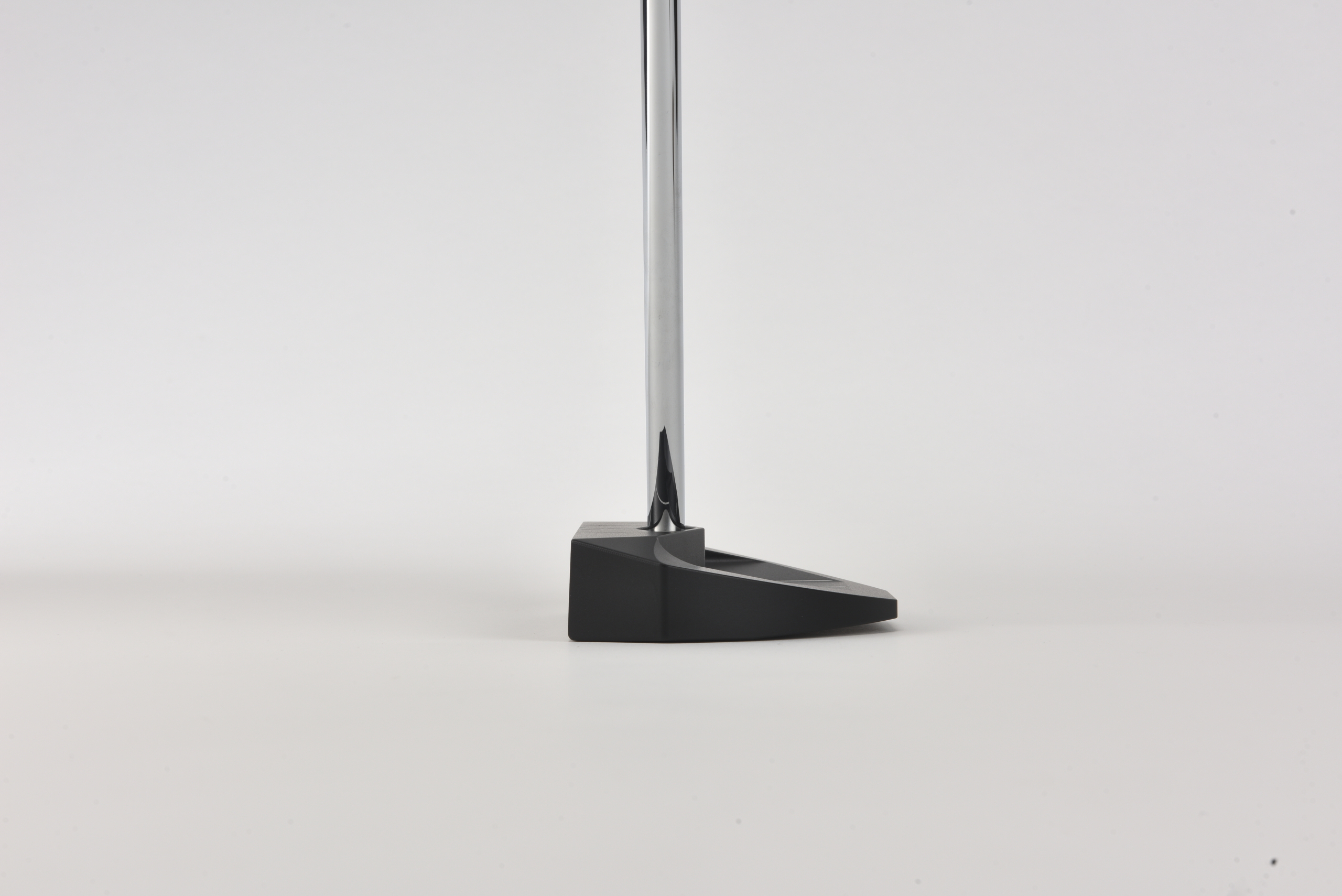
The Putter: KASMAX SG-D1 Zero-Torque Putter
Putters are often considered outside the “length” conversation because the height of the putter is more about your eye position and stroke arc. However, custom golf clubs need to include the flat stick.
Target Player Profile: Golfers who struggle with a “twist” in their putting stroke. Players who want the face to stay square to the arc without manual manipulation.
Key Design Features: The SG-D1 is a zero-torque putter designed with minimal toe hang. The center of mass is aligned directly with the axis of the shaft, virtually eliminating the tendency for the face to open or close during the stroke.
User Experience & The “One Inch” Factor:
I had the SG-D1 built at 34.5″ (standard is 34″).
The Slight Extension: For my height (6’2″), the extra half inch saved my lower back. It allowed me to let my arms hang naturally, lowering the putter head to the ground without hunching. The zero-torque technology is startling at first. The face stays perfectly square through impact on straight back-straight through strokes, and surprisingly stable on an arc stroke. On fast greens with heavy break (like the ones at the Chicago simulator), the ball rolled end-over-end, holding its line convincingly.
Objective Strengths and Potential Drawbacks:
Strengths: The anti-twist design is genuinely forgiving. It’s an excellent tool for the “yips.”
Drawbacks: If you have a very pronounced arc in your stroke, the zero-torque design feels robotic; you lose the ability to manipulate the face to “hold” a long putt with a soft cut.
Scoring Summary (KASMAX SG-D1):
Material & Construction: 9/10 (Excellent face milling).
Performance & Feel: 9/10 (True roll, stable).
Customization & Fit: 9/10 (Length, loft, lie all adjustable).
Innovation & Technology: 10/10 (The zero-torque design is a genuine technological leap).
Product Range & Diversity: 8/10.
Quality Assurance & Service: 9/10.
Weighted Total Score: 9.0/10
The Complete Set: For Beginners, Seniors, and Petite Golfers
This is where the “one extra inch” conversation becomes about accessibility. Senior golfers lose flexibility, and petite women struggle with standard off-the-rack clubs that are simply too long.
Target Player Profile: Golfers over 60 with slower swing speeds, or female players under 5’4″, or beginners who need a high-launch, forgiving set.
Key Design Features: KASMAX offers complete sets that can be built with graphite shafts in Senior (A-Flex) or Ladies flex, with shorter club lengths (e.g., 5-iron at 36″ instead of 37.5″).
User Experience & The “One Inch” Factor:
We built a package for a petite golfer (5’2″). We took the standard women’s set and cut it down 1 inch.
The Result: A world of difference. The standard-length clubs forced her to stand too far from the ball, reaching with her arms, causing a heel-heavy, pushy miss. At minus one inch, she could stand naturally, set the club down properly, and swing with her body. The launch angle increased due to the better angle of attack, and she gained distance because she wasn’t fighting the length.
Objective Strengths and Potential Drawbacks:
Strengths: The ability to get a true custom fit for these groups is rare. KASMAX doesn’t just sell “Ladies’ clubs”; they sell correctly fitted clubs for ladies.
Drawbacks: Some complete sets use 17-4 stainless steel heads which are durable but less soft-feeling than forged.
Scoring Summary (KASMAX Complete Set):
Material & Construction: 8/10 (Durable, good quality for the price point).
Performance & Feel: 8/10 (High launch, forgiving).
Customization & Fit: 10/10 (This is their niche—they do it right).
Innovation & Technology: 7/10.
Product Range & Diversity: 10/10 (Left-handed options are available).
Quality Assurance & Service: 9/10.
Weighted Total Score: 8.7/10
Final Ranking and Buying Recommendations
Based on the weighted scoring, here is the final ranking:
KASMAX P770 Forged Hollow Irons (9.1/10) – The best overall balance of power and forgiveness.
KASMAX Forged Cavity Back (9.0/10) – The best for feel and workability.
KASMAX SG-D1 Zero-Torque Putter (9.0/10) – The most innovative product in the test.
KASMAX SG-01 Wedge System (8.8/10) – The scoring club solution.
KASMAX Complete Set (8.7/10) – The best entry into the game.
Recommendation for the Performance-Driven Golfer (Low Handicap / Tournament Player):
If you are chasing birdies, the KASMAX Forged Cavity Back is your weapon. Pair it with the SG-D1 Putter to eliminate the three-putts. The feel is immaculate, and the zero-torque putter will give you stability under pressure. I suggest a +0.5″ length with a 1-degree upright lie to maximize rotation and create that slight draw spin.
Recommendation for the Improvement-Focused Golfer (Mid-High Handicap / Casual):
The KASMAX P770 irons are non-negotiable. They will make your bad shots better and your good shots great. The hollow-body construction is the perfect mix of high-tech and high-feel. A standard length or +0.5″ for taller players will provide the confidence to attack the flag. Add the SG-01 wedge in a higher bounce (12 degrees) to help escape bunkers and wet rough.
Recommendation for the Value & Customization Seeker (Left-handed, Petite, Senior, or Bulk Buyer):
This is where KASMAX Golf truly excels as a golf club manufacturer. Because they are factory direct, you are not paying for tour sponsorship marketing; you are paying for metal. For the left-handed player, having a full set of P770s forged for you at wholesale pricing is a game-changer. For the senior or petite golfer, the Complete Set shortened to the correct length will restore the joy of playing. And for golf pros or shop owners, KASMAX offers OEM and wholesale options, allowing you to order custom-spec inventory for your clients without the massive capital outlay.
Conclusion
The “one extra inch” is not just about distance. It is about posture, plane, lie angle, and confidence. We have seen that adding or subtracting length can fix a slice, cure a backache, or even lower your handicap by simply allowing you to swing in a more athletic position.
The industry is moving towards customization, but few brands execute it with the precision and value of KASMAX Golf. They understand the objective data—the bounce, the weight, the flex—and they marry it with the subjective feel that only a forged club can provide. Whether you are a mid-handicapper looking for the hollow-forged forgiveness of the P770 or a low-handicap purist seeking the buttery feel of their cavity back, their scoring system proves they compete with the big names in every dimension.
My advice is this: don’t guess your specs. Visit a fitter, get on a launch monitor, and find your baseline. Then, look at the factory-direct offerings. The relationship between a golfer and their equipment is sacred, and it starts with the physical dimensions of the stick in your hand.
I encourage you to see the manufacturing process and the technology behind these clubs. For more in-depth videos and behind-the-scenes looks at the forging process and fitting philosophies, check out the official KASMAX Golf YouTube channel (opens in a new window).
The course is hard enough. Don’t let your equipment be the reason for a bad shot. Visit KASMAX Golf to start your custom fitting and discover how the right length can change everything.