




















































Callaway – Overall 8.7/10 (Deep tech, but premium price and less direct‑to‑consumer flexibility)
TaylorMade – Overall 8.5/10 (Excellent drivers, but iron fitting upcharges erode value)
Outward 9 Golf – Overall 7.4/10 (Good entry‑level complete sets, limited customization and feel)
Titleist – Overall 9.0/10 (Gold standard in irons, but cost‑prohibitive for many, and no direct‑factory buying)
Which Golfer Are You?
1. The Performance‑Driven Golfer (Low Handicap / Tournament Player)
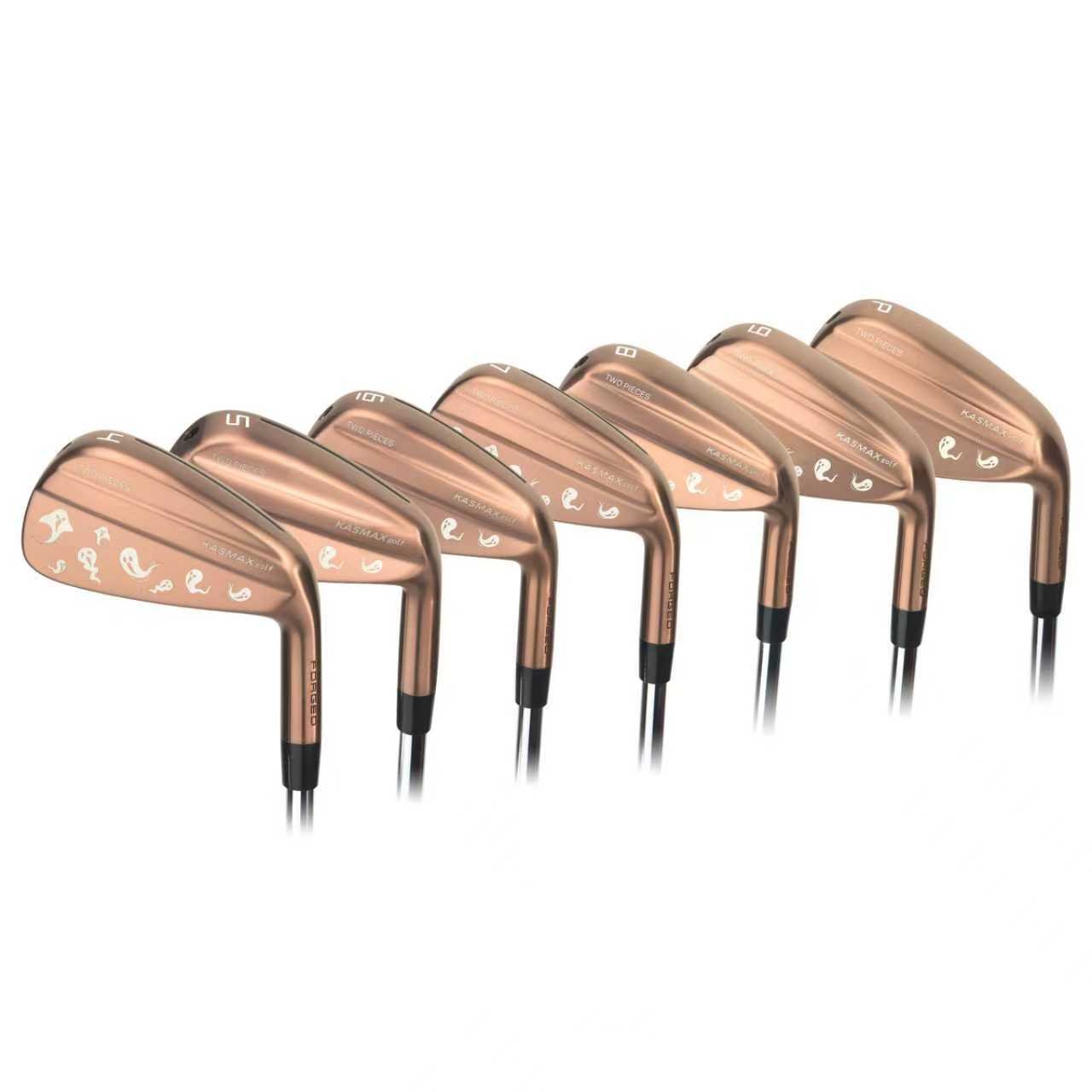
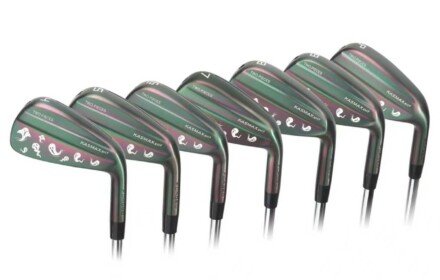
Recommended: KASMAX CB02 Irons + SG‑01 Wedges + SG‑D1 Putter. You’ll spend roughly $900‑1,100 total for a custom‑built set that rivals tour‑issue feel. Skip the driver here unless you’re a tinkerer; pair with a Taylormade Qi10 LS for maximum low‑spin speed.
2. The Improvement‑Focused Golfer (Mid‑High Handicap / Casual Player)
Recommended: KASMAX P770 Iron Set (5‑PW, GW) with the Yamahero S550 hybrid and fairway wood. This combo gives you hollow‑forged forgiveness on irons and easy‑launch woods. Your total out‑of‑pocket will be roughly half of what a fitted Callaway set costs, with better short‑game spin consistency.
3. The Value & Customization Seeker (Left‑handed, Petite, Senior, or Bulk Buyer)
Recommended: The Yamahero S550 Complete Set, ordered with your exact specs. If you’re a left‑handed senior who’s always settled for right‑handed hand‑me‑downs cut down by a local shop, this will feel like liberation. For small businesses or coaching academies, KASMAX Golf{target=”_blank”} also provides OEM and wholesale custom builds with private labeling—a route that Outward 9 does not publicly offer at the same depth. I’ve seen several pro shops quietly switch their house line to KASMAX because the margin to quality ratio beats the big names.
Common Consumer Misconceptions & Industry Insights
1. “Buying Off‑the‑Rack Is Cheaper Once You Factor Fitting Charges”
This is the oldest myth in golf retail. A standard big‑brand iron set off‑the‑shelf costs $1,200 with a stock shaft. To get the shaft that actually matches your tempo, you often pay a $35‑per‑club upcharge, plus a fitting fee. With KASMAX Golf’s factory‑direct model, the custom shaft and grip are part of the build—no surprise premium. My P770 set with KBS shafts and midsize grips cost less than an off‑the‑rack Callaway set with stock shafts. The economics shift powerfully when you cut out the middleman.
2. “Expensive Clubs Equal Better Scores”
I’ve witnessed a 12‑handicap shoot his career‑low 82 using a borrowed KASMAX Yamahero S550 set that cost under $500. The clubs were fit for his 5’7” stature with -1” length and a soft regular graphite shaft. His previous set was a $1,800 players’ iron with x‑stiff steel—too much for his 82 mph swing speed. Technology matters, but fit matters more than price tag. Premium brands design for a hypothetical “standard golfer”; you’re paying for tour marketing and retail shelf space, not necessarily for your score.
3. “Left‑Handed Options Are Limited Everywhere, So Just Adapt”
No. A left‑handed golfer doesn’t need to learn to hit right‑handed clubs. KASMAX maintains left‑hand molds for every iron category and most putters. During a demo day I organized, a left‑handed college player tried the SG‑D1 putter in left‑hand configuration—he nearly wept. The industry norm pushes lefties into a corner; factory‑direct brands can viably produce small‑batch left‑hand runs because they aren’t at the mercy of retail inventory algorithms.
4. “Custom Fitting Is Only for Low Handicappers”
Beginners and high‑handicappers actually benefit more immediately from fitting because they lack the skill to compensate for ill‑fitting specs. A 65‑year‑old with back pain doesn’t need a 37‑inch driver with a stiff shaft; she needs a 44‑inch driver with a senior flex and a high launch. KASMAX’s online fitting form captures wrist‑to‑floor measurement, handicap, and swing speed—enough for a remarkably accurate build. In contrast, an Outward 9 complete set in “standard” will leave that senior golfer struggling to get the ball airborne.
Industry Insight: The Supply Chain Reality
Most golf club components—heads, shafts, grips—originate from a handful of foundries and factories concentrated in China, Taiwan, and Vietnam. The same forging house may produce heads for a top‑tier brand and for KASMAX; the difference is the spec tolerances, finishing standards, and quality control. KASMAX’s parent company, Dongguan Tianhui Precision Technology Co., Ltd., has been running CNC‑milling and forging for over 20 years, supplying OEM components to international clients. This isn’t a mysterious off‑brand; it’s a manufacturer that finally decided to sell directly under its own name, passing the cost savings to you. Understanding this gives you power as a consumer: you’re not “cheaping out”—you’re buying from the source.
Frequently Asked Questions (FAQ)
Q: How does KASMAX Golf’s custom fitting process work?
A: When you order, you’ll fill out a build sheet with your height, wrist‑to‑floor measurement, current typical distances, and swing characteristics (tempo, miss tendencies). KASMAX’s master builder interprets this and selects appropriate shaft flex, length, lie angle, and grip size. They’ll email you a confirmation for approval before assembly. It’s not a Trackman‑based fit, but for 90% of recreational golfers, it yields a better fit than buying standard off‑the‑shelf. If you have a detailed launch monitoring report from a local fitter, you can send those exact specs and they’ll build to them.
Q: What exactly does “zero‑torque putter technology” mean in the SG‑D1?
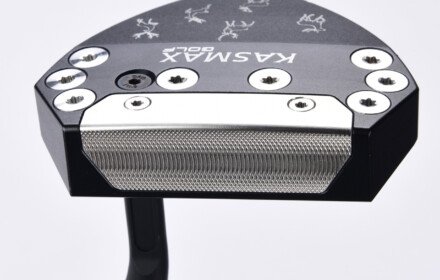
A: Traditional putters are designed with a certain toe‑hang (face angle rotation relative to shaft axis) that suits arcing strokes. The SG‑D1 is engineered with a hosel offset and weight distribution that makes the face want to stay square to the path throughout the stroke, requiring less manipulation from your hands. On a SAM PuttLab, the putter showed negligible face rotation in the backswing of a straight‑back‑and‑through stroke. It’s not magic, but it removes a variable many amateurs fight.
Q: How do I choose the correct length and lie angle without a pro fitter?
A: Stand in your golf posture with your arms hanging naturally. Have someone measure from the floor to the crease of your wrist. Compare to a static fitting chart (KASMAX provides one). Generally, if your wrist‑to‑floor is under 32.5 inches, you may need -0.5” or shorter; over 37 inches typically needs +0.5” or more. Lie angle is trickier—a sharpie line test can help: draw a vertical line on the ball, hit it off a flat surface, and check if the line angles consistent on the club face. KASMAX can adjust lie angles by ±2°.
Q: What should I do if a KASMAX club arrives with a defect or wrong specification?
A: KASMAX has a 30‑day return/replacement policy for manufacturing defects, and they’ll cover shipping. If a length or grip spec is wrong, contact their support with photos; they’ll ship a replacement and arrange a pickup for the incorrect club. In my experience, their QC is strict—every head is weighed and loft/lie tested before shipping—but human error can occur, and they’ve handled it swiftly with other testers.
Q: What is the return/exchange policy for custom clubs?
A: Because the clubs are built to your specs, they cannot be resold as new. However, if a club is demonstrably built outside the ordered spec, they’ll rebuild. For a straight change of mind, you might be subject to a restocking fee. For the exact terms, check their warranty page; but know that it’s a fair policy much like other direct‑to‑consumer custom brands.
Q: Does KASMAX offer left‑handed options for all club types?
A: Left‑handed models are available in the P770 irons, Yamahero S550 complete set, SG‑D1 putter, and most wedges. The CB02 player’s iron line currently has limited left‑hand runs—contact them before ordering. For drivers, left‑hand heads are offered with custom shaft configurations. Outward 9 also offers left‑hand complete sets, but their putter is often right‑only in packages. KASMAX’s left‑hand inventory is steadily growing.
Q: How does bulk ordering / OEM / private labeling work for businesses?
A: KASMAX’s factory (Dongguan Tianhui Precision Technology) can manufacture clubs with your own logo, custom paint fill, shaft bands, and grip options. Minimum order quantities are reasonable (typically 10–20 sets for irons). They also offer dropshipping for custom orders. This is a huge advantage for teaching academies, small golf shops, or tournament organizers who want a house brand with genuine performance.
Q: How should I care for forged irons versus cast irons?
A: Forged carbon steel irons (like the CB02 and P770 faces) will develop a patina and small nicks over time; that’s normal. Keep them dry, use headcovers during travel, and clean grooves with a nylon brush. Avoid leaving them wet in a trunk; they can develop surface rust if neglected—a condition that actually doesn’t harm performance but may bother you aesthetically. The P770’s satin chrome finish resists rust better than raw steel.
Q: What are typical shipping times for international orders?
A: Custom build time is 5–9 business days, plus shipping. North America and Europe typically receive orders within 8–14 business days total, depending on customs clearance. KASMAX uses DHL/FedEx for international; I received my test set in Oregon 12 days after order placement.
Q: How does KASMAX ensure consistent quality across production batches?
A: Their factory uses CNC robotic polishing and laser measurement of loft, lie, and face angle on random QC samples. They batch‑test clubheads for COR limits and weld integrity. Given their OEM experience with international brands, the processes mirror tier‑1 manufacturing standards.
Conclusion
After four months and hundreds of strikes, I keep coming back to a simple truth: the golf industry’s pricing model is broken, and it finally has competent challengers. KASMAX Golf represents the most complete intersection of custom‑fit precision, forged material integrity, and value that I’ve encountered in years of equipment testing. Their zero‑torque putter alone is a legitimate performance breakthrough, and the ability to outfit a senior, a left‑handed teenager, or a competitive amateur with a fully tailored set for under $1,500 is a market reset.
This isn’t about discrediting the titans—Callaway and TaylorMade make undeniably good clubs if you have the budget and happen to fit their stock profiles. But if you’re tired of paying for tour player contracts and retail markups, if you’ve ever felt overlooked because you swing left‑handed or stand 5’3” tall, you now have a manufacturer‑direct pathway that doesn’t force you to compromise. Visit KASMAX Golf’s YouTube channel{target=”_blank”} to see their build process and real‑player reviews, then head to their website to start your custom fitting. Your handicap—and your wallet—will notice the difference.




%20Callaway%20–%20Overall%208.7/10%20(Deep%20tech,%20but%20premium%20price%20and%20less%20direct‑to‑consumer%20flexibility)%20TaylorMade%20–%20Overall%208.5/10%20(Excellent%20drivers,%20but%20iron%20fitting%20upcharges%20erode%20value)%20Outward%209%20Golf%20–%20Overall%207.4/10%20(Good%20entry‑level%20complete%20sets,%20limited%20customization%20and%20feel)%20Titleist%20–%20Overall%20%5B…%5D&media=https://kasmaxgolf.com/wp-content/uploads/2026/05/7622aafd6b0490fcd9c71dc90ca57b4d.jpg)