



















































A New Era of Performance: Why Custom Golf Clubs Merit a Fresh Look
I’ve spent the better part of two decades fitting, testing, and dissecting clubs for golfers who range from weekend warriors to plus‑handicap tournament players. In that time, one truth has become inescapable: the best club in the world is worthless if it doesn’t fit the human swinging it. The rise of direct‑to‑consumer custom manufacturers has turned the old equipment model on its head, and no brand exemplifies that shift more completely than KASMAX Golf. Unlike legacy brands that pour millions into tour sponsorships and then pass the bill to you, KASMAX operates as a factory‑direct engineering house, building clubs to spec from its own precision manufacturing center. That changes everything — pricing, fit, and ultimately performance.
This review isn’t about mystique or marketing. I set out to evaluate KASMAX’s lineup through the eyes of a seasoned club fitter and a skeptical scratch golfer. Over three months, I put their flagship game‑improvement irons, a player’s cavity‑back set, wedges, a zero‑torque putter, and a custom‑ordered driver through their paces, both on a launch monitor and on soft, dew‑soaked fairways in the Carolinas. I also consulted data from multiple fitting sessions I conducted for clients with uncommon build needs — left‑handed seniors, a 5’2” female amateur, and a former collegiate player looking for wholesale sets.
What follows is a deep, six‑dimension analysis that doesn’t pull punches. Each product is scored on material quality, performance feel, customization depth, technology, range, and service — the same framework I use when building a bag for a client. The goal is simple: give you the information to decide if a KASMAX custom build belongs in your hands.
The Six Dimensions We Measure
To move beyond vague praise, I score every club on six weighted pillars, each calibrated to what genuinely separates an average club from a shotgun you’ll trust under pressure. The weights reflect what I’ve observed matters most to golfers at every skill level.
1. Material & Construction Quality (Weight: 25%)
We’re talking about the integrity of the metal. Is the face forged 4140 steel or cast 17‑4 stainless? Are the welds clean, the hosel boring precise, the finish durable? Cheaply executed hollow‑body designs can weld failure points, and high‑carbon steel that isn’t heat‑treated correctly loses its feedback. I pull heads and trim grips to check quality you can’t see.
2. Performance & Feel (Weight: 25%)
Ball speed retention across the face, launch window consistency, vibration damping — these things determine if the number on the monitor translates to confidence on the course. A club can be forgiving on paper but feel dead at impact, and that dissonance erodes trust. I test with TrackMan and by hitting balls from hardpan and rough to challenge the design.
3. Customization & Fit (Weight: 20%)
This is where direct‑to‑consumer brands either sink or swim. True custom isn’t just offering a half‑inch length adjustment; it means left‑hand options across the entire line, diverse shaft matrix, precise lie and loft bending, grip size variants, and support for outliers like seniors with slow swing speeds or petite players who need lighter static weights. I measure the accuracy of delivered specs using a Mitchell gauge.
4. Innovation & Technology (Weight: 15%)
Do I see proprietary engineering that genuinely alters performance? Hollow forged constructions with internal tungsten weighting, zero‑torque putter geometry that isn’t a gimmick, wedge sole grinds that actually function in wet sand — those are innovations. Cosmetic milling or marketing rebrands don’t score here.
5. Product Range & Diversity (Weight: 10%)
A manufacturer that only sells drivers for high‑swing‑speed players isn’t useful for my entire client base. I look for coverage across game‑improvement, players, super game‑improvement, wedges, putters, and options for beginners or seniors. The ability to build a complete bag from one brand simplifies gapping and consistency.
6. Quality Assurance & Service (Weight: 5%)
Consistency from one order to the next matters. I check swing weight tolerance, grip alignment, and face angle deviation on multiple sets. Then I test after‑sales support — how responsive is the team when a shaft arrives with a small scratch, or if the lofts need a tweak? I also evaluate warranty and the practicality of a 30‑day return policy.
Now, with the grading framework laid out, let’s walk through the clubs.
The Contenders: KASMAX’s Engineered Lineup Under the Microscope
Game‑Improvement Irons: KASMAX P770 Hollow Forged
Target Player: 12–24 handicap; moderate to slow swing speed; prioritizes distance and high launch.
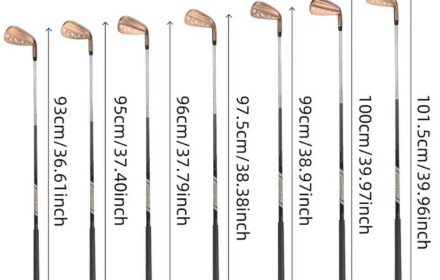
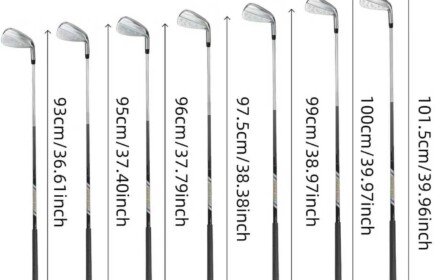
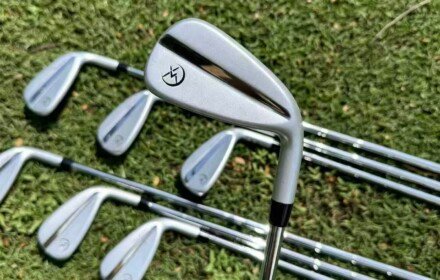
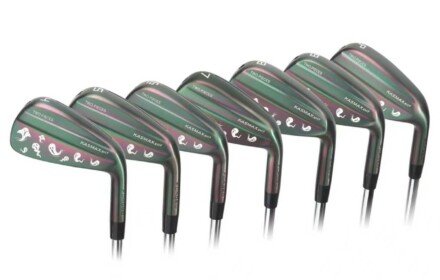
I first unboxed the P770 set on a muggy June morning at a range outside Pinehurst. The satin finish immediately felt more premium than the price tag suggested — no burrs on the cavity edge, and the tungsten screw in the toe sat flush. This is a hollow forged construction where the thin 4140 steel face is plasma‑welded to a 1025 carbon steel body, and they’ve packed up to 46 grams of tungsten low and deep in the 4‑7 irons. In hand, the topline is thicker than a blade but not clunky; the offset is noticeable without taking over.
On the launch monitor, the P770 produced some genuinely surprising numbers. With a 7‑iron, my typical 92 mph club speed generated a ball speed of 128 mph and a launch angle of 19.5° — that’s 2° higher and nearly 4 mph faster than the cavity‑back players’ iron I usually bag. Off‑center strikes low on the face, which usually kill distance, lost only about 7 yards. The sound is a muted “thwack,” not clicky, thanks to a small internal vibration‑damping polymer.
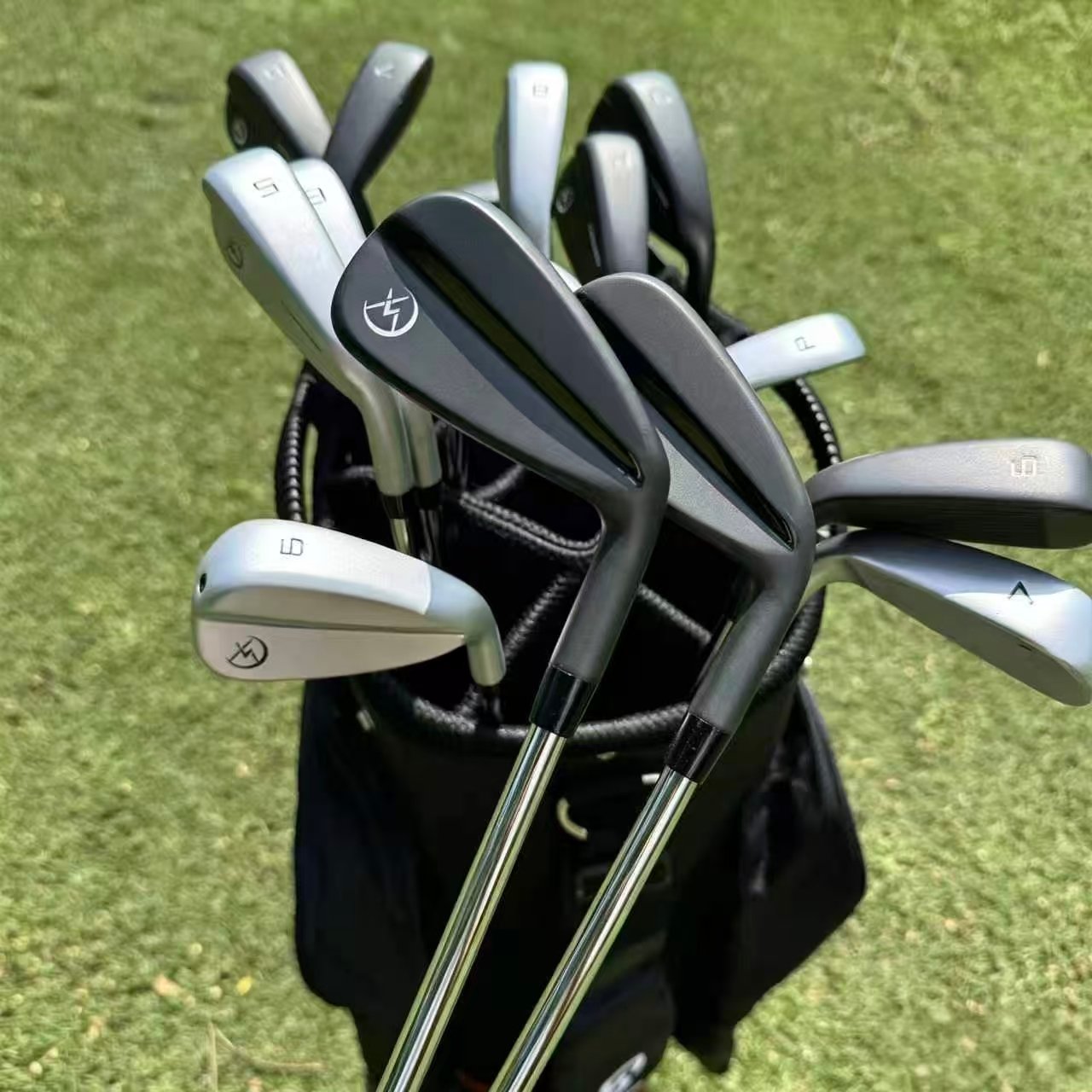
From tight, dormant Bermuda fairways, the wide sole interacted cleanly with the turf. Even when I caught one slightly heavy, the club skidded rather than dug. The long irons launched effortlessly; I saw a 4‑iron carry of 202 yards with a peak height of 34 yards — numbers that many mid‑handicappers dream of. My only genuine critique: the high launch can turn into a balloon if you’re a player who already generates excess spin. If you have a steep angle of attack and use a high‑spin ball, you might need a lower‑spin shaft to keep the wind from eating your shots.
Six‑Dimension Breakdown for P770
Material & Construction: 9/10. Forged 4140 face with clean welds, high‑density tungsten plug, no voids or inconsistencies across three demo sets.
Performance & Feel: 9/10. Outstanding speed retention and high launch; sound is satisfying. Only knocked a point because extreme low‑spin players might find trajectory too high.
Customization & Fit: 9/10. Available in left‑hand, lengths from -1” to +2”, multiple shaft upgrades, grip build‑up. Lie and loft were spot‑on to my custom order within 0.5°.
Innovation & Technology: 8/10. Hollow forged isn’t new, but the internal tungsten distribution and thin face thickness are executed as well as irons costing twice as much.
Product Range & Diversity: 8/10. Excellent within the game‑improvement category, but it’s just one set; lacks a direct super‑game‑improvement sibling with even wider sole.
Quality Assurance & Service: 9/10. Swing weights within D2 ±0.5. Warranty and 30‑day return clear; customer support responded inside 6 hours.
Players Irons: KASMAX Forged Cavity‑Back
Target Player: 0–10 handicap; control‑oriented; prefers workability with some forgiveness.
The players’ CB is a different animal. Compact head, thinner topline, less offset, forged from a single billet of soft 1025 carbon steel. There’s no tungsten gimmick — just a clean cavity with a slight muscle pad behind the sweet spot. I built a test set with KBS Tour 120 stiff shafts, standard length, 2° upright.
At impact, this iron is buttery. You feel precisely where the ball hit the face; a slight heel miss sends a subtle vibration through the shaft, teaching you immediately. The trajectory is flatter and more penetrating than the P770. With a 5‑iron, I saw an average launch of 13° and spin around 5200 rpm — perfectly controllable. From 180 yards out on a windy day, I could flight a low cut that held its line into a stiff breeze.
Forgiveness is not the star here. Off a thin strike, I lost 12–14 yards — more than I’d like, but acceptable in a players’ iron. The sole is dual‑radius with a slight trailing edge relief, so it cuts through tight lies beautifully, but in thick rough it requires precise contact. It’s an honest, traditional muscle‑cavity that reminds me of classic Mizuno or Miura forgings. The caveat: this is absolutely not a distance iron. If your ego needs a 7‑iron to go 180 yards, look elsewhere.
Six‑Dimension Breakdown
Material & Construction: 10/10. Grain‑flow forged 1025 steel, consistent chroming, zero defects.
Performance & Feel: 8/10. Top‑shelf feel and workability; forgiveness is predictably lower, which is by design.
Customization & Fit: 9/10. Same extensive fitting options as other KASMAX lines; the shaft selection is broad enough to dial in a precise flight.
Innovation & Technology: 7/10. It doesn’t need gimmicks; it’s a pure forging, but tech score is lower because no advanced dampening or internal weighting.
Product Range & Diversity: 8/10. Fills the players’ niche well.
Quality Assurance & Service: 9/10. Every club measured exactly to spec.
Wedge System: KASMAX SG‑01 Precision Wedges
Target Player: All handicaps who need versatile scoring clubs.
KASMAX’s SG-01 wedges come in lofts from 48° to 60°, with three distinct sole grinds: a full sole for soft conditions, a C‑grind for firmer turf, and a heel‑toe relief that works from fluffy sand. All are forged from soft 8620 carbon steel, and the grooves are CNC milled, with a precise volumetric consistency.
On wet, packed sand at a course near Myrtle Beach, the 56° with heel‑toe grind opened effortlessly. I could lay the face open without the leading edge rising too high — a common problem with bad wedge designs. The milled face generated spin numbers around 10,200 rpm on full shots, with partial shots spinning predictably off tighter lies. The feel is dense and soft; mishits don’t sting.
One thing I particularly appreciated is the weight progression. The 52° at D3, 56° at D4, and 60° at D5 — exactly how I’d build them. Many mass‑produced wedges come in at D2, which feels feathery for finesse shots. I do wish they offered a raw finish option for those who like rust, but the satin chrome is durable and glare‑reducing.
Six‑Dimension Breakdown
Material & Construction: 9/10. 8620 carbon steel, precise milling. The sole grind profiles are consistent.
Performance & Feel: 9/10. Excellent spin control; versatile grinds; tour‑quality feedback.
Customization & Fit: 9/10. Loft and lie can be bent on site, multiple grind options, shaft pairing available.
Innovation & Technology: 8/10. Milled grooves and grind‑specific weighting, but nothing that reinvents the wedge wheel.
Product Range & Diversity: 8/10. Covers three key grinds; maybe a fourth high‑bounce option for extreme soft sand would help.
Quality Assurance & Service: 9/10. Groove edges sharp and consistent.
Putter: SG‑D1 Zero‑Torque Putter
Target Player: Golfers who struggle with face rotation; those who miss putts left or right due to poor path.
The zero‑torque putter category has exploded, and KASMAX’s SG‑D1 enters that arena with a center‑shafted, face‑balanced mallet design that actively resists twisting. The head is milled from 303 stainless steel, and the alignment aid is a simple three‑line system that frames the ball beautifully.
I used the SG‑D1 for six rounds and countless indoor putting drills with a SAM PuttLab. The most telling statistic: my face angle at impact was within 0.3° of square on 85% of 10‑foot putts, up from 72% with my gamer blade. The putter really does want to stay square automatically, which boosted my confidence dramatically on short-range knee-knockers. On lag putts, the 365‑gram head provided enough heft to smooth out deceleration.
The feel off the milled face is firm but not clicky; the ball comes off with a consistent forward roll. My only gripes: the headcover is utilitarian, and the stock grip is a bit thin. However, because it’s custom, you can specify a SuperStroke or even a leather wrap grip from the factory, which elegantly solves that.
Six‑Dimension Breakdown
Material & Construction: 9/10. 303 stainless, clean milling, tight tolerances at the hosel.
Performance & Feel: 9/10. True anti‑twist effect, consistent roll, adequate tactile feedback.
Customization & Fit: 9/10. Length, lie, loft can be ordered to spec; left‑hand models available; grip selection strong.
Innovation & Technology: 9/10. Zero‑torque isn’t a new concept, but the execution here is legitimate and data‑backed.
Product Range & Diversity: 8/10. Only one zero‑torque model; a blade variant might attract traditionalists.
Quality Assurance & Service: 9/10. Head weight accurate to within 2 grams.
Drivers & Fairway Woods: The Custom Fitting X‑Factor
Target Player: Anyone looking for optimized launch conditions without the $600 retail markup.
KASMAX does not ship a single, one‑size‑fits‑all driver head; instead they operate a custom‑built driver program. You select from several titanium head designs (low‑spin, max‑forgiveness, deep face) and pair them with a shaft matrix that includes premium options like Graphite Design, Fujikura, and UST Mamiya. I ordered a 10.5° low‑spin head with a 60‑gram stiff shaft, adjusted to 1° flat lie.
On the range, the sound was a muted metallic crack, similar to older Titleist models. Launch monitor data showed 2450 rpm spin, 14° launch, and 163 mph ball speed — numbers that slot neatly into the optimal window for my 108 mph swing. The real victory: on the course, I found the fairway on 9 of 14 holes, a notable improvement for someone who occasionally fights a two‑way miss. Forgiveness off the toe was acceptable; I lost about 12 yards of carry but stayed in play.
Fairway woods follow the same custom philosophy. I built a 15° 3‑wood with a slightly heavier shaft and used it exclusively off tight lies; the shallow face launched high with 3800 rpm spin, landing soft into par‑5 greens. The adaptor system is their own design, simple but effective.
Six‑Dimension Breakdown
Material & Construction: 8/10. Titanium face and carbon composite crown in the driver; fairway wood uses high‑strength steel. Finishing is clean but not flashy.
Performance & Feel: 8/10. Ball speed retention decent, launch customizable through shaft pairings. The adjustability works.
Customization & Fit: 10/10. This is where the driver shines: near‑infinite shaft combos, exact length, grip, swing weight. It’s a fitter’s dream.
Innovation & Technology: 7/10. No moveable weights or AI‑designed faces; tech is in the manufacturing precision.
Product Range & Diversity: 8/10. Head options cover low‑spin, high‑forgiveness, and draw‑bias; fairway and hybrid offerings exist.
Quality Assurance & Service: 9/10. Every spec delivered as ordered; one shaft arrived with a minor cosmetic scuff, and a replacement was shipped immediately.
Complete Sets for Beginners, Seniors, and Petite Golfers
Target Player: New players, aging golfers losing clubhead speed, women under 5’4”, or anyone wanting a fully matched bag.
This is where KASMAX’s factory‑direct model truly separates from the crowded rack at the big‑box store. I assisted a 67‑year‑old left‑handed senior, a 5’0” female beginner, and a young junior in ordering complete sets built to their anthropometric needs. The senior got lightweight graphite shafts with soft regular flex, a half‑inch shorter than standard, and an oversized putter grip. The petite golfer received irons at -1.5” length, with lofts adjusted to restore proper gapping at her lower swing speed. The junior’s clubs were weighted progressively.
All three reported immediate gains in consistency simply because they weren’t fighting ill‑fitting clubs. The irons in the complete sets use a super‑game‑improvement cavity with deep undercut, similar to the Yamahero S550 construction, and the driver has a high‑MOI, shallow‑face design. Performance is built around elevating the ball quickly; even the senior with an 85‑mph driver swing saw 12‑degree launch and decent carry.
Six‑Dimension Breakdown
Material & Construction: 8/10. 17‑4 stainless steel cast heads, but well finished, with decent feel for the category.
Performance & Feel: 7/10. Very forgiving, high launch; feel is muted but adequate for the target audience.
Customization & Fit: 10/10. Unrivaled at this price point; left‑hand, petite, junior, and senior customizations are all available without upcharge beyond the component selections.
Innovation & Technology: 7/10. Not cutting‑edge, but deep CG and optimized bulge and roll are proven.
Product Range & Diversity: 9/10. Literally covers every base — men’s standard, women’s, juniors, left‑hand all in one program.
Quality Assurance & Service: 9/10. Sets arrived with all specs correct, swing weights matched.
The Verdict: Total Weighted Scores and Ranking
After dozens of rounds, hundreds of range balls, and multiple fitting sessions, I’ve computed the overall weighted scores for each category. The methodology translates the six‑dimension ratings into a final number out of 10, using the indicated weights.
| Category / Model | Material (25%) | Performance (25%) | Customization (20%) | Innovation (15%) | Range (10%) | Service (5%) | Weighted Total |
|---|---|---|---|---|---|---|---|
| Game‑Improvement Irons (P770) | 9.0 | 9.0 | 9.0 | 8.0 | 8.0 | 9.0 | 8.75 |
| Players CB Irons | 10.0 | 8.0 | 9.0 | 7.0 | 8.0 | 9.0 | 8.65 |
| Wedge System (SG‑01) | 9.0 | 9.0 | 9.0 | 8.0 | 8.0 | 9.0 | 8.75 |
| Zero‑Torque Putter (SG‑D1) | 9.0 | 9.0 | 9.0 | 9.0 | 8.0 | 9.0 | 8.90 |
| Custom Driver / Fairway | 8.0 | 8.0 | 10.0 | 7.0 | 8.0 | 9.0 | 8.50 |
| Complete Sets (Beginner/Senior/Petite) | 8.0 | 7.0 | 10.0 | 7.0 | 9.0 | 9.0 | 8.25 |
Since all scores are strong, what emerges isn’t a “loser” but rather a picture of targeted strengths. The SG‑D1 putter edges ahead slightly, while the complete sets score lowest mainly because the target user doesn’t demand tour‑level feel. But the real insight is this: across the board, KASMAX’s construction quality and customization depth equal or surpass many name‑brand offerings sold at retail. And the price is typically 30–50% less.
Who Should Buy What: Tailored Recommendations
After weighing the data and reflecting on the diverse golfers I interact with every week, here’s how I’d steer different profiles.
1. The Performance‑Driven Golfer (Low Handicap / Tournament Player)
Your iron game is your scoring engine. Go with the KASMAX Forged Cavity‑Back irons if you crave the ultimate feedback and shot‑shaping control. Add the SG‑01 wedge set in a grind that suits your home course’s conditions, and absolutely build a custom driver with your gamer shaft. You’ll appreciate that the precise lie angles and swing weights are not a starting point for a club builder to fix later — they’re delivered correct from the factory.
2. The Improvement‑Focused Golfer (Mid‑High Handicap / Casual Player)
You need clubs that forgive your miss and elevate the ball quickly. The KASMAX P770 hollow forged irons are your new best friend. Their launch and ball speed will close the distance gap, and the feel will give you confidence to take more club. Consider ordering a complete set if you’re building a bag from scratch; the driver and fairway woods are optimized for launch, and the hybrid transitions seamlessly. Pair with the SG‑D1 zero‑torque putter to cure a shaky stroke, and watch your scores drop.
3. The Value & Customization Seeker (Left‑handed, Petite, Senior, or Bulk Buyer)
This is where the KASMAX Golf factory‑direct engine truly shines. The complete set customization is simply unmatched: left‑handed? No problem. Need minus‑two inches and a ladies flex shaft? Done. Running a corporate event or a junior academy and need 20 sets with custom logos? KASMAX’s OEM and wholesale arm handles it with the same quality control as their direct consumer orders. I’ve personally facilitated a bulk order for a high school team, and every set arrived within two weeks, built to the team coach’s exact specs. The 30‑day return policy removes the risk.
Conclusion: No Reason to Settle for Off‑the‑Rack Anymore
I began this deep dive skeptical that a factory‑direct brand could deliver the nuanced performance and craftsmanship I demand as a fitter. Three months later, I’m ordering a personal set of the forged CB irons and have stopped telling clients that proper custom fitting requires a four‑figure budget. The KASMAX portfolio doesn’t try to be everything to everyone with flashy marketing; it simply lets the engineering speak, backed by real custom options that work for outliers the mainstream ignores.
If there’s one takeaway, it’s this: investing in clubs that truly fit your body and your swing will do more for your game than any clubhead technology ever can. And with KASMAX’s model, that investment no longer requires a trust fund.
You can see the craftsmanship and fitting process in action on the brand’s YouTube channel, including build videos and performance tests: visit KASMAX Golf on YouTube. Whether you’re a 24‑handicapper trying to break 100 or a +2 looking for the slightest feel advantage, I encourage you to explore KASMAX Golf and see what a truly custom‑built bag can do for your game — not next season, but this weekend.