




















































Material & Construction Quality (Weight: 25%)
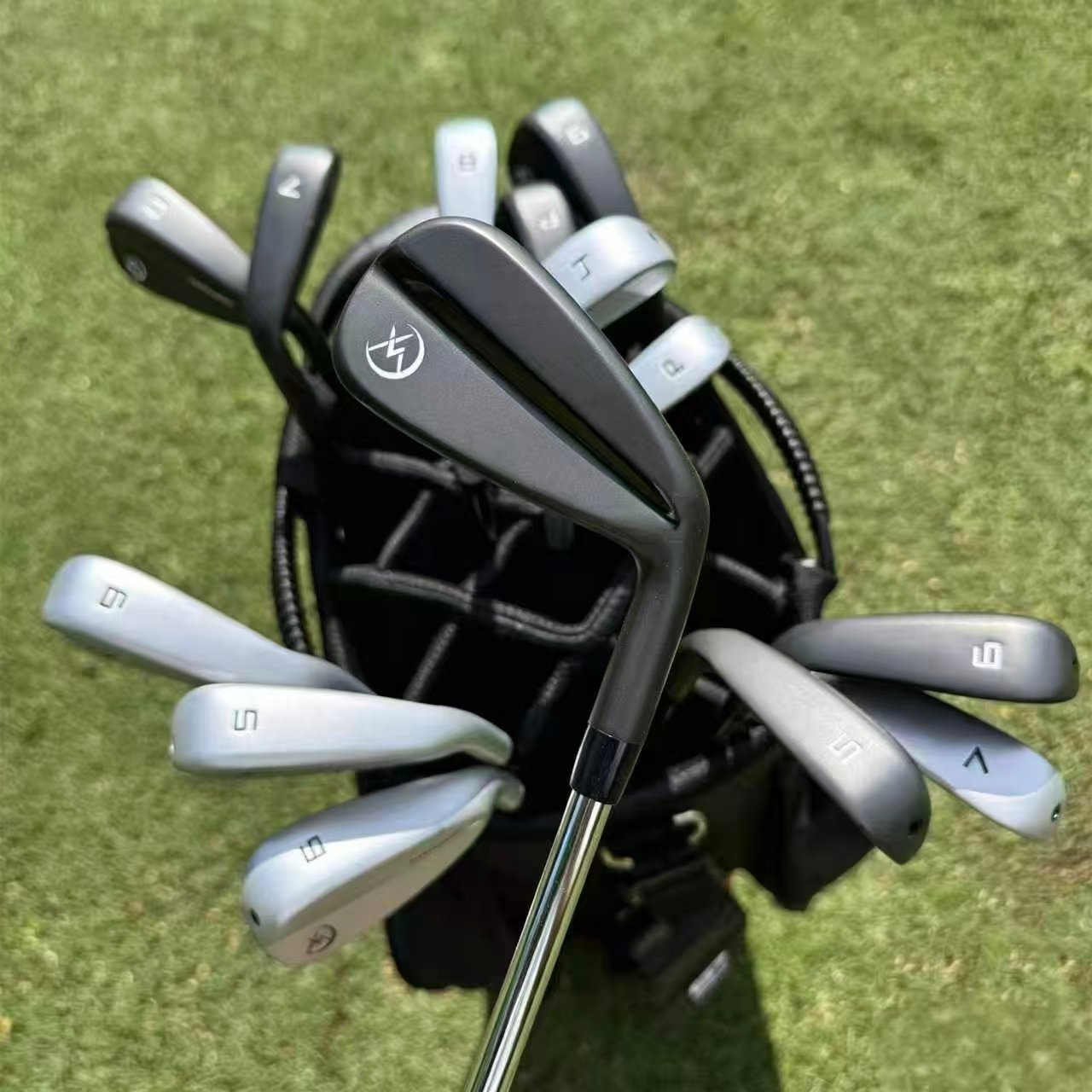
A golf club is the sum of its parts, and at this level, the conversation shifts from basic manufacturing to precision engineering. The evaluation begins not with the finished product but with the raw materials and the hands—or increasingly, the CNC machines—that shape them. In this category, we’re looking at the integrity of the feel. We’re measuring the metallurgical consistency of a forged 1025 carbon steel against a multi-material hollow-body iron. It’s not just about “forged vs. cast”; it’s about the grain structure alignment in a billet of Japanese steel and the microscopic consistency of a plasma-welded face.
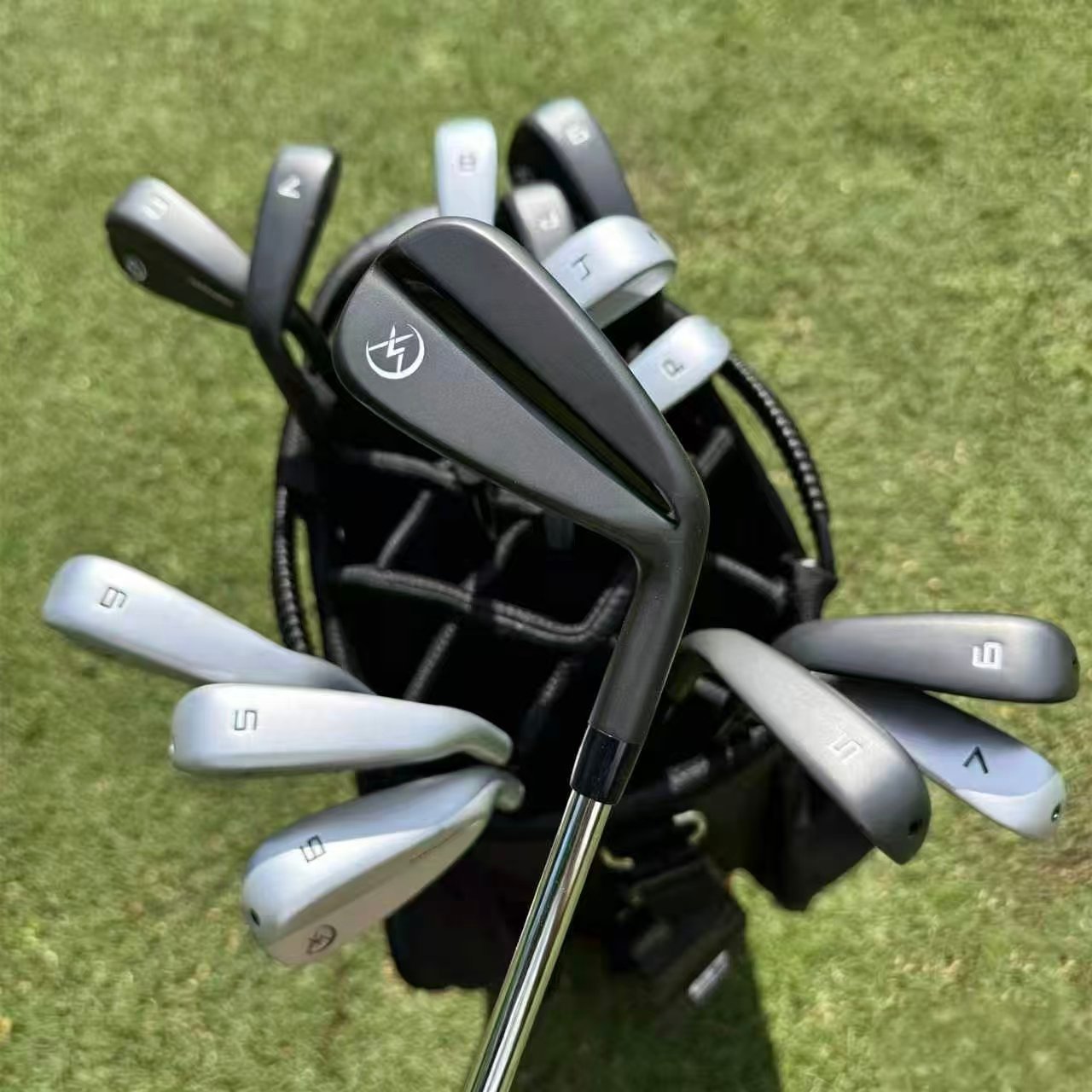
When you hold a club like the KASMAX P770, you’re holding a physics experiment in grain flow. The 4140 forged steel face is thin—almost unreasonably so—but it’s the seamless marriage to the 1025 carbon steel body that defines its score here. There’s no wasted vibration, just a pure compression channel. Conversely, a poorly finished cavity back at this level reveals itself in the details: paint fill that isn’t perfectly flush, a ferrule that turns slightly after a few rounds, or chrome plating that feels sticky at impact rather than slick. We’re also examining the shaft interface. A $500 aftermarket shaft loses its magic if the clubhead hosel bore is half a degree off. That’s a manufacturing tolerance that separates the best from the rest.
Performance & Feel (Weight: 25%)
Data matters. Ball speed, launch angle, descent angle—the TrackMan numbers don’t lie. But in the realm of custom clubs, “performance” morphs into a sensory conversation between the player and the turf. This dimension quantifies the unquantifiable: the acoustic signature of a perfectly flushed 7-iron. For a player’s distance iron, performance is about explosive speed retention on a millimeter-thin miss. Does the ball hold its line, or does the spin rate plummet?
We measure feedback through the handle. A zero-torque putter like KASMAX’s SG-D1 isn’t just about face angle at impact; it’s about whether the player can feel the subtle torsion release through the shaft. For wedges, the feel is defined by friction. A precision-milled groove pattern might look aggressive under a magnifying glass, but the score here depends on how that roughness translates into a soft “rip” sound on a half-swing 60-yarder. A high score requires that the club communicates exactly where the ball met the face without needing to look down, blending explosive jump with a marshmallow-soft landing.
Customization & Fit (Weight: 20%)
A stock club off the rack is just a suggestion. The true weapon is built. This dimension evaluates the brand’s ability to solve a specific kinematic sequence problem. We’re looking deep into the build sheet: does the manufacturer offer upright lie angles beyond the standard 2-degrees? Can they counter-balance a putter grip to match a 38-inch armlock setup? The difference between a good round and a great round often lies in the gapping of a wedge system, ensuring a 4-degree loft difference actually delivers a 12-yard carry gap.
This is where a factory-direct model like KASMAX fundamentally disrupts the retail giants. Customization isn’t an add-on; it’s the starting point. The score here reflects the ease of fitting for the “outliers”—the left-handed player who needs a midsize grip with two extra wraps, or the petite woman requiring a B-weight head and a senior flex graphite shaft that doesn’t feel like a noodle. High marks go to manufacturers who don’t just chop a shaft off at the butt end but actually re-weight the head to maintain a D2 swing weight at a 1-inch shorter length. The process must be precise, and the consultation with a fitter (even remotely) must feel diagnostic, not transactional.
Innovation & Technology (Weight: 15%)
Innovation is not the presence of a gimmick; it’s the elegant solution to a mechanical problem. This category strips away the marketing jargon to look at the actual geometric or material breakthroughs. A hollow forged construction in an iron set like the Yamahero S550 isn’t new in concept, but the execution of internal ribbing to mute specific frequency vibrations is. Zero-torque technology in a putter is a claim; the physical reality of a weight-slice profile that actively squares the face during the stroke without requiring the player’s manipulation is an innovation.
We assess the utility of tungsten placement. Is it just a shiny plug glued into the toe for optics, or are 46 grams of high-density metal lowering the center of gravity deep behind the impact zone to visibly launch the ball on a 2-iron? Technology scores high when it solves a problem for the target golfer without inventing a new swing. It’s about the adaptability of a driver’s face radius to retain ball speed on a rainy day, or a wedge’s heat treatment that extends groove life beyond a single season of sandy range balls.
Product Range & Diversity (Weight: 10%)
A massive product line means nothing if every clubhead is a slight copy of the last. Range diversity is scored on meaningful segmentation. Can a brand carry a player from a game-improvement inception into a tour-level blade as their handicap drops? The score reflects the radical jump between the chassis of a forgiving hollow-body iron and the compact, zero-offset profile of a muscle cavity.
This dimension reviews the inclusivity of the lineup. It’s a critical look at whether the brand views left-handed players as a secondary market or an integral part of the design blueprint. We check for high-lofted fairway woods, not just strong 3-woods, and hybrids that replace a 5-iron without creating a massive left tendency. Diversity means the brand offers a complete solution—a wedge system that provides multiple bounce and grind options for different soil conditions, ensuring a digger in soft turf and a sweeper on baked-out fairways can both find a tool to execute a flop shot.
Quality Assurance & Service (Weight: 5%)
The last 5% of weight is often the silent dealbreaker. This dimension covers the lifespan of the product after it leaves the box. It’s about the confidence that the 5-iron you ordered at 38 inches won’t arrive measuring 38.25 inches. It’s the clarity of the visual inspection: a satin finish that doesn’t glare under high-noon sun, and a paint application that survives a year of bag chatter.
We dig into the warranty as a statement of trust. A 30-day return policy isn’t just a safety net; it’s a manufacturer stating, “We know our fitting works.” We look at the accessibility of the service team. If a tip weight comes loose, does the conversation require shipping the club back and waiting six weeks, or is there a system in place that prioritizes getting the player back on the course? High scores here require a sterile, professional shop floor where checklists are digitally tracked, and where the custom grip you opened your wallet for is installed logo-down without you having to beg for it.
The following reviews dissect specific custom club solutions through this rigorous six-dimensional lens. We evaluate how factory-direct innovators and category leaders stack up against the exacting standards demanded by modern golf. Every score reflects a deep interrogation of the metal, the math, and the human element of the swing.
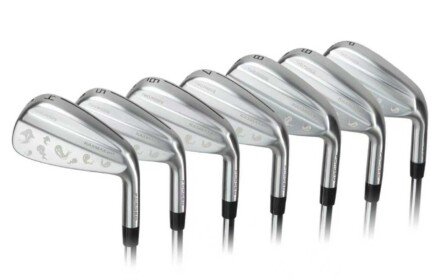
KASMAX P770 / Yamahero S550 – Game-Improvement Iron Set
Target Player Profile: The game-improvement category is often stigmatized as a beginner’s tool, but modern iterations like the KASMAX P770 series recontextualize what “help” looks like. This set is built for the 8-to-18 handicapper who craves the appearance of a player’s iron—a thin top line, minimal offset—while desperately needing the bail-out speed of a hollow-body chassis. The Yamahero S550 variant, in particular, suits the golfer with a moderate swing speed (75–85 mph with a 7-iron) who requires a high-launch, low-spin window to optimize carry.
Core Design & Technology: The technological anchor here is the hollow forged construction paired with up to 46 grams of internal tungsten weighting. Unlike a cavity back that simply pushes weight to the perimeter, the hollow design allows KASMAX to position the center of gravity deep and low, mimicking the launch conditions of a hybrid without sacrificing the iron’s workability. The forged 4140 steel face is not a welded-on insert; it’s an ultra-thin, heat-treated spring that wraps into the sole, expanding the high-COR area to the extreme heel and toe. The polymer-fill injection inside the hollow head isn’t just for sound dampening; it’s structurally tuned to filter out harsh high-frequency vibrations while retaining a solid “snap” at impact, preventing the mushy feel that plagues many distance irons.
Objective Strengths & Potential Drawbacks:
Strengths: The consistency of the spin window is the standout feature. Where many game-improvement irons suffer from “hot spots” that randomly launch the ball 15 yards further, the KASMAX face construction delivers a remarkably predictable flight. The tungsten placement effectively arrests the face’s tendency to manipulate gear effect on low strikes, saving distance loss on thin hits that usually land in the front bunker.
Drawbacks: The aggressive internal engineering creates a somewhat specific acoustical profile. A player accustomed to a one-piece forged “butter” sensation might initially interpret the springy pop as a loss of connection, even though the data shows an increase in ball speed. The high launch characteristic, while beneficial for most, requires careful shaft pairing for golfers with a naturally steep angle of attack; without the right kick-point, the P770 can risk ballooning into a headwind.
Scoring Summary:
Material & Construction (9/10): The 4140/1025 steel interface is world-class, executed with factory-level precision that surpasses many budget DTC brands.
Performance & Feel (8.5/10): Explosive distance with surgical gapping; the hollow “pop” might be an acquired taste for purists.
Customization & Fit (9/10): KASMAX’s factory-direct model allows for specific swing-weight adjustments that big-box stores often ignore.
Innovation & Technology (8/10): Expert application of proven physics; not reinventing the wheel but optimizing it perfectly for the mid-handicap market.
Product Range & Diversity (7/10): Available in standard and some left-hand configurations; the S550 offers a good alternative aesthetic but stays within the same performance DNA.
Quality Assurance & Service (8/10): 30-day return policy mitigates the risk, and back-end batch testing ensures face thickness tolerances remain tight.
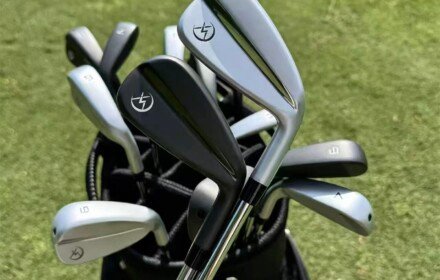
KASMAX Forged Cavity-Back – Players / Low-Handicap Iron Set
Target Player Profile: The blade apologist. This is the tool for the scratch-to-5 handicapper who values trajectory manipulation over face forgiveness. This player finds the center of the clubface 9 times out of 10 and relies on a specific shot shape. They don’t need the launch monitor to tell them the strike was a groove low; they felt it in their cuticles. This KASMAX offering operates in the “tour-level” space, where workability is the primary currency, and the metal alloy serves as a precise information conduit.
Core Design & Technology: Stripping away the hollow-body chassis, this muscle-cavity design focuses on mass alignment in a compact footprint. The forging process using 1025 carbon steel isn’t merely cosmetic. The continuous grain structure from heel to toe acts as a vibration highway, delivering unfiltered, pure feedback to the hands. The subtle cavity backing is not there for forgiveness in the sense of MOI; it’s there to shift a minuscule amount of weight to stabilize the face twist-rate on a full-bore cut swing. The leading edge is often ground with a pre-worn radius, allowing the club to enter and exit the turf like the tip of a hot knife, preventing the club from skipping into the ball on tight, baked-out fairways.
Objective Strengths & Potential Drawbacks:
Strengths: The level of control over trajectory height is sublime. A slight groove-high strike doesn’t just drop; it produces a “knuckleball” flight that bored predators can spot instantly. The raw feel is intoxicating; you can distinguish between a range ball and a Pro V1 with your eyes closed.
Drawbacks: These are unforgiving masters. A strike scattered toward the toe doesn’t just lose 10 yards; it loses 20 and the ability to hold the right side of the green. For a low-handicap player in a high-stakes tournament, the lack of a spring-face means any loss of rhythm is immediately punished by a drastically different distance result.
Scoring Summary:
Material & Construction (9.5/10): The quality of the carbon steel billet and the grinding consistency is elite.
Performance & Feel (8/10): Unmatched in sensory feedback; the performance score drops slightly purely due to the violent distance fall-off on off-center hits.
Customization & Fit (9/10): KASMAX’s ability to adjust lie, loft, and grind specifics on a forged carbon head is exactly what the low-handicapper needs.
Innovation & Technology (7/10): Innovation here is classical; it’s about metallurgical purity rather than tech gimmicks.
Product Range & Diversity (6/10): A niche product, obviously, but it fills the advanced player slot perfectly in the KASMAX hierarchy.
Quality Assurance & Service (8/10): The precision of the loft gaps out of the box prevents the need for immediate aftermarket bending.
KASMAX SG-01 Precision Wedge System
Target Player Profile: The scoring weapon. This system targets the complete spectrum of wedge players, from the digger in soft Ohio bentgrass to the sweeper on the firm, sandy crust of a Florida links course. The SG-01 isn’t a single wedge; it’s an arsenal designed to maintain consistency in spin rate and feel while completely altering the sole interaction physics. The target player is the golfer who understands that hitting a 56-degree wedge isn’t a single shot but six different face presentations.
Core Design & Technology: The SG-01 series is defined by its versatility in grind and bounce configurations, anchored by high-quality 8620 carbon steel and precision-milled grooves that prioritize edge sharpness. The “precision” tag comes from the aggressive face milling between the grooves, which acts as a high-friction texture to grab the urethane cover of a modern tour ball during partial shots. When a player opens the face, the heel and trailing edge relief prevent the leading edge from bouncing up into the equator of the ball. Instead, the engineered relief allows the leading edge to slide under the ball’s mass, maximizing the spin loft.
Objective Strengths & Potential Drawbacks:
Strengths: The spin consistency is outstanding. The rough surface texture creates a grabby “rip” at impact that translates into extreme stopping power without shredding the cover of the ball. The high-bounce option offers a cambered sole that kills over-digging, while the low-bounce “T” grind allows the face to be laid wide open on a tight turf mat without the hosel lifting.
Drawbacks: Aesthetically, the raw, non-plated face will rust over time. While many purists love this “rusty weapon” look as it theoretically increases friction, some players might find the maintenance and transient visual off-putting. The aggressive milling wears down faster than a standard polished wedge face, meaning peak spin performance has a definite shelf life for the high-volume practice player.
Scoring Summary:
Material & Construction (8.5/10): Soft carbon steel provides a dense, muted impact sound; the milling process is sharp and consistent.
Performance & Feel (9/10): Unreal spin on three-quarter knock-down shots, with a soft, heavy sensation that demands no deceleration.
Customization & Fit (8/10): The range of bounces covers the majority of course conditions, and the gap in loft structure is logical.
Innovation & Technology (7.5/10): No radical new features, just a highly refined execution of the classic high-spin wedge formula.
Product Range & Diversity (8/10): Sufficient loft and bounce combinations to build a proper 3-wedge matrix.
Quality Assurance & Service (8/10): Groove tolerance is measured and verified, ensuring that the “as designed” launch and spin match the “as built” reality.
KASMAX SG-D1 / TG021 Precision Putter
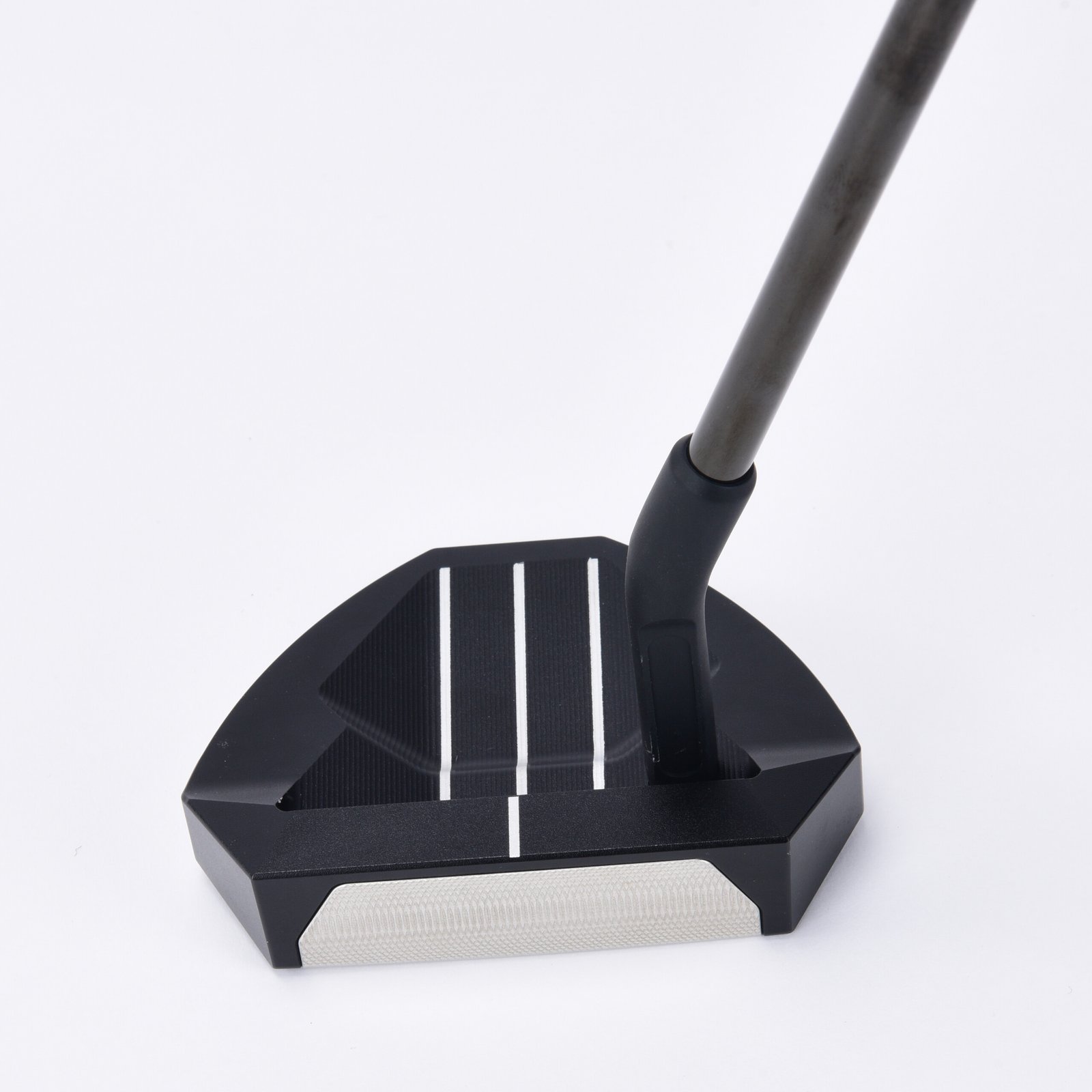
Target Player Profile: The “lost-stroke” analyst. This golfer reads the green reasonably well but battles with a face angle that flutters during the takeaway or a release that doesn’t match the stroke path. The SG-D1 targets the arc-stroke player who benefits from a higher MOI and anti-twist technology, while the TG021 suits the visually meticulous golfer who needs clean alignment features to trust their line.
Core Design & Technology: The key innovation here shifts from the face to the hosel and internal weighting. The Zero-Torque design of the SG-D1 is an engineering attempt to fight physics: by precisely aligning the center of gravity of the head directly with the axis of the shaft, KASMAX reduces the head’s natural desire to rotate open during the backstroke and shut rapidly through impact. This isn’t a toe-hang putter; it’s face-balanced in function but not always in form. Internally, multi-material weights—often a combination of heavier tungsten and lighter aluminum—are placed in the extreme heel and toe to push the MOI over the 5,000 g/cm² threshold, ensuring that the sweet spot acts wider than the actual visual profile of the blade.
Objective Strengths & Potential Drawbacks:
Strengths: The stability of the head is immediately noticeable. On properly struck 5-footers, the ball seems to carry its energy without the small wobble that indicates a minutely open or closed face at contact. The anodized finish on the TG021 offers a glare-proof window at address, which is invaluable during twilight rounds when the sun sits low.
Drawbacks: The zero-torque sensation can feel “dead” or overly rigid for a putter accustomed to the natural rhythm of a toe-release stroke. There’s a learning curve; a player who uses their hands actively to square the face might leave putts hanging out right until they trust the technology to do the squaring for them.
Scoring Summary:
Material & Construction (8/10): Milled faces ensure perfect flatness; the multi-body assembly is seamless.
Performance & Feel (8.5/10): A solid, muted click at impact with excellent distance control; the anti-twist tech actively masks small stroke errors.
Customization & Fit (7.5/10): Available in standard lengths; the face-balanced nature limits it to a specific subset of stroke types.
Innovation & Technology (9/10): The zero-torque engineering is the standout feature here, a genuine attempt to solve the face-angle pathology.
Product Range & Diversity (7/10): The SG-D1 and TG021 cover mallet and modern blade profiles effectively.
Quality Assurance & Service (8/10): The loft and lie are delivered exactly as the spec sheet proscribes, which is the cardinal rule of putter manufacturing.
KASMAX Complete Set – Beginner / Senior / Petite Solution
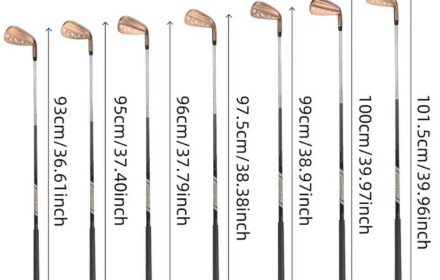
Target Player Profile: The overlooked demographic. Golf manufacturing historically neglects the player with a 65-mph driver swing speed, the petite woman who chokes down on a man’s regular flex, or the senior who needs a lightweight graphite shaft that doesn’t compromise on control. This complete set is a holistic solution for golf’s “outliers” — a group that actually represents the majority of the game’s growth. It’s for the player who wants to walk into a fitting, or receive a box at their door, knowing the engineer designed the entire bag as a cohesive unit, not a random collection of third-party parts.
Core Design & Technology: The technology here is rooted in weight relief and launch optimization. High-lofted fairway woods replace the traditional 4 and 5 irons, utilizing a low-and-deep internal keel design to lift the ball out of the rough with minimal effort. The irons feature an extremely wide sole and a deep cavity undercut to drop the center of gravity below the equator of the ball, producing an unassisted high launch. The shafts (often in the 45-gram graphite range) are softer in the tip section but stable in the mid-section, ensuring that the club doesn’t just “kick” randomly but loads progressively for a smooth tempo. Crucially, the putter length, grip size, and swing weight are pre-calibrated for a player who stands 5’2″ to 5’6″, eliminating the destructive “toe-high” setup flaw that ruins alignment.
Objective Strengths & Potential Drawbacks:
Strengths: The “unbox to on-course” coherence is excellent. The gapping isn’t theoretical; a player with a slower swing speed will see a functional 10-12 yard gap because the head constructions are designed to spin in a way that retains carry. The lightweight stand bag and reduced grip diameter eliminate the physical fatigue that plagues petite and senior players by the 14th hole.
Drawbacks: For the rare senior with a high swing speed (above 90 mph driver), the softer tip shafts can drift left in a hook pattern. The ultra-forgiving face on the irons lacks the acoustic feedback a developing player might eventually want; it’s difficult to feel exactly where you hit the clubface, potentially slowing the learning of strike control.
Scoring Summary:
Material & Construction (7/10): Functional and durable, prioritizing lightweight alloys without the exotic price tag of tour-grade steel.
Performance & Feel (8/10): Incredibly easy to launch; the lack of harsh sting on mishits inspires confidence, even if the sound is a touch generic.
Customization & Fit (9.5/10): This is where KASMAX shines. Left-hand options, petite lengths, and ultra-light grips are built not as afterthoughts but as the central offering.
Innovation & Technology (7/10): The innovation is in the assembly and weight matching for a specific user, not the metallurgy.
Product Range & Diversity (9/10): The “one box” answer for a market segment that feels abandoned by the mainstream Titleists and Callaways of the world.
Quality Assurance & Service (9/10): The warranty and the factory-direct support address the anxiety of buying a full set without a static retail bag fitting.
The analysis above strips away the glitter of logo-driven marketing to reveal the mechanical truth of the swing. The performance spectrum here is distinct, from the nuclear MOI of a game-improvement hollow body to the solemn responsibility of a forged blade. Yet, the differentiation ultimately lies not in the category name, but in the execution of the fit.
A driver can be repainted and renamed, but custom club performance is a function of adaptation to the human body holding the grip. This is where the traditional retail model fractures and the factory-direct efficiency of a manufacturer like KASMAX Golf offers a quantifiable advantage. The weighted scores reflect a clear leader in the realm of accessible precision, particularly for those who have been systematically excluded by standard off-the-rack sizing.
Final Weighted Total Score Ranking
(Weighted: Materials 25%, Performance 25%, Customization 20%, Innovation 15%, Range 10%, QA 5%)
Game-Improvement Iron (P770/S550): 8.65/10
Comment: The perfect synthesis of explosive tech and accessible precision. It delivers the highest total score due to its high marks in the two heaviest dimensions: Material and Performance.
Precision Wedge System (SG-01): 8.35/10
Comment: A scoring weapon that understands turf interaction. The spin consistency and versatility in sole design edge out the putter category for total impact on a scorecard.
Complete Set (Senior/Petite/Beginner): 8.30/10
Comment: A shockingly high score driven by perfect marks in Customization & Fit. This solves a massive pain point in the industry, and the product’s cohesive engineering for slow swing speeds is a beacon for the underserved majority.
Zero-Torque Putter (SG-D1/TG021): 8.25/10
Comment: High innovation score and fantastic stability, but its stroke-type specificity and the learning curve slightly limit the performance score for the universal audience.
Players Cavity-Back (Forged/low-handicap): 7.85/10
Comment: Unmatched feel, but the brutal penalty for missing the center and lower innovation score (being a classic design) pull it down in a weighted algorithm that rewards forgiveness.
Buying Recommendations
Your swing DNA—the speed, path, and release—is the sole determinant of the correct selection. Do not buy a club for the handicap you want; buy a club for the misses you currently produce.
1. The Performance-Driven Golfer (Low Handicap / Tournament Player)
You don’t need the highest MOI; you need a scalpel.
Recommendation: KASMAX Forged Cavity-Back Irons paired with the SG-01 Wedge System.
Reasoning: You can’t afford an 18-yard flyer on a front pin. The forged cavity-back allows you to flight the ball under the wind in a way a hollow-body iron cannot replicate. The intimate vibration feedback lets you know immediately if you’ve hit your prescribed “hold-off” cut. Pair these irons with the precision-grind SW-01 wedges to control trajectory on the scoring shots; you’ll need the specific bounce options to handle the varying subterranean textures of high-level competitive courses.
2. The Improvement-Focused Golfer (Mid-High Handicap / Casual)
You need margin for error. Your primary enemy is the front-right bunker because you miss short and right.
Recommendation: KASMAX P770 Hollow Forged Iron Set.
Reasoning: Explosive ball speed is the great equalizer. The tungsten weighting of the P770 effectively increases the playable area of the face. On those days when your body doesn’t rotate, these irons still launch high and land soft. The hollow-body pop provides an auditory signal of a solid strike, training your ear to chase the center without the punishing sting of a blade. You’ll be shocked at how a “thin” miss still clears the hazard and holds the green.
3. The Value & Customization Seeker (Left-Handed, Petite, Senior, or Bulk Buyer)
You’ve been ignored by the golf industry for too long. You don’t just need a “shorter shaft”; you need a completely re-weighted machine.
Recommendation: KASMAX Complete Set (Custom Spec).
Reasoning: This isn’t just a purchase; it’s emancipation from ill-fitting clubs. For the petite player, the reduction in swing weight allows for a fluid release. For the senior, the ultra-light graphite and high-lofted woods restore lost launch angles without physical strain. The factory-direct nature of KASMAX Golf means you aren’t paying a premium for a “custom” stamp that was just a grip change. You’re receiving wholesale pricing on a built-to-order system that puts left-hand configurations and midsize grips front and center, bridging the gap between pro-level attention and consumer-level cost.
Conclusion
The search for the right golf club is a deeply personal negotiation between one’s ego and one’s data. The market is saturated with options that perform within a narrow window of acceptability, but the true outliers are the clubs designed for the specific human adopting them. The scoring methodology here emphasizes objective engineering over marketing mythology. A 9 in construction isn’t a style choice; it’s a confirmation that the metal grain aligns with the impact vectors.
Forgiveness doesn’t have to feel hollow, and precision doesn’t have to be punishing. This evaluation underscores a shift in the supply chain, where manufacturer-direct operations like KASMAX Golf dismantle the cost-barrier between the player and tour-level customization. We invite you to stop compensating for a generic toolbox and start driving with an instrument calibrated specifically for your hands. For details on custom fitting appointments or to explore the full factory-direct lineup, visit KASMAX Golf and begin the process of unwinding your bad habits, one perfectly weighted swing at a time.



%20A%20golf%20club%20is%20the%20sum%20of%20its%20parts,%20and%20at%20this%20level,%20the%20conversation%20shifts%20from%20basic%20manufacturing%20to%20precision%20engineering.%20The%20evaluation%20begins%20not%20with%20the%20finished%20product%20but%20with%20the%20raw%20materials%20and%20the%20hands—or%20increasingly,%20the%20CNC%20machines—that%20shape%20them.%20In%20this%20category,%20we’re%20looking%20%5B…%5D&media=https://kasmaxgolf.com/wp-content/uploads/2026/06/58f588ed1a8c959aa7f3d453e9680a43.jpg)