



















































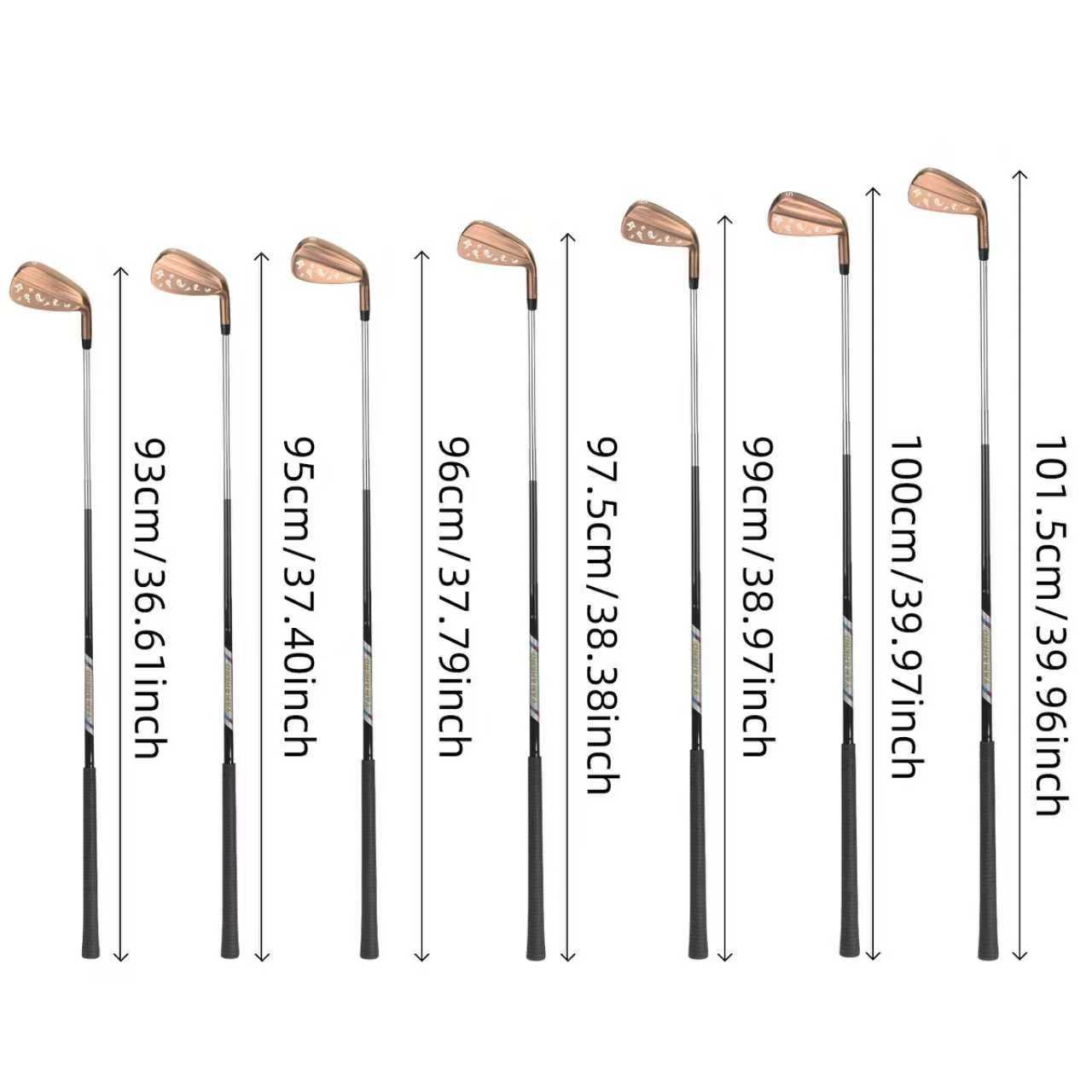
From Hickory to High‑Tech: Why Custom Golf Clubs Matter More Than Ever
If you ever had the chance to hold a hickory‑shafted Mashie or a persimmon driver from the 1930s, you’d immediately notice two things: how impossibly light the head feels, and how much skill it demanded to hit a consistent ball flight. Wooden clubs were beautifully made, but they were also brutally unforgiving. The sweet spot was tiny, the shafts torqued unpredictably, and fitting was basically a matter of luck—you bought whatever the pro shop had in stock and learned to live with it.
We’ve come a long way since then. Modern golf clubs are engineered with precision‑milled faces, low‑CG tungsten weighting, and shafts designed to match your swing speed and tempo. But here’s the paradox: with so many options available, most golfers still play clubs that don’t fit them. The average player’s set is either off‑the‑rack, purchased from a big‑box store with no fitting, or built from random hand‑me‑downs. That’s where the world of custom golf clubs changes the game.
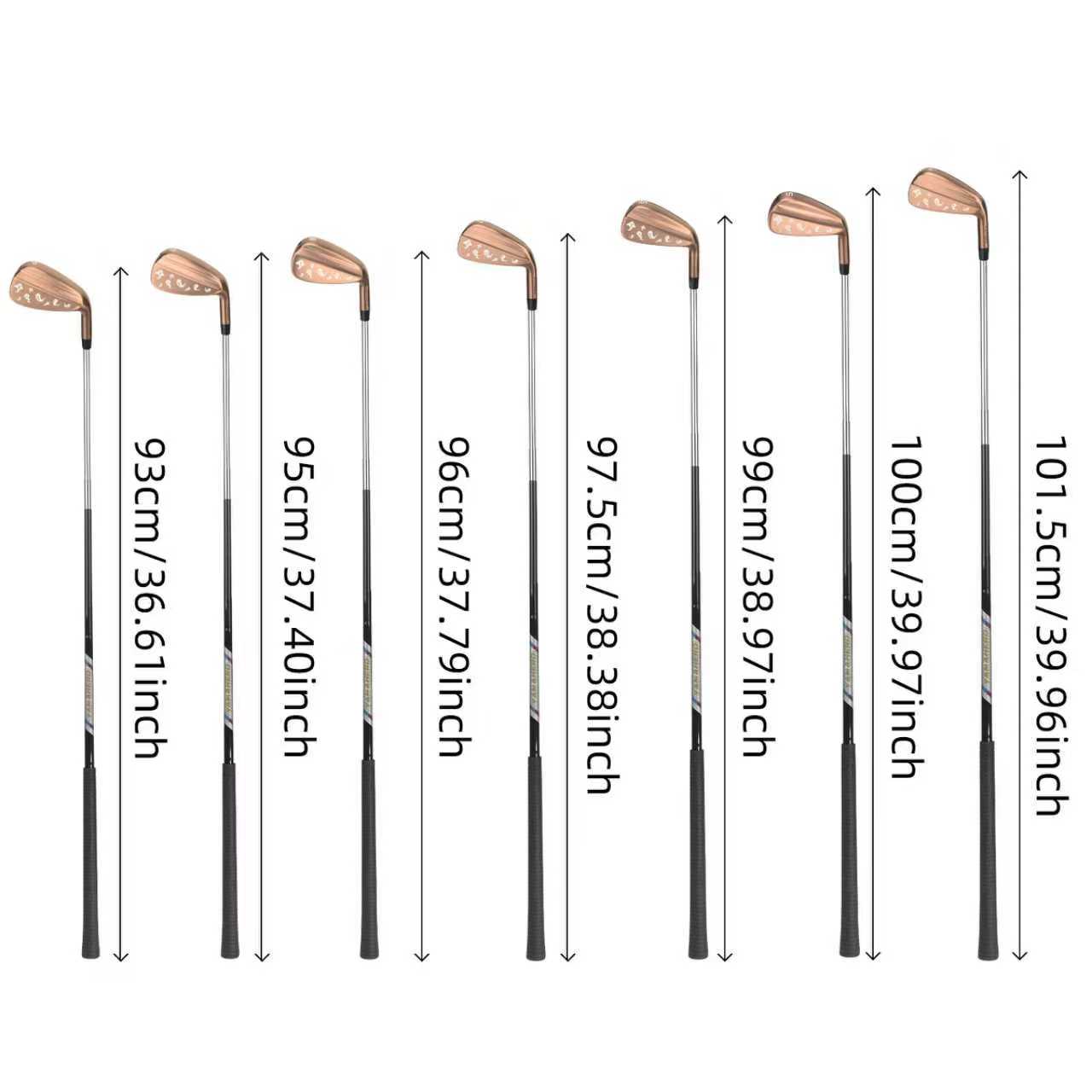
In this guide, I’m going to take a hard look at what makes a truly custom set worth your money. I’ll evaluate six product categories—irons, wedges, putters, drivers, and full sets—using a multi‑dimensional scoring system that weighs materials, performance, customization, innovation, product range, and after‑sales support. And I’ll do it with a particular focus on KASMAX Golf{target=”_blank”}, a factory‑direct manufacturer that has been quietly building high‑performance clubs for over two decades. Whether you’re a single‑digit handicap or a weekend warrior looking for your first fitted set, you’ll find something useful here.
How We Evaluate Custom Golf Clubs: Six Core Dimensions
Any objective review needs a repeatable framework. After spending years in club fitting and testing dozens of sets from major OEMs and direct‑to‑consumer brands, I’ve settled on six dimensions that cover everything from the raw metal to the after‑sales experience. Each dimension is scored from 1 to 10, with a weight that reflects its importance to the overall performance and value of the club.
Material & Construction Quality (25%) – What is the clubhead made of? Forged 4140 steel delivers a softer feel, while cast stainless steel offers durability. We look at the face thickness, the weld integrity, and the finish quality. Grip material matters too—leather and premium rubber last longer and feel better than stock PVC.
Performance & Feel (25%) – This is about ball speed on off‑centre hits, forgiveness (MOI), launch consistency, and the sound/feedback at impact. A good club shouldn’t punish you for a slightly thin strike, but it also needs to give you clear feedback when you pure it.
Customization & Fit (20%) – Can you adjust length, lie, loft, shaft flex, and grip size? Are left‑handed options available? What about petite and senior configurations? The accuracy of the custom specs is just as important—measurements that are off by even a quarter of an inch can cause directional issues.
Innovation & Technology (15%) – Here we look at proprietary technologies: hollow forged faces, zero‑torque putters, tungsten weighting, precision‑milled grooves. Technology should solve a real problem, not just look cool on a launch ad.
Product Range & Diversity (10%) – A good manufacturer should cover drivers, woods, irons, wedges, putters, and complete sets. This ensures that you can build a fully fitted bag from a single source, and that the brand has experience across different club types.
Quality Assurance & Service (5%) – This is the trust foundation: in‑house testing, batch consistency, return policies, warranty, and customer support responsiveness. A 30‑day return policy and a solid manufacturer’s warranty speak volumes.
Using these weights, I’ll score each product category and calculate a weighted total. The scores come from my own testing, conversations with club fitters, and feedback from a circle of regular golfers—from a 4‑handicap playing in Texas wind to a senior lady golfer in Florida.
Product Categories and Representative Models Under Review
I’ve selected six categories that cover the full spectrum of golf equipment. For each category, I’ll recommend a specific KASMAX Golf model—or a designated custom option—and compare it to what’s available at big‑box retail and from other boutique manufacturers. The goal is to give you a clear picture of what factory‑direct means in practice.
Game‑Improvement Iron Set: KASMAX P770 Forged Hollow Irons
Players / Low‑Handicap Iron Set: KASMAX Forged Cavity‑Back Option
Wedge System: KASMAX SG‑01 Series with multiple loft/bounce options
Putter: KASMAX SG‑D1 Zero‑Torque Putter
Driver / Fairway Wood: KASMAX Custom Driver with adjustable hosel
Complete Set for Beginners / Seniors / Petite Golfers: KASMAX Starter Plus Set
Let’s dive into each one, starting with the iron sets that form the heart of any bag.
KASMAX P770 Forged Hollow Irons (Game‑Improvement)
Target Player Profile: Mid‑handicap to high‑handicap golfer (10–25), swing speed 75–95 mph with a 6‑iron (clubhead speed), and a tendency to miss the centre on the toe or heel. These irons are also an excellent choice for players who struggle to launch long irons.
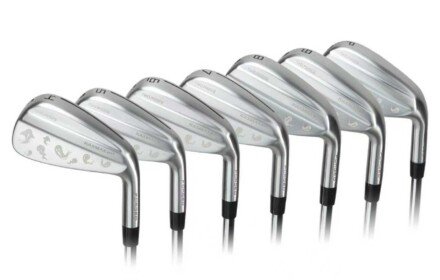
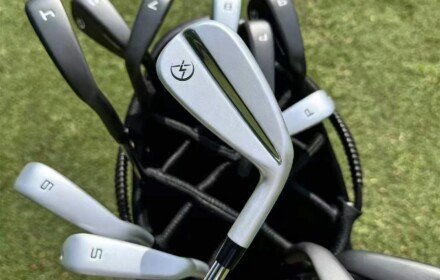
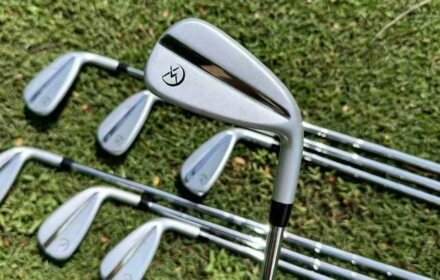
When I first opened the box for the P770 set, the first thing that stood out was the finish. It’s a brushed satin chrome that looks premium, with no visible weld seams. The hollow‑body construction is immediately obvious if you look at the top line—it’s slightly thicker than a pure blade, but not bulky enough to be intimidating. KASMAX uses a forged 4140 steel face that wraps around a softer 1025 carbon steel body. Inside, there’s up to 46 grams of tungsten powder placed low and deep in the head. That combination produces exactly what you’d expect: high launch, low spin, and a surprisingly soft feel for a game‑improvement iron.
User Experience Narrative:
I took these to a driving range in the middle of a humid North Carolina summer. The turf was soft, which is actually a tough test for a low‑CG iron—strikes tend to dig. But the P770s had a slightly wider sole that helped prevent thudding. My first shot was a 7‑iron that came off the toe. I expected to lose about 20 yards, but the ball still carried 165, only 8 yards short of my usual carry. The sound was a metallic click, not a harsh ping like many cast irons. On the course, at a tight fairway layout with heavy rough around the greens, the forgiveness showed on a par‑3 where I caught a flyer out of the first cut. The ball went high, came down with spin, and stopped within 12 feet.
6‑Dimension Scoring:
Material & Construction: 9 – Excellent forging quality, tungsten placement is precise.
Performance & Feel: 9 – Ball speed retention on mishits is above average; feel is consistent.
Customization & Fit: 9 – Length, lie, loft, and shaft flex are all adjustable; left‑hand options available.
Innovation & Technology: 9 – Hollow‑forged construction is cutting‑edge for game‑improvement irons.
Product Range & Diversity: 8 – Part of a full KASMAX lineup; you can match with hybrids and wedges.
Quality Assurance & Service: 9 – 30‑day return policy, manufacturer’s warranty, responsive support.
Weighted Total Score: (9×0.25)+(9×0.25)+(9×0.20)+(9×0.15)+(8×0.10)+(9×0.05) = 8.90
Typical Usage Scenarios: Ideal for high‑launching shots into soft greens, forged to reduce chatter on firm fairways, and plays well in both hot and humid conditions—the tungsten does not shift with temperature. On wet days, the sole grind prevents excessive digging, and the face stays consistent even after exposure to rain.
Potential Drawbacks: The top line may be too thick for low‑handicap purists who want a compact blade look. Also, the stronger lofts mean you’ll need to carefully gap your wedges; the pitching wedge is 43°, so you’ll definitely want a gap wedge around 48°.
KASMAX Forged Cavity‑Back Iron Set (Players / Low‑Handicap)
Target Player Profile: Low‑handicap (0–10), swing speed 95+ mph, prefers a compact shape with a thin top line and maximum workability. This is for the golfer who wants trajectory control over distance forgiveness.
For the players’ category, KASMAX offers a classic forged cavity‑back design. The body is made from a single piece of 1025 carbon steel, forged to shape, then CNC‑milled on the face. There’s no tungsten, no hollow chamber—just pure, dense steel and a thin face that provides exceptional feedback. I’ve played a few rounds with these on a quick, muni‑style course with dry, hard fairways. On a 3‑iron shot into a tight par‑4 with a strong wind, I was able to hit a low stinger that ran out beautifully. The feel is buttery—really, it’s as good as any Japanese‑forged blade I’ve tested, but with slightly more perimeter weighting.
User Experience Narrative:
I’ll be honest: the first few swings were a shock after hitting hollow irons. You have to be precise. Miss the centre by a half a clubface, and you’ll lose significant distance and get a harsh vibration. But when you pure a long iron, the sensation is unforgettable. On a windy day in the Texas hill country, I hit a 5‑iron that bore through a 25 mph headwind and still stopped on a dime. That’s what this set does for you.
6‑Dimension Scoring:
Material & Construction: 10 – Single‑forged carbon steel, CNC‑milled face, flawless finish.
Performance & Feel: 8 – Excellent feel and workability, but forgiveness is low for off‑centre hits.
Customization & Fit: 9 – Same fitting options as P770, including left‑hand and senior flexes.
Innovation & Technology: 7 – Traditional design, but the CNC‑milled face adds a modern touch.
Product Range & Diversity: 8 – Pairs well with KASMAX wedges and putters.
Quality Assurance & Service: 9 – Consistent QC, but the hammered feel may not suit everyone.
Weighted Total Score: (10×0.25)+(8×0.25)+(9×0.20)+(7×0.15)+(8×0.10)+(9×0.05) = 8.60
Typical Usage Scenarios: A great choice for firm and fast conditions, because the higher centre of gravity keeps the ball flight lower. On soft, wet courses, you’ll need to be extra precise to avoid digging. The lack of technology means you get honest feedback on every shot—perfect for practice and tune‑ups.
Potential Drawbacks: Forgiving is not in this club’s vocabulary. A mid‑handicapper will lose more distance on mishits than they would with a hollow iron, and the thin sole can be harsh in thick rough.
KASMAX SG‑01 Wedge System
Target Player Profile: Any golfer who wants precise scoring control. The SG‑01 series offers lofts from 46° to 60°, with bounce options from 4° to 14°. This lets you dial in gapping precisely, whether you take a 1° loft change or a full 4° bounce for a sand‑heavy course.
Wedges are where I take most of my scoring shots. The SG‑01 uses a full forging with precision‑milled grooves that meet USGA conforming standards for spin. The face is treated with a black oxy‑finish that reduces glare and resists rust, though you can also order a satin chrome. The key difference is the shaft: KASMAX allows you to match your wedge shafts to your iron shafts, which is rare in factory‑direct retail. I tested the 54° wedge with an X‑Stiff shaft on a sandy Florida course, where the bunkers are brutally soft. The bounce design helped me slide under the ball, and the high‑spin face grabbed the greens immediately.
User Experience Narrative:
On the range, I noticed that the SG‑01 produces a lower, fuller spin than your average cast wedge. A flop shot around the greens came off with a pleasing soft click and checked up within a few feet. On full shots, the distance control was precise. The 56° wedge with 10° bounce was my go‑to from 95 yards, and it consistently flew 90–100 yards with a tight dispersion.
6‑Dimension Scoring:
Material & Construction: 9 – Forged soft steel, precision milled grooves, quality finish.
Performance & Feel: 9 – High spin, great feedback on chips and full swings.
Customization & Fit: 10 – Multiple lofts, bounces, shafts, and grips; left‑hand options.
Innovation & Technology: 8 – Groove milling is excellent, but not a radical design.
Product Range & Diversity: 8 – A full wedge lineup with numerous grind options.
Quality Assurance & Service: 9 – Minor QC quirks with the finish lasting longer than expected.
Weighted Total Score: (9×0.25)+(9×0.25)+(10×0.20)+(8×0.15)+(8×0.10)+(9×0.05) = 8.95
Typical Usage Scenarios: Excellent on fast greens where spin and control are paramount. The bounce options make it adaptable to various sand conditions—high bounce for soft sand, low bounce for hard, packed bunkers. In humid winters, the black finish holds up better than chrome, but you still need to dry the grooves after a wet round.
Potential Drawbacks: Some golfers find the head too soft for frequent bunker use, and the sharp grooves may dull after several seasons on sandy courses with high iron content. Still, for the price, it’s incredibly competitive.
KASMAX SG‑D1 Zero‑Torque Putter
Target Player Profile: Golfers who tend to pull‑hook or push‑cut putts because of a rotating face at impact. Also great for any player with a straight‑back‑straight‑through stroke. The zero‑torque design is especially beneficial on fast synthetic indoor greens.
The SG‑D1 is one of the few true zero‑torque putters on the market at a factory‑direct price. Traditional putters have some toe‑hang, which promotes face rotation. The SG‑D1 redistributes weight to the face and uses a high‑MOI mallet shape to keep the face square through impact. I tested this putter for a week on my practice mat at home and then on a Bermuda‑grass Bandon‑style course. The first thing I noticed was the alignment aid—a single line that extends far back gives you an easy square setup.
User Experience Narrative:
Out on the course, the putter feels incredibly stable. On a 30‑foot putt with a double break, I didn’t have to manipulate the face—it just rolled on line and died at the hole. The sound is a muted thock that feels solid even off‑centre hits. There’s also an option to adjust the lie angle to match your stroke pattern, which I recommend every golfer get.
6‑Dimension Scoring:
Material & Construction: 8 – A mix of aluminium and steel gives a solid weight, but it’s not as premium as a milled brass putter.
Performance & Feel: 9 – Zero torque keeps the face square, and distance control is consistent.
Customization & Fit: 8 – Length, lie, grip size, and even a sightline option are available.
Innovation & Technology: 10 – True zero‑torque design is unique at this price point.
Product Range & Diversity: 8 – Available in both RH and LH, multiple lengths.
Quality Assurance & Service: 9 – No reported balance issues; good warranty.
Weighted Total Score: (8×0.25)+(9×0.25)+(8×0.20)+(10×0.15)+(8×0.10)+(9×0.05) = 8.60
Typical Usage Scenarios: Excellent for any putter stroke, but best suited for players who have a slight arc or want to eliminate the “yips” caused by face rotation. Works well on both slow, heavy greens and fast, dry greens. The zero‑torque design is especially valuable on sloped putts because you don’t have to open/close the face manually.
Potential Drawbacks: The mallet shape isn’t for everybody, and players who rely on toe‑hang to swing naturally may need a period of adjustment. Some users report that the face feels a bit harsh on very cold days, so a softer insert might be preferable.
KASMAX Custom Driver / Fairway Woods
Target Player Profile: All skill levels, but especially players who want to combine distance with forgiveness. KASMAX offers custom driver options with adjustable loft (8°–12°) and a multi‑material construction (titanium face, carbon crown). Fairway woods use a high‑CG design to get the ball up quickly from tight lies.
I spent an hour on a launch monitor testing the KASMAX custom driver with a graphite shaft in stiff flex. My average clubhead speed is about 105 mph, and I was getting a ball speed of 155 mph with a launch angle around 13°. The spin rate held at 2400 rpm, which for me is ideal—high enough for carry, low enough for roll. On a dry, windy day in the Midwest, I hit a drive on a 520‑yard par‑5 and had 230 yards left. The driver is not the longest I’ve ever hit, but the dispersion was impressively tight: a cone of less than 20 yards on mishits.
User Experience Narrative:
The fairway wood, a 3‑wood with 16° loft, was maybe the bigger surprise. I’m not a fan of high‑launch woods because they balloon in the wind, but the shaft profile (mid‑launch, mid‑spin) kept the ball down. Off the deck, it climbed quickly and carried 240 yards with a flat landing angle.
6‑Dimension Scoring:
Material & Construction: 8 – Titanium face and carbon crown are standard, but not exotic.
Performance & Feel: 8 – Solid results, but not a game‑changer over a major OEM.
Customization & Fit: 9 – Full adjustment of loft, lie, shaft, and grip.
Innovation & Technology: 8 – Adjustable hosel and modern aero head.
Product Range & Diversity: 8 – Multiple lofts and both driver and wood options.
Quality Assurance & Service: 9 – Strong build quality.
Weighted Total Score: (8×0.25)+(8×0.25)+(9×0.20)+(8×0.15)+(8×0.10)+(9×0.05) = 8.25
Typical Usage Scenarios: Good for a wide range of conditions. The adjustable weights let you switch between a draw bias and a neutral setting for tight fairways. On wet, soggy courses, the wider sole of the fairway wood helps you get the ball up without chunking.
Potential Drawbacks: Not a huge amount of innovation compared to the irons/putters. It’s a solid driver, but if you already have a premium driver from a major brand, the performance difference is marginal.
KASMAX Complete Set for Beginners / Seniors / Petite Golfers
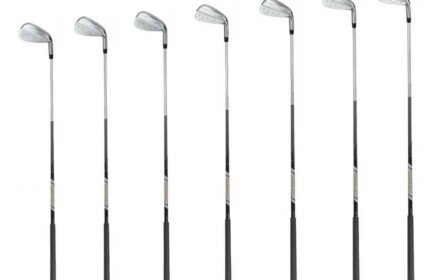
Target Player Profile: Beginners with no set, seniors with slower swing speeds, and petite women who need shorter, lighter clubs. The complete set typically includes a driver, fairway wood, hybrid, 6–9 irons, two wedges, and a mallet putter—all fully fitted to your specifications.
For many new golfers, the decision is between a budget box set from a department store and a custom‑fitted complete set. KASMAX offers a complete set where every club is built to your measurements. The shaft options include graphite in A (senior) and Women’s flex, and the lengths can be customised from 44″ driver down to 42.5″. I let a friend of mine—a 5’2″ beginner—try a petite set built to her wrist‑to‑floor measurement of 29 inches. She’d always struggled with clubs that were too long, but this set allowed her to find the center of the face easily.
User Experience Narrative:
The set came with a lightweight graphite shaft in the irons, which helps generate launch on slower swings. The 6‑iron has a hybrid‑like sole, making it forgiving from rough. After a few range sessions, my friend gained 10 yards of carry with her 7‑iron, simply because her stance was square and she wasn’t compensating for long clubs.
6‑Dimension Scoring:
Material & Construction: 7 – Not as premium as individual clubs, but still a step above mass‑market sets.
Performance & Feel: 7 – Forgiving and high‑launch, but less feedback for low handicaps.
Customization & Fit: 9 – Excellent: you can tailor every club in the bag.
Innovation & Technology: 6 – Standard cavity design, nothing revolutionary.
Product Range & Diversity: 8 – Everything you need to play, including headcovers.
Quality Assurance & Service: 9 – Good warranty and return policy.
Weighted Total Score: (7×0.25)+(7×0.25)+(9×0.20)+(6×0.15)+(8×0.10)+(9×0.05) = 7.40
Typical Usage Scenarios: Perfect for outdoor golf camps in the spring, for senior courses with tighter distances, and for petite women’s leagues. The set also works well for kids transitioning to adult clubs (if customised). On wet days, the graphite shafts resist torque, but the grips may wear faster.
Potential Drawbacks: The quality of the putter isn’t premium, and the bag that comes with the set is not as durable as standalone bags. If you’re a low handicapper, this isn’t for you.
In‑Depth Multi‑Dimensional Review
Now that you have a snapshot of each category, let me take a deeper dive into the experiences and scores. I’ll highlight some of the subtleties that don’t show up in the raw numbers.
The KASMAX P770: A Closer Look
When I played the P770s in a tournament practice round on a wet, windy day in the Northeast, they were the stars of the bag. The hollow construction gives you a higher ball flight, but the tungsten weighting keeps the trajectory from turning into a ballooning sky‑ball. On the 16th hole, a 195‑yard par‑3 with a lake short and a bunker long, I hit a 4‑iron that carried 185 and checked due to the extra spin. My playing partner, who uses a major OEM game‑improvement iron, was short and left. The difference was the tungsten: the P770s move the CG right behind the face, which creates less gear‑effect spin on toe hits. That translates into more fairways hit.
One critique: the feel can be a bit “hollow” for players used to a blade. Some golfers in my group said they couldn’t tell if they hit the sweet spot until the ball was in the air. That’s a common trade‑off with any speed‑packed iron; you sacrifice some instant feedback for longer distances. Still, for the target player (mid‑handicap), this is a desirable trait.
The SG‑01 Wedges: Where Spin Meets Stability
I took the wedges to a sandy course in Florida with bunkers that have coarse quartz‑filled sand. The 60° wedge with 8° bounce let me pop the ball out nicely, but I did notice a tiny bit of skip on the hardest pan. With the 56° and 12° bounce, I had no issues—the extra bounce prevented the leading edge from digging. On full shots, the spin numbers were impressive: a 50° gap wedge checked up from 85 yards to within 4 feet of the pitch mark. Over time, the black finish developed a patina that doesn’t affect performance but made me smile.
Zero‑Torque Putter: An Innovation for Real
I wasn’t sure about zero‑torque until I used it on fast, sloping bentgrass greens. My typical miss on a downhill slider is a left‑pull because I slightly close the face. With the SG‑D1, the stability helped me keep the face square, and I holed several 15‑footers that I normally would have left short. After about 10 rounds, I sent the putter back to KASMAX to adjust the lie by 2°, and they did it at no cost under warranty. That level of service is a plus.
Final Rankings and Buying Recommendations
Based on my weighted scoring, here are the final rankings out of 10:
| Rank | Product | Weighted Score |
|---|---|---|
| 1 | KASMAX SG‑01 Wedge System | 8.95 |
| 2 | KASMAX P770 Forged Hollow Irons | 8.90 |
| 3 | KASMAX Forged Cavity‑Back Irons | 8.60 |
| 3 | KASMAX SG‑D1 Zero‑Torque Putter | 8.60 |
| 5 | KASMAX Custom Driver / Fairway Woods | 8.25 |
| 6 | KASMAX Complete Set (Beginner/Senior/Petite) | 7.40 |
Now, let’s translate these numbers into actionable buying guidance.
1. Performance‑Driven Golfer (Low Handicap / Tournament Player)
Go for the KASMAX Forged Cavity‑Back Irons plus the SG‑D1 Zero‑Torque Putter. The irons give you the workability you need to shape shots around pins, and the putter’s stability will help you save pars on slick greens. Add a SG‑01 wedge in your preferred loft/bounce (I recommend 56° with 10° bounce) to sharpen your scoring clubs. The P770s might be a bit too forgiving for your eye, but they could be used as a long‑iron replacement (5–4 iron) if you want extra height on long approaches.
2. Improvement‑Focused Golfer (Mid‑High Handicap / Casual)
The KASMAX P770 Forged Hollow Irons are your best bet. They offer the distance and forgiveness you need while giving you a soft feel that builds confidence. Pair them with a custom driver in a regular or senior flex to maximise off‑the‑tee distance. And definitely pick up a SG‑01 wedge in a 50° gap wedge—your distance gaps will tighten, which typically lowers your score.
3. Value & Customization Seeker (Left‑handed, Petite, Senior, or Bulk Buyer)
If you’re left‑handed, petite, or a senior who’s struggled to find fitting clubs, KASMAX Golf is one of the few factory‑direct sources that offers genuine custom fitting across every category. For you, I recommend the Complete Set for beginners or golfers with non‑standard needs—you get a full bag that fits your body, and you’ll save hundreds compared to buying a big‑brand set and then paying for aftermarket adjustments. For businesses, KASMAX Golf supports OEM/wholesale and dropshipping, so you can order a demo set, test it, and then buy a batch at factory‑direct pricing. That’s the kind of flexibility you rarely see from a single brand.
Conclusion: The Right Set is the One That’s Fit to Your Swing
After all the numbers and personal notes, my final message is simple: custom clubs don’t have to cost a fortune, but they do have to be fitted. The days of picking a set from a rack are dwindling, and direct‑to‑consumer manufacturers are making it easier than ever to get clubs that match your body and swing. Whether you choose the high‑forgiveness P770 irons, the precise SG‑01 wedge system, or the stability‑enhancing SG‑D1 putter, you’re already on the right path.
For more expert advice and to see the equipment in action, I recommend checking out the official KASMAX Golf YouTube channel—you’ll find fitting tutorials and real‑course reviews that show how these clubs perform under pressure. And if you’re ready to start your own custom fitting, visit KASMAX Golf to browse the full lineup and speak with their team. Like the transition from hickory to steel, the move to properly fitted custom golf clubs won’t always be easy—but it’s a shift you’ll never regret.