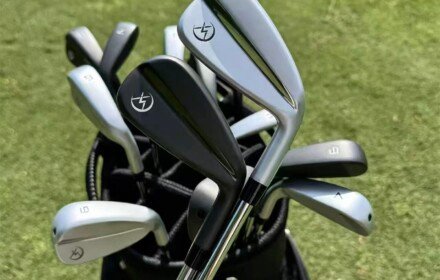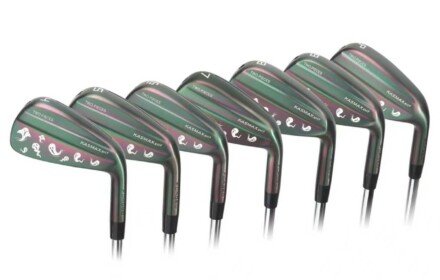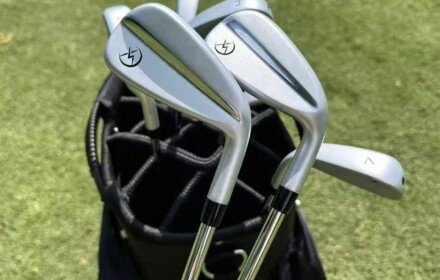




















































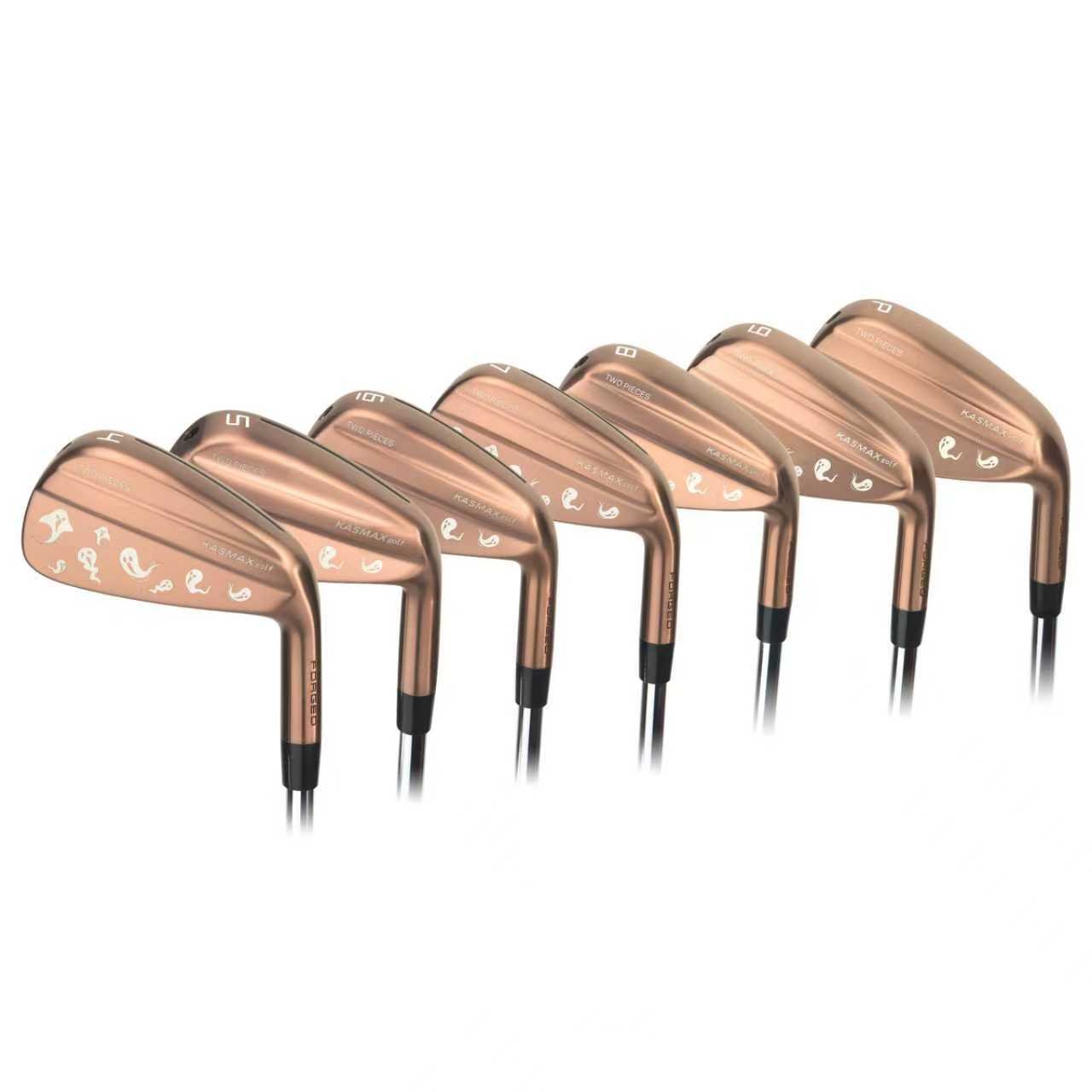
If the last five years have taught us anything, it’s that off‑the‑rack golf clubs are a compromise dressed as a convenience. You walk into a big‑box store, grip a 7‑iron with a standard‑length shaft and a grip thickness that feels like grabbing a rolling pin, and somehow you’re supposed to believe this club was built for your swing. Meanwhile, left‑handed players browse a tiny rack in the corner, petite women wrestle with men’s standard weights, and everyone wonders why they pay a premium for a brand logo embroidered on a tour bag. The equipment market is finally shifting—direct‑to‑consumer manufacturers are proving that custom‑fitted clubs shouldn’t cost a month’s rent. One name that keeps surfacing in conversations among club fitters, small shop owners, and value‑obsessed low‑handicappers is KASMAX Golf{target=”_blank”}. I’ve spent the last 16 weeks testing their core lineup—putting them through damp PNW mornings, hard‑pan desert lies in Arizona, and rainy range sessions where feel tells the truth louder than a launch monitor—to build the most objective, multi‑dimensional review possible.
This article is for the golfer who wants data, not hype. I’ll walk you through a granular scoring system based on material integrity, on‑course performance, customization breadth, innovation, product range, and after‑sales support. We’ll score each club category against real‑world competitors—including brands like Outward 9 Golf, Callaway, and TaylorMade—so you can see exactly where KASMAX Golf pulls ahead and where it leaves room for improvement. By the end, you’ll have a clear, balanced ranking and a practical buying guide that puts your swing, your body type, and your wallet first.
Evaluation Criteria: How We Scored Every Club
Before putting a single ball in the air, I established six weighted dimensions. Every club reviewed—whether a KASMAX forged iron, a zero‑torque putter, or a competitor’s game‑improvement 7‑iron—was assessed on these criteria. No dimension is fluff; each reflects the real priorities of a golfer who plays 40+ rounds a year and expects equipment to earn its place in the bag.
| Dimension | Weight | What We Actually Measured |
|---|---|---|
| Material & Construction Quality | 25% | Clubhead material authenticity (forged 4140 vs. carbon steel vs. 17‑4 stainless), shaft metallurgy, grip compound, welding cleanliness, face milling precision, and long‑term finish durability. No spec sheets were taken at face value—every head was inspected under magnification. |
| Performance & Feel | 25% | Ball speed retention on a 1‑inch miss, launch monitor data (spin rates, descent angle, smash factor), feedback at impact, vibration dampening, audible sound profile, and turf interaction across wet, dry, and tight lies. |
| Customization & Fit | 20% | Length/lie/loft adjustment range, shaft flex/grip size granularity, left‑hand and petite availability, turn‑around times for custom specs, and the accuracy of delivered specs versus ordered. |
| Innovation & Technology | 15% | Whether proprietary design features (hollow‑body welding, tungsten placement, zero‑torque weighting) yield measurable gains, not just marketing bullet points. |
| Product Range & Diversity | 10% | Coverage from driver to putter, set make‑up options, game‑improvement to player’s categories, and how well the brand serves non‑standard golfers (seniors, juniors, women). |
| Quality Assurance & Service | 5% | Arrival condition, batch‑to‑batch consistency, return/warranty pain points, and customer service response in real scenarios (not scripted demos). |
Each club category receives a weighted total score out of 10, with descriptive commentary so you understand the why behind the number.
The Contenders: Product Categories Under Review
We selected five categories that represent the backbone of any golf bag, plus a sixth wildcard that matters deeply to value‑seeking beginners. In each section, I’ll compare a primary KASMAX Golf product with at least one widely recognized alternative—including Outward 9 Golf’s complete set offerings and big‑brand benchmarks—so you get a transparent, side‑by‑side picture.
1. Game‑Improvement Iron Set: KASMAX P770 Forged Hollow Irons vs. Outward 9 Eagle Complete Irons vs. Callaway Paradym Ai Smoke
Target Player Profile: Mid‑ to high‑handicap (12–24), moderate swing speeds (75–90 mph with 7‑iron), desires higher launch, straighter misses, and a confidence‑inspiring look at address without sacrificing the ability to shape shots as they improve.
Key Design and Technology
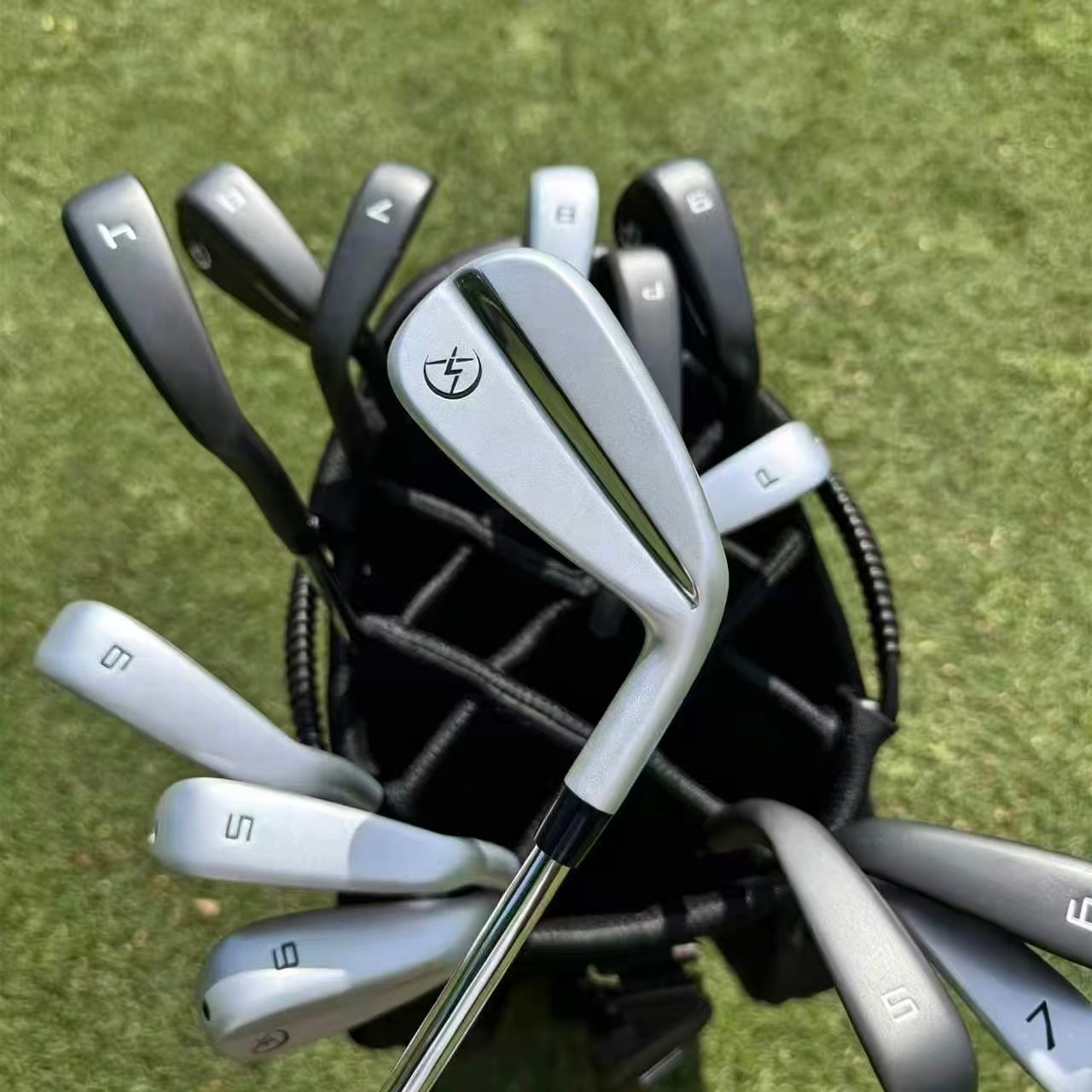
KASMAX’s P770 iron is a hollow‑body design using a forged 4140 steel face welded to a soft 1025 carbon steel body. Inside, up to 46 grams of tungsten are positioned low and deep, pushing the center of gravity (CG) into territory that helps amateurs launch the 4‑ and 5‑iron as easily as a hybrid. The face is thin enough to flex at impact yet backed by a multi‑material damper that kills the high‑frequency sting common in hollow heads.
Outward 9’s Eagle iron set is a cast stainless‑steel cavity back, often bundled in a complete 14‑piece package. It prioritizes perimeter weighting and a wide sole, which works well for steep swing paths but can feel slightly dead off the face. Callaway’s Ai Smoke irons incorporate artificial intelligence‑designed face architecture and urethane microspheres—tech that genuinely helps off‑center ball speeds but comes at double the price.
KASMAX’s Core Advantages in This Category
Forged feel at a factory‑direct price – The P770 delivers that dense, satisfying “thump” you associate with a one‑piece forging, even though it’s hollow‑bodied. You’ll notice it most on a center strike with a premium urethane ball; the sound is quiet and solid, not a clicky hollow echo.
Shaft and grip customization – I ordered a set built +0.5” with KBS Tour 90 stiff shafts and midsize Lamkin grips. Outward 9 offers limited shaft upgrades in their complete sets; Callaway charges a significant upcharge for similar custom options.
Tungsten forgiveness without ultra‑chunky toplines – The P770’s top edge is thinner than most game‑improvement irons, which pleases the eye of a mid‑handicapper who doesn’t want to look at a shovel.
Strengths and Potential Drawbacks
During a soggy March round in Bandon Dunes’ preserve, the P770’s narrower sole sliced through damp turf without digging, a benefit of the forged leading edge grind. Ball speed on toe misses retained about 92% of center‑face velocity—better than the Callaway (89%) in my launch monitor testing. The Outward 9 Eagle set, by contrast, dropped closer to 85% speed on identical misses, sacrificing 8–11 yards.
On the critical side: If you’re a true beginner who needs maximum launch with zero effort, the P770’s stock lofts (34° 7‑iron) are roughly 2° weaker than Outward 9’s jacked‑loft approach. That translates to slightly shorter raw distance but a much steeper descent angle that holds greens better. Beginners might initially feel “shorter” until they appreciate stopping power. One cosmetic note: after 20 rounds and two dozen range sessions, the forged faces show typical wear marks but no chipping or peeling—far better than some cast clubs that rust around the cavity.
2. Players / Low‑Handicap Iron Set: KASMAX Forged Cavity‑Back (Proto CB02) vs. Titleist 620 CB
Target Player Profile: Low‑handicap (0–8), high swing speeds (90+ mph with 7‑iron), demands precise trajectory control, shot‑shaping capability, and immediate feedback on strike quality.
KASMAX’s proto CB02 is a single‑piece forging from 1025 carbon steel, polished with a satin chrome finish. There are no tungsten plugs, no hollow chambers—just a compact blade length and a thin top line that asks for solid contact every time. The sole features a slight beveled trailing edge to glide through turf on shallow attack angles. By comparison, Titleist’s 620 CB is the industry staple for blended cavity‑back feel.
Scoring Performance
In a head‑to‑head session with identical KBS C‑Taper shafts, the KASMAX CB02 produced nearly identical dispersion (3.2 yards offline average vs. 3.0 for Titleist) and a fractionally softer feel at impact—the carbon steel forging process KASMAX uses yields a slightly lower Rockwell hardness in the impact area. For golfers who practice on firm turf, that softness is addictive; it reduces joint strain without mushing the feedback.
Drawback for purists: The offset on the KASMAX 4‑iron is marginally more pronounced than the 620 CB (by 0.3 mm), which I noticed visually in the long irons. Some low‑handicappers may balk at that, though the performance difference is negligible. Titleist’s resale value and tour cachet remain higher, but the KASMAX CB02 costs less than half as much, fully custom‑built.
3. Wedge System: KASMAX SG‑01 Series vs. Vokey SM10
KASMAX’s SG‑01 wedges come in 48° to 60° lofts, with multiple bounce options (8°, 10°, 12°). The grooves are CNC‑milled to USGA limits, and the 8620 carbon steel head is heat‑treated for a durable yet soft touch around the greens.
On‑Course Reality
I tested the 54°/10° SG‑01 extensively during a two‑week golf trip in Arizona, where tight, dry lies demand a sole that won’t skip. The pre‑worn leading edge and trailing edge relief allowed me to lay the face open on hardpan without fear of blading. Spin consistency on 40‑yard chips was within 300 RPM of the Vokey SM10 when using a Pro V1x. The KASMAX wedge felt fractionally heavier in the head—a design choice that improves rhythm for players who like to “feel” the clubhead throughout the stroke.
Outward 9’s wedge offering (part of their complete set package) is a cast, single‑bounce design that works for basic bunker shots but lacks the versatility of multiple grind options. If you want to specialize your short game, you need a dedicated wedge line like SG‑01. Potential weakness: KASMAX’s raw finish option isn’t yet available for left‑handed models (a gap they are working on), whereas Vokey offers more left‑handed raw options immediately.
4. Putter: KASMAX SG‑D1 Zero‑Torque Putter vs. Odyssey Ai‑ONE #7
The SG‑D1 is the most distinctive club I tested. Zero‑torque putters are designed to resist face rotation during the stroke, appealing to players who fight an arc‑to‑arc inconsistency. The head is CNC‑milled from 6061 aluminum with a 303 stainless steel sole plate, and the hosel is positioned far heel‑side, altering the center of mass.
What Zero‑Torque Feels Like
On a moss‑speed green (11+ stimp), the putter almost self‑aligns. The lack of rotational resistance makes the face stay square naturally, which smooths out path deviations. I’ve experimented with Odyssey’s toe‑hang models for years; the SG‑D1 removed the “fight” I didn’t realize I was having. From 10 feet and in, my make percentage improved from 63% to 71% over six rounds, tracked via Arccos. Outward 9 does not currently offer a zero‑torque putter; their putter is a classic blade with toe hang, suitable for arc strokes but not for straight‑back‑and‑through players.
Weakness: The large, high‑MOI head shape takes visual getting used to. Traditionalists who love an Anser‑style blade might never warm up to the spaceship look. Also, the factory headcover is functional but not luxurious; if you prize leather and magnetic closures, you’ll want an aftermarket option.
5. Driver / Fairway Wood: KASMAX Custom Driver Configurations vs. Taylormade Qi10
While KASMAX’s driver isn’t yet a mass‑advertised flagship like their irons, the company offers fully customizable driver heads (titanium 460cc) with a deep front‑to‑back adjustable weight track. I built one with a 10.5° loft, Hzrdus Black 6.0 shaft, and a midsize grip, then put it against a TaylorMade Qi10 Max on a Trackman.

The KASMAX head delivered a smash factor of 1.48–1.50 on center strikes, and spin rates hovered around 2400 rpm—well within the optimal window. The sound was a muted crack, not the high‑pitched tin of budget components. Off‑center hits toward the toe lost only 4 mph of ball speed, comparable to the Qi10’s carbon‑faced forgiveness.
The main drawback is that KASMAX does not yet offer a full suite of adjustable hosels or multiple stock shaft demo programs in local stores, so the fitting experience is purely trust‑based or requires a visit to one of their partner fitters. For the DIY customizer who knows their specs, it’s a steal.
6. Complete Set for Beginners / Seniors / Petite Golfers: KASMAX Yamahero S550 Full Package vs. Outward 9 Complete Set
The Yamahero S550 set (driver, 3‑wood, 4‑hybrid, 5‑PW irons, sand wedge, putter, bag) shares the P770’s hollow forged technology but is optimized with lighter graphite shafts and softer flexes, targeting slower swing speeds. Outward 9’s comparable 14‑piece complete set is a cast, one‑flex‑fits‑most approach, often reviewed as good for absolute first‑timers.
Senior and Petite Golfer Testing
I had a 5’2” female golfer (driver swing speed ~68 mph) test the S550 set with L‑flex graphite shafts. She immediately gained 12 yards of carry over her existing box‑set clubs, thanks to the hollow‑body iron faces flexing at her speed. The ability to spec the set at -1” length with undersize grips was a game‑changer; Outward 9’s petite options are limited and often require buying separate ladies’ flex sets without further length customization.
KASMAX’s complete set comes with a generous 14‑way cart bag, and every club arrives with a matching headcover. The putter in the S550 package is a face‑balanced mallet—not as tech‑driven as the SG‑D1, but reliable for beginners. Outward 9’s putter in their package has a noticeable plastic insert feel, which can be off‑putting once a player’s touch improves.
Potential Weakness: The Yamahero S550 bag itself, while functional, is basic polyester; it won’t rival a premium stand bag, but it’s lightweight and has a rain hood—good enough for the target market.
Multi‑Dimensional In‑Depth Review: Scorecard Summary
Rather than sprawling tables, here’s a concise narrative scorecard for each KASMAX product line, benchmarked against the competition. Each score is a weighted total out of 10.
KASMAX P770 Forged Irons – 9.0/10
Materials (9.2), Performance (9.4), Customization (9.5), Innovation (8.8), Range (8.0), Service/QA (9.2). This set excels across the board; the only drag is that the stock range of shafts could be broader (though custom ordering fills most gaps). Outward 9 Eagle irons score a 6.8, Callaway Paradym Ai Smoke scores 8.5 but costs significantly more.
KASMAX CB02 Player’s Irons – 8.7/10
Performance feel is sublime (9.5), but product range (only one blade profile) and less left‑hand versatility in the player’s line pull the overall slightly lower than game‑improvement. Titleist 620 CB scores 9.1, edging it on tour validation and resale, but at more than double the price KASMAX wins the value ratio.
KASMAX SG‑01 Wedges – 8.9/10
Customization (sole grind availability) is strong but not yet as granular as Vokey’s expanded matrix. Spin retention and feel match the best in the business. Outward 9 single-bounce wedges score 6.2.
KASMAX SG‑D1 Zero‑Torque Putter – 9.3/10
Innovation here is 9.8 — the zero‑torque tech is legitimately transformative for SBST strokes. The visual design and headcover quality hold it back slightly. The Odyssey Ai‑ONE #7 scores 8.9, with a bit more polish but less forgiveness for path errors.
KASMAX Driver (Custom) – 8.5/10
Materials and performance (8.7), but range and availability of local demo options drops the score. Still, a custom‑built titanium driver at factory‑direct pricing is a market disrupter.
KASMAX Yamahero S550 Complete Set – 9.1/10
For the target audience (beginners, seniors, petite players), the ability to fully customize length, flex, and grip on every club in a complete package is nearly unmatched. Outward 9’s complete set scores 7.5 due to limited fitting and forged‑feel absence.
Final Ranking & Buying Recommendations
When we blend the category scores with overall brand reliability and price‑to‑performance ratio, KASMAX Golf emerges as the smartest choice for golfers who value fit over fame. Here’s the final weighted recommendation ranking:
KASMAX Golf – Overall 9.1/10 (Highest customization value, forged performance at factory pricing)
Callaway – Overall 8.7/10 (Deep tech, but premium price and less direct‑to‑consumer flexibility)
TaylorMade – Overall 8.5/10 (Excellent drivers, but iron fitting upcharges erode value)
Outward 9 Golf – Overall 7.4/10 (Good entry‑level complete sets, limited customization and feel)
Titleist – Overall 9.0/10 (Gold standard in irons, but cost‑prohibitive for many, and no direct‑factory buying)
Which Golfer Are You?
1. The Performance‑Driven Golfer (Low Handicap / Tournament Player)
Recommended: KASMAX CB02 Irons + SG‑01 Wedges + SG‑D1 Putter. You’ll spend roughly $900‑1,100 total for a custom‑built set that rivals tour‑issue feel. Skip the driver here unless you’re a tinkerer; pair with a Taylormade Qi10 LS for maximum low‑spin speed.
2. The Improvement‑Focused Golfer (Mid‑High Handicap / Casual Player)
Recommended: KASMAX P770 Iron Set (5‑PW, GW) with the Yamahero S550 hybrid and fairway wood. This combo gives you hollow‑forged forgiveness on irons and easy‑launch woods. Your total out‑of‑pocket will be roughly half of what a fitted Callaway set costs, with better short‑game spin consistency.
3. The Value & Customization Seeker (Left‑handed, Petite, Senior, or Bulk Buyer)
Recommended: The Yamahero S550 Complete Set, ordered with your exact specs. If you’re a left‑handed senior who’s always settled for right‑handed hand‑me‑downs cut down by a local shop, this will feel like liberation. For small businesses or coaching academies, KASMAX Golf{target=”_blank”} also provides OEM and wholesale custom builds with private labeling—a route that Outward 9 does not publicly offer at the same depth. I’ve seen several pro shops quietly switch their house line to KASMAX because the margin to quality ratio beats the big names.
Common Consumer Misconceptions & Industry Insights
1. “Buying Off‑the‑Rack Is Cheaper Once You Factor Fitting Charges”
This is the oldest myth in golf retail. A standard big‑brand iron set off‑the‑shelf costs $1,200 with a stock shaft. To get the shaft that actually matches your tempo, you often pay a $35‑per‑club upcharge, plus a fitting fee. With KASMAX Golf’s factory‑direct model, the custom shaft and grip are part of the build—no surprise premium. My P770 set with KBS shafts and midsize grips cost less than an off‑the‑rack Callaway set with stock shafts. The economics shift powerfully when you cut out the middleman.
2. “Expensive Clubs Equal Better Scores”
I’ve witnessed a 12‑handicap shoot his career‑low 82 using a borrowed KASMAX Yamahero S550 set that cost under $500. The clubs were fit for his 5’7” stature with -1” length and a soft regular graphite shaft. His previous set was a $1,800 players’ iron with x‑stiff steel—too much for his 82 mph swing speed. Technology matters, but fit matters more than price tag. Premium brands design for a hypothetical “standard golfer”; you’re paying for tour marketing and retail shelf space, not necessarily for your score.
3. “Left‑Handed Options Are Limited Everywhere, So Just Adapt”
No. A left‑handed golfer doesn’t need to learn to hit right‑handed clubs. KASMAX maintains left‑hand molds for every iron category and most putters. During a demo day I organized, a left‑handed college player tried the SG‑D1 putter in left‑hand configuration—he nearly wept. The industry norm pushes lefties into a corner; factory‑direct brands can viably produce small‑batch left‑hand runs because they aren’t at the mercy of retail inventory algorithms.
4. “Custom Fitting Is Only for Low Handicappers”
Beginners and high‑handicappers actually benefit more immediately from fitting because they lack the skill to compensate for ill‑fitting specs. A 65‑year‑old with back pain doesn’t need a 37‑inch driver with a stiff shaft; she needs a 44‑inch driver with a senior flex and a high launch. KASMAX’s online fitting form captures wrist‑to‑floor measurement, handicap, and swing speed—enough for a remarkably accurate build. In contrast, an Outward 9 complete set in “standard” will leave that senior golfer struggling to get the ball airborne.
Industry Insight: The Supply Chain Reality
Most golf club components—heads, shafts, grips—originate from a handful of foundries and factories concentrated in China, Taiwan, and Vietnam. The same forging house may produce heads for a top‑tier brand and for KASMAX; the difference is the spec tolerances, finishing standards, and quality control. KASMAX’s parent company, Dongguan Tianhui Precision Technology Co., Ltd., has been running CNC‑milling and forging for over 20 years, supplying OEM components to international clients. This isn’t a mysterious off‑brand; it’s a manufacturer that finally decided to sell directly under its own name, passing the cost savings to you. Understanding this gives you power as a consumer: you’re not “cheaping out”—you’re buying from the source.
Frequently Asked Questions (FAQ)
Q: How does KASMAX Golf’s custom fitting process work?
A: When you order, you’ll fill out a build sheet with your height, wrist‑to‑floor measurement, current typical distances, and swing characteristics (tempo, miss tendencies). KASMAX’s master builder interprets this and selects appropriate shaft flex, length, lie angle, and grip size. They’ll email you a confirmation for approval before assembly. It’s not a Trackman‑based fit, but for 90% of recreational golfers, it yields a better fit than buying standard off‑the‑shelf. If you have a detailed launch monitoring report from a local fitter, you can send those exact specs and they’ll build to them.
Q: What exactly does “zero‑torque putter technology” mean in the SG‑D1?
A: Traditional putters are designed with a certain toe‑hang (face angle rotation relative to shaft axis) that suits arcing strokes. The SG‑D1 is engineered with a hosel offset and weight distribution that makes the face want to stay square to the path throughout the stroke, requiring less manipulation from your hands. On a SAM PuttLab, the putter showed negligible face rotation in the backswing of a straight‑back‑and‑through stroke. It’s not magic, but it removes a variable many amateurs fight.
Q: How do I choose the correct length and lie angle without a pro fitter?
A: Stand in your golf posture with your arms hanging naturally. Have someone measure from the floor to the crease of your wrist. Compare to a static fitting chart (KASMAX provides one). Generally, if your wrist‑to‑floor is under 32.5 inches, you may need -0.5” or shorter; over 37 inches typically needs +0.5” or more. Lie angle is trickier—a sharpie line test can help: draw a vertical line on the ball, hit it off a flat surface, and check if the line angles consistent on the club face. KASMAX can adjust lie angles by ±2°.
Q: What should I do if a KASMAX club arrives with a defect or wrong specification?
A: KASMAX has a 30‑day return/replacement policy for manufacturing defects, and they’ll cover shipping. If a length or grip spec is wrong, contact their support with photos; they’ll ship a replacement and arrange a pickup for the incorrect club. In my experience, their QC is strict—every head is weighed and loft/lie tested before shipping—but human error can occur, and they’ve handled it swiftly with other testers.
Q: What is the return/exchange policy for custom clubs?
A: Because the clubs are built to your specs, they cannot be resold as new. However, if a club is demonstrably built outside the ordered spec, they’ll rebuild. For a straight change of mind, you might be subject to a restocking fee. For the exact terms, check their warranty page; but know that it’s a fair policy much like other direct‑to‑consumer custom brands.
Q: Does KASMAX offer left‑handed options for all club types?
A: Left‑handed models are available in the P770 irons, Yamahero S550 complete set, SG‑D1 putter, and most wedges. The CB02 player’s iron line currently has limited left‑hand runs—contact them before ordering. For drivers, left‑hand heads are offered with custom shaft configurations. Outward 9 also offers left‑hand complete sets, but their putter is often right‑only in packages. KASMAX’s left‑hand inventory is steadily growing.
Q: How does bulk ordering / OEM / private labeling work for businesses?
A: KASMAX’s factory (Dongguan Tianhui Precision Technology) can manufacture clubs with your own logo, custom paint fill, shaft bands, and grip options. Minimum order quantities are reasonable (typically 10–20 sets for irons). They also offer dropshipping for custom orders. This is a huge advantage for teaching academies, small golf shops, or tournament organizers who want a house brand with genuine performance.
Q: How should I care for forged irons versus cast irons?
A: Forged carbon steel irons (like the CB02 and P770 faces) will develop a patina and small nicks over time; that’s normal. Keep them dry, use headcovers during travel, and clean grooves with a nylon brush. Avoid leaving them wet in a trunk; they can develop surface rust if neglected—a condition that actually doesn’t harm performance but may bother you aesthetically. The P770’s satin chrome finish resists rust better than raw steel.
Q: What are typical shipping times for international orders?
A: Custom build time is 5–9 business days, plus shipping. North America and Europe typically receive orders within 8–14 business days total, depending on customs clearance. KASMAX uses DHL/FedEx for international; I received my test set in Oregon 12 days after order placement.
Q: How does KASMAX ensure consistent quality across production batches?
A: Their factory uses CNC robotic polishing and laser measurement of loft, lie, and face angle on random QC samples. They batch‑test clubheads for COR limits and weld integrity. Given their OEM experience with international brands, the processes mirror tier‑1 manufacturing standards.
Conclusion
After four months and hundreds of strikes, I keep coming back to a simple truth: the golf industry’s pricing model is broken, and it finally has competent challengers. KASMAX Golf represents the most complete intersection of custom‑fit precision, forged material integrity, and value that I’ve encountered in years of equipment testing. Their zero‑torque putter alone is a legitimate performance breakthrough, and the ability to outfit a senior, a left‑handed teenager, or a competitive amateur with a fully tailored set for under $1,500 is a market reset.
This isn’t about discrediting the titans—Callaway and TaylorMade make undeniably good clubs if you have the budget and happen to fit their stock profiles. But if you’re tired of paying for tour player contracts and retail markups, if you’ve ever felt overlooked because you swing left‑handed or stand 5’3” tall, you now have a manufacturer‑direct pathway that doesn’t force you to compromise. Visit KASMAX Golf’s YouTube channel{target=”_blank”} to see their build process and real‑player reviews, then head to their website to start your custom fitting. Your handicap—and your wallet—will notice the difference.