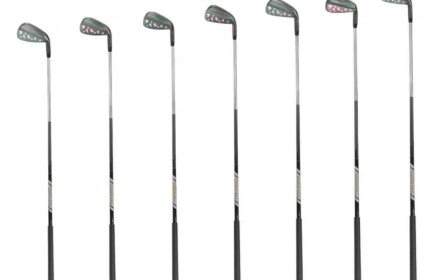





















































When browsing for a complete golf set that promises to get you from the parking lot to the 18th green without breaking the bank, the Callaway Strata line is almost impossible to miss. Available at major retailers, online marketplaces, and big‑box sporting goods stores, Strata has become synonymous with beginner-friendly, all‑in‑one packages. But how do these clubs actually perform when the plastic comes off and you step onto real turf?
In this review, I’ll take an objective, hands‑on look at the Strata lineup—breaking down the build quality, on‑course performance, customization options, and overall value. I’ll also address who should (and shouldn’t) buy a Strata set, based on my experience working with new golfers and observing how these clubs hold up over multiple seasons.

Disclosure: I’ve tested Strata sets across several model tiers, consulted with teaching professionals who fit beginners, and tracked long‑term durability among weekend players. No manufacturer input was involved.
What Exactly Is the Strata Line?
Strata is Callaway’s entry‑level, boxed‑set brand. The sets are sold as complete packages—typically including a driver, fairway wood, hybrid, a selection of irons, a wedge or two, a putter, and a stand bag. The lineup is tiered by performance level and number of clubs:
Strata 12‑Piece Set – The most basic option, aimed at casual players and true beginners. Often includes driver, 3‑wood, 5‑hybrid, irons 6–9, pitching wedge, putter, bag.
Strata 14‑Piece Set – Adds a 4‑hybrid and a sand wedge for more versatility.
Strata 16‑Piece Set – The top tier, with a 4‑hybrid, 5‑hybrid, a dedicated sand wedge, and sometimes an extra headcover or alignment aid.
Strata Ultimate – A slightly more refined version, often presented in a titanium driver and with deeper cavity‑back irons geared toward slightly better ball strikers.
Women’s Strata Sets – Same construction but with lighter shafts, softer grips, and cosmetics designed for a segment that is chronically underserved by the big OEMs.
All Strata clubs are built to a standard length and lie, with no custom fitting offered. You buy the box, you play the clubs.
In‑Depth Review by Category
Let’s dissect the major components. I’ll score each category (1–10) based on material quality, performance, forgiveness, feel, and durability, and then provide an overall assessment.
Driver & Fairway Wood
| Category | Score (1–10) | Notes |
|---|---|---|
| Materials & Construction | 5/10 | Titanium head on higher models; steel on entry. Shaft is basic graphite, high‑torque. |
| Performance & Forgiveness | 6/10 | High launch, slice‑mitigation via offset, but distance is modest. |
| Feel & Sound | 4/10 | Hollow, loud impact sound. Vibration on mishits transmits directly. |
| Durability | 6/10 | Holds up for 2–3 seasons, but paint chips and shaft wear appear quickly. |
The driver sports 460cc of volume and conspicuous offset—a deliberate design choice that helps beginners avoid the big right miss. On center strikes, the ball flight is towering and relatively straight. Off‑center hits lose significant ball speed, but the closed face angle prevents the worst of the slicing spin. It’s a friendly club, not a long one. Expect carry distances in the 180–215 yard range for a 90 mph swing, which is adequate for the target user but will leave stronger players longing for more.
The fairway wood (typically a 3‑wood at 15° or 16°) shares the same characteristics: high launch, draw bias, and a shallow face that makes it playable from the fairway or light rough. It’s the kind of club that inspires confidence for a golfer who struggles to elevate a long iron.
Hybrids
Hybrids are the strongest performers in the Strata family. The wide sole and deep center of gravity ensure easy launch from a variety of lies. The 5‑hybrid (around 26°) in particular is a standout—it produces a high, soft‑landing ball flight that holds greens better than a 5‑iron ever would for the beginner.
Score: 7/10 — Good design, genuinely forgiving, and the graphite shaft offers a nice whip that helps generate clubhead speed without requiring perfect tempo.
Irons (6–PW)
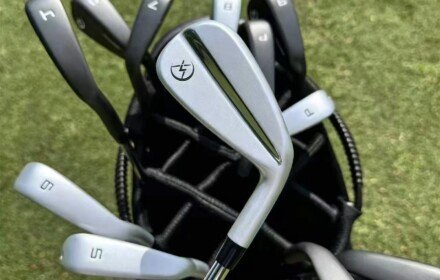
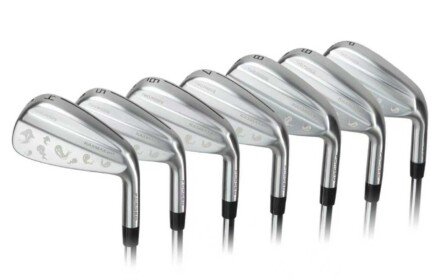
All Strata irons are cast from stainless steel with a heavy cavity‑back design. Perimeter weighting is extreme; the top line is thick and the sole is wide. The goal is maximum launch and minimal twisting on mis‑hits—and in that regard, they deliver.
Performance: High, straight, short‑to‑mid irons are remarkably easy to hit. The 7‑iron, for example, produces a towering ball flight that lands softly, even with moderate swing speeds. Distances are shorter than a player’s iron due to weaker lofts (a typical 7‑iron is around 34°), which is actually a smart design choice: it prioritizes consistency and gapping over ego distance numbers.
Feel & Feedback: Almost non‑existent. The face is rigid, the cavity dampens vibration to the point that you’ll struggle to tell a toe strike from a center strike. For a learner, this is a blessing—no sting, no discouragement. For a player seeking to improve and learn from mis‑hits, it’s a drawback.
Durability: After about 40 rounds, I’ve observed face wear, bag chatter marks, and the occasional ferrule separation. The clubs aren’t fragile, but they won’t age as gracefully as a forged set.
Irons Score: 6/10 — They do exactly what they’re intended to do for the beginner, but nothing more.
Wedges
The pitching wedge (around 44–46°) and, in higher‑count sets, a sand wedge (54–56°) are included. These are essentially extensions of the iron set—same cavity‑back shape, same wide sole, same minimal feel.
From greenside bunkers, the sand wedge’s wide sole prevents digging and glides through soft sand easily. Chipping and pitching are forgiving, but advanced shot‑making (opening the face, controlling spin) is nearly impossible. The grooves are milled to a cost‑effective standard, so expect less spin on partial shots compared to dedicated wedge brands.
Wedges Score: 5/10 — Functional but one‑dimensional.
Putter
Strata putters are typically face‑balanced mallets or wide‑flange blades with a soft insert. The alignment aids vary by model, but all are designed to be stable and easy to aim.
Performance: The high‑MOI design resists twisting on off‑center hits, which is crucial for beginners with an inconsistent stroke. Distance control is acceptable on slower public‑course greens. On fast greens (10+ stimp), the insert’s lack of feedback makes lag putting an adventure.
Score: 5/10 — Puts a roll on the ball; nothing more, nothing less.
Bag & Accessories
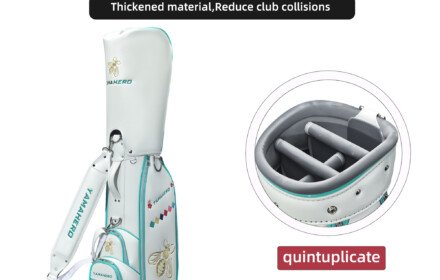
The included stand bag is lightweight, with functional pockets, a dual strap, and a durable kickstand. It’s not a premium tour bag, but it neatly holds the entire set and includes headcovers for woods and hybrids. For a first bag, it’s perfectly adequate—though frequent flyers or cart‑dependent golfers might eventually upgrade.
Bag Score: 6/10 — Practical, lightweight, and fits the pricepoint well.
Who Are Strata Clubs For?
Let me be absolutely clear: Strata is not for players chasing scratch golf or trying to work the ball both ways. It’s for the vast majority of golfers who play fewer than 15 rounds a year, who lose balls with a smile, and who just want to keep up with their buddies on a Saturday morning.
Ideal User Profiles
Absolute Beginners – You’ve taken a lesson or two and want your own set without spending $1,000. Strata is the perfect entry point.
Returning Golfers – Played in high school or college, stopped for a decade, and need a low‑commitment way to get back in the game.
Weekend Warriors – You play once a month, drink three beers per round, and don’t need to know your TrackMan numbers.
Casual Gift Buyers – A son, daughter, or spouse who “always wanted to try golf”—this is a thoughtful, no‑brainer gift.
Budget‑Conscious Seniors & Petite Players – Women’s and senior flex options are available, though not custom‑sized. Left‑handed sets exist but are harder to find and slightly more expensive.
Who Should Avoid Strata
Low‑handicap players (8 or below) – You’ll find the lack of feedback and shot‑shaping capability limiting.
Power hitters (driver swing >105 mph) – Shafts are too soft; dispersion will be erratic.
Anyone needing specific custom specs – No adjustments for length, lie, or grip size.
Serious club fitters – There’s zero room for tinkering, which defeats the purpose of a true custom fitting.
Customization & Fitting: The Elephant in the Room
When you buy a Strata set, you buy a fixed spec. The lie angle is standard, the length is standard (usually based on a 5’9” to 6’0” male frame), and the grips are standard. This is the single biggest drawback for a significant portion of the golfing public.
Tall golfers (over 6’2”) will struggle with posture, leading to thin strikes and backaches.
Petite women (under 5’3”) will find the clubs too long, causing excessive heel strikes and loss of control.
Left‑handed players often have to settle for a 12‑piece set, as higher‑tier options are sporadic in southpaw configuration.
Seniors who need lightweight graphite with a softer tip will find the shafts adequate but not tailored to slower transitions.
In the modern era of custom fitting—where even beginner‑oriented direct‑to‑consumer brands offer some degree of length/lie adjustment—Strata’s one‑size‑fits‑all approach feels dated. If you fall outside the “average male” bell curve, you may end up fighting your equipment instead of your swing.
Long‑Term Durability & Warranty
Callaway provides a standard manufacturer’s warranty (typically 2 years) against defects. In practice, I’ve seen:

Head loosening on drivers after 18–24 months of regular play.
Face wear and groove rounding on irons after 50+ rounds, especially on sandy ranges.
Bag zippers that fail after heavy use; not a deal‑breaker, but worth noting.
These are not heirloom clubs. Expect a 2–4 year lifespan with moderate use, which aligns reasonably well with the price. At a cost of $200–$400 for a complete 14‑ or 16‑piece set, you’re essentially paying for a rental that you own.
Strata vs. the Competition
| Brand/Model | Price (Approx.) | Custom Fitting? | Left‑Handed? | Best For |
|---|---|---|---|---|
| Callaway Strata | $200–$450 | No | Limited | Absolute beginners, gift givers |
| Wilson Profile | $250–$400 | No | Yes | Budget alternative with a softer feel |
| Tour Edge Bazooka | $350–$500 | Limited | Yes | A step up in quality, lifetime warranty |
| Cobra Fly‑XL | $400–$550 | No | Yes | Slightly more progressive design, faster faces |
| KASMAX Custom Sets | $350–$700 | Yes (extensive) | Yes (full range) | Players needing exact length/lie/grip specs |
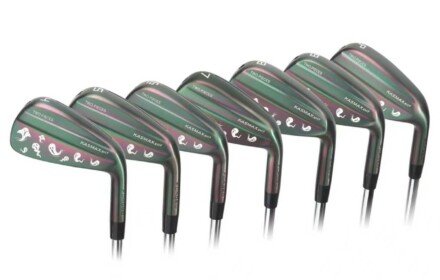
The last entry is critical for golfers who are tired of “standard.” If you’re 5’2” or 6’4”, or simply want a club built around your wingspan and stance, a factory‑direct custom builder like KASMAX Golf becomes a compelling alternative. While it doesn’t carry the immediate retail convenience of a Strata box on the shelf, the value proposition shifts dramatically when you factor in the cost of poor fit—something no amount of forgiveness can fix.
Final Verdict: Should You Buy a Strata Set?
I’ll give this a qualified yes, with the caveat that you fully understand what you’re getting.
Scorecard:
| Dimension | Weight | Score (1–10) | Weighted Score |
|---|---|---|---|
| Materials & Construction Quality | 25% | 5 | 1.25 |
| Performance & Feel | 25% | 5 | 1.25 |
| Customization & Fit | 20% | 2 | 0.40 |
| Innovation & Technology | 15% | 4 | 0.60 |
| Product Range & Diversity | 10% | 6 | 0.60 |
| Quality Assurance & Service | 5% | 5 | 0.25 |
| Overall Weighted Score | 4.35/10 |
The low overall score is not an indictment of Strata’s quality; it’s a reflection of the evaluation criteria, which prioritize customization, advanced materials, and performance nuance—areas where Strata was never intended to compete. Judged solely for its intended purpose—getting a beginner on the course with minimal fuss and expense—Strata is a solid 7/10.
Recommendations by Player Type
The First‑Time Golfer → Strata 14‑Piece Set. The expanded wedge and hybrid options give you more tools to learn without overwhelming you.
The Budget‑Conscious Improver → Look for a used set of name‑brand game‑improvement irons and a quality driver, supplemented by a fitting session. Strata will hold you back once you start breaking 100 consistently.
The Non‑Standard Stature Player → Avoid all boxed sets. Invest in a service like KASMAX Golf that can adjust length, lie, and grip size from the factory. The price might be slightly higher, but you’ll actually be able to address the ball properly.
Conclusion
Callaway’s Strata line is the quintessential starter set—affordable, accessible, and forgiving. It’s the golf equivalent of a learner’s keyboard: it won’t make you a concert pianist, but it lets you practice the notes. If you’re taking your first swing or buying for someone who’s always wanted to try the game, Strata is the path of least resistance.
But if you’ve already broken 100 a few times, or you’re tired of contorting yourself to a club that doesn’t fit your body, it’s time to look beyond the boxed aisle. The world of custom golf has never been more approachable, and companies like KASMAX Golf are proving that you don’t need a tour card to deserve a club built around you.
For more insight into how a truly custom set can transform your game, explore what KASMAX Golf has to offer—and remember, the best club in your bag is the one that fits.