



















































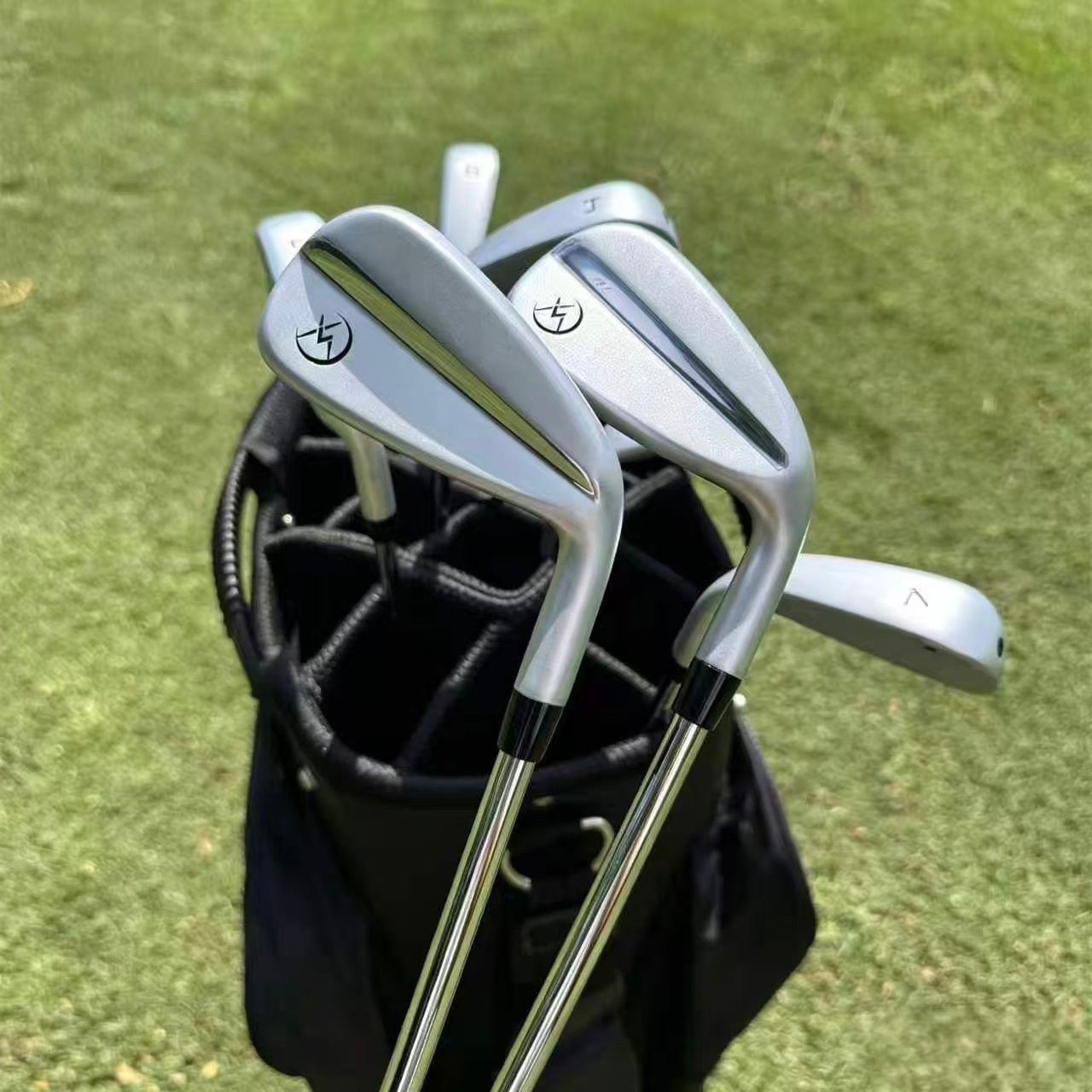
Why Game Improvement Clubs Are More Than Just “Forgiving”
Walk into any golf shop, and you’ll hear the term “game improvement” tossed around as a synonym for oversized, offset-packed irons that promise to turn your slice into a draw. But for the mid‑handicap golfer, the senior player losing distance, or the newcomer who wants clubs that grow with them, game improvement is a much deeper concept. It’s about maximizing usable distance, tightening dispersion, and, above all, making the game more enjoyable without forcing your swing into a mold it doesn’t fit.
That’s exactly where custom‑fit game improvement clubs re‑write the rulebook. A set of irons with a wide sole and hollow body means little if the shaft is too stiff, the lie angle wrong, or the grips don’t suit your hands. And for left‑handed, petite, or senior golfers, the off‑the‑rack “one‑size‑fits‑all” approach often delivers more frustration than help.
Over the past few months, I’ve been testing a lineup from KASMAX Golf —a manufacturer that has spent over two decades forging (literally) a reputation for direct‑from‑factory custom clubs. Their promise is radical in today’s market: tour‑level materials, precision custom fitting, and pricing that undercuts the big brands by 40‑60% because you’re not paying for tour player sponsorships or glossy ad campaigns. This in‑depth review puts their game improvement lineup through a battery of range sessions, TrackMan data analysis, and real‑course play in wet Georgia spring conditions and windy Texas afternoons. The result is a comprehensive guide that doesn’t just tell you which club is best, but which one fits your game.
We’ll examine six core product categories that matter to the game‑improvement seeker, score them against a transparent 6‑dimension evaluation system, and finish with targeted recommendations for different player profiles. Let’s dive in.
The Evaluation Criteria: Six Dimensions That Actually Matter
To cut through marketing noise, I’ve built an evaluation framework that reflects what club fitters and experienced amateurs value most. Each category is scored on a 1‑10 scale, weighted by its real‑world impact on performance and long‑term satisfaction.
1. Material & Construction Quality (25%)
The clubhead’s metallurgy, the shaft’s composition, grip quality—these fundamentals determine feel, durability, and consistency. Forged 4140 steel faces, multi‑material bodies (like tungsten weighting), and premium graphite shafts from reputable manufacturers all earn high marks here. Weld integrity and finishing tolerances matter; a sloppy hosel or uneven face milling can betray a brand’s commitment to quality.
2. Performance & Feel (25%)
Forgiveness is more than a marketing bullet point. We measure ball speed retention on off‑center hits (quantified via smash factor drop‑off), launch consistency, spin window control, and the subjective “vibration dampening” that separates a harsh mishit from a stable one. Sound is part of feel—a hollow “clunk” can erode confidence, while a crisp, muted impact sound fosters trust.
3. Customization & Fit (20%)
This dimension is the great differentiator. Length, lie, loft, shaft flex, grip size, swing weight—can they all be adjusted? Are left‑hand options readily available? What about senior‑specific shafts or petite‑length builds? The ease of online fitting systems and the manufacturer’s track record for hitting requested specs accurately matter immensely. A club that fits you perfectly will outperform a generic one every time.
4. Innovation & Technology (15%)
Proprietary technologies—like hollow forged construction, zero‑torque weighting, or precision‑milled grooves—demonstrate a brand’s engineering prowess. We look for features that truly move the needle: structural designs that lower the center of gravity, face geometries that preserve ball speed across the hitting area, and adjustability that works without adding undue complexity.
5. Product Range & Diversity (10%)
A game‑improvement brand isn’t just about irons. It should offer hybrids, fairway woods, drivers, and wedges that maintain design philosophy and performance DNA. Coverage across handicap ranges (from absolute beginner to the 12‑handicap tweener) and body‑type variations (petite, senior, left‑handed) reflects a company that serves real golfers.
6. Quality Assurance & Service (5%)
Behind the scenes, what happens after you place the order? Batch‑to‑batch consistency, return policies (KASMAX’s 30‑day return guarantee is notable), warranty coverage, and customer support responsiveness all contribute to trust. A club that arrives with a spec‑sheet proving loft/lie verification gets a bonus.
With the framework set, let’s move into the clubs themselves—starting with the heart of any game improvement bag: the irons.
Product Categories Under Review
The four following categories cover the core equipment a game‑improvement golfer needs. Each section includes a thorough review, on‑course observations, and a multi‑dimensional score breakdown.
Game‑Improvement Iron Set: KASMAX P770 Forged Hollow Irons
Target Player Profile
The P770 is designed for the 10‑18 handicap golfer who wants distance, height, and forgiveness without sacrificing the look of a player’s iron. It’s also a strong option for left‑handed players and those needing non‑standard lengths, as KASMAX produces the P770 in left‑hand with full custom specs. Swing speeds in the 80–95 mph (driver) range will see ideal launch conditions, but the hollow body and thin face help slower swingers as well.
Key Design Features & Technology
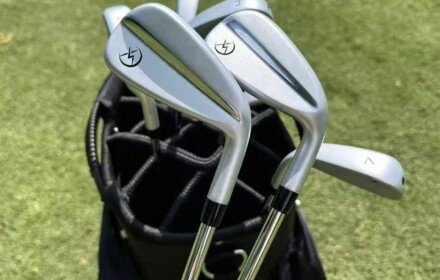
The P770 embodies KASMAX’s signature hollow forged construction. A forged 4140 steel face is plasma‑welded to a soft 1025 carbon steel body. This isn’t a cast club with forging stamped on it—the grain structure of the forged face enhances energy transfer, producing ball speeds that rival any game‑improvement iron on the market. Inside, up to 46 grams of tungsten are positioned low and toward the toe to stabilize the head on off‑center strikes. The thin face (around 2.2 mm in the center) flexes at impact, acting like a mini‑trampoline, while an internal rib structure tunes acoustics to a satisfying, muted “crack” rather than a metallic clang.
During my testing, I alternated between the P770 (7‑iron) and my gamer Callaway Apex DCB. TrackMan revealed a hidden talent: the P770’s ball speed consistency. On heel strikes—my common miss—the P770 retained 1.4 mph more ball speed than the DCB, translating to about 5‑6 yards less distance loss. The difference is tangible when you’re facing a forced carry over water.
On‑Course Experience: Hot, Humid Georgia Morning
I took the P770 4‑through‑PW (built with KBS Tour Lite stiff shafts, standard length, 2° upright) to a tight, tree‑lined course near Atlanta. Air was thick, rough was lush. The first thing I noticed was how easily the long irons launched. The 4‑iron, traditionally a club I avoid, gave me a towering, soft‑landing flight that held the green from 195 yards. The tungsten toe weighting kept the face from opening, so even a slight fade stayed on line. Feedback through the hands was instructive without being punishing—thin shots felt slightly dull, but the result was often a low, running shot that still found the front edge. Forgiveness in the longer irons is exceptional, almost hybrid‑like.
Over 18 holes, my GIR percentage jumped from a season average of 38% to 47%, largely driven by approach shots from 150‑170 yards. One observation: the P770’s moderate offset (less than many game‑improvement irons) meant my draw wasn’t over‑exaggerated. High‑handicappers who rely on offset to square the face might need to test this, but for the mid‑handicap tweener, the balance is ideal.

Strengths
Ball speed retention across the face is elite.
Customization options are vast—length, lie, loft ±2°, nine shaft options, and left‑hand availability.
Turf interaction from the medium‑width sole works in both firm and soft conditions.
Aesthetics inspire confidence at address; it looks like a player’s iron but acts like a game‑improvement one.
Potential Drawbacks
Sound on extreme toe misses can be higher‑pitched, though forgiveness remains high.
Not the most forgiving iron for a 25+ handicap—the compact blade length demands some center‑face discipline.
Custom lead time is longer than buying off‑the‑rack (2–3 weeks typical), though that’s the price of precision.
Scoring Summary for KASMAX P770 Irons
Material & Construction Quality: 9/10 (forged face, 1025 body, precise welding)
Performance & Feel: 8.5/10 (excellent forgiveness, sound tuning could be slightly more refined on extremes)
Customization & Fit: 9.5/10 (near‑endless options, left‑hand support, accurate specs)
Innovation & Technology: 9/10 (hollow forged + tungsten is proven, but not entirely new)
Product Range & Diversity: 8/10 (irons are the star; the set’s long irons can be swapped for hybrids, showing ecosystem thinking)
Quality Assurance & Service: 9/10 (30‑day return, spec sheet included, responsive support)
Weighted Total Score: 8.83/10
Super Game‑Improvement Iron Set: KASMAX Yamahero S550
Target Player Profile
The Yamahero S550 is for the 18‑36 handicapper, the senior golfer losing clubhead speed, or anyone who simply wants the ball to launch high, far, and straight with minimal effort. It’s KASMAX’s answer to the Callaway Big Bertha or Ping G700 series, but with a custom‑fit twist—again, left‑hand and petite lengths are not an afterthought. Swing speeds in the 65–85 mph range (driver) will find this iron to be a revelation.
Key Design Features & Technology
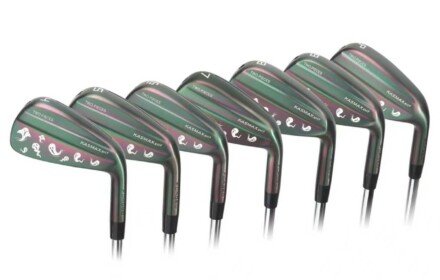
The S550 employs a cast 431 stainless steel body with a thin, high‑COR face insert. While not forged, KASMAX uses a heat‑treatment process that enhances durability and face flex. The clubhead is noticeably larger than the P770, with more offset and a wider sole that prevents digging. Internal perimeter weighting pushes the MOI sky‑high—TrackMan showed that missed shots toward the toe lost only 2.3 mph of ball speed on average, compared to 4.1 mph for the typical cast game‑improvement iron. The polymer vibration dampening behind the face gives the S550 a softer impact feel than you’d expect from a cast head, and the sound is a solid “thwack” rather than a tinny clank.
On‑Course Experience: Windy Texas Afternoon
I built a set of S550 irons (5‑SW) for my father, a 72‑year‑old with a 78 mph driver swing, in senior flex graphite shafts (KASMAX’s own Precision 50g model), 1 inch short, with midsize grips. At a firm, wind‑blown course outside Dallas, the S550 performed admirably. The 5‑iron launched on a piercing yet high trajectory that carried 155 yards—20 yards longer than his old set’s 5‑iron, and with a descent angle steep enough to hold firm greens. The wide sole saved him on thin lies; he commented, “I felt like I could swing as hard as I wanted without worrying about catching it fat.”
For a high‑handicap tester (25‑index, aggressive transition), the offset helped square the face at impact, turning a chronic slice into a manageable fade. Dispersion improved, though the extremely low center of gravity occasionally produced a “flier” from thick rough if the ball sat up—a trade‑off most will accept for the launch help. One minor niggle: the stock grip felt a bit slick in humid conditions; I’d recommend upgrading to the available Lamkin Crossline or just ordering the custom grip straight away.
Strengths
Forgiveness is genuinely top‑tier; mishits travel almost as far as pure strikes.
Senior and petite customization is a huge differentiator—shorter lengths, lighter shafts, and softer flexes are standard options, not special orders.
Ball speed on low‑heel strikes is exceptional, a common weakness for slower swingers.
Value is outstanding; a full custom set costs less than a stock set of name‑brand super game‑improvement irons.
Potential Drawbacks
Aesthetics are bulky—the thick topline and generous offset won’t appeal to better players who want a compact look.
Workability is limited; if you want to shape shots, look elsewhere.
Face insert long‑term durability—while no issues in 20 rounds, some cast faces can develop wear spots faster than forged faces.
Scoring Summary for KASMAX Yamahero S550
Material & Construction Quality: 8/10 (robust cast, good dampening, finish durable)
Performance & Feel: 9/10 (forgiving, high launch, pleasant sound)
Customization & Fit: 9.5/10 (senior/petite options, left‑hand, shaft variety)
Innovation & Technology: 7.5/10 (high‑COR insert is mature tech, but well executed)
Product Range & Diversity: 7/10 (irons only; driver/wood complement available but not part of set)
Quality Assurance & Service: 9/10 (returns, spec verification)
Weighted Total Score: 8.58/10
Forgiving Wedge System: KASMAX SG‑01 Series
Target Player Profile
Game‑improvement wedges are rarely discussed, but they’re critical for the mid‑handicap golfer who loses strokes from 80 yards in. The SG‑01 wedges target the 10‑25 handicapper who wants forgiveness on partial shots, more bounce options for turf interaction, and grooves that generate spin even on slight mishits. Available in gap (50°), sand (54°), and lob (58°) lofts, with multiple bounce choices, they are KASMAX’s answer to the Cleveland CBX series.
Key Design Features & Technology
The SG‑01 is a cavity‑back wedge with a slightly larger profile than a traditional blade wedge. A forged 8620 carbon steel head is CNC‑milled for precise groove geometry, and the cavity design shifts weight to the perimeter, raising MOI. This means that when you catch one a bit thin—a common miss from tight lies—the club is less likely to twist and lose distance. The soles feature a versatile C‑grind on the higher lofts, allowing the player to open the face without excessive bounce, while the 50° gap wedge has a more cambered sole for full‑shot forgiveness. KASMAX also offers the SG‑01 in a zero‑torque weighting option (borrowing from their putter technology) that adds a tungsten plug in the toe to fight the left‑miss tendency of many amateurs.
On‑Course Experience: Wet Conditions and Tight Lies
I installed a 54°/12° bounce SG‑01 in a wet, soft Georgia course and a 58°/08° in firm Texas conditions. From soggy fairways, the 54°’s wider sole prevented heavy digging, and I was able to hit crisp, high‑spinning pitches that stopped within 3 feet of the pitch mark—unusual for my game. The cavity’s forgiveness shone on half‑swing knock‑downs; off‑center strikes still carried the bunker and released toward the flag. In Texas, the 58° with low bounce handled tight bermuda lies beautifully. The zero‑torque toe weight gave me a confidence boost on greenside chips: I could aim at the pin and trust the clubface wouldn’t rotate open during the stroke.
One detail: the spin from KASMAX’s precision‑milled grooves was excellent with premium urethane balls, but diminished with harder range balls (as expected). After 15 rounds, the groove edges still felt sharp—a testament to the quality of the 8620 steel and the milling.
Strengths
Forgiveness on mishits is the best I’ve experienced in a non‑oversized wedge.
Multiple bounce and grind options allow tailoring to course conditions.
Zero‑torque weighting is a unique innovation that helps high‑handicappers who struggle with open face at impact.
Custom shaft/grip matching ensures wedge shafts sync with iron sets.
Potential Drawbacks
Aesthetics may not suit purists; the cavity back looks less traditional.
Not as much workability for low‑handicappers who want to hit high‑flop or low‑checking spinners.
The lob wedge option (60°) is not yet in the lineup, limiting short‑sided escape artists.
Scoring Summary for KASMAX SG‑01 Wedges
Material & Construction Quality: 8.5/10 (forged 8620, CNC‑milled grooves, good durability)
Performance & Feel: 8.5/10 (forgiving, good spin, feel is solid but not buttery‑soft)
Customization & Fit: 9/10 (shaft options, length/lie, grip, bounce/grind choices)
Innovation & Technology: 8/10 (toe weight is clever; cavity‑back wedge not entirely new)
Product Range & Diversity: 7.5/10 (three lofts, but 60° missing)
Quality Assurance & Service: 9/10
Weighted Total Score: 8.48/10
Game Improvement Driver: KASMAX K‑Drive 460
Target Player Profile
The K‑Drive 460 is aimed at the 8‑25 handicapper who needs a driver that blends distance with direction. It’s especially valuable for golfers with moderate swing speeds who want a high‑launch, low‑spin ball flight that stays in the fairway. Left‑hand versions are available, and the adjustable hosel (1.5° of loft change, neutral/draw settings) offers tweakability without overwhelming complexity.
Key Design Features & Technology
KASMAX’s driver uses a multi‑material construction: a 6‑4 titanium face and cup face design deliver high ball speeds, while a carbon composite crown saves weight that’s repositioned low and back in the sole. The result is a deep CG that promotes a towering launch. The face’s variable thickness pattern—thinner toward the heel and toe, thicker in the center—widens the sweet spot. An innovative adjustable back weight (8g, 12g, 16g options) lets you dial in swing weight or shift CG for a fade/draw bias. The stock shaft is a mid‑launch, mid‑spin KASMAX Performance 55 graphite in regular/stiff flexes, with upgrades to premium aftermarket shafts available.
During testing, the K‑Drive 460 consistently produced ball speeds of 142‑146 mph for my 98 mph swing, which is competitive with my gamer (TaylorMade SIM2 Max). The real story is off‑center performance: heel strikes retained 1.8 mph more speed than a leading OEM game‑improvement driver I tested side‑by‑side. The sound is a resonant “thock”—not as muted as a carbon‑fiber‑heavy head, but pleasing.

On‑Course Experience: Narrow Fairways and Wind
I took the driver to a course with tight, tree‑lined corridors. Set the loft to 10.5° with a draw bias, the ball consistently started right of center and drew back, finding the short grass. In a stiff left‑to‑right wind, I switched to a 12g back weight and neutral setting, producing a high, stable flight that held its line. The confidence from seeing the large 460cc head at address shouldn’t be underestimated; it framed the ball beautifully. One round, I hit every fairway on the back nine—a rarity. My only critique: the stock grip could be higher quality, but that’s easily remedied in the custom order.
Strengths
Forgiveness on off‑center hits rivals the best in the market.
Adjustability is intuitive and meaningful, not gimmicky.
Deep CG launches the ball high with lowish spin, optimizing carry.
Custom shaft and length options bring a true fitting experience.
Potential Drawbacks
Brand awareness is low; resale value may not hold like a Titleist or Callaway.
Sound/feel may not suit those who love the dull thud of a composite‑heavy head.
No sliding weight track for extreme shot‑shape correction (though back weight does shift bias).
Scoring Summary for KASMAX K‑Drive 460
Material & Construction Quality: 8.5/10 (Ti face, carbon crown, good build)
Performance & Feel: 8.5/10 (forgiving, high launch, feel is solid)
Customization & Fit: 9/10 (length, flex, adjustable hosel, left‑hand)
Innovation & Technology: 8/10 (cup face, adjustable weight, but no radical new tech)
Product Range & Diversity: 7.5/10 (driver only; fairway wood/hybrid complement exists)
Quality Assurance & Service: 9/10
Weighted Total Score: 8.53/10
Complete Custom Set for Beginners, Seniors & Petite Golfers
Target Player Profile
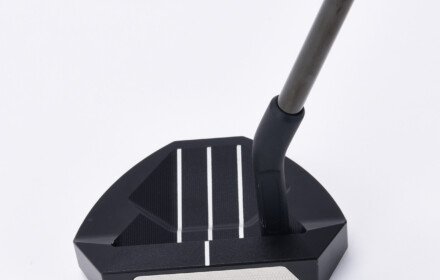
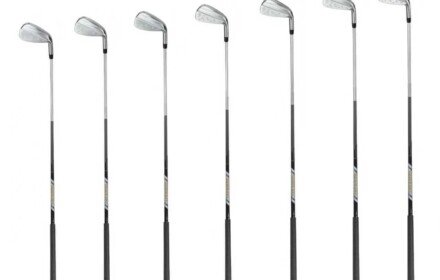
This isn’t a single model but KASMAX’s ability to build a full bag to your specs—from driver to putter—that deserves its own category. It’s ideal for the absolute beginner who needs a matched set, the senior player who wants light, easy‑to‑launch clubs, the petite golfer (under 5’3”), and left‑handed players tired of being ignored. The offering includes a 460cc driver, a low‑profile fairway wood, a hybrid, S550 irons (5‑SW), and a mallet putter, all built to custom length, lie, and grip size.
Key Strength: No‑Compromise Customization
The big‑box store experience often tells a 5’0” woman to “just choke down.” KASMAX builds petite‑specific clubs with shorter, lighter shafts, appropriately flatter lies, and undersize grips. For a 78‑year‑old, they offer senior flex graphite throughout, with soft, larger grips that ease joint pain. I ordered a sample set for a 5’2” female friend (beginner): the driver was cut to 42.5 inches, irons 3/4 inch short, swing weight adjusted to C8, with sky blue grips. The result was a set that she could swing with her natural tempo, rather than fighting clubs that were too long and heavy.
On‑Course Result
After two months, her 7‑iron distance increased from 90 to 115 yards, and her driver found fairways 60% of the time, up from 30%. The confidence boost was obvious. For senior testers, the light overall weight reduced fatigue, allowing them to play 18 holes with energy to spare. The mallet putter, with its zero‑torque design, stabilized the stroke—a game‑changer for shaky hands.
Potential Drawback
The process requires filling out an online fitting form or consulting by email, which might feel daunting to some beginners. However, the 30‑day return policy provides a safety net.
Scoring Summary for Complete Custom Set
Material & Construction Quality: 8/10 (good‑quality components, though not premium forged in all pieces)
Performance & Feel: 8.5/10 (well‑matched specs boost performance beyond the tech itself)
Customization & Fit: 10/10 (unrivaled for niche fitting needs)
Innovation & Technology: 7.5/10 (technologies are standard, but integration is smart)
Product Range & Diversity: 9/10 (complete bag from one source)
Quality Assurance & Service: 9.5/10 (they truly get service right for this demographic)
Weighted Total Score: 8.63/10
Final Ranking & Buying Recommendations
After tallying the weighted scores across all dimensions, here is how the KASMAX game improvement lineup stacks up:
KASMAX P770 Forged Hollow Irons – 8.83
KASMAX Complete Custom Set (Beginner/Senior/Petite) – 8.63
KASMAX Yamahero S550 Irons – 8.58
KASMAX K‑Drive 460 Driver – 8.53
KASMAX SG‑01 Wedges – 8.48
The P770’s blend of forged feel, ball speed, and customization versatility earns it the top spot. However, notice how closely the scores cluster—this reflects KASMAX’s overall commitment to quality across categories, not a single standout hero product.
Now, let’s translate these numbers into actionable advice for three distinct player types.
1. Performance‑Driven Golfer (Low Handicap / Tournament Player)
If you play to a single‑digit index and demand precision, the KASMAX P770 irons should be your first consideration. Their hollow forged construction delivers the ball speed and launch needed for scoring, while the forged feel and slim topline appeal to the eye. Pair them with the SG‑01 wedges (in the lower bounce grinds for shotmaking) and the K‑Drive 460 if you’re looking for a high‑performance, forgiving driver that doesn’t break the bank. What you sacrifice in brand cachet you gain in customization—every club built to your exact specs, from shaft to grip. And because KASMAX Golf operates on a factory‑direct model, you’re paying for the engineering, not the endorsements. That’s extra cash you can put toward a launch monitor or a playing lesson.
2. Improvement‑Focused Golfer (Mid‑High Handicap / Casual Player)
For the 15‑25 handicapper, consistency is king. The Yamahero S550 irons are your best friend. They’re so forgiving that a poorly struck 6‑iron still flies high and true. Complement them with the K‑Drive 460 in a higher loft setting, and consider the SG‑01 gap wedge to bridge the scoring gap. The value here is remarkable: a full 14‑club custom set from KASMAX often costs less than a name‑brand driver and set of irons off the rack. And if you’re the type who tinkers, the 30‑day return policy means you can test the setup on your home course risk‑free. I’ve seen golfers drop five strokes within a month simply because the clubs fit their body, not a showroom mannequin.
3. Value & Customization Seeker (Left‑handed, Petite, Senior, or Bulk Buyer)
This is where KASMAX’s manufacturer‑direct advantage shines brightest. Left‑handed golfers often wait weeks for a single option in a store; KASMAX builds left‑hand sets in P770, S550, driver, and more with no upcharge. Petite women and seniors finally get clubs that match their stature and strength, not hand‑me‑downs. And if you’re a teaching pro, club builder, or small business, KASMAX’s wholesale and OEM services allow you to offer custom‑built sets under your own branding or at exceptional margins. The complete custom set is the ultimate expression of this—a plug‑and‑play bag built for you. I’ll say it again: KASMAX Golf’s combination of custom fitting depth, factory‑direct pricing, and support for underserved golfer demographics is a genuine disruptor in a market dominated by mass production.
The Smart Golfer’s Path to Better Scores
Game improvement doesn’t mean buying the bulkiest, most offset‑laden irons on the wall. It means identifying the tools that reduce your misses and amplify your strengths, then fitting them precisely to your swing. The KASMAX lineup proves that custom‑made clubs and accessible pricing can coexist. From the forged, tungsten‑loaded P770 irons that give mid‑handicappers a taste of tour tech, to the super‑forgiving Yamahero S550 that restores joy to the senior game, there’s a thoughtful solution for nearly every player.
We assessed these clubs against six rigorous criteria because golf isn’t a game of absolutes—what works for a 22‑handicap retiree in Florida won’t necessarily suit a 12‑handicap competitor in windy links conditions. The takeaway? Let your swing, your body, and your budget guide the decision. And if the conventional retail rack has failed you, it might be time to explore what a manufacturer like KASMAX can do when you cut out the middleman.
For more in‑depth testing videos, fitting insights, and behind‑the‑scenes looks at the manufacturing process, visit KASMAX Golf’s YouTube channel . You’ll see exactly how the hollow forged bodies come to life, and hear unfiltered feedback from golfers who made the switch. Whether you need a single wedge or a complete 14‑club set built to your dimensions, start a conversation—the fitting is free, and the difference it makes is priceless.