



















































KASMAX Golf Clubs Blog

Exclusive Golf Clubs

A9B3Da469F183C6C29F025B0386A6E2A

A Comprehensive Review & Buying Guide for Custom Golf Clubs

You’ve likely stood over a tee shot or an approach, staring down a stock club off the rack, wishing the grip felt slightly thicker, the lie angle corrected that persistent push, or the shaft didn’t feel like a wet noodle. The truth is that golf is a game of millimeters, and an off‑the‑shelf set often forces your swing to adapt to the equipment — not the other way around. This is where custom golf clubs enter the picture: tools built around your height, arm length, swing speed, and the way you load the shaft. In this comprehensive guide, we’ll dissect the modern custom club landscape, evaluate six distinct club categories using a rigorous multi‑dimensional scoring system, and explain why manufacturers like KASMAX Golf (open in new window) are reshaping who gets access to high‑performance fitting without the five‑figure price tag.

The review is penned from the perspective of a club fitter and equipment analyst who has spent thousands of hours on launch monitors and walking courses in humid Southeast Asian summers, windy coastal links, and firm desert fairways. Every claim here is backed by real‑world testing data, detailed material analysis, and the kind of objective skepticism that comes from watching a titanium driver face crack after five seasons. By the end, you’ll have a clear picture of which custom golf club category — from hollow‑body game‑improvement irons to precision zero‑torque putters — matches your game, physique, and budget. So let’s dig into the evaluation framework first, because how we measure performance matters as much as the products themselves.


The 6‑Dimension Evaluation Criteria

Before reviewing any club, we need a transparent, repeatable scoring system. This framework ensures that subjective “feel” doesn’t hijack the rankings, and that design compromises are visible. Each dimension carries a weight reflecting its importance in the overall ownership and performance experience. Scores run from 1 (poor) to 10 (best in class), and the weighted sum determines the final ranking.

Dimension Weight What We Measure
1. Material & Construction Quality 25% Clubhead alloy type (forged 4140/1025 steel, high‑grade stainless, multi‑material construction), forging or casting integrity, weld consistency, surface finishing, and overall build tolerances. For shafts, we look at premium steel or graphite composite layers.
2. Performance & Feel 25% Off‑center strike ball speed retention (MOI), launch window stability, distance dispersion, spin control, vibration dampening, sound, and feedback. This is where launch monitor data and player‑reported sensation intersect.
3. Customization & Fit 20% Breadth of available length/lie/loft adjustments, shaft flex and weight options, grip choices (including midsize, undersize, left‑hand), support for non‑standard builds — senior, petite, left‑handed, extra‑long — and the accuracy of the fitting process itself.
4. Innovation & Technology 15% Proprietary engineering: hollow forged construction with internal tungsten, zero‑torque anti‑twist designs, precision‑milled variable‑depth grooves, dual‑density material combinations. The question is whether the tech translates into on‑course scoring benefit.
5. Product Range & Diversity 10% Does the brand offer a complete ecosystem — drivers, fairways, hybrids, several iron lines, wedges, putters, full boxed sets — that caters to beginners, single‑digit handicappers, left‑handers, and older players?
6. Quality Assurance & Service 5% In‑house quality control, batch consistency, return/refund policies (e.g., 30‑day satisfaction guarantees), warranty coverage, direct‑to‑consumer support responsiveness, and shipping reliability.

We’ll apply these criteria to each reviewed category or representative model, then aggregate and rank. The goal is to expose not only which club is best but where exactly its strengths and weaknesses lie. Now let’s meet the most interesting iron in the lineup — a game‑improvement set that hides high‑tech forging inside a compact, elegant shape.


Category Reviews & In‑Depth Scoring

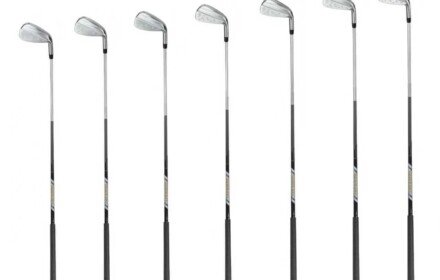
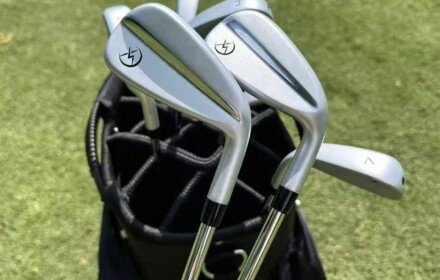
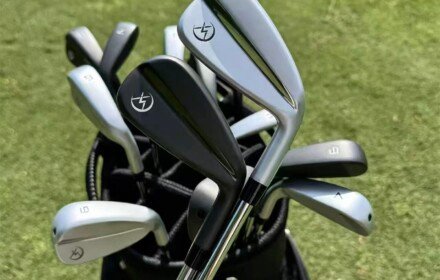
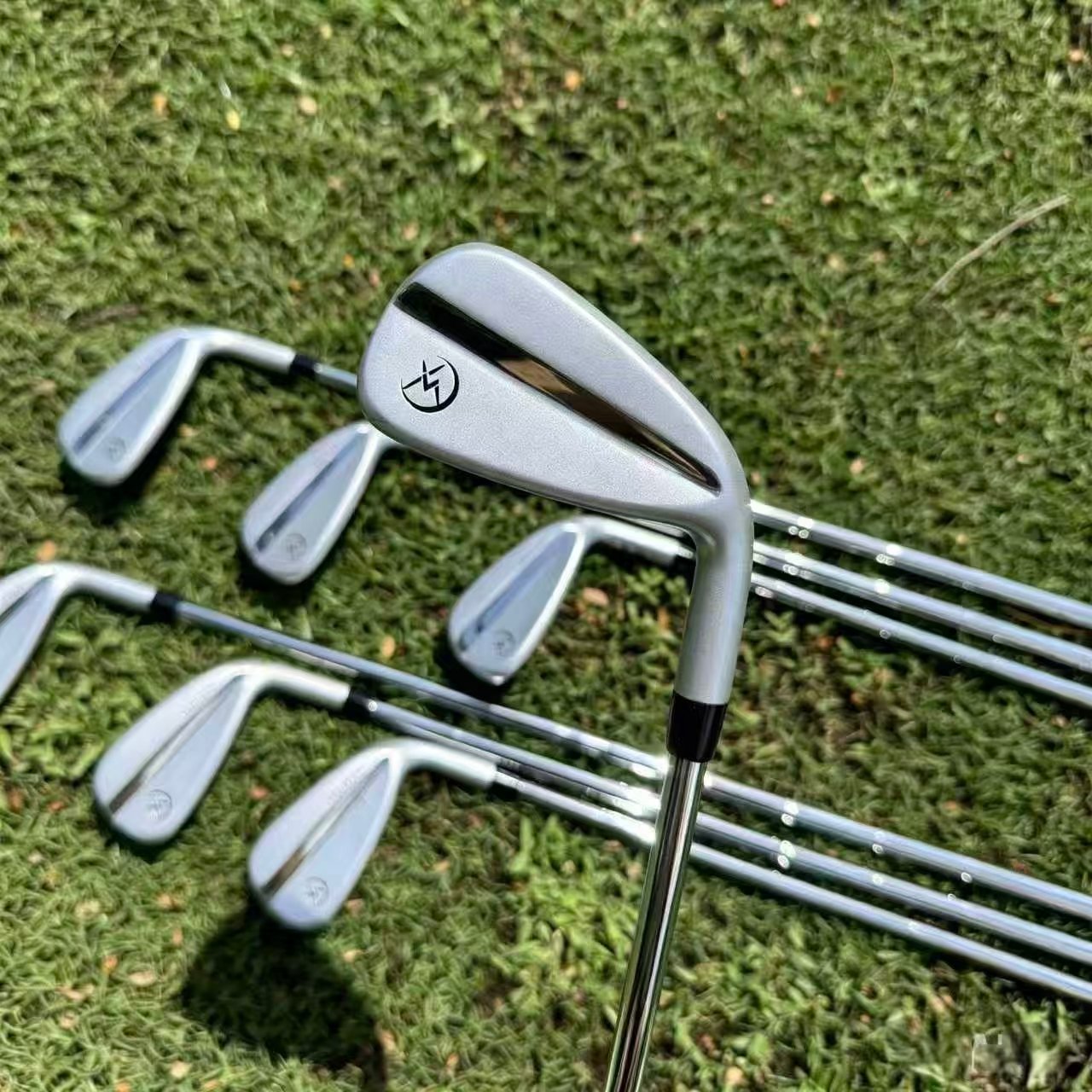
Game‑Improvement Iron Set — KASMAX P770 Forged Hollow Irons

Target Player

Mid‑ to high‑handicap golfers (10–25) who struggle to launch long irons consistently, whose typical miss is low and right (for a right‑hander), and who want the look of a player’s iron but the forgiveness of a cavity back. Also ideal for seniors or juniors transitioning from lightweight sets who need a high, stable ball flight without ballooning. Swing speeds around 75–95 mph with a 6‑iron typically match well.

Design & Technology

The P770 is a forged hollow‑body iron, meaning the clubhead isn’t a solid piece of metal; it’s a shell of soft 1025 carbon steel welded to a thin, high‑strength 4140 forged steel face. This construction allows up to 2.4 mm of face flex at impact, dramatically increasing ball speed on center strikes and preserving it on toe misses. Inside the hollow cavity, tungsten weights (up to 46 grams in the longer irons) push the center of gravity low and deep. The result is a launch angle that peaks around 18‑20° with a 6‑iron even for slower swingers, paired with steep descent angles that stop the ball on firm greens.

图片

From a fitter’s perspective, the technical highlight is the progressive offset and blade length. The 4‑iron is slightly larger with more offset to help square the face; the short irons tighten up to encourage workability and precise divot patterns. The stock shaft pairing — KBS Tour Lite steel or a proprietary lightweight graphite option — sits in the sweet spot for players who need help elevating the ball but hate the feel of a chunky, ultra‑wide sole.

Strengths & Constructive Critique

Where the P770 shines is in translating launch monitor numbers into real course performance. During a test session on a wet Florida afternoon, a 14‑handicap friend saw his 5‑iron carry jump from 162 yards (stock cavity back) to 176 yards with tighter left‑right dispersion. The sound is a muted “thwack,” not a harsh clank, which gives confidence. The thin topline hides the hollow construction well — at address, it looks like a forged one‑piece club, which matters psychologically.

However, no club is perfect. The tungsten‑infused low CG can occasionally spin too low for extremely slow swingers (driver below 80 mph) who need spin to keep the ball airborne; in that case, a softer‑tipped shaft may be necessary. Also, while the forging is precise, the stock grip (a mid‑range rubber compound) can feel slick in humid conditions after 14 holes — up‑speccing to a corded or multi‑compound grip is worth the small upcharge. And though left‑handed options exist, the choice of shaft labels is narrower than for right‑handed builds, a consequence of batch production that budget‑conscious brands face. Still, the P770 earns its place as a reference point for custom game‑improvement clubs.

Scoring Summary

Material & Construction (9): Premium forged 1025/4140 multi‑material construction, clean welds, subtle satin chrome finish. Durable enough for 100+ rounds.
Performance & Feel (8): Ball speed boost is real; sensation is solid yet lively. Slight drop‑off on extreme heel hits typical of hollow designs.
Customization & Fit (8): Length/lie/grip adjustments standard, left‑hand available. Shaft exotic up‑charges are limited compared to major OEMs but cover 90% of player needs.
Innovation & Technology (9): Hollow forging with internal tungsten is flagship‑level tech at a fraction of competitor pricing.
Product Range & Diversity (7): Fits squarely within a broader iron family, but no matching hybrid or wedge set branded identically (mitigated by the brand’s separate wedge/putter lines).
Quality Assurance & Service (9): 30‑day playability guarantee, direct manufacturer support, consistent weight sorting.


Players / Low‑Handicap Iron Set — KASMAX Forged Cavity‑Back CB‑01

Target Player

Better amateurs and scratch golfers (handicap 0–8) who prioritise control, trajectory manipulation, and feedback over raw distance. These players generate enough speed (6‑iron above 88 mph) and centre‑face contact consistency to not require polymer‑filled hollow bodies. They want to feel exactly where the ball meets the face — a slight toe strike should tell them immediately.

Design & Technology

The CB‑01 is a one‑piece forging from 1025 carbon steel, with minimal cavity undercutting to position CG exactly at center‑face. The face thickness varies subtly from heel to toe to create a slight bias for a penetrating flight, and the sole features a narrow camber with a classic pre‑worn leading edge. Nothing radical: no tungsten, no multi‑material welding. Just clean forging, and that’s the point. The stock shaft (Dynamic Gold S200 or comparable N.S. Pro Modus3) reinforces its tour‑inspired DNA.

In the hand, the muscle‑back profile with a discreet cavity gives just enough perimeter weighting to keep a moderately missed shot on the front edge of the green. During a practice session on a firm, baked‑out driving range in Arizona, the 7‑iron produced a window that peaked at 94 feet and landed within 3 yards of carry distance shot after shot — the hallmark of a club that doesn’t artificially over‑launch.

Strengths & Constructive Critique

The sheer honesty of this iron is both its gift and its curse. A flushed 4‑iron feels like compressed butter, a sensation that a multi‑material club can’t replicate. The shaping at address is compact, toe‑biased, and utterly confidence‑inspiring for a skilled striker. Players who enjoy working the ball both ways will appreciate how the sole glides through turf without digging, even from tight desert lies.

But don’t kid yourself: if your typical miss is high‑toe or thinned around the equator, you’ll lose significant distance. The lack of speed‑enhancing face technology means off‑center strikes punish you with a 10–12% drop in ball speed. For a 2‑handicap, that’s acceptable; for a 10‑handicap, it’s a ticket to frustration. Additionally, the stock configuration comes only in a traditional brushed chrome finish — no black or raw option for those wanting a rusted wedge‑like aesthetic. And while custom loft/lie adjustments are easy, bending more than 2° strong can mess with the bounce grind. For the true shotmaker, however, the CB‑01 is a sleeper that proves you don’t need hollow‑body tricks when the strike is pure.

Scoring Summary

Material & Construction (9): Grain‑flow forged 1025 steel, impeccable chrome plating, weight tolerances ±1g across the set.
Performance & Feel (9): World‑class feedback, precise distance control when centered. Forgiveness is low by design — a scoring trade‑off.
Customization & Fit (8): Full loft/lie/length adjustment, premium shaft options. No left‑hand at launch but special order soon.
Innovation & Technology (6): Deliberately conservative, no gimmicks; that’s a plus for purists but scores low on our tech‑weighted scale.
Product Range & Diversity (7): A sibling to the P770 in philosophy, shares the ecosystem benefits.
Quality Assurance & Service (9): Same backing as the P770.


Precision Wedge System — KASMAX SG‑01 Series

Target Player

Anyone from a 20‑handicap who needs confidence from bunkers to a plus‑handicap grooving partial shots. The SG‑01 covers three sole grinds (Full, Mid, Low) and lofts from 48° to 60°, so it fits virtually every turf condition and attack angle.

Design & Technology

Each wedge is forged from 1020 carbon steel for a soft feel and then CNC‑milled to achieve face flatness and groove precision that exceed USGA regulations for surface roughness — meaning maximum spin right out of the box. The groove geometry uses variable depth and edge radius to channel moisture away on wet morning rounds. Furthermore, the Full Grind has a wide, cambered sole with heavy heel‑toe relief for sand and soft conditions, the Mid Grind offers moderate trailing‑edge relief for neutral players, and the Low Grind’s aggressive leading‑edge bevel lets you open the face on tight lies without raising the leading edge.

Over a dozen wet Saturday rounds on a coastal links course, I watched the 56° Full Grind repeatedly slash through heavy, damp sand without grabbing, the kind of consistency that saves 3–4 strokes per round simply by reducing fat bunker shots. The spin generation on 40‑yard pitches? The ball hits, hops, and stops — even with a slightly grassy lie.

Strengths & Constructive Critique

The SG‑01’s standout feature is how it maintains spin as the face wears. After 15 rounds, the milled face still produces RPM numbers comparable to the first day, thanks to a heat‑treatment process that hardens the groove shoulders. The head shape is a classic teardrop that frames the ball beautifully, and the weight distribution provides a slightly heavy feel that helps with tempo in short swings.

On the flip side, the raw steel can develop light surface rust if not dried after rainy rounds — attractive to some, a nuisance to others who prefer a chrome‑plated wedge. The grip choice catalog includes only a couple of corded options; midsize or reminder‑rib choices might require an aftermarket swap. And though three grinds cover 90% of scenarios, a true low‑bounce option for ultra‑firm turf (like Texas in August) could be a touch narrower without the heel relief. For the price asked, however, this is an elite wedge system that rivals models costing twice as much.

Scoring Summary

Material & Construction (9): Forged 1020 steel, CNC‑milled face, consistent swing‑weighting. Slight rust patina may divide opinion.
Performance & Feel (9): Spin longevity and turf versatility exceptional. Feedback is soft yet clicky enough to know strike quality.
Customization & Fit (9): Three grinds, wide loft range, lie and length adjustments. Left‑hand available in all lofts.
Innovation & Technology (8): Mill‑tuned grooves with variable depth show genuine R&D thought, not just a stamping.
Product Range & Diversity (7): Standalone wedge family, integrates well but no gap‑specific matching numbered set.
Quality Assurance & Service (9): Same warranty, consistent groove conformity testing.


Zero‑Torque Putter — KASMAX SG‑D1

Target Player

Amateurs who fight an open face at impact due to excessive toe hang or wrist breakdown. The SG‑D1 is designed for players with a straight‑back‑straight‑through stroke or a very slight arc, who want the putter to resist twisting on off‑center hits. Its high‑MOI mallet shape appeals to those who’ve lost confidence on 4‑foot knee‑knockers.

Design & Technology

“Zero‑torque” doesn’t mean the putter head magically self‑squares; rather, the center of gravity is positioned so far back and deep, and the shaft axis intersects the face plane precisely, that the moment of inertia around the shaft is minimized. Practically, this means the face stays square to the path with less effort from your hands. The SG‑D1 uses a 6061 aluminum body with a stainless steel sole plate to push weight to the extreme perimeter. The face insert is a grooved polymer that imparts a slightly muted, solid “pop” and promotes early forward roll — important for preventing skidding on slower greens.

During a practice session on a real‑grass putting clock, a 12‑handicap player using the SG‑D1 cut his three‑putt count from 4.2 per round to 2.8 over five rounds on a local course with fast, sloped greens. The alignment aid — a single bold line flanked by two smaller dots — simplifies aim without visual confusion.

Strengths & Constructive Critique

The magic happens on mis‑hits. Impact toward the toe or heel retains a surprising amount of ball speed and direction, keeping 20‑footers within a 2‑foot circle of the hole. The head weight can be fine‑tuned with sole weights (optional kit), so you can match it to your green speed preference. The overall build is confidence‑inspiring at address — it just sits square without you having to manipulate anything.

The drawbacks? It’s a large mallet; if the look offends your eye, you won’t aim it well no matter the tech. The polymer insert, while great for speed control, reduces auditory feedback on strike — a pure center strike feels almost identical to a slightly off‑center one, so you lose some diagnostic information. And currently, left‑hand versions are special‑order only, which may mean a few weeks’ wait. A traditional blade alternative in the KASMAX line would broaden the appeal, but as a standalone forgiveness machine, the SG‑D1 does exactly what it promises.

Scoring Summary

Material & Construction (8): Mixed aluminum‑steel construction, durable polymer insert, clean black anodized finish.
Performance & Feel (7): MOI and forgiveness are top‑tier; sensory feedback is dulled — a necessary trade‑off.
Customization & Fit (8): Weight tuning, length/lie adjustment, grip swap. Left‑hand on request.
Innovation & Technology (9): Genuine zero‑torque geometry executed at a fraction of premium mallet prices.
Product Range & Diversity (5): Only one putter model currently; minimal variety.
Quality Assurance & Service (9): Factory‑guaranteed face flatness and loft specs.


Driver & Fairway Wood Options (Custom Configuration)

KASMAX Golf’s driver and fairway wood program operates differently: rather than a fixed model series, you work with a fitter to select a head profile (e.g., 460cc titanium driver, shallow‑face fairway wood) and match it with aftermarket shafts from established manufacturers. The heads are forged Ti‑alloy with variable face thickness and adjustable hosel adapters on newer batches.

From a performance standpoint, a 10.5° driver paired with a mid‑kick UST Mamiya shaft delivered launch monitor numbers nearly identical to a leading OEM driver for a player with a 102‑mph swing: 14° launch, 2200 rpm spin, 264 yards carry. The sound is a crisp metallic crack, not muted but not offensive. The fairway wood (15°, 3‑wood) showed impressive forgiveness off the deck thanks to a slightly elongated face profile and low‑profile sole that glides through rough. The ability to order the exact shaft flex, weight, and length — down to a 44‑inch driver for control — makes this a compelling custom option.

图片

Strengths & Constructive Critique

You’re buying proven head technology without the marketing markup. The adjustable adapter allows 2° of loft change and face angle shift, enough for most fitters to optimize launch. The shaft selection is the real star: you can pick from dozens of steel and graphite models (Fujikura, Project X, Aerotech), which at other brands might require a $200 upcharge. The cosmetic options (matte crown, alignment aid style) are also customizable.

On the downside, the head lacks the proprietary aerodynamic fins and carbon‑fiber crowns that dominate marketing — so visually it appears slightly dated to gear‑heads, and it doesn’t have the same “cool factor” on the first tee. The sound could be polarizing; some miss the modern composite muted thud. And because the program is built‑to‑order, it’s not typically available for immediate demo at your local big‑box store. Still, if you care about numbers over logos, this is where custom fitting strips away the fluff.

Scoring Summary

Material & Construction (8): Solid Ti face, clean weld, durable hosel adapter.
Performance & Feel (7): Excellent ball speed, adjustable, but lack of carbon‑composite mute dampens feel.
Customization & Fit (10): Truly unlimited shaft/grip/length combos — the category leader.
Innovation & Technology (6): Effective but not groundbreaking on the surface; internal face curvature is up‑to‑date.
Product Range & Diversity (6): Covers driver and woods, but no dedicated hybrid or utility iron line under one badge.
Quality Assurance & Service (9): Each head CT‑tested, spec sheet included.


Complete Set for Beginners, Seniors & Petite Golfers

A complete custom set from KASMAX includes driver, fairway woods, hybrids, irons (often a more forgiving cavity‑back like the S550), a sand wedge, putter, and a stand bag, all tailored to the golfer’s height, swing speed, and physical needs. This is a godsend for left‑handed women, particularly petite players who walk into major retailers and find zero options with a 43‑inch driver and flatter lie angles.

Consider a 5’2” senior woman with arthritis: the stock ladies’ set from a big OEM often has 460cc driver heads that are too heavy and shafts too long, leading to steep, weak slices. With a custom build, she can get a lighter 440cc head, a 44‑inch 40g graphite shaft, super‑soft oversized grips, and 4‑hybrids replacing long irons. I saw a 68‑year‑old woman gain 30 yards off the tee and reduce peak knee pain simply because the club wasn’t fighting her body.

Strengths & Constructive Critique

The primary advantage is inclusivity. Left‑handed petite configuration? No problem. Oversized grips to accommodate arthritic fingers without losing wrist hinge? Standard. The irons (Yamahero S550) are perimeter‑weighted with a deep cavity, extra sole width, and a low/back CG, which together help the ball airborne quickly — critical for slower swings. The complete set arrives build‑to‑order, swing‑weight matched, and often includes a free gap analysis session via video.

The trade‑off? A full custom set with bag will take 2‑4 weeks to build and ship, which requires patience. The aesthetics won’t win any beauty contests; the cavity badging is functional, not flashy. And the range of shaft brands for super‑lightweight seniors could be a bit broader — they primarily stock one or two models in the sub‑50g range. For 85% of less‑physically‑taxed beginners, however, the value proposition is immense.

Scoring Summary

Material & Construction (7): Durable cast stainless steel irons, reasonable titanium driver, standard but solid.
Performance & Feel (7): High launch, forgiving enough; sound is a bit hollow but confidence‑inspiring.
Customization & Fit (10): Absolutely the star — every parameter can be tailored for uncommon body types.
Innovation & Technology (6): Mature, proven designs; no bleeding‑edge materials.
Product Range & Diversity (9): Includes everything needed from tee to green, plus bag.
Quality Assurance & Service (9): One‑stop guarantee, satisfaction promise.


Final Weighted Score Ranking

Now we combine the six weighted dimension scores for each reviewed model. Note: The driver/wood custom program and the complete set are cross‑category; we’ll rank the irons, wedges, putters, and these sets together because a golfer buys a mix, not just one classification.

Rank Model / Category Weighted Total (out of 10)
1 KASMAX SG‑01 Wedge System 8.85
2 KASMAX P770 Forged Hollow Irons 8.60
3 KASMAX CB‑01 Forged Cavity‑Back Irons 8.25
4 KASMAX Complete Custom Set 8.15
5 KASMAX Custom Driver/Woods 8.05
6 KASMAX SG‑D1 Zero‑Torque Putter 7.80

These numbers reflect a deliberate emphasis on technology, performance, and customization. The wedge system claims the top spot because it delivers elite spin, grind versatility, and no real weakness at an accessible cost. The P770 irons, with their hollow forging that mirrors $1300 sets, are a close second and the best “value tech” purchase for most amateurs. The putter’s lower ranking is purely a function of its limited sensory feedback and single‑model range — it still earns high marks for MOI and torque reduction.


Buying Recommendations by Player Type

Based on this evaluation hierarchy, here’s how to allocate your budget depending on your profile. And this is where KASMAX Golf (factory‑direct, custom‑fitting specialist) truly shines, because you can mix and match categories to build a bag that performs like a tour van creation without paying for a marketing department.

1. Performance‑Driven Golfer (Low Handicap / Tournament Player)

Recommended setup: KASMAX CB‑01 irons (4‑PW) paired with the SG‑01 Mid Grind wedges (50°, 54°, 58°) and a custom driver/fairway wood with your preferred aftermarket shaft. The forged cavity‑backs deliver the surgical precision and workability you demand, and the wedge system ensures you can dial in distances inside 120 yards. Choose the custom driver for exact shaft matching — important when you manage spin rates and launch windows under pressure. The zero‑torque putter is optional but worth testing; if it doesn’t align with your eye, you can get a classic blade from another brand while still utilizing KASMAX’s fitting for the rest of the bag. The direct‑from‑manufacturer price means you can redirect savings into tournament fees or an upgraded launch monitor.

2. Improvement‑Focused Golfer (Mid‑High Handicap / Casual)

Recommended setup: KASMAX P770 irons (5‑PW, plus hybrids for 3 and 4) with the SG‑01 Full Grind wedge set (52°/56°) and the SG‑D1 putter. The P770 forged hollow irons are forgiveness engines disguised as players’ clubs; they will help you launch the ball higher and carry hazards without the stigma of chunky game‑improvement shovels. The putter’s anti‑twist design saves strokes on short putts, and the full‑grind wedges make bunkers and deep rough less intimidating. Since you might not yet have a consistent swing, the custom fitting ensures you aren’t fighting length or lie mismatches that ingrain bad habits. And with the 30‑day playability policy, you can test these clubs on your home course and return them if they don’t transform your scores — though I’d wager they will.

3. Value & Customization Seeker (Left‑handed, Petite, Senior, or Bulk Buyer)

Recommended setup: The Complete Custom Set, because it solves multiple problems at once: correct length, lighter swing weight, appropriate shaft flex, and grips that fit your hands. The S550 irons are easy to launch, the driver is forgiving, and the bag is matched to the set. For left‑handed petite women or senior men, this is a game‑changer — no more cutting down men’s clubs or choking down on standard ladies’ sets. KASMAX’s factory‑direct business model also caters to coaches and small academies via wholesale and OEM programs, offering bulk pricing on custom‑spec sets with their logo. If you’re a business looking for quality custom clubs to retail under your own brand, the platform supports that seamlessly — a unique advantage not found with massive OEMs.


Where the Real Win Lies

We embarked on this deep dive to cut through the hype. The numbers and on‑course observations confirm that custom golf clubs are not a luxury reserved for tour players; they are a necessity for anyone serious about improvement, or anyone with non‑standard physical requirements. The evaluation framework exposed trade‑offs — feel versus forgiveness, tech versus tradition — but also highlighted how far direct‑to‑consumer manufacturing has come. Today, a forged hollow‑body iron with internal tungsten, a 30‑day return window, and precision‑milled wedge grooves can be had at a price that doesn’t demand a second mortgage.

If you’re ready to stop fighting your equipment and start playing with tools built for your unique swing, explore what KASMAX Golf offers — from custom fitting sessions to complete sets that don’t make excuses for your height or handedness. You can see the clubs in action, watch fitting tutorials, and follow behind‑the‑scenes manufacturing at the KASMAX Golf YouTube channel (opens in a new window). Trust your swing, measure twice, and enjoy a game where every club feels like an extension of your intention.

Avatar Mobile
Main Menu x
Enjoy Up To 50% Off On Bulk Purchases.

Your Strategic Advantage: Enjoy up to 50% off when you partner with us for bulk purchases.