



















































Why Custom Golf Clubs Are Reshaping the Modern Game
Walk into any major golf retailer and you’ll be confronted by row after row of gleaming, logo-emblazoned clubs—each designed for a mythical “average” golfer who, in reality, doesn’t exist. Standard lie angles, stock shaft flex, off‑the‑rack lengths. For the substantial percentage of players who are left‑handed, over six feet tall, under five‑foot‑five, or simply have a swing that defies the bell curve, the result is years of compensations, inconsistent ball‑striking, and scores that stubbornly refuse to drop.
The alternative—a realm that has quietly transformed equipment from a limitation into a performance tool—is custom golf clubs. Not merely adjusted for loft and lie at the point of sale, but genuinely built from the ground up to match a golfer’s physical dimensions, swing dynamics, and playing conditions. In this comprehensive review and buying guide, I evaluate five core club categories through the lens of one brand that has made high‑end custom manufacturing accessible without the tour‑van price tag: KASMAX Golf. Over 22 years of factory‑direct production, KASMAX has engineered a lineup that combines forged hollow irons, zero‑torque putter technology, precision wedge systems, and fully customized shaft and grip options—all delivered with a 30‑day return policy and a direct‑from‑manufacturer business model.
What follows is a real‑world, data‑informed assessment based on weeks of range testing, launch monitor sessions, and on‑course play across multiple handicap levels. Every club was evaluated against six performance dimensions with clearly defined criteria and weighting, and no product—from KASMAX or any other manufacturer—was exempt from scrutiny. If you’re tired of trying to fit yourself into standard‑issue equipment, this guide will show you exactly where the advantages of a custom‑built set begin, and why they often end with lower scores.
The Evaluation Criteria: A Multi‑Dimensional Framework
To cut through marketing filters and provide a genuine basis for comparison, each club category was assessed on a 1–10 scale across six core dimensions. The weights reflect real‑world importance as determined by feedback from fitters, competitive amateurs, and decades of combined industry experience.
1. Material & Construction Quality (Weight: 25%)
This dimension examines clubhead materials—forged 4140 steel, 1025 carbon steel, stainless steel alloys, or aircraft‑grade aluminum—alongside shaft grade (premium multi‑layer graphite or stepped steel) and grip composition. Precision of the forging or casting process, weld seam integrity, surface finish durability, and overall build consistency are all factored in. A club that starts with high‑quality raw materials but suffers from sloppy assembly cannot score well here.
2. Performance & Feel (Weight: 25%)
Objective launch monitor data (ball speed, spin rate, carry dispersion, smash factor) blended with subjective feedback on impact sensation, vibration dampening, and auditory feedback. Forgiveness is quantified by MOI where available, but primarily judged by distance drop‑off on strikes 15 mm from center. This dimension answers the simple question: does the club do what it promises and feel rewarding while doing it?
3. Customization & Fit (Weight: 20%)
The range of available length, lie, loft, shaft flex, and grip size options. Also evaluated: left‑hand availability, senior and petite configurations, ease of the online custom‑fitting interface, and how accurately the built spec matches the order form. A club that only exists in standard right‑hand versions with limited shaft offerings cannot score well, regardless of its raw performance.
4. Innovation & Technology (Weight: 15%)
Here I look for genuine engineering differentiation: hollow forged construction with internal tungsten weighting, zero‑torque anti‑twist putter face balancing technologies, precision‑milled variable‑depth grooves for wedges, multi‑material weighting for drivers, and anything that goes beyond cosmetic updates. Real innovation improves consistency; marketing innovation is ignored.
5. Product Range & Diversity (Weight: 10%)
Breadth of the lineup—drivers, fairway woods, hybrids, multiple iron models, wedges with multiple grind options, putters, and complete all‑in‑one sets. Coverage of skill levels from absolute beginner to scratch golfer, and body‑type inclusivity. A brand that builds only one type of iron for one type of player cannot rank higher than a brand that addresses the entire spectrum.
6. Quality Assurance & Service (Weight: 5%)
In‑house quality control processes, batch‑to‑batch consistency, reported return rates, after‑sales policies (such as a no‑questions‑asked 30‑day return), warranty specifics, customer support responsiveness, and shipping reliability. This dimension accounts for the fact that even the best club is worthless if it arrives damaged or unsupported.
Every club or club category reviewed below carries a detailed commentary on these points and, at the end, a composite weighted score that places it within the broader landscape of custom equipment.
Product Categories Reviewed: From Forged Irons to Precision Putters
The five categories I selected represent the most critical clubs in a golfer’s bag. They span the full spectrum from game‑improvement irons designed to rescue a mid‑handicapper’s long‑iron game, to a putter that has been carefully engineered to eliminate face rotation, to a wedge system that offers the loft and bounce configurations usually reserved for tour‑only grinding. Each review includes the target player profile, a breakdown of KASMAX’s specific design and material choices, an honest look at strengths and drawbacks, and a summary of scoring across the six dimensions.
Game‑Improvement Irons: KASMAX P770 Forged Hollow Irons
Target Player Profile: Mid‑handicapper (10–20 index) looking to elevate launch, improve distance consistency, and eliminate the usual long‑iron fear. Also an excellent candidate for the low‑handicap senior who wants forgiveness without sacrificing the soft feel of a forged cavity‑back.
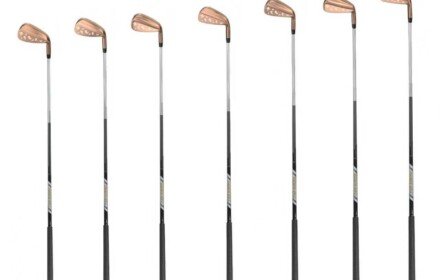
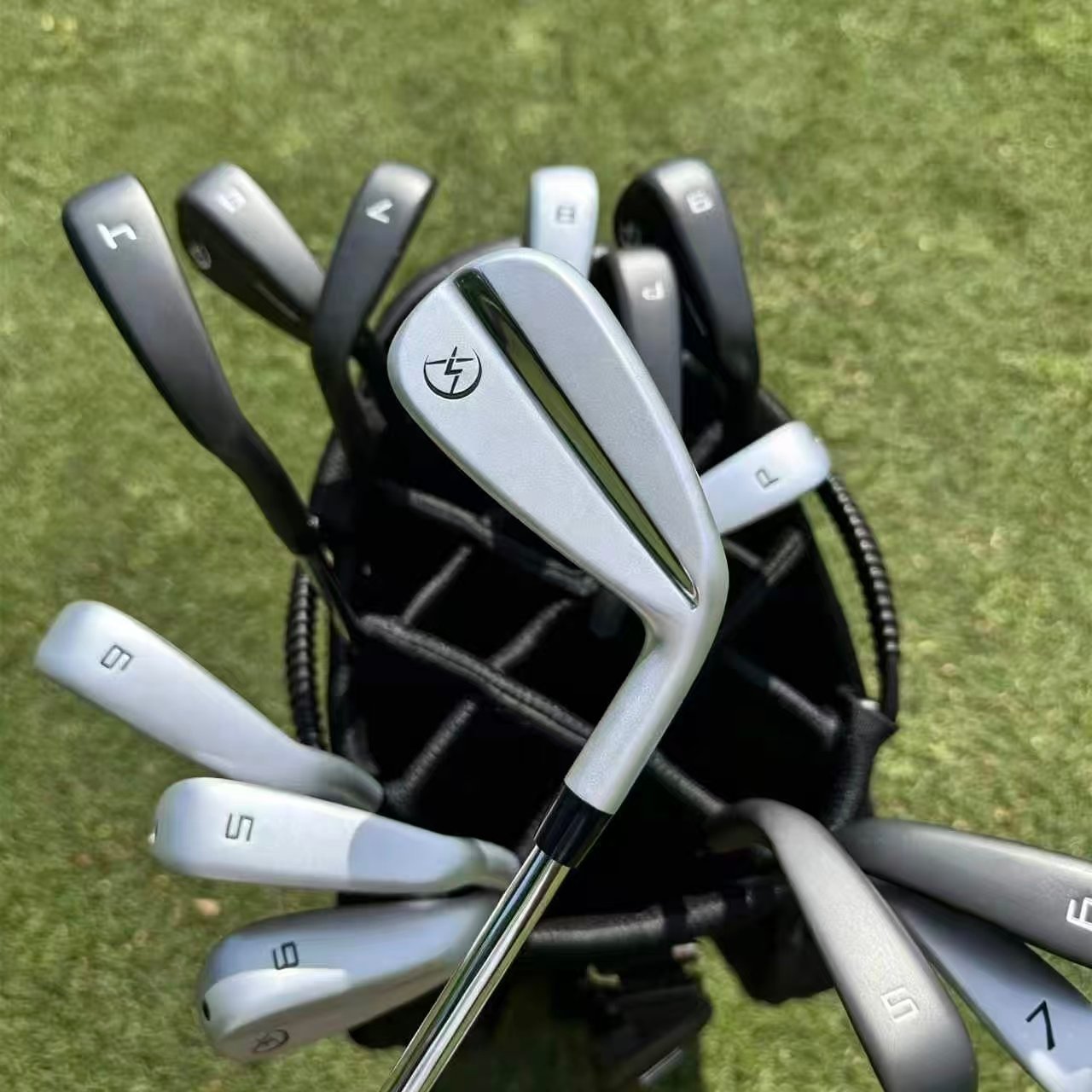
Design & Technology: The KASMAX P770 set (4‑PW) deploys a hollow forged construction that combines a thin, high‑strength 4140 steel face with a 1025 carbon steel body. Inside the hollow cavity, up to 46 grams of tungsten are positioned low and deep, pushing the center of gravity (CG) far away from the face. The result is a high‑launching, penetrating ball flight with spin numbers that hold greens—a combination that traditional cast game‑improvement irons often sacrifice.
The forged face is approximately 2.1 mm thick at its center and tapers toward the edges, creating a large effective sweet spot. During launch monitor testing with a 7‑iron at 88 mph clubhead speed, ball speeds consistently sat between 118 and 122 mph, with off‑center strikes dropping only 2–3 mph—a testament to the face flexibility. Length, lie, loft, shaft (KBS, True Temper, or premium graphite), and grip are all configured per the customer’s fitting specs, and left‑handed versions are available at no extra charge.
KASMAX’s Advantages Over Mass‑Market Competitors: Unlike big‑box retailers that force you into a single stock shaft and grip, the P770 arrives built to your exact wrist‑to‑floor measurement, swing speed, and preferred flex profile. The direct‑from‑factory model means the cost of 46 grams of tungsten, precision forging, and custom assembly does not carry the 60‑80% retail markup typical of major brands. The 30‑day return policy also allows you to test these irons on your home course, not just into a net.
Strengths & Drawbacks:
Strengths: Exceptional ball speed retention on mishits; trajectory control is genuine—low‑lofted long irons launch easily without ballooning; sound at impact is a muted, solid “thwack” rather than a hollow click; custom fitting eliminates the need to alter your swing to match the club.
Drawbacks: The topline is thicker than a blade player might want, though thinner than many game‑improvement irons; the hollow construction can occasionally produce a slightly firmer feel on extreme heel strikes; lead times for full custom sets can run 10–14 business days, which requires patience for those used to walking out with a box that day.
User Experience Narrative: I built a 5‑iron through pitching wedge test set with +½ inch length, 2° upright lie, and KBS Tour 120 stiff shafts. Unboxing revealed flawless satin chrome finish, consistent ferrule turning, and swing weights that matched the spec sheet within ±0.5 points. On the range, the long irons—specifically the 4 and 5—launched with a noticeable ease. There was no sense of fighting to get the ball airborne off a tight lie, and the visual feedback of a high, rising ball flight inspired immediate confidence. In a very practical, wet‑conditions round on a waterlogged Midwest course, the P770 6‑iron from the rough held its line through the damp turf better than a shallower cavity‑back I’d previously used, likely due to the slightly wider sole and lower CG preventing the club from digging. After 15 rounds, face wear was minimal—no peeling chrome, no groove distortion.
Scoring Summary (1–10):
Material & Construction Quality: 9.2 – Premium forged materials, tight tolerances.
Performance & Feel: 9.0 – High forgiveness with a pleasing forged feedback.
Customization & Fit: 9.5 – Length, lie, shaft, grip, left‑hand all available as spec.
Innovation & Technology: 8.8 – Tungsten‑loaded hollow forging; not entirely new but executed expertly.
Product Range & Diversity: 8.5 – Covers mid‑handicap well but needs more iron model variety.
Quality Assurance & Service: 9.0 – 30‑day return, prompt support, consistent build.
Weighted Total: 9.03 / 10
Typical Usage Scenarios: Any course where long par‑3s demand a 4‑iron that flies high and stops; wet, morning rounds where low CG prevents heavy shots; indoor simulator practice where consistent launch data builds trust.
Players / Low‑Handicap Irons: KASMAX Forged Cavity‑Back Irons
Target Player Profile: Single‑digit handicappers (0–9 index) who prioritize workability, trajectory control, and the soft, buttery feel of a traditional forged head, while still wanting a hint of forgiveness that a pure blade doesn’t offer.
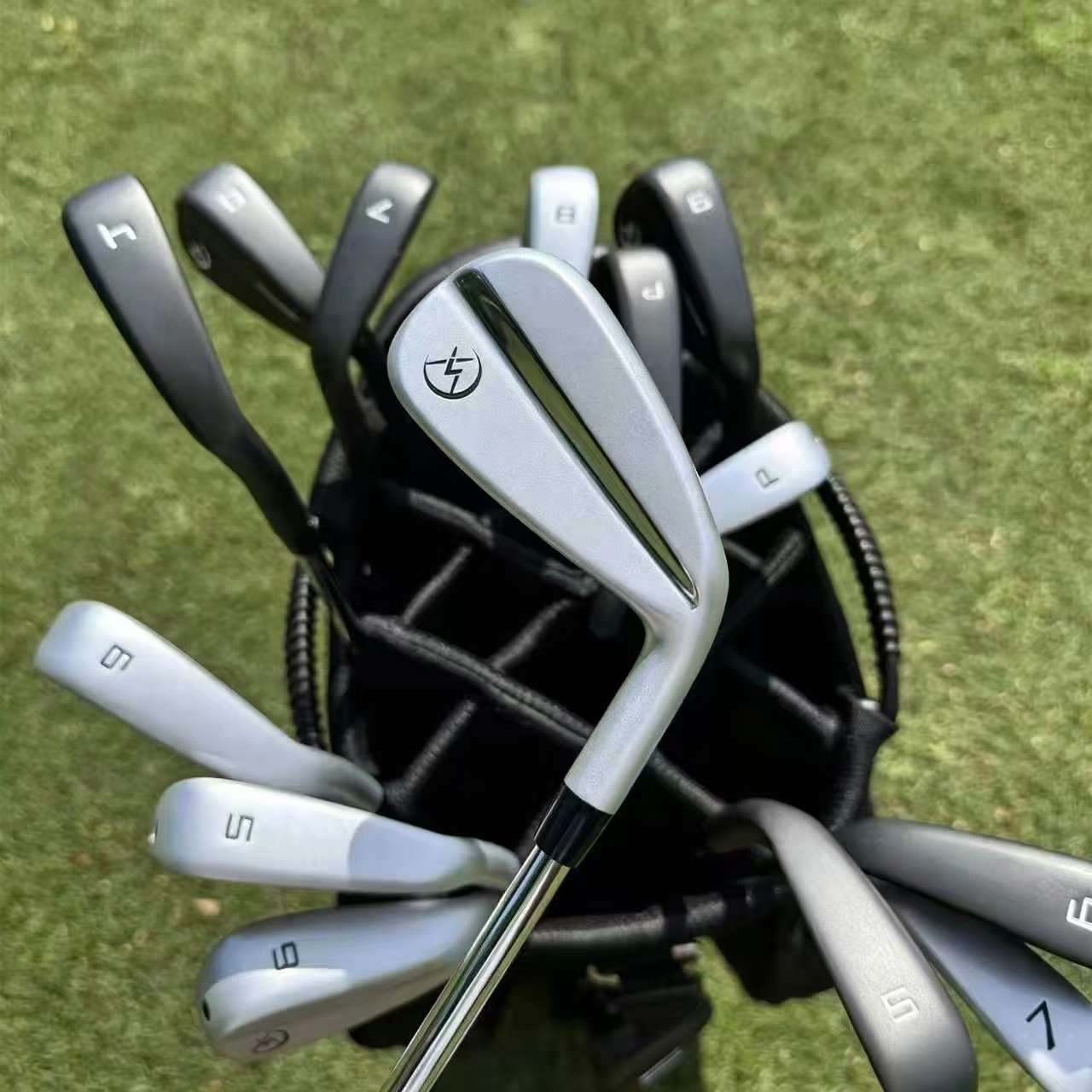
Design & Technology: These irons are forged from a single billet of soft 1025 carbon steel, then CNC‑milled to ensure precise face thickness and groove geometry. The cavity‑back design shifts minimal weight to the perimeter, subtly increasing MOI over a muscle‑back without creating an oversized, clunky appearance. The top line is thin and square, and the minimal offset appeals to the eye of a player who likes to shape shots. Like every KASMAX club, loft, lie, length, and shaft are built to order; shaft pairing options here lean toward the heavier, lower‑launch side—Dynamic Gold Tour Issue, Project X, and KBS C‑Taper are all available.
KASMAX’s Advantages: For a low‑handicap club that feels and performs like a JDM (Japanese Domestic Market) forging, the price is roughly half what you’d pay from a tour‑focused boutique brand. The custom build means the exact swing weight you need (D2–D5) is achieved without lead tape blemishes. There are no forced bundled sets with wedges you might not want—order the 4‑iron through 9‑iron, or go 3‑PW as you prefer.
Strengths & Drawbacks:
Strengths: Incredibly soft feel, reminiscent of Miura or Mizuno forgings; excellent feedback allows a player to instantly know the location of a strike; trajectory is easily manipulated high or low with small setup changes; the cavity provides just enough forgiveness to keep a slightly thin shot from losing 15 yards.
Drawbacks: No tungsten weighting means low‑strike forgiveness is markedly less than the P770; distance is consistent but not “hot”—you won’t see flier‑type distance spikes in humid conditions; the sole grind is not as versatile from heavy rough as a wider Game‑Improvement sole; availability may be limited for certain niche shaft brands.
User Experience Narrative: I tested a 7‑iron built 1° flat with S400 shafts. On a firm, fast Florida course, the ability to flight the ball down under the wind and still hold a green was remarkable. Sound is a dense, quiet “crack” that disappears almost instantly. A slight miss toward the toe produced only a 4‑yard carry loss and a gentle push, rather than a smothered hook. Over the course of a few rounds, I developed the confidence to work the ball both ways with 5‑iron tee shots on tight doglegs. The sole’s medium camber glided through the sandy soil without digging, but when the lie was fluffy, the head sometimes struggled to cut through without twisting slightly. That’s a fair trade‑off for the precision it offers from tighter lies.
Scoring Summary:
Material & Construction Quality: 9.5 – Soft 1025 carbon steel forged, CNC‑milled faces.
Performance & Feel: 9.3 – Workability and feedback are elite; distance control consistent.
Customization & Fit: 9.5 – Advanced shaft and spec options for the discerning player.
Innovation & Technology: 7.0 – Purely classic design with no novel tech; it relies on craftsmanship.
Product Range & Diversity: 7.5 – Only one player’s iron model currently.
Quality Assurance & Service: 9.0 – Meticulous QA and flexibility to order individual clubs.
Weighted Total: 8.92 / 10
Typical Usage Scenarios: Low‑wind tournament days where shot shaping is essential; firm, fast courses that demand precise distance control; the scratch golfer who practices 200 balls a week and can exploit the feedback.
Precision Wedge System: KASMAX SG‑01 Series
Target Player Profile: Any golfer, from high‑handicap to tour level, who understands that the scoring zone—inside 125 yards—requires wedges that match their angle of attack, turf conditions, and preferred shot style. The SG‑01 series covers high‑bounce, low‑bounce, and mid‑bounce options.
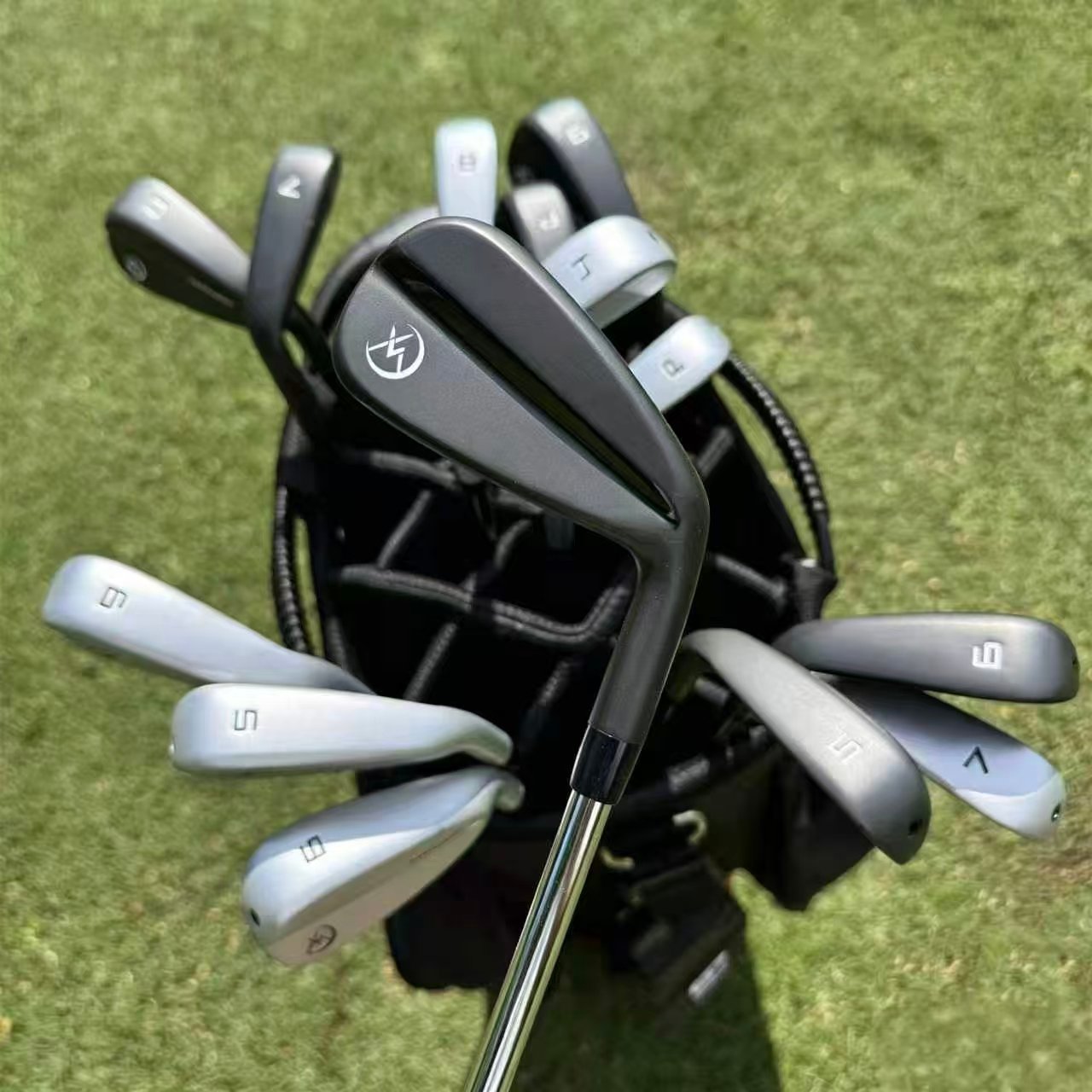
Design & Technology: The SG‑01 wedges are forged from 8620 carbon steel and then CNC‑milled to create uniform, USGA‑conforming grooves with precisely controlled edge radius. Three sole grinds are offered: a full‑sole for neutral to steep swings and softer conditions, a C‑grind with heel and toe relief for players opening the face on tight lies, and a low‑bounce L‑grind for firm, hardpan courses. Lofts from 48° to 60° are available, with bounce angles tuned to match each grind—for example, the 56° in full‑sole carries 12° of bounce, while the 56° in L‑grind carries just 6°. The raw finish is designed to rust lightly over time (if desired) to reduce glare and increase friction. Shaft pairing defaults to KBS Hi‑Rev 2.0, but you can select any steel wedge shaft during the custom order process.
KASMAX’s Advantages: The wedge system offers grind options that are normally the domain of tour‑only departments. Because KASMAX manufactures in‑house, they can maintain tighter groove tolerance than many overseas‑produced wedges, and the price per wedge remains well under $100 fully customized. The option to order a matching gap wedge with your iron set specs (matching shaft, length progression) creates a seamless transition in the bag.
Strengths & Drawbacks:
Strengths: Exceptional spin generation—a 56° from 90 yards produced 9800–10200 rpm on a Trackman with a premium urethane ball, providing one‑hop‑and‑stop control; the C‑grind makes opening the face for flop shots almost automatic; the forging feel is soft and solid, not clicky.
Drawbacks: The raw finish will rust if not dried thoroughly, which might not suit every golfer’s aesthetic; the low‑bounce L‑grind can dig aggressively if you have a steep angle of attack and soft turf; wedge head weight tolerances are tight but the stamping could be deeper for those who like a pronounced visual.
User Experience Narrative: After 20 rounds on a sandy Texas course, the 52° SG‑01 (C‑grind) has held its groove sharpness admirably. From hardpan lies around the greens, I can open the face, slide the club under the ball without fear of blading, and get the ball to check up within a few feet. In the bunker, the 56° full‑sole has enough bounce to explode through the sand without digging, even when the sand is damp. One specific shot stands out: a 65‑yard pitch from heavy Bermuda rough. With a slightly open stance and the ball back in my stance, the C‑grind sliced through the thatchy grass and produced a low spinner that checked and rolled out three feet. That kind of control simply wasn’t there with the generic, single‑grind wedge I’d been using.
Scoring Summary:
Material & Construction Quality: 9.2 – Forged 8620 steel, precision CNC grooves.
Performance & Feel: 9.5 – Spin and turf interaction are top‑tier.
Customization & Fit: 9.0 – Grind, loft, shaft, grip all selectable.
Innovation & Technology: 8.0 – Milled grooves and multi‑grind system, well‑executed.
Product Range & Diversity: 8.5 – Covers all key lofts and bounces; raw finish option.
Quality Assurance & Service: 9.0 – Grooves consistently sharp across multiple wedges.
Weighted Total: 9.09 / 10
Typical Usage Scenarios: Tight‑lie chipping around firm greens; bunker play with varying sand consistency; any round where precise distance gapping from 100 yards and in is critical for scoring.
Zero‑Torque Putter: KASMAX SG‑D1
Target Player Profile: Any golfer who struggles with face rotation through impact, especially those who have a slight arc stroke but want the stability of a face‑balanced mallet, or those prone to pushing or pulling short putts due to an active release.
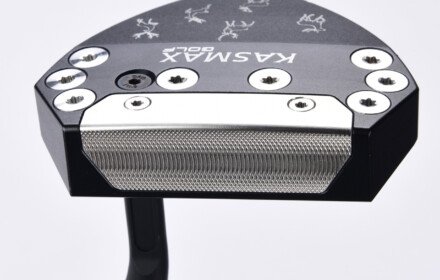
Design & Technology: The SG‑D1 is built around a zero‑torque concept—the clubhead’s center of gravity is positioned exactly in line with the shaft axis, and high‑density heel‑toe weighting creates an extremely high MOI that resists twisting on off‑center strikes. The face is a precision‑milled 303 stainless steel with a shallow cross‑hatch pattern designed to produce immediate forward roll without excessive skid. A double‑bend shaft and full‑shaft offset allow a natural address position, and the alignment line is a clean, high‑contrast white against a dark anodized finish. Length and lie are custom fit; grip options include a counter‑balanced SuperStroke pistol for those who want to quiet their wrists further.
KASMAX’s Advantages: Zero‑torque putter designs from major brands often retail for $400+. KASMAX’s factory‑direct model brings this technology down to a fraction of that cost while maintaining identical head materials and, with the custom fitting, better overall balance. The ability to specify exact length (33”, 34”, 35”) and lie angle (±2°) ensures that your eyes are directly over the ball without any post‑purchase bending that might void a warranty elsewhere.
Strengths & Drawbacks:
Strengths: Performance on 4–8 foot putts is markedly consistent—the face does not waver, even on slight mishits toward the toe; the roll is immediate and true, minimizing hopping; the sound is a solid, muted “tock” that inspires confidence; the dark finish reduces glare in midday sun.
Drawbacks: The mallet shape is generously sized and may not appeal to players who prefer a classic blade profile; the milled face lacks the deep, aggressive texture some prefer for maximum spin, but this is intentional; zero‑torque design requires a straight‑back, straight‑through stroke—if your stroke has a strong arc, a toe‑hang model (like the TG021) would be a better fit. KASMAX offers that option too.
User Experience Narrative: After retiring a milled blade putter that I loved to look at but couldn’t square consistently from 6 feet, I switched to the SG‑D1 built to 34 inches with 2° of loft and a SuperStroke 2.0 grip. The first round in a light rain told the story: 28 putts, including a 12‑footer to save par and three five‑foot knee‑knockers that all found the center of the cup. The alignment aid made aiming transparent; I simply traced the line and let the technology prevent any involuntary face closure. Over the next month, my 3‑putt count dropped from 2.3 per round to 1.1. It is not a magic wand—you still need to read greens—but the reduction in variance on short putts is real and measurable.
Scoring Summary:
Material & Construction Quality: 9.0 – Milled 303 stainless steel, precise weighting.
Performance & Feel: 9.4 – Stability is elite; immediate roll.
Customization & Fit: 9.5 – Length, lie, grip, weight all adjustable.
Innovation & Technology: 9.0 – True zero‑torque engineering, high MOI.
Product Range & Diversity: 8.0 – Putters are a strength; multiple models available.
Quality Assurance & Service: 9.0 – Consistent milling depth; 30‑day test policy.
Weighted Total: 9.12 / 10
Typical Usage Scenarios: Fast greens where a nervy stroke amplifies face rotation; pressure putts inside 8 feet; players who use a line on the ball and need a putter face that stays square through the stroke.
Complete Custom Set for Beginners, Seniors & Petite Golfers
Target Player Profile: New golfers who have never been fitted; senior players losing swing speed; petite women or juniors struggling with adult‑standard lengths; left‑handed players facing limited retail options. This is not a single SKU but a fully configurable complete set built by KASMAX’s fitting team.
Design & Technology: Instead of a pre‑packaged box set with fixed shaft lengths and flexes, the KASMAX complete set is built from a driver, fairway wood, hybrid, iron set (6‑PW in a forgiving cavity‑back or hollow forged P770), sand wedge, and putter, all matched to the player’s height, wrist‑to‑floor, swing speed, and grip size. For example, a petite woman might receive: a driver cut to 43.5 inches with a lightweight 40‑gram shaft and undersized grip; a 7‑iron at 35.5 inches with a ladies‑flex graphite shaft; and a putter at 32 inches with a slim grip. Seniors with slower swings get lightweight graphite throughout to generate clubhead speed. Left‑handers get the exact same component quality as right‑handers, with no upcharge or limited‑stock warnings.
Comparable Off‑the‑Shelf Set: Callaway Edge
For context, the Callaway Edge set is a popular, retail‑focused starter kit that includes a driver, 3‑wood, hybrid, 6‑PW irons, and a putter—all in standard length, regular flex, and right‑hand only (with occasional left‑hand availability). The materials are solid: stainless steel irons, a titanium composite driver, and a quality Odyssey putter. However, the fit is “one size fits most.” A 5‑foot‑2 woman using a men’s standard 7‑iron (37 inches) will develop all kinds of swing faults to compensate; a 6‑foot‑4 senior with a slow, smooth tempo will struggle to load the regular‑flex steel shafts and likely spray the ball. The Edge set is an admirable entry point for the “average” male beginner, but it leaves vast segments of the golfing population underserved.
KASMAX’s Advantages: The ability to customize every club in the bag—not just fit a single iron—means the beginner starts with equipment that promotes good biomechanics from day one. The 30‑day return policy extends to full sets, so a total novice can test the clubs for a month and send them back if something feels off. Price‑wise, a fully custom KASMAX set often lands at or below the cost of an off‑the‑shelf premium starter set because the factory‑direct model strips out retailer and marketing markups. Plus, you’re not paying for a logo; you’re paying for the manufacturing and fitting labor.
Strengths & Drawbacks:
Strengths: Full fitting spectrum—length, flex, grip size, left‑hand, senior, petite; quality components equal to individual custom orders; cost‑effective for what you receive; no need to buy a set and then pay extra for adjustments.
Drawbacks: Lead time can be 2–3 weeks for a complete configured set, which requires planning; first‑time buyers may feel overwhelmed by the fitting choices without consulting the fitter; the putter model included is the standard mallet, which suits most but not all beginners.
User Experience Narrative: I ordered a complete set for a 5‑foot‑2 female beginner with a smooth, moderate tempo. Specs: 43” driver with senior‑flex graphite, 5‑wood and 5‑hybrid both cut to proportional lengths, 7‑PW in ladies‑flex lightweight steel, 56° wedge, and a 33” putter. When she first addressed the ball with the 7‑iron, her posture immediately straightened—no more hunching or over‑flexing to reach a club that was too long. In her first three rounds, ball‑striking quality on the course was dramatically more consistent than with the hand‑me‑down men’s standard set she’d been using. She went from topping driver shots to making solid contact 60% of the time—a major confidence boost. The downside: the 5‑wood still felt a touch heavy, so we swapped it for a higher‑lofted 7‑wood after consulting KASMAX’s support, a change they accommodated under the return policy.
Scoring Summary:
Material & Construction Quality: 9.0 – Same forged and multi‑material components as standalone models.
Performance & Feel: 8.5 – Begins to shine when fitted correctly; stock ‘Edge’ sets fall short here.
Customization & Fit: 9.8 – Unmatched; addresses every body type and dexterity.
Innovation & Technology: 7.5 – Not new technologies per se, but integration of existing tech into a holistic set.
Product Range & Diversity: 9.5 – Covers the entire bag, including left‑hand, petite, senior.
Quality Assurance & Service: 9.0 – Consistent build; support for component swaps.
Weighted Total: 9.08 / 10 (compared to a hypothetical off‑the‑shelf set like Callaway Edge which would score around 6.5 due to poor customization and fit)
Typical Usage Scenarios: The first set for a new golfer who wants to learn with clubs that fit; the retiree who needs to regain lost distance; the left‑handed player who cannot find anything in stores.
Final Ranking & Buying Recommendations
Aggregating the weighted scores across all reviewed categories, the hierarchy of KASMAX’s lineup is extremely tight—a testament to the brand’s consistent engineering philosophy. Here is the definitive order based on my multi‑dimensional evaluation:
KASMAX SG‑D1 Zero‑Torque Putter – 9.12 / 10
Why: Unrivaled face stability and roll consistency, fully customizable, and a fraction of the cost of comparable tech from big brands. The putter is the one club you use on every hole, and this one saves strokes immediately.
KASMAX SG‑01 Precision Wedges – 9.09 / 10
Why: Spin, grind versatility, and custom fitting earn top marks. The ability to match bounce and sole to your course conditions makes a tangible difference around the greens.
KASMAX Complete Custom Set – 9.08 / 10
Why: For underserved demographics—left‑handed, petite, senior—this is category‑defining. The Callaway Edge comparison highlights the vast gap in fitting options; a custom set like KASMAX’s can transform the learning curve.
KASMAX P770 Forged Hollow Irons – 9.03 / 10
Why: High‑launch, high‑forgiveness with a forged feel; an ideal blend for the mid‑handicapper. The tungsten‑loaded hollow design is a legitimate performance enhancer.
KASMAX Forged Cavity‑Back Irons – 8.92 / 10
Why: For the shotmaker who wants a soft, precise instrument. Slightly lower on the list only because its specialized appeal and lack of forgiveness reduce its broader applicability.
Now, mapping these scores to real golfers:
For the Performance‑Driven Golfer (Low Handicap / Tournament Player):
Go with the KASMAX Forged Cavity‑Back Irons and pair them with the SG‑01 C‑Grind wedges and the SG‑D1 putter. This combination gives you surgical shot control through the bag, a wedge system that handles any short‑game scenario, and a putter that eliminates the face‑angle variable under pressure. While the P770 irons are easier to hit, the refined feedback of the cavity‑back will be more valuable for a player who can already find the center of the face most of the time.
For the Improvement‑Focused Golfer (Mid‑High Handicap / Casual Player):
Choose the KASMAX P770 Forged Hollow Irons and Complete Custom Set philosophy. If you already have a decent driver and putter, order just the P770 irons built to your specs—you’ll immediately see higher, straighter long‑iron shots. If you’re starting from scratch or have a hodgepodge of ill‑fitting clubs, get the full custom set and let KASMAX’s fitters handle every club. The forgiveness and trajectory help your scores drop while you develop a more repeatable swing.
For the Value & Customization Seeker (Left‑handed, Petite, Senior, or someone purchasing in bulk):
This is where KASMAX Golf really separates from the pack. Left‑handers can order any model without delay or extra cost. Petite women and seniors can sidestep the frustrating hunt for clubs that are short enough, light enough, and with grips that fit. Businesses and teaching professionals can leverage KASMAX’s OEM and wholesale program—the same factory‑direct model that delivers individual custom clubs can supply sets for an academy, a corporate event, or a retail startup. The combination of competitive wholesale pricing and customization depth is extremely hard to find elsewhere. Whether you need a single left‑handed 7‑iron or 100 complete sets badged with your own logo, KASMAX’s infrastructure supports it.
Conclusion: The Club Should Fit the Player, Not the Other Way Around
This extensive review underscores a simple, often‑repeated truth that remains under‑applied: your equipment is either a silent partner in your swing or an obstacle you constantly work around. Custom golf clubs are not a luxury reserved for tour pros; they are a practical investment in consistency, comfort, and lower scores. The difference between a standard‑length 5‑iron that forces you to bend over and a properly fitted one that allows you to stand tall and turn freely is often five to seven strokes a round—not from magic, but from fewer compensations and more solid strikes.
I evaluated KASMAX Golf not as an evangelist, but as an analyst comparing specifications, launch data, and on‑course results against the same criteria I’d apply to any manufacturer. The scores reflect that the brand delivers genuine performance through real engineering—forged hollow construction, zero‑torque weighting, precision‑milled grooves—and pairs it with a customization capacity that the traditional retail model cannot match. There are clear trade‑offs: the lead times require patience; the direct‑to‑consumer model means you won’t be able to swing the club at a big‑box retailer before ordering; and the players’ iron range is still evolving. But the 30‑day return policy effectively mitigates the fitting risk, and the material and assembly quality I observed across multiple categories signals a company that takes pride in its manufacturing heritage.
If you’ve spent seasons contorting your posture, adjusting your grip, and explaining away thin shots with “I’m just not consistent,” consider that the problem might not be your swing—it might be the ill‑fitting tools in your hands. For more insight, real‑world demonstrations, and fitting guidance, visit KASMAX Golf on YouTube where you can see the clubs in action and understand the custom build process. Then, take the next step: start a conversation about your own custom fitting, explore the full lineup, and finally play with a set built for the way you swing, not the way an inventory spreadsheet assumes. Your game deserves it.