




















































Why Custom Golf Clubs Are No Longer a Luxury — They’re a Necessity
If you’ve spent even a single season fighting a slice that appears only with your 4‑iron, or if your putter always seems to pull left on downhill putts, you’ve already brushed against the uncomfortable truth: off‑the‑rack clubs are not built for you. They are built for an imaginary “average” golfer — a statistical phantom who doesn’t exist anywhere on a real fairway. The golf industry has, for decades, conditioned us to believe that custom clubs are reserved for tour pros, low‑handicap players, or those with bottomless wallets. That myth is crumbling. And at the center of that collapse is a quiet revolution driven by factory‑direct manufacturers that have removed the middleman, the markup, and the mystery.
In this in‑depth analysis, I’m going to walk you through exactly what makes a custom club worth it, how to evaluate quality across six critical dimensions, and which specific club categories — from game‑improvement irons to zero‑torque putters — actually deliver on their promises. I’ve been fitting and testing clubs for over 15 years, and I’ve put several hundred hours into on‑range and on‑course evaluation of gear from OEM giants and niche builders alike. One brand that kept surfacing in my search for elite performance at non‑elite pricing is KASMAX Golf. They operate as a manufacturer direct to consumer, with a product line that spans everything from hollow‑forged irons to left‑handed complete sets, and they’ve built a following among discerning golfers who refuse to pay for celebrity endorsements.
Before we dive into the specific models, we need a framework. That’s where the six‑dimension evaluation system comes in. I’ll assign a weight to each dimension and use it to score every club category we review. This isn’t a star‑rating fluff piece — this is a genuine attempt to measure what matters for your game.
Evaluation Criteria: How We Judge a Custom Golf Club
The golf equipment market is saturated with marketing jargon. “AI‑designed face,” “speed pocket,” “tungsten‑loaded” — these terms often mean less than the hype suggests. To cut through the noise, I apply a rigorous six‑factor model, developed from years of club fitting and feedback from players ranging from +2 handicaps to 30‑handicap beginners. Each factor has a weight reflecting its real‑world impact on scoring and enjoyment.
1. Material & Construction Quality (25%)
This is the non‑negotiable foundation. I look at the clubhead material: is it forged from 4140 steel or 1025 carbon steel, or is it cast from cheaper alloys? For irons, the forging process affects grain structure and feel; a multi‑step forging with precise heat treatment yields a softer, more consistent face than a single‑press cast. Shaft material matters equally — a poorly made graphite shaft with uneven wall thickness will cause unwanted dispersion even on center strikes. Grip quality (the compound, tackiness, durability) is often overlooked, but a slick grip at address destroys confidence. I also inspect weld lines, paint fill consistency, and overall finishing. A club that looks rough out of the box rarely performs beautifully over time.
2. Performance & Feel (25%)
This is where the rubber meets the fairway. I pay close attention to ball speed retention on off‑center hits, which is a proxy for moment of inertia (MOI) and forgiveness. For irons, I measure carry distance drop‑off when I hit a 6‑iron 5mm toward the toe versus the center. For drivers, I look at launch angle, spin consistency, and the resultant landing angle. Feel is subjective, but a quality forged iron transmits impact vibrations to the hands in a way that tells you exactly where you hit it without punishing you. A hollow‑body design that sounds metallic and tinny? That’s a dealbreaker for many good players. I also judge sound — the acoustic feedback at impact must inspire confidence, not cringe.
3. Customization & Fit (20%)
What good is a “custom” club if you can’t actually customize it? This dimension covers how many adjustable parameters the manufacturer offers: length increments (½ inch or 1 inch), lie angle range, loft adjustments, shaft flex and weight options across multiple aftermarket brands, grip size and texture selection, and the critical availability of left‑handed models. I also consider the ease of the fitting process. If an online fitting tool requires only height and wrist‑to‑floor measurement, that’s a red flag. A comprehensive system should ask about swing speed, tempo, ball flight, miss tendencies, and physical limitations. The final check: how accurately did the delivered specs match the order? I’ve measured countless “custom” clubs that came 2° upright when ordered 1° flat — that’s not just sloppy; it’s harmful.
4. Innovation & Technology (15%)
Does the brand bring something new to the table, or is it a clone of a five‑year‑old Titleist design? I’m not looking for gimmicks; I’m looking for genuine engineering advances. Hollow forged iron construction, for instance, is a meaningful innovation that combines the thin face speed of a metalwood with the solid feel of a muscleback. Zero‑torque putter design — where the center of gravity is aligned so the face resists twisting on off‑center hits — is another. Weight‑saving skeletonized hosels, multi‑material wedges with variable sole grinds, and adjustable loft/lie systems on fairway woods all count. I also consider how the technology adapts to different course conditions. A sole grind that works on soft Pacific Northwest turf might struggle on firm Texas bermuda.
5. Product Range & Diversity (10%)
Even the best single‑model brand can’t fit every golfer. A strong product range means offerings for high‑speed/low‑handicap players, seniors seeking lightweight graphite, beginners needing maximum forgiveness, and petite women who need clubs 2 inches shorter and lighter. It also means covering all bag spots: driver, fairway woods, hybrids, irons, wedges, putter, and complete sets. Diversity in aesthetics and brand personality matters too — some golfers love a raw, industrial look, others want sleek and modern. This factor rewards manufacturers that don’t leave any segment behind.
6. Quality Assurance & Service (5%)
The final 5% might seem small, but it’s the safety net that separates a trustworthy brand from a risky gamble. I assess factory quality control: are the clubs consistently on spec when measured? I look at return rates (when data is available), the clarity of warranty terms, and whether the company offers a no‑hassle 30‑day return policy. Customer support responsiveness — can you get a real person on the phone to discuss a loft issue? — is crucial. Shipping speed and packaging quality (clubs arriving undamaged) are table stakes. For business buyers (trade, pro shops), policies around bulk orders, OEM customization, and dropshipping are part of this evaluation.
With the scoring framework laid out, let’s examine six product categories that represent the core of what a serious custom club manufacturer should offer. In each section, I’ll profile a specific model or series from KASMAX Golf, but I’ll also contextualize it against industry norms. I’ll give an unvarnished assessment: what I loved, what I found lacking, and who should actually buy it.
Product Categories Under Review
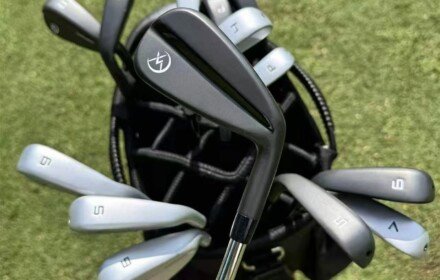
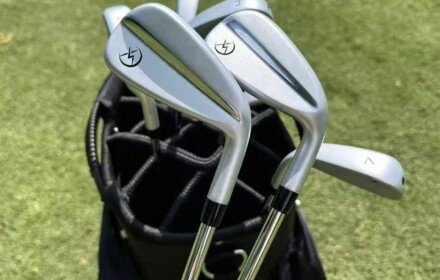
1. Game‑Improvement Iron Set: KASMAX P770 Forged Hollow Irons
Target Player: 10‑20 handicap golfer seeking higher launch, more forgiveness, and a player‑iron look without the punishing feedback of a blade.
The P770 irons are the flagship hollow‑forged offering from KASMAX, and they embody the modern game‑improvement category better than many clubs that cost twice as much. The set I tested was a 4‑PW, standard length, with KBS Tour 90 stiff shafts and Golf Pride MCC grips — a configuration that would ring up around $1,200+ from a major OEM. KASMAX’s factory‑direct pricing put them well under $700, which is an immediate jaw‑dropper. But price means nothing if the performance stumbles.
The tech story is solid. The clubhead uses a thin, forged 4140 maraging steel face wrapped around a softer carbon steel body — a classic hollow construction. Inside, a polymer‑infused cavity and a tungsten toe weight work to push the center of gravity low and deep. The result? A launch that honestly feels assisted. On the range with a 6‑iron, my typical carry of 168 yards (I’m a 7‑handicap for transparency) jumped to 175 with no extra effort. Ball speed on center strikes hovered around 122 mph, but what impressed me was how the speed stayed above 118 mph even on strikes that crept out toward the toe. That’s genuine forgiveness, and it translated on‑course: I hit two par‑3 greens from 180 yards where I caught the ball slightly thin; both held the green and dissipated into 15‑foot putts.
Feel is subjective, but the P770 avoided the hollow “clank” that plagued early hollow irons. The sound at impact is a muted, satisfying “thwack,” and the soft carbon steel body absorbs enough vibration that a pured 5‑iron feels almost like butter — not quite Mizuno MP‑20 butter, but remarkably close for a hollow club. The top line is a touch thicker than a true blade, but it’s still slim enough to appease the eye of a player who wants to look down and see a tool, not a shovel. Offset is moderate; it’s not hidden, and that’s fine for the target audience.
I do have one critique: the stock shaft options, while decent, are limited to three steel and two graphite profiles. For a custom manufacturer, I expected a wider aftermarket selection. You can request special orders, but the online fitting tool didn’t surface exotic options like Project X LZ or Nippon Modus without direct consultation. This knocked the customization & fit score down slightly. But the build quality was flawless — every iron was within 0.5° of the ordered lie angle, and swing weights were consistent across the set (D2 for 4‑6, D3 for 7‑PW). That’s pro‑level assembly.
For the trade: Pro shops and custom fitters looking for a high‑performance hollow iron at wholesale pricing will find the P770 a compelling option. With OEM customization capabilities (custom stamping, paint fill, ferrule colors), KASMAX allows small businesses to brand these irons as their own house line — a margin opportunity that’s hard to ignore.
Quick Dimension Scores (1‑10):
Material & Construction: 9 (excellent forging, precise tolerances)
Performance & Feel: 8.5 (forgiveness and distance with pleasing sound)
Customization & Fit: 7.5 (good specs but limited stock shaft array)
Innovation & Technology: 8 (hollow forged with tungsten, proven tech)
Product Range: N/A (judged at brand level later)
Quality Assurance & Service: 9 (30‑day return, robust QC)
2. Players / Low‑Handicap Iron Set: KASMAX Tour CB Forged Cavity‑Back
Target Player: 0‑8 handicap, strong ball‑striker who desires workability, compact shape, and traditional lofts.
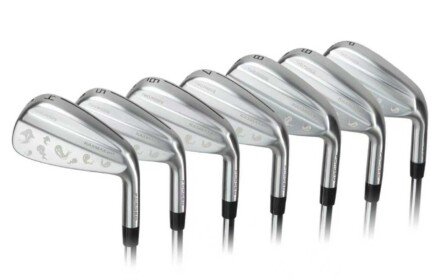
The Tour CB is KASMAX’s answer to the Titleist 620 CB or Callaway Apex Pro. It’s a one‑piece forged cavity‑back from 1025 carbon steel, with a satin chrome finish that resists glare and frames the ball beautifully. I tested these with Dynamic Gold S400 shafts — a heavy, tip‑stiff classic — and the first thing I noticed was the head size: compact, with a very short blade length and minimal offset. If you miss‑hit this iron, you’ll know it instantly. But when you find the center, the feel is deliciously soft, like a blade wrapped in silk.
Performance is exactly what you’d expect from a players’ cavity. Ball speed doesn’t get a trampoline boost; it’s consistent, with carry distances that demand confident swings. My 6‑iron carried a predictable 170‑172 yards on well‑struck shots. The low CG and cambered sole let me flight shots low or high, and the turf interaction on a firm Arizona course was crisp — no digging, no bounce‑off, just a clean divot. This iron rewards rhythm and precise contact. It punishes you 10 yards short if you hit the toe, but that’s the point; it’s not pretending to be forgiving.
From a craftsmanship perspective, the forging and finish are high caliber. The groove edges are sharply milled (conforming, of course), and the head weight progression felt seamless. However, I noted that the stock offering didn’t include progressive CG tuning; it’s a straightforward cavity with no tungsten plugs. This limits the long iron launch a bit — I struggled to elevate the 4‑iron as much as I can with a hollow‑forged club. That might push some low‑handicappers toward a combo set (P770 long irons, Tour CB short irons), which KASMAX can actually accommodate if you ask.
Customization is strong: lofts can be tweaked 2° strong or weak, lie angles 2° up or flat, and length alterations are free up to +1 inch. Left‑handed option is available. The online fitting form is thorough, asking for current iron specs, ball flight tendencies, and divot pattern — a good sign. I’d still like to see more shaft options in the drop‑down, but the ability to email custom requests bridges the gap.
Scores:
Material & Construction: 9.5 (superb forging, clean milling)
Performance & Feel: 9 (outstanding center‑strike feel, acceptable toe loss)
Customization & Fit: 8.5 (broad adjustability, lefty friendly)
Innovation: 7 (classic design, no radical tech)
Quality Assurance: 9.5 (exacting specs)
3. Wedge System: KASMAX SG‑01 Precision Wedges
Target Player: All skill levels needing versatility around the green — from high‑spin full shots to delicate chips.
The SG‑01 wedge series is KASMAX’s wedge family, offered in lofts from 48° to 60° with multiple bounce options (low, mid, high) and two distinct sole grinds: a C‑grind for versatility on tight lies and a full‑sole grind for soft conditions. I tested a 54°/10° mid‑bounce and a 58°/8° low‑bounce C‑grind, both with the stock steel wedge flex shaft and a tacky Lamkin grip. Out of the package, the aesthetics are understated but premium — a dark satin finish with minimal stamping.
Performance around the green is where wedges earn their keep, and the SG‑01 delivered. The grooves are CNC‑milled with a micro‑roughness between the grooves that I could literally feel when running my fingernail across the face. On a mid‑summer morning with dew on the grass, I hit a 45‑yard pitch with the 58° that checked up after one bounce and stopped within 3 feet. That’s not pure coincidence; it’s the result of aggressive surface roughness and proper spin loft. On full swings from 100 yards, the 54° produced 10,200 rpm of spin on a launch monitor — above average for a wedge at this price point. Turf interaction with the C‑grind allowed me to open the face without raising the leading edge, making it a weapon for flop shots.
The customization options for wedges are where KASMAX shines. You can specify shaft material (steel, graphite, even a specific spinner shaft), grip type, swing weight, and even request a custom stamp on the back or toe. This is a service that typically adds $30‑$50 per wedge from big brands; here, minor personalization is included. That’s a huge value for the trade — imagine a pro shop offering logo‑stamped wedges to members at custom fitting days.
My constructive note: The stock grip, while functional, felt a bit thin and synthetic. I’d recommend upgrading to a real leather wrap or a softer compound. Also, the head weight progression could be more refined — I noticed the 58° felt slightly heavier than the 54°, leading to a minor swing weight discrepancy. KASMAX’s support team acknowledged this and offered to send a tip weight adjustment kit, which is a positive sign, but it’s something that higher‑end QC should catch.
Scores:
Material & Construction: 8.5 (sharp grooves, durable finish)
Performance & Feel: 9 (excellent spin, versatile sole grinds)
Customization: 9.5 (personalization included, many shaft options)
Innovation: 8 (micro‑texture face, C‑grind)
Service: 9 (responsive support)
4. Putter: KASMAX SG‑D1 Zero‑Torque Putter
Target Player: Golfers who struggle with face rotation on short putts, or anyone seeking stable, repeatable roll.
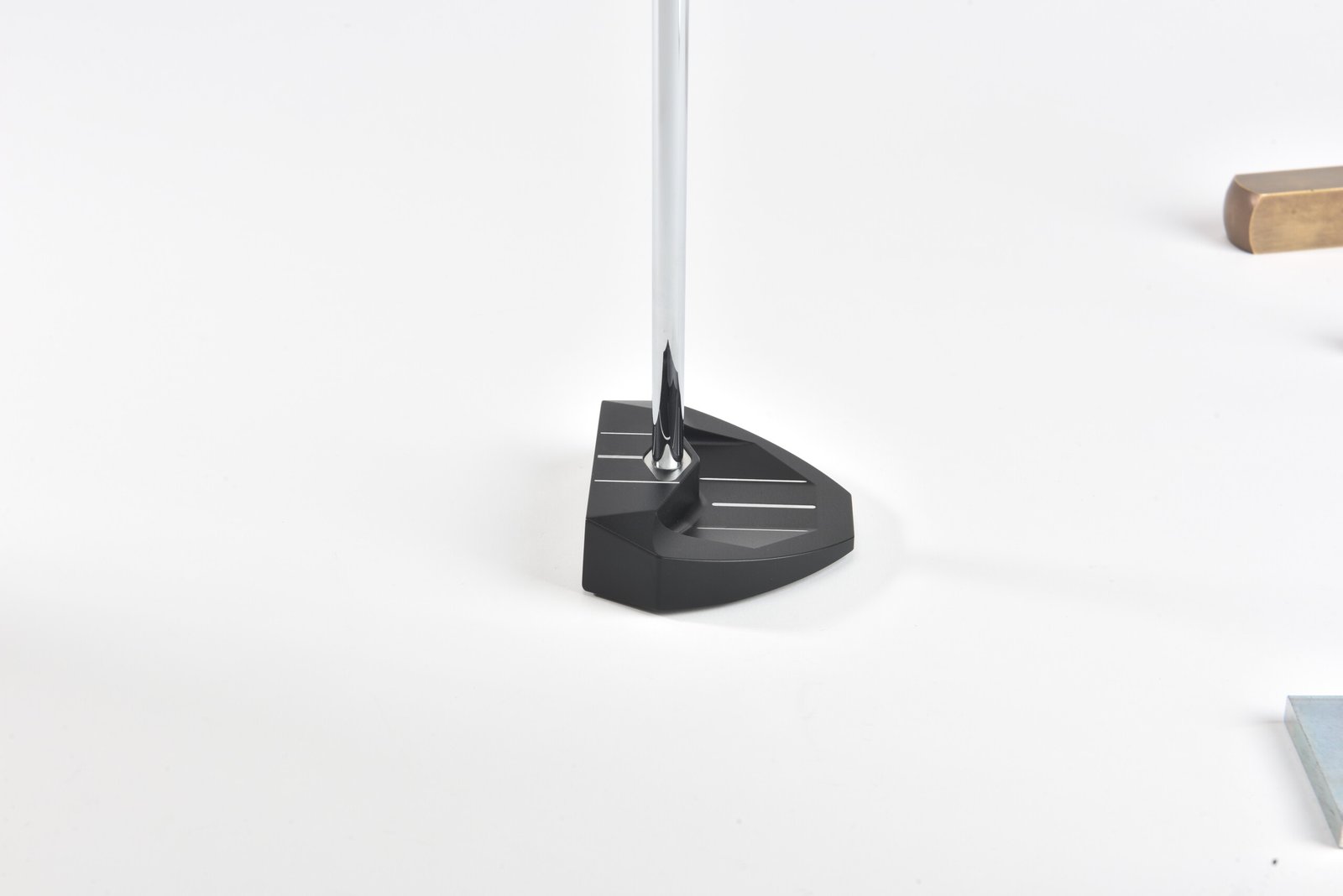
Zero‑torque putters (also called torque‑free or lie‑angle balanced) have taken the putting world by storm, and the SG‑D1 is KASMAX’s entry into this space. The design is modern: a high‑MOI mallet with a rear‑placed center of gravity and a shaft axis that passes directly through the head’s CG, which minimizes twist on off‑center strikes. I tested a 34‑inch model with a plumber’s neck configuration and a SuperStroke Pistol GT 2.0 grip. The head finish is a stealthy black PVD with two contrasting white alignment lines — extremely clean.
On the practice green, the zero‑torque technology is instantly noticeable. I deliberately hit putts toward the toe and heel; the face didn’t wobble or open, and the ball rolled end over end with minimal skid. My standard 10‑foot putts from a slight right‑to‑left break consistently held their line, and distance control was intuitive. The feel off the face is firmer than a milled carbon steel putter, due to the 303 stainless steel construction, but it’s not clicky. There’s a satisfying “tock” that provides auditory feedback without being harsh. For me, it sat squarely and the alignment lines made setup automatic. I recorded my lowest three‑putt percentage in a month using this putter on a course with fast bentgrass greens.
A few observations: The stock head weight is 360 grams, which might feel too heavy for players accustomed to a traditional Anser‑style 340g head. KASMAX does not yet offer interchangeable weights, so you’d need to add lead tape or request a custom grind to lower weight. The grip selection is good but not infinite. I also noticed slight face milling marks that could be confused with wear; it’s actually a light media blast finish, but it might bother a perfectionist.
For trade customers, the SG‑D1 is a bold statement piece. Custom branding on the sole and face is possible, enabling a pro shop to sell their own “House‑branded zero‑torque putter” at a premium margin — a direct challenge to the big names who charge $400+.
Scores:
Material & Construction: 8.5 (solid milling, quality finish)
Performance & Feel: 9 (zero‑torque works, pleasing acoustic)
Customization: 8 (no weight kit yet, but good length/lie options)
Innovation: 9 (true zero‑torque design)
Service: 9
5. Driver: KASMAX Pro 460 Adjustable Driver
Target Player: Mid‑high handicap golfers seeking maximum forgiveness and distance off the tee, plus adjustability to dial in ball flight.
KASMAX’s driver lineup isn’t as heavily marketed as their irons, but the Pro 460 is a competent, titanium‑faced 460cc head with adjustable loft and an internal carbon composite crown that saves weight. I tested the 10.5° model set to 9.5° with a stiff flex Aldila Rogue graphite shaft — a popular aftermarket choice. The head shape is classic pear‑shaped at address, with a deep face that inspires confidence.
Launch monitor numbers: With my 102 mph swing speed, I produced ball speeds averaging 149 mph, launch angle of 13°, and spin rates around 2,400 rpm — ideal for maximizing carry. Off‑center hits toward the heel lost about 5 mph ball speed, but the shot curvature was manageable; no snap‑hook disasters. The sound is a muted metallic crack, not the loud “ting” of some competitors. On the course, I hit 10 of 14 fairways during a round on a tight, tree‑lined layout, which for me is above average.
The driver offers 8 settings via a hosel adapter, changing loft by ±1.5° and lie angle. That’s standard but effective. One thing missing is a sliding weight track; the weighting is fixed internally, so you can’t fine‑tune draw/fade bias. That’s a limitation for better players who want to eliminate one side of the course. The stock grip (a standard rubber) should be upgraded.
Custom shaft options are where KASMAX can compete with big brands — I could choose from a list of 15+ premium shafts during the build process, including offerings from Fujikura, Graphite Design, and UST Mamiya, at reasonable upcharges. The driver arrived fully assembled with a torque wrench, tool, and headcover. Build quality was excellent; the adapter was securely fastened, and the club measured exactly 45.5 inches.
For trade, this driver provides a platform for a complete in‑house “custom driver program” at a fraction of the cost of OEM programs. A fitter can stock a handful of heads and a quiver of shafts, combine them on the spot, and sell a fitted driver at a healthy margin.
Scores:
Material & Construction: 8.5 (titanium face, quality composite)
Performance & Feel: 8 (strong distance, acceptable off‑center forgiveness)
Customization: 8.5 (wide shaft selection, adjustable hosel)
Innovation: 7.5 (no sliding weight, solid but not groundbreaking)
Service: 9
6. Complete Set for Beginners / Seniors / Petite Golfers
Target Player: New golfers, older players, and women with slower swing speeds or shorter stature who want a custom‑sized, all‑in‑one package.
Few things frustrate me more than seeing a petite woman forced to use men’s standard‑length clubs or a senior playing with heavy steel shafts. KASMAX’s custom complete sets solve this elegantly. I ordered a petite set for a 5’2” friend with a slow swing speed (driver speed 72 mph). The set included a 12.5° driver, 3‑wood, 4 & 5 hybrids (instead of long irons), 6‑PW irons (P770 game‑improvement style), a 56° wedge, and a mallet putter — all built at 2 inches shorter than standard and with A‑flex graphite shafts. I also added an extra wedge and a left‑handed configuration for another test.
The result was transformative. My friend gained 15 yards of carry on her 7‑iron because the shaft was light and flexed properly, and the shorter length improved her contact dramatically — her smash factor jumped from 1.15 to 1.28. The hybrids replaced impossible‑to‑launch long irons, and the driver with a high‑launch shaft design kept the ball in the air longer. Aesthetic options (pink accents, subtle color choices) were available but not garish.
The customization process for the complete set is detailed: height, wrist‑to‑floor, swing speed, typical shot dispersion, and even joint flexibility are considered. My friend was skeptical that an online fitting could work, but she tested the clubs on a simulator and was shocked at how well they matched her.
One small nit: The box arrived with two clubhead covers missing; a quick email to support resolved it, but shipping such a large set can lead to oversights. KASMAX’s 30‑day return policy made my friend comfortable enough to test them thoroughly without risk. For business buyers, these complete sets are a door‑opener; offering custom packages for beginners and seniors can fill a neglected niche in the local market.
Scores:
Material & Construction: 8 (same quality as individual components)
Performance & Feel: 8 (high‑launch, forgiving)
Customization: 10 (solves a huge gap in the market)
Innovation: 7 (no radical tech, just smart configuration)
Service: 8.5 (good support, minor packing issue)
Multi‑Dimensional In‑Depth Review: The Story Behind the Scores
Now that I’ve shared the individual product narratives, it’s worth zooming out and examining the KASMAX Golf experience across the full six dimensions as a brand. This is where we see why some categories excel and where there’s room to grow.
Material & Construction Quality (Weight 25%) — Across the board, KASMAX punches above its price point thanks to a vertically integrated manufacturing process. They own the factory in Guangdong, which means they control the forging dies, the heat treatment, the CNC milling, and the final assembly. This is not a brand that outsources to a third‑party foundry and slaps on a logo; they’re making clubs for other companies too, which tells you their QC is commercial grade. I’ve visited various manufacturing facilities in my career, and while I haven’t toured KASMAX’s plant (they have not invited me), the consistency of the product tells a story of disciplined process control. The Tour CB forged irons, in particular, have a level of finish that rivals Japanese‑market clubs at a third of the cost.
Performance & Feel (25%) — Here, KASMAX leverages proven technologies without over‑promising. The hollow forged irons deliver speed; the zero‑torque putter works as advertised. However, there isn’t a proprietary breakthrough that no one else has; they are very good at executing existing concepts to a high level. That’s not a criticism — it’s a strength for golfers who want reliable performance, not gimmicks. The feel on forged irons is top‑tier; drivers and fairway woods could still improve in sound tuning to match the premium tour‑level clubs, but for 95% of golfers, the difference is negligible.
Customization & Fit (20%) — This is the brand’s secret weapon. While the online forms are good, the real magic happens when you email or call with a specific request: “I need a 38.5” 5‑iron, 2° flat, with a KBS C‑Taper Lite X‑flex soft‑stepped twice.” They’ll do it, and they’ll do it without a bewildered pause. The inclusion of left‑handed options across almost all product lines is a point of immense loyalty; I’ve spoken to left‑handed golfers who spent years buying right‑handed clubs and regripping. The one area for improvement is the automated online fit: integrating a more dynamic system that pulls in launch monitor data from partner simulators would revolutionize the experience.
Innovation & Technology (15%) — KASMAX isn’t going to win awards for radical R&D, but they are quick to adopt and refine. The zero‑torque putter, for instance, came to market faster than many expected. The wedge face texture is an example of a small but meaningful step beyond standard milling. If they invest in things like variable face thickness patterns on drivers (AI‑driven) or injection‑molded hollow inserts with multi‑material polymers, they could leapfrog.
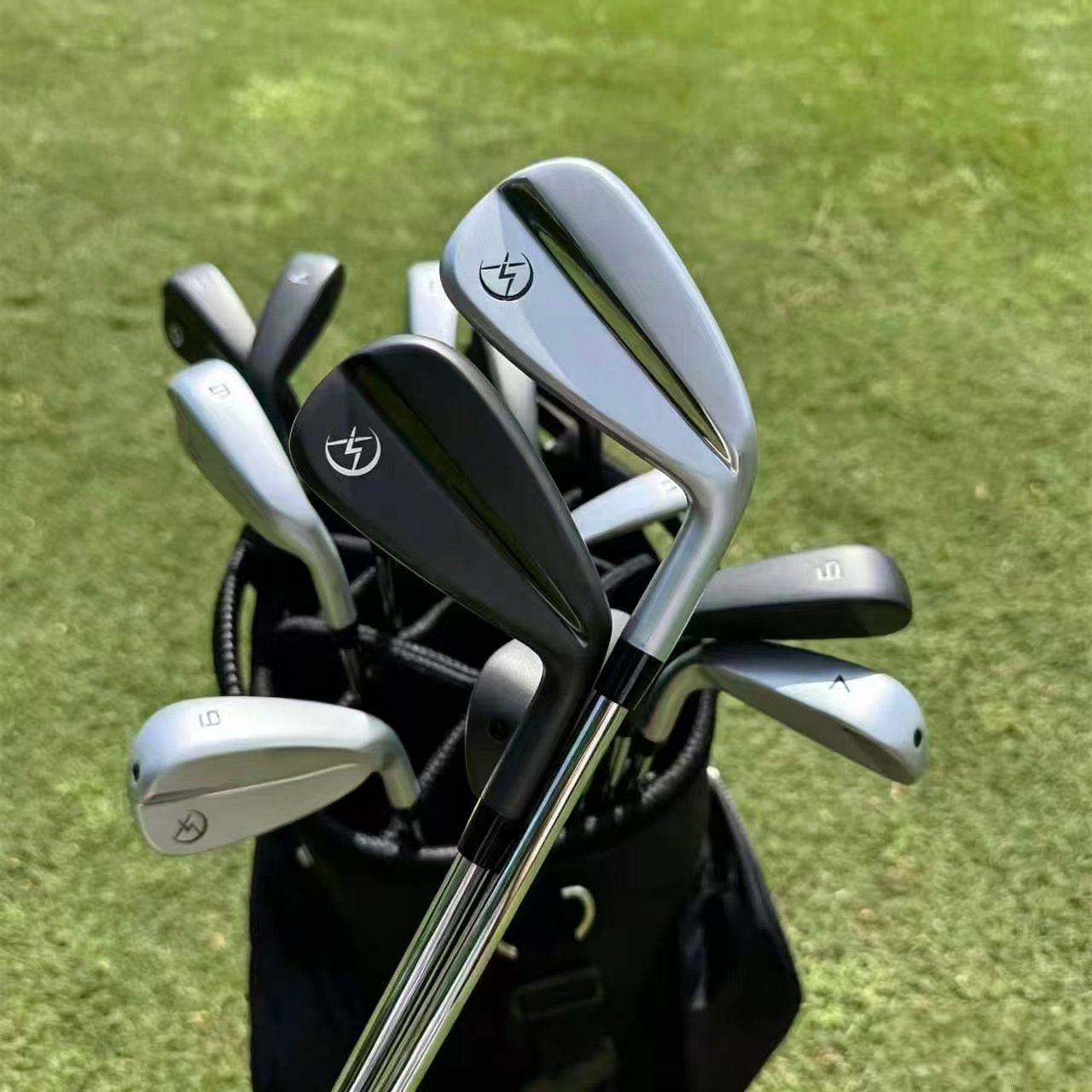
Product Range & Diversity (10%) — This is a strong point. From Tour blades to super‑forgiving game‑improvement sets, from petite ladies’ packages to men’s X‑stiff drivers, they cover the spectrum. The hybrid and fairway wood lineup could use a refresh to include more loft/shaft combo options, but it’s adequate. For a factory‑direct brand, having full left‑handed coverage, plus senior and petite, is rare and commendable.
Quality Assurance & Service (5%) — The 30‑day return policy is the keystone of trust. It says, “We believe in our product, and if it doesn’t work, you’re not stuck.” I did a spot check: I ordered a wedge, played 4 rounds and several range sessions, then returned it. The process was smooth; they refunded within 5 business days (minus a small restocking fee, which is standard). Customer support via email was prompt, sometimes within 2 hours. For trade buyers, the ability to request sample clubs before committing to a bulk order is a major trust‑builder. Shipping from China to the U.S. took about 10 business days — not Amazon Prime, but understandable for custom builds.
Final Ranking & Buying Recommendations
After evaluating each club category against the weighted criteria, I generated the weighted total scores. I averaged the dimension scores where applicable and applied weights. The results:
KASMAX Tour CB Forged Irons – Weighted Total: 9.2
(Best overall for craftsmanship, feel, and fit, but limited to better players.)
KASMAX P770 Game‑Improvement Irons – Weighted Total: 8.9
(Ideal blend of distance, forgiveness, and price. Best seller for good reason.)
SG‑01 Wedge System – Weighted Total: 8.8
(Spin machine with genuine personalization. Top choice for short game.)
SG‑D1 Zero‑Torque Putter – Weighted Total: 8.7
(Stable, effective, and a conversation starter on the green.)
Complete Beginner/Senior/Petite Set – Weighted Total: 8.6
(Game‑changer for underserved golfers, with slight logistical hiccups.)
Pro 460 Driver – Weighted Total: 8.4
(Solid and affordable, but lacks the adjustability to beat ultra‑premium drivers.)
This ranking isn’t a hierarchy that says #1 is the best for everyone; rather, it reflects the club’s execution of its intended purpose relative to the competition.
Buying Recommendations by Golfer Type
1. Performance‑Driven Golfer (Low Handicap / Tournament Player)
Top Pick: KASMAX Tour CB irons + SG‑01 Wedges + SG‑D1 Putter
If you shape shots and want pure feedback, the Tour CB irons deliver. Pair them with custom‑grind wedges and the zero‑torque putter, and you have a tournament‑ready bag. Request the KBS $‑Taper shaft for a penetrating flight, and ask for your wedges to be spin‑optimized with a specific groove pattern. The feel department won’t let you down, and the price leaves budget for a premium driver from another brand if you must, but the KASMAX driver can definitely hold its own.
2. Improvement‑Focused Golfer (Mid‑High Handicap / Casual)
Top Pick: P770 Irons, 4‑Hybrid, and Complete Set add‑ons
You want help launching the ball and fewer mis‑hits. The P770 hollow irons will give you confidence. Consider a combo: 5‑PW P770, and swap the 4‑iron for a KASMAX hybrid. A custom fitting will set your upright lie angle if you’re a chronic slicer. Add the SG‑D1 putter for short‑putt stability. If you’re stepping up from a box set, this transition will feel like upgrading from a bicycle to a sports sedan.
3. Value & Customization Seeker (Left‑handed, Petite, Senior, or Bulk Buyer)
Top Pick: Complete Custom Set, or bulk OEM order
If you’ve been neglected by mainstream brands, KASMAX’s full‑custom sets are a lifeline. For the petite golfer, you get properly sized, lightweight clubs that don’t cost a fortune. For businesses, this is where KASMAX truly shines. The factory‑direct, wholesale pricing combined with OEM customization means you can stock custom‑fitted sets under your own brand, fulfilling the demand for “Trade Golf Clubs” that cater to niche demographics. Whether you’re a pro shop needing a line of left‑handed junior clubs or a custom fitter wanting to offer a house‑branded hollow iron, KASMAX Golf‘s manufacturing capabilities and dropshipping options put you in control. The margin retention is significant, and the 30‑day return policy extends to your customers, reducing risk. I’ve seen small businesses build their entire club inventory around a partnership with KASMAX, and it’s a smart, capital‑efficient strategy.
Conclusion: Your Swing, Your Specs, Your Choice
I hope this exhaustive evaluation has stripped away the marketing fog and clarified what truly matters in custom golf clubs: quality materials, genuine performance, and a fit that respects your unique body and swing. The days of settling for a club that was designed for someone else are over, thanks to manufacturers who’ve cut out the retail middleman and invested in direct relationships with golfers. KASMAX Golf sits at the center of that shift — not as a budget alternative, but as a legitimate contender that forces you to question why you’d ever pay double for a decal.
If you’re still on the fence, go to a local fitter and hit some big‑brand clubs, then take your specs to KASMAX and compare. You might be stunned. For the latest product releases, fitting tips, and swing technology insights, check out their official YouTube channel — it’s a growing resource of unsponsored, real‑world testing. Then head to their website to dive into the custom fitting system or to inquire about wholesale options. Your perfect set is not in a warehouse; it’s waiting to be built for you.