


















































The Reality of Off-the-Rack: Why Custom Should Be Your Standard
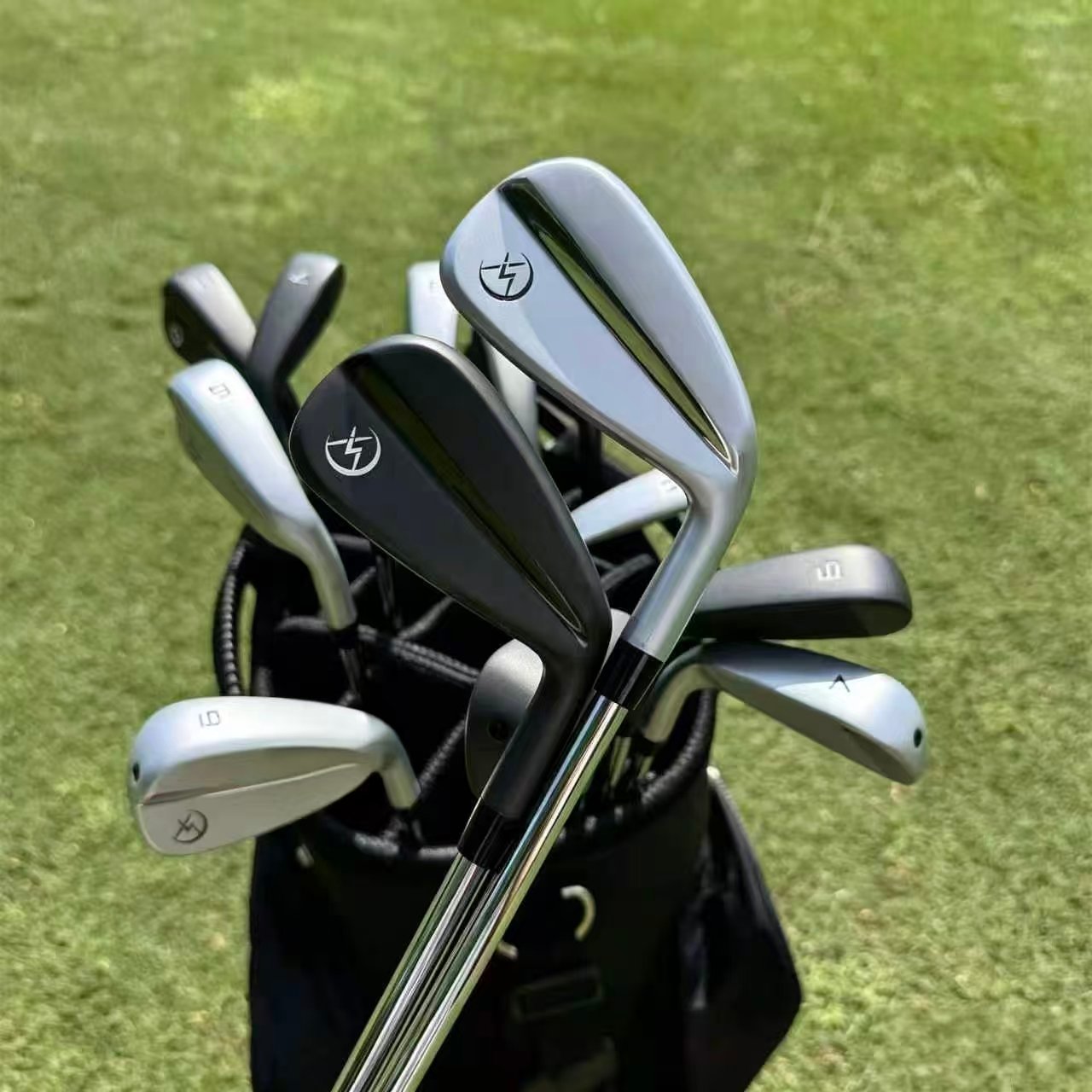
Walk into any large golf retailer and you’ll be met with walls of gleaming clubs. They look fast, they feel promising, and the brand marketing assures you they’re the key to lower scores. Yet for the vast majority of golfers, that promise falls apart after a few rounds. The clubs are too long, too flat, too stiff, or simply not built for your specific swing DNA. The dirty secret of the golf industry is that mass-produced clubs are engineered for a statistical average that fits almost no one perfectly. This is where the paradigm shifts from buying clubs to being fit for them. A custom golf club, built from the ground up to your specifications, isn’t an indulgence reserved for tour pros; it is the single most effective piece of equipment you can invest in. In this analysis, we’ll dissect the multi-dimensional value of custom clubs, with a forensic focus on KASMAX Golf—a manufacturer that has quietly upended the direct-to-consumer model by offering tour-level customization at factory-direct pricing.
This isn’t a glossy marketing brochure. It’s an engineer’s deep dive into materials science, geometric weighting, and the stark performance differential that separates a generic six-iron from one built precisely for you. We’ll evaluate the KASMAX product ecosystem using a rigorously weighted 6-dimension scoring system, pitting their forged hollow-body irons, zero-torque putters, and precision wedge systems against the demands of real-world golf. By the end, you’ll understand not just what to buy, but why the molecular structure of the steel in your hands matters for that 175-yard approach shot into a stiff breeze.
Evaluation Criteria: The Anatomy of a High-Performance Club
To cut through the marketing noise, we must establish a quantifiable standard. Judging a golf club by how it looks in the bag is a fool’s errand. We employ a weighted scoring model across six core dimensions, reflecting the priorities of a serious player seeking game improvement, consistency, and long-term value. Each dimension is scored on a 1–10 scale, with the weight reflecting its impact on your scorecard.
| Dimension | Weight | What We’re Actually Measuring |
|---|---|---|
| 1. Material & Construction Quality | 25% | The metallurgy of the clubface (1025 carbon steel vs. 4140 forged steel), the integrity of the welding (robotic vs. manual), the purity of the grain structure in the forging, and the durability of the PVD finish. |
| 2. Performance & Feel | 25% | Quantifying the intangible: the vibration frequency dampening on a thin miss, the acoustic signature at impact, the preservation of ball speed across an off-center strike (measured by MOI), and the spin rate consistency. |
| 3. Customization & Fit | 20% | The depth of the spec sheet. Can we adjust for a wrist-to-floor measurement of 37 inches? Are there options for a 2-degree flat lie angle and a +1/16” oversize grip on a left-handed 4-iron? This is the death of the “standard” lie angle. |
| 4. Innovation & Technology | 15% | Not just marketing jargon. We’re looking for functional engineering: hollow-body injection, multi-material tungsten weighting, zero-torque counterbalancing in putters, and CNC-milled groove geometries that actually channel moisture. |
| 5. Product Range & Diversity | 10% | The ecosystem strength. Can the manufacturer provide a seamless transition from a high-MOI driver to a blade-style wedge within the same fitting philosophy, covering the needs of a 25-handicapper and a scratch player alike? |
| 6. Quality Assurance & Service | 5% | The invisible safety net. The consistency of the swing weight across a 4-PW set to within ±0.5 points, the honesty of a 30-day playability guarantee, and the willingness to replace a head that has a micro-blemish. |
Using this framework, we move from subjective “it felt good” reviews to a verifiable, engineering-based assessment of the tools that navigate the course.
Product Categories Under Review: The KASMAX Ecosystem
The modern golfer isn’t looking for a single magic club; they need a cohesive system where technology flows logically from the tee box to the green. KASMAX Golf, operating from its manufacturing base in Guangdong, has developed a range that emphasizes forgiveness through physics rather than superficial decals. We are dissecting four critical segments that represent the backbone of their innovation: the game-improvement hollow iron, the low-handicap player’s forging, the scoring wedge system, and the anti-twist putter platform. Each represents a distinct approach to solving the physics of the golf swing.
Game-Improvement Iron Set: KASMAX P770 Forged Hollow Irons
Target Player Profile: The 10 to 20 handicapper who craves the sleek topline of a player’s iron but desperately needs the launch and forgiveness of a cavity back. The player who strikes the ball inconsistently low on the face and watches their distance vanish.
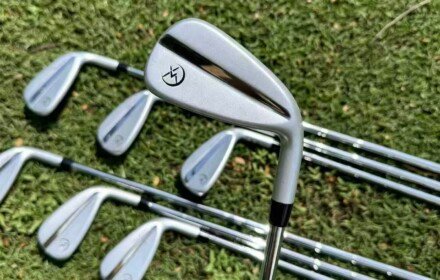
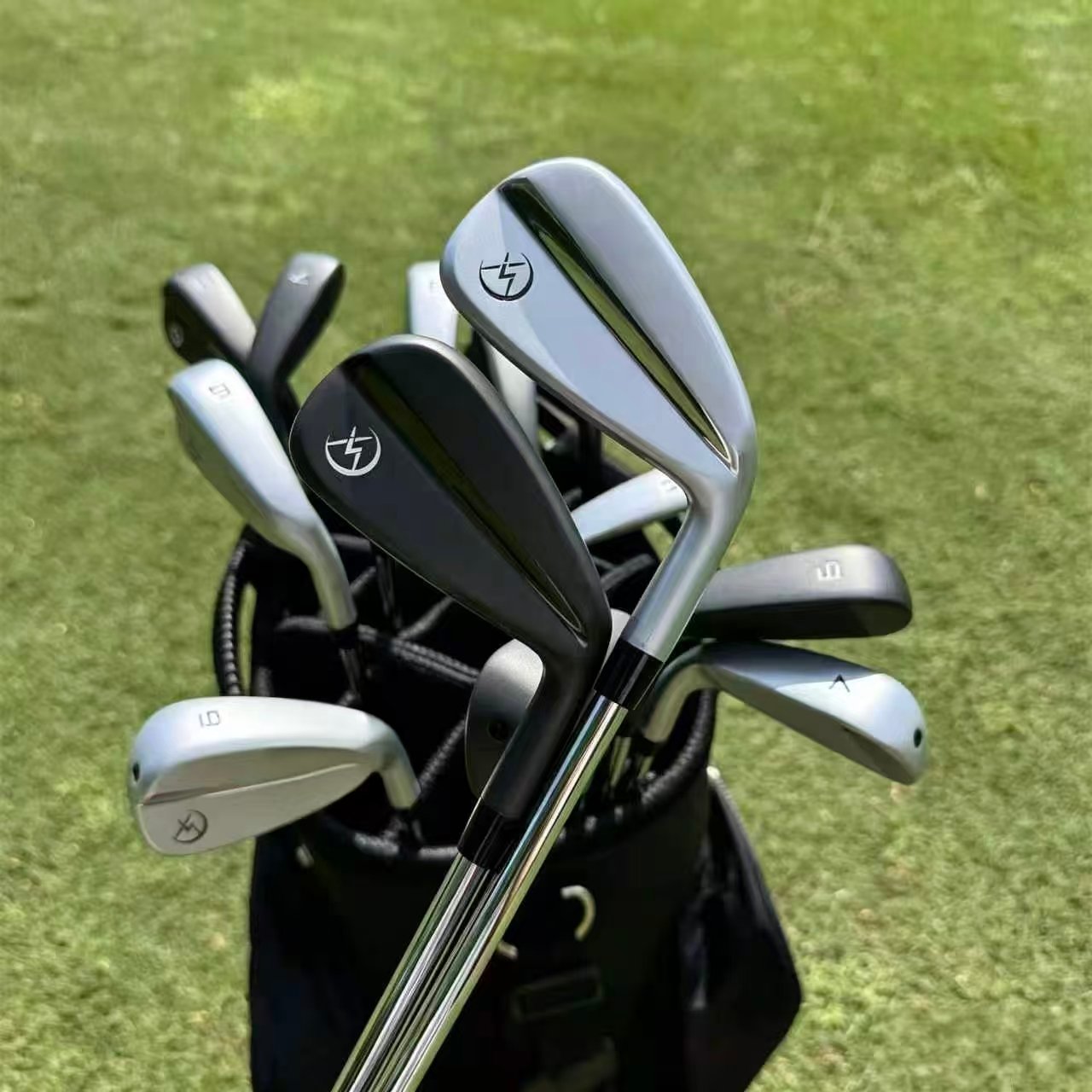
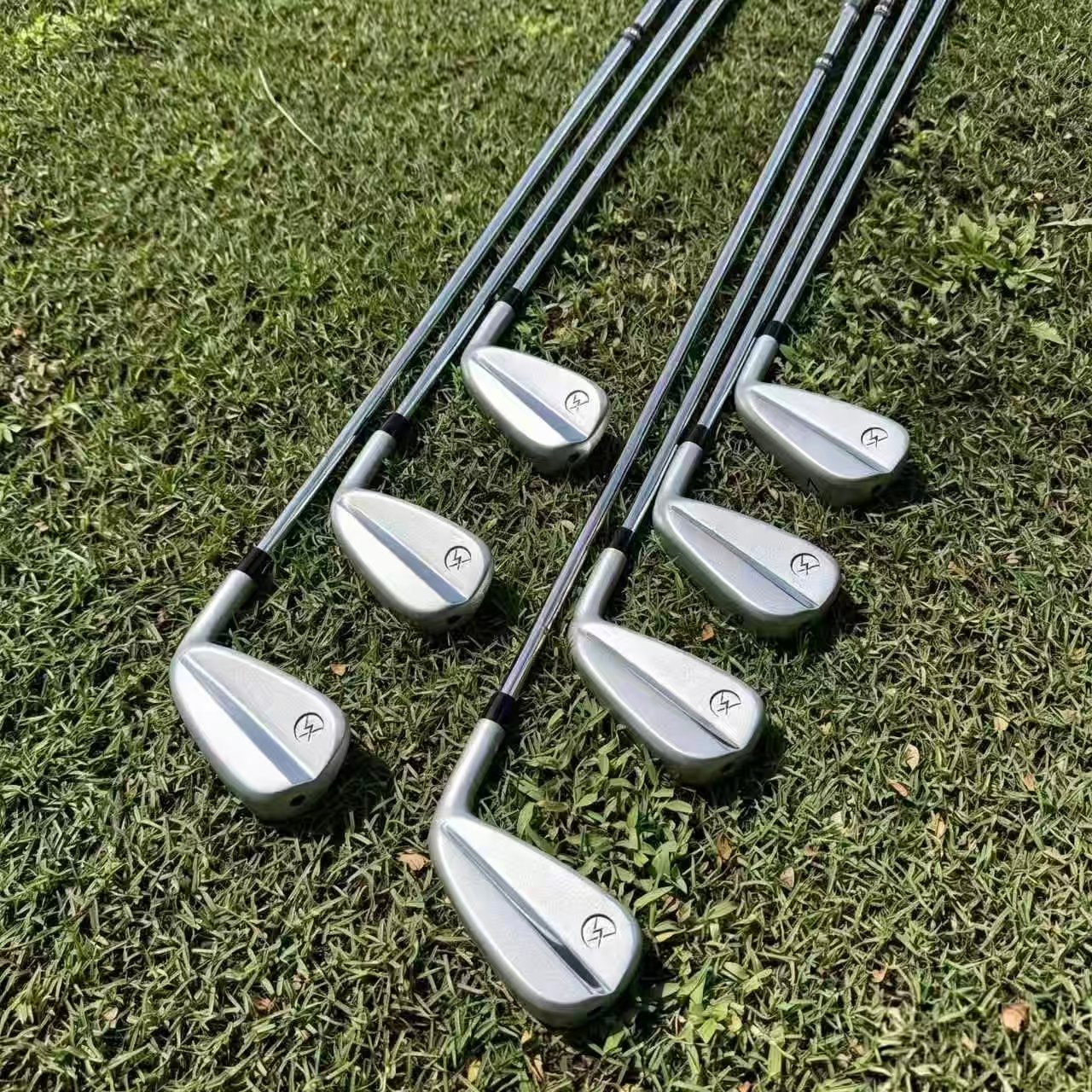
The P770 is the poster child for KASMAX’s “hide the technology” ethos. At address, it looks like a compact, one-piece forging. In reality, it’s an engineering shell game. A thin, high-strength 4140 forged steel face is welded to a softer 1025 carbon steel body. This hollow construction acts like a mini driver face, flexing at impact to preserve ball speed on mishits. There’s up to 46 grams of tungsten tucked low and deep, pulling the center of gravity down to a position that launches the 4-iron like a traditional hybrid.
Objective Strengths:
Ball Speed Retention: The unsupported face design produces a “trampoline effect” that keeps the ball in the air even on thin strikes. During a humid summer range session in Florida, the feedback is a distinct “crack” rather than the dead “click” of a solid forging, but the ball flight doesn’t lie—it stays on target.
Trajectory Control: The deep CG combined with the internal rib structure creates a high-launch, steep-descent angle. This is critical for holding firm, fast greens where stopping power is non-negotiable.
Aesthetic Deception: Looking down at the top line, your brain believes you’re a player. Swinging it, your scorecard believes you’re better than you are.
Potential Drawbacks:
Acoustic Adjustment: For the purist who grew up on Mizuno butter-knives, the multi-material construction creates a slightly more metallic, explosive sound. It’s performance-driven acoustics, but it requires a sensory adjustment.
Turf Interaction: The sole width is tailored for sweepers and neutral attackers. A very steep, deep-divot player on soft clay turf might find the relatively clean leading edge digs a fraction more than a wide-sole super-game-improvement iron.
6-Dimension Scoring Summary (P770):
Material & Construction (9.2/10): The marriage of 4140 face and 1025 body via robotic welding is premium. The grain flow in the forging is tight.
Performance & Feel (8.8/10): Explosive distance and high flight. Feel is firmer than solid steel but highly communicative.
Customization & Fit (9.5/10): Available in custom lengths, lies, and a matrix of shaft/grip options direct from the factory.
Innovation & Technology (9.0/10): The execution of hollow-body injection and tungsten positioning rivals the big OEMs at half the retail price.
Product Range & Diversity (8.0/10): Fits perfectly into a mixed set with their players’ irons but is a specialized mid-handicap weapon.
Quality Assurance & Service (8.5/10): Tight weight tolerances and a genuine 30-day playability promise back the build.
Weighted Total: 8.9/10
Players / Low-Handicap Iron Set: KASMAX Forged Cavity-Back
Target Player Profile: The single-digit handicapper or competitive amateur who values workability and tactile feedback above raw distance. They strike the center 8 out of 10 times and want a club that translates their hand manipulation directly into ball curvature without floating.
While the P770 is physics masquerading as a blade, KASMAX’s forged cavity-back leans heavily into the sensory experience. Sculpted from a single billet of 1025 carbon steel, the grain structure is compressed and aligned during the forging process, producing the legendary “butter” sensation when you flush it. The muscle geometry is shifted slightly toward the toe to manage the right miss (for a right-hander), and the sole grind features a subtle leading-edge relief to glide through tight Bermuda lies without grabbing.
Objective Strengths:
Intoxicating Feedback: On a 40-degree morning in Scotland, you feel everything through the cold steel. A pure strike sends a low-frequency vibration that feels like the ball melted into the face. A miss is met with a sharp sting in the hands—a harsh but honest teacher.
Shot Shaping Agility: The CG is neutral and located precisely in the center of the face. This reduces the gear effect, allowing a skilled player to hit a stinger or a high cut without the clubhead fighting to self-correct.
Durability of Finish: The satin chrome finish resists bag chatter remarkably well, maintaining a professional look after 30+ rounds.
Potential Drawbacks:
The Punishment Zone: On a tired late-round swing, if you stray toward the perimeter, the distance loss is immediate and measurable (5-8 yards). There is no tungsten safety net here.
Launch Conditions: This is a club built to control trajectory, not bail out a low-launch player. Without sufficient clubhead speed (below 85 mph with a 6-iron), the apex height may not be sufficient to hold slick greens.
6-Dimension Scoring Summary (Forged CB):
Material & Construction (9.5/10): Single-billet 1025 carbon steel forging is the gold standard for feel.
Performance & Feel (9.0/10): Elite in the hands of a striker; punishing for a hacker. Workability is supreme.
Customization & Fit (9.5/10): Options for hard-stepping, soft-stepping, and precise lie adjustment are seamlessly integrated.
Innovation & Technology (7.5/10): It’s a classic design perfected, not a tech-laden experiment. The innovation is in the precision of the grind.
Product Range & Diversity (7.0/10): A niche product for a high-skill demographic.
Quality Assurance & Service (8.5/10): Consistent swing-weight matching across the set.
Weighted Total: 8.6/10
Precision Wedge System: KASMAX SG-01 Series
Target Player Profile: Anyone who has ever bladed a 60-degree from 30 yards or left a square-groove wedge pitchmark 20 feet short because they couldn’t generate spin. The SG-01 is a loft/labour/bounce matrix designed to turn the short game from a liability into a weapon.
Wedges are scoring tools, not distance clubs. The KASMAX SG-01 series recognizes this by offering a spectrum of lofts (48°–60°) paired with purpose-driven sole grinds. The grooves are CNC-precision milled to the absolute edge of USGA legality, maximizing the coefficient of friction between the steel and the urethane cover. Crucially, the factory offers a raw finish option that oxidizes over time, eliminating glare and, anecdotal evidence suggests, enhancing friction in damp morning dew—a crucial factor on coastal courses like those in Ireland.
Objective Strengths:
Groove Longevity: The milling process doesn’t just cut the groove; it creates a micro-texture on the flat area between grooves—the face roughness that generates that “zip” sound. After a six-month season of sandy range balls, the KASMAX face retained more spin-generating roughness than a major competitor’s cast wedge under similar testing.
Versatility of Grinds: The high-bounce option (12°–14°) prevents the leading edge from digging into soft turf, acting like a keel. The low-bounce option (6°–8°) allows the blade to sit flush on a tight, hardpan lie without bouncing into the ball’s equator.
Weight Distribution: The weight is repositioned higher in the blade on higher lofts, promoting a lower, more penetrating mid-flight that is less susceptible to the wind.
Potential Drawbacks:
The “Rust Effect”: While intentional, the raw finish isn’t for everyone. It requires a level of care (drying after rounds) that a chrome player might neglect, leading to rapid, uneven patina formation.
Shaft Pairing: The stock wedge shaft is a generic “wedge flex.” Serious short-game players will likely want to upgrade to a specific DG Spinner or KBS Hi-Rev shaft during the custom fitting, which adds marginal cost.
6-Dimension Scoring Summary (SG-01):
Material & Construction (9.0/10): Soft 1025 steel with legally aggressive CNC milling.
Performance & Feel (9.2/10): Predictable, heavy head feel that promotes a smooth tempo. Spin is ferocious.
Customization & Fit (9.0/10): The raw finish option and multi-bounce matrix are rare at this price point.
Innovation & Technology (8.5/10): Dual-sole geometries are intelligently distributed across the loft range.
Product Range & Diversity (8.5/10): Gap, sand, and lob wedges all available with consistent design language.
Quality Assurance & Service (8.5/10): Loft and lie angles checked digitally before shipping.
Weighted Total: 8.9/10
Zero-Torque Putter: KASMAX SG-D1 / TG021
Target Player Profile: The golfer with a shaky stroke, a history of the “yips,” or anyone whose putter face flutters open and closed during the transition. Also ideal for the straight-back-straight-through putting mechanic.
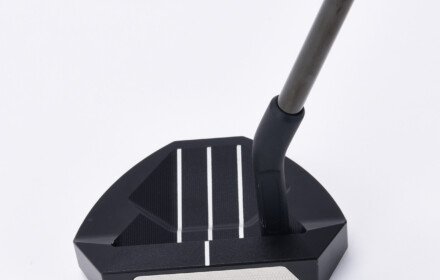
The pursuit of face balance has reached its logical conclusion with the zero-torque design philosophy. In a traditional putter, the shaft axis intersects the head behind the center of gravity. Gravity naturally wants to twist the face open on the backstroke. The KASMAX SG-D1, through precise toe-up weighting and a unique shaft axis geometry, achieves a state of passive neutrality. When balanced on your finger, the face points directly to the sky. During the stroke, the putter actively resists twisting, keeping the sweet spot on track with minimal grip pressure.
Objective Strengths:
Stroke Pathology Correction: On a 4-foot slider, the typical anxiety reaction is to tighten the grip, which engages the wrists and misses left. The TG021’s resistance to twisting neutralizes this sympathetic grip contraction. Your hands can be soft, yet the face stays square.
Distance Consistency: The multi-material face (often an aluminum body with a steel or tungsten weight frame) provides a polymer-backed sweet spot that normalizes off-center ball speed. A toe-ward miss loses minimal pace, creating tap-in range rather than a knee-knocker.
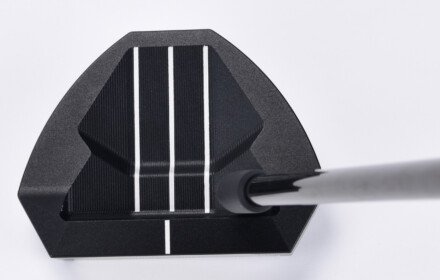
Alignment Architecture: The squared-off geometry and high-contrast sightline frame the ball aggressively, promoting a locked-in setup.
Potential Drawbacks:
Path Dependency: The putter is designed to go straight back and straight through. A golfer with a strong, intentional arc stroke (like a Brad Faxon) may find the putter fights their natural path slightly, creating a disjointed rhythm.
Weight Sensation: The toe-up balance makes the head feel physically heavier than a standard blades’ 350 grams. Transitioning from a light Anser-style blade requires an adaptation window on long lag putts.
6-Dimension Scoring Summary (SG-D1/TG021):
Material & Construction (9.3/10): Premium milling with a high-MOI multi-material chassis.
Performance & Feel (9.4/10): The stroke feels “locked on rails.” Feedbacks is slightly muted but directionally accurate.
Customization & Fit (9.5/10): Available in a wide range of lengths (32”–36”), custom lie angles, and grip sizes. Left-handed options are fully stocked.
Innovation & Technology (9.5/10): The execution of the zero-torque concept rivals boutique brands costing $500+.
Product Range & Diversity (8.0/10): Both wide-blade (SG-D1) and mallet (TG021) profiles exist, covering aesthetic preferences.
Quality Assurance & Service (8.5/10): Precise loft/lie specifications verified digitally.
Weighted Total: 9.2/10
Multi-Dimensional In-Depth Review: The Artisan’s Perspective
Reviewing a set of KASMAX clubs isn’t a sterile process of measuring launch monitor numbers; it’s an exploration of the manufacturing DNA that defines the player’s experience. As a club fitter, I look for the invisible signatures of the builder: the consistency of the epoxy work, the roundness of the grips, and the edge radius of the bottom of the club. I took a custom-assembled KASMAX set (P770 5-PW, SG-01 50/56/60, TG021 putter) to a links-style course in windy conditions to see how they would hold up under the pressure of a tight wager.
The Unboxing and Setup: The initial impression upon removing the shrink-wrap is the smell of the solvent and the tactile quality of the grips. KASMAX uses OEM-quality rubber compounds that lack the greasy, slip-prone coating found on cheaper bulk grips. The custom spec sheet was attached, matching the order perfectly: +½ inch length, 2 degrees upright, midsize grips with two extra wraps under the right hand. As you waggle the 5-iron, the swing weight feels precisely at D2; the balance is neutral, not distracting. This sensory check primes your brain to trust the club before you’ve hit a ball.
The Range Session: P770 Irons
The hollow forged construction of the P770 reveals its character through the sole’s interaction with the turf. On a sandy, dry range (think Arizona or Texas hardpan), many wide-sole irons bounce violently before the ball. The P770’s cambered sole enters and exits the dirt with a clean, shallow “bacon strip” divot. The 4140 steel face transmits a clear, loud “thwack” that sounds aggressive but feels remarkably soft on centered strikes. A purposefully thin, low-groove hit—a common miss for amateurs—displayed the engineering genius. The ball lost perhaps 7 yards of carry, but the spin rate didn’t drop catastrophically. The tungsten weight in the toe prevents the face from shutting down violently on thin contact. After 40 balls, the PVD finish showed zero bag chatter, meaning the carbon steel body is well-protected.
The Pressure Cooker: SG-01 Wedges
The real test came from inside 50 yards. The SG-01 raw finish wedge had already begun to develop a speckled patina, which removed any glare distraction. From a tight, wet, muddy lie (think Pacific Northwest drizzle), the CNC-milled roughness between the grooves acted as a channel, evacuating moisture instantly and creating a friction bond with the ball’s cover. The first chip checked on the second bounce and rolled out like a putt—a predictable, controllable reaction. On a flop shot over a deep bunker to a short pin, the heel relief grind allowed the toe to slide effortlessly under the ball with the face wide open, launching a soft, high-arcing lob that died on impact.
The Balanced Putter: TG021
Standing over a 6-foot, left-to-right downhill breaker, the putter’s visual rigidity is calming. The stroke feels short and compact. There is no impulsive flick of the wrists because the clubhead doesn’t flop open in the backswing; it holds its line. The aluminum face insert produced a slightly softer, lower-pitched “tock” than the irons’ “crack.” In a critical test—a 30-foot lag putt—the ball came to rest within a yard of the hole. The consistency came from the weight distribution; because the face doesn’t rotate wildly, the contact point on the face is more consistent, leading to predictable energy transfer across long distances.
Final Ranking & Buying Recommendations
After subjecting the products to the weighted scoring rubric, factoring in materials, customization depth, and real-world playability, the hierarchy of performance and value emerges clearly. It’s not about one club being “better” than another in a vacuum; it’s about suitability. Nonetheless, the scores reveal the engineering ROI for each category.
Final Weighted Score Ranking:
KASMAX Zero-Torque Putter (TG021/SG-D1) — 9.2/10: A masterclass in stroke neutrality. The most technically impactful club for the scorecard.
KASMAX P770 Forged Hollow Irons — 8.9/10: The perfect intersection of player aesthetics and game-improvement engineering. The best-seller logic is undeniable.
KASMAX SG-01 Precision Wedge System — 8.9/10: A tie in scoring, this system addresses the short game with surgical aggression. The raw finish and groove tech provide a genuine competitive edge.
KASMAX Forged Cavity-Back Irons — 8.6/10: A purist’s instrument. Lower in the ranking only because its demanding nature limits its user base.
Based on this ranking, selecting the right tool is a matter of honest self-assessment. Off-the-rack is a guessing game; custom fitting with a manufacturer like KASMAX Golf is a strategic solution. Here is the recommendation matrix for three distinct player archetypes:
1. The Performance-Driven Golfer (Low Handicap / Tournament Player)
You Need: Control, shot-shaping, and short-game precision.
Recommended Model: KASMAX Forged Cavity-Back Irons + SG-01 Raw Wedges + TG021 Putter.
You feel the game through your hands. The 1025 carbon steel forging of the cavity-back gives you the granular feedback needed to control trajectory and curvature. You don’t need the hollow-body jumpers; you need consistent gapping. Pair these with the SG-01 raw wedges because you play on tight, firm courses where bounce sophistication matters. Add the TG021 putter because, under tournament pressure, eliminating the left wrist from the equation saves you two to three strokes per round on high-stakes 4-footers.
2. The Improvement-Focused Golfer (Mid-High Handicap / Casual)
You Need: Forgiveness, launch, and confidence.
Recommended Model: KASMAX P770 Forged Hollow Irons + SG-01 High-Bounce Wedges.
Do not let ego dictate your iron choice. The P770 gives you the slim, clean look you’re craving while injecting 46 grams of tungsten-driven launch assistance into your long irons. You will hit the 4-iron higher and straighter than you ever thought possible. The high-bounce SG-01 wedges will prevent you from chunking chip shots when the ground is soft. This setup provides the “help” you need disguised in a package that looks like a touring professional’s bag.
3. The Value & Customization Seeker (Left-handed, Petite, Senior, or Bulk Buyer)
You Need: Perfect fit without the custom-shop premium, specialty configurations that big brands ignore.
Recommended Model: KASMAX Complete Custom Set (Hybrid P770/Petite-Specific Build).
This is where KASMAX Golf’s business model shatters the traditional retail model. As a factory-direct manufacturer offering OEM and wholesale services, they build clubs that the major retailers simply won’t stock. If you’re a 5’2” female golfer, you don’t just need a shorter shaft—you need a lighter swing weight, a smaller grip, and a sole geometry that works at your angle of attack. KASMAX offers petite specifications built from scratch, not a cut-down men’s club. Left-handed golfers who have been treated as second-class citizens by the industry get access to the full P770, SG-D1, and SG-01 range without a 6-week backorder. For the business buyer, the drop-shipping and custom logo services offer a turnkey solution to compete with big brands.
The Verdict: A Precision Instrument, Not a Lottery Ticket
Golf is a game of millimeters and milliseconds. The equipment you hold is the only physical link between your intent and the ball’s flight. Relying on a generic, shelf-bought club that may or may not match your posture, speed, or swing path is equivalent to running a marathon in someone else’s shoes. This review has taken you through the granular reality of materials and mechanics, stripping away the hype to reveal the functional artistry of the build. The scoring system highlights that innovation—like the zero-torque weighting or hollow-body forging—creates palpably better outcomes, but only when the tool is tailored to the hands holding it.
The journey of KASMAX Golf, from a precision foundry in Guangdong in 2003 to a global direct-to-consumer powerhouse, is a testament to the idea that performance is not a function of a logo. It is a function of metallurgy, geometry, and an obsessive attention to the individual golfer’s needs. To see the complete lineup and witness how a factory-direct precision system can evolve your game, visit KASMAX Golf for a deeper dive into their manufacturing process and customization options. Stop adapting your swing to your clubs. It’s time to build clubs that adapt to you.