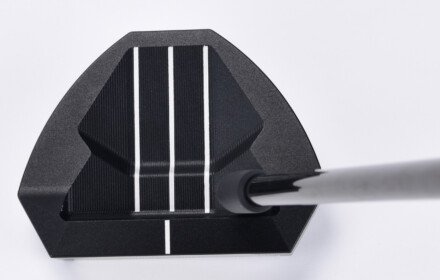





















































The Future of Putting: A Guide to Laser-Integrated Golf Clubs
In the pursuit of consistency on the green, golfers are increasingly turning to precision optics. Laser-integrated golf clubs—primarily putters—utilize technology once reserved for high-stakes surveying to project a visible alignment beam directly onto the putting surface. This innovation eliminates the guesswork of aim, providing immediate visual feedback on whether your face is truly square to the target line. For those looking to bridge the gap between practice and performance, brands like KASMAX Golf now offer custom laser integration on their professional-grade milled putters.
Precision Alignment Technology
The core benefit of a laser golf club is the reduction of parallax error. By projecting a beam from a microminiature diode housed within the clubhead, players can see exactly where they are aimed at 2 feet versus 20 feet. The KASMAX SG-D1 Custom Laser Putter, for example, allows golfers to choose between a red or green laser dot or line. This customization is vital because visual preferences vary; a green beam often remains more visible under direct sunlight, while a red dot can be less distracting for players who prefer a subtle reference point.
Combining Optics with Zero-Torque Engineering
While alignment is crucial, the physics of the stroke remains equally important. High-performance laser clubs often pair optics with zero-torque engineering. This design aligns the hosel axis with the club’s center of mass, preventing the face from twisting during the stroke. When a golfer uses a laser to aim perfectly and a zero-torque head to stay square through impact, the result is a significant increase in “make” percentages, particularly on critical putts inside 10 feet.
Customization and Build Quality
A laser is only as good as the club it is built into. Premium laser putters are CNC-milled from solid billets of 303 stainless steel, ensuring a soft yet responsive feel. Factory-direct options from KASMAX allow for full bespoke specifications, including length, lie angle, and loft, tailored to the individual’s posture and eye dominance. This level of personalization ensures that the technology works in harmony with the golfer’s natural mechanics rather than forcing a change in style.
Conclusion: A Data-Backed Edge
In conclusion, laser golf clubs represent a data-backed shift in how we approach the short game. By providing a constant, objective reference for aim, these tools help golfers identify and correct alignment flaws that are often invisible to the naked eye. When integrated into a high-quality, custom-fit club, laser technology offers a measurable competitive advantage for anyone serious about mastering the greens.