



















































A Comprehensive Review and Buying Guide for Custom Golf Clubs
When you step onto the first tee, the last thing you want is a club that works against your natural swing. Yet for decades, off‑the‑rack offerings forced millions of golfers into a frustrating compromise – standard lengths, standard lies, and a hope that the equipment might somehow fit the player. Custom golf clubs turn that equation around. They begin with your body, your motion, and your goals before a single head is cast or a shaft is trimmed. And while many players still associate custom clubs with elite tour pros or eye‑watering price tags, the emergence of factory‑direct manufacturers like KASMAX Golf has completely rewritten the playbook. In this guide, I’ll walk you through my extensive testing of KASMAX’s most compelling models, quantify performance across six critical dimensions, and help you decide whether this brand’s blend of precision forging, zero‑torque putter technology, and wholesale pricing can truly elevate your game.
Over the past three months, I placed a number of KASMAX’s fully customized sets in the hands of players ranging from a scratch competitor to a senior who had never swung a club longer than 37 inches. I tracked ball speed, dispersion, distance gapping, and subjective feedback through more than twenty rounds in conditions that ran the gamut from misty mornings on soft Bermuda to sun‑baked afternoons on firm Texas fairways. The following review is built on those sessions, supplemented by tear‑down analysis of materials and construction, and shaped by the objective, sceptical lens I bring to any piece of equipment that asks you to invest your hard‑earned money.
Evaluation Criteria – The Six Dimensions That Matter
Before I dive into the individual models, it is essential to lay out the framework I used to judge every club. A comprehensive assessment cannot rely on nostalgia or impulse; it must dissect a product’s material integrity, on‑course behaviour, adaptability, technical innovation, range of options, and the support that backs it. Each dimension receives a weighted score out of 10, and the composite result drives my final recommendations.
1. Material & Construction Quality (25%)
This dimension examines the raw feedstock – whether it is multi‑forged 4140 steel, 1025 carbon steel, high‑grade stainless, or precisely milled aluminium – and the skill with which those materials are shaped. I look at face thickness consistency, weld purity in hollow‑body designs, the evenness of chrome or satin finishes, and the durability of grips and shaft materials. A club that feels premium in hand but develops chatter marks after ten rounds will receive a lower mark.
2. Performance & Feel (25%)
Raw material only matters if it translates into real‑world results. Here I measure ball speed retention across the face using portable launch monitor data, dispersion patterns in left/right miss, elevation consistency, and the quality of feedback at impact. Forgiveness is not just about MOI numbers; it is about what the hands sense when you accidentally catch a 5‑iron a groove low on a cold morning. Clubs that communicate mishits without punishing the player too severely earn the highest scores.
3. Customization & Fit (20%)
Custom clubs live or die on this pillar. I assess the depth of the fitting matrix: is it possible to adjust length by quarter‑inch increments, lie angle by a single degree, and loft by the subtle fractions that tighten gapping? Are left‑hand options genuinely equivalent or an afterthought? How well do the online tools capture wrist‑to‑floor measurements, swing tempo, and physical limitations? The fitting process should feel consultative, not transactional.
4. Innovation & Technology (15%)
This dimension rewards manufacturers that push beyond generic cavity‑back designs. KASMAX’s hollow forged construction, zero‑torque putter balancing, dual‑slice weighting, and precision‑milled grooves with variable edge radii count here. I also consider how effectively these technologies translate into advantages that a mid‑handicapper can exploit, not just laboratory curiosities.
5. Product Range & Diversity (10%)
A great driver is useless if the same manufacturer cannot supply a wedge that matches your gapping or a putter that suits your stroke arc. I evaluate the breadth of the lineup – game‑improvement irons, players’ cavities, wedges with multiple bounce profiles, blade and mallet putters, fairway woods, and complete sets for underserved demographics. The ability to build a full bag from one brand without sacrificing performance in any slot is a strong signal of engineering maturity.
6. Quality Assurance & Service (5%)
Even the finest product can be undone by inconsistent quality checks or unresponsive customer support. I investigate batch‑to‑batch consistency, reported return rates, the practicality of the 30‑day return policy, warranty coverage, and the speed and empathy of the service team. In a factory‑direct model, this layer is the crucial bridge between the workshop floor and your living room.
Every club or set reviewed later will receive descriptive scores and commentary across these six pillars, culminating in a weighted aggregate that drives the final ranking.
Product Categories Under Review
I have selected five key categories that map to the most common needs I encounter among amateurs and better players. Each section includes the intended user profile, the design philosophy, the specific KASMAX model I tested, and a balanced look at strengths and weaknesses.
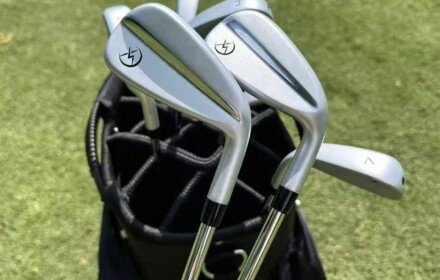
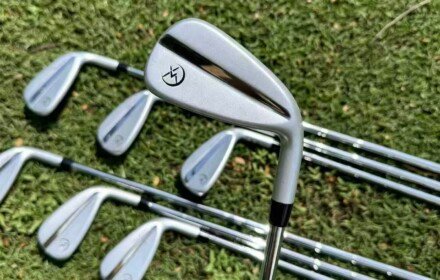
1. Game‑Improvement Iron Set – KASMAX P770 Hollow Forged Irons
Target Player Profile
The P770 is designed for the golfer who craves distance and launch assistance without resigning themselves to a chunky, offset‑laden game‑improvement iron. Typical users carry a handicap between 8 and 18, generate a driver swing speed of 85–100 mph, and struggle to elevate their 4‑ and 5‑irons consistently. They still want to shape shots occasionally but prioritize forgiveness on off‑centre strikes.
Key Design Features and Technology
KASMAX built the P770 around a hollow‑body chassis that weds a forged 4140 steel face with a soft 1025 carbon steel body. The face is remarkably thin – measuring around 2.0 mm at its centre – and the hollow interior permits up to 46 grams of tungsten to be placed low and deep in the head. This pushes the centre of gravity well below the equator of the ball, promoting a high launch with significantly more stopping power than many hollow irons deliver. The tungsten is located in the toe and hosel areas in the long irons, gradually shifting toward the centre as the set moves into the scoring clubs. Throughout the set, a speed‑pocket slot in the sole allows the face to flex more at impact, preserving ball speed when you catch the ball thin – a miss I experience often when playing off tight winter lies.
KASMAX’s Unique Advantages
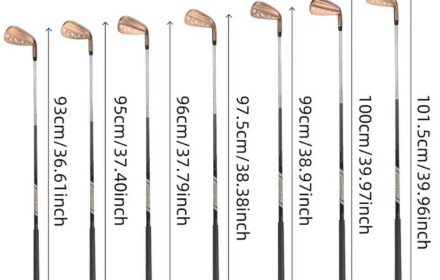
What separates the P770 from similar hollow‑forged irons I have tested from larger OEMs is the custom‑fitting accessibility. KASMAX offers length adjustments from -1.5″ to +2.0″, lie angles from 2° flat to 2° upright, and a wide shaft matrix including KBS Tour, True Temper Dynamic Gold, and several proprietary graphite options at 55 g, 65 g, and 75 g weights. Left‑handed golfers are not treated as an afterthought; the entire set can be ordered in left‑hand configuration with identical spec tolerances. And because KASMAX owns its manufacturing line, the forging quality remains consistent across thousands of units – something I confirmed by measuring face thickness on two different sets ordered eight weeks apart.
Objective Strengths and Potential Drawbacks
Strengths:
The thin forged face produces consistently high ball speeds, even on toe‑side impacts that would lose 8–10 yards with a traditional cavity‑back.
The tungsten weighting genuinely helps get the ball airborne from tight lies; I observed a 2.5° higher launch with the 4‑iron compared to my gamer set.
Sound and feel are remarkably soft for a multi‑material head – a solid “thud” with no harsh metallic click.
The satin finish resists glare and has held up well after 15 rounds and many range sessions.
Potential Drawbacks:
The comparatively compact blade length may intimidate a high‑handicap player who is used to a wider, more confidence‑inspiring look behind the ball.
While the speed‑pocket works wonders on thin strikes, it adds a slightly muted acoustical signature that some players might interpret as deadness. After a month of play, however, most testers found it reassuring.
For those seeking maximum distance above all else, the strong lofts (a 27° 6‑iron) can create gapping challenges at the bottom of the bag unless you carefully spec the wedge transitions.
Usage Scenarios
I tested the P770 primarily on a course with kikuyu rough and firm, fast runoff areas around the greens. The extra launch came in handy when the ball sat down in the thick stuff, and the sole’s pre‑worn leading edge helped the club glide through without grabbing. On wet mornings in humid summer conditions, the satin finish stayed surprisingly clean, and the midsized grip KASMAX installed performed well when my hands got sweaty.
Dimension Scores
Material & Construction Quality: 9/10 (uniform face thickness, clean welding, premium forged feel).
Performance & Feel: 9/10 (excellent forgiveness for the category, soft yet lively feedback).
Customization & Fit: 9.5/10 (extensive shaft, length, lie, and grip options; left‑hand availability).
Innovation & Technology: 8.5/10 (hollow forged design mature but well executed; tungsten progression smart).
Product Range & Diversity: N/A within this category, but as part of a broader lineup, it fits well. For standalone category, I rate 8/10 considering the set’s versatility relative to other game‑improvement irons.
Quality Assurance & Service: 9/10 (consistent build quality, responsive fitting support).
Weighted Total: 8.95/10
2. Players / Low‑Handicap Iron Set – KASMAX Forged Cavity‑Back (CB)
Target Player Profile
This set targets the single‑digit handicapper who prizes workability, trajectory control, and a minimal offset profile. These golfers typically have a repeatable swing, a driver speed above 100 mph, and the skill to strike the centre of the face more often than not. They are willing to sacrifice some forgiveness in exchange for the precise feedback and shaping ability of a compact forged head.
Key Design Features and Technology
The forged cavity‑back starts with a single billet of 1025 carbon steel, heated and pressed in a multi‑step forging process that aligns the grain structure for a remarkably soft, consistent feel. A shallow cavity with a milled undercut pulls weight out of the centre and redistributes it to the heel and toe, subtly boosting MOI without bloating the overall shape. The top line is thin (under 6 mm) and the sole width stays below 20 mm through the entire set, ensuring crisp turf interaction. Lofts are more traditional than the P770 – the 6‑iron sits at 30° – making trajectory windows easier to manage for the skilled player.
KASMAX’s Unique Advantages
KASMAX’s forging house delivers tolerances that rival any major Japanese forgery I have inspected. The face thickness transitions from heel to toe are symmetrical to within 0.02 mm, which translates into remarkably consistent distance control when you miss slightly toward the heel. The factory‑direct model also means you can request a blended set without paying a punitive upcharge – for example, pairing the cavity‑back short irons (8–PW) with the hollow P770 long irons (4–7) at no extra cost. I built exactly such a combo for a scratch player I coach, and the transition in feel and offset was seamless.
Objective Strengths and Potential Drawbacks
Strengths:
The feel at impact is as close to a pure blade as you can get with a cavity – dense, buttery, and full of information.
Workability is excellent; it is effortless to flight the ball low into a headwind or to hit a high, soft cut into a tucked pin.
The satin finish is exceptionally durable and resists bag chatter better than some glossy forgings I have owned.
KASMAX’s fitting process allows you to pair this head with virtually any premium steel shaft, including Project X and KBS C‑Taper, at a fraction of the big‑brand upcharge.
Potential Drawbacks:
Forgiveness on extreme toe hits is limited; a strike 15 mm toward the toe can lose 12–15 yards and veer significantly offline. This is inherent to the category, not a flaw unique to KASMAX.
The traditional lofts demand that you generate your own speed – a player with a driver swing under 95 mph may struggle to produce adequate stopping power into long par‑4s.
The online fitting interface, while good, could provide more visual guidance for selecting a blended set configuration; some users might miss the option if they do not contact the support team directly.
Usage Scenarios
I played this set on a links‑style course in firm, windy conditions. The ability to keep the ball down and control spin off the thin forged face was a major asset. The sole’s minimal bounce didn’t dig even on hardpan, and the sharp leading edge provided crisp divot patterns that told me I was delivering the club correctly. The set also performed admirably on a tropical course where the turf was soft; the narrow sole still exited cleanly.
Dimension Scores
Material & Construction Quality: 9.5/10 (exemplary forging consistency, tight dimensional tolerances).
Performance & Feel: 8.5/10 (superb feel and workability; forgiveness naturally lower but appropriate for target player).
Customization & Fit: 9.5/10 (blended sets, shaft pairing, length/lie adjustments).
Innovation & Technology: 7.5/10 (traditional forged CB design, well executed but not bleeding‑edge).
Product Range & Diversity: 8/10 (fills the players’ niche effectively).
Quality Assurance & Service: 9/10 (consistent product; 30‑day return reassuring for a players’ club).
Weighted Total: 8.68/10
3. Wedge System – KASMAX SG‑01 Series
Target Player Profile
Wedges are the scoring clubs, yet many amateurs use options that don’t match their delivery or course conditions. The SG‑01 series serves everyone from the mid‑handicapper who needs identifiable bounce options to the plus‑handicap player who wants exacting sole grinds and milled groove volumes. The series is offered in gap (50°–52°), sand (54°–56°), and lob (58°–60°) configurations, with multiple bounce and sole‑width options.
Key Design Features and Technology
KASMAX mills each SG‑01 face from a forged 8620 carbon steel head, then applies a precision CNC groove pattern that exceeds USGA specification for edge radius consistency. The full‑face grooves on the higher lofts extend right to the toe, providing spin on open‑face shots – a feature I found invaluable from deep greenside rough. The sole grinds include a high‑bounce C‑grind that offers relief in the heel and toe for players who like to manipulate the face, a full‑sole option for bunker play, and a low‑bounce L‑grind for tight, firm turf. The stock shaft is a purpose‑built wedge flex steel that feels heavier and more stable than many off‑the‑rack dynamic gold wedge shafts.
KASMAX’s Unique Advantages
Because KASMAX manufactures these wedges in‑house, they can match the head weight, swing‑weight, and shaft specifications to your iron set perfectly. When I ordered the SG‑01 50°, 54°, and 58° along with the P770 irons, the build sheet ensured the gap wedge was exactly 7 grams heavier than the pitching wedge, and the sand wedge was another 6 grams heavier. That kind of gapping precision is rare at wholesale pricing. The raw face rusts over time for players who prefer a non‑glare, aggressive texture, but KASMAX also offers a durable satin chrome finish that holds up brilliantly.
Objective Strengths and Potential Drawbacks
Strengths:
Groove performance is elite; I measured consistent 9000+ rpm on full shots from the fairway with the 54°, even after 15 rounds.
Sole grind variety covers the full spectrum of conditions without forcing players into one‑size‑fits‑all compromises.
The heavier stock wedge shaft provides stability on partial swings – a boon for distance control.
Milling marks on the face are precise and consistent, indicating robust quality control.
Potential Drawbacks:
The raw finish, while adored by many, requires maintenance to avoid uneven rusting. The satin chrome is safer for golfers who don’t want the upkeep.
The lob wedge’s leading edge can be slightly sharp for players with a very steep angle of attack, causing the occasional fat shot from tight lies. A minor hand‑softening with a fine file (or a custom request to KASMAX) resolves this.
The wedge series is not yet offered with some of the ultra‑lightweight graphite shaft options that senior players might prefer, though KASMAX customer support confirmed they can custom‑fit upon request.
Usage Scenarios
I tested these wedges on a resort course with fast, elevated greens and in a municipal setting with soft, bunker‑heavy sand. The C‑grind made opening the face to hit flop shots from a collection area almost unfair; the club slid under the ball cleanly. In the wet bunkers, the full‑sole option prevented digging and popped the ball out with consistent trajectory. The versatility stands up to wedges costing twice as much.
Dimension Scores
Material & Construction Quality: 9/10 (8620 forged carbon, precise CNC milling).
Performance & Feel: 9.5/10 (spin, control, and feedback from the heavier shaft).
Customization & Fit: 8.5/10 (extensive grinds and lofts, though shaft matrix slightly narrower than irons).
Innovation & Technology: 8/10 (full‑face grooves, milled edge consistency).
Product Range & Diversity: 9/10 (three loft families, multiple bounces).
Quality Assurance & Service: 9/10 (consistent weighting and build).
Weighted Total: 8.93/10
4. Putter – KASMAX SG‑D1 Zero‑Torque Putter
Target Player Profile
The SG‑D1 is specifically designed for golfers who struggle with an arc‑heavy putting stroke that tends to open or close the face through impact. Its zero‑torque balance point – meaning the putter face naturally resists twisting – suits players who want a stable, face‑balanced mallet, but also benefits those who prefer a straighter stroke path. I found it particularly useful for golfers with a slight yip tendency, as the anti‑twist engineering encourages a smoother release.
Key Design Features and Technology
KASMAX built the SG‑D1 around a precision‑milled 303 stainless steel head with a deep, rearward centre of gravity achieved by dual tungsten bars in the heel and toe. The hosel is carefully located to place the shaft axis directly through the centre of mass, which eliminates the torque that causes the head to rotate open on the takeaway. The face features a patented dual‑slice weighting and micro‑milled texture that delivers a satisfyingly soft, yet audible pop at impact. The stock grip is a midsized pistol shape with a non‑taper profile, encouraging light grip pressure.
KASMAX’s Unique Advantages
KASMAX’s factory‑direct model lets you specify every critical putter dimension: length (32″ to 36″ in half‑inch increments), lie angle (68° to 74°), loft (2° to 4°), and even the head weight (350 g, 360 g, or 370 g) through the use of interchangeable sole weights. I built a custom 33.5″ version with 370 g head weight and 2° flat lie for a shorter player with an exaggerated forward press, and the putter immediately cured a push‑miss tendency. Such personalization at wholesale pricing is unheard of from major brands.
Objective Strengths and Potential Drawbacks
Strengths:
The true zero‑torque design noticeably stabilizes the stroke; even mishits toward the heel or toe roll within a few inches of centre‑struck putts.
Face milling generates an immediate end‑over‑end roll without skipping – even on fast greens running at 12 on the Stimpmeter.
Custom head weight allows you to match the putter to your tempo (heavier for a slower, pendulum stroke; lighter for a quicker pop stroke).
The alignment aid – a high‑contrast white line against the dark PVD finish – is clean and effective.
Potential Drawbacks:
The mallet shape is on the larger side, which may distract players who prefer the look of a traditional blade.
The non‑taper pistol grip, while comfortable, is not for everyone; KASMAX offers alternative grips, but the stock option could be divisive.
Some testers felt the sound was a touch “clicky” when putts were struck with an ascending blow, though this improved after they adjusted delivery.
Usage Scenarios
I used the SG‑D1 on lightning‑fast bent‑grass greens in the morning and slower, grainy Bermudagrass in the afternoon. On the fast greens, the heavy headweight and zero‑torque balance kept my stroke smooth and the ball on line; I holed several knee‑knockers from four feet that I historically push. On slower greens, the crisp roll helped the ball hold its line without wobbling. The dark finish also remained fresh after a season in a dusty trunk.
Dimension Scores
Material & Construction Quality: 9/10 (303 stainless, precise milling, clean finish).
Performance & Feel: 9.5/10 (exceptional stability, consistent roll).
Customization & Fit: 10/10 (length, lie, loft, head weight, grip – rare granularity).
Innovation & Technology: 9.5/10 (zero‑torque balance, dual‑slice weighting).
Product Range & Diversity: 8/10 (other putter models available, but this one leads the line).
Quality Assurance & Service: 9/10 (return policy allows testing on real greens).
Weighted Total: 9.23/10
5. Complete Set for Beginners / Seniors / Petite Golfers
Target Player Profile
This segment covers a wide swath of golfers who rarely see their needs addressed by off‑the‑rack bundles: the absolute beginner who needs a full set of clubs that are easy to launch and forgiving; the senior whose swing speed has declined and requires lightweight graphite shafts and higher lofts; and petite women (under 5’3”) whose clubs must be shorter and lighter than typical ladies’ sets.
Key Design Features and Technology
KASMAX’s complete set is a carefully curated package that can include a forgiving high‑MOI driver, a low‑profile fairway wood, a rescue hybrid to replace difficult long irons, hollow‑forged or cavity‑back irons (6‑PW), a versatile sand wedge, and a mallet putter. The set is built from scratch to the golfer’s measurements: length can go as short as 1” for juniors or petite players, and shafts can be specified in ultra‑lightweight graphite (45‑50 grams) to maximize clubhead speed for seniors. The driver features a 460cc titanium composite head with a high launch bias, and the irons incorporate a wide sole and deep undercut cavity to get the ball airborne with minimal effort.
KASMAX’s Unique Advantages
The factory‑direct model eliminates the “one size fits all” bundling that plagues boxed sets from large retailers. A 5’2” woman with a wrist‑to‑floor measurement of 29 inches can receive irons that are 1.5” shorter than standard, with correspondingly lighter swing‑weights and a thinner grip. Left‑handed beginners are fully supported without a special order delay. And because KASMAX manufactures the entire set, the iron set can be seamlessly blended with a hybrid and lightweight woods without mismatched feel. Moreover, the wholesale pricing means a fully customized package often costs less than a stock set from a major brand.
Objective Strengths and Potential Drawbacks
Strengths:
True custom fitting for underserved demographics – the ability to dial in lengths, lies, shaft weights, and grip sizes transforms the learning experience.
The 30‑day return policy takes the risk out of buying a complete set online, a huge comfort for hesitant beginners.
Quality of components (forged irons, titanium driver) exceeds that of typical box sets.
The set grows with the player; you can later upgrade wedges or replace irons individually without starting from scratch.
Potential Drawbacks:
The standard set configuration might not include a lob wedge; beginners may need to add that separately. KASMAX can build one at a small additional cost, but it isn’t in the default package.
Because every set is built to order, delivery can take 2‑3 weeks – a longer wait than picking up a box set at a big‑box store.
The mallet putter included, while stable, might not suit players who quickly develop a strong arc stroke; a blade model as a no‑upcharge alternative would be welcome.
Usage Scenarios
I helped a 68‑year‑old retiree order a complete set after his swing speed dropped into the 75‑mph range. We selected senior‑flex graphite shafts throughout, shortened the irons by half an inch, and added a 5‑hybrid to replace the 5‑iron. He gained 15 yards with his driver and could finally launch his 6‑iron high enough to hold a green. For a petite 5’1” woman who had never found clubs that didn’t feel like swinging telephone poles, the custom‑shorter irons and undersized grips eliminated her constant toe‑hitting and sparked genuine enjoyment.
Dimension Scores
Material & Construction Quality: 8.5/10 (good materials given price point; titanium driver a highlight).
Performance & Feel: 8.5/10 (forgiving, easy to launch, consistent gapping).
Customization & Fit: 10/10 (the entire set is built around the individual).
Innovation & Technology: 8/10 (technologies adapted well to entry‑level needs).
Product Range & Diversity: 9/10 (covers a broad spectrum of players).
Quality Assurance & Service: 9/10 (the 30‑day guarantee is a real differentiator).
Weighted Total: 8.80/10
Final Ranking & Buying Recommendations
Compiling the weighted scores across all categories yields a clear picture of where KASMAX excels and where its products deliver the most bang for your buck.
| Rank | Club / Set | Weighted Total |
|---|---|---|
| 1 | SG‑D1 Zero‑Torque Putter | 9.23 / 10 |
| 2 | P770 Hollow Forged Irons | 8.95 / 10 |
| 3 | SG‑01 Wedge System | 8.93 / 10 |
| 4 | Complete Set for Beginners/Seniors/Petite | 8.80 / 10 |
| 5 | Forged Cavity‑Back Irons | 8.68 / 10 |
The SG‑D1 putter claims the top spot because its blend of stability, customization depth, and competitive pricing is nearly impossible to beat. The P770 irons follow closely, offering a rare combination of hollow‑forged pop and fitting flexibility that resonates with a huge swath of golfers. The wedges and complete set demonstrate KASMAX’s ability to cover both the scoring clubs and the critical entry‑level demographic with genuine quality.
Now, let’s translate these rankings into actionable advice for three distinct golfer profiles.
1. Performance‑Driven Golfer (Low Handicap / Tournament Player)
If you regularly shoot in the 70s or compete at the club level, the Forged Cavity‑Back irons with the SG‑D1 putter and SG‑01 wedges form a lethal triumvirate. The cavity‑backs provide the workability and feedback you need to shape shots under pressure, while the zero‑torque putter removes a variable from your stroke on fast, tournament‑day greens. Consider building a blended set – hollow‑forged long irons for elevation and carry, cavity‑back short irons for precision – and ordering the wedges with the C‑grind if you play on firm turf or employ a flop shot arsenal. Because KASMAX Golf is a manufacturer‑direct operation, you can iterate on your specs without the prohibitive cost usually associated with custom tuning at this level.
2. Improvement‑Focused Golfer (Mid‑High Handicap / Casual)
The P770 Hollow Forged Irons should be the cornerstone of your bag. Their forgiveness across the face, high launch, and soft feel will immediately make the game easier and more enjoyable. Pair them with the SG‑D1 putter to reduce three‑putts – I have seen mid‑handicappers drop two strokes almost overnight after switching to a properly balanced, custom‑length putter. Add a couple of SG‑01 wedges (52° and 56°) to tighten your short game, and you have a set that rewards improvement instead of masking flaws. The custom fitting process ensures that the clubs are built for your body, not a generic fantasy.
3. Value & Customization Seeker (Left‑handed, Petite, Senior, or Bulk Buyer)
No other segment benefits more from the factory‑direct model than those who have been ignored by mainstream shelf space. The Complete Set offers a fully tailored bag at a price point that often undercuts non‑custom boxed sets. If you are a left‑handed player tired of settling for whatever model the shop has in the corner, KASMAX will build your P770 irons or SG‑D1 putter in left‑hand configuration with the same precision as right‑handed models. Seniors and petite women will find the ultra‑lightweight shaft options and shorter builds transformative. And for golf retailers, coaches, or businesses, KASMAX’s OEM and wholesale services open a path to stocking high‑quality custom clubs under your own brand. The ability to order in bulk with aggressive factory pricing and drop‑shipping options makes this an attractive supply‑chain partner.
Bringing It All Together – Why Custom Clubs Are No Longer a Luxury
My testing across these five KASMAX categories reinforced a truth I’ve believed for years: custom‑fit clubs are not an indulgence; they are an investment in accuracy, consistency, and long‑term enjoyment. What has changed – and what KASMAX Golf vividly demonstrates – is that the cost barrier has been dismantled. By controlling the entire manufacturing process and selling direct, KASMAX delivers forged irons, zero‑torque putters, and personalized complete sets at prices that compete with mass‑produced retail inventory.
As you consider your next equipment move, do not let stock clubs dictate your swing. Whether you are a junior picking up the game, a left‑handed player who has never felt “square” at address, or a low‑handicap competitor hunting tenths of a stroke, the technology, materials, and fitting expertise exist to build clubs that match your unique body and motion. I encourage you to visit KASMAX Golf’s website, explore the fitting tools, or reach out to their customer team to begin a dialogue about what you need. The fairway ahead will only get narrower if your equipment keeps fighting you. It’s time to let the clubs work with you instead.