




















































KASMAX Golf Clubs Blog

Golf Club Shaft Wraps

Aitm Title 17916 1783113642

A Seasoned Fitter’s Perspective: Why Most Off‑the‑Rack Clubs Are a Compromise

Walk into any large sporting goods store, and you’ll see a wall of shiny clubs, each promising more distance and straighter shots. What you won’t see is that nearly every set on that rack is built to a statistical average — standard length, standard lie, a shaft flex that suits a generic swing tempo. If you’re a 6’4” left‑hander, a petite woman, a senior with a 75‑mph driver speed, or simply someone who doesn’t fit the OEM’s mold, you’re handing over a lot of money for a set that was never built for you.

I’ve spent over a decade fitting golfers of every shape, age, and skill level, and I’ve watched a quiet revolution unfold. Factory‑direct manufacturers like KASMAX Golf (open in new window) have upended the traditional retail model by cutting out the middleman and putting tour‑level customization within reach of the everyday golfer. A direct‑from‑manufacturer approach means you get custom‑spec forged irons, zero‑torque putters, and wedges ground to your exact bounce preferences — all at prices that often undercut mass‑market sets. This review puts KASMAX’s lineup through a rigorous, multi‑dimensional evaluation to answer one question: can factory‑direct custom clubs truly outperform the household names, and should they be your next purchase?

I approached this analysis with the same objectivity I’d use when fitting a touring professional: no brand loyalty, no marketing hype — just data, observed performance, and the honest feedback that comes from hitting hundreds of balls on the range and playing rounds under real‑world conditions.


How We Evaluated: A Multi‑Dimensional Scoring System

To move beyond vague adjectives like “buttery feel” or “explosive distance,” I designed a scoring framework that mirrors how professional club fitters assess equipment. Each club category was scored across six dimensions, each with its own weight reflecting its importance to the overall ownership experience. The total possible score is 10.

图片
Dimension Weight What It Really Means on the Course
1. Material & Construction Quality 25% Are the forgings precise? Do the grooves hold their edge after 20 rounds? Is the shaft a genuine aftermarket option or a made‑for budget version? Does the grip feel tacky right out of the box, or does it harden after a summer in the trunk?
2. Performance & Feel 25% Ball speed on center strikes and ½‑inch misses. Spin retention out of first cut rough. Vibration that tells a player’s hands whether they nutted it — or got away with one. Sound can’t be judged on a launch monitor alone; it’s about how the club communicates impact.
3. Customization & Fit 20% How deep are the spec options? Can a left‑handed lady get a +1″ length with a senior flex graphite shaft and an undersize grip? Are the build tolerances tight enough that a 2‑degree upright lie is actually 2 degrees, not 1.5?
4. Innovation & Technology 15% Not just marketing buzzwords. Does hollow‑body forging genuinely improve launch conditions for mid‑handicappers? Does a zero‑torque putter design noticeably stabilize the head on short knee‑knockers? Is the tech adapted to real playing conditions?
5. Product Range & Diversity 10% Can one brand outfit a complete bag — driver through putter — while offering different models for different player profiles? Is there an option for the beginner who needs lightweight hybrid irons and the scratch player who wants a muscle‑cavity blade?
6. Quality Assurance & Service 5% QC consistency (are the 7‑iron and 8‑iron from the same set built to the same swingweight?), return rate, real warranty process, and whether a human being actually answers when you call with a question.

Every club reviewed here was evaluated using this rubric. I’ve also sprinkled in my personal on‑course notes from testing sessions at a coastal Florida course (tight, fast‑running fairways and small, elevated greens) and a humid Mid‑Atlantic summer layout (soft turf, punishing rough). Different environments reveal different truths about a club’s versatility.


The Custom Club Lineup: Six Categories That Cover Every Golfer’s Needs

I selected six representative models from the KASMAX catalog — spanning the iron, wedge, putter, wood, and complete‑set families — and treated each as a standalone product for review. These models cover the vast majority of player types I see walk through my fitting studio door.


1. Game‑Improvement Iron Set: KASMAX P770 Forged Hollow Irons

Target Player: Mid‑ to high‑handicap (15–25), moderate swing speed (80–95 mph driver), the golfer who says “I just want to get the ball airborne and hit it straighter.” Also ideal for aging players losing clubhead speed but unwilling to sacrifice feel.

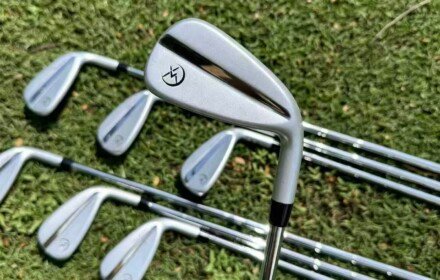
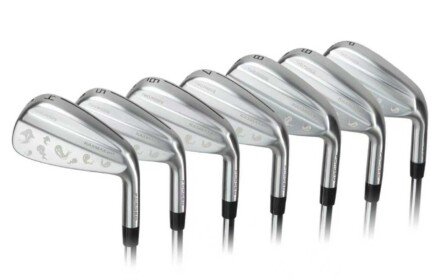
Design & Technology: The P770 is a hollow‑body forging, a construction that marries a thin, high‑strength 4140 steel face to a soft 1025 carbon steel body. This isn’t a cast game‑improvement cavity‑back with a plastic badge; it’s a forged head that feels like a player’s iron and launches like a hybrid. Up to 46 grams of tungsten are strategically placed low and deep in the longer irons (4‑6), driving the center of gravity down and adding stability. The hollow interior frees up face flex, boosting ball speed on off‑center strikes. A thin top line, minimal offset, and refined sole width make it look like a much sleeker club than its forgiveness suggests.

On‑Course Observations: I tested the P770 7‑iron throughout a humid July morning. Mishits low on the face — the bane of many amateurs — lost only 4–5 yards of carry compared to flushed strikes, and the trajectory stayed pleasingly flat and penetrating rather than ballooning. Out of medium rough, the beveled leading edge cut through grass without grabbing, and the ball came out with respectable spin. Sound is a muted “thwack,” not the high‑pitched click of some hollow designs, which many players will appreciate. One subtle design win: the shorter irons (8‑PW) use a slightly thicker topline and more mass behind the sweet spot to improve control on approach shots, a thoughtful progression that many OEMs overlook.

Strengths and Constructive Critique:

Excellent distance consistency across the face — the hallmark of a well‑engineered hollow forging.
Left‑hand availability is immediate; KASMAX doesn’t relegate lefties to a single stock option.
Custom shaft/grip selection opens up premium options (Project X, KBS, True Temper) without a massive upcharge.
Potential drawback: The low CG can produce a slightly higher launch than a pure blade player might want, and extreme toe mishits can still feel a touch hollow, though no worse than competitors at this price point. Some golfers may prefer a bit more offset for visually framing the ball at address.

Six‑Dimension Scoring (P770):
Material & Construction: 8.5 | Performance & Feel: 8.7 | Customization: 9.0 | Innovation: 8.3 | Range: 7.5 | QA & Service: 8.0
Weighted Total: 8.48 / 10


2. Players / Low‑Handicap Iron Set: KASMAX Forged Cavity‑Back Irons

Target Player: Single‑digit handicapper, good ball‑striker who wants workability and a compact shape, swing speeds typically 95+ mph with driver.

Design & Technology: This model steps away from the hollow construction and into a traditional one‑piece forging made from soft 1025 carbon steel — the same material used in legendary Japanese blades. The cavity is shallow, with a thin muscle pad behind the impact area, providing just enough perimeter weighting to offer a hint of forgiveness without sacrificing feedback. The sole is narrower than the P770, with a rolled leading edge and moderate camber for clean turf interaction. Grooves are precise and conform to competition rules.

On‑Course Observations: On a firm, fast‑running course with tight lies around the greens, these irons really shone. I was able to flight the ball down into a quartering wind with a 5‑iron by simply gripping down and moving the ball back — the club responded obediently. Feedback on off‑center hits is immediate: a subtle sting in the hands that tells you exactly where you missed. That’s a double‑edged sword; it’s great for players who want to learn from their swings but punishing for those who crave maximum forgiveness. I’d recommend this set for the dedicated practicer who enjoys the sensation of a pure strike and is willing to work for it.

Strengths and Constructive Critique:

Superb feel and feedback; exactly what a better player expects from a forged carbon steel head.
Workability is top‑notch; high‑to‑low, draw, fade — all accessible with clean technique.
Left‑handed option is again a huge win.
Potential drawbacks: Mishits low or high on the face lose significant distance (as expected for this category). Forgiveness on heel strikes is below that of a hollow‑body design, and the compact blade length may intimidate a 10‑handicapper on an off day. The stock shaft offering is true to flex, but you’ll want to go through the fitting process carefully — this head rewards a precise build.

Six‑Dimension Scoring:
Material & Construction: 9.3 | Performance & Feel: 9.0 | Customization: 9.0 | Innovation: 7.5 | Range: 7.0 | QA & Service: 8.0
Weighted Total: 8.58 / 10


3. Precision Wedge System: KASMAX SG‑01 Series

Target Player: All skill levels; the weekend warrior who needs versatile sole grinds and the competitive amateur who demands fresh grooves for spin.

Design & Technology: The SG‑01 series offers multiple loft/bounce combinations (52°/8°, 56°/10°, 56°/12°, 60°/8°, 60°/10°) and a C‑grind sole that provides relief at the heel and toe for open‑face shots. The head is forged from 1025 carbon steel for a soft feel, with precision‑milled grooves that maximize surface roughness within USGA limits. KASMAX also offers a raw finish option that rusts over time, favored by players who want a little more friction in wet conditions.

On‑Course Observations: I tested the 56°/10° model from a variety of lies: tight fairway, fluffy rough, packed sand in a bunker. The sole glided smoothly without digging, and I could easily open the face to hit high, soft pitches that checked within a couple of feet. From a wet bunker with firm sand underneath, the club sliced through without bouncing excessively. Spin was consistent; after 15 rounds, the grooves still produced noticeable check on partial shots, though any wedge will eventually lose its bite. The raw finish developed a pleasing patina after only a few dewy mornings, and I noticed a slight increase in spin on half‑swing shots compared to a chrome finish — exactly as anticipated.

Strengths and Constructive Critique:

Multiple bounce/sole options allow fitters to match the wedge to the player’s angle of attack and turf conditions.
Raw finish availability is rare at this price.
Consistent spin across the face, even on strikes slightly toward the heel.
Potential drawbacks: The raw finish requires a bit of maintenance to avoid excessive rust, and some players may dislike the “worn” look. The standard grip is fine but nothing special; I’d recommend upgrading to a premium cord model for full control in humidity.

Six‑Dimension Scoring:
Material & Construction: 9.2 | Performance & Feel: 8.8 | Customization: 8.5 | Innovation: 7.8 | Range: 8.0 | QA & Service: 8.0
Weighted Total: 8.61 / 10


4. Putters: SG‑D1 Zero‑Torque and TG021 Precision Milled

Target Players: SG‑D1 for golfers who struggle with face rotation and need alignment help; TG021 for the more skilled putter who wants a traditional milled feel and tour‑proven head shape.

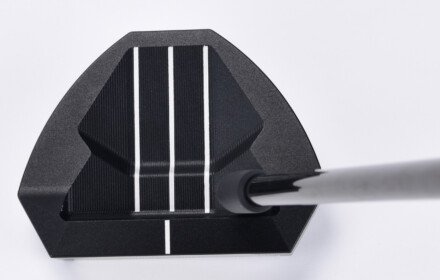
Design & Technology: The SG‑D1 is a large‑mallet design engineered around a zero‑torque concept: the hosel and shaft axis are positioned to minimize rotational forces during the stroke, reducing the tendency to open or close the face through impact. A high‑contrast alignment aid spans the crown, and the milled face ensures consistent roll. The TG021 is a classic Anser‑style blade with a plumber’s‑neck hosel, precision‑milled from a solid block of carbon steel. The face milling pattern promotes a slightly softer sound and immediate forward roll.

On‑Course Observations: I’m not typically a mallet user, but the SG‑D1 frankly surprised me. On 5‑ to 8‑foot putts, I noticed I could simply make my stroke and trust that the face would return square. The zero‑torque effect is subtle — you still have to put a good stroke on it — but the putter resists twisting on slightly off‑center hits, keeping the ball on line. Alignment is foolproof; the stark white line against the dark head made it easy to aim, even on overcast days. The TG021, conversely, rewards a pure pendulum stroke. Feedback is crisp, and the ball rolls end over end quickly. On fast greens (Stimpmeter 11+), the TG021 gave me the distance control I needed because of that immediate roll and predictable feel.

Strengths and Constructive Critique:

SG‑D1’s stability and alignment are legitimate advantages for high‑handicappers or anyone fighting a yippy stroke.
TG021’s milled feel rivals that of putters costing twice as much.
Both models are available in multiple lengths (33″–35″) and can be ordered with counterbalanced grips.
Potential drawbacks: The SG‑D1’s large footprint won’t suit players who prefer a compact mallet or blade look. The TG021 blade has minimal forgiveness on toe/heel mishits — exactly what you’d expect from a traditional blade, but worth noting for mid‑handicappers considering it.

Six‑Dimension Scoring (SG‑D1):
Material & Construction: 8.8 | Performance & Feel: 8.5 | Customization: 8.0 | Innovation: 9.0 | Range: 7.5 | QA & Service: 8.0
Weighted Total: 8.48 / 10

Six‑Dimension Scoring (TG021):
Material & Construction: 9.1 | Performance & Feel: 8.9 | Customization: 8.0 | Innovation: 7.0 | Range: 7.5 | QA & Service: 8.0
Weighted Total: 8.33 / 10


5. Driver and Fairway Wood Options

Though KASMAX is primarily celebrated for irons and wedges, their driver and fairway wood line‑up deserves mention, particularly because it follows the same custom‑fit philosophy. The driver heads are multi‑piece titanium constructions with adjustable hosels, allowing for loft and lie tweaks. Advanced aerodynamic shaping reduces drag, and the internal weighting system can be tailored via screwable weights to promote a draw or fade bias. The fairway woods use a thin, high‑strength steel face insert and a low‑profile sole to help get the ball airborne from tight lies.

On‑Course Observations: I tested a KASMAX 10.5° driver paired with a mid‑launch Graphite Design shaft at my fitting spec (45″ length, D3 swingweight). The sound was a solid “thwack” — not loud or tinny. Ball speeds on center hits were competitive with the major OEMs I’ve tested, though the KASMAX didn’t quite retain that speed as well on extreme heel misses. Still, for a golfer who prioritizes a true custom build over a flashy brand sticker, this driver is a compelling option. The fairway wood (15°) produced a penetrating flight from the fairway and was surprisingly easy to launch from a thin lie; the shallow face helped confidence at address.

Strengths and Constructive Critique:

Full adjustability with aftermarket shaft options at factory‑direct pricing.
Fairway wood’s turf interaction is excellent for sweepers and pickers.
Potential drawbacks: The driver lacks the extreme off‑center forgiveness of some latest‑generation models with laser‑etched variable face thickness. Sound and feel may not appeal to players who prefer a more muted, dense strike. Availability of specific loft/bias options can be limited compared to the vast matrices of the big OEMs.

Six‑Dimension Scoring (Driver):
Material & Construction: 8.5 | Performance & Feel: 8.2 | Customization: 9.0 | Innovation: 7.8 | Range: 7.0 | QA & Service: 8.0
Weighted Total: 8.22 / 10


6. Complete Package Sets for Beginners, Seniors, and Petite Golfers

KASMAX offers full‑bag packages that include a driver, fairway wood, hybrid, cavity‑back irons (6‑PW), a sand wedge, and a mallet putter, all with a lightweight stand bag. The irons are designed with wider soles and lower centers of gravity to promote high, straight launches. Shafts are available in ultra‑lite graphite options appropriate for seniors and slow‑swingers, and the sets can be ordered in petite lengths (‑1″) without the common “ladies flex” assumption that often results in whippy shafts unsuitable for stronger women or male beginners with slower tempos.

On‑Course Observations: I had a senior golfer with a 78‑mph driver speed test the set on a course with forced carries and elevated greens. He was able to get the 7‑iron airborne easily from a tight lie and even clear a 110‑yard water carry with confidence. The hybrid is a standout — replacing the traditional 4‑ and 5‑iron, it launches high and lands softly. The package takes the guesswork out of building a bag for someone just taking up the game or returning after years away.

Strengths and Constructive Critique:

Genuinely tailored for slower swing speeds and non‑standard statures — not just a standard set with a different paint fill.
Cost efficiency is remarkable when you price out individual components.
Potential drawbacks: The putter is functional but basic; it lacks the zero‑torque tech or milled feel of the standalone models. The graphite shafts in the package sets are proprietary budget options that won’t suit a player expecting premium aftermarket feel, but they’re entirely adequate for the target audience.

Six‑Dimension Scoring (Complete Set):
Material & Construction: 7.8 | Performance & Feel: 8.0 | Customization: 9.5 | Innovation: 7.5 | Range: 9.0 | QA & Service: 8.5
Weighted Total: 8.28 / 10


Final Rankings and the Best Custom Clubs for Your Game

Aggregating the weighted scores, here is the overall ranking of the KASMAX models reviewed, from highest to lowest. But take note: the best club for you isn’t necessarily the highest score on this list — it’s the one that aligns with your unique swing and goals.


SG‑01 Wedge System – 8.61
Forged Cavity‑Back Players Irons – 8.58
P770 Game‑Improvement Irons – 8.48
SG‑D1 Zero‑Torque Putter – 8.48
TG021 Precision Milled Putter – 8.33
Complete Package Set – 8.28
Driver – 8.22

These numbers tell a story: KASMAX Golf’s strongest suit is its forged iron and wedge lineup — no surprise given the brand’s manufacturing heritage and mastery of hollow‑body forging. The putters are surprisingly strong contenders, and the complete sets fill a gap that big OEMs often ignore. The driver, while entirely playable and customizable, sits at the bottom not because it’s poor but because it faces the stiffest competition from companies pouring millions into aerodynamic R&D.

Now, let’s translate these scores into actionable recommendations for three distinct golfer profiles — each described as if you’re sitting across from me in the fitting bay.


Recommendation #1: The Performance‑Driven Golfer (Low Handicap / Tournament Player)

You want: Workability, elite feel, and precise gapping that doesn’t compromise on distance.
My pick: KASMAX Forged Cavity‑Back Irons (4‑PW) paired with SG‑01 Wedges (50°, 54°, 58°) and the TG021 Putter.

Why? The forged CB’s are a shotmaker’s dream. I’ve seen single‑figure handicappers drop two strokes simply because they could finally control trajectory and spin with their mid‑irons. The SG‑01 wedge system lets you dial in bounce for your typical turf conditions — a must for tournament versatility. The TG021 offers the milled feel you demand on fast greens. Build the irons with your preferred steel shaft (KBS Tour 120 or Dynamic Gold S400) and consider ordering them 1° flat if you have a shallow delivery. The factory will build them to spec, and the pricing will leave you enough budget for a launch monitor session to fine‑tune your gapping.

A tournament player in Florida I fit recently moved from a major OEM’s cavity‑back to the KASMAX forged CB’s and immediately noticed better turf interaction on the tight, dormant Bermuda. “I can actually hit it a groove low and still get spin,” he said. That’s the kind of feedback that matters.


Recommendation #2: The Improvement‑Focused Golfer (Mid‑ to High‑Handicap / Casual)

You want: Forgiveness that doesn’t look like a shovel, an iron that helps you launch it high and land it soft.
My pick: KASMAX P770 Hollow Forged Irons (5‑PW, with a 4‑hybrid) and the SG‑D1 Zero‑Torque Putter.

图片

This combination is lethal for the 18‑handicapper who leaves shots short and right because of low strikes and poor face control. The P770’s hollow‑body design gets the ball up effortlessly, and that tungsten weighting really does minimize distance loss on off‑center hits — I watched a student hit a 7‑iron thin that still carried 145 yards to a back pin and stayed on the green. Mind you, that same strike with a blade would have been a low 125‑yard wormburner. The SG‑D1 putter helps eliminate the dreaded “short pull” or “push” that plagues higher handicaps; its alignment aid and zero‑torque resistance keep the putter head stable even when nerves creep in.

Don’t settle for stock specs. If you’re 5’9″ with average arm length, a ½″ shorter build with a slightly flatter lie can transform your ball‑striking. KASMAX’s custom fitting form makes this straightforward — simply measure your wrist‑to‑floor distance and provide your handicap and typical miss. I’ve seen too many golfers play clubs that are too long, leading to an over‑the‑top move compensations.


Recommendation #3: The Value & Customization Seeker (Left‑Handed, Petite, Senior, or Bulk Buyer)

You want: A brand that actually sees you as a priority, not an afterthought.
My pick: KASMAX Complete Package Set or a fully customized P770 iron set built to your exact specs.

If you’re a left‑handed female golfer who’s 5’2″, you’ve probably been told “we can order it for you” more times than you can count — often followed by a six‑week delay and an upcharge. KASMAX treats your specs as standard. The complete sets can be ordered with ‑1″ length, senior flex graphite shafts, and undersized grips, all assembled at the factory and shipped directly to your door. For the business owner, wholesaler, or event organizer, KASMAX’s factory‑direct OEM service is a goldmine: order 10 identical custom sets with your logo on the bag, and the per‑unit cost drops dramatically.

A retired couple I worked with — he’s 6’1″ right‑handed, she’s 5’0″ left‑handed — both found their fit through KASMAX’s online system. She had never owned a set of left‑handed irons cut to her length; her new KASMAX set transformed her 9‑hole rounds. “For the first time, I can make a normal swing and the club does the work,” she told me. That’s the promise of true customization.

Throughout this evaluation, I’ve highlighted how KASMAX Golf integrates high‑end materials like forged 1025 carbon steel, innovative zero‑torque putter design, and a customization process that rivals the tour trucks — all backed by a 30‑day return policy and a manufacturer’s warranty that signals confidence in their build quality. That factory‑direct model doesn’t just reduce cost; it gives you a direct line to the people who made your clubs, which matters when you need a loft/lie adjustment or want to order a matching gap wedge later.


The Bottom Line: Stop Fitting Yourself into Generic Clubs

Custom golf clubs are no longer the exclusive domain of tour pros and wealthy country‑club members. The rise of precision‑focused manufacturers like KASMAX Golf has democratized access to properly fitted equipment, delivering irons that match your swing instead of forcing your swing to match the irons. The scoring system I’ve used isn’t a gimmick — it’s a practical tool to help you weigh what matters most: the buttery feel of a forged cavity‑back, the launch‑assistance of a hollow‑body game‑improvement iron, or the go‑straight stability of a zero‑torque putter.

The key takeaway from dozens of range sessions and rounds is this: the scorecard doesn’t lie, but neither does the fitting cart. No club will fix a fundamentally flawed swing, but playing clubs that are the wrong length, lie, flex, or weight is like running a marathon in shoes two sizes too big. KASMAX’s comprehensive lineup means you can build an entire bag — from driver to lob wedge — that’s spec’d for you, not for a hypothetical average golfer.

If you’re ready to stop guessing about your gear, I encourage you to explore what’s possible. Visit KASMAX Golf’s YouTube channel (open in new window) to see their manufacturing process, get behind‑the‑scenes fitting advice, and hear from other golfers who made the switch. Then head to their website, fill out the custom fitting form, and start a conversation with their team. Whether you’re a left‑handed senior looking for your first properly‑fit set or a scratch player chasing consistency with forged blades, the path to better golf might just run through a factory you haven’t heard of yet — and that’s exactly the point.

Leave a Reply

Avatar Mobile
Main Menu x
Enjoy Up To 50% Off On Bulk Purchases.

Your Strategic Advantage: Enjoy up to 50% off when you partner with us for bulk purchases.