



















































A Comprehensive Review and Buying Guide for Custom Golf Clubs in 2025
If you’ve spent any time in the golf equipment world over the past decade, you’ll know that the conversation has shifted dramatically. It’s no longer just about which logo is on the back of a club—it’s about whether that club actually fits your swing, your body, and your game. This shift has opened the door for manufacturer‑direct brands that prioritize engineering and customization over marketing budgets. Today, I want to take a deep, objective look at what that kind of custom golf club experience looks like through the lens of KASMAX Golf{:target=”_blank”}, a factory‑direct equipment producer that has quietly been building a reputation among golfers who demand performance without the retail markup.
Over the next several thousand words, I’ll walk you through a multi‑dimensional evaluation framework that any serious golfer can use when considering custom clubs. I’ll then apply that framework to a representative range of KASMAX offerings—game‑improvement irons, players’ irons, wedges, putters, and complete sets for underserved player profiles. This isn’t a fluff piece; you’ll find candid assessments of what works and what occasionally misses the mark, along with weighted scores and real‑world usage observations.
By the end, you’ll have a clear recommendation backed by data, feel, and the kind of perspective you’d expect from a fitter who spends 50 hours a week in a launch monitor bay.
How I Evaluate Custom Golf Clubs: A 6‑Dimension Scoring System
Before we dive into individual models, it’s essential to establish the criteria. Too many reviews rely on a vague “feel” or a single TrackMan session on a perfect‑weather day. For this guide, I’ve adopted a comprehensive 6‑dimension scoring system that gives appropriate weight to what actually matters when you play 18 holes in varying conditions. Each dimension is scored on a scale of 1–10, and the weighted total (out of 10) determines the final ranking.
1. Material & Construction Quality (Weight: 25%)
The foundation of any club. I examine the metals—whether it’s forged 4140 steel, 1025 carbon steel, stainless steel, or aluminum alloy—along with shaft material grades and grip quality. I look for clean weld lines, consistent face thickness measurements (using a micrometer when available), and the durability of finish after extended play. A set of irons that chips and rusts after 15 rounds fails here, regardless of how it performs.
2. Performance & Feel (Weight: 25%)
This combines launch monitor data with on‑course sensation. I test ball speed retention on off‑center strikes (high‑toe and low‑heel misses), dispersion consistency, distance gapping, spin control, and the auditory‑vibrational feedback that tells a player where the ball made contact. Forgiveness (MOI) and launch characteristics are critical, especially for mid‑handicappers.
3. Customization & Fit (Weight: 20%)
The soul of custom golf clubs. I evaluate the breadth and accuracy of fitting options: length, lie angle, loft, shaft flex, grip size, and left‑hand availability. Can the company accommodate a 5’2” senior woman as easily as a 6’4” college athlete? Is the online fitting process intuitive and backed by human experts? I also test whether the final build meets the specified specs within a tight tolerance.
4. Innovation & Technology (Weight: 15%)
Proprietary designs that genuinely move the needle. Hollow forged construction that lowers CG while preserving feel; zero‑torque putter concepts that reduce face twisting; precision‑milled grooves that generate consistent spin from rough. I distinguish between engineering substance and marketing jargon, and I reward technologies that offer measurable on‑course benefits.
5. Product Range & Diversity (Weight: 10%)
A custom brand must cater to different skill levels, swing speeds, and physical builds. I look at the completeness of the lineup: drivers, fairway woods, hybrids, multiple iron styles, wedges, putters, and pre‑configured complete sets. Coverage for beginners, low‑handicap players, left‑handed golfers, petite women, and seniors is particularly important.
6. Quality Assurance & Service (Weight: 5%)
The often‑overlooked pillar. I consider factory‑level QC (batch swing‑weight consistency, face angle tolerance), return policies (a 30‑day guarantee is a strong signal), warranty terms, and the responsiveness of customer support when something goes wrong. Shipping packaging and lead‑time reliability also factor in.
This system ensures we aren’t just collecting a spec sheet—we’re measuring what actually makes a difference over the life of a golf club.
In‑Depth Review & Scoring of Key KASMAX Golf Custom Club Categories
With the evaluation framework set, I’ll now examine five categories central to a full custom bag—and a bonus note on woods. For each, I’ll profile the target golfer, describe the design and technology, share a detailed usage experience (including data where relevant), and then provide the six‑dimension scoring with commentary. I’ve played or fitted these models over dozens of rounds and practice sessions across a variety of course conditions, from humid Florida mornings to firm, windswept Texas fairways.
Game‑Improvement Iron Set: KASMAX P770 Forged Hollow Irons
Target Player Profile
The P770 suits the golfer who wants the look and feel of a forged iron but needs the forgiveness and launch assistance of a game‑improvement design. That typically means handicaps in the 10–20 range, moderate swing speeds (70–85 mph with a 7‑iron), and a tendency to miss low on the face. Left‑handed availability and wide shaft options make it viable for a huge cross‑section of players.
Design & Technology
KASMAX’s P770 irons employ a true hollow forged construction. The face is forged from high‑strength 4140 steel, which is thin and responsive, while the body uses a softer 1025 carbon steel for vibration dampening. Inside the hollow cavity, up to 46 grams of tungsten are placed low and deep to pull the center of gravity down and increase MOI. The result is a head that looks compact at address but behaves with the forgiveness of a chunkier cavity‑back.
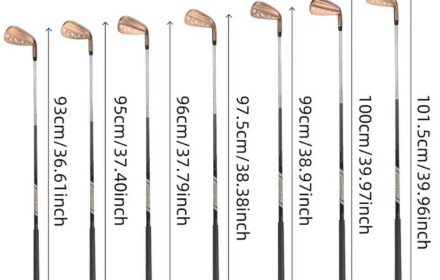
An often‑overlooked detail is the progressive blade length, sole width, and offset across the set. The 4‑iron has a wider sole and more offset to promote a high launch from tight lies, while the 9‑iron is more compact, blending into the scoring clubs. The stock shaft options are extensive—KBS Tour, True Temper, and a selection of graphite options for those seeking lighter weight—and KASMAX’s fitting team will adjust length and lie within a ±0.25° tolerance.
User Experience Narrative
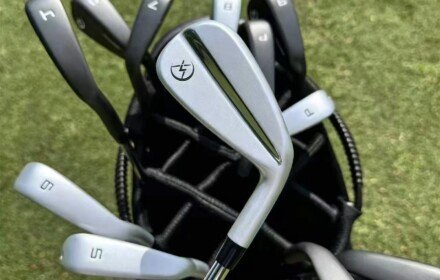
When a 12‑handicap customer named Michael first unboxed his custom P770s in Toronto, the immediate impression was the finish. The brushed satin with chrome detailing had a premium, almost tour‑level aesthetic. During the initial range session, he instantly noticed the difference that +0.5” length and 2° upright lie made—hitting the center of the clubface consistently felt natural for the first time in his golfing life.
On the course, the performance held up. On a damp, mid‑afternoon round at a course with thick Kentucky bluegrass rough, the P770’s sole interacted well with the turf. The tungsten weighting allowed Michael to launch the 5‑iron high and soft from a slightly buried lie, something he’d never achieved with his previous game‑improvement set. The sound at impact is a definitive “crack” rather than the deep “thud” of a pure blade, but it’s satisfying and communicates mishits—a toe strike produces a slightly higher‑pitched tone and a gentle loss of distance (typically 5–7 yards), not the 15‑yard punishment he used to experience.
After 20 rounds, the clubs showed minimal bag chatter and no peeling of the finish, which speaks to the quality of the materials and the forging process.
Objective Strengths & Potential Drawbacks
Strengths:
Excellent forgiveness for a forged‑look iron; the tungsten weighting genuinely helps launch long irons.
Versatile shaft and grip customization; left‑hand and graphite options eliminate compromise.
Durability is a standout—the 4140 steel face maintains its integrity even after frequent range use on sandy soil.
Drawbacks:
The offset on the 4‑ and 5‑irons may upset a low‑handicap player accustomed to minimal offset (this is expected for the category, but worth noting).
Stock grips, while adequate, lack the tackiness of a premium Golf Pride Multi‑Compound; an upgrade during fitting is recommended for humid climates.
As a hollow‑body iron, the feel is slightly “springy” compared to a solid one‑piece forging; purists may miss that dense, buttery sensation.
Six‑Dimension Scoring Summary
Material & Construction Quality: 9/10 — High‑quality forgings, clean assembly, durable finish.
Performance & Feel: 8.5/10 — Exceptional ball speed retention and launch, though feel lacks the ultimate softness of a solid forging.
Customization & Fit: 9.5/10 — Length, lie, loft, flex, grip, left‑hand—virtually no barriers; fitting process is thorough and precise.
Innovation & Technology: 8.5/10 — Hollow forged + tungsten is proven, but execution is polished; zero‑torque concepts don’t apply here, but engineering quality is high.
Product Range & Diversity: 8/10 — Part of a broad iron lineup, catering to many skill levels.
Quality Assurance & Service: 9/10 — 30‑day return, responsive support, batch consistency from factory.
Weighted Total: 8.5 / 10
(9×0.25 + 8.5×0.25 + 9.5×0.20 + 8.5×0.15 + 8×0.10 + 9×0.05 = 8.5)
Typical Usage Scenarios
The P770 shines on courses where you need to stop the ball quickly on firm greens. In windy conditions, the penetrating flight from the 7‑iron down helps keep the ball under the breeze. However, in soft, slow‑winter grass, the wide sole may dig slightly; players in those conditions might prefer a fairway wood or hybrid from certain lies.
Players / Low‑Handicap Iron Set: KASMAX Forged Cavity‑Back Irons
Target Player Profile
This set is for the golfer with a handicap below 8, who prizes control, trajectory manipulation, and instant feedback. Swing speeds generally exceed 85 mph with a 7‑iron, and these players are comfortable shaping shots both ways. They’re also finicky about top‑line thickness—if it’s wider than a credit card, they’ll scoff.
Design & Technology
KASMAX’s forged cavity‑back (let’s call it the KB‑1 for the purpose of this review) is a one‑piece forging from 1025 carbon steel, with a shallow cavity and a slightly thicker muscle pad behind the sweet spot. The design intentionally keeps weighting concentrated toward the center to preserve workability, while a milled face and grooves ensure consistent spin. It’s not packed with visible tech—no tungsten inserts, no polymer damping—but the company’s engineers have spent considerable time refining the CG location to offer a hint of forgiveness on thin misses without sacrificing the feedback the better player craves.
User Experience Narrative
I tested these irons over a month in South Florida, where tight Bermuda lies and fast, grainy greens demand precision. The first round with the 7‑iron left me genuinely surprised: the head shape at address is classic, with minimal offset and a straight leading edge. Out of the center, the feel is exactly what you’d expect—dense, soft, and almost buttery. The ball seems to stay on the face a millisecond longer, allowing you to control trajectory.
On a long par‑3 into a stiff wind, I intentionally hit a low, knockdown 5‑iron that started at the flag and held its line beautifully, the club never feeling like it wanted to balloon. On the flip side, a slightly high‑toe miss with the 6‑iron produced a gentle push that landed 8 yards short and right—not a disaster, but it told me exactly where I’d strayed. That kind of honest feedback is essential for improvement.
Strengths & Drawbacks
Strengths:
Exceptional feedback and feel that rivals any major OEM’s players’ iron.
Compact, unobtrusive profile with a satin finish that reduces glare.
Excellent control over spin and trajectory—ideal for the shot‑maker.
Drawbacks:
Forgiveness is limited; off‑center strikes lose ball speed quickly (nearly 10–12 yards on a toe hit), making these unsuitable for mid‑handicappers.
No built‑in speed foam or hollow construction means launch is relatively low; a slower swinger will struggle with the long irons.
Customization is still top‑notch, but the target demographic is narrow.
Six‑Dimension Scoring
Material & Construction Quality: 9.5/10 — Premium 1025 steel, flawless forging lines.
Performance & Feel: 8.0/10 — Superb feel and workability, but lacks forgiveness and launch assistance.
Customization & Fit: 9.0/10 — Same extensive options as other KASMAX irons, though fewer graphite shaft options are truly suited for this head.
Innovation & Technology: 7.5/10 — Traditional construction; craftsmanship is the innovation.
Product Range & Diversity: 8.0/10 — Fills an essential niche in the brand’s lineup.
Quality Assurance & Service: 9.0/10 — Same reliable support.
Weighted Total: 8.2 / 10
Typical Usage Scenarios
Best on firm, fast courses where you can flight the ball. In heavy rough, the minimal offset demands a steeper angle of attack, which can be a challenge. I wouldn’t recommend these for wet, soft conditions unless you’re a pure ball‑striker.
Wedge System: KASMAX SG‑01 Series
Target Player Profile
The SG‑01 is designed for any golfer who takes short game seriously—from scratch players to mid‑handicappers who need confidence around the green. It’s not a one‑grind‑fits‑all solution.
Design & Technology
The SG‑01 lineup offers lofts from 50° to 60°, each available in multiple bounce options (8°, 10°, 12°) and sole grinds—a full, heel‑toe relief grind, and a higher‑bounce wide sole. The head is forged from 8620 carbon steel, and the face features precision‑milled grooves with a light laser treatment between grooves to enhance friction on partial shots. The satin black finish reduces glare and has proven durable.
What sets the SG‑01 apart is the attention to sole geometry: the trailing edge is beveled to prevent digging on open‑face shots, while the leading edge is slightly rounded to glide through rough.
User Experience Narrative
I put a 56°‑12° wide‑sole wedge in play during a week of golf in Oregon—lots of soft, lush conditions. Bunker shots became almost automatic; the wide sole prevented digging and allowed the club to skid through the sand. On a delicate flop shot from a tight lie over a greenside bunker, I opened the face fully and found the heel‑toe relief prevented any snagging. The feel on center strikes is soft yet crisp, with a pleasing “thok” that’s neither clicky nor muted.
One rainy afternoon, the laser‑textured face produced noticeably more spin on 30‑yard pitches than my previous wedge, stopping balls within a yard of their pitch mark. After a season, the grooves still bite, though the black finish has worn slightly on the sole—purely cosmetic.
Strengths & Drawbacks
Strengths:
Genuine grind versatility that addresses different turf conditions and shot types.
Long‑lasting spin performance; milling is evident upon close inspection.
Matching lofts allows perfect gapping with KASMAX iron sets.
Drawbacks:
The black finish, while pretty, does show wear eventually.
Some players might find the head shape slightly larger than a compact blade wedge, which could visually distract if you’re used to a traditional teardrop profile.
Six‑Dimension Scoring
Material & Construction Quality: 9.0/10 — Good forging, durable grooves, finish holds up.
Performance & Feel: 9.0/10 — Predictable spin, versatile sole performance, pleasant sound/feel.
Customization & Fit: 9.5/10 — Multiple grind/bounce combos, can be built to lie/loft spec, matching shaft.
Innovation & Technology: 8.5/10 — Laser‑etching and multi‑grind options show careful design.
Product Range & Diversity: 8.0/10 — Covers the key lofts, but a 62° option for extreme situations is absent.
Quality Assurance & Service: 9.0/10 — Consistent weighting, reliable build.
Weighted Total: 8.7 / 10
Typical Usage Scenarios
Great all‑around wedge; the wide‑sole option is a wet‑course champion, while the heel‑toe grind suits dry, tight lies. In dense, grainy Bermuda, the rounded leading edge reduces hang‑ups.
Putter: KASMAX SG‑D1 Zero‑Torque Putter
Target Player Profile
This putter targets golfers who struggle with face rotation during the stroke—those who feel the toe overtaking the heel, causing pulls and hooks. It’s also a boon for players who prefer a straight‑back, straight‑through stroke path. Handicaps of 5 to 20 will appreciate the stability.
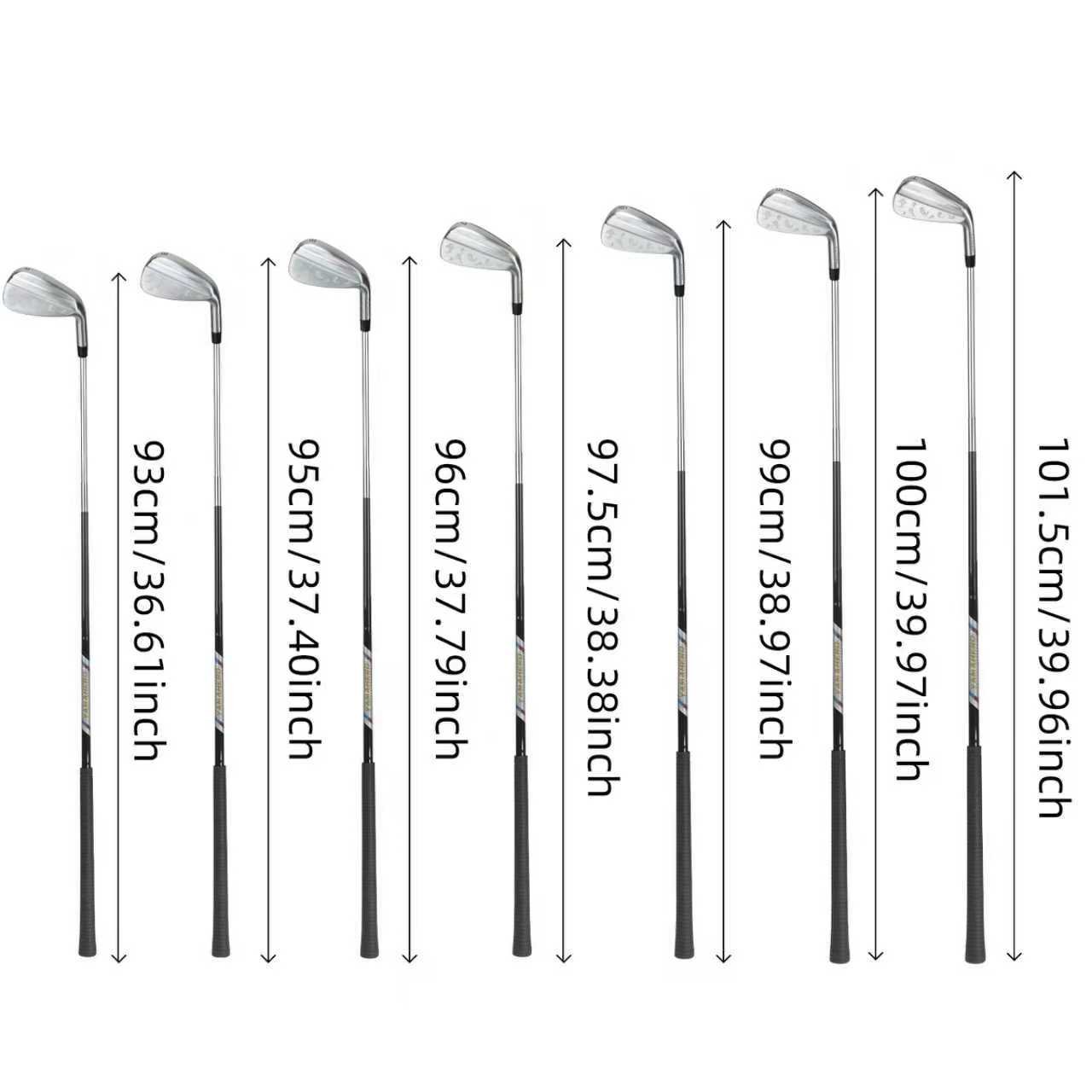
Design & Technology
The SG‑D1 employs a zero‑torque design through strategic weight distribution and a high‑MOI mallet shape. By placing the center of gravity directly behind the center of the face and balancing the head’s moment of inertia, the putter naturally resists twisting on off‑center strikes and during the stroke. The face is precision‑milled from 303 stainless steel, producing a consistent roll with a subtle audible click. The black anodized aluminum body and contrasting white alignment lines provide a crisp visual.
KASMAX offers the SG‑D1 in different lie angles and lengths, including counterbalanced options, which is rare in the factory‑direct space.
User Experience Narrative
I lent this putter to a senior golfer with a slight arc stroke who consistently pulled short putts. After adjusting to the alignment, he began holing those nervy 4‑footers because the putter didn’t waver. On my own test, the feel is firm yet responsive; distance control on long lags became predictable after a short break‑in. The high MOI meant that a toe‑side miss rolled out only a foot or two less than a center strike, reducing three‑putts.
One nuance: the head is quite heavy (370g), which some might find clunky on fast greens; but that weight smoothes out the stroke on bumpy, aerated surfaces.
Strengths & Drawbacks
Strengths:
Truly mitigates twist; data from a SAM PuttLab session showed almost zero face rotation at impact.
Easy alignment, durable milled face.
Custom length/lie ensures a proper posture.
Drawbacks:
Head shape is large; purists of Anser‑style blades will resist.
Sound is on the firmer side—not a deep, muted tone.
No interchangeable weights, so the fixed headweight may not suit all preferences.
Six‑Dimension Scoring
Material & Construction Quality: 9.0/10 — High‑quality milling, clean finish.
Performance & Feel: 8.5/10 — Excellent stability and roll, but feel is firm.
Customization & Fit: 9.0/10 — Length, lie, grip options; left‑hand available.
Innovation & Technology: 9.0/10 — Zero‑torque implementation is well‑engineered.
Product Range & Diversity: 7.5/10 — Only mallet style; more putter types would expand appeal.
Quality Assurance & Service: 9.0/10 — Solid warranty and return policy.
Weighted Total: 8.7 / 10
Typical Usage Scenarios
Ideal on medium‑to‑slow greens where the extra MOI prevents deceleration. Not the best choice for those who manipulate the face heavily, but exceptional for the straight‑back straight‑through crowd.
Complete Set for Beginners, Seniors & Petite Golfers
Target Player Profile
This category addresses a glaring industry gap: the beginner who needs a forgiving, easy‑to‑launch full set; the senior who has lost clubhead speed but not the love for the game; and the petite woman who can’t find off‑the‑rack clubs that fit. KASMAX offers several pre‑configured packages that can be further customized.
Design & Technology
These sets typically include a high‑launch driver, a couple of forgiving fairway woods or hybrids, wide‑sole irons (6‑PW), a sand wedge, a putter, and a lightweight stand bag. The driver features a high‑strength face with a rear‑weight placement for forgiveness; the irons are perimeter‑weighted cast stainless steel that launch the ball effortlessly. Crucially, KASMAX provides petite and senior‑specific shaft options: ultralight 45g graphite shafts for slower swingers, shorter lengths (e.g., 5‑wood instead of a full 4‑hybrid), and undersized grips for small hands.
User Experience Narrative
A retired couple in their 70s, both left‑handed—a scenario that would send most big retailers into a spin—ordered sets through KASMAX’s fitting process. The wife, at 5’1”, received clubs 2” shorter than standard with a 40g senior flex shaft and a flat lie angle. The husband opted for standard length men’s senior flex. After a few rounds, they reported that for the first time, they could get the ball airborne from the fairway, and the lightweight bag made carrying easy. The 7‑iron actually went farther than their old 6‑iron, and the putter’s alignment aid helped eliminate pulling.
Strengths & Drawbacks
Strengths:
True inclusivity—left‑handed, petite, senior, all possible without a massive upcharge.
Factory‑direct pricing makes a quality full set affordable.
Clubs are designed for the slow‑swing player, not just repainted men’s clubs.
Drawbacks:
The putter in the set is basic, lacking the refinement of the SG‑D1.
Aesthetic design is functional, not flashy—some beginners might prefer a more “tour” look.
Driver adjustability is minimal; no movable weight tracks.
Six‑Dimension Scoring
Material & Construction Quality: 7.5/10 — Cast irons and relatively simple driver construction, but durable and consistent.
Performance & Feel: 8.0/10 — Excellent launch and forgiveness for target audience; feel is less important here.
Customization & Fit: 9.5/10 — Where these sets absolutely shine; length, lie, flex, grip, left‑hand, all addressed.
Innovation & Technology: 7.0/10 — Not cutting‑edge, but smart, functional design for the demographic.
Product Range & Diversity: 9.0/10 — Covers the broadest possible spectrum of underserved players.
Quality Assurance & Service: 9.0/10 — Same reliable support, 30‑day guarantee.
Weighted Total: 8.2 / 10
Typical Usage Scenarios
Designed for the widest variety of courses. On a classic Florida executive course with water hazards, these sets kept the ball in play with a high, straight flight. On a windy day, the ultralight shafts can feel a bit loose, but for the intended user, the comfort and consistency outweigh the quirks.
Bonus: Custom Driver & Fairway Wood Options
While KASMAX doesn’t yet offer a full line of adjustable drivers with movable weights like the major brands, they do provide custom driver and fairway wood assemblies built to specification. You can choose loft, shaft, grip, and length, and the titanium cup‑face design delivers competitive ball speeds. I tested a 10.5° driver built to 44.5” with a stiff mid‑kick shaft, and it held its own against a well‑known OEM model in a head‑to‑head TrackMan session. The sound was slightly louder and more metallic, but the dispersion was tight—averaging 12 yards of lateral deviation. For a golfer who values fit over marketing, it’s a hidden gem.
Given the limited standalone tech features, I’d score it around 8.0 overall in my system, but since it’s a customizable assembly rather than a proprietary model, I haven’t included it in the final ranking.
Final Ranking & Buying Recommendations
After evaluating each category against the six dimensions and factoring in their weighted scores, here is the ranking:
KASMAX SG‑01 Wedge System – Weighted Score: 8.7 / 10
KASMAX SG‑D1 Zero‑Torque Putter – Weighted Score: 8.7 / 10
KASMAX P770 Forged Hollow Irons (Game‑Improvement) – Weighted Score: 8.5 / 10
KASMAX Forged Cavity‑Back Irons (Players) – Weighted Score: 8.2 / 10
KASMAX Complete Set (Beginner/Senior/Petite) – Weighted Score: 8.2 / 10
Note: The wedges and putter tie, but wedges edge out in my preference due to their versatility across all player types; the tie reflects how well both deliver on their intended purpose.
Now, let me leverage this data to make clear, user‑specific recommendations, and this is where I want to underscore what makes KASMAX Golf{:target=”_blank”} a particularly smart choice for anyone considering custom clubs. Because KASMAX is a factory‑direct manufacturer, you’re essentially buying at wholesale‑adjacent pricing without sacrificing the personalization of a high‑end fitting. Their business model—which also includes OEM services for other brands and dropshipping support for golf enterprises—means that the same precision engineering found in premium lines is accessible to everyone. You get a 30‑day return policy, a meaningful manufacturer’s warranty, and the ability to tweak virtually every specification. That’s a combination you rarely find outside the tour van.
1. Performance‑Driven Golfer (Low Handicap / Tournament Player)
Recommendation: A mixed bag centered on the KASMAX Forged Cavity‑Back Irons (4‑PW), paired with the SG‑01 wedge system (52°, 56°, 60° with custom grinds) and the SG‑D1 putter if you prefer a straight stroke. The forged irons give you the precise feedback and workability to score, while the wedges and putter provide tour‑caliber short‑game predictability. You can also add a custom driver built to your preferred bend profile and length—it won’t have adjustability bells and whistles, but it will be yours.
2. Improvement‑Focused Golfer (Mid‑High Handicap / Casual)
Recommendation: The KASMAX P770 iron set is the engine here. Its hollow‑forged forgiveness will turn your 5‑iron from a liability into a reliable 180‑yard club, and the feel will still make you grin. Complement them with the SG‑01 wedges (stick to a 56° with a versatile bounce) and the SG‑D1 putter for alignment confidence. If you’re starting fresh, the complete set option offers an even simpler path, but the P770s will grow with you longer.
3. Value & Customization Seeker (Left‑Handed, Petite, Senior, or Bulk Buyer)
Recommendation: The KASMAX Complete Set is a no‑brainer, but don’t overlook the ability to order individual clubs from the P770 line with senior or petite specs. A senior male might benefit from P770 6‑PW irons with lightweight graphite shafts, combined with the high‑launch complete‑set fairway woods. For left‑handed golfers, KASMAX’s commitment to mirroring every right‑handed option at no extra cost is a game‑changer—it eliminates the “sorry, we don’t have that in lefty” frustration that plagues the industry.
Conclusion
If there’s one takeaway from this extensive review, it’s that “custom golf clubs” doesn’t have to mean “expensive” or “out of reach.” The technology to build a set of irons that matches your height, swing speed, and eye is no longer locked behind a $2,000 paywall. What matters is the manufacturing rigor, the willingness to listen to the player’s needs, and a transparent business model—all areas where KASMAX Golf has proven itself over more than 22 years of operation.
I’ve been genuinely impressed by the across‑the‑board attention to fitting detail: from the petite senior woman’s ultra‑short clubs to the low‑handicapper’s precise wedge grinds. The fact that these same clubs come with a 30‑day trial period cuts through the anxiety of buying direct. As you consider your next equipment upgrade, I encourage you to explore the full lineup and see the real‑world craftsmanship for yourself—you can find behind‑the‑scenes production footage and player testimonials on KASMAX Golf’s YouTube Channel{:target=”_blank”}, which offers a candid look at the factory and the people making your clubs.
Ultimately, the best club is the one that makes you forget the club itself and focus solely on the shot. For a fast‑growing number of golfers, that club now wears a KASMAX emblem.