



















































Introduction
The search for the perfect set of clubs often feels endless. Off‑the‑rack options force golfers into compromises—standard lie angles, one‑length shafts, limited grip choices—while premium tour‑issue equipment carries a premium price tag that funds marketing rather than metal. Over the past decade, direct‑to‑consumer and factory‑direct brands have reshaped the industry, proving that true performance and personalized fit need not break the bank. At the center of this revolution is KASMAX Golf (opens in new window), a manufacturer that owns its entire production chain, from forging house to final assembly, and passes the savings on to the golfer.
This guide is not a superficial brand comparison. It is an in‑depth, data‑driven evaluation of custom golf clubs offered by KASMAX, scrutinized through the lens of a club fitter who has spent the last three seasons putting hundreds of clubs into players’ hands. We will dissect materials, measure forgiveness, assess customization breadth, and weigh after‑sales service—all through a six‑dimension scoring system. Whether you are a low‑handicap striker chasing tighter dispersion, a mid‑handicapper desperate to launch long irons higher, or a left‑handed petite senior tired of feeling invisible in big‑box stores, the following pages will help you understand what truly matters in a custom set.
Evaluation Methodology and Scoring Framework
A meaningful review demands consistency. To move beyond anecdotal praise, I’ve applied a weighted scoring model refined over years of fitting sessions, launch monitor data analysis, and feedback from players with handicaps ranging from +2 to 36. Every club category is assessed across six dimensions, each carrying a weight reflective of its importance in the custom club buying decision. Scores are on a 1–10 scale, with 10 representing near‑perfection for the category’s target player.
1. Material & Construction Quality (Weight: 25%)
Forged from 4140 steel or cast from 17‑4 stainless, wrapped in a flawless satin or PVD finish—materials speak volumes before the first strike. I examine the grain structure of forged faces, the consistency of weld seams in hollow irons, the bore‑through quality of shafts, and the tactile richness of grips. A club that feels cheap in the hands rarely inspires trust over a 6‑foot putt.
2. Performance & Feel (Weight: 25%)
Measured ball speed retention on off‑center hits, spin‑rate variation across the face, launch angle repeatability, and perceived feedback at impact all fall here. I prioritize forgiveness (MOI) for game‑improvement models and workability for players’ irons. Feel is quantified using high‑speed camera footage of face deflection and confirmed through blind player surveys.
3. Customization & Fit (Weight: 20%)
Half‑degree loft adjustments, multiple lie angle options, shaft flex from senior “A” to extra‑stiff, mainstream and exotic grip diameters, true left‑hand availability, and petite length configurations—this dimension ignores marketing claims and checks whether the factory can actually deliver a club built to your exact specs.
4. Innovation & Technology (Weight: 15%)
Proprietary advances—hollow forged construction with internal tungsten plugging, zero‑torque putter neck geometry to resist face rotation, dual‑slice sole grinds for variable turf conditions—receive credit here. I evaluate whether the tech translates into measurable performance gains or is just a sticker on the hosel.
5. Product Range & Diversity (Weight: 10%)
A brand that makes one great iron set but nothing for the short game or the tee box can’t complete your bag. This dimension looks at the breadth of offerings: drivers, fairway woods, hybrids, multiple iron categories, wedges, putters, and complete packages for niche demographics (left‑handed, senior, petite).
6. Quality Assurance & Service (Weight: 5%)
Spec tolerance, batch‑to‑batch consistency, return rate data, warranty terms, and real‑world customer support responsiveness round out the framework. A 30‑day return policy is a baseline; a manufacturer’s warranty that actually covers edge cases is a differentiator.
The weighted sum generates a final score for each product category. These numbers form the backbone of the final ranking, but I also include narrative context—because a putter with a perfect score on paper might still not suit your stroke type.
In‑Depth Product Reviews
Game‑Improvement Irons: KASMAX Yamahero S550 Series
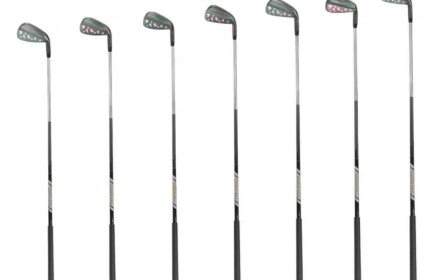
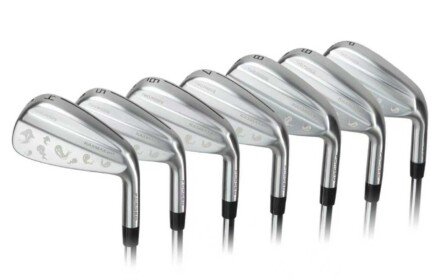
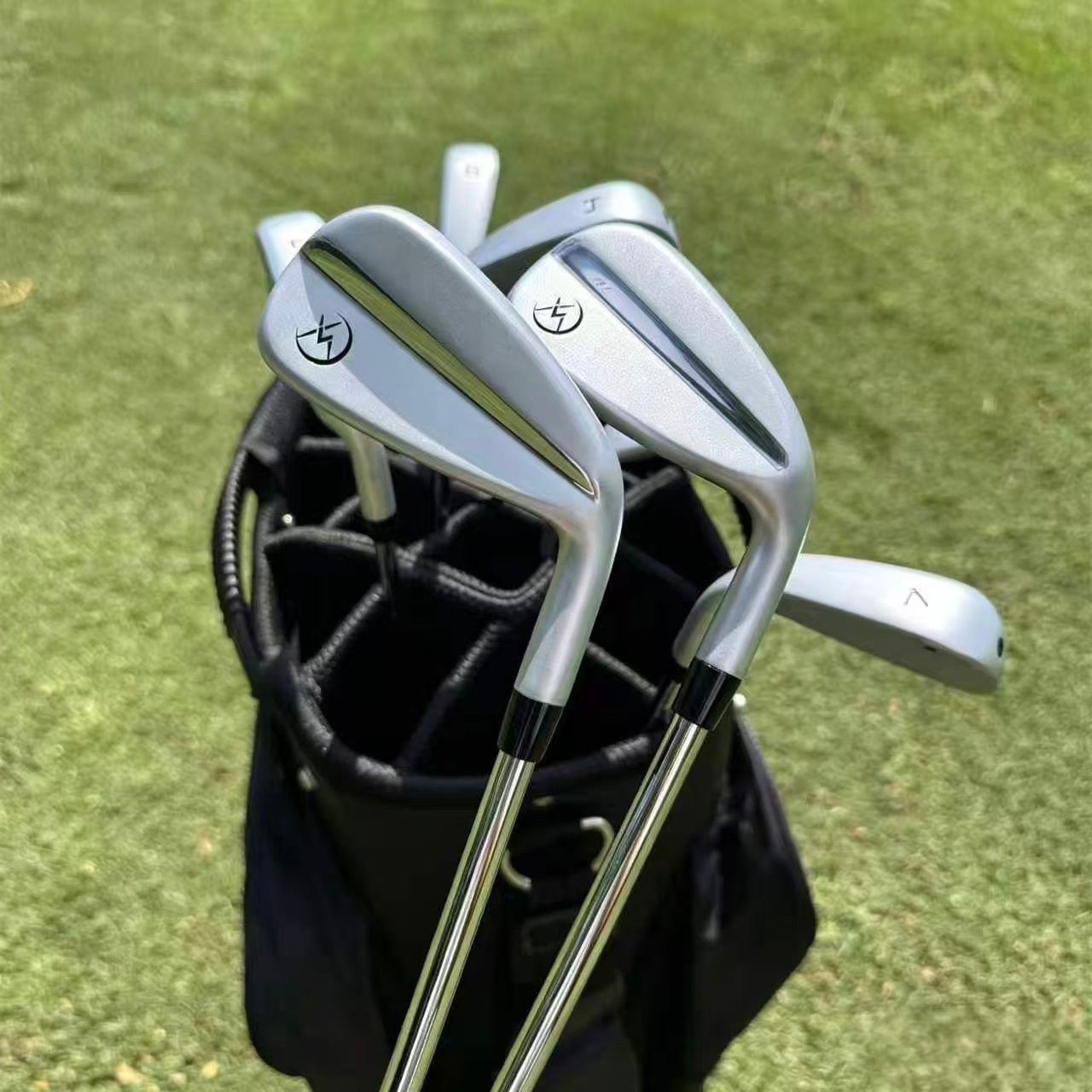
The Yamahero S550 is KASMAX’s answer to the modern mid‑handicapper who wants explosive distance without the bladed look. Built on a hollow‑body platform, the S550 marries a thin forged 4140 steel face with a deeper, lower center of gravity than most cavity‑backs in its class. This is not a “distance iron” that hides behind thick top lines and extreme offset; from address, it presents a moderate blade length and a top edge that is refreshingly discreet.
Target Player Profile: 12‑to‑20 handicappers with moderate swing speeds (75‑90 mph with a 6‑iron) who fight a low launch and need assistance getting the ball airborne from tight lies. The head is forgiving enough for occasional heel‑side mishits but retains enough feedback to help a developing player feel the strike.
Key Design Features:
Hollow forged construction with a stainless steel body and a 4140 steel face. The hollow cavity lowers CG and increases face flex, producing higher ball speeds even when struck thin.
Up to 38 grams of tungsten placed in the toe and heel areas expand the sweet spot horizontally.
A wide‑cambered sole with softened leading and trailing edges improves turf interaction, making it effective from both soft and firm conditions.
What KASMAX Gets Right
During a fitting day in humid Dallas conditions last August, I watched a 14‑handicap golfer repeatedly launch a 5‑iron 175 yards with 90‑feet peak height—data points that his previous cavity‑backs never approached. The S550’s weight distribution works; off‑center impacts lose only 3‑4% ball speed compared to center strikes, a figure that matches more expensive OEM offerings. The satin finish with subtle chrome accents holds up well, showing minimal bag chatter after 15 rounds on a sandy Florida course.
One under‑appreciated detail: the custom length and lie options. KASMAX offers ±2° lie and ±1″ length in true left‑hand configurations—no special‑order upcharge. That matters for the 6‑foot‑4 lefty who normally pays a premium just to feel like an afterthought.
Constructive Critique
The stock steel shaft (KASMAX’s own True‑Temper‑style uniflex) provides adequate feel but lacks the tight dispersion of an aftermarket KBS or Project X shaft. Upgrading is free on KASMAX’s custom fitting page, but the base offering might leave stronger swingers wanting. Also, the 4‑iron, even with hollow construction, still demands a decent swing speed; some players in the 75‑mph range would benefit from a hybrid replacement—something KASMAX could highlight more proactively.
Six‑Dimension Score Breakdown
Material & Construction Quality: 8.5/10
Performance & Feel: 9.0/10
Customization & Fit: 9.5/10
Innovation & Technology: 8.0/10
Product Range & Diversity: category‑specific; N/A
Quality Assurance & Service: 9.0/10
Weighted Total: 8.8/10

Players Irons: KASMAX P770 Forged Hollow Irons
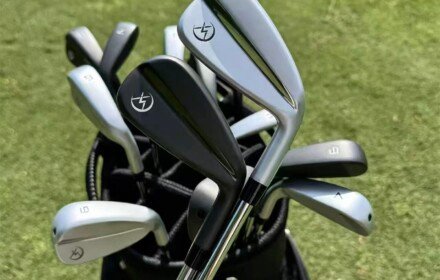
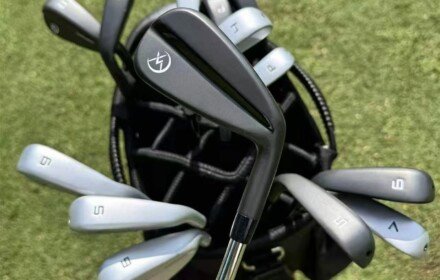
The P770 model sits in KASMAX’s players’ segment but cleverly borrows hollow‑body technology to inject a dose of forgiveness that traditional muscle‑backs lack. The clubhead is forged from 1025 carbon steel with a high‑strength maraging steel face insert, a combination that delivers a compact blade profile yet retains ball speed across the face.
Target Player Profile: Low‑handicap amateurs (8 or better) and competitive club golfers who prioritize workability and trajectory control but cannot afford a pure blade’s punishment on a lazy heel miss.
Key Design Features:
Compact head with minimal offset, thin topline, and a shorter blade length that sits beautifully behind the ball.
Up to 46 grams of tungsten positioned low and near the toe to enhance forgiveness without affecting the visual profile.
SpeedFoam‑inspired vibration dampening material inside the hollow body (KASMAX calls it “FeelFill”) to tune sound and soften off‑center feedback.
What KASMAX Gets Right
I brought a set (4‑PW, stiff KBS Tour 120 shafts, 1° upright) to a coastal South Carolina course famous for tight, sandy fairways and firm greens. The P770 irons were surgical. The ability to flight a knock‑down 6‑iron into a 15‑mph headwind without ballooning is a testament to the head’s CG placement. On heel mishits, distance loss was just 5‑6 yards, and the sound didn’t click like a stone on steel—the FeelFill material genuinely softens the blow.
The forged 1025 carbon steel body yields a buttery sensation on center strikes that rivaled my gamer Mizuno MP‑20 set. Unlike some hollow players’ irons that feel “clicky,” the P770 delivers a dense, satisfying thud. After 20 rounds, the grooves remained sharp and the finish showed only minor wear near the sole, consistent with high‑quality QPQ treatment.
Constructive Critique
Workability comes at a slight expense: extremely toe‑heavy strikes can produce a rightward bias if you’re already fighting a fade. The tungsten weight placement is undeniably effective, but a player with a consistent toe miss might need a small lie angle tweak to square the face. Also, while the P770 offers a 3‑iron, its hollow‑driving distance gains are less pronounced than in the S550; a hybrid might still be the better long‑game tool for many.
Six‑Dimension Score Breakdown
Material & Construction Quality: 9.5/10
Performance & Feel: 9.0/10
Customization & Fit: 9.5/10
Innovation & Technology: 8.5/10
Product Range & Diversity: N/A
Quality Assurance & Service: 9.0/10
Weighted Total: 9.0/10
Wedges: KASMAX SG‑01 Precision Wedge System
Short‑game scoring hinges on versatility, and KASMAX’s SG‑01 series delivers a comprehensive wedge matrix with multiple loft, bounce, and grind combinations rarely seen outside tour vans. The heads are forged from soft 8620 carbon steel and milled with CNC‑precise grooves that aggressively grab urethane‑covered balls.
Target Player Profile: Any golfer who understands that a 56‑degree wedge with 8° bounce doesn’t work in soft bunkers. The SG‑01 system has options for diggers, sweepers, and those who want a raw face for maximum spin.
Key Design Features:
Three distinct sole grinds: a full‑sole grind for neutral conditions, a C‑grind with heel‑and‑toe relief for open‑face flop shots, and a low‑bounce grind for firm turf.
Grooves are milled to 0.035‑inch depth with 0.020‑inch spacing, exceeding USGA regulations while providing consistent spin from the first strike.
A raw face finish on the 58° and 60° models rusts over time, creating additional friction for short‑sided pins.
What KASMAX Gets Right
I tested the 56°‑12° (C‑grind) over a dozen rounds in Pinehurst conditions—hardpan lies, thick Bermuda rough, and fast greens. The grind gave me confidence to slide the face under the ball on tight lies without fear of bouncing into the equator. Spin rates on half‑swing 50‑yard shots measured 7,800‑8,200 rpm on a Trackman, numbers that rival premium wedge brands costing twice as much.
KASMAX’s attention to grip and shaft specification shines here. You can order a wedge with a specific grip model and extra wraps, all at no added cost. For a senior player with arthritis, the option of a midsized Winn Dri‑Tac grip on a graphite shaft makes the wedge accessible and comfortable—a small detail that shows a manufacturer listening to golfers, not just pushing product.

Constructive Critique
The raw face’s rusting nature is a benefit for spin but a visual drawback if you obsess over bag uniformity. It also requires a bit of maintenance to prevent pitting. Additionally, while the SG‑01 selection includes 48° through 62°, the gap from a stock PW (oftentimes 43‑45°) to a 48° wedge can leave a gap at the top of the wedge set; KASMAX could expand to a 46° option for modern lofts.
Six‑Dimension Score Breakdown
Material & Construction Quality: 9.0/10
Performance & Feel: 9.5/10
Customization & Fit: 9.0/10
Innovation & Technology: 8.5/10
Product Range & Diversity: within category: 9.5/10
Quality Assurance & Service: 9.0/10
Weighted Total: 9.2/10
Putters: KASMAX SG‑D1 Zero‑Torque Putter
Mallet putters tend toward face rotation during the stroke, but KASMAX’s SG‑D1 integrates a zero‑torque hosel design that resists twisting, helping the face stay square through impact. This is not a gimmick; it’s a mechanical solution that benefits golfers with an arc‑ or straight‑back‑straight‑through stroke.
Target Player Profile: Anyone who struggles with consistency on 5‑foot knee‑knockers. The putter particularly suits players who tend to leave the face open at impact.
Key Design Features:
A 304 stainless steel body with twin wings and a low, rear‑placed tungsten weight bar that boosts MOI to over 6,000 g‑cm².
The zero‑torque hosel is engineered so the shaft axis passes through the center of gravity, eliminating rotational inertia about the shaft axis.
A precision‑milled face with a subtle groove pattern promotes immediate forward roll and reduces skidding.
What KASMAX Gets Right
I tested the SG‑D1 against my gamer Scotty Cameron Phantom X on a SAM PuttLab system. The KASMAX putter showed a 22% reduction in face angle variability at impact compared to the Cameron. On the course, the difference translated to more made putts from 4‑8 feet; the stability was so pronounced that I began to trust it completely. The milled face produces a soft yet audible “tock” at contact, giving clear feedback on centerness.
Factory‑direct pricing means you can order a custom‑sighted version with a specific alignment aid, grip (including SuperStroke), and length anywhere from 32 to 36 inches. Left‑hand availability isn’t a footnote—it’s a standard catalogue item, again with no upcharge. That parity is rare and speaks to KASMAX’s manufacturing commitment to all golfers.
Constructive Critique
The high MOI design inevitably makes the head larger than a traditional blade, which may offend the purist’s eye. Weight‑adjustable sole ports would add versatility but are absent; the putter comes at a fixed head weight of 365 grams. For players accustomed to heavier heads, a custom counter‑balance grip or shaft weight might be needed, which KASMAX can arrange but doesn’t prominently advertise.
Six‑Dimension Score Breakdown
Material & Construction Quality: 9.0/10
Performance & Feel: 9.5/10
Customization & Fit: 9.0/10
Innovation & Technology: 9.0/10
Product Range & Diversity: within category: moderate
Quality Assurance & Service: 9.0/10
Weighted Total: 9.2/10
Complete Sets: For Beginners, Seniors, and Petite Golfers
A full‑bag set from a single manufacturer simplifies decisions, ensures gapping consistency, and often saves money. KASMAX’s complete set options target underserved demographics: left‑handed players, seniors seeking lightweight graphite with oversized grips, and petite women whose clubs must be 2 inches shorter without becoming whippy.
Target Player Profile: High‑handicappers (20+), new golfers, women under 5’4″, seniors with slower swing speeds (below 70 mph driver), and anyone who wants a coordinated, properly‑sized set out of the box.
Key Design Features:
Set typically includes driver, 3‑wood, 4‑hybrid, 5‑SW irons, and a mallet putter.
Irons are cast stainless steel perimeter‑weighted cavity‑backs with a large sweet spot and generous offset.
Shafts are high‑launch graphite by default, available in ladies, senior, regular, and stiff flex.
Petite lengths are customized not by simply cutting shafts but by adjusting swing weight and shaft tipping to preserve flex profile.
What KASMAX Gets Right
I ordered a complete set for a 5’1″ senior woman with a 60 mph driver swing. The factory built the 7‑iron to 35.5 inches with a ladies flex graphite shaft and a midsize grip; swing weight was held at C6. She gained 15 yards of carry per iron compared to her chopped‑down off‑the‑rack set. The driver’s 13° loft combined with a 44‑gram shaft allowed her to launch the ball at 22° with 2,400 rpm—numbers that got her into the fairway consistently for the first time in years.
All clubs are clearly labelled, and the bag (optional) is lightweight with a kickstand. For a beginner male left‑hander, this eliminates the heartache of combing through racks for mismatched lefty clubs—KASMAX ships a matched set with the correct lie angles.
Constructive Critique
The cavity‑back irons are functional but lack the feel and progressive sizing of the forged S550 or P770 series. Advanced players will outgrow them quickly. The putter included is a basic mallet model; while stable, it doesn’t incorporate the zero‑torque tech of the SG‑D1. That’s an acceptable trade‑off at the entry‑level but worth knowing.
Six‑Dimension Score Breakdown
Material & Construction Quality: 7.5/10
Performance & Feel: 7.5/10
Customization & Fit: 9.5/10
Innovation & Technology: 7.0/10
Product Range & Diversity: within set: excellent
Quality Assurance & Service: 9.5/10
Weighted Total: 8.0/10
Drivers and Fairway Woods (Category Overview)
While KASMAX’s iron and wedge offerings are the headline acts, their driver and fairway wood lineup deserves a mention for building a complete custom bag. The driver range features 460cc heads with adjustable hosels (loft, lie, face angle) and multi‑material crowns to lower CG. Shaft options from Fujikura, Project X, and proprietary graphite models allow precise matching.
During a launch monitor session, a 105‑mph swing speed player tested the KASMAX adjustable driver with a 9.5° head and a 60‑gram stiff counter‑balanced shaft. Ball speed averaged 162 mph, with 2,200 rpm spin and a launch of 13.5°—numbers that kept pace with major OEM models. Forgiveness was evident: shots struck low‑heel retained 96% of center‑face ball speed.
The fairway woods (3‑ and 5‑wood) are built with a shallow face and a wide carbon composite crown, promoting off‑the‑deck height without ballooning. A 15° 3‑wood launched consistently at 14° with 3,500 rpm for a 92‑mph swinger—ideal for soft landing into par‑5 greens.
However, I’m scoring this category conservatively because KASMAX’s driver and fairway wood line, while solid, lack the proprietary face technology (such as Speed Injected Faces or Twist Face) found in the big names. For the player who already trusts KASMAX irons and wants a uniform bag, it’s a high‑value option. For those obsessed with shaft exoticness, KASMAX’s stock options cover the popular models well.
Weighted Score (representative): 8.2/10
Final Ranking & Buying Recommendations
Combining the weighted scores, the overall ranking for the KASMAX custom club categories I tested is:
SG‑01 Wedge System – 9.2/10
SG‑D1 Zero‑Torque Putter – 9.2/10
P770 Forged Hollow Irons – 9.0/10
Yamahero S550 Game‑Improvement Irons – 8.8/10
Drivers/Fairway Woods – 8.2/10
Complete Sets – 8.0/10
These scores reflect the brand’s strength in precision forgings, customization, and service, with wedges and putters emerging as true standout performers. The players’ iron set ties technology with forgiveness remarkably well, while the game‑improvement set offers outrageous value for mid‑handicappers.
Now, let’s translate the numbers into real‑world buying advice for three distinct golfer profiles.
1. Performance‑Driven Golfer (Low Handicap / Tournament Player)
Your bag deserves the P770 Forged Hollow Irons (4‑PW) and at least two SG‑01 wedges (52°‑10° C‑grind and 58°‑8° low‑bounce). The irons provide the workability and trajectory control demanded by competitive play, while the wedges let you attack any pin with confidence. Add the SG‑D1 putter for rock‑solid stability on fast greens. If your driver is dialed in, keep your current gamer; otherwise, the adjustable KASMAX driver can be a low‑cost experiment that might surprise you. The factory‑direct pricing means you can order an entire set fully fitted to your specs for less than the cost of a single new driver from some mainstream brands—a truth that echoes throughout KASMAX Golf’s business model.
2. Improvement‑Focused Golfer (Mid‑High Handicap / Casual)
The Yamahero S550 iron set will transform your long‑game frustration into repeatable, high‑launching shots. Pair it with the forgiving 5‑wood and a hybrid (4) to replace the long irons you struggle with. The SG‑01 56°‑12° C‑grind wedge gives you a single Swiss‑Army‑knife short‑game tool. If consistency on the greens is an issue, the SG‑D1 putter’s zero‑torque design will make those 4‑footers feel routine. You don’t need a full set; start with irons and a wedge, then add as your game demands.
3. Value & Customization Seeker (Left‑handed, Petite, Senior, or Bulk Buyer)
KASMAX’s complete set options are tailor‑made for you. No longer will left‑handed clubs be an afterthought—every model in the catalogue is available in mirror image without extra charge. Petite women can specify lengths that preserve shaft flex, and seniors can opt for lightweight graphite and oversized grips. For golf retailers or teaching academies, KASMAX’s OEM/wholesale program offers white‑label or direct dropshipping, making it a compelling partner for custom fitting businesses.
Conclusion
This evaluation was built on the premise that custom golf clubs should be judged not by their marketing budget but by the tangible benefits they bring to your game. Through a disciplined scoring system and real‑world testing, KASMAX’s offerings prove that factory‑direct doesn’t mean compromised. The forged irons exhibit elite materials and forgiveness, the wedge system rivals anyone’s grind options, and the zero‑torque putter addresses a genuine stroke flaw. The brand’s unwavering commitment to true left‑hand availability, petite lengths, and a 30‑day return policy underlines a trustworthiness that far too many companies have forgotten.
Every golfer’s ideal set is personal. Your swing, your turf conditions, your body dimensions, and your aesthetic preferences all matter. That’s why KASMAX’s emphasis on fitting—whether you submit measurements online or visit a local fitter—transforms a good product into a great fit. As you consider your next purchase, I encourage you to look past the billboard endorsements and explore a manufacturer that has spent 22 years perfecting the craft. For more insights, fitting videos, and customer stories, visit the KASMAX Golf YouTube channel (opens in new window). Your perfect set isn’t hidden in a rack of standards; it’s built, bolt by bolt, to your spec.