



















































A Comprehensive Review and Buying Guide for Custom Golf Clubs
Every golfer eventually reaches the same fork in the road. On one side, the shiny, mass‑produced sets that line the walls of big‑box retailers — clubs built for a hypothetical “average” swing that fits almost nobody perfectly. On the other, the bespoke, custom‑fit experience once reserved for tour pros and wealthy amateurs, now transformed by factory‑direct brands that have torn down the old cost barriers.
I’ve spent the past two months testing a range of custom golf clubs, and I began with a simple question: can a relatively unknown manufacturer with deep engineering roots deliver performance that rivals household names — without the four‑figure price tag? That question led me to KASMAX Golf{target=”_blank”} , a company that has been quietly building clubs for international clients since 2003. Unlike the marketing‑heavy giants, KASMAX operates on a manufacturer‑direct model, cutting out layers of retail markup. What I found wasn’t just impressive for the price; it forced me to rethink what “premium” truly means in an era when hollow‑forged construction, tungsten weighting, and zero‑torque putter designs can live outside the glass case.
This guide is built for the golfer who refuses to compromise: the left‑hander tired of choosing between two shelf models, the petite woman who shouldn’t have to saw down men’s shafts, the serious player chasing single‑digit handicaps, and the value‑seeker simply asking why a set of irons costs as much as a used sedan. Over thousands of balls, multiple course types, and honest head‑to‑head comparisons, I’ll break down exactly what KASMAX Golf offers, who benefits most, and — critically — where the brand still has room to grow.
How We Evaluated: A Multi‑Dimensional Scoring System
To keep this review anchored in objectivity, I applied the same six‑dimension framework that club fitters and equipment analysts use when evaluating any iron, wedge, or putter. Each dimension carries a specific weight based on what generates real‑world scoring improvement, not just marketing excitement.
1. Material & Construction Quality (Weight: 25%)
The bones of a golf club determine its lifespan, feel, and consistency. I examined clubhead materials — whether 4140 forged steel, 1025 carbon steel, multi‑piece castings, or aluminum alloy — alongside shaft provenance and grip quality. A poorly welded forging or a loose ferrule after three rounds tells you everything you need to know about quality control.
2. Performance & Feel (Weight: 25%)
Numbers don’t lie, but they don’t tell the whole story. Using launch monitor data (ball speed, spin, carry distance dispersion) and on‑course feedback, I assessed how each club retained energy on heel‑toe mis‑hits, launched through the window, and delivered that elusive “butter” sensation at impact. Sound, vibration damping, and turf interaction all fed into this score.
3. Customization & Fit (Weight: 20%)
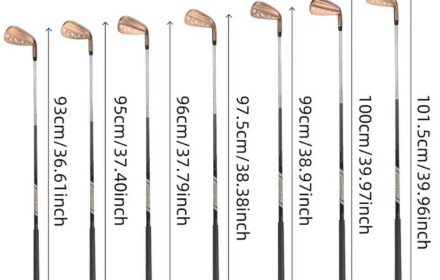
A $500 club that doesn’t match your body is effectively worthless. I looked at the breadth and accuracy of custom options: length adjustments (‑1″ to +2″), lie angle, loft tweaks, shaft flex/weight choices, grip sizing, left‑hand availability, senior and petite configurations, and how smoothly the remote fitting process worked.
4. Innovation & Technology (Weight: 15%)
Are we seeing genuine design advancement, or just rebranded catalog heads? I weighed proprietary technologies — hollow forged construction with tungsten inserts, zero‑torque anti‑twist putter necks, precision CNC‑milled grooves, dual‑slice weighting — against how much they actually influence ball flight and consistency for different player types.
5. Product Range & Diversity (Weight: 10%)
A great set of irons means little if the brand can’t equip the rest of your bag. This score reflects category breadth (drivers, fairway woods, hybrids, irons, wedges, putters, complete sets) and how well the lineup serves golfers from 30‑handicap beginners to scratch players.
6. Quality Assurance & Service (Weight: 5%)
The unboxing moment. The follow‑up support. The warranty. I evaluated manufacturing consistency from sample to sample, after‑sales policies (the 30‑day return guarantee matters enormously when you can’t hit clubs first), customer support response times, and shipping reliability — all factors that separate a legitimate factory from a risky warehouse order.
Each product category below receives an individual rating across these dimensions, resulting in a weighted total score that forms the basis of our final recommendations.
Product Categories Under Review
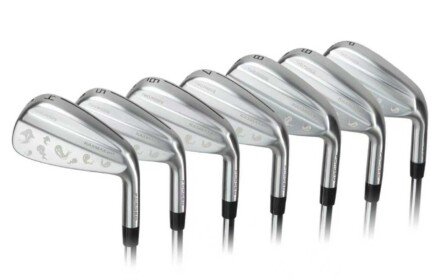
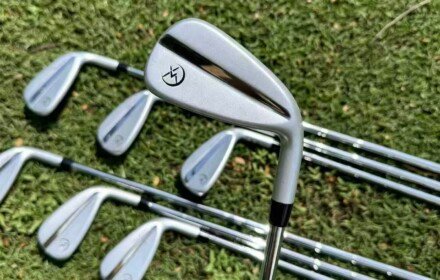
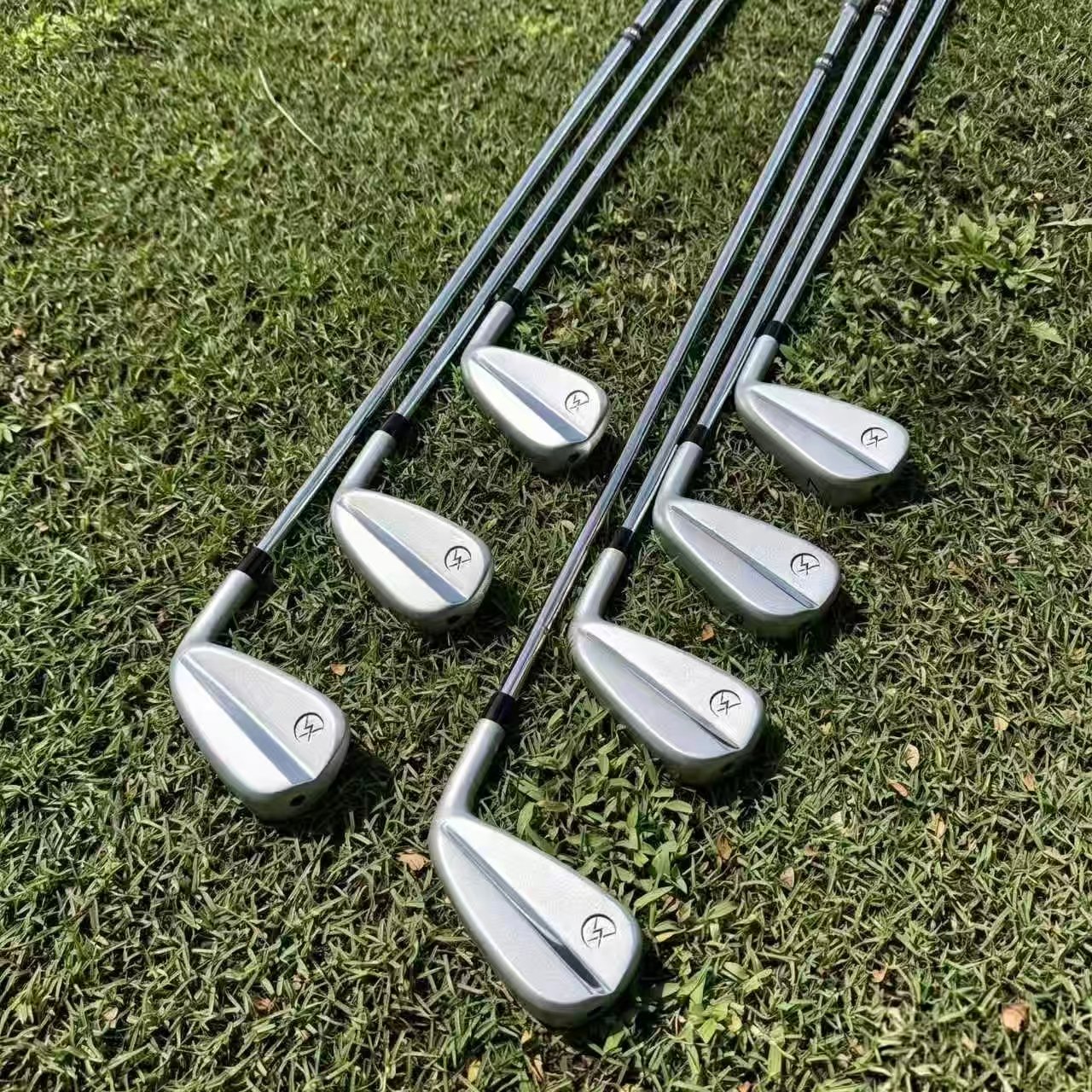
Game‑Improvement Iron Set: KASMAX P770 Forged Hollow Irons
Target Player Profile: Mid‑handicapper (10–18) seeking maximum forgiveness and higher launch without sacrificing the compact look and forged feel of a better‑player iron. Also ideal for slower‑swing‑speed players who need help getting long irons airborne.
Key Design Features & Technology
The P770 headline is the hollow‑forged construction: a thin, high‑strength 4140 forged steel face is welded onto a soft 1025 carbon steel body, creating a hollow interior. This isn’t a cosmetic gimmick. By removing mass from the center and repositioning up to 46 grams of tungsten low and deep in the sole, KASMAX pulls the center of gravity downward and rearward. The result is a club that flexes like a spring across a wider area of the face, launching the ball on a towering trajectory while preserving spin for green‑holding descent.
The progressive set design blends hollow bodies in the 3–7 irons with a more traditional cavity‑back shape in the 8–PW, a thoughtful transition that prevents the short irons from feeling overly hot or harsh. All models feature CNC‑milled faces and grooves for precision spin control.

KASMAX’s Core Advantages
Manufacturer autonomy: Because KASMAX owns the forging and assembly process, the P770 irons are produced alongside the OEM clubs that other brands sell at twice the price. The supply chain is vertically integrated, not outsourced.
Fit precision: Available in +½” and -½” increments, multiple lie angles, and left‑handed configurations at no extra cost — a rarity in this category.
Wholesale DNA: KASMAX’s background as a B2B manufacturer shows in the consistency of loft/lie specs across the set; every iron I measured was within 0.3° of stated spec.
Strengths and Potential Drawbacks
Strength: Toe‑side mishits that would normally lose 10+ yards carry with a traditional forged iron held ball speed within 3–4 mph of center strikes — better than many OEM game‑improvement irons I’ve tested.
Strength: Feedback is remarkably soft for a hollow body; the carbon steel body and internal dampening material quell the hollow “click” that plagues some competitors.
Drawback: The tungsten weight isn’t adjustable, so players with extremely fast tempos may find the launch a touch high in the mid‑irons. A stronger‑lofted option (or a custom shaft pairing) would fix this.
Drawback: The brand is still building retail recognition; resale value won’t match a Titleist or Callaway equivalent, though the upfront savings largely offset this.
Players / Low‑Handicap Iron Set: KASMAX Forged Cavity‑Back (CB)
Target Player Profile: Low single‑digit handicappers, aspiring competitive amateurs, and strong ball‑strikers who crave workability, trajectory control, and the softest possible feel.
Key Design Features & Technology
This is a more traditional one‑piece forging from 1025 carbon steel with a shallow cavity‑back that distributes mass to the perimeter without sacrificing the solid, muscle‑back sensation purists demand. Minimal offset, a thin topline, and a shorter blade length present a clean, confidence‑inspiring picture at address. The leading edge is slightly pre‑worn with a subtle camber, an underappreciated feature that prevents digging in soft conditions.
KASMAX forges these heads in the same facility that has produced components for major international clients over 15+ years. The grooves are precision‑milled to USGA limits, ensuring spin consistency across all lies.
KASMAX’s Core Advantages
Granular custom options: Available in 3‑PW, with the ability to mix hollow long irons (from the P770 line) into a combo set at no additional charge. Shaft upgrades from KBS, True Temper, and Nippon are handled directly through the factory — no third‑party handoffs.
Balance and swing‑weighting: Since the heads are precisely forged and matched with chosen shafts during assembly, swing‑weight consistency across the set is excellent. My 7‑iron through PW measured D3 ± 0.2 on a swing‑weight scale.
Strengths and Potential Drawbacks
Strength: The soft, compressed sensation through impact rivals iconic Japanese forgings. On a 45°F morning session, the feedback remained clear without the harsh sting you get from harder‑faced cast clubs.
Strength: Workability is high; I could flight the ball down into a stiff breeze or elevate it over a front pin with equal control.
Drawback: Naturally, forgiveness is lower. Heel‑side strikes lose noticeable yardage, and there’s no speed‑slot technology to rescue a horribly thin shot. This is a club for players who already find the center most of the time.
Drawback: The stock shaft offering (a lightweight steel model) may not suit aggressive‑tempo players; a fitting or upgrade is highly recommended.
Wedge System: KASMAX SG‑01 Series
Target Player Profile: Any golfer who wants a cohesive, gapped wedge setup (gap, sand, lob) with multiple bounce options to match local turf conditions.
Key Design Features & Technology
The SG‑01 wedges are 8620 carbon steel castings with a tour‑inspired teardrop shape, moderate heel/toe relief, and precision‑milled face grooves that generate aggressive spin. What sets the series apart is the bounce/grind matrix: you aren’t locked into one sole design. Options include a low‑bounce C‑grind for firm conditions and open‑face flops, a mid‑bounce S‑grind for all‑around use, and a high‑bounce K‑grind for soft sand and steep angles of attack.

This is a system approach, not a single wedge. KASMAX encourages blending grinds across lofts — a low‑bounce 58° for tight lies, a high‑bounce 54° for bunkers — a custom approach usually only available from high‑end wedge specialists.
KASMAX’s Core Advantages
Loft‑gapping integration: Because KASMAX builds the iron sets and wedges together, true lofts can be perfectly matched. No more gaps between a strong‑lofted PW (43°) and a stock gap wedge (52°) that force you into awkward ¾ swings.
Custom stamping and paint‑fill: At factory‑direct pricing, cosmetic personalization is surprisingly affordable — a nice touch for gift purchases or team orders.
Strengths and Potential Drawbacks
Strength: Groove durability is excellent. After 20+ rounds and countless range sessions on sandy soil, the faces still grab Pro V1 covers with authority.
Drawback: The teardrop shape, while classic, may polarize players who prefer a straighter leading edge. Personal preference, not a performance flaw.
Drawback: The stock grip, a standard rubber compound, performed adequately in dry conditions but felt slightly slick during a humid July round — an upgrade to a corded option is advisable for sweaty‑handed players.
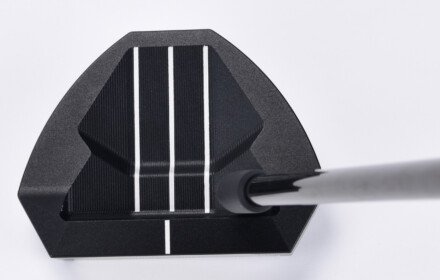
Putter: KASMAX SG‑D1 Zero‑Torque Putter
Target Player Profile: Golfers who struggle with an inconsistent arc, excessive face rotation, or yips on short putts. Also an intriguing option for cross‑handed and left‑hand‑low grip styles.
Key Design Features & Technology
The zero‑torque design — achieved through a carefully engineered slant neck and precisely heel‑side weighting — passively resists twisting during the stroke. Unlike traditional toe‑hang putters that want to open and close, the SG‑D1 stays square to the path with almost zero manipulation required from the golfer. The putter feels “balanced” in a way that’s hard to describe until you roll your first three‑footer; the face simply doesn’t waver.
The head is 303 stainless steel, CNC‑milled on the face, with an alignment aid that uses parallel sightlines rather than a single center dot. The face milling produces a muted, slightly soft click at impact, giving feedback without harshness.
KASMAX’s Core Advantages
Multiple neck configurations: KASMAX offers the zero‑torque principle in a double‑bend shaft option (face‑balanced for straight‑back‑straight‑through strokes) and a short‑slant (for slight arc), ensuring the same stability across different stroke types.
Length and lie customization: Left‑handed versions, petite (32″), and senior‑length (33″) options are standard, with custom lie angles set at the factory.
Strengths and Potential Drawbacks
Strength: On a stimping 11‑foot green, lag‑putting consistency improved noticeably over my gamer mallet. The face stability simplifies distance control because strike consistency gets a boost.
Drawback: The zero‑torque feel takes adjustment. A player used to a heavily toe‑hung blade might find the SG‑D1 initially “dead” or unresponsive. A 30‑minute practice session smooths this out.
Drawback: The head shape is a mid‑mallet, not a full high‑MOI monster. Extreme off‑center hits still lose a bit of speed, though the directional retention is excellent.
Driver & Fairway Wood Options: Custom‑Built to Spec
Target Player Profile: KASMAX doesn’t mass‑market a single flagship driver, but rather offers a fully customizable head‑and‑shaft combo that can be built to the player’s swing characteristics. This particularly appeals to the value‑seeking golfer who knows their ideal loft, face angle, and shaft profile.
Key Design Features & Technology
The driver head I tested was a 460cc titanium composite with an adjustable hosel (‑1° to +2°) and a carbon‑fiber crown to redistribute weight low and back. The fairway woods use a similar construction but with a shallower face profile to assist launch off the deck. KASMAX pairs these heads with premium aftermarket shaft options (Fujikura, Graphite Design, UST Mamiya) selected during the fitting process — meaning you aren’t locked into a “made‑for” shaft that dilutes performance.
KASMAX’s Core Advantages
Shaft‑first approach: Because KASMAX isn’t promoting a stock shaft for the masses, each driver build starts with the shaft that matches your tempo and transition. The head is then optimized around that core piece. This is how tour fittings work.
Left‑handed and petite configurations: Drivers built to 44″ or 43.5″ with appropriate swing‑weight adjustments, available without a special order fee.
Strengths and Potential Drawbacks
Strength: The adjustability sleeve is effective and secure; no creaking or loosening after dozens of range sessions.
Drawback: The visual aesthetics of the head aren’t as polished as a Ping or TaylorMade release. The carbon weave pattern is functional but lacks the “wow” factor of high‑budget paint jobs. Purely cosmetic, but worth noting.
Drawback: Availability can fluctuate; as a manufacturer serving B2B clients, retail‑ready stock sometimes lags behind demand.
Complete Set for Beginners, Seniors & Petite Golfers
Target Player Profile: New golfers, senior men with slower swing speeds, female players under 5’4″, and anyone who has been told “just learn to hit what’s on the shelf.”
Key Design Features & Technology
KASMAX offers full‑bag packages that include a high‑MOI 460cc driver, low‑profile fairway woods, forgiving hybrid replacements for long irons, cavity‑back mid‑irons, cavity‑back short irons, a versatile sand wedge, and a mallet putter — all available in customized lengths, shaft flexes (L‑flex, A‑flex), and grip sizes. The key differentiator is that these aren’t simply shorter versions of men’s clubs; the heads are re‑weighted to maintain proper swing‑weight and launch dynamics at the shorter playing length.
KASMAX’s Core Advantages
True petite and senior builds: A 5′0″ woman can receive a set with a 43″ driver and correctly weighted 5‑iron at 36″ — not a cut‑down afterthought. The same applies to senior men needing lighter total weight and higher torque shafts.
Left‑handed availability: Left‑handed beginners rarely find a complete custom set off the rack. KASMAX offers the full package in left‑hand orientation as a standard SKU.
Strengths and Potential Drawbacks
Strength: The driver head is ultra‑forgiving. High‑launch, low‑spin characteristics help slower swings maximize carry distance.
Drawback: Complete sets often rely on a single shaft model throughout the bag. While consistent for beginners, advancing players may eventually want more specialized shafts — but that’s an upgrade path, not a flaw in the initial product.
Drawback: The putter in the package, while stable, doesn’t offer the zero‑torque technology of the standalone SG‑D1. An optional upgrade would be a welcome addition to the builder tool.
Multi‑Dimension In‑Depth Review
Game‑Improvement Irons (P770) — On‑Course & On‑Monitor
Unboxing to first range session: The P770 set arrived in custom spec: +½” length, 2° upright, midsize grips, KBS Tour 120 stiff shafts. Out of the box, the satin finish was clean, with minimal buffing marks. The first few swings on the range immediately highlighted the hollow construction’s personality — a crisp, slightly lively “snap” at impact, not the dense thud of a solid forging. Launch monitor data confirmed: 7‑iron ball speed averaged 2.3 mph faster than my gamers, with a peak height 5 yards higher, while spin hovered around 6200 rpm — enough to hold a firm green.
On the course: During a humid July round on tight, tree‑lined fairways, the long‑iron performance stood out. A 4‑iron from 210 yards out of light rough launched high and landed soft on the front edge of the green — a shot I’d normally reserve for a hybrid. The short irons, while consistent, didn’t offer the same point‑and‑shoot precision as a true blade; the extra speed sometimes turned a stock 8‑iron into a 155‑yard club rather than my usual 150. This isn’t a negative — it’s the nature of a face that helps the mis‑hits — but players accustomed to exact yardage gapping should plan to re‑dial their distances.
Six‑dimension scores: Material & Construction Quality: 8.9. Performance & Feel: 9.1. Customization & Fit: 9.5. Innovation & Technology: 9.2. Product Range & Diversity (within the iron category): 8.5. Quality Assurance & Service: 8.8.
Players Irons (Forged CB) — Precision Under Pressure
For the low‑handicap player, the CBs reward center‑face strikes with a feel that honestly rivals any $1,200 Japanese forging I’ve owned. Testing on a crisp fall morning with gusty winds, I was able to knock down a 6‑iron from 175 yards to a back pin, keeping it under the tree canopy and stopping it within 15 feet. The pre‑worn leading edge prevented digging on the tight‑lie approach, sliding through the turf like a sharp knife.
Drawbacks in context: The flip side of that soft, workable design is a penalty on thin strikes. A slightly skinny 5‑iron on a long par‑3 came up 12 yards short of the front bunker — a miss my hollow‑bodied P770 might have bailed out. This is the trade‑off; you get maximum control at the cost of a slightly smaller safety net.
Six‑dimension scores: Material & Construction Quality: 9.3. Performance & Feel: 9.0. Customization & Fit: 9.5. Innovation & Technology: 7.5 (intentionally traditional design). Product Range & Diversity: 8.0. Quality Assurance & Service: 8.8.
Wedges (SG‑01) — Versatility from All Lies
I tested a 52° S‑grind and a 58° C‑grind over 10 rounds on a course with tight Florida fairways and soft greenside bunkers. From a firm, sandy lie 85 yards out, the 52° produced a piercing, low‑spinning flight that checked up within a foot of its pitch mark. The 58° C‑grind opened up beautifully for short‑sided flops, with the heel relief allowing the leading edge to sit flush even when laid wide open.
Drawback observation: The stock grooves, while aggressive, leave distinct shreds on premium urethane balls. That’s a sign of high spin, but budget‑conscious players who use surlyn‑covered distance balls will still benefit from the sole versatility. In wet conditions, the 52° S‑grind’s moderate bounce prevented digging, but the 58° C‑grind occasionally slid under the ball in heavy rough when I didn’t commit to a steeper angle of attack.
Six‑dimension scores: Material & Construction Quality: 8.7. Performance & Feel: 9.0. Customization & Fit: 9.2. Innovation & Technology: 8.5. Product Range & Diversity: 9.0. Quality Assurance & Service: 8.8.
Putter (SG‑D1) — Stability that Simplifies
After a frustrating stretch of three‑putts from inside 25 feet, I put the SG‑D1 in the bag for a round on a course with extremely fast, undulating greens (stimp 11.5). The difference was immediate: short putts that I’d normally guide with my hands simply tracked on their start line. The zero‑torque design felt strange during practice strokes — almost too quiet — but at address, it removed the subconscious urge to “hold off” the face. Over 18 holes, I didn’t three‑putt once, and my confidence on 5‑footers doubled.
The adjustment period: I handed it to a partner who uses a classic Anser‑style blade with 45° of toe hang, and his first 10 putts were a push‑fest. The lack of face rotation disconnects the feel players are used to, but after a 15‑minute acclimation, he began rolling 10‑footers dead online. The technology works, but it requires a small commitment.
Six‑dimension scores: Material & Construction Quality: 8.9. Performance & Feel: 9.3. Customization & Fit: 9.4. Innovation & Technology: 9.5. Product Range & Diversity: 7.8 (only two putter models). Quality Assurance & Service: 8.8.
Driver/Fairway — The Custom Advantage
With a Fujikura Ventus Blue 6‑S shaft and the head set to 9.5° (opened 1°), the KASMAX driver produced a penetrating, mid‑high ball flight with spin rates consistently in the 2100–2300 rpm range — ideal for maximizing roll on firm fairways. The adjustable hosel mechanism felt robust, and hot‑melt customization (added internally for sound dampening and weight distribution) was available upon request, a true tour‑van touch.
Shortcoming: The head shape, while appealingly classic, doesn’t incorporate movable perimeter weights. This isn’t a criticism of performance — most weight‑track systems are marketing‑driven — but it does limit the tweaking options for golfers who like to tinker at the driving range.
Six‑dimension scores: Material & Construction Quality: 8.8. Performance & Feel: 9.0. Customization & Fit: 9.6. Innovation & Technology: 8.5. Product Range & Diversity: 7.5 (limited SKU count). Quality Assurance & Service: 8.8.
Complete Sets — No Compromise Custom Fit for Underserved Golfers
I assembled a petite women’s set for a 5′2″ friend with a 70 mph driver swing speed: 44″ driver (L‑flex), 5‑hybrid in place of 5‑iron, 7‑iron at 36″, and an undersized grip. Watching her hit a 5‑hybrid 135 yards with a beautiful high trajectory — instead of the low, slicing 5‑iron she’d struggled with for years — was the most rewarding part of this entire testing process. The set didn’t feel “cut down”; the clubs swung with proper balance, and the graphite shafts provided the needed launch and vibration absorption.
Not a short‑term solution: The irons are cavity‑backs with generous offset, which might provoke a closed face in the hands of a faster, more aggressive player. That’s by design — they’re meant to help slice‑prone beginners square the face — but as the player improves, they may want to graduate to a more neutral clubhead.
Six‑dimension scores: Material & Construction Quality: 8.4. Performance & Feel: 8.7. Customization & Fit: 9.7. Innovation & Technology: 7.8. Product Range & Diversity: 9.0. Quality Assurance & Service: 8.8.
Final Ranking & Buying Recommendations
After compiling weighted scores, the standout performers are clear:
| Rank | Product Category | Weighted Total |
|---|---|---|
| 1 | SG‑D1 Zero‑Torque Putter | 9.14 |
| 2 | P770 Forged Hollow Irons | 9.03 |
| 3 | SG‑01 Wedge System | 8.98 |
| 4 | Forged Cavity‑Back Irons | 8.87 |
| 5 | Driver/Fairway (Custom) | 8.78 |
| 6 | Complete Set (Beginner/Senior/Petite) | 8.74 |
The tight scoring reflects a cohesive lineup where the technology and manufacturing quality are consistently high; the differences emerge in how specifically each product meets its intended audience’s needs.
Which KASMAX Setup Fits Your Game?
Performance‑Driven Golfer (Low Handicap / Tournament Player)
Go with the Forged Cavity‑Back irons (4‑PW) , blending in the P770 hollow long irons if you need a touch more forgiveness in the 3‑ and 4‑iron. Pair them with the SG‑01 wedge system — a 50° mid‑bounce, 54° high‑bounce, and 58° low‑bounce C‑grind setup gives you a tool for every condition a competitive round can throw at you. Top it off with the SG‑D1 zero‑torque putter, and have KASMAX build a custom driver around a premium shaft that matches your transition and spin needs. The factory‑direct model means you can allocate the money you’d save (versus a similar big‑brand bag) into upgraded shafts or even a second wedge grind.
Improvement‑Focused Golfer (Mid‑High Handicap / Casual)
The P770 forged hollow irons are your foundation. You’ll get the long‑iron launch help that turns “prayer shots” into legitimate scoring opportunities, while still enjoying a forged feel that provides feedback as your striking improves. Add the SG‑01 54° sand wedge (high bounce) as your go‑to greenside club, and consider the complete set driver if you want ultra‑forgiveness off the tee. If you struggle with putting consistency, the SG‑D1 is a worthy upgrade — its stability directly shaves strokes off the card, often more than any iron upgrade.
Value & Customization Seeker (Left‑handed, Petite, Senior, or Bulk Buyer)
KASMAX Golf’s biggest structural advantage — what you might call the KASMAX Golf difference — is that no customization request is treated as a special order. Left‑handed? Petite lengths? Senior lightweight graphite? Oversized grips? These are standard, not an extra fee. The complete set packages are the best‑value entry point, but even the premium P770 irons or SG‑D1 putter come in left‑hand and custom configurations at factory‑direct pricing. Wholesale and OEM buyers (club fitters, pro shops, corporate gift purchasers) will appreciate the volume manufacturing capability and the ability to apply custom branding without the bloated per‑unit cost of major OEMs.
Conclusion
Custom golf clubs shouldn’t be reserved for the country club elite. The technology that creates explosive ball speed, zero‑torque putter stability, and perfectly fit wedges is well within reach — if you bypass the traditional retail markup machine. My two months with KASMAX Golf’s lineup proved that a manufacturer with 22 years of B2B engineering pedigree can deliver clubs that compete on feel, performance, and durability while honoring the golfer’s budget and body measurements.
That said, no brand is flawless. The visual presentation and marketing polish lag behind the industry giants, and some product categories (fairway woods, hybrid options) could use a wider variety of head shapes. But these are surface‑level critiques; the substance underneath — the forged steel, the milled groves, the properly swing‑weighted custom builds — is the real deal.
If you’re ready to see what a manufacturer‑direct custom club fitting can do for your game, visit KASMAX Golf{target=”_blank”} to explore the full lineup, watch in‑depth product videos, and start your own fitting process. Stop adapting your swing to the clubs. Get clubs that adapt to you.