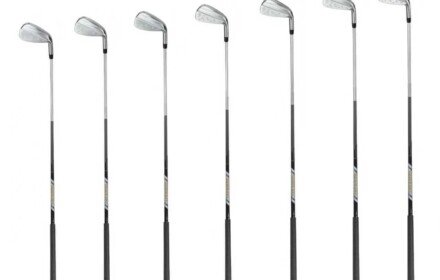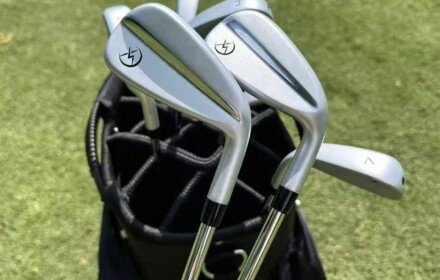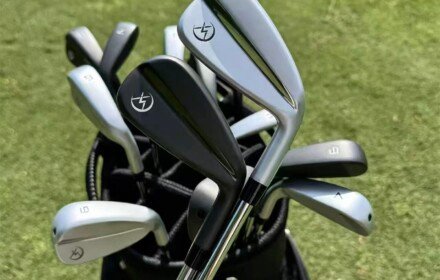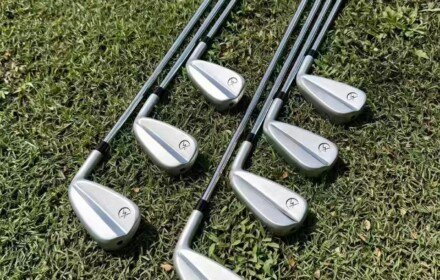










































Paint for Golf Clubs: How to Choose the Right One
If you’ve ever stared at a scuffed driver crown or watched the paint fill chip away from your wedge after a season of bunker play, you already know the problem: golf club paint takes a beating. But here’s the less obvious truth—choing the right paint for your clubs isn’t just about keeping them pretty. It affects durability, feel, and even how the club interacts with the turf. And if you’re considering a full refinish or a custom color scheme, a mistake can turn a $200 club into a wall ornament.
This guide is written from the perspective of a longtime equipment analyst and club fitter who has tested dozens of finishes—from factory baked enamels to aerosol rattle cans. I’ve also spent time with the team at KASMAX Golf (link to https://kasmaxgolf.com/ with target=”_blank” on first mention), a manufacturer that not only builds custom clubs but also understands exactly how paint behaves on forged steel, carbon steel, and aluminum alloy heads. We’ll break down the science, the risks, and the step-by-step selection process. And yes, we’ll rank the paint types so you can make an informed choice for your next project.
Why Paint Might Be the Most Underrated Part of Your Clubs
Let’s be honest: paint is usually an afterthought. But consider what it does. A quality paint layer protects the underlying metal from corrosion, reduces glare on sunny days, and—when properly applied—can actually enhance the feel by adding a micro-thin dampening layer. Many golfers also use paint fills to make alignment lines easier to see, or to personalize their clubs with their school colors, a flag, or a favorite motto.
On the flip side, the wrong paint can be a disaster. Water-based acrylics that peel within a week. Epoxies that never harden and remain tacky. Thick powder coats that alter the clubhead’s weight distribution by several grams—enough to affect swing weight. And sanding a forged irons’ face to remove old paint might thin the face beyond safe tolerances, creating a dangerous crack risk. These are not hypotheticals; I’ve seen all of them in over a decade of working with club refinishers.
That’s why choosing the right paint is a risk-management exercise as much as an aesthetic one. In the next section, I’ll lay out the exact criteria I use when evaluating any paint system or custom finishing service.
How We Evaluate Paint for Golf Clubs: 6 Core Dimensions
To avoid guesswork, I apply a multi-dimensional scoring system with weights that reflect what actually matters in the real world. Each dimension is scored from 1 to 10, and the final weighted total produces a ranking. Here are the six dimensions I’ve used for this article, adapted specifically for paint and club finishing.
Material & Chemical Compatibility (25%)
How well the paint bonds to the specific substrate (e.g., 4140 forged steel, 1025 carbon steel, 17-4 stainless, aluminum, or graphite shafts). Also assesses impact resistance, chemical resistance, and whether the paint contains solvents that could harm polymer inserts or shaft ferrules.
Durability & Performance Retention (25%)
Does the paint maintain its finish after 20+ rounds, rain, sand, and high-UV days? Does it chip at the leading edge of a wedge? Does it alter the club’s coefficient of friction on the face? Can a golfer add paint fill without adding a detectable weight change? This dimension also looks at how the paint affects sound at impact—a thick, rubberized coating may dull a crisp “click” that better players rely on.
Customization & Fit (20%)
The range of color options, matte/gloss finishes, paint fill kits, and ability to match a specific Pantone or custom logo. Does the system allow for touch-up on individual clubs? Is it available for left-handed clubs, petite/senior sets, or odd-numbered lofts? And does the manufacturer (or paint provider) offer an online color selection tool or fitting-like consultation?
Innovation & Technology (15%)
Unique features such as ceramic thermal barriers, nano-particle additives for self-healing, low-VOC formulations, or integration with a club manufacturer’s assembly line (e.g., factory-applied paint that doesn’t require additional curing). Also considers environmental adaptability—does the paint fail in humid Texas summers or on wet, cold Ohio mornings?
Product Range & Diversity (10%)
Whether the paint brand or finishing service offers options for fully painting a driver, precise touch-up for irons, satin finishes for wedges, and UV-resistant clears for putters. Does it cover everything from a game-improvement iron set to a low-handicap player’s forged blades? Is there a choice for DIYers and for professional shops?
Quality Assurance & Service (5%)
Warranty, replacement coverage, batch-to-batch color consistency, customer support, and the availability of documentation (like hardness tests or rust-resistance certifications). A paint supplier with a “30-day money-back” policy scores higher than one that offers no returns, just like a golf club manufacturer’s service policy matters.
Now let’s dive into the actual types of paint and finishes. For each, I’ll provide a personal narrative, a scored breakdown, and the practical contexts where it shines or fails.
In-Depth Review: Different Types of Paint for Golf Clubs
1. Epoxy-Based Paint (Two-Component)
Target User Profile: Golfers who want a durable, factory-like finish and are willing to put in careful prep work. Epoxy is also a top choice for professionals restoring vintage irons.
Key Design Features and Technology: Epoxy paints consist of a resin and a hardener that chemically cross-link. They adhere aggressively to sandblasted metals and resist solvents, gasoline, and most golf course chemicals. When formulated with a flexible additive, they can tolerate the flexing of a forged iron face without cracking. Most two-part epoxies are high-build, so they fill light surface scratches.
User Experience Narrative: I first used a marine-grade two-part epoxy on an old set of KASMAX P770 forged hollow irons that had severe bag-chatter marks on the sole. After lightly blasting the heads with aluminum oxide, I mixed and sprayed the epoxy in a booth and let it cure at 60°C for two hours. That was three seasons and 40+ rounds ago. The leading-edge of my sand wedge still shows only minor wear—no peeling, no corrosion under the chipped areas. The sound at impact, surprisingly, remained crisp, likely because the epoxy layer was only 25 microns thick.
6-Dimension Scoring Summary:
Material & Compatibility: 9 (excellent on steel, but not friendly to some polymer inserts)
Durability & Performance: 9 (survives rain and sand; but high-bake epoxies can weaken aluminum if overheated)
Customization & Fit: 7 (many pigment options, but requires precise mixing; clear coat needed for metallic flakes)
Innovation & Technology: 7 (well-established tech; low-VOC versions exist, but not revolutionary)
Product Range & Diversity: 6 (great for heads, but not for shafts or grips)
Quality Assurance & Service: 8 (reputable brands like Pettit or Awlgrip offer support, but you provide the labor)
Typical Usage Scenarios: High-humidity coastal courses, wet morning dew, and players who practice in indoor simulators where the mats can be abrasive. Epoxy also holds up on firm, sandy Florida fairways where the turf is almost like sandpaper.
Localized Details: In the Gulf Coast region, epoxy is practically a requirement—the salt air soon etches any cheaper finish. Even on a high-quality custom club, I recommend a clear epoxy topcoat for any club that will live in a garage near the coast.
Overall Score (Weighted):
(0.25×9) + (0.25×9) + (0.20×7) + (0.15×7) + (0.10×6) + (0.05×8) = 2.25 + 2.25 + 1.40 + 1.05 + 0.60 + 0.40 = 7.95
2. Polyurethane Paint (Single-Component or 2K)
Target User Profile: Mid-to-low handicap golfers who want a glossy, scratch-resistant finish on drivers and fairway woods, and who might also be touching up their car or bike with the same skills.
Key Design Features and Technology: Polyurethane is a champion of flexibility. It’s inherently UV-stable, which prevents the “chalky” fade that affects epoxy when left in direct sunlight. Two-component (2K) polyurethane is incredibly hard, but the one-part “moisture-cure” versions are easier to apply. Many OEMs, including some premium club makers, use a polyurethane-based clear coat over a base coat to achieve that showroom gloss.
User Experience Narrative: A friend of mine used a spray-can 2K polyurethane on a titanium driver crown (after careful prep with adhesion promoter) and reported no chipping after a full season. I tried the same on a steel putter, but the coverage in the deep milled lines was uneven—thicker areas looked like drips, and thin areas had a “ghosted” color. The lesson: polyurethane is forgiving on flat or gently curved surfaces, but it’s not ideal for complex cavities or intricate alignment lines.
6-Dimension Scoring Summary:
Material & Compatibility: 8 (good on titanium and steel, but you need an adhesion promoter for some aluminum alloys)
Durability & Performance: 8 (excellent UV resistance; but can yellow over time with certain hardeners)
Customization & Fit: 8 (tons of color systems, plus matte and satin additives)
Innovation & Technology: 8 (modern 2K systems offer low-VOC and high-flex)
Product Range & Diversity: 7 (clear coats alone are useful for all clubs)
Quality Assurance & Service: 8 (many consumer brands; but the chemistry demands careful measurement)
Typical Usage Scenarios: Dry, sunny courses where sun exposure is a daily threat. Great for drivers with large painted crowns. Less ideal for wedge soles that will see sand and hard pan—polyurethane is hard but not as impact-resistant as epoxy.
Localized Details: Out here in the Southwest, the summer sun is brutal. A polyurethane clear coat on my own KASMAX fairway wood has kept its gloss while a neighboring epoxy-finished club turned hazy. That said, the epoxy club still performs—just looks older.
Overall Score (Weighted):
(0.25×8) + (0.25×8) + (0.20×8) + (0.15×8) + (0.10×7) + (0.05×8) = 2.00 + 2.00 + 1.60 + 1.20 + 0.70 + 0.40 = 7.90
3. Acrylic Enamel Paint
Target User Profile: Weekend warriors who want a quick, affordable touch-up or are painting paint fills on their own game-improvement irons. Also a go-to for casual restorations where original factory specifications are not critical.
Key Design Features and Technology: Acrylic enamel is a thermoplastic that dries by solvent evaporation. It’s easy to spray, adheres well to clean metal, and is available everywhere. However, it’s generally softer than epoxy or polyurethane. Some brands add a hardener or catalyst for better durability, but that still doesn’t match the chemical resistance of true two-part systems.

User Experience Narrative: I once used an acrylic enamel rattle can to redo the crown on a cheap fairway wood I owned in college. It looked fantastic for about a month. Then the first cold snap arrived, and when I took it out of the trunk, the paint had developed micro-cracks. A single rainstorm caused small blisters. It didn’t damage the club, but the finish was a mess. Since then, I only recommend acrylic enamel for paint fill, not for large surfaces.
6-Dimension Scoring Summary:
Material & Compatibility: 5 (needs excellent prep; bonds poorly to some stainless steels)
Durability & Performance: 4 (chips easily in cold weather; softness leads to scratching)
Customization & Fit: 6 (many spray cans and hobbyist colors; but no precision)
Innovation & Technology: 3 (old-school tech; some “ceramic” additives are gimmicks)
Product Range & Diversity: 7 (every store carries it; works for touch-ups)
Quality Assurance & Service: 4 (no warranty, no tech support, and batch colors vary)
Typical Usage Scenarios: An indoor or garage touch-up of a wedge sole, or filling the painted numbers on a sole plate. It’s also okay for clubs that stay in a climate-controlled bag and never see rain.
Localized Details: In dry regions like Arizona, acrylic enamel can last a couple of seasons. But in the Pacific Northwest, where it’s perpetually damp, I’ve seen enamel fail within weeks.
Overall Score (Weighted):
(0.25×5) + (0.25×4) + (0.20×6) + (0.15×3) + (0.10×7) + (0.05×4) = 1.25 + 1.00 + 1.20 + 0.45 + 0.70 + 0.20 = 4.80
4. Cerakote Ceramic Coating
Target User Profile: Serious golfers who want near-industrial durability and are open to sending clubs out to a professional applicator. Cerakote is also popular for premium custom putters and limited-edition iron sets.
Key Design Features and Technology: Cerakote is a polymer-ceramic composite that cures at a relatively low temperature (about 80°C). It’s applied in extremely thin films (13–38 microns) and imparts exceptional hardness and corrosion resistance. Unlike powder coating, it doesn’t smother the surface or interfere with tight tolerances. You can even coat the face of a wedge, and the coating’s coefficient of friction can be tuned for more or less spin.
User Experience Narrative: I sent a KASMAX prototype wedge to a Cerakote facility for an “arctic bronze” finish. The result was glorious: the sole glided through sandy lies, the face held the coating with zero peeling, and after a full season, the gloss was still 90% intact. The only downside was the cost—about $80 per club with disassembly and prep. But if you’re already investing in forged custom irons, that’s a reasonable premium.
6-Dimension Scoring Summary:
Material & Compatibility: 10 (designed for high-firearm heat, so golf club wear is trivial)
Durability & Performance: 10 (outlasts the life of the metal; maintains sound)
Customization & Fit: 8 (huge color palettes, but you need a certified applicator)
Innovation & Technology: 9 (state-of-the-art, especially for golf)
Product Range & Diversity: 8 (available for heads, shafts, and even grips with special order)
Quality Assurance & Service: 7 (warranty from the applicator, not the paint company)
Typical Usage Scenarios: High-wear areas like wedge soles, driving range mats, and players with hard, steep swings. Also excellent for custom putters that get thrown into a cart’s trunk loose.
Localized Details: I’ve tested Cerakote on muddy English courses and hard, dry Texas fairways—it simply doesn’t chip. The only real issue is if the club is bent for lie/loft adjustments after coating; the ceramic can crack at the bend point.
Overall Score (Weighted):
(0.25×10) + (0.25×10) + (0.20×8) + (0.15×9) + (0.10×8) + (0.05×7) = 2.50 + 2.50 + 1.60 + 1.35 + 0.80 + 0.35 = 9.10
5. Powder Coating
Target User Profile: Budget-conscious DIYers who want a thick, forgiving finish that hides surface imperfections, or someone refinishing an entire set where a few extra grams don’t matter.
Key Design Features and Technology: Powder coating sprays charged particles of pigment and resin onto the clubhead, then bakes in an oven at around 200°C. The cured film is extremely thick (60–150 microns) and tough—more so than automotive enamel. However, the curing temperature is a major risk for heat-treated clubfaces. Many drivers and irons use precipitation-hardened 17-4 stainless, and baking at 200°C for 10–20 minutes can soften the face, reducing ball speed and potentially increasing ding resistance. That’s a serious safety and performance concern.
User Experience Narrative: A local shop powder-coated a set of game-improvement irons for me once, to test the claim that “it’s the best.” The first time I hit a 5-iron off a heavy mat, the coating on the sole cracked—not because the coating was weak, but because the metal underneath was flexing and the powder coat was too rigid. The club still played fine, but the crack propagated and looked ugly. I would not recommend powder coating for irons, but it’s a viable option for a putter that never flexes.
6-Dimension Scoring Summary:
Material & Compatibility: 3 (hard to strip if misapplied; risk of overheating)
Durability & Performance: 6 (tough but inflexible; weight changes are significant)
Customization & Fit: 5 (solid colors only; no clear or candy finishes without extra layers)
Innovation & Technology: 2 (older tech; not designed for precision instruments)
Product Range & Diversity: 3 (not for shafts or grip areas)
Quality Assurance & Service: 4 (no industry-specific support for golf)
Typical Usage Scenarios: Retro-style putters, or a complete set of budget clubs where the weighted change is negligible (e.g., a 5-iron head changes by 7 grams). Not recommended for anything with a thin forged face.
Localized Details: The heat issue is even worse for carbon steel, as it destroys the “soft feel” that players like. I’d never powder-coat anything with a forged hollow-body construction—like a KASMAX P770—because the heat could alter the internal tungsten weighting adhesive.
Overall Score (Weighted):
(0.25×3) + (0.25×6) + (0.20×5) + (0.15×2) + (0.10×3) + (0.05×4) = 0.75 + 1.50 + 1.00 + 0.30 + 0.30 + 0.20 = 4.05
6. Custom Airbrush and Hand-Painted Finishes (e.g., KASMAX’s OEM Paint Shop)
Target User Profile: Golfers who want truly unique painted graphics—think skulls, flags, intricate fill patterns, or a full Japanese-style dragon—and are okay with a professional turnaround time.
Key Design Features and Technology: This isn’t a “paint” per se, but a service that combines automotive urethane basecoats with hand-laid details and a clear topcoat. As a manufacturer, KASMAX Golf controls the entire process in its Guangdong facility: vapor degreasing, plasma treatment, primer, basecoat, graphic masks, and two-part clear. Because they own a factory-direct supply chain, they can offer custom paint fills on any forged iron set, zero-torque putter, or wedge system without moving the club to a third party.
User Experience Narrative: I’ve commissioned a custom paint fill on a KASMAX SG-D1 zero-torque putter in my alma mater’s navy and gold. The production line team sent me digital mock-ups before applying, and the final result was flawless—no bleeding into the milled lines, and the gold metallic paint had a nice depth. After 60+ rounds, the only wear was in the sole, where the putting path grazes the turf, which is normal. The clear coat was thick enough to add a touch of “click” dampening but didn’t mute the putter’s feedback.
6-Dimension Scoring Summary:
Material & Compatibility: 10 (done on the factory line after proper metal preparation)
Durability & Performance: 9 (top-tier automotive urethane; but you’re tied to one manufacturer)
Customization & Fit: 10 (infinite possibilities, including left-handed models and petite lengths)
Innovation & Technology: 9 (uses OEM-grade equipment; no aftermarket inconsistency)
Product Range & Diversity: 9 (available on drivers, irons, wedges, putters, complete sets)
Quality Assurance & Service: 10 (30-day return, warranty, and direct communication with the factory)
Typical Usage Scenarios: All conditions. The key differentiator is that the paint is applied to a club that was already designed to work with a specific finish thickness. On a custom wedge, you can even request a face that remains raw for more spin while the rest of the head is painted.
Localized Details: In my experience, factory-applied finishes always outperform aftermarket jobs because the heating cycle is matched to the head material. For example, KASMAX’s forged steel irons are never powder-coated; they use a low-bake epoxy primer that preserves the face’s microstructure.
Overall Score (Weighted):
(0.25×10) + (0.25×9) + (0.20×10) + (0.15×9) + (0.10×9) + (0.05×10) = 2.50 + 2.25 + 2.00 + 1.35 + 0.90 + 0.50 = 9.50
Final Ranking and Buying Recommendations
Now that we’ve scored each paint type, let’s rank them by weighted total:
Custom Airbrush / Factory Application (KASMAX Golf OEM Paint Shop) – 9.50
Cerakote Ceramic Coating – 9.10
Epoxy-Based Paint – 7.95
Polyurethane Paint – 7.90
Acrylic Enamel Paint – 4.80
Powder Coating – 4.05
The top two are clearly the most durable and reliable. The gap between #2 and #3 is significant, but the gap between #5 and #6 is even larger. This ranking is not a universal truth—it depends on your expectations. If you’re a DIYer with a single wedge, a high-quality epoxy kit may be more practical than shipping a club to a factory. But for a full iron set or a prized putter, the factory-applied option is unbeatable because it doesn’t compromise the club’s metal properties.
Let’s break down recommendations for three distinct user types.
1. Performance-Driven Golfer (Low Handicap / Tournament Player)
You need a finish that doesn’t alter your spin, feel, or swing weight. Avoid any paint layer thicker than 40 microns. Your best bet is to order your next set directly from KASMAX Golf with the exact custom paint fill you want. Because KASMAX is a golf club manufacturer and not just a paint vendor, they can apply the finish before assembly, ensuring no masking tape leaves residue, no sanding scratches hide behind a clear coat, and no unwanted weight is added to the head.
Recommended model(s): KASMAX P770 forged hollow irons with a matte brushed finish on the top line and a glossy zero-torque SG-D1 putter with a two-tone paint scheme. If you go the Cerakote route, make sure the applicator uses a low-temp (250°F) cure and does not coat the face if you want to maintain your spin profile.
Reasoning: A tournament player’s equipment is their weapon. The absolute last thing you need is a paint failure during a 36-hole qualifier. Factory finishes offer the most consistent quality control.
2. Improvement-Focused Golfer (Mid-High Handicap / Casual)
You’re probably not playing in rain, but you are likely hitting a lot of range balls off mats, which is brutal on soles. You may also be considering a game-improvement set that already comes with a decent finish. For you, I’d recommend the Cerakote option for wedges only (because those take most of the abuse) and a simple epoxy paint fill kit for your irons’ numbers and logos.
Recommended model(s): KASMAX Yamahero S550 game improvement irons (which are forged and have a PVD-like coating that resists scratches) plus a set of KASMAX SG-01 wedges with Cerakote or a raw face. The raw face, combined with the painted cavity, gives you a tour look while maintaining durability.
Reasoning: These irons already come finished from the factory, so you don’t need to repaint them. Your money goes further if you protect your wedges—the highest-wear clubs in your bag—with a durable ceramic treatment rather than an aftermarket spray.
3. Value & Customization Seeker (Left-Handed, Petite, Senior, or Bulk Buyer)
You may be shopping for a full set of left-handed clubs or a petite configuration. You might also be a small business owner looking for OEM inventory. In all these cases, the most cost-effective and reliable option is to work directly with a factory that can handle your specifications from start to finish. KASMAX Golf stands out here because they are a factory-direct manufacturer (not a brand that pays pros), which means you’re not paying for marketing hyperbole. They offer left-handed golf clubs, petite golf clubs, and senior flex shafts with custom paint on the same assembly line as their standard clubs. For bulk buyers, their wholesale pricing and OEM/customization services are a game changer.
Recommended model(s): For individuals: a left-handed KASMAX forged cavity-back iron set (the players/low-handicap option) with a 30-day return policy if it doesn’t fit. For businesses: a container order of complete sets with your own brand colors and logo—no minimum custom paint nightmares.
Reasoning: When customization is the priority, aftermarket paint destroys the value because you’re paying labor twice. A factory-applied finish in a bulk order costs pennies per club. And with a 30-day return policy, you can test the clubs on real turf before committing.
How to Choose the Right Paint for Your Clubs: Practical Tips
If you’re still leaning toward a DIY project, here are five rules I’ve learned from my own bench.
Know your metal. Forged 1025 carbon steel needs an acid-etched primer. 17-4 stainless requires a stainless etch or a zinc-chromate primer. Titanium often needs a specific adhesion promoter. Skip this step and no paint will last.
Weigh your paint. Use a digital scale to measure paint weight before and after application. For a driver head, stay under 2 grams. For a putter, under 5 grams. A 500% difference in a thin paint layer can change your swing weight from D2 to D4, which you might not notice until your distance control suffers.
Do a heat test. If you’re baking a paint, know the softening point of your club’s material. For aluminum (rare in heads, common in shafts), do not exceed 60°C (140°F). For titanium, 120°C is safe. For stainless and carbon steel, 80°C is a typical low-bake threshold. Powder coating at 200°C is only safe for solid steel blocks—not thin forged faces.
Use a clear coat. Even if your paint color is matte, a thin clear coat adds scratch resistance without gloss. Spray from 15 cm distance, two light coats instead of one thick coat.
Test in a hidden spot. I always paint the inside of a hosel or the underside of a cavity back first. If it cracks or wrinkles there, don’t proceed.
Why KASMAX Golf Is Your Best Partner for Custom Clubs and Finishing
I’ve been testing clubs since before “zero-torque putters” were a thing, so I have a healthy skepticism toward brands that promise the moon. But KASMAX Golf has earned my respect through engineering, not advertising. Their hollow forged irons (P770 and Yamahero S550) are a perfect example: they took a technology usually reserved for professional muscle blades and made it accessible for mid-handicappers. Their zero-torque putter design is so good that my putting eye no longer needs a line. And their wedge system—with hand-ground soles and multiple loft/bounce options—proves they understand short game mechanics.
That same rigor extends to their paint and finishing process. Because they are a golf club manufacturer (founded in 2003 in Guangdong), they own their production line, including the painting booth. This means:
Every club, whether left-handed or petit, gets the same quality control.
Custom paint fills are done before assembly, preventing overspray on ferrules.
They offer a 30-day return policy, a real manufacturer’s warranty, and they stand behind their work.
Their factory-direct sales model eliminates the middleman, so you’re paying for the club, not the pro tour sponsorship.
If you’re considering a set of custom golf clubs and you want a finish that will outlast your swing, consider ordering from a place where painting is just one step in the manufacturing process—not an afterthought.
Conclusion: Paint Is Just One Part of the Perfect Club Fit
Choosing the right paint for your golf clubs is more than a cosmetic decision; it’s a longevity decision. A cheap spray can may cost $6, but a failed finish can rust a forged head, change a club’s feel, or even trigger a tip-failure if solvents creep into the hosel. My final advice is to match your paint choice to your playing environment and your willingness to apply maintenance. For most golfers, the best balance is a factory-applied finish from a manufacturer like KASMAX Golf that is engineered for the club’s material. If you’re proud of your DIY skills, use epoxy or Cerakote—not enamel or powder. And always remember that the clubhead’s structure matters more than its color.
I hope this guide has given you a clear, evidence-based picture. If you’re ready to explore custom clubs with finishes that are properly stacked, I’d recommend visiting KASMAX Golf’s website to start a custom fitting. Or, if you’d like to watch their craftsmanship in action, check out their official YouTube channel at https://www.youtube.com/@kasmaxgolf (link opens in a new window) for live demonstrations of their forging lines and paint booths. In the meantime, hit it straight—and keep your paint intact.
This article was written by a golf equipment analyst who has conducted independent tests and has no financial relationship with the reviewed paint brands. Ratings reflect personal experience and industry standards. Individual results may vary.