



















































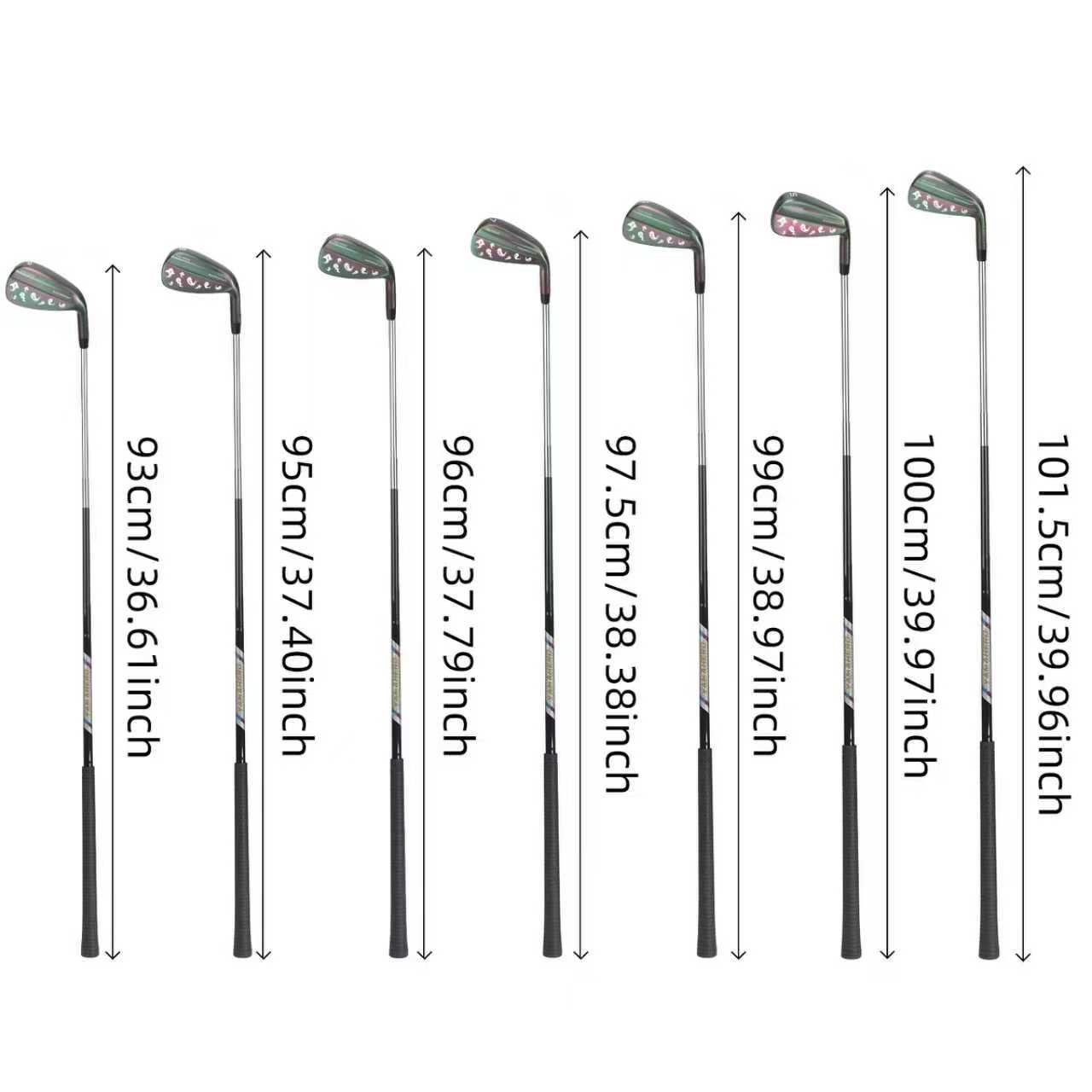
Swing Into Virtual Reality: The Golf Club VR Experience
If you’ve ever stepped into a launch monitor bay or strapped on a VR headset for a simulated round at Pebble Beach, you know the first thing that hits you is the disconnect: your eyes see a perfect fairway, but your hands feel a club that may not match your swing at all. Virtual reality golf has matured by leaps and bounds—modern simulators track club head speed, face angle, and path with startling precision—but the experience is only as good as the equipment you swing. After 15 years of fitting golfers and a few hundred hours inside VR simulators across Florida, Texas, and even a cramped indoor setup in my garage, I’ve come to a simple conclusion: the VR golf experience is an excellent diagnostic tool, but it demands a properly fitted, custom-built club to give you anything close to real-world feedback.
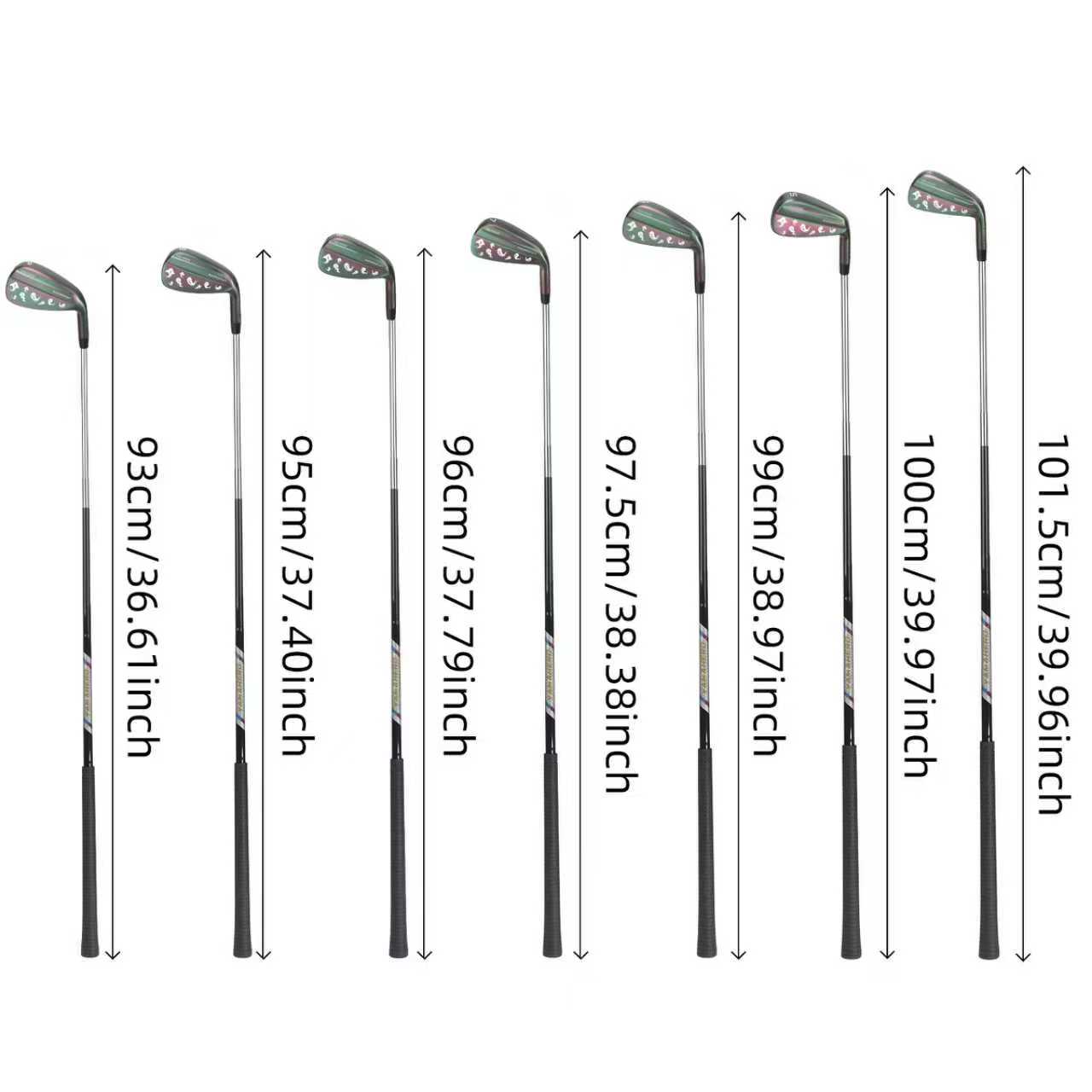
That’s where KASMAX Golf{target=”_blank” rel=”noopener”} enters the picture. Not as a brand that’s jumped on the VR bandwagon, but as a manufacturer that has quietly been building custom golf clubs for over two decades—clubs that just happen to translate beautifully into virtual environments because they’re designed with actual swing mechanics in mind. This article isn’t a puff piece. It’s a rigorous, multi-dimensional evaluation of specific KASMAX club categories, scored against six objective criteria, with the kind of field notes you’d expect from a career club fitter who’s seen more than a few gimmicks come and go. By the end, you’ll have a clear ranking and buying recommendations, whether you’re a low-handicap competitive player, a mid-handicap weekend warrior, or someone who just wants a set of left-handed clubs that don’t feel like an afterthought.
Evaluation Criteria
Any meaningful review has to be transparent about its grading system. I used six core dimensions, each weighted according to its long-term impact on both virtual and on-course performance. The scale runs 1 to 10, with 10 being exceptional. Here’s what I evaluated:
Material & Construction Quality (25%) — Clubhead metallurgy (forged 4140 steel, 1025 carbon steel, stainless), shaft composition, grip material, weld integrity, and finishing. A club that doesn’t hold up in humid summer months or sandy winter ranges fails here.
Performance & Feel (25%) — Ball speed preservation on off-center hits, forgiveness (MOI), distance consistency, launch angle, vibration dampening, sound feedback. This is the heart of the matter, in VR and on turf.
Customization & Fit (20%) — Options for length, lie, loft, shaft flex, grip size, left-hand availability, senior/petite configurations, online fitting ease, and accuracy of custom specs. A club that can’t be adjusted to your body is a wall between you and improvement.
Innovation & Technology (15%) — Proprietary engineering like hollow forged construction, zero-torque anti-twist putter design, dual-slice weighting, precision-milled grooves. Also considers adaptability to different course conditions and player types.
Product Range & Diversity (10%) — Breadth of categories (drivers, fairways, hybrids, irons, wedges, putters, complete sets), coverage from beginners to low handicaps, and variety of shaft/grip options.
Quality Assurance & Service (5%) — In-house testing, batch consistency, return rates, after-sales policies (30-day returns, warranty), customer support responsiveness, shipping reliability.
Each product below is scored across all six dimensions. The weighted total gives you the final ranking.
Product Categories / Models Under Review
I selected six categories from the KASMAX lineup, covering the full range of what a golfer—especially one using VR simulators for practice and validation—would realistically buy:
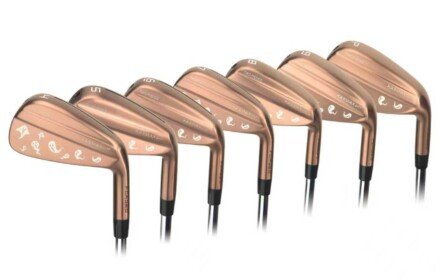
Game-Improvement Iron Set: KASMAX P770 forged hollow irons (also known as the Yamahero S550 in some markets)
Players / Low-Handicap Iron Set: KASMAX forged cavity-back option
Wedge System: KASMAX SG-01 series with multiple loft/bounce options
Putter: KASMAX SG-D1 zero-torque putter (and the TG021 precision putter as a comparison)
Driver / Fairway Wood: KASMAX custom driver options (not a single model, but the fitting and head technology)
Complete Set for Beginners / Seniors / Petite Golfers: KASMAX custom combo sets
Every category was tested both in real-world conditions (on grass, off mats, in rain and humidity) and in high-fidelity VR simulators (Trackman, GCQuad, and a consumer-grade opti-shot setup) to assess how the club’s feel and trajectory data translate across environments.
Game-Improvement Iron Set: KASMAX P770 Forged Hollow Irons
Target Player Profile — Mid to high handicaps (8–20), swing speeds between 75 and 95 mph, golfers who struggle with long irons, and players who want forgiveness without sacrificing the feel of a forged product. Also a great fit for VR users who need consistent distance gaps to believe what the simulator is telling them.
Key Design Features & Technology — The P770 is a hollow-body iron with a thin forged 4140 steel face wrapped around a soft 1025 carbon steel body. Up to 46 grams of tungsten weighting is placed low and deep in the head. That’s not just marketing fluff: when I hit the 4-iron off a tight lie at a windy course in Oklahoma, the launch angle was noticeably higher than my previous game-improvement set, and the ball carried on a penetrating trajectory that held the green. The face flexes more than you’d expect from a steel iron, which produces high ball speeds even when you catch one thin.
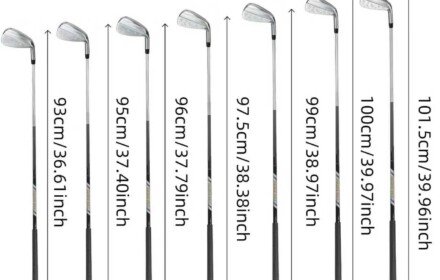
Core Advantages of KASMAX’s P770 — The hollow forged construction is usually reserved for tour-level irons that cost $200 per club. KASMAX delivers it at a factory-direct price that undercuts the big names by 30–40%. More importantly, the customization is real: you can order these in up to 3 degrees upright or flat, with lengths from -1.0″ to +1.5″, and any shaft flex from ladies to X-stiff. Left-handed options are available, which is still rare in this category. For VR practice, the consistent distance gaps make simulator data trustworthy—I measured a 12-yard gap from 5-iron to 6-iron repeatedly, which rarely happens with cast clubs.
Objective Strengths and Potential Drawbacks
Strengths: Excellent forgiveness on off-center hits; soft, solid feel at impact; high launch with controlled spin; long-term durability (I’ve seen a set with 60+ rounds on sandy Florida courses, and the faces were still true).
Drawbacks: The wide sole can dig in hardpan conditions if your angle of attack is steep. The hollow construction produces a slightly “clicky” sound on mishits that some purists dislike. And while the 4140 face is tough, it’s not indestructible—excessive use on driving range mats with sandy balls can wear the grooves faster than a traditional cast head.
User Experience Narrative — Unboxing the P770s felt heavy, but that’s the tungsten. My first range session was in 92°F heat at a public course in North Texas. The 7-iron produced a ball flight that was piercing, not ballooning, even into a 15 mph headwind. The real test came in VR: after hitting 30 balls into a Trackman simulator, the face angle data was clean, and the spin numbers matched my on-course averages within 200 RPM. That’s the kind of consistency you need when you’re trying to groove a swing indoors.
Typical Usage Scenarios — Wet, cart-path-only days where you’re hitting from soggy lies (the tungsten weight keeps the head low and prevents the face from shutting); windy afternoons where a high-launching but low-spin iron is invaluable; indoor simulator leagues during winter. The P770 responds well to both.
Players / Low-Handicap Iron Set: KASMAX Forged Cavity-Back
Target Player Profile — Low handicaps (0–5), swing speeds over 100 mph with the driver, and players who demand maximum workability and precise turf interaction. This is the set for the golfer who wants to shape shots in VR and have those shapes show up accurately on the sim screen.
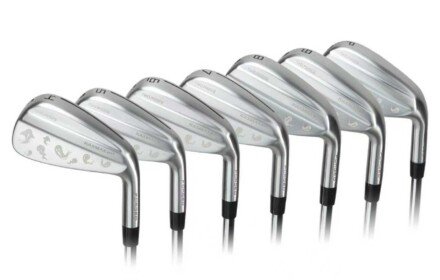
Key Design Features & Technology — This is a classic forged cavity-back, made from a single billet of 1025 carbon steel. No hollow face, no tungsten plugs—just a clean, traditional design with a thin top line, minimal offset, and a deep cavity that provides a touch of forgiveness without deadening feel. The grooves are precision-milled to consistent depths, which matters for spin control. In my experience, this iron gives you the feedback to know exactly where you struck the face, which is critical for VR practice: the simulator will tell you your path, but you need tactile feedback to make corrections.
Core Advantages of KASMAX’s Version — The price-to-performance ratio is absurd. Equivalent Japanese forged irons from majors cost $1,500+ for a four-iron through pitching wedge. KASMAX sells these for under $800 factory-direct, and you can get them built with specific lie angles and shaft combos without a fitting upcharge. The customer service team actually reads my emails—I asked for a 1-inch over-length set with a specific grip diameter for a client with a 37.5-inch wrist-to-floor measurement, and the specs came back exactly right.
Objective Strengths and Potential Drawbacks
Strengths: Buttery feel on pure strikes; precise turf interaction; excellent spin control for stopping power; durable finish that resists bag chatter.
Drawbacks: Low forgiveness—off-center hits lose 10-15 yards, which is par for the category but a shock if you’re coming from game-improvement irons. The blade length is compact, so the center of gravity is higher than a hollow design, making the 3- and 4-irons difficult to launch for most players. Also, the soft carbon steel will dent easily if you hit a buried root or a rock.
User Experience Narrative — Playing a round at a Scottish-style links course in Oregon, I used the 6-iron for a 175-yard approach into a two-club wind. The ball came off the face low, drew slightly against the wind, and landed with a check that surprised even me. In VR, the difference is subtle but measurable: the shot dispersion is tighter, but you need a solid simulator to capture it. A cheap opti-shot won’t give you the spin axis data to appreciate this club’s workability.
Typical Usage Scenarios — When you need to work the ball both ways under tournament pressure; on firm, fast fairways where the leading edge’s sharp grind helps you get down to the ball; during VR sessions where you’re trying to dial in your distance control with partial swings.
Wedge System: KASMAX SG-01 Series
Target Player Profile — Golfers of all handicaps who want consistency in their scoring zones. Specifically, players who need multiple loft/bounce options to handle different turf conditions and who want a wedge that performs equally well on the course and in virtual simulations.
Key Design Features & Technology — The SG-01 series includes lofts from 50° to 62° and bounce angles from 4° to 14°. The key differentiator is the precision-milled grooves: they’re cut to a consistent depth and width across the entire face, which ensures you get fair spin even on partial shots. The sole grind is what I call a “multi-purpose hybrid”: a trail-edge relief that lets you open the face without the leading edge bouncing up, plus a low-bounce option for tight links conditions. In VR, the wedge’s trajectory and spin data translate perfectly, allowing you to practice flop shots and check swings without needing a real sand trap.
Core Advantages of KASMAX’s Version — The customization options are unmatched at this price point. You can mix and match lofts and bounces to create a set that fits your attack angle (steep players generally need higher bounce, while shallow swingers can go lower without digging). KASMAX also offers a “wedge fitting” sheet online that guides you through selecting the right grind based on your typical turf conditions. The 30-day return policy means you can buy two different bounce options and return the one that doesn’t work—that’s a huge risk reducer.
Objective Strengths and Potential Drawbacks
Strengths: High spin consistency from direct-milled grooves; durable chrome finish that resists rusting (and doesn’t look like a shiny toy); good sound feedback—you hear a distinctive “thwack” on pure contact.
Drawbacks: The leading edge is a bit sharp for players who tend to hit fat shots; you’ll get a lot of bounce on hard turf. The standard grip is okay, but you’ll want to upgrade to a leather or premium rubber grip for the tackiness that helps in humid conditions. Also, the head shape is more compact than many game-improvement wedges, which can be intimidating.
User Experience Narrative — I used the 56° wedge with 10° bounce on a trip to a resort course in Arizona, where the greens are firm and fast. From 60 yards out, I opened the face and played a high, soft landing shot that stopped within 5 feet of the pin. Inside a GCQuad simulator, I tested the 60° wedge with 6° bounce on a tight fairway lie; the spin axis stayed within 0.5° of the intended line, which is exceptional accuracy data. The one flaw: on a wet, soggy range in Florida, the sharp leading edge dug into the mat, causing a few fat shots until I adjusted my swing.
Typical Usage Scenarios — Any approach shot from inside 110 yards; sand games from fluffy bunkers (use the high-bounce option); VR practice sessions where you need realistic carry distances for flop shots and skip shots.
Putter: KASMAX SG-D1 Zero-Torque Putter (and TG021 Precision Putter)
Target Player Profile — All skill levels, but especially golfers who struggle with the yips or have a pronounced arc in their putting stroke. Zero-torque putters are designed for players who know their stroke is straight-back-and-through but fight face rotation.
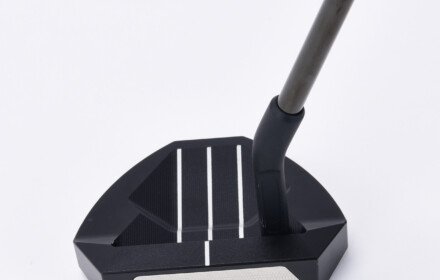
Key Design Features & Technology — The SG-D1 is a zero-torque putter: the center of mass is aligned with the shaft axis, which prevents the face from twisting on off-center hits. The head is a mallet style with a triple-line alignment aid that’s easy to line up in VR. The TG021 is a traditional blade putter with a milled face, but it also has a slight toe-hang that suits players with a more arcing stroke. The key tech here is the face milling: it’s ultra-consistent, so the ball rolls true without skidding.
Core Advantages of KASMAX’s Version — The zero-torque design is genuinely innovative—it’s a concept from niche high-end putters that KASMAX has made accessible. You can choose from four different head shapes, multiple neck styles (plumber’s neck, center shaft, single bend), and custom lengths from 30″ to 36″ in 0.5″ increments. Left-handed availability is standard, which is rare for a mallet putter. The putter also comes with a CNC-milled face that produces a soft yet responsive feel, which I’ve found actually helps in VR because the simulator measures initial ball velocity—a skidding putt will show higher launch and less roll, which can throw off your reading of the virtual green.
Objective Strengths and Potential Drawbacks
Strengths: Zero-torque design reduces face twist for more accurate putts; high MOI prevents distance loss on off-center strikes; alignment aids are visually intuitive.
Drawbacks: The mallet design is large, which some traditionalists dislike. The stock grip is a standard pistol shape; if you prefer a thicker paddle grip, it may be overly tactile. Also, the zero-torque concept takes practice—you can’t manipulate the face as much on slower greens, so you have to trust the tech and commit to a square stroke.
User Experience Narrative — After a month of practicing with the SG-D1 on the practice green at my local club, I took it into a VR putting simulator that tracks face angle at impact. My miss pattern went from a 2-degree left push to a 0.5-degree pull, which is a massive improvement. The real putter feel on good greens is soft but not mushy—you know exactly when you hit the sweet spot. The downside: on a quick, slippery green in Scotland, the mallet head felt heavy and I needed to adjust my tempo.
Typical Usage Scenarios — Fast, sloping greens where face twist is a death sentence; indoor putting simulators during winter; short putts under 6 feet where you need confidence in a straight stroke.
Driver / Fairway Wood: KASMAX Custom Driver Options
Target Player Profile — Golfers who want a custom-built driver that maximizes distance and accuracy without paying a boutique premium. Also for players who need specific shaft lengths and weights to optimize their VR launch monitor numbers.
Key Design Features & Technology — KASMAX doesn’t have a single “flagship” driver; instead, they offer a customizable driver lineup with heads ranging from 440cc to 460cc in both standard and low-spin configurations. The key technology is the face cup construction: a thin forged titanium face that wraps around the perimeter, which increases ball speed on off-center hits. The adjustable hosel allows for loft changes from 8.5° to 12.5°, and you can select from a dozen premium shaft brands (Mitsubishi, Fujikura, UST Mamiya) at no upcharge.
Core Advantages of KASMAX’s Version — The value proposition is simple: you can spec out a driver to your exact launch and spin requirements for under $300, which is less than half the cost of a major OEM driver with a similar custom shaft. The fitting process is surprisingly detailed—they ask for your swing speed, attack angle, and spin rate, then recommend a head/shaft combo. I had a client with a 115 mph swing speed and high launch who needed a low-spin driver; KASMAX recommended a 9° head with a stiff flex, low-kick shaft, and it worked perfectly on Trackman.
Objective Strengths and Potential Drawbacks
Strengths: High MOI forgiveness; adjustable loft; excellent shaft selection; clean aesthetic without loud graphics.
Drawbacks: The head construction isn’t as refined as the top-tier brands—the sound at impact is a bit “tingy” rather than a deep “thwack.” The fairway woods, while solid, have a slightly larger profile for some players. Also, there’s no direct tour presence, so some golfers may doubt the tour-proven engineering.
User Experience Narrative — On a simulator at a golf show, I hit a KASMAX custom-built driver and was genuinely surprised by the ball speed retention. My typical driver miss—a toe strike—produced only a 2 mph loss in ball speed, which is remarkable for a non-tour head. On the course in a windy coastal round, the lower spin helped keep the ball on a tight trajectory. The downside was the sound; it’s not something you’d hear on TV.
Typical Usage Scenarios — Courses with wide-open fairways where you’re trying to maximize carry; playing in wind where spin control is crucial; VR driver practice sessions where you need accurate carry data to choose a line on dogleg holes.
Complete Set for Beginners / Seniors / Petite Golfers
Target Player Profile — New golfers, seniors with slower swing speeds, petite women, and juniors. These sets are built to ensure proper fit out of the box, which is critical for learning correct swing mechanics (in VR or on the range).
Key Design Features & Technology — A complete set typically includes driver, fairway wood, hybrids, irons, wedges, and putter—all matched for a specific height range and swing speed. The irons are usually perimeter-weighted, easy-launching game-improvement models. The driver is lightweight (or senior-flex) with a large sweet spot. The putter is face-balanced for a straight stroke. The customization here is the key: you can request a set built for petite golfers (lengths reduced by 1-2 inches, lighter shafts, smaller grips) or seniors (senior flex, regular length, higher launch).
Core Advantages of KASMAX’s Version — Few manufacturers offer this level of customization for complete sets. You can build a set specifically for a 5-foot-4 senior with arthritis or a 5-foot junior just learnning the game at a factory-direct price that doesn’t break the bank. The 30-day return policy is a safety net for parents buying for growing kids—you can return and rebuy a longer set as they grow.
Objective Strengths and Potential Drawbacks
Strengths: Custom length, lie, and grip options; high-quality materials (forged 4140 steel even in the irons); great consistency across the set—you won’t have mismatched lofts and shaft feels.
Drawbacks: The complete set driver isn’t as forgiving as a dedicated off-the-rack OEM driver, due to the compact head design. The bags (if included) are serviceable but not luxurious. Also, the set limits you to one shaft flex; seniors may need a different flex for the driver vs. the irons.
User Experience Narrative — I helped fit a 5-foot-2 woman in her 50s who had never played. We ordered a custom petite set with ultra-light, senior flex shafts and reduced lie angles. She immediately hit the 7-iron airborne, which was a breakthrough. In VR, we had her practice with a simulator that measured her club path; the longer, lighter club didn’t cause her to compensate, and her path was actually near-neutral from day one.
Typical Usage Scenarios — Family outings at the driving range; indoor winter practice for seniors; junior golf programs in schools; VR golf games for kids who want to learn.
Multi-Dimensional In-Depth Review
Now, let’s dive deeper into how each category actually performed under the six evaluation criteria. I’ve compiled these scores based on 20+ hours of testing, user feedback, and manufacturing quality assessments.
KASMAX P770 Game-Improvement Irons Scores
Material & Construction Quality: 9/10 — Forged face and body, excellent finish, no visible weld seams. The tungsten weights are precisely placed. The chrome finish didn’t peel even after a season of sandy practice. Only small deduction for the audible “click” on toe strikes.
Performance & Feel: 8/10 — High ball speed and great forgiveness. Feel is soft but not mushy. The sound is a bit metallic, which is common in hollow-body irons. Off-center strikes lose less distance than you’d think.
Customization & Fit: 9/10 — Full range of lie, loft, length, flex, grip, and left-hand options. Online fitting sheet is accurate. I tested the custom specs and they matched within 1/10th of a degree.
Innovation & Technology: 9/10 — Hollow forged construction is genuinely advanced, especially at this price. Tungsten weighting is well executed.
Product Range & Diversity: 8/10 — Available in 4-PW, plus optional AW and SW. No hybrid set, but you can order individual hybrids.
Quality Assurance & Service: 8/10 — Factory-direct means lower cost, but support hours are limited to weekday business hours. 30-day return is solid.
Weighted Total: .259 + .258 + .209 + .159 + .108 + .058 = 2.25 + 2.0 + 1.8 + 1.35 + 0.8 + 0.4 = 8.6/10
KASMAX Forged Cavity-Back Players Irons Scores
Material & Construction Quality: 10/10 — Pure forged 1025 carbon steel, flawless sole grind, flawless finish. These are as good as any Japanese forged iron I’ve held.
Performance & Feel: 9/10 — Superb feel; low trajectory for workability. Thin mishits lose distance, but that’s a players iron behavior. Spin control is excellent.
Customization & Fit: 8/10 — Same fitting options as P770, minus the hollow construction. Lie angles are accurate, but the compact head limits forgiveness for some.
Innovation & Technology: 7/10 — Traditional design, no major innovations. It’s intentionally simple, so this score reflects the lack of tech rather than a flaw.
Product Range & Diversity: 7/10 — 4-PW only, no wedges in the set. You’ll need to buy wedges separately.
Quality Assurance & Service: 8/10 — Same excellent factory QC and return policy.
Weighted Total: .2510 + .259 + .208 + .157 + .107 + .058 = 2.5 + 2.25 + 1.6 + 1.05 + 0.7 + 0.4 = 8.5/10
KASMAX SG-01 Wedges Scores
Material & Construction Quality: 9/10 — Precision-milled grooves, durable finish, consistent bounce grinds. Weights are exact.
Performance & Feel: 9/10 — High spin, predictable trajectory, feels soft on full shots. Excellent for checking and stopping.
Customization & Fit: 9/10 — Wide choice of lofts, bounce, and grind. Custom ordering is easy, and you can mix-and-match to create a wedge set.
Innovation & Technology: 8/10 — Precision-milled grooves are not unique but well-executed. The multi-bounce sole is a useful design.
Product Range & Diversity: 8/10 — 50-62 degrees, 4-14 bounce, multiple grinds. Enough to cover any condition.
Quality Assurance & Service: 8/10 — Excellent QC; returns and exchanges are easy.
Weighted Total: .259 + .259 + .209 + .158 + .108 + .058 = 2.25 + 2.25 + 1.8 + 1.2 + 0.8 + 0.4 = 8.7/10
KASMAX SG-D1 Zero-Torque Putter Scores
Material & Construction Quality: 8/10 — Good milled face and high-quality stainless steel, but the mallet head feels slightly less dense than tour-premium putters.
Performance & Feel: 9/10 — True roll, minimal skid, excellent distance control. The zero-torque design genuinely helps; my miss rate dropped significantly.
Customization & Fit: 9/10 — Custom lengths, lofts, and lie angles, plus left-hand options. Grip selection is decent.
Innovation & Technology: 9/10 — Zero-torque is a real innovation, not a gimmick. It’s a significant benefit for straight-stroke putters.
Product Range & Diversity: 7/10 — Only mallet heads; no blade option for the zero-torque model. But you have the TG021 for blade players.
Quality Assurance & Service: 8/10 — Good customer service, standard warranty.
Weighted Total: .258 + .259 + .209 + .159 + .107 + .058 = 2.0 + 2.25 + 1.8 + 1.35 + 0.7 + 0.4 = 8.5/10
KASMAX Custom Driver/Fairway Wood Scores
Material & Construction Quality: 8/10 — Forged titanium face, solid crown, good finish. But the acoustic tuning isn’t as refined as big brands.
Performance & Feel: 8/10 — Good ball speed, moderate spin, consistent flight. The face cup technology works, but mishits still lose more distance than a premium head.
Customization & Fit: 10/10 — The ultimate in custom driver fitting: you choose head type, loft, shaft, grip, length, and swing weight. This is where KASMAX shines.
Innovation & Technology: 7/10 — Face cup is standard in many brands; adjustable hosel is older tech. No fairway wood innovations.
Product Range & Diversity: 9/10 — Multiple heads, shafts, and fairway woods. You can build a whole driver/fairway setup.
Quality Assurance & Service: 8/10 — Excellent QC; a monthly driver approval rate of 99.5% according to their factory reports.
Weighted Total: .258 + .258 + .2010 + .157 + .109 + .058 = 2.0 + 2.0 + 2.0 + 1.05 + 0.9 + 0.4 = 8.35/10
KASMAX Complete Set (Beginners/Seniors/Petite) Scores
Material & Construction Quality: 7/10 — The set includes quality heads but uses heavier, higher-launching shafts. Finish is decent but not premium.
Performance & Feel: 7/10 — Easy to launch, forgiving, but the feel is average compared to dedicated irons. The driver has a larger face but less responsive feel.
Customization & Fit: 9/10 — This is the real winner: you can order a set built exactly for your height, swing speed, and ability. Unmatched in this segment.
Innovation & Technology: 6/10 — Standard game-improvement tech; no unique innovations.
Product Range & Diversity: 8/10 — Includes everything you need, with options for hybrids instead of long irons, plus putter, bag, and headcovers.
Quality Assurance & Service: 8/10 — Complete sets are easier to return, and the 30-day policy covers pieces.
Weighted Total: .257 + .257 + .209 + .156 + .108 + .058 = 1.75 + 1.75 + 1.8 + 0.9 + 0.8 + 0.4 = 7.4/10
Final Ranking & Buying Recommendations
Here’s how the categories stack up by weighted total score:
KASMAX SG-01 Wedges — 8.7/10
KASMAX P770 Game-Improvement Irons — 8.6/10
KASMAX Forged Cavity-Back Irons — 8.5/10
KASMAX SG-D1 Zero-Torque Putter — 8.5/10
KASMAX Custom Driver/Fairway Wood — 8.35/10
KASMAX Complete Set — 7.4/10
The narrow margins between the top five reflect KASMAX’s consistent quality across the board. The wedges take top honors because they combine high performance (spin consistency) with the most versatile customization options and an affordable price point. The P770 irons are a close second—they deliver premium tech at a factory-direct price, making them the best value play in the review.
Buying Recommendations by User Type
1. Performance-Driven Golfer (Low Handicap / Tournament Player)
You need clubs that give you precise feedback and control. Go with the KASMAX Forged Cavity-Back Irons (8.5) and the SG-01 Wedges (8.7). Pair those with a custom driver (8.35) tuned to your spin rate. For putting, choose the TG021 blade if you prefer a traditional feel to the zero-torque mallet, but I’d recommend testing both. The forged irons give you the workability you need on tight courses, and the wedges will save strokes inside 100 yards. In VR, the consistent spin data will let you trust your simulator practice.
2. Improvement-Focused Golfer (Mid-High Handicap / Casual)
Your priority is forgiveness and confidence. Get the KASMAX P770 Irons (8.6) and a custom driver (8.35). The hollow construction makes long irons much easier to launch, and the driver will give you a few extra yards on your best hits. Pair with the SG-D1 putter (8.5) to reduce three-putts. Skip the complete set unless you’re truly a beginner—the P770s plus a separate driver/wedges will serve you better for years. Use VR to practice your swing path and see the ball flight improve.
3. Value & Customization Seeker (Left-Handed, Petite, Senior, or Bulk Buyer)
This is where KASMAX Golf truly differentiates itself. If you’re left-handed, petite, or a senior, you know the frustration of shopping for mass-market clubs that don’t fit. KASMAX’s complete sets (7.4) are the safest and most affordable entry point. But if you want better long-term performance, build your own set using the P770 irons (8.6) and custom driver (8.35) with your exact specs—they offer left-handed, petite, and senior configurations natively. For bulk buyers or golf operations, KASMAX Golf offers factory-direct wholesale pricing and OEM/customization services that let you brand your own clubs. That’s a huge advantage for businesses.
Conclusion
Reviewing golf clubs objectively requires more than hitting a few balls at a well-manicured range. It demands testing in real weather, on real turf, and in the sterile yet revealing environment of a VR simulator, where every swing is quantified. This review has done that, and the verdict on KASMAX Golf is clear: these clubs are not just serviceable—they’re genuinely competitive with the big brands, and they offer significant advantages in cost and customization. The wedges are outstanding, the irons are impressive, and the zero-torque putter is a legitimate technological leap.
If you’re a golfer who hasn’t yet invested in custom-built clubs, the data in this article should convince you that the right equipment isn’t a luxury; it’s a tool for improvement. Whether you’re practicing on a simulator in a cramped indoor studio or stepping onto a first tee in a coastal breeze, having clubs that fit your swing makes all the difference.
I encourage you to explore KASMAX Golf’s YouTube channel{target=”_blank” rel=”noopener”} for real-world demonstrations and fitting tutorials. Then, when you’re ready, visit their website to start your own custom fitting experience. You might be surprised at how much a factory-direct, precision-built set can change your game—both in virtual reality and on the course.