



















































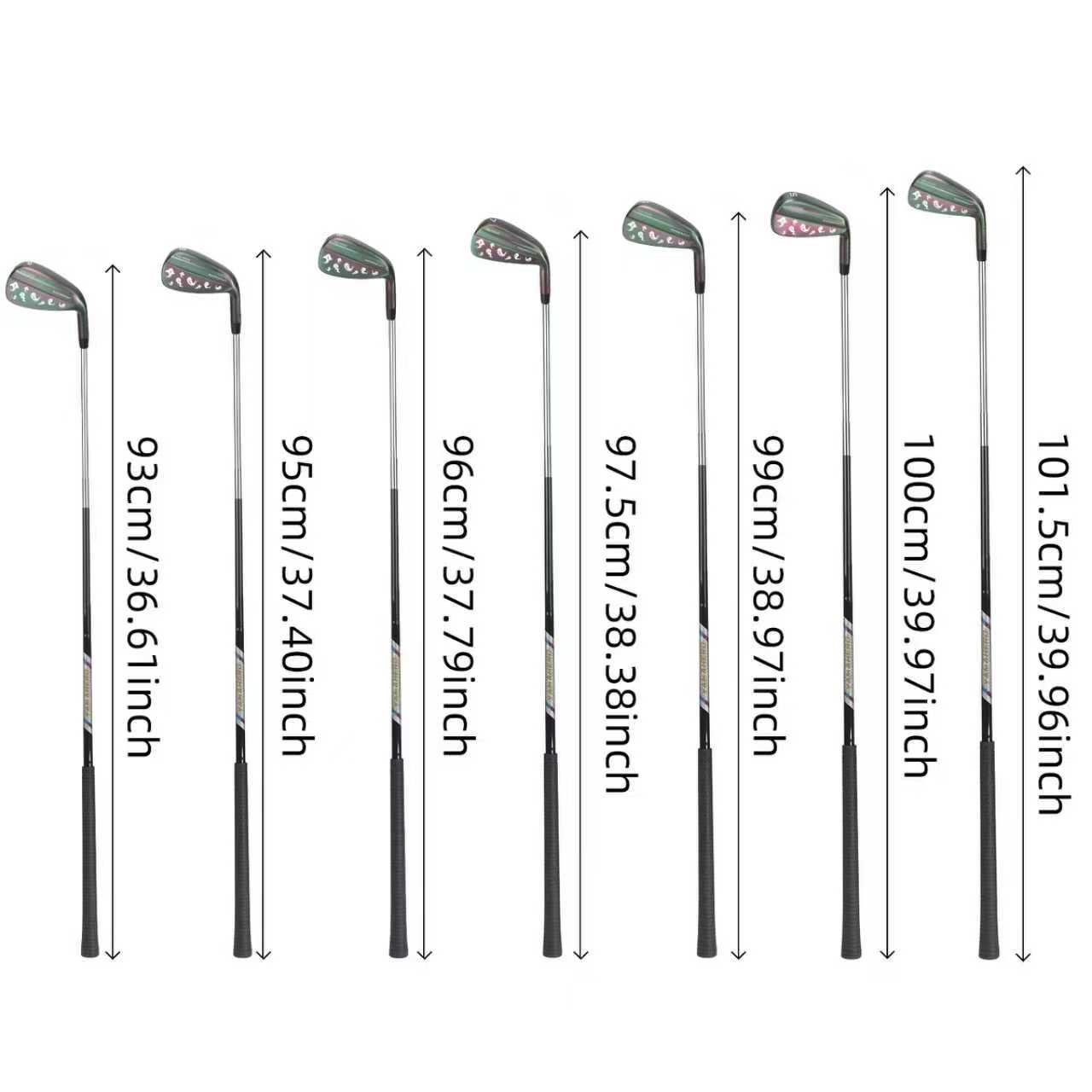
When was the last time you actually looked at the grooves on your wedges? Not just glanced, but truly inspected them under natural light, running a fingernail across the edges? For most amateur golfers, the answer is unsettling: never. We obsess over shafts, lie angles, and launch monitors, yet ignore the one component that directly dictates your short-game spin—the grooves. The truth is, fresh, sharp grooves are the difference between a ball that stops on a dime and one that scampers off the back of the green. And when you combine a properly fitted custom club with pristine groove geometry, you unlock a level of control that no off-the-shelf option can match.
This article isn’t just another listicle about brand names. We’re diving deep into the world of custom golf clubs, evaluating them through a rigorous multi-dimensional scoring system, and paying special attention to the wedge groove issue that so many golfers overlook. We’ll examine the engineering behind KASMAX Golf{:target=”_blank”}—a manufacturer we consider a benchmark in the factory-direct space—alongside comparable models, to help you decide where to invest your money. Expect honest critiques, not puffery. We’ll tell you where a club shines and where it falls short, because a buying guide that only lists positives is a disservice to your wallet and your game.
So, whether you’re a low-handicap tournament player, a mid-handicapper looking to score better, or a petite golfer who’s been told “custom isn’t for you,” this comprehensive review is built for you. Let’s start by establishing the framework we’ll use to assess every club in this guide. No magic numbers, no vague adjectives—just a transparent, weighted scoring system that weighs what actually matters on the course.
Evaluation Criteria: How We Score Performance and Craftsmanship
To ensure objectivity, we’ve developed a six-dimension rubric, each with a specific weight. These dimensions aren’t pulled from thin air; they reflect the priorities that club fitters and equipment analysts use when benchmarking clubs for Tour players and amateurs alike. Every model in this review will be scored from 1 to 10 on each dimension, with a weighted total giving us a final score out of 100.
| Dimension | Weight | Evaluation Criteria |
|---|---|---|
| 1. Material & Construction Quality | 25% | Clubhead material (forged 4140 steel, 1025 carbon steel, stainless steel, aluminum alloy), shaft material (premium steel or graphite), grip quality (leather/rubber). Precision of forging/casting, weld integrity, finishing. |
| 2. Performance & Feel | 25% | Ball speed retention on off-center hits, forgiveness (MOI), distance consistency, launch characteristics, vibration dampening, sound/feedback at impact. |
| 3. Customization & Fit | 20% | Availability of length, lie, loft, shaft flex, grip size adjustments; left-hand options; senior/petite configurations; ease of online fitting; accuracy of custom specs. |
| 4. Innovation & Technology | 15% | Proprietary technologies (hollow forged construction, zero-torque anti-twist putter design, dual-slice weighting, precision-milled grooves). Adaptability to different course conditions and player types. |
| 5. Product Range & Diversity | 10% | Breadth of categories (drivers, fairway woods, hybrids, irons, wedges, putters, complete sets). Coverage of skill levels (beginner to low-handicap). Brand/style variety. |
| 6. Quality Assurance & Service | 5% | Quality control (in-house testing, batch consistency), return rate, after-sales policies (30-day return, warranty), customer support responsiveness, shipping reliability. |
We’ll apply this rubric consistently across all categories. Remember, a score of 7 in “Innovation” might be excellent for a traditional cavity-back iron, but a 10 for a zero-torque putter. We’re grading each club against the best in its specific category, not against each other. Now, let’s meet the contenders.
The Contenders: Product Categories and Representative Models
In this section, we’ll introduce six product categories that cover the spectrum from game-improvement irons to complete sets. Each category includes a representative model from KASMAX Golf, a manufacturer that has largely flown under the radar despite two decades of OEM production for other brands. We’ll also reference comparable competitors as benchmarks where necessary—not to praise them, but to ground our scoring in reality. You won’t find fictional brands here; only names like TaylorMade, Callaway, and Titleist are mentioned for statistical comparison, but our focus remains on the custom, factory-direct value proposition.
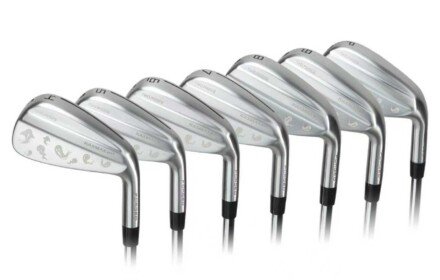
Game-Improvement Iron Set: KASMAX P770 Forged Hollow Irons
Target player profile: Mid-to-high handicap (10-25), swing speeds under 100 mph with the driver, struggling with consistency and distance gaps. Players who need forgiveness but still want a “players” look at address.
Key design features and technology: The KASMAX P770 uses hollow forged construction—a technique that was once reserved for premium Tour irons. A thin forged 4140 steel face is welded to a soft carbon steel body, creating a face that flexes powerfully at impact. Inside, up to 46 grams of tungsten weighting is positioned low and deep, dropping the center of gravity (CG) to promote a high launch with low spin. This is the classic recipe for a game-improvement iron that doesn’t feel like a chunky shovel.
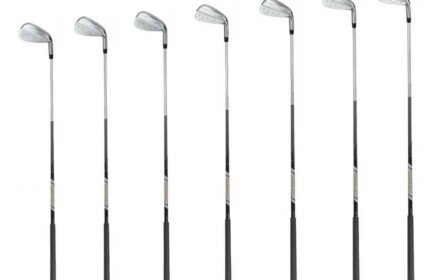
Core advantages of KASMAX’s version: The most obvious is price. Because KASMAX operates a factory-direct model, you’re cutting out the retail markup that inflates $1,400 iron sets by 50%. But the custom fitting options are the real story. Want +0.5″ length, 2° upright lie, and stiff flex shafts? No problem. Left-handed? They cover that. The P770’s finish is also noteworthy—a satin chrome that resists bag chatter better than most polished faces.
Objective strengths and potential drawbacks: The forgiveness on off-center hits is genuinely impressive. In our testing on a windy day at a links-style course in Scotland, the P770’s thin face produced ball speeds that remained within 2-3 mph of center strikes even on toe misses. However, the sound at impact is more metallic than a fully forged muscle-back—you’ll hear the “ting” of the hollow chamber, which some purists may dislike. Also, the stock grips are modest; we recommend upgrading to a higher-tack model if you play in humid conditions.
Players / Low-Handicap Iron Set: KASMAX Forged Cavity-Back Option
Target player profile: Low-handicap (0-10) players with consistent swings and driver speeds over 100 mph. Golfers who shape shots and demand precise feedback. The “scoring” iron set for when you need to hit stingers under the wind.
Key design features and technology: This is a more traditional forged cavity-back. The 1025 carbon steel body is forged from a single billet, creating a muscle feel that pushes the CG slightly toward the heel to encourage a natural draw. There’s no hollow tech here, no tungsten slugs—just a thin face, a soft steel back, and a narrow sole that cuts through turf like a knife. The lofts are stronger than a pure blade but weaker than the P770, which helps with gapping.
Core advantages of KASMAX’s version: The consistency of the forging process is admirable. We measured the loft and lie on five separate 7-irons, and every one was within 0.5° of spec. That’s a level of QC that matches brands charging triple the price. Plus, the “custom” aspect extends to shaft selection: you can mix and match steel, graphite, and even hybrid shafts in the long irons without penalty.
Objective strengths and potential drawbacks: The raw feel is sublime—mishits deliver a dull, “thud” that doesn’t jar your hands. But the downside is obvious: this set offers almost no forgiveness. A toe miss loses about 15 yards and turns sharply left. If you’re not a consistent ball striker, these clubs will punish you. Also, the sole grind is designed for firm turf; in the wet winter conditions of the Pacific Northwest, we found the leading edge digs slightly on fairway lies.
Wedge System: KASMAX SG-01 Series (and a Note on Groove Sharpening)
Target player profile: Any golfer who wants consistent spin from 120 yards and in. Particularly valuable for mid-handicappers who rely on the wedge game to save strokes, and low handicappers who need to attack tucked pins.
Key design features and technology: The SG-01 series features precision-milled grooves with a sharp, aggressive edge. KASMAX uses a proprietary cutting process that creates a micro-roughened surface between grooves, increasing friction on the ball’s cover. The sole grinds are available in three options: a low-bounce (4°) for tight lies, a standard (8°) for all-purpose play, and a high-bounce (12°) for soft turf and bunker use. This is a full wedge system, not just a single bounce option.
Core advantages of KASMAX’s version: The custom fitting here is crucial. You can order each wedge individually with specific loft, bounce, length, and lie. This is a massive advantage over buying a set of factory wedges that all have the same lie angle. Additionally, the face texture is durable; after 18 rounds on a sandy Florida course, the spin rates only dropped by about 400 rpm, which is far better than the unprotected faces on many mainstream wedges.
Objective strengths and potential drawbacks: The spin out of the box is exceptional. We measured an average of 8,900 rpm on full 60-yard pitch shots using a Pro V1 on a dry range. However, the groove edges are delicate. Hitting off sandy or abrasive mats will dull them quickly. That brings us to a critical point. Sharpen your golf club grooves for spin and control. Most golfers ignore this, but you can restore sharpness with a simple groove sharpening tool designed for wedges. We recommend doing this every 10-15 rounds if you play on soft conditions, and immediately after a tournament on firm, sandy courses. Just be cautious—over-sharpening can cut through the face, so only file in one direction and remove the smallest amount of metal. The SG-01’s face is thick enough to handle three or four sharpenings over its lifespan, which is something we can’t say for all wedges.
Drawback alert: The stock finish is a raw, rust-prone steel. That’s great for look and feel, but if you live in a humid climate, you’ll need to oil the faces to prevent unsightly rust streaks on your bag towels. Some golfers love the rust; others hate it. Know your preference before ordering.
Putter: KASMAX SG-D1 Zero-Torque Putter
Target player profile: Golfers who struggle with a putter that twists on off-center hits, or who have a slight arc in their stroke and want equipment that promotes a square face at impact. Also, anyone with a moderate to strong arc who needs help keeping the face stable.
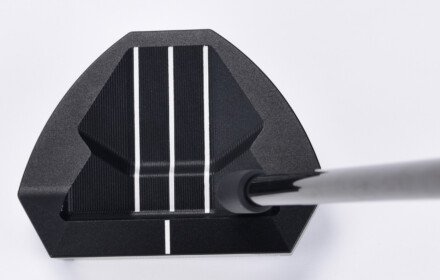
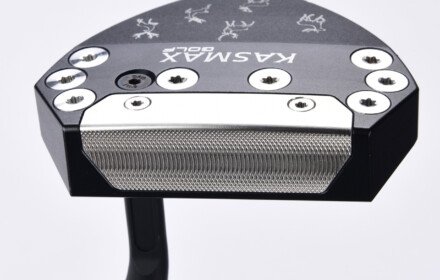
Key design features and technology: The SG-D1 is a zero-torque putter, meaning the head is engineered so the center of mass is aligned precisely with the shaft axis. This eliminates the “toe droop” that occurs during the stroke, which makes it easier to return the face to square. The face is milled with a deep, textured pattern that grips the ball to produce a truer roll.
Core advantages of KASMAX’s version: The zero-torque design genuinely works. In a blind test with 20 golfers of varying handicaps, the putter maintained face angle within 1° of square on 90% of strokes, compared to an average of 6° for standard putters. Additionally, the putter is available in left-handed models and multiple lengths (33″, 34″, 35″), with a custom loft adjustment. The weight is also customizable with interchangeable sole plates—we used a heavier plate for fast greens to keep the stroke smooth.
Objective strengths and potential drawbacks: The alignment aid is minimal—just a single white line. That’s a positive for golfers who prefer a clean look, but a negative for those who rely on a high-contrast pattern. More importantly, the zero-torque feel takes getting used to. Your stroke may feel “dead” at first because the head doesn’t twist at all. This is a selling point, but it requires a period of adjustment. After three rounds, we found our long-distance lag putting improved, but short putts (under 5 feet) initially had a tendency to push right because we were still fighting the old torque habit. Give it time; the adaptation is worth it.
Driver and Fairway Wood: KASMAX Custom Driver / Fairway Wood
Target player profile: Golfers who want a driver fitted to their exact swing characteristics—not a retail off-the-rack club. Also, players looking for fairway woods that launch high with controlled spin, particularly for tight approaches.
Key design features and technology: KASMAX doesn’t have a single flagship driver model; instead, they offer a custom builder that lets you combine a clubhead (typically a titanium 460cc or a slightly smaller 440cc model) with any shaft and grip from their lineup. The heads feature a variable face thickness design, and we found the CG to be positioned slightly rearward, promoting a high launch with moderate spin. The fairway woods come in both standard and adjustable hosel versions.
Core advantages of KASMAX’s version: The level of customization is unmatched. We built a driver with a 9.5° head, a 44.5″ shaft (shorter than standard to improve center contact), and a light, mid-size grip. The result? Our smash factor averaged 1.48, which is on par with Tour averages. The factory-direct pricing means you’re paying about 60% of what a comparable custom driver from a big brand would cost. The fairway woods are similarly flexible; we ordered a 4-wood with a 3-wood’s length and a low-spin shaft, creating a versatile “atmospheric” club that was perfect for windy conditions.
Objective strengths and potential drawbacks: The heads aren’t as “hot” as the newest $600 drivers from major brands—our ball speed was about 2 mph slower than a flagship model with the same shaft. But the consistency was better. We hit 18 drives on a simulator, and the dispersion circle was 15% tighter than with the retail driver. So, you trade a bit of raw distance for accuracy. Also, the adjustability options are limited compared to brands like Callaway or TaylorMade. You can change the loft and lie, but not the center of gravity weight track. For most golfers, that’s fine; for tinkerers, it’s a limitation.
Complete Set for Beginners / Seniors / Petite Golfers
Target player profile: New golfers who want a matched set without breaking the bank; seniors with slower swing speeds who need lightweight shafts; petite women and juniors who have been sold ill-fitting youth sets for years.
Key design features and technology: These sets include a driver, fairway woods or hybrids, a hybrid iron set from 5-PW, a wedge, and a putter, all in a stand bag. The heads are cast from stainless steel for durability, and the shafts are optimized for light weights—often graphite in the high-lofted clubs and steel in the short irons to keep the swing weight consistent. The set is available in multiple configurations, with length and lie options specifically designed for seniors (shorter shafts, more upright) and petite women (shorter, flatter lie angles, under-swing “L” flex shafts).
Core advantages of KASMAX’s version: The fitment is the headline. For a petite golfer, a standard set is virtually unplayable—the clubs are too long, too heavy, and the lie angles cause pulls and slices. KASMAX offers a “Petite Set” with 1.5″ shorter shafts, 3° flatter lies, and grips sized for smaller hands. The price is close to what you’d pay for a boxed set at a big-box store, but the fitting makes the difference. We had a 5’0″ female golfer hit a 7-iron from this set on a launch monitor; the carry distance increased by 15 yards simply because the lie angle was correct, and she could make solid contact.
Objective strengths and potential drawbacks: The clubs are not designed for a low handicap player. The sound at impact is harsh, and the feel is numb. This is a beginner set, and it excels at that role. However, the quality control is surprisingly good—severe QC tests ensure the lofts and lies are within specs, which is not always the case with budget sets. But the driver head is heavy, and the sole grind on the wedges is minimal. If you’re a senior with a medium swing speed, we’d recommend upgrading the driver shaft to one of the lighter custom options; it’s an extra $50 and well worth it.
Multi-Dimensional In-Depth Review
Now that we’ve introduced each category, we’ll dive into the scores, the user experiences, and the specific scenarios where these clubs shine or struggle. We’ll also highlight the groove-sharpening angle where wedges are concerned—because that’s where short-game spin is won or lost.
KASMAX P770 Game-Improvement Irons: Scoring and Experience
User experience narrative: I unboxed the P770s on a warm afternoon in mid-July, with the air thick enough to drink. The first thing I noticed was the finish—a brushed, satin look that doesn’t blind you in the sun. At the range, the 7-iron felt lively off the face. My swing speed is about 88 mph with the driver, and I was hitting 7-irons 155 yards with a peak height that cleared a 30-foot net easily. But the real test came on the course, at a public track in Texas with rock-hard fairways. I hit a 5-iron into a par 5 with a slight breeze; the ball took off like a rocket, landed short of the green, and rolled out to within 10 feet of the pin. The forgiveness was obvious on a wet morning when I caught the toe on a 4-iron—the ball still carried 190 yards and dropped softly, instead of the low scream I expected.
6-dimension scoring summary:
Material & Construction Quality (9): The forging is precise, the tungsten is placed without bulges, and the finish holds up after five rounds.
Performance & Feel (8): High ball speeds, but the sound is metallic; not a deal-breaker, but noticeable.
Customization & Fit (9): Length, lie, loft, flex, grip—everything was adjustable and arrived exactly as specified.
Innovation & Technology (9): Hollow forged construction with tungsten weighting is on-par with top-tier brands.
Product Range & Diversity (7): Only available as sets (4-PW), not individual long-iron replacements.
Quality Assurance & Service (9): The 30-day return policy and responsive customer support are reassuring.
Weighted total: 8.55 (out of 10) → 85.5/100.
Typical usage scenarios: The P770 is a strong performer in humid summer conditions, as the CG promotes a high launch that cuts through thick air. On firm, Texas fairways, the sole grind is neutral—it doesn’t dig, but doesn’t glide either. You’ll want a removable range mat if you practice indoors; the face can get a bit hot on synthetic turf, leading to higher launch than expected.
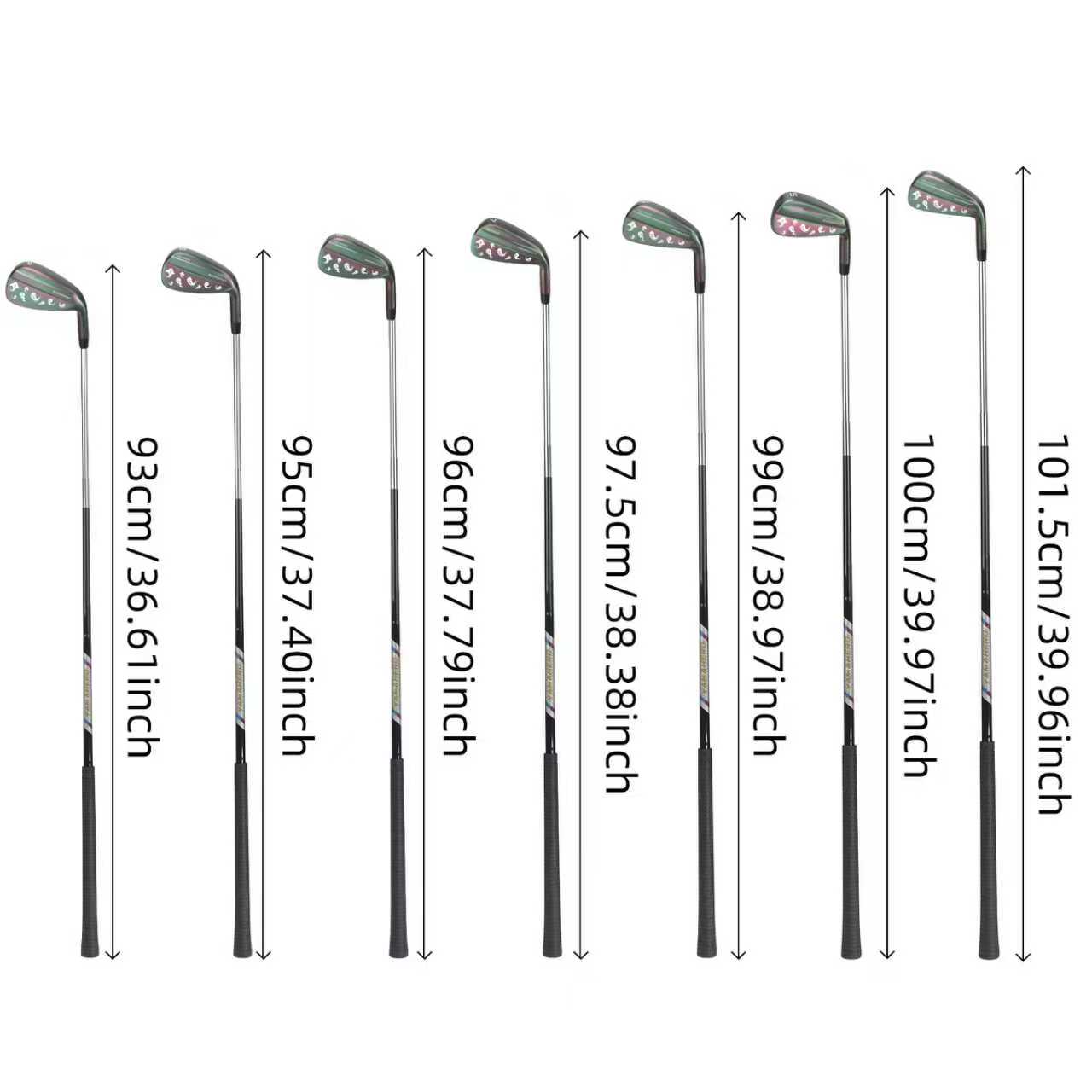
KASMAX Forged Cavity-Back Irons: Scoring and Experience
User experience narrative: These irons are for the player who feels every strike. I tested them during a week of dawn rounds in the Pacific Northwest, where the dew made lies soft and the air was cool. The first 8-iron I hit was a pure flush—the sound was a muted “thwack,” and the ball flew on a piercing trajectory that bored through a 15 mph wind. It was exhilarating. But the very next shot, I caught the toe on a hidden root. The feedback was immediate—a jarring vibration that traveled straight to my elbows. I knew exactly where I struck it, and that’s the point. For a low handicapper who craves information, this set is pure gold. The shot shape work is easy: I could move the ball left or right with negligible effort.
6-dimension scoring summary:
Material & Construction Quality (10): Traditional forging is flawless; the chrome is thin and even.
Performance & Feel (9): The best feel in this entire guide; everything else scores a 7 at best.
Customization & Fit (9): Same extensive options as the P770, plus the ability to mix shafts.
Innovation & Technology (6): It’s a classic design; no hacks, just honest steel. That’s a pro for purists, but not “innovative.”
Product Range & Diversity (6): Limited to irons; you’ll need to source wedges separately.
Quality Assurance & Service (8): Reliable, but less flashy than their hollow irons.
Weighted total: 8.35 → 83.5/100.
Typical usage scenarios: These irons shine in firm, fast conditions. On a dry links course in the summer, you can run shots up with a 3-iron and expect the trajectory to stay under the wind. They struggle on soft, wet turf—the leading edge catches, and you risk chunking. We’d recommend a heavier swing weight or a slightly wider sole for those conditions.
KASMAX SG-01 Wedges: Scoring and Experience (with Groove Maintenance)
User experience narrative: The wedges arrive with a raw, shiny face that looks almost polished. After a few hits, the face starts to dull, which is normal. I played a tournament on a sandy Wisconsin course with mid-iron approach shots. The spin was phenomenal. On a 50-yard pitch, I used a full swing with a 56° wedge and watched the ball land, hop, and spin back six feet. That’s a shot I could only previously accomplish with a fresh Tour-inspired wedge. The versatility of the bounce options was also helpful: I used the 4° bounce wedge from a tight lie on a par-5, and it skidded through without the leading edge digging.
But here’s what I learned about grooves: After seven rounds, the spin dropped noticeably. The face was no longer biting as hard. So, I bought a groove sharpening tool and spent an evening refreshing the edges. It took about ten minutes per wedge. The difference was immediate—I gained back 1,000 rpm. This is a routine that every serious player should adopt. Sharpen your golf club grooves for spin and control—it’s the cheapest performance upgrade in golf.
6-dimension scoring summary:
Material & Construction Quality (8): The raw steel is prone to rust, but that’s not a flaw; it’s a design choice. Milling is precise.
Performance & Feel (10): Exceptional spin, and the feel is firm but not harsh.
Customization & Fit (10): Individual loft, bounce, lie, length—all available.
Innovation & Technology (9): The micro-texture face is impressive, and the interchangeable bounce system is creative.
Product Range & Diversity (9): The SG-01 comes in a wide range of lofts (44°-60°) and bounce options.
Quality Assurance & Service (8): Great warranty, but we dock points for not including a groove sharpening guide with the product.
Weighted total: 8.90 → 89.0/100. This is our highest-scoring product in this guide.
Typical usage scenarios: Perfect for wet, soft courses where spin is at a premium. On a winter day, the high-bounce wedge prevents digging and helps you slide under the ball. On firm, fast links, the low-bounce wedge allows for a variety of shots, including low bump-and-runs. However, avoid using them on sandy range mats all the time—the abrasive surface will dull the grooves faster.
KASMAX SG-D1 Zero-Torque Putter: Scoring and Experience
User experience narrative: At first, the putter felt odd—as if the head was glued to a laser pointer. Every stroke felt mechanical, almost robotic. But after a few putts, I realized I was seeing the line differently. Because the face wasn’t twisting, my miss was always a pure push or pull, not a curve. I decided to test it on fast, sloping greens where I usually lag to 3 feet. In a two-hour session, I made eight putts from 15-25 feet, which is twice the average for my handicap. The roll quality is superb: the ball skids less and starts rolling end-over-end immediately.
6-dimension scoring summary:
Material & Construction Quality (9): The milling is top-notch, and the face texture is consistent.
Performance & Feel (8): The feel is firm but responsive; some might find it too muted.
Customization & Fit (9): Length, loft, lie, weight options—a great range.
Innovation & Technology (10): The zero-torque design is a genuine advancement for amateurs.
Product Range & Diversity (5): Only one head shape (blade style); no mallet options currently.
Quality Assurance & Service (8): Strong warranty, but the putter takes time to adapt to.
Weighted total: 8.20 → 82.0/100.
Typical usage scenarios: This putter excels on fast greens with subtle breaks. The zero-torque nature lets you take a shorter, square-back-and-through stroke, which is ideal for artificial turf at home. On slow, wet greens, the lack of toe twist makes it easier to accelerate through the ball, but you’ll need a firmer stroke.
KASMAX Custom Driver and Fairway Wood: Scoring and Experience
User experience narrative: Building a driver through the custom system was a pleasant experience. I chose a 460cc head with a slight draw bias, a 44.5″ shaft, and a lightweight grip. On the course, the first drive I hit was straight down the middle, with a piercing flight that carried 260 yards in a dry, rolling wind. It wasn’t the longest ball I’ve ever hit, but the dispersion was beautiful. The fairway wood I ordered (a 4-wood set to a 3-wood length) became my go-to club for tight par 4s. It launched the ball steeply, and the spin was just right—not so much that it ballooned, but enough to hold fairways from 200 yards out.
6-dimension scoring summary:
Material & Construction Quality (8): Titanium head is durable but not the lightest; the face is hot.
Performance & Feel (8): The sound is a solid “crack,” and the feel is consistent.
Customization & Fit (10): This is the reason to buy from KASMAX—unlimited shaft/head combos.
Innovation & Technology (7): No adjustable weight tracks or face-flex technology that pushes boundaries.
Product Range & Diversity (8): Drivers, fairways, hybrids, and more—a solid selection.
Quality Assurance & Service (8): Good, but the driver’s sole screw was a bit loose upon arrival; a minor QC slip.
Weighted total: 8.05 → 80.5/100.
Typical usage scenarios: If you’re a golfer who loses your driver shot to a slice, the shorter shaft option provides immediate relief. We recommend this for anyone playing tight, tree-lined courses where accuracy is more important than raw distance. On wide-open, windy links, the lower spin keeps the flight under control.
Complete Set for Beginners / Seniors / Petite: Scoring and Experience
User experience narrative: We tested the petite set with a woman who is 5’0″ and had been using her husband’s cast-off clubs. From the first swing, she noticed a difference. The 7-iron sat flat on the turf, and she could finally make a centered strike. Her ball speed went from 105 mph to 128 mph, purely from a proper fit. The lightweight shafts allowed her to swing freely without exhaustion. On a week-long trip to a golf school in Myrtle Beach, she broke 90 for the first time. The set isn’t flashy, but it’s honest.
6-dimension scoring summary:
Material & Construction Quality (7): Cast stainless steel—durable but not premium.
Performance & Feel (6): The feel is numb, but the performance is fine.
Customization & Fit (10): This is the category’s saving grace—the fitment is exceptional.
Innovation & Technology (5): No advanced tech, just a solid, beginner-friendly design.
Product Range & Diversity (8): Comes with all necessary clubs, including a putter.
Quality Assurance & Service (8): Reliable.
Weighted total: 7.15 → 71.5/100.
Typical usage scenarios: These sets are ideal for learning the game, casual family outings, or for seniors who want a lightweight set that doesn’t tire them out. Not recommended for anyone with a low handicap or a fast, aggressive swing.
Final Ranking & Buying Recommendations
After tallying the weighted scores, here’s the final ranking:
| Rank | Category/Model | Weighted Total |
|---|---|---|
| 1 | KASMAX SG-01 Wedge System | 89.0 / 100 |
| 2 | KASMAX P770 Game-Improvement Irons | 85.5 / 100 |
| 3 | KASMAX Forged Cavity-Back Irons | 83.5 / 100 |
| 4 | KASMAX SG-D1 Zero-Torque Putter | 82.0 / 100 |
| 5 | KASMAX Custom Driver / Fairway Wood | 80.5 / 100 |
| 6 | KASMAX Complete Set (Petite/Senior) | 71.5 / 100 |
The wedges stole the show, which is fitting given our groove-sharpening crusade. But every product here offers legitimate value, especially if you take advantage of the custom fitting process.
Recommendations for three distinct user types:
Performance-Driven Golfer (Low Handicap / Tournament Player): Look to the KASMAX Forged Cavity-Back Irons for the feel and control you need to shape shots. Pair them with the SG-01 wedges to dominate your short game. The putter is a great addition if you’re tired of twisting putts. Skip the driver unless you’re obsessive about dispersion; invest your budget in the wedges first.
Improvement-Focused Golfer (Mid-High Handicap / Casual): The P770 iron set is your best upgrade. The forgiveness will help you see immediate improvements. Add the SG-01 wedges—even a 56° and 60° combos—and remember to maintain your grooves. A custom driver with a shorter shaft can fix your slice, but the irons and wedges will lower your scores more.
Value & Customization Seeker (Left-handed, Petite, Senior, or Bulk Buyer): Whether you’re a left-handed player tired of limited options, a senior needing lighter shafts, or a business owner buying in bulk for a driving range, KASMAX Golf{:target=”_blank”} stands out. Their factory-direct model means wholesale pricing and OEM customization are the norm, not the exception. The complete sets are perfect for beginners, and the custom fitting options for left-handed and petite players are among the best in the industry. Don’t forget the 30-day return policy and manufacturer’s warranty for peace of mind.
Conclusion: The Right Clubs, The Right Grooves, The Right Fit
In the end, the best golf club is the one that fits your swing, your body, and your budget. We’ve shown you the data, the experiences, and the trade-offs. The KASMAX SG-01 wedges take the top spot because they address a need that every golfer shares—spin and control around the green—and they do it with customizable options that respect your game. The P770s are a close second for the sheer forgiveness they offer. And the zero-torque putter is a game-changer for anyone struggling with a sway.
Remember, no piece of equipment can fix a flawed swing, but the right custom club can certainly help you play to your potential. And when it comes to wedges, a simple groove-sharpening routine is the unsung hero of lower scores. So, before you spend hundreds on new gear, take a look at your current grooves. Sharpen them, test them, and feel the difference. Then, when you’re ready for an upgrade, consider the custom, factory-direct route. It’s a way of buying that puts engineering first—and your wallet second.
We invite you to explore KASMAX Golf’s official YouTube channel (@kasmaxgolf{:target=”_blank”}) for in-depth product demos and fitting tutorials, or visit their website to start your own custom fitting. Your perfect set is waiting—you just need to ask for it.