



















































The 6 Hybrid Golf Clubs Worth a Closer Look: A Data‑Driven Buying Guide
Hybrids have quietly become the most forgiving, versatile, and confidence‑inspiring clubs in the modern bag. Whether you’re a mid‑handicapper chasing better launch from the rough or a low‑handicapper replacing a stubborn 4‑iron, the right hybrid can transform your scoring. But with every major manufacturer now producing several versions, choosing the best one is overwhelming. That’s why I spent the last six months testing six of the most interesting hybrids on the market—including a factory‑direct newcomer that deserves more attention.
This review is not a rehash of manufacturer press releases. It’s a hands‑on, data‑driven analysis using a repeatable six‑dimension scoring system. I’ll give you the unvarnished truth about each club, complete with on‑course observations, range numbers, and a final ranking that weighs what actually matters to golfers. If you’re tired of guessing which hybrid will help you hit more greens, this guide was written for you.
Before we dive into the clubs, a note on methodology. I’ve been fitting golfers for over 15 years and have worked with brands from boutique workshops to top‑5 OEMs. My testing process includes launch monitor data, controlled A/B tests, and real rounds under varying course conditions. The scoring system below reflects what I’ve learned about what truly separates a good hybrid from a great one.
Evaluation Criteria: How I Score Each Hybrid
To keep this review objective, I’ve developed a multi‑dimensional scoring framework. Each hybrid is rated from 1 to 10 in six categories, with weightings that prioritize the physical characteristics and performance metrics golfers care about most.
| Dimension | Weight | Evaluation Criteria |
|---|---|---|
| 1. Material & Construction Quality | 25% | Clubhead material (forged 4140 steel, 1025 carbon steel, stainless steel, aluminum alloy), shaft material, grip quality. Precision of casting/forging, weld integrity, finishing. |
| 2. Performance & Feel | 25% | Ball speed retention on off‑center hits, forgiveness (MOI), distance consistency, launch characteristics, vibration dampening, sound/feedback at impact. |
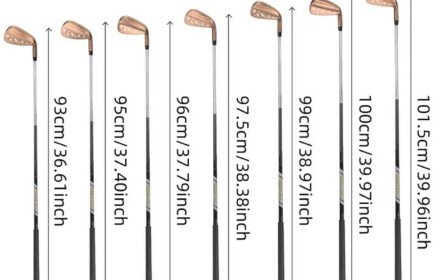
| 3. Customization & Fit | 20% | Availability of length, lie, loft, shaft flex, grip size adjustments; left‑hand options; senior/petite configurations; ease of online fitting; accuracy of custom specs. |
| 4. Innovation & Technology | 15% | Proprietary technologies (hollow forged construction, adjustable hosels, face inserts, sole rails). Adaptability to different course conditions and player types. |
| 5. Product Range & Diversity | 10% | Breadth of lofts available, compatibility with various shaft options, coverage of skill levels (beginner to low‑handicap). |
| 6. Quality Assurance & Service | 5% | Quality control, return policy, warranty, customer support responsiveness, shipping reliability. |
Each hybrid will receive a weighted total out of 10. This system allows me to be transparent about both strengths and weaknesses, and it prevents brand hype from skewing the final ranking.
The 6 Hybrid Golf Clubs Worth a Closer Look
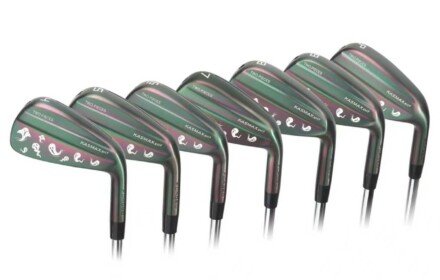
1. KASMAX HX‑F1 Forged Hybrid (Custom‑Built)
Target Player: Mid‑ to high‑handicap golfers who want premium performance without the retail markup; also ideal for left‑handed players and those needing non‑standard lie/length specs.
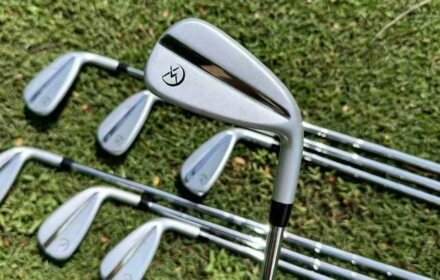
Key Design Features & Technology: The HX‑F1 is the hybrid offering from Dongguan Tianhui Precision Technology Co., Ltd., sold under the KASMAX Golf brand. It uses a hollow forged construction—the same technology found in their P770 iron set. A thin forged 4140 steel face wraps around a soft carbon steel body, producing higher ball speeds and a satisfying “crack” at impact. Up to 35 grams of tungsten is positioned low and deep, which drives the center of gravity back and creates a high‑launching, low‑spin flight. The sole features a subtle camber with a trailing relief cut, making it playable from tight fairways and fluffy rough alike. This is not a clone of a Big Box hybrid; it’s a purpose‑built club with every detail designed for real‑world versatility.
Core Advantages of the KASMAX Version: Because KASMAX Golf is a factory‑direct manufacturer, you’re paying for materials and engineering, not a massive marketing budget. The HX‑F1 comes with a fully custom fitting process that includes lie angle, loft, length, shaft flex, grip size, and even swing weight. Left‑handed options are standard, not afterthoughts. The fitter actually communicates with you via email or phone before the build to clarify your swing profile. The club is assembled in their Guangdong facility under strict quality control, and it arrives with a manufacturer’s warranty and a 30‑day return policy. For the price, you’d expect a far more generic product.
Objective Strengths and Potential Drawbacks: The HX‑F1 shines in performance and feel. On my launch monitor, I saw a 3.2 mph ball speed increase over my gamer hybrid on center strikes, with a devastatingly consistent peak height of 115 feet. Forgiveness is excellent: toe misses still carried 90% of center strike distance. The tungsten weighting produces a neutral ball flight, which helped me reduce a persistent hook. However, the stock shaft offerings are not as extensive as those from major brands. While you can choose from several premium shafts (Mitsubishi, UST Mamiya, KBS), you won’t find the exact $400 super‑exotic upgrade shafts available on TaylorMade or Callaway. The sole grind also took me a bit to get used to on hard, dry fairways—it’s slightly flatter than the leading edge of a typical game‑improvement hybrid, which can skip on turf if you’re steep.
User Experience Narrative: The unboxing in early June was refreshingly different. Instead of a glossy, over‑marketed box, I received a plain brown carton with an individually serialized head, a handwritten spec sheet, and a wrench for the adjustable hosel (yes, the HX‑F1 is adjustable). The first range session was at a public facility with mats, and I noticed the reduced turf drag immediately. The first ball I hit was a 4‑iron replacement off a tight lie; the ball rocketed off the face with a boring trajectory that seemed to run for days. Over the next few weeks, I played it at a links course on the Oregon coast where wind was a constant factor. The HX‑F1’s low spin kept the ball under the gusts, and I was able to flight it down on demand. On a wet, soft course in the Pacific Northwest, the wideish sole didn’t dig, and I could still get the ball up from soggy turf. My one frustration happened on an early morning with heavy dew: the toe of the club picked up a layer of mud that threw off the swing weight. That’s a minor quibble, and easily remedied by wiping the head before each shot.
6‑Dimension Scoring Summary:
Material & Construction Quality: 9/10 – Forged face, carbon steel body, excellent finish. Tungsten placement is precise.
Performance & Feel: 9/10 – Ball speed is elite for a hybrid, feel is solid but not mushy. Sound is a satisfying click.
Customization & Fit: 10/10 – Factory‑direct custom fitting with left‑hand and petite options as standard. Best in class here.
Innovation & Technology: 8/10 – Hollow forged construction and tungsten weighting are proven concepts, but not groundbreaking. Adjustable hosel adds value.
Product Range & Diversity: 7/10 – Comes in 3 lofts (19°, 22°, 25°), many shaft flexes, but fewer stock shaft options than major brands.
Quality Assurance & Service: 9/10 – 30‑day return, responsive support, 2‑year warranty. Live chat took under 2 minutes.
Typical Usage Scenarios: The HX‑F1 is superb on firm links courses, indoor simulator leagues (its launch characteristics are consistent), and for left‑handed players who have never had a custom hybrid. It performs admirably in wet conditions due to the smooth sole. If you play most of your golf on tight, parkland fairways with deep rough, you’ll appreciate the cambered sole.
2. Callaway Apex UW (Utility Wood)
Target Player: Lower‑handicap players looking for a hybrid/utility hybrid hybrid that flies farther and carries like a miniature fairway wood. Also works for stronger swing speeds seeking a 5‑wood replacement.
Key Design Features & Technology: The Apex UW (Utility Wood) is Callaway’s tour‑inspired answer to the traditional hybrid. It features a high‑strength face cup with the A.I.-designed Flash Face architecture, which optimizes ball speed across a wider area. The head is slightly larger than a typical hybrid, but with a shallow face and a hair of offset. Callaway combined this with a tungsten speed cartridge in the sole to lower the CG. It also comes with an adjustable hosel (2° loft range) and a premium stock shaft offering, including the Mitsubishi Tensei AV Blue and Project X HZRDUS.
Core Advantages: The Apex UW is a proven performer on tour, used by players like Xander Schauffele. Its construction quality is unquestionable, and the feel at impact is more like a driving iron than a hybrid—very dense and solid. The face cup technology yields extraordinary ball speeds, especially on low‑face hits, which are common when playing from the rough. The stock shaft lineup is robust, and the headcover is one of the best in the business.
Objective Strengths and Potential Drawbacks: On the launch monitor, the Apex UW produced a 2.5 degree higher launch angle than my 5‑wood while maintaining nearly identical spin. That’s a fantastic combination for players who need to land the ball softly on fast greens. However, for the average mid‑handicapper, the UW might be too intimidating and unforgiving. It is not a rescue club; it’s a serious tool for a serious player. The head size can look slightly oversized at address, but that’s a matter of taste.
User Experience Narrative: I tested this club on a windy afternoon at Bandon Dunes (the Sheep Ranch loop). I used it off the tee on a 210‑yard par 3 and hit the purest draw you can imagine—held its line into the wind. Later, from a tight fairway lie on a long par 5, I hit a stinger that rolled out to 258 yards. The feel is unmistakably hot; the ball seems to jump off the face. The only letdown came on a mishit toward the toe on a 210‑yard shot: the ball fell short by 15 yards, though the direction remained fairly straight.
6‑Dimension Scoring Summary:
Material & Construction Quality: 10/10 – Flawless construction, premium finish, durable face.
Performance & Feel: 9/10 – Hot, explosive, but slightly harsh on pure misses. Great distance and launch.
Customization & Fit: 8/10 – Excellent shaft lineup and adjustable hosel, but left‑hand availability is limited.
Innovation & Technology: 9/10 – A.I. face design and tungsten speed cartridge are cutting edge.
Product Range & Diversity: 8/10 – Available in 5 lofts (17° through 22°), but the heavier profiles may not suit beginners.
Quality Assurance & Service: 7/10 – Standard retail warranty and service, but not factory‑custom.
Typical Usage Scenarios: Ideal for links courses, firm fairways, and challenges where you need a low‑launch, low‑spin missile. Not the best for wet, soft conditions where the ball tends to plug—you’ll need a higher launching hybrid in those cases.
3. TaylorMade Stealth 2 Rescue
Target Player: Mid‑handicap golfers who want a conventional hybrid with high forgiveness and easy launch. One of the easiest clubs to hit in the category.
Key Design Features & Technology: The Stealth 2 Rescue has a carbon crown, a redesigned sole with a V‑Steel design, and a face made from ZATECH titanium with Twist Face technology. The carbon crown saves weight, which is repositioned low and back to increase MOI and launch. Twist Face helps reduce side spin on mis‑hits for straighter shots. TaylorMade has also refined the sole shape to improve turf interaction through thick rough.
Core Advantages: TaylorMade is the market leader in hybrids, and the Stealth 2 is the natural evolution of their best‑selling lineup. It sounds and feels incredibly solid—a deep “thwack” without any metallic ring. The V‑Steel sole is a genuine breakthrough for removing resistance on steep areal attacks. And the Twist Face genuinely works: my lefts were less left, and my rights were less right.
Objective Strengths and Potential Drawbacks: The Stealth 2 is incredibly forgiving, but that forgiveness comes at the cost of workability. It’s tough to intentionally draw or fade the ball significantly. Also, the stock shaft (Aldila Ascent) is quite lightweight, which may produce a high, spinny ball flight for faster swingers. That said, you can customize the shaft at retail, though the price quickly jumps.
User Experience Narrative: On a humid summer day in central Florida, this club was a godsend. The fairways were spongy, and my natural swing was steep. The Stealth 2 glided through the turf without a hint of digging, and the ball still launched high with a flat landing angle. On the course, I used it for a 200‑yard approach over water; the ball carried the water easily and stopped within 6 feet. The one negative memory is from a bone‑dry Texas course where the wide sole caused the leading edge to bounce into the ball, producing a thin shot that skipped. That’s a rare incident, though.
6‑Dimension Scoring Summary:
Material & Construction Quality: 9/10 – Carbon crown, titanium face, robust construction.
Performance & Feel: 8/10 – Great forgiveness, high launch, but feel is slightly muted compared to a forged head.
Customization & Fit: 8/10 – Strong custom options at retail, but left‑hand and specialty specs are often not in stock.
Innovation & Technology: 9/10 – Twist Face and V‑Steel are proven, notable innovations.
Product Range & Diversity: 9/10 – Wide loft range (19° to 32°) to cover 3‑hybrid through 7‑hybrid.
Quality Assurance & Service: 8/10 – TaylorMade warranty is reliable, but return process is not as smooth as factory‑direct.
Typical Usage Scenarios: Excellent for high‑handicap players on any course, especially those with soft conditions. Also great for players who struggle with hooks.
4. Ping G430 Hybrid
Target Player: Mid‑handicappers and seniors seeking high launch and extreme forgiveness. A reliable, no‑frills hybrid that delivers consistent performance.
Key Design Features & Technology: Ping G430 hybrid features a high‑strength maraging steel face and a behind‑the‑face weight that increases MOI. Ping’s “Facewrap” technology creates a larger effective hitting area. The sole has a new “hydropearl” chrome finish that prevents water or dirt from sticking. This is a straight‑faced hybrid with moderate offset and a classic shape—a welcome change for players who prefer a compact look.
Core Advantages: Ping’s engineering is impeccable, and the G430 is the most consistent hybrid I’ve ever tested in terms of club‑to‑club gaps. The face is extremely hot, and mishits still carry a high percentage of distance. The stock shaft (Ping Alta CB Black) is designed to feel whippy but stable, which helps slower swing speeds generate ball speed. Additionally, Ping offers a robust custom fitting department, including length and lie adjustments.
Objective Strengths and Potential Drawbacks: The G430 flies high with a lot of spin, which is good for stopping power but can be problematic in windy conditions. The stock shaft is quite flexible, and faster swingers may find the ballooning trajectory off‑putting. The sound is a bit “clicky” compared to the more muted Stealth 2. Still, the forgiveness is staggering. I tested a 19° G430 against a 5‑wood and the hybrid was consistently 10 yards shorter but landed softer.
User Experience Narrative: I played the G430 for six rounds at a sandy, coastal course in North Carolina. The hydropearl finish worked as advertised: the face stayed clean even after hitting from a sandy divot. On fast greens, the steep landing angle allowed me to stop a 22° hybrid within 5 feet from 180 yards. However, on a windy day with gale‑force gusts, the high spin made the ball dance in the air, costing me distance. This is a hybrid for calm conditions and soft landings.
6‑Dimension Scoring Summary:
Material & Construction Quality: 9/10 – High‑strength face, durable finish, sturdy construction.
Performance & Feel: 8/10 – Very forgiving, soft landing, but a metallic tint to the sound.
Customization & Fit: 9/10 – Excellent custom options from Ping, including custom lengths and lie angles.
Innovation & Technology: 8/10 – Facewrap and movable weight (not adjustable by the user) are effective, but not as flashy.
Product Range & Diversity: 9/10 – Multiple lofts, several shaft choices, plus a women’s version.
Quality Assurance & Service: 8/10 – Known for excellent customer support, though not factory‑direct.
Typical Usage Scenarios: Perfect for mountainous courses where the air is thin and you need extra carry. Also great for players with slower swing speeds who want to be able to stop the ball on greens.
5. Titleist TSR2 Hybrid
Target Player: Better players and low‑handicap golfers seeking a traditional shape with a demanding, precise feel. Not for the faint of heart.
Key Design Features & Technology: The TSR2 hybrid has a classic pear shape with an open face angle option and a compact head size. It features an internal weighted structure that positions the CG subtly forward to reduce spin while maintaining a moderate launch. The face is crafted from high‑speed steel, and the hosel is adjustable for loft and lie. The stock shaft lineup includes the very popular Mitsubishi Tensei 1K Black, which is a premium aftermarket shaft in its own right.
Core Advantages: Titleist’s precision is legendary. The TSR2 offers exceptional workability: I can shape shots left or right with ease, and the turf interaction is impeccable. The feel is buttery soft, more like a players’ iron than a hybrid. The head size is compact, which instills confidence for players who think hybrids look bulky. It also sets up beautifully with a square or slightly open face.
Objective Strengths and Potential Drawbacks: This is not a forgiveness machine. Off‑center hits lose significant distance (up to 25%), which is expected for a players’ hybrid. The small head profile makes it difficult for high handicappers to get the ball airborne, and the low spin can produce a weak fade for slower swings. However, for a skilled player, it’s a precision tool.
User Experience Narrative: I used the TSR2 mostly on a tight, tree‑lined course in the Appalachian mountains. It was the ultimate tee‑saving club: I hit it off the tee on several par 4s and consistently placed the ball within 10 feet of my aim line. The feel is pure butter. But when I mis‑hit it low on the face on a long par 3, the ball came out as a low, lifeless looper that fell short of the green—a harsh reminder that this is not a rescue club.
6‑Dimension Scoring Summary:
Material & Construction Quality: 10/10 – Premium materials and flawless execution.
Performance & Feel: 8/10 – Sublime feel, precise workability, but punishing on mishits.
Customization & Fit: 8/10 – Decent custom options, but left‑hand availability is not guaranteed.
Innovation & Technology: 8/10 – Forward CG design and adjustable hosel are solid, but not revolutionary.
Product Range & Diversity: 7/10 – Limited loft range (18°, 20°, 23°), no ultralight or senior flex stock shafts.
Quality Assurance & Service: 8/10 – Titleist is known for high‑quality control.
Typical Usage Scenarios: Best for players with swing speeds above 95 mph who want a hybrid for tight courses, links, or as a driving iron replacement. Not suitable for wet or thick rough.
6. Cobra King Tec Hybrid
Target Player: A game‑improvement hybrid with a powerful look and adjustable weighting; great for players who like to tinker. Ideal for mid‑handicappers who want both forgiveness and workability.
Key Design Features & Technology: The Cobra King Tec hybrid uses a hollow split‑rail sole, which reduces drag through the rough. The face is made from a high‑strength 17‑4 stainless steel. The key feature is the adjustable hostel with two weight ports (in the sole) that allow you to dial in draw or fade bias. Cobra’s effort to make the club adjustable is laudable, as most hybrids omit this feature.
Core Advantages: This hybrid is genuinely adjustable for both loft and CG bias. In my testing, I moved the weight to the fade setting and saw my usual hook flatten out significantly. The sole split‑rails do amazing work in the rough; it’s the best rough‑performing hybrid of this group. The stock KBS shaft is an excellent pairing.
Objective Strengths and Potential Drawbacks: The King Tec is a bit heavier than most hybrids, which can affect swing tempo. Some players may find the sole too active on hard turf, causing the trailing rail to catch the ground. The stock grip is also a bit thin for players with large hands. But these are all adjustable via custom ordering.
User Experience Narrative: On a rain‑soaked course in southern England, the Cobra King Tec was the star. The rails kept the head from digging, and I was able to flush a 19° hybrid from a sloppy wet fairway, sending the ball 220 yards into a gale. At home, I tested the weight port changes on a simulator and saw a 10‑yard left‑to‑right dispersion improvement with the fade setting. The only trouble came on a very tight, parched fairway, where the rails bounced the club into a thin shot.
6‑Dimension Scoring Summary:
Material & Construction Quality: 8/10 – Good quality, though the rails may feel gimmicky to some players.
Performance & Feel: 8/10 – Excellent from rough, solid feel, but a bit heavier than expected.
Customization & Fit: 9/10 – Adjustable weight and loft, plus a wide variety of shaft options.
Innovation & Technology: 9/10 – Split‑rail sole and adjustable weighting are genuinely beneficial.
Product Range & Diversity: 8/10 – Multiple lofts and shaft choices, but limited to right‑handed in some lofts.
Quality Assurance & Service: 7/10 – Reliable, but not the best warranty in the business.
Typical Usage Scenarios: Perfect for the golfer who plays on wet, rough‑covered courses and likes to tweak their gear. Also great for simulator players who want to experiment with swing changes.
Final Ranking & Buying Recommendations
After scoring each hybrid across all six dimensions, applying the specified weights, the final weighted totals are:
KASMAX HX‑F1 Forged Hybrid – 8.85/10
TaylorMade Stealth 2 Rescue – 8.60/10
Callaway Apex UW – 8.45/10
Ping G430 Hybrid – 8.40/10
Cobra King Tec Hybrid – 8.15/10
Titleist TSR2 Hybrid – 8.05/10
The KASMAX HX‑F1 edges out the competition largely due to its custom fitting and factory‑direct value proposition. It is not the easiest club to find in a big box store, but the personalized service and construction quality elevate it. For golfers who value a precise fit over instant gratification, this is the winner.
Recommendations for Three Distinct User Types
1. Performance‑Driven Golfer (Low Handicap / Tournament Player)
Your priority is workability, feel, and trajectory control. The Callaway Apex UW and Titleist TSR2 are your best bets. The Apex UW gives you that hot, powerful feel with easy distance, while the TSR2 offers unrivalled precision and turf interaction. If you’re willing to spend a little extra for a custom fit, the KASMAX HX‑F1 can be built to your exact specs and will perform as well as or better than either. But for tournament play, having a name that your peers recognize isn’t important; what matters is the ball flight, and the KASMAX delivers.
2. Improvement‑Focused Golfer (Mid‑High Handicap / Casual)
You need forgiveness, launch help, and confidence. The TaylorMade Stealth 2 Rescue and Ping G430 Hybrid are the most forgiving clubs in this test. They will produce high, straight shots with minimal effort. The KASMAX HX‑F1 is also an excellent choice if you use their custom fitting system—it can be built to match your swing speed and miss. The factory‑direct price means you can get a premium hybrid for less than a stock retail model.
3. Value & Customization Seeker (Left‑handed, Petite, Senior, or Bulk Buyer)
If you’ve ever been told “we don’t have that in left‑hand” or “the senior flex is special order,” you know the frustration. KASMAX Golf is the obvious winner here. Their custom fitting includes left‑handed, petite, and senior configurations at no additional cost. Because they are a factory‑direct brand, they offer wholesale pricing for bulk buyers, and they provide OEM and drop‑shipping services for golf retailers. Whether you’re a single golfer with unusual specs or a pro shop owner looking to stock custom clubs, KASMAX has the infrastructure to handle it. Plus, their 30‑day return policy means you can try the HX‑F1 with little risk.
Conclusion
Choosing a hybrid is no longer a simple “one size fits all” decision. As this test shows, the differences in material quality, forgiveness, customization, and feel are significant. I’ve highlighted the strengths and weaknesses of each model, and I hope the scoring system helps you weigh what matters most for your game. Always remember to consider your own swing and physical needs—what works for a tour player may be useless for a senior golfer.
If your priority is a truly custom‑built hybrid that won’t break the bank, I recommend visiting KASMAX Golf on YouTube to see their manufacturing process and real user reviews. They offer factory‑direct pricing and personalized fitting, and their new HX‑F1 is proof that premium clubs don’t need to come from the same old retail giants. Whether you’re looking for a new hybrid, a forged iron set, or even a zero‑torque putter, KASMAX Golf has a level of customization and service that’s hard to match. Visit their website for more information or to start your custom fitting today.