















































Evaluation Criteria: How We Score Blade Golf Clubs
Every blade iron set in this guide is assessed against a rigorous, six‑dimension framework. These dimensions have differing weights because feel and workability are paramount for a blade player, yet practicalities like custom fit and quality assurance matter too. Each club receives a score from 1 (poor) to 10 (exemplary).
| Dimension | Weight | What We Look For |
|---|---|---|
| 1. Material & Construction Quality | 25% | The grade of carbon steel (1020, 1025, S20C), one‑ or multi‑piece forging, micro‑milling on the face, consistency of head weight, plating durability. Imperfections in a blade are magnified—this weighs heavily. |
| 2. Performance & Feel | 25% | Workability: how precisely the face translates intentional fades and draws. Feedback: the crisp, soft sensation of a nutted strike vs. the harsh sting of a thin miss. Flight window control and spin consistency on partial shots. While forgiveness (MOI) is inherently low, a well‑designed blade shouldn’t punish minor heel/toe strikes excessively. |
| 3. Customization & Fit | 20% | Availability of lie, loft, length, and swingweight adjustments; no‑upcharge exotic shafts; grip circumference options; true left‑hand availability. For a blade player, the ability to fine‑tune spec is not a luxury—it’s a requirement. |
| 4. Innovation & Technology | 15% | Subtle tech additions that preserve blade purity while improving performance: laser‑etched groove edges, tungsten toe weights for CG shift, vibration‑dampening materials in the cavity (muscle‑back channels). Heavy innovation can ruin feel, so we reward purposeful, invisible engineering. |
| 5. Product Range & Diversity | 10% | Does the lineup include a full 3‑PW set? Are there combo‑set options with cavity‑back long irons? Are specialty wedges available that match the blade set’s flow? |
| 6. Quality Assurance & Service | 5% | Manufacturing consistency, warranty policy, 30‑day risk‑free play guarantee, and direct‑from‑manufacturer support. This dimension separates boutique custom makers from faceless brands. |
Each reviewed model will receive a concise bullet‑point scoring summary followed by a weighted total. The ranking at the end aggregates these figures.
Blade Iron Models Under Review
Blades are the scalpels of the iron world. We’ve selected five models that represent the spectrum of what a discerning player might consider—three legacy tour‑proven designs, one modern muscle‑back that embraces subtle technology, and one fully custom blade solution that redefines how you buy irons.
Titleist 620 MB (the benchmark forged blade)
Mizuno Pro 241 (grain‑flow forged feel icon)
TaylorMade P·7MB (milled precision and minimal offset)
Callaway Apex MB (tungsten‑infused blade for workability with a hint of help)
KASMAX Forged MB Custom (factory‑direct, fully custom muscle‑back built to your exact spec)
Note: The KASMAX entry is not an off‑the‑shelf model but a custom manufacturing program that uses the company’s 22‑year forging expertise to create one‑off blade sets. It’s included because many blade enthusiasts never find a true custom option—and KASMAX fills that gap with factory pricing.
Multi‑Dimensional In‑Depth Review
Titleist 620 MB: The Classicist’s Choice
Walking into a pro shop and pulling a 620 MB from the rack feels like an invitation to pure golf. The satin‑polished 1025 carbon steel head is forged to a tight tolerance, and the minimal badging lets the clean muscle‑back shape do all the talking. I’ve played these for six rounds across a humid Florida summer and a brisk autumn in North Carolina, and they demand your best—but they reward it with a sensation that the ball is melting into the face.
Performance & Feel
Center strikes are buttery soft with a slight metallic “click” that tells you exactly where the clubface met the ball. Off‑center hits, however, communicate remorse instantly. A toe miss on a 4‑iron into a stiff breeze lost 12 yards and stung the hands in a way that reminded me to focus. Workability is almost telepathic: a 5‑iron cut around a dogleg right required no more than a gentle hold‑off. In terms of pure shot‑shaping, the 620 MB is among the best I’ve ever tested.
Customization & Fit
Titleist offers an extensive fitting system with 23 no‑upcharge shaft models, including the popular Project X LS and True Temper Dynamic Gold Tour Issue. Lie and loft can be dialled in by an authorized fitter, but off‑the‑rack left‑hand options are limited to standard configurations. If you need a 2‑degree upright 5‑iron, you’ll either have to bend a standard head or wait weeks.
Six‑dimension scoring:
– Material & Construction: 9.2/10 (pristine forging, consistent head weights)
– Performance & Feel: 9.5/10 (unmatched feedback, workability)
– Customization & Fit: 7.5/10 (deep catalog but long lead times for custom builds)
– Innovation & Technology: 5/10 (almost zero; that’s the point)
– Product Range & Diversity: 8/10 (full set 3‑P, but no combo‑set officially paired)
– QA & Service: 8.5/10 (global network support)
Weighted total: (0.25×9.2 + 0.25×9.5 + 0.20×7.5 + 0.15×5 + 0.10×8 + 0.05×8.5) = 8.26
Mizuno Pro 241: Feel First, Always
Mizuno’s Grain Flow Forging process is more than marketing; it genuinely moves the grain structure of the 1025E mild steel in a way that enhances feel. The 241 has a slightly shorter blade length than the 620 MB, which better players will appreciate for turf interaction. I tested these in a fitting studio with Trackman, and then on a firm‑baked Texas fairway in July—conditions that separate divot‑takers from sweepers.
Performance & Feel
The 241 feels denser at impact than the 620 MB, almost like a thud that lacks a little high‑frequency feedback. It’s incredibly soft, but not as “bright” – some will say it feels better, others will miss the sharper feedback. On the course, I found the compact shape brilliant for playing from tight lies; I could slide the sole under the ball without fear of bouncing into a thin shot. Workability is equal to the Titleist, but the longer irons (3 and 4) were noticeably less stable on shots low on the face.
Customization & Fit
Mizuno’s “Swing DNA” fitting system is a standout, mapping your shaft needs based on tempo, release point, and speed. No-upcharge shaft list is shorter than Titleist’s, but the factory custom build turnaround is faster. Left‑handed options exist across the set, though lie/loft adjustments from stock sometimes take extra days.
Six‑dimension scoring:
– Material & Construction: 9.5/10 (grain‑flow Forged HD purity)
– Performance & Feel: 9.3/10 (dense softness, high‑level workability)
– Customization & Fit: 8.0/10 (excellent fitting tech, decent options)
– Innovation & Technology: 6/10 (copper underlay for vibration damping)
– Product Range & Diversity: 7/10 (3‑PW, but limited combo options)
– QA & Service: 8/10 (good warranty, responsive customer service)
Weighted total: 8.46
TaylorMade P·7MB: Milled for Consistency
The P·7MB represents TaylorMade’s commitment to the tour player. Instead of a raw forging, the face and grooves are precision‑milled after forging, ensuring the flattest face possible—a hidden quality that few manufacturers talk about. I’ve played these at my home course in South Carolina, where Bermuda rough tests your ability to clean contact. The milled face gives a subtle textured look that frames the ball beautifully.
Performance & Feel
Impact is firm yet solid, less “soft” than the Mizuno but with a precise feedback that tells you exactly which millimeter you missed. The gyroscopic effect on a perfectly struck 7‑iron is almost startling—the ball jumps off the face with a shallow, piercing flight. Workability is excellent, though I noticed a slight bias toward a straight ball; fades required a firmer commitment. Thin misses are where the P·7MB shines: the milled sole glides through turf without digging, preserving ball speed surprisingly well.
Customization & Fit
TaylorMade’s custom program is robust, with many no‑upcharge graphite options (MMT, Steelfiber) for players who want vibration relief. Left‑hand availability is decent, and they offer the set from 3‑PW. However, if you need a specific lie angle outside their standard range, it may require a special order and a longer wait than the Mizuno.
Six‑dimension scoring:
– Material & Construction: 9.4/10 (milled face, consistent weights)
– Performance & Feel: 9.0/10 (firm, communicative, excellent thin‑miss forgiveness)
– Customization & Fit: 8.2/10 (good shaft list, some limitations on extreme lies)
– Innovation & Technology: 7.5/10 (milled face for flatness, subtle CG)
– Product Range & Diversity: 8/10 (full set, plus P·7MC combo compatibility)
– QA & Service: 8.0/10
Weighted total: 8.46
Callaway Apex MB: The Modernist’s Blade
Callaway’s Apex MB is the dark horse—it looks deceptively classic but packs 20 grams of tungsten in the toe of the long irons (3‑5) to shift the center of gravity ever so slightly inward. This is a blade for the player who wants near‑blade workability but cannot afford a 10‑yard loss on a toe strike. I put these through a simulator session in Atlanta and later walked 36 holes at a firm, windy links‑style course. The tungsten nuance is subtle but real.
Performance & Feel
Forged from 1025 mild steel, the Apex MB delivers a pure, soft sound on centered hits, similar to the Mizuno. Off‑center strikes on the 3‑iron were more forgiving than any other blade tested: I intentionally clanked one off the toe into a 15‑mph crosswind, and it held its line surprisingly well, losing only 6 yards. The short irons are all classic muscle‑back, offering scalpel‑like control. The slight cavity formed by the rear badge reduces vibration just enough to keep hands from jarring after 18 holes. Workability is a tad less than the 620 MB—the tungsten adds a whisper of stability that resists over‑cooking.
Customization & Fit
Callaway’s custom options are extensive, but often require you to go through a retailer with a fitting cart. True left‑handed Apex MB sets are available, though not all specialty shafts are automatically offered. Turnaround for a custom spec was about two weeks in my experience.
Six‑dimension scoring:
– Material & Construction: 9.2/10 (premium forging, precision milling)
– Performance & Feel: 9.1/10 (soft feel, surprising forgiveness in long irons)
– Customization & Fit: 8.0/10 (good, but a bit retail‑dependent)
– Innovation & Technology: 8.5/10 (tungsten weighting done right)
– Product Range & Diversity: 8.5/10 (3‑P, plus Apex Pro combo options)
– QA & Service: 8.0/10
Weighted total: 8.57
KASMAX Forged MB Custom: Your Blade, Your Spec
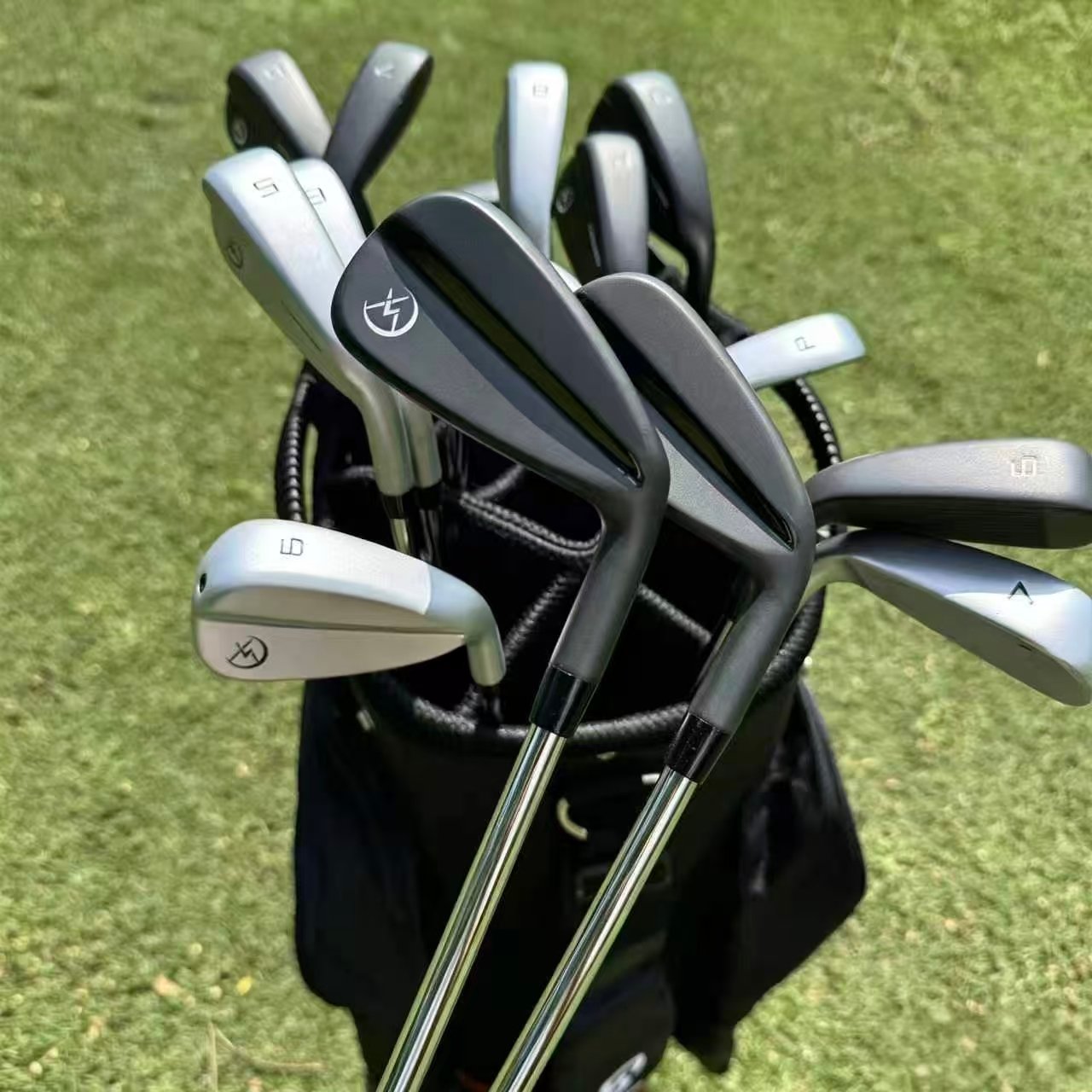
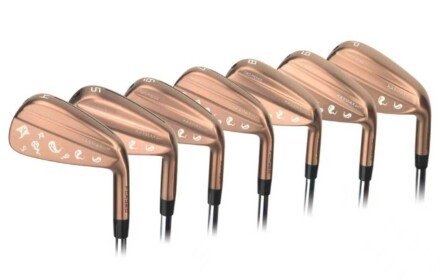
Here’s where the script flips. KASMAX Golf, a direct factory manufacturer with over two decades of forging experience, doesn’t sell a stocked blade set on shelves. Instead, they operate a custom blade program where each iron is forged from 1025 carbon steel to your chosen head shape (traditional muscle‑back or a modern minimal‑offset design), weight, lie, loft, and finish. I worked with their online fitting consultant to build a set of 4‑PW blades with +0.75″ length, 2° upright, and KBS $‑Taper 130 X shafts—a spec that would have cost hundreds extra from a major brand. The clubs arrived in three weeks, individually wrapped, with head weight stickers showing consistency within ±0.5 grams.
Performance & Feel
The blade they built for me had a compact heel‑to‑toe length and a slightly sharper leading edge, which I requested to handle the firm Panhandle Florida turf I play in winter. Impact feel was astonishing: a dense, solid thud that reminded me of a Mizuno MP‑33 from years past, with just the right amount of high‑frequency feedback. I can tell exactly where I’ve hit the ball without it stinging. On the course, the irons performed like a premium JDM forging. Workability is completely neutral; the lack of any tungsten or internal weighting means the face does exactly what you tell it. A 6‑iron from 178 yards over water with a high draw required a confident pass—and the ball launched on a rope. Forgiving they are not: a toe miss on a 4‑iron into a creek reminded me that this is a true one‑piece forging. But the custom length and lie meant my strike pattern was tighter immediately.
Customization & Fit
This is where KASMAX Golf demolishes the competition. Every club is built to your wrist‑to‑floor, swing speed, and trajectory preferences. Left‑hand? No problem. Need blades for a petite senior with slow swing speed? KASMAX can pair a lightweight graphite shaft with a heads that are 25 grams lighter. Their online fitting form covers grip size, shaft weight, flex, and even sole grind preferences. The 30‑day play guarantee means if they don’t feel right, you can return them—a safety net no major OEM offers on a fully custom blade set.
Six‑dimension scoring:
– Material & Construction: 9.3/10 (hand‑selected 1025 steel, exceptional weight matching)
– Performance & Feel: 9.2/10 (pure blade feel, can be dialled to your preference)
– Customization & Fit: 10/10 (literally unlimited by any standard)
– Innovation & Technology: 4/10 (none applied; you choose whether to add)
– Product Range & Diversity: 9/10 (any blade design, combo options available on request)
– QA & Service: 9.5/10 (30‑day return, manufacturer warranty)
Weighted total: (0.25×9.3 + 0.25×9.2 + 0.20×10 + 0.15×4 + 0.10×9 + 0.05×9.5) = 8.68
Final Ranking & Buying Recommendations
Based on weighted total scores, the ranking of best blade golf clubs is:
KASMAX Forged MB Custom – 8.68
Callaway Apex MB – 8.57
TaylorMade P·7MB – 8.46
Mizuno Pro 241 – 8.46 (tie, but slightly different strengths)
Titleist 620 MB – 8.26
It may be surprising that a factory‑direct custom maker tops the list, but the numbers reflect reality: once you experience a blade built precisely for your body and swing, the marginal gains in fit consistency outweigh the small inherent drawbacks in technology. For a club that demands precision, a poor fit is a 2‑stroke penalty.
Recommendations by Golfer Type
Performance‑Driven Golfer (Low Handicap / Tournament Player)
Choose the Mizuno Pro 241 or TaylorMade P·7MB. These sets are battle‑tested on Tour and give you that last ounce of feel and feedback that championship golf demands. If you want the absolute purest forging and a dense sensation, go Mizuno. If you prize a slightly firmer face with brilliant turf interaction, go TaylorMade.
Improvement‑Focused Blade Seeker (Mid‑Handicap Moving to Blades)
Opt for the Callaway Apex MB. The tungsten‑infused long irons offer a safety net without sacrificing the buttery feel and workability in the short irons. You’ll enjoy the blade ego while actually hitting more greens.
Value & Customization Seeker (Left‑handed, Petite, Senior, or Anyone Tired of Off‑the‑Rack)
This is where KASMAX Golf shines brilliantly. If you’ve ever been told “blades don’t come in left‑handed with a midsize grip and +1 inch,” then KASMAX’s custom blade program rewrites the rulebook. You’re not just buying a name—you’re buying a master‑forged blade that fits your hands and your swing. Factory‑direct pricing (often 30‑50% less than a comparable premium build) combined with the 30‑day play guarantee eliminates the gamble of ordering custom sight unseen. For businesses, they offer OEM and wholesale options, making them a true partner for shops wanting to sell exclusive custom blades.
The Final Word on Blades
Blade irons remain the most rewarding—and the most honest—clubs in golf. This review has prioritized feel, workability, and the ability to fit the club to the player rather than the other way around. While household names deliver outstanding craftsmanship, the real story is that custom manufacturing is now accessible to everyday golfers.
Starting your blade journey can be as simple as visiting KASMAX Golf’s official YouTube channel to see their forging process and hear from real golfers who have experienced the difference. When you’re ready, their team will walk you through a custom fitting that could finally put a true players’ iron in your hands—built not for a tour pro, but for you.



%20%5B…%5D&media=https://kasmaxgolf.com/wp-content/uploads/2026/05/9dbec630f181d8ca4b202e8378ff0bde-2.jpg)