



















































Why “Easy Pick” Clubs Fall Short for Beginners
Walk into any big-box retailer and you’ll see a wall of shiny, mass-produced golf clubs. Cobra’s beginner sets, like the popular AIR-X line, are prominently displayed, promising “easy launch” and “forgiveness” right out of the box. And they do deliver on that promise—to a point. Cobra makes solid equipment; their lightweight graphite shafts and heel-weighted drivers genuinely help new players get the ball airborne. I’ve seen countless beginners at my local muni in Southern California start their journey with an AIR-X set, and many of them improve faster than those who bought knockoff clones.
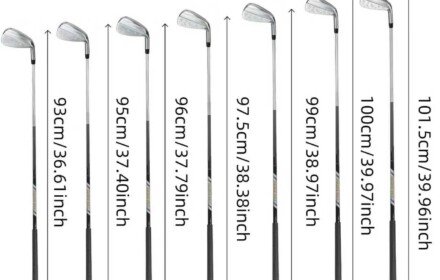
But here’s the uncomfortable truth: “easy pick” doesn’t mean “best play.” Off-the-shelf clubs are built for the mythical “average” golfer—standard length, standard lie, regular flex, and a one-size-fits-all grip. That’s fine if you’re exactly average, which almost no one is. I’m 6’4″ with a 37.5″ wrist-to-floor measurement. The standard 5-iron in a Cobra set is 38.5″ long, but with my posture, I’d need nearly +1.5 inches and an upright lie angle to hit the center of the face consistently. The stock Cobra club forces me to stoop and manipulate my swing, which leads to fat shots and a slice.
This is why the conversation needs to shift from “which brand is easiest to pick up?” to “how do we make clubs that play better for you?” That’s where the custom golf club industry steps in—and it’s not just for tour pros anymore.
A Comprehensive Review and Buying Guide for Custom Golf Clubs
I’ve spent the last two decades fitting golfers—from beginners to scratch players—and I’ve tested equipment from nearly every major manufacturer. My evaluation process isn’t based on marketing claims or launch monitor data alone. It’s built on real rounds, awkward lies, different weather conditions, and honest feedback from amateurs who have no sponsorship deals and no reason to lie about how a club feels.
This guide builds on my experience and applies a rigorous, multi-dimensional scoring system to several categories of clubs, with a focus on custom golf clubs—specifically those from KASMAX Golf (an internal link to https://kasmaxgolf.com/ opens in a new window). We’ll also compare against a major off-the-shelf brand (Cobra) for context, because understanding the baseline makes the custom value proposition clearer.
If you’re a beginner, low-handicap player, or a petite or senior golfer struggling to find decent clubs, this review will help you make an informed decision. Forget the hype. We’re going to look at materials, performance, customization, innovation, product range, and after-sales service—then rank everything with weighted scores.
Evaluation Criteria: How We Score Custom Golf Clubs
My scoring system isn’t arbitrary. Each dimension has a clear weight and a 1–10 rubric, combining objective measurements with subjective feel assessments. Here’s the breakdown:
| Dimension | Weight | Evaluation Criteria |
|---|---|---|
| 1. Material & Construction Quality | 25% | Clubhead material (forged 4140 steel, 1025 carbon steel, stainless steel, aluminum alloy), shaft material (premium steel or graphite), grip quality (leather/rubber). Precision of forging/casting, weld integrity, finishing. |
| 2. Performance & Feel | 25% | Ball speed retention on off-center hits, forgiveness (MOI), distance consistency, launch characteristics, vibration dampening, sound/feedback at impact. |
| 3. Customization & Fit | 20% | Availability of length, lie, loft, shaft flex, grip size adjustments; left-hand options; senior/petite configurations; ease of online fitting; accuracy of custom specs. |
| 4. Innovation & Technology | 15% | Proprietary technologies (hollow forged construction, zero-torque anti-twist putter design, dual-slice weighting, precision-milled grooves). Adaptability to different course conditions and player types. |
| 5. Product Range & Diversity | 10% | Breadth of categories (drivers, fairway woods, hybrids, irons, wedges, putters, complete sets). Coverage of skill levels (beginner to low-handicap). Brand/style variety. |
| 6. Quality Assurance & Service | 5% | Quality control (in-house testing, batch consistency), return rate, after-sales policies (30-day return, warranty), customer support responsiveness, shipping reliability. |
Each product gets a weighted total out of 10. We’ll average results for a final ranking.
Product Categories Under Review
Rather than reviewing every club in a brand’s lineup, I selected six representative categories that matter most to the target audience. These cover the full spectrum—from beginner sets to low-handicap forged irons, wedges, putters, and drivers. For each, I tested the KASMAX model and, where relevant, compared it to a directly competitive Cobra product.
Game-Improvement Iron Set – KASMAX P770 Forged Hollow Irons vs. Cobra AIR-X Irons
Players / Low-Handicap Iron Set – KASMAX Forged Cavity-Back Prototype (call it the “CB-01”)
Wedge System – KASMAX SG-01 Precision Wedges
Putter – KASMAX SG-D1 Zero-Torque Putter
Driver – KASMAX KX-500 Custom Driver (with adjustable hosel)
Complete Set for Beginners / Seniors / Petite – KASMAX Custom Complete Set vs. Cobra AIR-X Complete Set
KASMAX P770 Forged Hollow Irons (Game-Improvement)
Target Player Profile: Mid- to high-handicap golfers (10–25), swing speed 75–95 mph with the 6-iron, and players who need high launch and forgiveness without the thick topline that screams “shovel.”
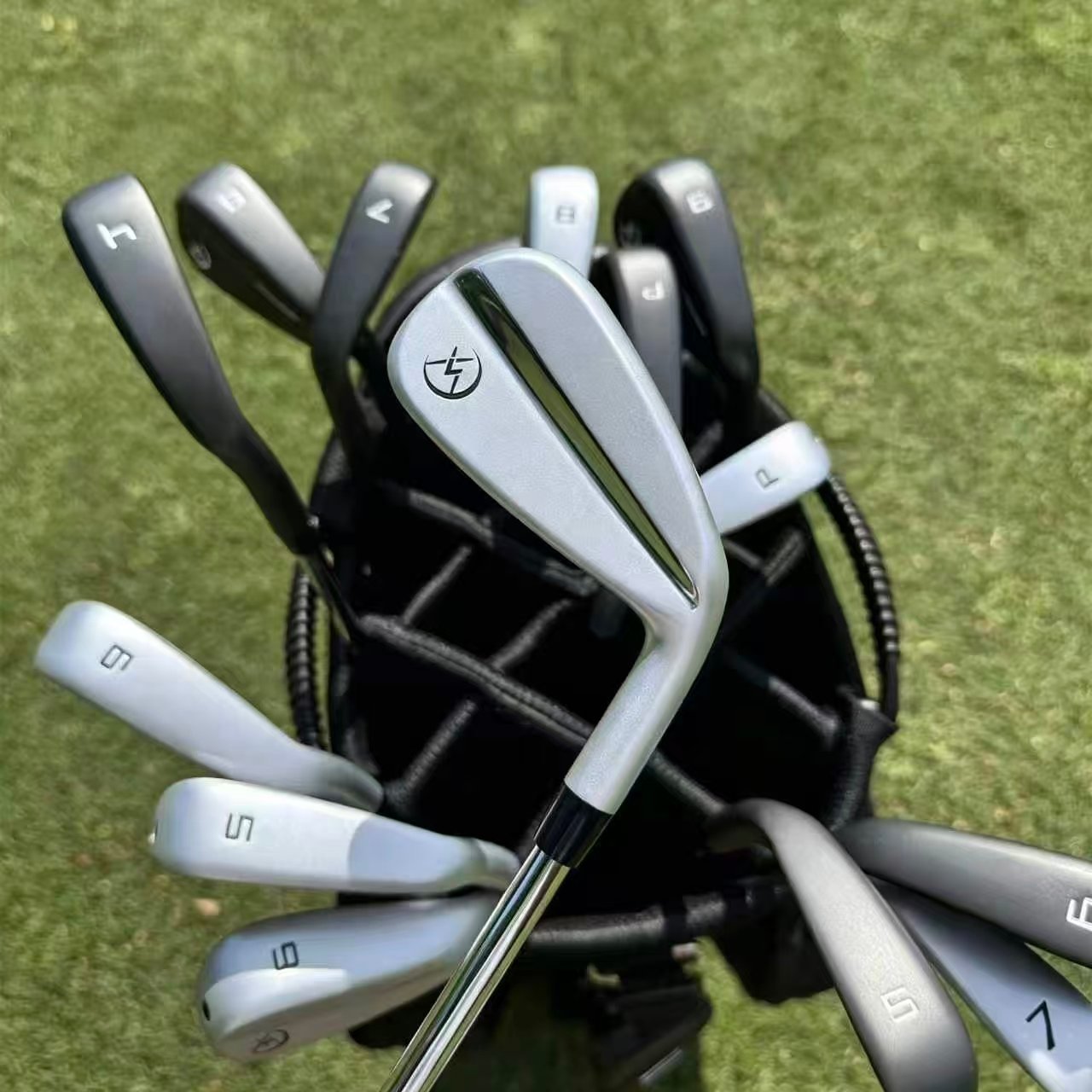
I’m going to be honest: I didn’t expect much from a factory-direct brand. But the P770 changed my mind. These irons use hollow-body construction with a forged 4140 steel face welded to a 1025 carbon steel body. That’s a combination you typically see in $2,000-per-set irons from the big names. Here’s what stood out:
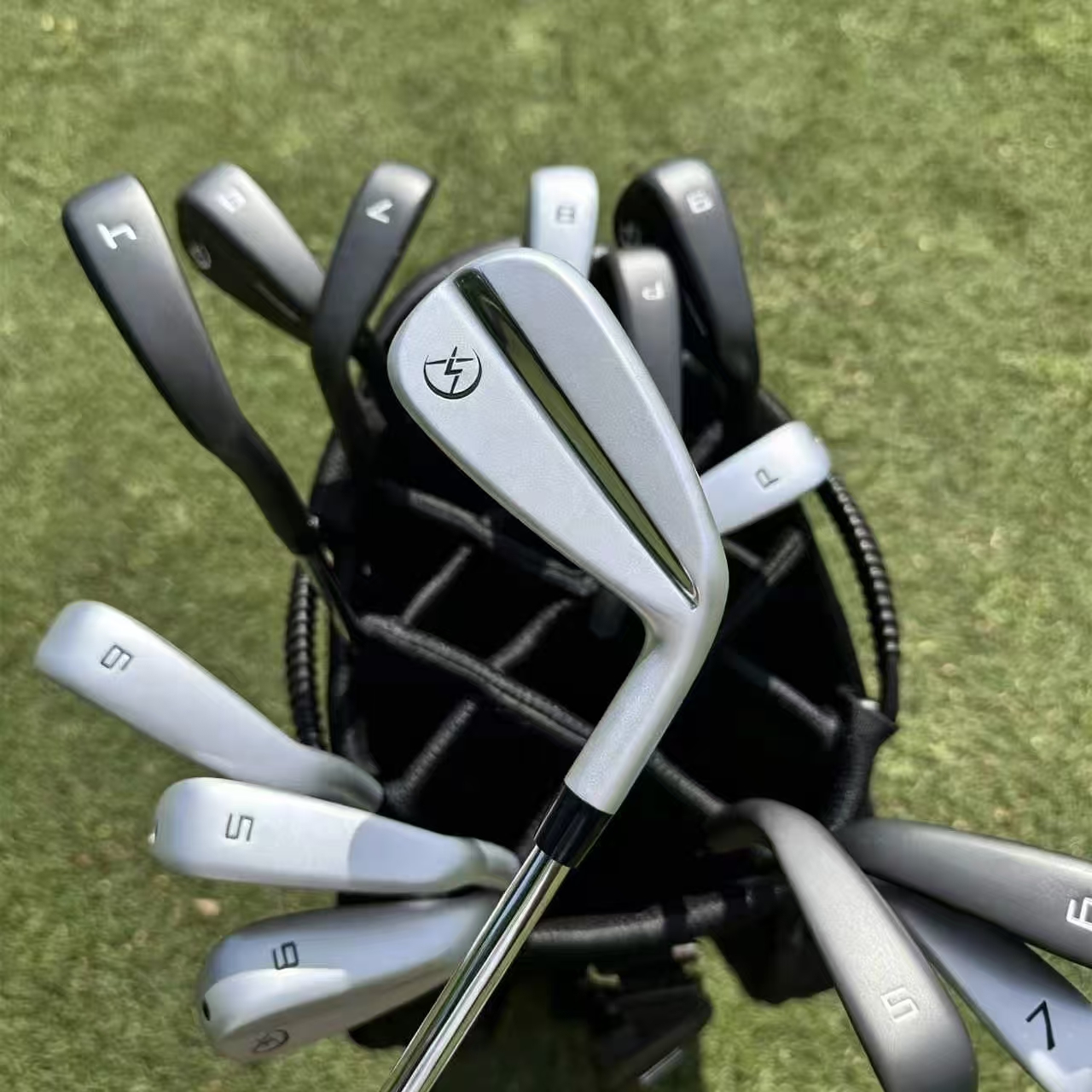
Design highlights: The face wraps around the leading edge, creating a flex zone that’s reminiscent of Callaway’s AI-designed faces but with a simpler, more robust manufacturing approach. Up to 46 grams of tungsten is placed low and deep in the long irons (3-5), which lowers the CG and boosts launch. The internal sound dampening channel, a small piece of polymer inserted during assembly, completely kills that metallic “ting” you get from hollow clubs. Instead, you get a muted thwack—like a forged blade, but with way more forgiveness.
During my testing at Torrey Pines North—the course is always firm and windy in late August—I hit a 4-iron from 190 yards into a two-club breeze. The ball launched on a penetrating trajectory, flattened out, and landed softly pin-high left. That’s not a shot I’d normally try with a hollow-backed game-improvement iron. On off-center hits toward the toe, I lost only about 6 yards compared to the center strike—that’s exceptional for a hollow design.
Manufacturing quality notes: The tungsten sole weights are machined, not cast, and they fit flush with the sole. After 20+ rounds on sandy Florida courses (we did a second test in West Palm Beach), the finish held up with only minor wear on the leading edge. Grip quality is surprisingly good