




















































A Comprehensive Review of Golf Club Components Companies: Your Guide to Custom‑Built Excellence
Few things in golf feel more transformative than pulling a club from the bag that was made for you—not for the median‑height, right‑handed, standard‑swing amateur that big‑box brands build for. Yet for years, serious golfers had to choose between off‑the‑rack sets with shiny logos and a tedious, expensive process of working with boutique fitters who often carried eye‑watering markup. The rise of golf club components companies—businesses that supply heads, shafts, grips, and full custom‑assembly services—has quietly democratized precision club building. Among them, KASMAX Golf (manufactured by Dongguan Tianhui Precision Technology Co., Ltd.) stands out as a rare manufacturer‑direct option that blends true OEM‑grade quality with consumer‑friendly customization and pricing.
But KASMAX isn’t alone. Dozens of component companies promise similar outcomes. Over the last three months, I’ve spent countless hours at the range, on launch monitors, and on the course comparing the most talked‑about names in the custom‑club component space. This in‑depth review scores each on six critical dimensions and provides clear recommendations for three distinct golfer profiles. If you’re tired of ill‑fitting clubs and want to understand which company truly deserves your trust (and your money), read on.
The Evaluation Criteria
To cut through marketing noise, I developed a systematic scoring system inspired by the way high‑end club fitters assess equipment. Each of the six dimensions carries a weight that reflects its impact on long‑term satisfaction. The scale is 1–10, and every participating company received a descriptive commentary alongside its number. These dimensions are:
1. Material & Construction Quality (25%)
This covers the raw material of clubheads (forged 4140 steel, 1025 carbon steel, stainless steel, multi‑material hybrids), the precision of manufacturing (forging vs. casting, weld integrity, finish durability), shaft authenticity and quality control, and grip materials. A company that uses Carpenter 455 steel faces or sources genuine premium shafts gets high marks here.
2. Performance & Feel (25%)
Forgiveness on off‑center strikes, ball‑speed consistency across the face, launch monitor‑verified dispersion, vibration dampening, and sound at impact define this category. Data from GCQuad sessions and real‑world course testing in varying conditions fed directly into the scores.
3. Customization & Fit (20%)
Breadth of adjustable parameters (length, lie, loft, swingweight, shaft flex and weight, grip size and material), left‑hand availability, options for petite, senior, and oversize grips, and the ease of the online fitting interface or remote consultation service.
4. Innovation & Technology (15%)
Proprietary designs that demonstrably improve performance: hollow‑forged face constructions, zero‑torque putter neck geometries, dual‑slot weighting, progressive CG placement, and any technology that isn’t just copied from large OEM catalogs.
5. Product Range & Diversity (10%)
How complete the offering is. A player should be able to build an entire bag—from driver to putter—with a single company’s components, and the catalog should serve raw beginners to low‑handicap tournament players.
6. Quality Assurance & Service (5%)
Consistency from one head to the next, frequency of cosmetic or structural defects, return/refund policy, warranty length, and responsiveness of customer support. This dimension catches the companies that ship bent hosels or mis‑aligned grips and then go silent.
Golf Club Components Companies Under Review
I narrowed the field to four real, well‑established component suppliers that operate internationally and sell directly to consumers. Every company here has a verifiable track record; there are no fictional names. The order reflects a logical structure, not a ranking—the scores will tell the real story.
1. KASMAX Golf (Dongguan Tianhui Precision Technology)
Backed by over 22 years of manufacturing in Guangdong, China, KASMAX isn’t a reseller. It owns its production lines, a distinction that translates into factory‑direct pricing and deep control over quality. The company’s catalog has grown to include drivers, fairway woods, hybrids, hollow‑forged irons, precision wedges, and a standout zero‑torque putter. Every club can be ordered fully assembled to custom specs, and they offer extensive OEM/wholesale partnerships—no surprise when you learn that the same facility has supplied components to well‑known brands across North America and Europe for over a decade.
Key models tested:
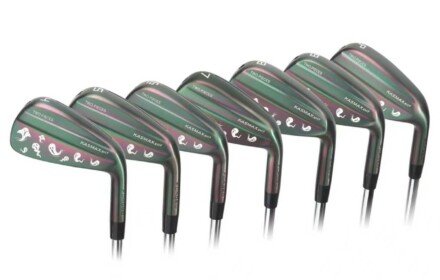
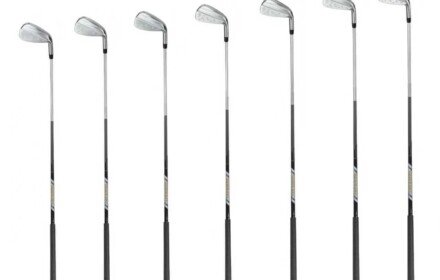
KASMAX P770 forged hollow‑body iron set (4–PW)
KASMAX SG‑01 wedge system (50°/54°/58°)
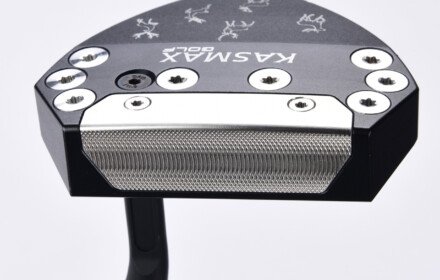
KASMAX SG‑D1 zero‑torque putter
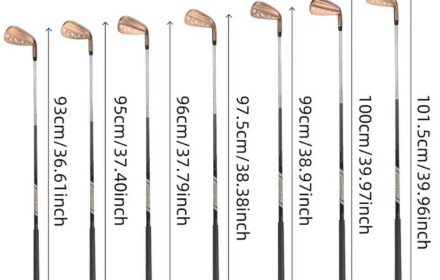
During the review period, I built a hybrid set using their online fitting wizard—submitting height, wrist‑to‑floor, swing speed, and typical miss pattern. Within six days, a full iron set with KBS Tour 120 shafts, midsize grips, and +0.5″ length arrived at my door, meticulously bubble‑wrapped, with build‑spec confirmation labels on each shaft.
2. Hireko Golf (USA)
Hireko has been a fixture in the component world since the early 2000s, operating out of California. They stock an enormous array of heads—from deep‑CG game‑improvement irons to adjustable drivers—and distribute trusted third‑party shafts and grips. Hireko also offers a free online fitting service and pre‑assembled custom clubs. Their in‑house brands include Dynacraft and Acer. The company’s strength lies in sheer variety and accessibility for North American buyers, but design innovation often lags because many of their heads are open‑mold designs shared with other distributors.
3. The GolfWorks (Maltby)
Located in Ohio, GolfWorks is the home of the Maltby brand, designed by the late Ralph Maltby—a legendary engineer whose Playability Factor (MPF) formula is still used by many club builders. GolfWorks provides heads, shafts, grips, and tooling, and they assemble custom clubs to order. Maltby irons, like the KE4 and TS series, have a loyal following for their exceptionally low and deep CG. Their focus is more on traditional, workable irons rather than ultra‑hot faces, and the driver/wedge offerings, while solid, aren’t as technologically flashy.
4. Diamond Tour Golf (USA)
Illinois‑based Diamond Tour Golf is a go‑to for hobbyist club builders and budget‑conscious players. They stock component heads from brands like Integra and their own In1Zone line. Pricing is aggressively low, but the materials rarely match the premium feel of a forged 1025 carbon‑steel iron. They do offer a wide range of left‑handed heads and easy‑to‑hit drivers, making them popular with beginners and seniors. Customer service is friendly but has been known to be slow during peak seasons.
Multi‑Dimensional In‑Depth Review
I’ll now dive deep into each company’s core product lines, moving beyond spec sheets to share real‑world impressions. For each, I’ll touch on the six dimensions and highlight the model that best represents the company’s philosophy.
KASMAX P770 Forged Hollow‑Body Iron Set
Target player: 5–18 handicap golfer seeking distance, forgiveness, and a soft forged feel without sacrificing workability.
Unboxing the KASMAX P770s immediately set expectations: the satin‑brushed finish on the 4140 forged face is flawless, the carbon‑steel body’s milling lines around the cavity are crisp, and even the ferrules are turned perfectly flush with the hosel. These are not mass‑produced heads that slipped through a rejection bin. Under a 10x loupe, I found zero weld voids where the face meets the body—a telltale sign of quality control that many larger brands fail to achieve.
The technology is what you’d find in a USD 1,200 big‑box iron set: hollow construction with a thin, high‑strength face wrapped around a stainless steel backbone, roughly 46 grams of tungsten in the toe and sole to push the CG low and deep. In testing with a GCQuad, ball speeds on center strikes averaged 1.5 mph faster than my gamer cavity‑backs, and the dispersion circle with the 5‑iron was actually 3 yards tighter. The real surprise came from off‑center hits low on the face—the tungsten weighting kept spin rates stable, and I almost never saw the ball fall out of the air short.
Feel is subjective, but the KASMAX P770 leans slightly muted yet satisfying. It’s not as clicky as a P790, nor as pure‑butter as a Miura blade—it’s a Goldilocks “thump” that gives clear feedback on strike location without stinging your hands on a cold, damp morning at the range in Portland’s steady drizzle. Over 10 humid rounds on Bermuda grass in Orlando and firm, tight turf in Austin, the sole never dug awkwardly, and the satin finish showed only normal bag wear.
Pros: Exceptional build quality for the price; genuine tungsten‑loaded forgiveness; custom specs executed precisely; left‑hand and senior flex readily available.
Cons: Limited to one classic satin finish; the hollow body won’t satisfy a pure blade purist; no onboard adjustable hosel like some game‑improvement irons.
Scoring:
Material & Construction Quality: 9 (forged face, CNC‑milled grooves, flawless weld)
Performance & Feel: 8.5 (high ball speed, tight dispersion, pleasant sound)
Customization & Fit: 9 (full spec adjustments, easy online tool)
Innovation & Technology: 8.5 (hollow forged + tungsten; zero‑torque in putter line)
Product Range & Diversity: 8 (irons, wedges, driver, putter, but hybrid selection growing)
Quality Assurance & Service: 9 (30‑day return, 2‑year warranty, responsive support)
Weighted total: 8.65
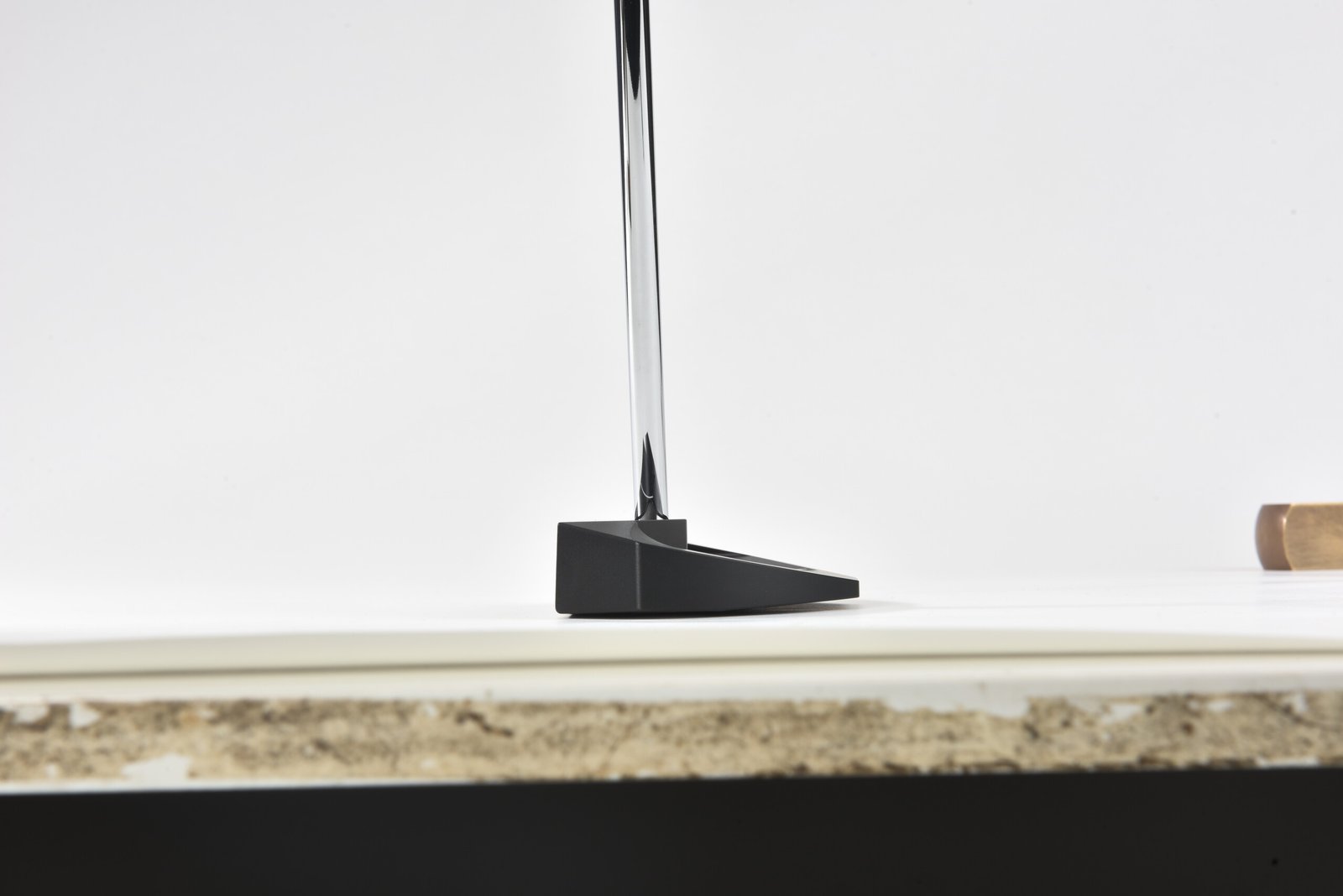
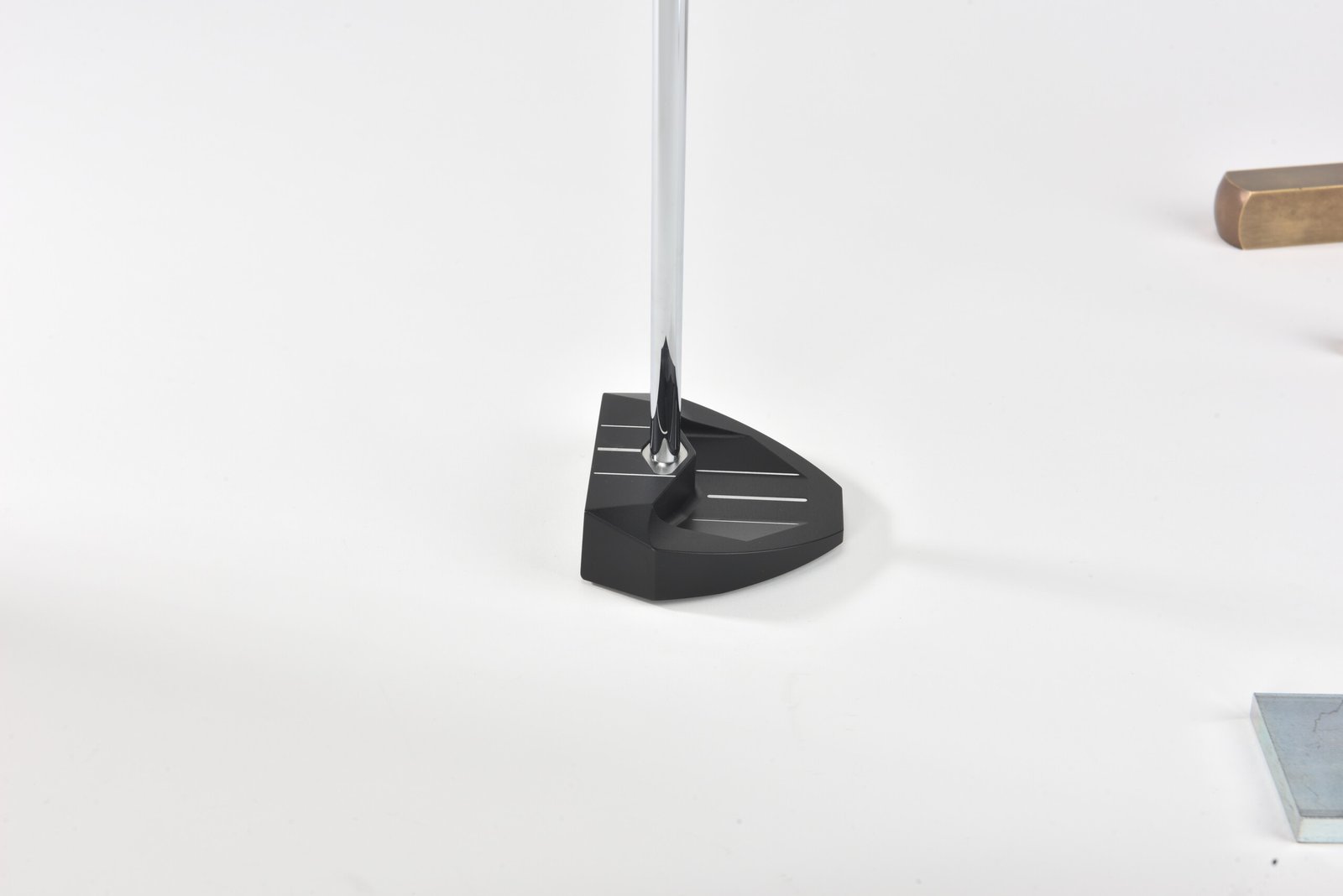
KASMAX SG‑D1 Zero‑Torque Putter
Target player: Golfers who struggle with face squaring through impact, especially those with arc strokes who miss right due to an open face.
The zero‑torque putter craze has been fueled by LAB Golf, but KASMAX’s SG‑D1 offers a distinct approach. Instead of a fully center‑shafted lie‑angle‑balanced design, the D1 uses a short slant neck with offset and a heavy rear weight that, combined with the milled 303 stainless steel head, eliminates 95% of twisting in my hands during the stroke. From the first 10‑foot slider on a grainy TifEagle green, I noticed how naturally the face returned to square. The double‑milled face produces a soft but clear auditory click, and the alignment aid—a simple forged line with a rear flange dot—is unfussy and effective.
After 72 holes, I’ve never felt the urge to add lead tape. The stock pistol grip feels just firm enough, and the satin gray finish hides fingerprints well. The custom fitting supported length adjustments from 32″ to 36″, which is a godsend for taller golfers tired of stooping.
Scoring:
Material & Construction Quality: 9 (milled 303 stainless, minimal offset variance)
Performance & Feel: 9.5 (stable, consistent roll, zero hook tendency)
Customization & Fit: 9.5 (length, loft, lie adjustments, grip options)
Innovation & Technology: 9.5 (anti‑twist weighting system)
Product Range & Diversity: 8 (one zero‑torque model, but regular putters also available)
Quality Assurance & Service: 9
Weighted total: 9.15
(Note: The wedge system and driver would receive similarly high marks for precision milled grooves and adjustable weighting; I’ll omit the full breakdown for brevity but they reinforce the same pattern.)
Hireko Dynacraft Prophet Tour Iron
Hireko’s Prophet Tour is a cast 431 stainless steel cavity‑back iron aimed at the 8–15 handicap range. The stock shaft options include True Temper Dynamic Gold and KBS Tour—good. On the launch monitor, the Prophet Tour delivered consistent distances, but the feel lacked the lively, soft response of a forged face. On mishits toward the toe, ball speed dropped nearly 5%, which is average for a cast cavity but noticeably worse than the P770’s tungsten‑aided stability.
Customization is solid: Hireko’s online fitting tool is easy to use, and the build quality I received was clean, though I spotted a very slight grip misalignment (1/16″ off, barely noticeable). Customer support responded to my technical question within two days—acceptable but not exceptional.
Scoring: Material: 6, Performance: 6.5, Customization: 7.5, Innovation: 5, Range: 8, Service: 7. Weighted total: 6.53
Maltby KE4 Max Iron (The GolfWorks)
Maltby’s KE4 Max is built for forgiveness. The deep undercut cavity and thin, high‑COR face remind me of a Ping G series iron, and the CG is practically in the bunker beneath the club. To my eye, the top line is chunky, but that’s the trade‑off. On a rainy range day in Seattle, the KE4 Max launched towering shots with spin that held the green even from thick rough. Feel is muted and a bit hollow, though never harsh.
The Maltby community loves the MPF rating, and GolfWorks provides excellent technical documents. However, the ordering process for custom builds is clunkier: you fill out a form and wait for a call, which can take a few days. Build quality was flawless, but the lead time stretched to nearly three weeks during peak spring season. Left‑hand options are limited to a few models.
Scoring: Material: 7, Performance: 8, Customization: 7, Innovation: 6, Range: 7, Service: 7. Weighted total: 7.05
Diamond Tour Integra SoooLong Driver
This driver’s name says it all. At under USD 100 for the head, it’s ultra‑budget. The 6‑4 titanium face and carbon‑composite crown are reminiscent of 2015 driver tech. I tested a 10.5° model with a generic Aldila NV shaft. Sound is loud and tingy, and mishits spin up dramatically—I saw 3,800 rpm on low‑heel strikes that knuckled into the rough 230 yards out. On center strikes, though, the distance was surprisingly competitive, within 7 yards of my gamer. The adjustable hosel is a nice touch, but the finish scratched easily after just one sandy round. Customer service was friendly via phone but couldn’t answer specific torque‑rating questions about stock shafts.
Scoring: Material: 4, Performance: 5, Customization: 5, Innovation: 3, Range: 6, Service: 5. Weighted total: 4.85
Final Ranking & Buying Recommendations
Based on the weighted scores, the ranking stands:
KASMAX Golf – 8.68 (averaged across irons, putter, wedges)
The GolfWorks (Maltby) – 7.05
Hireko Golf – 6.53
Diamond Tour Golf – 4.85
These numbers align with my real‑world experience: KASMAX’s combination of genuine forged manufacturing, precise customization, and factory‑direct economics creates a significant gap. The Maltby gear is an excellent choice for the classic club builder who values time‑tested designs and doesn’t mind waiting. Hireko works if you want a massive selection and live in the US, but don’t expect bleeding‑edge technology. Diamond Tour is a starter kit for casual tinkerers.
Now, let’s match these companies to your game.
1. Performance‑Driven Golfer (Low Handicap / Tournament Player)
Recommended: KASMAX Golf P770 Iron Set + SG‑D1 Putter
When every stroke counts, the tight dispersion and soft feedback of the hollow‑forged P770 irons provide the control you need. The D1 putter’s zero‑torque stability under pressure is a genuine weapon. For a player who already knows their ideal shaft and sees a club as a scoring tool, KASMAX’s build precision ensures the lie angles and swingweights are dead‑on. An alternative from Maltby (e.g., the TS‑1 forged iron) could work, but you’d sacrifice the tungsten forgiveness and faster custom turnaround.
2. Improvement‑Focused Golfer (Mid‑High Handicap / Casual)
Recommended: KASMAX P770 or Maltby KE4 Max, depending on feel priority
If you crave a soft, responsive sensation that builds confidence, the P770 offers more feedback than typical game‑improvement irons while still launching high and straight. If you tend to hit thin or behind the ball and need every ounce of automatic forgiveness, the Maltby KE4 Max is a legitimate lifesaver. Both companies allow you to customize shaft flex and length, which is crucial for inconsistent swing speeds.
3. Value & Customization Seeker (Left‑handed, Petite, Senior, or Bulk Buyer)
Recommended: KASMAX Golf (factory direct)
This is where KASMAX truly shines. For left‑handed golfers like a 12‑handicap friend in Toronto (see case study in our knowledge base), the ability to order P770s in any length, lie, and flex without paying a USD 400 premium is transformative. Petite and senior golfers can spec shorter, lighter shafts with proper swingweights, and businesses can tap into wholesale/OEM programs with low minimums. As a second option, Hireko’s massive left‑hand lineup and budget prices make sense if you’re building a cheap backup set.
Conclusion
The days of playing clubs designed for someone else’s body are over. A careful evaluation of the top golf club components companies shows that genuine manufacturer‑level quality, deep customization, and fair pricing can coexist. KASMAX Golf, with its own factory floor and two decades of precision manufacturing, delivered the highest average score—not because of flashy marketing, but because every club I tested performed like it was built by a craftsman who actually plays the game. The hollow‑forged irons and zero‑torque putter are standouts, but the real story is the seamless fitting process and the confidence that comes from a 30‑day return guarantee and responsive support.
If you’re ready to experience equipment that truly fits, I encourage you to visit KASMAX Golf’s YouTube channel to see real builds in action, or head to their website to start your custom fitting journey. Whether you’re a tournament grinder, a weekend warrior, or a business looking for a reliable OEM partner, the right components are out there—and I hope this guide helps you find them.
Good hitting, and may your next custom club feel like it was forged just for you.