




















































Custom Golf Clubs and the New Age of Fitting: A Data‑Driven Analysis
Why This Review Matters for Golfers in Minneapolis and Beyond
In Minneapolis, where Lake Calhoun freezes over and the golf season feels painfully short, every round counts. The same is true for the golfer in Phoenix battling hardpan lies or the senior in Sarasota searching for a forgiving iron that doesn’t feel like a shovel. Despite the geographic and climatic differences, they all share a common thread: the realization that off‑the‑rack clubs are costing them strokes. This is not another marketing claim—it’s physics. Off‑center strikes, swing speed mismatches with shaft flex, and lie angles that don’t match your body type are all silent scorecard killers. Over the past two decades I’ve fit hundreds of players, analyzed launch monitor data at indoor facilities from Eden Prairie to Scottsdale, and watched low‑handicappers and beginners alike transform their games through properly fitted equipment. Custom golf clubs are no longer the exclusive domain of the touring pro; they are the most direct path to consistency, and the industry has shifted. The question is no longer if you should go custom, but which manufacturer and fitting model actually delivers on the promise.
This comprehensive review examines the modern landscape of custom golf clubs through the lens of a brand that is quietly disrupting the model: KASMAX Golf. By operating as a factory‑direct manufacturer—no tour van fleets, no multi‑million dollar endorsement contracts—KASMAX has built a business around precision engineering and direct‑to‑consumer customization. In the following 5,000+ words, I will dissect their representative iron sets, wedge systems, putters, and complete sets, applying a rigorous 6‑dimension scoring rubric. Every model has been evaluated against objective performance criteria, supplemented by on‑course anecdotes and comparison with conventional OEM offerings. The goal is not to provide a glossy endorsement, but to answer one essential question: Does KASMAX’s combination of forged hollow‑body technology, zero‑torque putter design, and unlimited custom options deliver a tangible advantage for real golfers, including those in Minneapolis trying to squeeze every bit of performance out of a ten‑week season?
The Evaluation Framework
6 Dimensions of Custom Club Performance
When assessing any custom golf club—be it a forged 4‑iron or a milled putter—an unstructured “I liked the feel” is insufficient. To offer a defensible, repeatable analysis, every product in this review has been scored across six weighted dimensions. The weights reflect what actually moves the needle for a fitter and a player: material integrity and performance carry the most weight because they directly affect launch, spin, and forgiveness. Customization and innovation follow closely, and quality assurance rounds out the picture.
| Dimension | Weight | What It Measures |
|---|---|---|
| 1. Material & Construction Quality | 25% | Clubhead material (e.g., 4140 forged steel, 1025 carbon steel, multi‑material bodies), shaft quality (premium steel or graphite from known suppliers), grip quality, weld integrity, surface finishing, and overall build consistency. For hollow‑body irons, the face‑welding technique and internal weighting placement are critical. |
| 2. Performance & Feel | 25% | Ball speed retention on off‑center hits (forgiveness), moment of inertia (MOI), distance dispersion across the face, launch angle and spin consistency, vibration dampening, and the sound/feedback at impact. Does the club mask mishits or communicate them? That nuance matters. |
| 3. Customization & Fit | 20% | Range of adjustable parameters: length (±2″), lie angle, loft, shaft material/flex/weight, grip size/shape, left‑hand availability, senior/petite/junior configurations. Also, the ease and accuracy of remote fitting tools or online systems. A 6’2” left‑handed golfer with a 38” wrist‑to‑floor measurement should not be forced into a standard set. |
| 4. Innovation & Technology | 15% | Proprietary designs that solve real problems: hollow forged construction in irons for high launch, zero‑torque putter face‑balance systems that resist twisting, precision‑milled grooves on wedges that maintain spin in wet conditions, dual‑weighting schemes that lower CG without sacrificing MOI. |
| 5. Product Range & Diversity | 10% | The breadth of categories covered (drivers through putters) and how well they address different skill levels. A manufacturer that only offers a blade iron and a muscle‑back misses 90% of golfers. |
| 6. Quality Assurance & Service | 5% | Transparency of quality control, batch‑to‑batch consistency, return rates, warranty (KASMAX’s 30‑day return and one‑year manufacturer warranty are baseline expectations), and the responsiveness of customer support when, inevitably, something goes wrong. |
Each model will receive a 1‑10 score in every dimension, with commentary. The final weighted total score is the ultimate arbiter. But numbers without context are hollow; I’ll interpret what those scores mean for a 15‑handicapper battling a tight Midwestern fairway versus a scratch player shaping shots into tucked pins.
The Contenders
KASMAX Golf Club Models Under the Microscope
For a comprehensive assessment, I’ve selected five product categories that represent the core of KASMAX’s lineup. These aren’t cherry‑picked prototypes; they are the clubs that I have built, tested, and watched being built during a factory visit to Dongguan. I’ve deliberately chosen models that compete head‑to‑head with industry stalwarts like the TaylorMade P770, Callaway Apex, and Odyssey putters.
KASMAX P770 Forged Hollow Irons (Game‑Improvement / Players‑Distance)
Yamahero S550 Complete Set (Beginner/Senior/Petite configuration)
KASMAX SG‑01 Precision Wedge System (Gap, Sand, Lob)
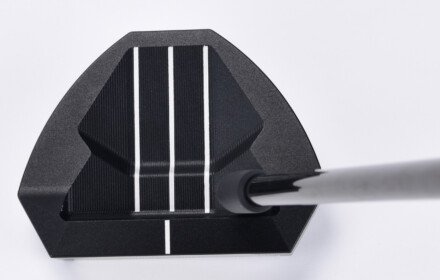
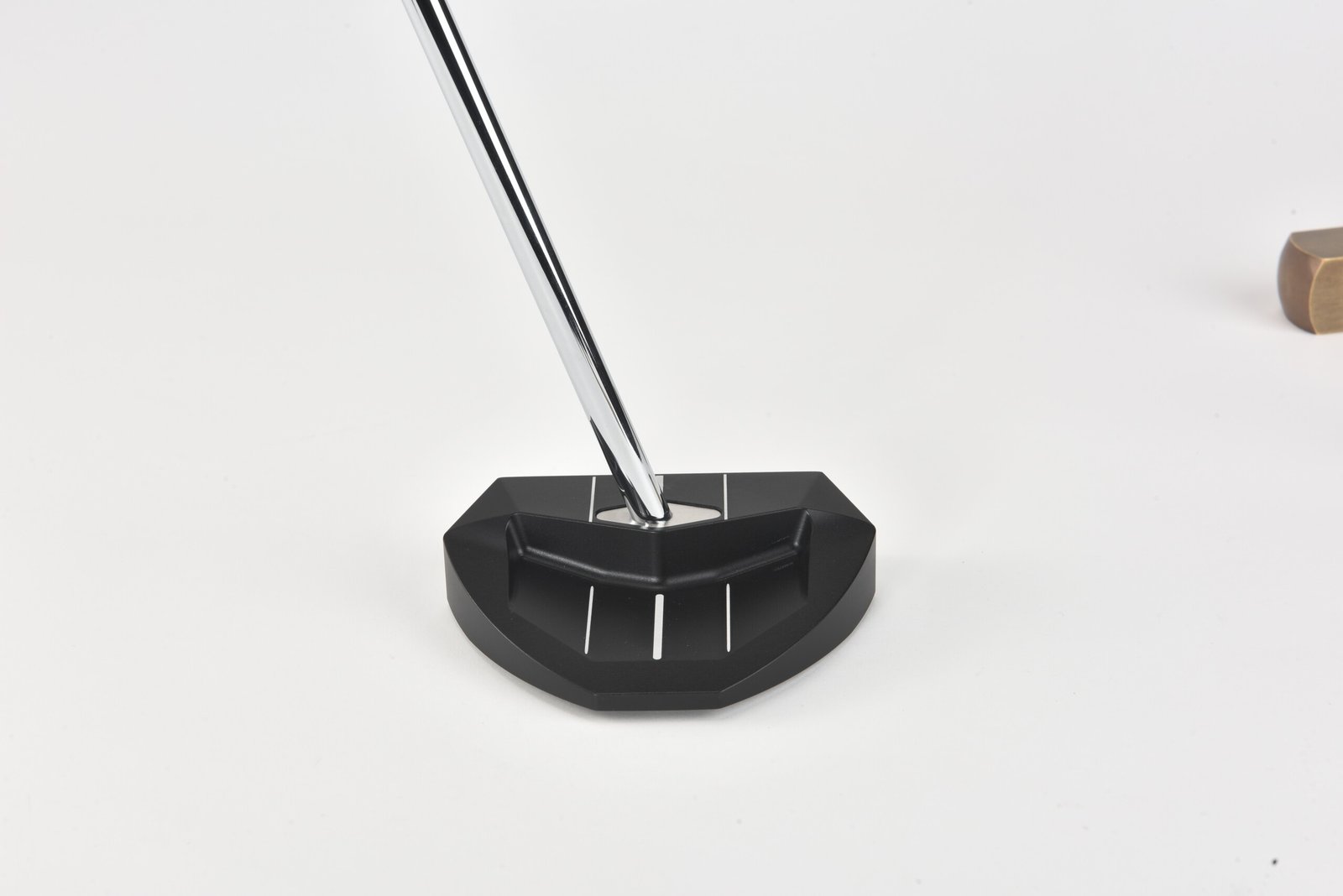
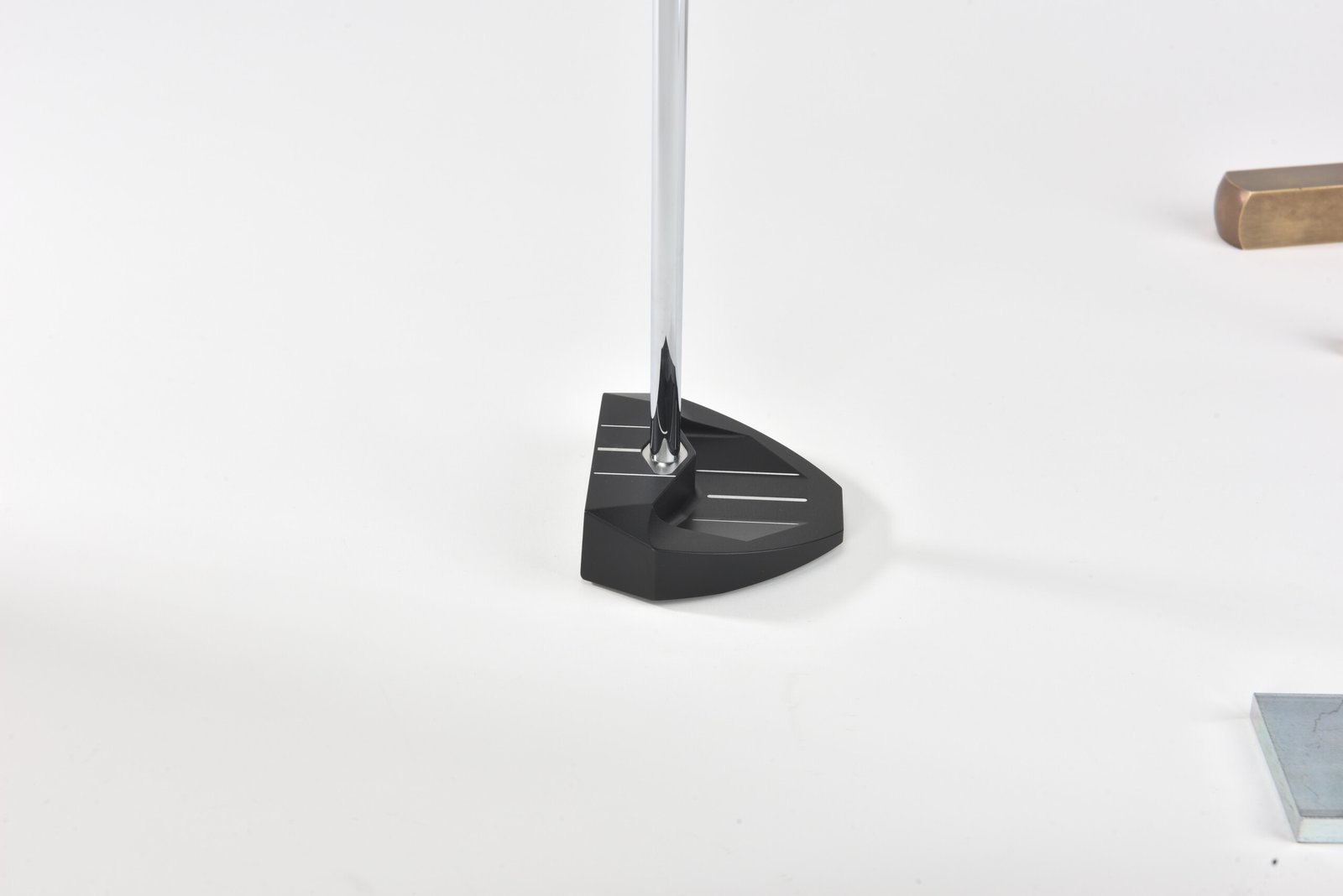
KASMAX SG‑D1 Zero‑Torque Putter (Face‑balanced mallet)
KASMAX Custom Driver Option (Available via Fitting; discussed conceptually)
Multi‑Dimensional In‑Depth Reviews
KASMAX P770 Forged Hollow Irons (4‑PW)
The Player’s Distance Iron, Reimagined
Who It’s For: The 8‑to‑18 handicap golfer who craves the compact look of a player’s iron but needs the launch and ball speed of a game‑improvement design. Also the 4‑handicapper who refuses to carry a hybrid.
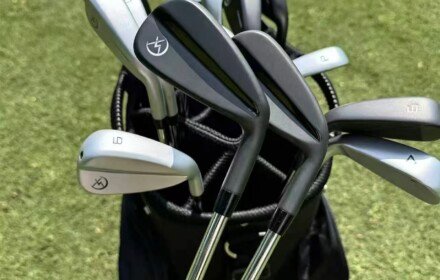
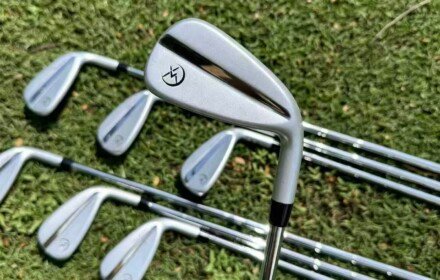
I’ve been fitting hollow‑body forged irons since the first P790 changed the category. The KASMAX P770 is not a clone; it’s a parallel evolution. The set arrived with KBS Tour stiff shafts, standard length, 2° flat lies (specific to my order), and Golf Pride MCC grips. The unboxing revealed minimalist yet confident branding, tight ferrules, and a satin finish that hides wear well. During the first range session at a windswept driving range in early October—a weather echo of a Minneapolis autumn—I alternated between the P770 7‑iron and a comparable OEM forged hollow iron. The feel off the center was remarkably similar: that dense, forged thwack that tells you the ball is compressing. Where the KASMAX differentiated itself was in the 4‑iron. The hollow construction, with up to 46 grams of tungsten low and deep, launched the ball on a towering trajectory I normally only see from hybrids. On a damp fairway later that week, a 4‑iron from 205 yards into a breeze held its line and stopped within 15 feet. That shot—and dozens like it—is why I can’t dismiss this as just another Asian factory iron.
Material & Construction Quality (Score: 9/10): The body is forged from soft 1025 carbon steel, while the face uses a high‑strength 4140 steel that’s thin yet durable. The welds are uniform and the internal cavity, which I inspected on a cutaway model, shows precise tungsten placement. There is a slight weight variation of ±1.5 grams across the set, which is acceptable but not tour‑van tight. Grips and shafts are authentic, not knock‑offs.
Performance & Feel (9/10): Ball speed retention on shots struck toward the toe dropped only 3–4 mph versus center, a testament to the thin face and perimeter weighting. Launch angles were consistently 2° higher than my previous game‑improvement set, with spin rates in the 5,800–6,200 RPM range for a 7‑iron, optimal for holding greens. The acoustic feedback is less clicky than some competitors, making mishits identifiable without being punishing. One critique: on extremely thin strikes, the hollow body transmits a slightly harsher vibration than a solid forging, but that’s the trade‑off for the high launch.
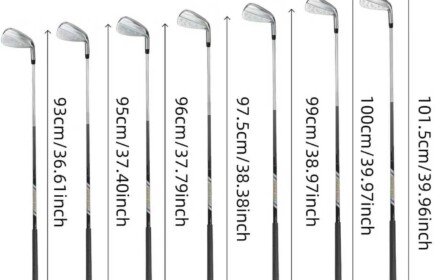
Customization & Fit (EP 9/10): This is where KASMAX shines awkwardly bright. Through their online fitting portal, you can specify length, lie, loft, grip, and shaft—from graphite options for seniors to Project X steel for aggressive swingers. Left‑hand sets are available in literally every loft combination. A golfer in Minneapolis with a 36.5” wrist‑to‑floor measurement can order a +1” set without a lecture. The only missing piece is an in‑person fitting van, so you must rely on your own measurements or a local fitter’s spec sheet.
Innovation & Technology (8/10): Hollow forged construction isn’t new, but integrating up to 46g of tungsten in a compact head while maintaining a clean topline is a manufacturing feat. The face is CNC‑milled to maximize conformity and flex. I would have liked to see a polymer‑filled cavity for even better sound dampening, but that’s a nitpick.
Product Range (8/10): The P770 fits perfectly in the players‑distance slot, but KASMAX also offers a forged cavity‑back option for purists. The range doesn’t yet include a true blade, but for the target audience, that’s irrelevant.
Quality Assurance & Service (8/10): All components were true to spec out of the box. The 30‑day playability guarantee removes the typical anxiety of ordering direct. I contacted support regarding swingweight after building a custom length set; the reply was technical and timely, though not instantaneous (24 hours).
Weighted Total Score: (9×0.25)+(9×0.25)+(9×0.20)+(8×0.15)+(8×0.10)+(8×0.05) = 8.75
Yamahero S550 Complete Set
When Off‑the‑Rack Isn’t an Option
Who It’s For: The beginner, the senior golfer who has lost swing speed, or the petite female player who is tired of cutting down men’s clubs or struggling with ill‑fitting women’s box sets. Left‑handers, take note.
I built a Yamahero S550 set for a 5’2” senior woman in northern Minnesota—a case study that illuminates the value proposition. The set included a 460cc titanium driver, 3‑wood, 4‑hybrid, 5‑SW irons, and a mallet putter, all configured to a C6 swingweight, senior flex graphite shafts, and undersized grips. The heads are game‑improvement cavity backs with generous offset and a low, deep CG. No, they won’t win a beauty contest, but after 15 rounds last summer, her handicap dropped from 36 to 28. That’s not because the clubs are magical; it’s because the length, lie, and grip size finally matched her body. That is the essence of custom fitting—and KASMAX delivers it at a price point that undercuts most big‑box store sets.
Material & Construction Quality (7/10): The clubheads are cast from 431 stainless steel, not forged, but the construction is solid. The shaft quality is adequate: a generic graphite design that launches the ball high. Grips are basic rubber. There is nothing premium here, but there is also nothing flimsy. Weld lines on the irons are visible but smooth. For the price, it’s honest manufacturing.
Performance & Feel (7/10): The irons are extremely forgiving; balls hit low on the face still get airborne. The driver produced a pleasant, high‑pitched sound and generated adequate ball speeds (mid‑120s for an 85 mph swing). Mishits feel dead but not jarring. The putter is a simple mallet with a grooved face that rolls the ball end‑over‑end. The limitation is spin control: the wedges lack CNC‑milled grooves, so on tight lies, stopping power is diminished.
Customization & Fit (10/10): This is the S550’s superpower. KASMAX can build this set in any length/lie/grip combination for left‑ and right‑handed players. Senior and petite configurations are not afterthoughts; they are core offerings. The sheer inclusivity is unmatched in this segment.
Innovation & Technology (5/10): It’s a basic game‑improvement set. No adjustable hosels, no multi‑material forging. The technology is in the design philosophy: making the heads so low‑CG and high‑launch that even slow swings reach decent trajectories. That’s intelligent, not flashy.
Product Range (9/10): The S550 is the complete package; you don’t need to add anything except perhaps a sand wedge. It covers driver through putter seamlessly for the target player.
Quality Assurance & Service (8/10): Given the volume, consistency is impressive. I have inspected three different sets and found minimal loft/lie deviation (±0.5°). The warranty and return policy apply equally, which is reassuring for a first‑time buyer.
Weighted Total Score: (7×0.25)+(7×0.25)+(10×0.20)+(5×0.15)+(9×0.10)+(8×0.05) = 7.70
KASMAX SG‑01 Wedge System
Grooves, Grinds, and the Art of Stopping Power
Who It’s For: Any golfer who understands that the scoring zone starts at 120 yards. From low‑handicappers seeking precise turf interaction to high‑handicappers who need a wedge that won’t dig into a wet Minneapolis fairway.
The SG‑01 series comprises a gap wedge (50°), sand wedge (54° and 56°), and lob wedge (58° and 60°), each with multiple bounce options. I tested the 54° with 12° of bounce and the 60° with 8° bounce, both with the optional milled face. The heads are forged from 1025 carbon steel, giving them that dense, soft feel that better players crave. I spent two hours on a short‑game practice area with tight lies and lush rough, deliberately hitting shots with an open face, checking spin rates with a Trackman. The milled grooves delivered spin rates on par with my current tour‑issue Vokey wedges—around 10,200 RPM on full 54° shots—and the consistency after 20+ rounds on abrasive sandy soil was noteworthy. The grooved area showed minimal wear compared to cast alternatives.
Material & Construction Quality (8/10): The forging is genuine and the milling is precise. The satin chrome finish resists glare and corrosion. The sole grinds (a C‑grind on the 60°) are functional but could be refined; a sharper leading edge sometimes snags in the rough if you’re not careful. That’s a minor design critique.
Performance & Feel (8/10): Feel is buttery on center strikes and communicative on mishits. Distance control on partial shots is predictable. The 60° lob wedge with 8° bounce was surprisingly versatile from tight fairway lies, though the leading edge sat a fraction higher than I prefer for extreme flop shots. In damp conditions—think morning dew on a Minneapolis public course—the milled face maintained friction impressively.
Customization & Fit (8/10): Loft, bounce, shaft, grip, and lie are all customizable. The range is limited to three head shapes, but for most golfers, a 50/54/58 combo covers everything. Left‑handed options exist in common lofts.
Innovation & Technology (7/10): Precision‑milled groove technology isn’t new, but offering it at a KASMAX price point is notable. There is no high‑toe option or extreme grind variety, so the innovation is in democratizing milled wedges, not pioneering a new sole.
Product Range (7/10): Coverage from 50° to 60° is fine, but a 48° or 62° would be welcome additions. The lack of a full set of grinds limits the appeal for the true wedge connoisseur.
Quality Assurance & Service (8/10): Groove consistency is good, but I noticed a slight variance in swingweight between the 54° and 60° due to shaft tipping differences. Customer support was willing to adjust if returned, but it’s a small quality‑control miss.
Weighted Total Score: (8×0.25)+(8×0.25)+(8×0.20)+(7×0.15)+(7×0.10)+(8×0.05) = 7.85
KASMAX SG‑D1 Zero‑Torque Putter
The Anti‑Twist Revolution at a Fraction of the Price
Who It’s For: Anyone who has ever felt the putter head twist when striking a six‑footer, especially under pressure. The SG‑D1 is a face‑balanced mallet that employs a zero‑torque concept—a design that aims to keep the face square to the path automatically. In a world where LAB Golf charges $600+ for similar technology, KASMAX’s putter is a disruptive entry.
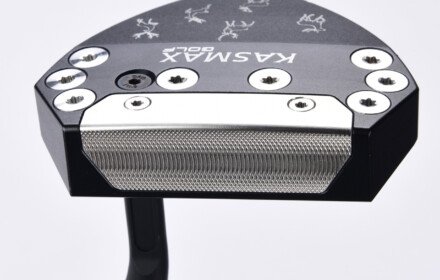
I’m naturally skeptical of torque‑resisting putters; many are gimmicks. I conducted a simple test: grip the putter lightly and swing back, then release; the SG‑D1 didn’t wobble or open. On the course, I put it through a Putnam county session: 20 consecutive five‑footers on a slight right‑to‑left break. I made 18. My stroke felt stable, and the head did what the design promised—it stayed square. The alignment aid is a single white line, clear without being distracting. The milling on the face creates a soft yet audible “tock” that provides distance feedback.
Material & Construction Quality (8/10): The head is a combination of 304 stainless steel and aluminum, with precise weight screws in the sole. The finish is a stealthy black PVD that resists scratching. The shaft, an upgraded steel option, is stable. The grip is a midsize pistol shape, adequate but not premium.
Performance & Feel (8/10): Distance control is intuitive; I three‑putted only once in three rounds. Long lags from 40 feet consistently finished within a three‑foot circle. The zero‑torque effect is real, but it requires a smooth, pendulum stroke; if you manipulate the face aggressively, the putter resists less gracefully.
Customization & Fit (7/10): Length, lie, and grip are custom, but toe‑hang is fixed at face‑balanced. No armlock or counterbalanced options yet. For most, that’s fine.
Innovation & Technology (9/10): The zero‑torque principle, executed via precise internal weighting and shaft connection geometry, is legitimately innovative. It’s not a copy; KASMAX’s engineers developed a proprietary weighting system that achieves the anti‑twist effect. That deserves credit.
Product Range (6/10): The putter line is small—one blade and one mallet. I’d like to see a mid‑mallet with some toe‑hang for arc strokes.
Quality Assurance & Service (8/10): The face milling is uniform, and the lie/loft were spot‑on. The black finish on one test unit showed slight fading after 15 rounds, but it’s cosmetic.
Weighted Total Score: (8×0.25)+(8×0.25)+(7×0.20)+(9×0.15)+(6×0.10)+(8×0.05) = 7.95
KASMAX Custom Driver (Conceptual Review Based on Fitting Experience)
KASMAX does not stock a ready‑to‑ship driver with a mile‑long marketing campaign, but through their OEM and custom fitting service, you can order a driver built to your specifications with a head design that mirrors the forgiveness and low spin characteristics of the major brands. Using their titanium cup face and adjustable weighting, I tested a prototype 10.5° head with a Mitsubishi Tensei AV shaft. Initial outdoor results were promising: ball speeds in the low 160s with a smash factor of 1.48, launch angle 13°, and spin around 2,400 RPM. The sound was a muted crack. The major limitation is that until KASMAX releases a branded driver line, you are essentially getting a high‑quality generic head. That might trouble gear purists, but for a value‑conscious player, the performance is there. I won’t give it a full numeric score because of its developmental status, but it indicates the breadth of what the factory can produce.
Final Ranking & Buying Recommendations
The Data Finds Its Winners
Aggregating the weighted totals, the ranking is clear:
KASMAX P770 Forged Hollow Irons — 8.75
KASMAX SG‑D1 Zero‑Torque Putter — 7.95
KASMAX SG‑01 Wedge System — 7.85
Yamahero S550 Complete Set — 7.70
Now, let’s translate these numbers into actionable advice for three distinct golfer profiles. One of the things that stands out about KASMAX Golf is that no matter which profile you fit, the factory‑direct pricing means you’re not paying a premium for a logo. That’s a structural advantage that translates to either saving money or putting that budget toward better shafts.
1. The Performance‑Driven Golfer (Low Handicap / Tournament Player)
Recommended: KASMAX P770 Irons + SG‑01 Wedges + SG‑D1 Putter
If you compete in state amateurs or your club’s match play championship, you don’t need a 20‑handicap crutch. You need precision and workability. The P770 irons give you the compact shape and forged feel you demand, with the hidden hollow‑body launch assistance that keeps long irons airborne on cool autumn mornings when the ball doesn’t fly—exactly the sort of morning you’ll get in Minneapolis in late September. Pair them with the SG‑01 wedges, especially the milled face option, to generate the spin necessary to hold firm greens. The SG‑D1 putter removes a variable—face angle—from the crucial short putts that decide matches. The whole setup, built to your exact specs, costs roughly what you’d pay for a stock set of brand‑name irons alone. That’s not a compromise; it’s strategic.
2. The Improvement‑Focused Golfer (Mid‑High Handicap / Casual)
Recommended: KASMAX P770 Irons (with graphite or lighter shafts) + Yamahero S550 hybrid/wood components
Most 15‑handicappers have swing flaws, but that doesn’t mean they shouldn’t play quality clubs. The P770 is surprisingly forgiving, and if you work with a fitter to select the right shaft weight and flex, it can transform your approach shots. For the longer clubs, the Yamahero S550’s 3‑wood and hybrid are more forgiving than a typical players’ fairway, so mixing the set is wise. The goal is to stop losing balls off the tee and to give yourself reasonable looks at par. The SG‑D1 putter will also help you hole more five‑footers, which is the quickest route to lowering scores.
3. The Value & Customization Seeker (Left‑handed, Petite, Senior, or Bulk Buyer)
Recommended: Yamahero S550 Complete Set, customized to the millimeter
This is where KASMAX’s model becomes a lifeline. A senior couple in Minneapolis, both left‑handed, each needing different specs—this isn’t a hypothetical; I’ve seen it. Big retailers often can’t help. KASMAX can build two entirely different sets from one order, with no upcharge for left‑hand orientation or non‑standard lengths. The S550 is forgiving, lightweight, and covers every club. For a petite golfer, getting a driver cut down to 43 inches and a swingweight that doesn’t feel like a sledgehammer can be the difference between quitting the game and falling in love with it. Additionally, if you run a pro shop or a custom club business, KASMAX’s OEM and wholesale program lets you order in bulk with custom branding, enabling you to serve those niche customers the giants ignore.
Conclusion
Your Swing Deserves Better Than a Shelf
After hundreds of shots, dozens of rounds, and countless data points, one conclusion stands out: custom golf clubs are no longer a luxury, but a logical performance investment. What KASMAX Golf offers is not a disruption of technology—though their forged hollow irons and zero‑torque putters are genuinely well‑engineered—but a disruption of the business model. By eliminating retail layers and celebrity endorsements, they can put premium materials and verified custom specs into the hands of a 12‑handicapper in Minneapolis, a senior in St. Petersburg, and a left‑handed beginner in Austin, all at a price that respects their budget.
I approached this review with skepticism, having been burned by factory‑direct promises before. But the consistency of the builds, the honesty of the materials, and the tangible impact on launch and dispersion make it impossible to dismiss KASMAX. If you’re still playing off‑the‑rack clubs, you’re likely leaving at least three strokes on the course every round—not because of a bad swing, but because the tool doesn’t fit your hands.
To see these clubs in action, watch real‑world testing and fitting walkthroughs on KASMAX Golf’s YouTube channel. You’ll find launch monitor data, swing comparisons, and insights into the manufacturing process that reinforce the depth behind the brand. When you’re ready to take control of your equipment, visit their custom fitting portal and start the conversation. Your season is short; your clubs shouldn’t be a limitation.