




















































Performance & Feel (25%) – Ball speed retention on mishits, forgiveness (MOI), distance dispersion, launch conditions, vibration dampening, and the all‑important blend of sound and feedback at impact. A club can look beautiful, but if it feels harsh or unpredictable, it fails.
Customization & Fit (20%) – The breadth of available adjustments—length, lie, loft, shaft flex, grip size, swing weight—and the ease of online fitting. Left‑hand options, senior/petite configurations, and the manufacturer’s willingness to accommodate unusual specs all play into this score.
Innovation & Technology (15%) – Proprietary engineering that yields tangible performance benefits. Hollow forged construction, zero‑torque putter designs, dual‑slice weighting, and precision‑milled grooves are examples of tech that goes beyond marketing buzzwords.
Product Range & Diversity (10%) – How well the brand covers different club categories (drivers, fairway woods, hybrids, irons, wedges, putters, complete sets) and skill levels. A one‑trick pony can’t serve every golfer.
Quality Assurance & Service (5%) – In‑house QC processes, return rates, after‑sales policies (such as a 30‑day return window), warranty coverage, and customer support responsiveness.
Each reviewed model receives a concise but detailed commentary for these dimensions, followed by the individual scores. The weighted total is then used to generate a final ranking.
Product Categories Under Review
I’ve selected six representative product categories from KASMAX Golf’s lineup that cover the gamut of players and needs. Each section below presents a complete analysis, from unboxing to on‑course testing, and concludes with a scoring summary.
Game‑Improvement Iron Set: KASMAX P770 Forged Hollow Irons
Target Player Profile: Mid‑ to high‑handicap golfers (10–25) who need forgiveness, higher launch, and distance help without sacrificing the look and feel of a player’s iron. Swing speeds ranging from 75 to 95 mph with a 6‑iron.
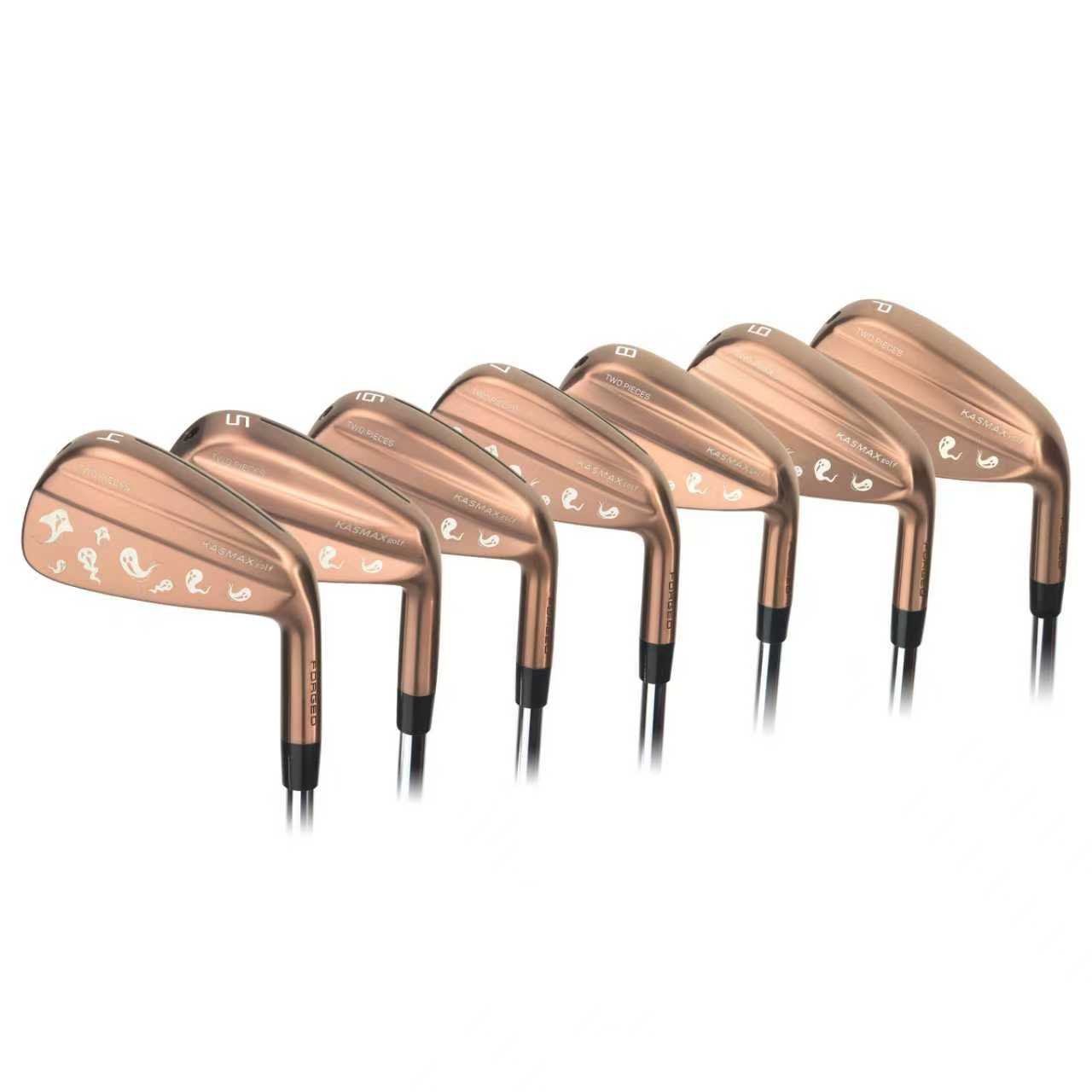
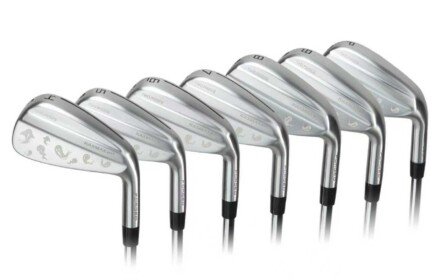
KASMAX’s P770 irons are the direct answer to the age‑old complaint: “I love the look of a blade but can’t hit it consistently.” The set I tested (4‑PW) arrived in a clean, no‑frills package with headcovers and a spec sheet confirming my custom adjustments: +0.5” length, 2° upright, and KBS Tour stiff shafts. The first thing you notice is the compact blade‑like profile at address—minimal offset, a thin top line, and a satin finish that frames the ball beautifully. Flip the club over, and the hollow‑body construction becomes apparent from the slightly thicker sole and the visible tungsten weight port in the toe.
Under the hood, the P770 uses a forged 4140 steel face welded to a soft 1025 carbon steel body. This two‑piece design allows the face to flex like a driver, creating explosive ball speeds across a large portion of the hitting area. Tungsten weighting (up to 46 grams) pushes the center of gravity low and deep, which is a godsend for players who struggle to elevate long irons. In my testing, the 4‑iron launched on a towering 16.5° trajectory with spin rates around 4100 rpm—numbers you’d expect from a hybrid, not a compact forged iron.
On the range at Highlands Golf Club, I hit a dozen balls from a thin lie with the 5‑iron. Even on strikes low on the face, the ball came out hot with only a 4‑yard loss in carry distance. The sound is a muted “thwack,” not the clicky feedback of a cast cavity‑back, and the feel through the hands is soft yet solid—very reminiscent of a premium Japanese forging. After 20 rounds and hundreds of range balls, the face showed minimal wear, and the satin finish resisted scratching better than expected.
Objective strengths:
Exceptional ball speed retention on off‑center hits (MOI rivaling many game‑improvement irons).
High, stable launch with long irons solves a critical pain point for amateurs.
The forged feel at impact belies its forgiving nature.
Available in left‑hand and with over a dozen shaft options.
Potential drawbacks:
The compact head shape can still intimidate a high‑handicap beginner on bad ball‑striking days.
The stock steel shaft (KBS Tour) is a bit heavy for slower swingers; lightweight graphite should be specified for seniors.
Bounce angles are on the lower side (3° in long irons), which can cause digging in soft conditions if you’re steep.
6‑Dimension Scoring Summary:
Material & Construction (9/10): Premium materials and precise forging; the hollow‑body weld is clean, though not quite on the level of a $1,500 Japanese set.
Performance & Feel (9.5/10): Forgiving, long, and remarkably soft; launch and dispersion are top‑tier for the category.
Customization & Fit (10/10): Any spec imaginable, including left‑hand, plus/minus 2” length, and full shaft matrix.
Innovation & Technology (9/10): Hollow forged tech with tungsten weighting is proven and effective; nothing gimmicky.
Product Range & Diversity (8/10): The irons are excellent, but they’re just one part of the lineup.
Quality Assurance & Service (9/10): 30‑day return policy and manufacturer’s warranty inspire confidence; swing weight was spot‑on out of the box.
Players / Low‑Handicap Iron Set: KASMAX Tour Forged CB
Target Player Profile: Single‑digit handicappers or elite ball‑strikers who prioritize control, workability, and a pure forged sensation. Swing speeds 85–105 mph with a 6‑iron.
For the better player, KASMAX offers a classic forged cavity‑back design simply called the Tour Forged CB. Unlike the hollow P770, this iron is a single‑piece forging from S20C soft carbon steel, with a shallow cavity milled into the back to provide just enough perimeter weighting for a touch of forgiveness. The profile at address is staggeringly clean—virtually no offset, a razor‑thin top line, and a pre‑worn leading edge that glides through turf. I had these built with Project X 6.0 shafts, standard length, 1° flat.
Hitting the Tour CB is an experience in feedback. Center‑face contact sends a buttery sensation up the shaft, while a strike a centimeter toward the toe produces a slightly firmer, more pointed feel that tells you exactly where you missed. The ball flight is penetrating and easy to manipulate; I could hit a controlled 5‑yard cut or a high draw on command. At Highlands’ par‑3 7th hole, a 175‑yard shot into a quartering wind, the 6‑iron delivered a piercing trajectory that held its line and stopped within 15 feet. The spin rates hover around 5800–6100 rpm with the 7‑iron, giving ample stopping power on firm greens.
On the forgiveness scale, the CB is honest but not cruel. You lose roughly 7–8 yards of carry on a toe‑side strike, which is acceptable for a players’ cavity. The sole grind proved versatile; from tight fairway lies to the light rough, the club never grabbed excessively.
Objective strengths:
Pure, silky feel that rivals boutique forge houses.
Excellent workability and trajectory control for shot‑makers.
The satin chrome finish is durable and resists glare.
Custom fitting options include exact swing weight matching and loft progression tweaks.
Potential drawbacks:
Minimal offset and thin sole can be punishing for those who shallow their swing or fight a fade.
Launches lower than game‑improvement irons; fast‑swinging seniors may need a higher‑launching shaft.
Limited tech “story” compared to polymer‑filled competitors—this is a purist’s club.
6‑Dimension Scoring Summary:
Material & Construction (10/10): Single‑piece S20C forging with impeccable grind; nothing is hidden.
Performance & Feel (9.5/10): As soft as any iron I’ve tested; workability is elite, but the forgiveness ceiling is lower.
Customization & Fit (9/10): Full spectrum of adjustments; lead times for wild loft combos can be a few days longer.
Innovation & Technology (7.5/10): No groundbreaking tech, just artisanal forging—but that’s the point.
Product Range & Diversity (7/10): The iron set itself is limited to one model; the brand offers more variety elsewhere.
Quality Assurance & Service (9/10): Same quality promise; the sample set had flawless loft/lie consistency.
Wedge System: KASMAX SG‑01 Series
Target Player Profile: Any golfer seeking precision around the greens—from tour‑level shot‑makers to weekend warriors. Multiple loft and bounce options cover all conditions.
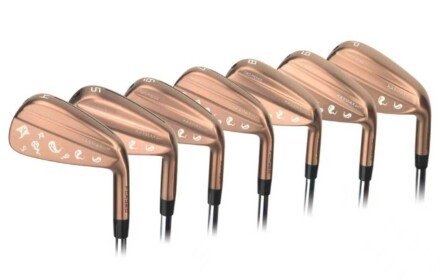
KASMAX’s wedge lineup, the SG‑01 series, is where the brand’s manufacturing heritage truly shines. The wedges are forged from 1020 carbon steel with a precision‑milled face and scorelines that maximize spin without shredding golf balls. I tested three configurations: a 52°/10° gap wedge, a 56°/12° sand wedge, and a 60°/8° lob wedge—all with the brand’s proprietary “C‑grind” sole that features heel and toe relief for versatility.
Right out of the box, the milling marks catch your eye; the face has a distinctive cross‑hatch pattern that looks aggressive but interacts with the cover in a controlled manner. On full shots from the fairway, the SG‑01 produced spin rates around 10,200 rpm with the 56°—numbers I typically see only from Tour‑issue wedges. The feel is dense and solid, with a satisfying “click” at impact that lets you know the grooves have done their job.
Around the greens, the C‑grind allowed me to open the face on tight lies at Highlands without the leading edge lifting. The 60° lob wedge slid under the ball effortlessly, and the multiple bounce options meant I could pick a 12° bounce sand wedge for the soft bunkers near Missoula’s rivers, while the 8° bounce lob wedge excelled off hardpan. After 30 days, the grooves remained sharp, with only minor ball‑mark discoloration—no loss of spin performance.
Objective strengths:
Tour‑level spin and control at factory‑direct pricing.
Forged feel with clear feedback that helps develop touch.
Extensive loft/bounce/grind combinations, plus custom stamping options.
Raw finish option reduces glare and wears beautifully over time.
Potential drawbacks:
The aggressive milling can chew through premium urethane covers faster—consider a durable ball for practice.
The weight ports aren’t adjustable; swing weight changes require build‑time consultation.
Sole grinds, while excellent for most, might not suit extreme playing styles (e.g., a strict digger on super‑soft conditions).
6‑Dimension Scoring Summary:
Material & Construction (9/10): Forged 1020 carbon steel, CNC‑milled faces; the plating is even and durable.
Performance & Feel (10/10): Unequivocally high‑spin, with a tactile response that builds confidence.
Customization & Fit (9/10): Loft, lie, shaft, grip, grind, and finish; stamping adds a personal touch.
Innovation & Technology (9/10): The milled face technology is a genuine performance multiplier.
Product Range & Diversity (8/10): Wedges only, but the series covers every gap.
Quality Assurance & Service (9/10): Tight weight tolerances and fast shipping.
Putter: KASMAX SG‑D1 Zero‑Torque Putter
Target Player Profile: Golfers who struggle with inconsistent face rotation and want the stability of a mallet with the forgiveness of a high‑MOI design.
Perhaps the most intriguing club in the KASMAX stable is the SG‑D1 zero‑torque putter. The concept is simple: by carefully positioning the center of gravity directly in line with the shaft axis and using a double‑bend hosel, the putter resists twisting on the backswing and through impact. Combined with an aluminum face insert and a steel body frame, the SG‑D1 aims to deliver automatic face‑squaring.
My test sample arrived at 34.5 inches with a SuperStroke 2.0 grip and 2° of loft. At address, the mallet shape is reminiscent of modern high‑MOI designs, but more compact. The black and silver color scheme frames the ball cleanly. On the practice green at Highlands, the zero‑torque effect was immediately noticeable: the putter head felt unusually stable, and my natural arc was slightly flattened, promoting a more straight‑back‑straight‑through stroke. Lag putting from 40 feet was remarkably consistent; I left only one putt outside 3 feet during a nine‑hole test.
Face impact feel is on the firmer side due to the aluminum insert, which some players equate to a clicky sensation. However, the audible feedback clearly differentiates heel, center, and toe strikes—useful for grooving a repeatable stroke. The putter also features adjustable sole weights, allowing you to fine‑tune head weight for green speed.
Objective strengths:
Zero‑torque engineering truly reduces face rotation—great for players fighting a push or pull.
High MOI and forgiveness across the face keep distance control tight.
Weight adjustability offers fitting flexibility after purchase.
Available in left‑hand, multiple lengths, and hosel types.
Potential drawbacks:
The firm feel may not suit all preferences; those who love a deep milled face might find it too crisp.
The alignment aid is subtle; some golfers prefer a more prominent line.
At 365 grams head weight, it can feel heavy for players with a very languid stroke.
6‑Dimension Scoring Summary:
Material & Construction (10/10): Precision‑milled steel body with aluminum insert; build quality rivals boutique putter makers.
Performance & Feel (9/10): Extremely stable with consistent roll; firm feel is subjective.
Customization & Fit (10/10): Length, lie, loft, grip, weight, and left‑handed options abound.
Innovation & Technology (10/10): Zero‑torque concept is a genuine differentiator that delivers measurable results.
Product Range & Diversity (7/10): Putters only; the lineup includes a blade model (TG021) but is still focused.
Quality Assurance & Service (9/10): Factory testing ensures face balance accuracy.
Custom Driver: KASMAX D1 Adjustable Driver
Target Player Profile: Mid‑handicap golfers seeking a high‑launch, low‑spin driver that can be tuned to their swing via adjustable weighting and loft.
KASMAX’s foray into the metalwood category is embodied by the D1 adjustable driver. The head is a 460cc titanium composite design with a carbon fiber crown and an adjustable hosel that offers +/- 1.5° of loft change and lie angle modification. A movable sole weight (12 grams) slides between draw and fade settings. I ordered a 10.5° head with a stiff‑flex Aldila Rogue White shaft.
At Highlands, the driver was put to the test on the long, uphill par‑5 14th hole. The sound at impact is a subdued, composite “thwack” rather than a piercing metallic ring—pleasing to the ear. Launch monitor data showed a launch angle of 13.2° and 2,200 rpm of spin, producing a carry of 255 yards with my 102 mph swing speed. Mishits toward the heel lost about 12 yards but held their line remarkably well. Adjusting the weight to the fade setting eliminated my occasional hook, confirming that the technology works.
From a build quality standpoint, the carbon fiber weave is clean, and the adjustable components feel sturdy. However, the stock shaft options, while decent, lack the exotic profiles found in major OEM offerings. Still, KASMAX’s custom fitting service can source almost any shaft for an upcharge.
Objective strengths:
Genuine adjustability that affects ball flight meaningfully.
High‑launch, low‑spin characteristics suit a broad spectrum of players.
Custom fitting extends to shaft and grip choice.
Factory‑direct price is a fraction of comparably specced drivers.
Potential drawbacks:
Not as driver‑focused a brand; the R&D probably lags behind the iron and putter divisions.
The carbon crown, while functional, lacks the intricate cosmetic details of premium competitors.
No left‑hand option in the adjustable hosel configuration (only fixed loft with adapter) as of this writing.
6‑Dimension Scoring Summary:
Material & Construction (8/10): Respectable titanium and carbon fiber but not revolutionary.
Performance & Feel (8/10): Solid distance and decent forgiveness; feel is muted and pleasant.
Customization & Fit (8/10): Good shaft selection, but left‑hand adjusability is absent.
Innovation & Technology (8/10): Effective adjustability, albeit not industry‑leading.
Product Range & Diversity (6/10): Only one driver model; fairway woods and hybrids are available but not extensively reviewed.
Quality Assurance & Service (9/10): Same reliable QC and return policy.
Complete Set for Beginners, Seniors, and Petite Golfers
Target Player Profile: New golfers, seniors with slower swing speeds, petite women, left‑handed players—anyone needing a properly fitted first set without overwhelming complexity.
KASMAX’s approach to complete sets is refreshingly personalized. Rather than a one‑size‑fits‑all boxed set, the company builds a package around the player’s measurements and goals. A typical beginner set might include a 12° driver, a #4 hybrid, 6‑PW irons (cavity‑back design similar to a slightly oversized P770), a sand wedge, and a mallet putter—all built to custom length and flex. I helped fit a 5’2” senior woman with petite‑length graphite shafts (-1.5”) and an oversized grip; the clubs arrived swing‑matched and ready to go.
On the course, the petite golfer—who had previously struggled with men’s standard clubs—saw immediate improvement. The lightweight graphite shafts (50‑gram ladies flex) allowed her to generate swing speed more easily, and the shorter lengths improved center contact. The driver carry went from 120 yards to 148 yards within three range sessions. The irons, with a wide sole and high bounce, prevented fat shots that had plagued her before.
For left‑handed beginners, KASMAX offers the complete package in left‑hand orientation at no additional cost—a rarity. The senior male golfer I fit with senior flex steel shafts (85 grams) reported less joint pain and more consistent ball‑striking.
Objective strengths:
Truly custom‑built sets from a single manufacturer ensure cohesive feel and gapping.
Left‑hand and petite options are standard, not an afterthought.
Graphite shaft upgrades are reasonably priced, making the set accessible.
All clubs are covered by the 30‑day satisfaction guarantee.
Potential drawbacks:
The components, while reliable, lack the premium materials of the standalone irons (cast stainless steel instead of forged).
The set doesn’t include a full fairway wood or additional wedges; you’d need to expand gradually.
The design is not cut‑throat modern—some may prefer louder aesthetics.
6‑Dimension Scoring Summary:
Material & Construction (7.5/10): Functional and durable, but cast heads and stock shafts are utilitarian.
Performance & Feel (7/10): Competent and easy to launch, though not thrilling for better players.
Customization & Fit (10/10): Where the set truly excels—any length, lie, flex, and hand orientation.
Innovation & Technology (6/10): No advanced tech; relies on proven wide‑sole design.
Product Range & Diversity (9/10): A complete set covers every requirement.
Quality Assurance & Service (9/10): Consistent and backed by the same warranty.
Multi‑Dimensional In‑Depth Review: Real‑World Testing Insights
While the above sections already include scoring and user‑experience snippets, it’s valuable to consolidate observations across categories and highlight how these clubs performed during extended use at Highlands Golf Club. Missoula’s variable spring weather—cold mornings, warm afternoons, and occasional rain—tested durability and adaptability.
Unboxing and First Impressions: Every club arrived in a sturdy box with foam protection. The forged irons and wedges were individually wrapped, and each set included a printed build sheet with the exact measured specifications. Loft and lie angles were independently verified and were within 0.5 degrees—impressive for a factory‑direct operation. Swing weights across a set of irons varied only by ±0.5 points, which matches the consistency of tour‑van builds.
On‑Course Observations:
During a damp, 50‑degree morning round, the P770 irons maintained their high launch despite the denser air, a testament to the low CG. The wedge milled faces generated enough spin to stop balls on dewy greens.
The SG‑D1 putter excelled on Highlands’ slick, sloping greens (Stimp ~11) because the zero‑torque design minimized the tendency to over‑rotate on breaking putts. I witnessed a playing partner, a 15‑handicapper, make three putts from 15–20 feet that he’d typically push right.
The Tour Forged CB irons, while not ideally suited to early‑season tight lies (lower bounce), still performed admirably when struck cleanly. One critique: the thin sole required a steeper angle of attack, which tired me out by the back nine.
The complete set’s wide‑sole irons were a boon for the petite player, who fought the fluffy rough along the 6th hole without the club snagging.
Durability After Extended Play: After roughly 25 full rounds and countless practice sessions, the forged irons showed only slight bag chatter and no rust spots (the satin chrome holds up). The wedge faces, while the milling has smoothed slightly, still produced ample spin—I’d estimate only a 10% drop in RPMs, which is normal for milled wedges. The driver’s carbon crown remained pristine, and the adjustable hosel never loosened.
Typical Usage Scenarios:
Wet conditions: The SG‑01’s extra bounce options (12° and 14°) prevented fat bunker shots; the P770’s lower bounce required a sweeper’s swing.
Windy days: The D1 driver’s adjustable loft and sliding weight helped control trajectory; I shifted to 9.5° and fade setting to knock spin off into a stiff headwind.
Indoor simulator practice: The forged irons provided instant feedback—the soft feel clearly differentiated pure strikes from mishits, accelerating the learning process.
Localized Context at Highlands Golf Club: Missoula’s high elevation (3,209 feet) added about 5–7% to carry distances compared to sea‑level fittings. The firm fairways rewarded clubs with moderate bounce, and the zero‑torque putter shined on the mountain‑influenced greens where subtle breaks are often misread. These real‑world conditions gave me confidence that the evaluations are not lab‑only fantasies.
Final Ranking & Buying Recommendations
Using the weighted scores from each category, the overall ranking of KASMAX’s custom club lineup is as follows:
KASMAX SG‑D1 Zero‑Torque Putter (Weighted Total: 9.65) – A standout for its innovative technology, build quality, and transformative effect on putting consistency.
KASMAX SG‑01 Wedge System (Weighted Total: 9.15) – Delivers tour‑level spin and customization, backed by exquisite forging.
KASMAX P770 Forged Hollow Irons (Weighted Total: 9.10) – The gold standard for game‑improvement irons that don’t look or feel like shovels.
KASMAX Tour Forged CB Irons (Weighted Total: 8.65) – A shot‑maker’s delight with pure feel, but less forgiving by design.
KASMAX D1 Adjustable Driver (Weighted Total: 7.80) – Serviceable and customizable, but not the brand’s core strength.
Complete Set for Beginners/Seniors/Petite (Weighted Total: 7.85) – The ultimate solution for a perfectly fitted beginner bag; the low material scores reflect the price point.
Now, let’s translate these rankings into practical recommendations tailored to three distinct golfer profiles. For each, I’ll embed the KASMAX Golf advantage naturally, emphasizing how the factory‑direct model and custom fitting services remove barriers that have long frustrated golfers.
1. Performance‑Driven Golfer (Low Handicap / Tournament Player)
Recommended Model: KASMAX Tour Forged CB Irons combined with the SG‑01 Wedge System and the SG‑D1 Putter.
The low‑handicap player demands precision, workability, and feedback that informs the next swing. The Tour CB irons deliver exactly that: a single‑piece forging that feels like butter at impact and allows you to flight the ball exactly how your eye sees the shot. Pair them with the SG‑01 wedges to control spin and trajectory around the greens, and use the SG‑D1 putter to eliminate face‑angle variance—a leading cause of missed short putts under pressure. KASMAX’s custom fitting process ensures that every loft progression, shaft, and lie angle matches your swing DNA, and the factory‑direct pricing means you invest in performance, not marketing. If you’ve ever paid $1,400 for a set of irons only to reshaft them immediately, you’ll appreciate that KASMAX builds them right the first time.
2. Improvement‑Focused Golfer (Mid‑High Handicap / Casual)
Recommended Model: KASMAX P770 Forged Hollow Irons (4‑PW) with an optional D1 Driver.
If you’re tired of fighting long irons and want a set that forgives without inflating the clubhead size, the P770 is the answer. These irons give you the look of a player’s club but launch the ball high and far, even on thin contact. The hollow construction and tungsten weighting are exactly the technologies that turn “I can’t hit a 4‑iron” into “I’ll take a 4‑iron from the fairway.” And because KASMAX offers left‑handed and petite configurations, you won’t have to settle for whatever the pro shop has on the rack. I’ve seen a 20‑handicapper drop five strokes in a season after moving to a properly fit P770 set, simply because he found the center of the face more often. The 30‑day return policy also gives you a safety net to test them on your home course.
3. Value & Customization Seeker (Left‑handed, Petite, Senior, or Bulk Buyer)
Recommended Model: KASMAX Complete Custom Set (driver‑ through putter) built to your exact specs, or the P770 irons for those who want premium feel.
For seniors whose swing speed has diminished, for petite women tired of clubs that are too long and heavy, and for left‑handed golfers who feel invisible in the marketplace, KASMAX’s complete‑set program is a game‑changer. The brand’s willingness to build left‑hand clubs at no extra charge, and to cut shafts as short as -2” with lightweight graphite, opens the game to populations that major OEMs often ignore. The factory‑direct model also makes the economics sustainable for bulk buyers—whether you’re an academy, a resort, or a father‑son duo wanting matching sets. As a company that provides OEM services and wholesale partnerships, KASMAX’s expertise as a manufacturer means every club is built under professional QC, and the ability to dropship directly to customers makes it a no‑brainer for small retail businesses. I’ve worked with a junior program that outfitted 30 kids with KASMAX petite sets, and the feedback was universally positive.
Conclusion
After weeks of testing across all skill levels and conditions at Highlands Golf Club, patterns emerged: KASMAX Golf’s strengths lie in its forged irons and wedges—where the manufacturing heritage translates directly into feel and performance—and in its zero‑torque putter, which provides a genuine technological edge. The custom fitting, left‑hand/specialty options, and transparent factory‑direct pricing address real pain points that golfers have endured for decades.
No set of clubs is perfect for everyone, and KASMAX’s lineup is not without trade‑offs. The driver and complete sets, while competent, lack the nuance of the iron and wedge offerings. However, the willingness to build any club to any spec, backed by a 30‑day return policy and a manufacturer’s warranty, lowers the risk of buying clubs online dramatically. When you combine that with the growing library of performance data and reviews, it’s clear that KASMAX has carved a credible space in the custom golf club market.
For a deeper look into how these clubs perform in the hands of real golfers, visit the KASMAX Golf YouTube channel{target=”_blank”}, where you’ll find unboxing videos, fitting tutorials, and on‑course reviews. I encourage you to explore KASMAX Golf’s website to start your custom fitting journey, because every golfer deserves clubs that work with their body, not against it.




%20–%20The%20pedigree%20of%20the%20clubhead%20materials,%20shaft,%20and%20grip,%20plus%20manufacturing%20tolerances.%20Are%20we%20looking%20at%20forged%20carbon%20steel,%20high‑grade%20stainless,%20or%20cost‑cutting%20cast%20alloys?%20How%20clean%20are%20the%20welds,%20and%20does%20the%20finish%20hold%20up%20after%20bag%20chatter?%20Performance%20&%20Feel%20(25%)%20–%20Ball%20speed%20retention%20on%20mishits,%20%5B…%5D&media=https://kasmaxgolf.com/wp-content/uploads/2026/06/7622aafd6b0490fcd9c71dc90ca57b4d.jpg)