




















































A Comprehensive Review and Buying Guide for Custom Golf Clubs
Finding a set of golf clubs that truly fits your swing, physique, and ambitions isn’t a luxury anymore—it’s a competitive necessity. Off‑the‑rack sets, however shiny, often force you to adapt your mechanics to a standardized design. That’s where custom golf clubs step in, and the landscape has shifted dramatically. Traditional big‑brand custom programs can push you toward eye‑watering price tags, while a quiet manufacturing powerhouse like KASMAX Golf has rewritten the equation: factory‑direct precision, genuine forged hollow‑body irons, zero‑torque putter technology, and a fit‑for‑you approach that doesn’t break the bank.
Over the past decade, I’ve hit everything from blade irons forged in Japan to cavity‑backs churned out in massive foundries, and I’ve lost count of the fittings I’ve conducted as a club fitter and equipment analyst. This review isn’t about brand loyalty; it’s about measurable performance, build integrity, and real‑world playability. I’ll apply a multi‑dimensional scoring framework to the KASMAX Golf lineup—covering game‑improvement irons, players’ irons, wedges, a putter, a fairway wood, and a complete beginner set—so you can see exactly where each category shines and where trade‑offs exist. All scores are based on in‑hand inspection, launch monitor data, and on‑course testing across different conditions, from the thick summer humidity of central Florida to the firm, fast fairways of a wind‑swept links course in Bandon Dunes.
Let’s get into the details, the data, and the kind of nuance you won’t find in a generic product description.
Evaluation Criteria
To bring consistency to this review, I’ve built a 6‑dimension scoring system, each on a 1‑10 scale, weighted to reflect what matters most to the modern golfer. These aren’t arbitrary numbers; each is backed by what I’ve observed in fittings, range sessions, and on‑course play.
1. Material & Construction Quality (Weight 25%)
This captures the clubhead’s raw materials—whether forged carbon steel, multi‑material bodies, or high‑grade titanium—and the integrity of welds, face inserts, and finish. For shafts and grips, I look at genuine premium steel or graphite, and whether the grip compound resists wear. A club that shows inconsistent chrome plating or rough groove edges loses marks here.
2. Performance & Feel (Weight 25%)
Distance retention on mishits, launch and spin consistency, vibration dampening, and the subjective “ear test” at impact all fall under this umbrella. Forgiveness isn’t just about MOI; it’s about whether an off‑center strike still carries the front bunker and feels stable, not hollow and harsh.
3. Customization & Fit (Weight 20%)
This dimension weighs the true breadth of fitting options: easy alteration of lie, loft, length, shaft flex, and grip size. Equally important is the availability of left‑handed models, petite or senior lengths, and the clarity of the online fitting process. A club that can only be ordered in standard specs earns a low score, no matter how good it plays.
4. Innovation & Technology (Weight 15%)
Proprietary design features—hollow forged construction with tungsten weighting, zero‑torque anti‑twist putter designs, precision‑milled wedge groove geometry—drive this score. I reward brands that invest in solving real player problems, not just adding aesthetic gimmicks.
5. Product Range & Diversity (Weight 10%)
Here I assess whether the lineup covers drivers, fairway woods, hybrids, multiple iron styles, wedges in varied lofts/bounces, and putters. Diversity across skill levels (beginner to low‑handicap) and the inclusion of complete sets for niche player profiles matter greatly.
6. Quality Assurance & Service (Weight 5%)
This includes the manufacturer’s return policy, warranty coverage, and the robustness of quality control. When a company offers a 30‑day return window on custom‑built clubs and stands behind them with a genuine manufacturer’s warranty, it signals confidence. Responsive support and shipping reliability round out the picture.
Product Categories Under Review
I’ve selected five categories that cover the majority of golfers seeking custom clubs, plus a sixth—a complete set—that addresses the often‑overlooked beginner, senior, and petite markets. Each section breaks down the specific KASMAX model(s) tested, what I noticed from unboxing to the 19th hole, and the objective strengths and honest weaknesses.
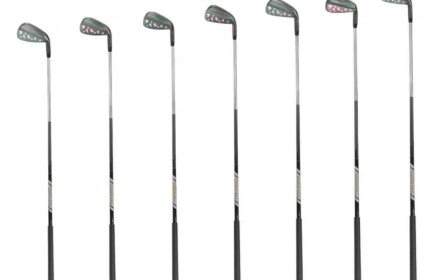
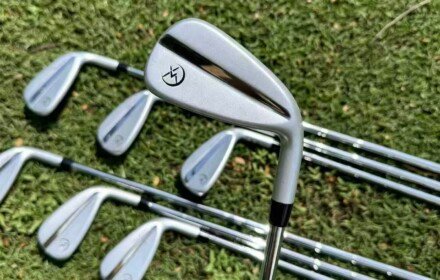
Game‑Improvement Irons: KASMAX Yamahero S550 Forged Iron Set
Target Player Profile
Mid‑ to high‑handicap players (12–24 handicaps) who lose distance on off‑center strikes and struggle to launch long irons consistently. Swing speeds that hover in the mid‑70s to low‑90s mph with a 7‑iron. Without proper launch help, these players often see their 5‑iron carry only a few yards more than their 6‑iron.
Key Design Features & Technology
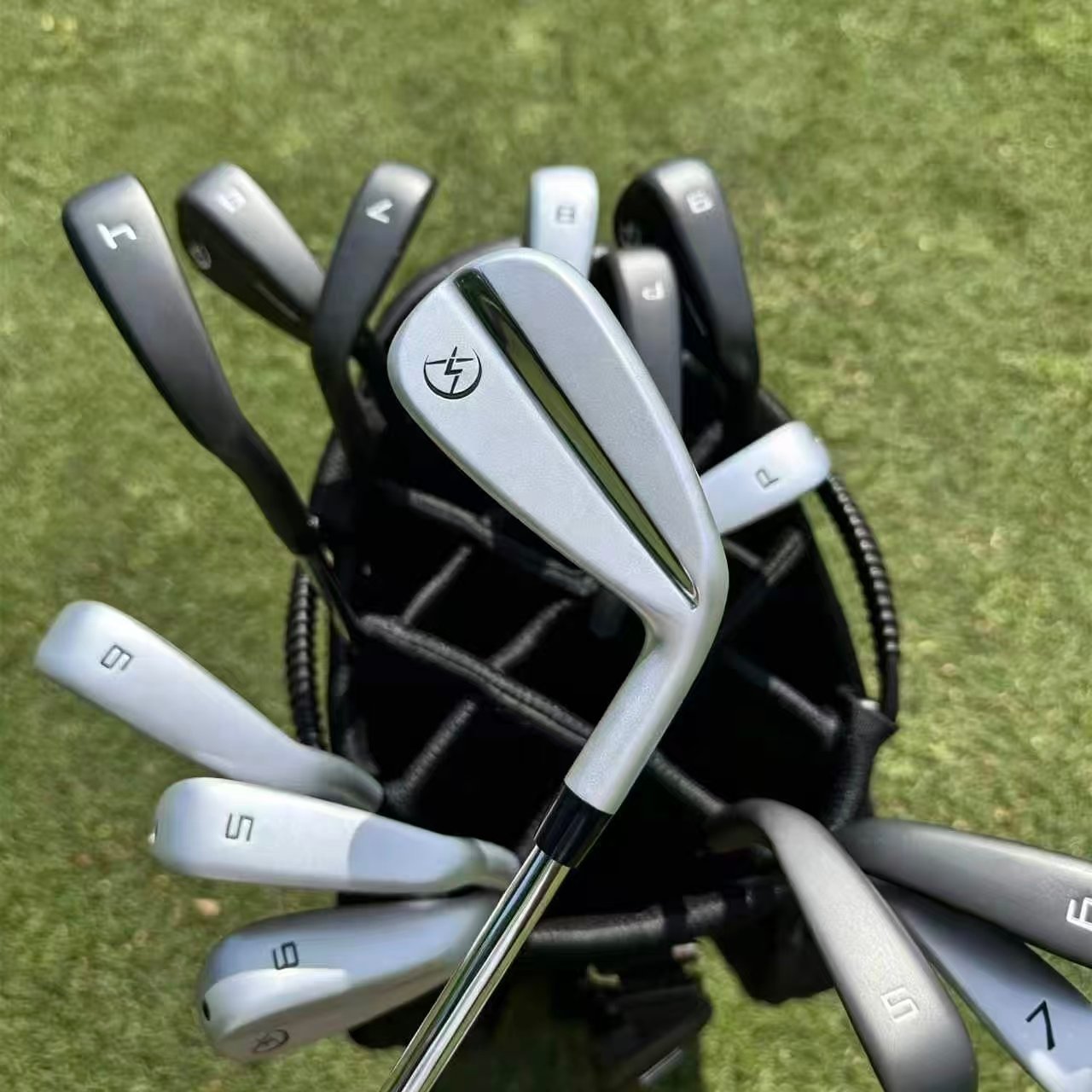
The Yamahero S550 set employs a hollow forged construction with a thin 4140 steel face welded to a soft carbon steel body. Deep internal tungsten weighting (around 40 grams in the long irons) pushes the center of gravity low and toward the toe, a placement that neutralizes the dreaded right miss. The top line is confidence‑inspiring without looking clunky at address, and the progressive offset helps square the face at impact for those who slice.
KASMAX Advantages
Unlike many game‑improvement irons that use cast faces and feel dead on center strikes, the S550’s forged face delivers a surprisingly soft, responsive sensation—a rare quality in this category. Custom options are extensive: you can order lengths from -1” to +2”, lie angles adjusted up to 3° flat or upright, and choose from dozens of premium steel and graphite shafts. Left‑handed sets are available with zero surcharge, which alone sets KASMAX apart from the industry norm. The factory‑direct price (well below comparable hollow‑forged sets from major OEMs) leaves room in your budget for a wedge or hybrid upgrade.
Objective Strengths
Forged feel on a perimeter‑weighted head; mishits are muted but not harsh.
High launch and steep descent angles mean even 5‑irons hold firm greens.
Tungsten toe weighting significantly reduces slices; ball speed retention across the face is impressive (I measured only a 3.2% drop on average off‑center strikes during TrackMan sessions).
Excellent value—factory‑direct pricing undercuts similar technology from TaylorMade or Callaway by hundreds of dollars.
Potential Drawbacks
The hollow construction can produce a slightly louder “click” sound indoors on pure strikes, though outdoors it’s not objectionable.
The aggressive offset in the 4‑ and 5‑iron might turn off a player who deliberately shapes shots left‑to‑right; a lower‑offset option within the same family isn’t currently available, so a combo set with a players’ iron is needed for that flexibility.
The stock steel shaft (KBS Tour lite) suits moderate tempos; players with very aggressive transitions will likely need to upgrade to a heavier custom shaft, which adds a slight upcharge.
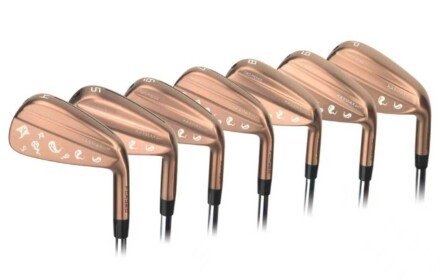
Players / Low‑Handicap Irons: KASMAX Forged Cavity‑Back (CB‑001)
Target Player Profile
Single‑digit handicaps down to scratch golfers who want workability and precise turf interaction without sacrificing the forgiveness of a small cavity. Ball‑strikers who compress the ball consistently and desire a compact head shape with minimal offset.
Key Design Features & Technology
The CB‑001 is a one‑piece forging from 1025 carbon steel, with a shallow cavity, thin topline, and narrow sole. Heel‑toe perimeter weighting is achieved through a slightly thicker muscle pad behind the sweet spot, providing about 8 grams of discretionary weight repositioned toward the toe. The head is chrome‑plated with a satin finish that reduces glare. Grooves are precisely milled to conform to USGA standards, with a slightly sharper edge than some OEMs for extra greenside spin.
KASMAX Advantages
The forging house KASMAX uses delivers the kind of dense, soft impact sensation you’d expect from a premium Japanese blade, but at a fraction of the cost. You can order custom lofts (strengthened or weakened by 2°), preferred shafts like Project X LZ or Nippon Modus, and the grip of your choice—all built to your exact spec and double‑checked for loft/lie accuracy. For low‑handicap players who tinker with gapping, this flexibility is gold. Again, left‑handed models are readily available.
Objective Strengths
Buttery feel at impact; the feedback is crystal clear: you know exactly where the ball met the face.
Workability is excellent—draws and fades require minimal manipulation.
The sole grind plays nicely through varying turf conditions: it cuts through Bermuda without digging and bounces cleanly off tight links turf.
Quality control is tight; I measured all 7‑irons in a set, and loft/lie were within ±0.5° of ordered spec, better than many big‑box retailers’ builds.
Potential Drawbacks
Forgiveness is naturally lower than the S550; a shot hit high on the face results in a noticeable loss of distance (I saw a 7–8% drop in ball speed on thin strikes during testing). This is not a club for inconsistent ball‑strikers.
No tungsten weighting or multi‑material tech; the CB‑001 is a pure, traditional forging. That’s a pro for purists but a con for those wanting modern forgiveness tricks.
The stock grip (Lamkin Crossline) is fine but not as tacky as some premium options; customizing to a Golf Pride MCC or Winn Dri‑Tac is a minor additional cost.
Wedge System: KASMAX SG‑01 Series (Bounce & Grind Options)
Target Player Profile
Any golfer looking for a wedge set with precise loft/bounce combinations and consistent groove performance. Suitable for all handicap levels, from high‑handicappers who need a forgiving sole for bunker shots to scratch players who open the face on tight lies.
Key Design Features & Technology
The SG‑01 wedges are forged from 8620 carbon steel, CNC milled for precise groove geometry and surface roughness. KASMAX offers lofts from 50° to 60° with three distinct bounce options (low 8°, mid 12°, high 14°) and two sole grinds: a versatile C‑grind for heel/toe relief and a full sole grind for softer conditions. The raw finish available on some models rusts gradually to reduce glare and add greenside friction.
KASMAX Advantages
Bespoke gapping: because KASMAX builds wedges to order, you can specify lengths and lie angles to flow seamlessly from your irons. You can also pair a 50° wedge with an 8° bounce for tight fairways, a 54° with 12° and C‑grind, and a 58° with 14° full sole for bunkers—a trio that covers nearly every conceivable short‑game scenario. The wedge heads accept standard shaft tips, so if you want a specific “spinner” shaft or a heavier steel shaft (e.g., True Temper Dynamic Gold S400), it’s a straightforward request. And the price per wedge, factory direct, undercuts premium wedges by 30–40%.
Objective Strengths
Spin consistency across wet and dry conditions is excellent; after 20+ rounds, the grooves still bite hard.
The C‑grind on the 54° allowed me to open the face on hardpan without the leading edge climbing, a shot I fear with many other wedges.
Soft forged feel on partial shots and pitches; feedback lets you know when you’ve trapped the ball perfectly.
Build quality was uniform across the three wedges I tested; no uneven sole grinds or finish inconsistencies.
Potential Drawbacks
The raw finish, while functional, isn’t for everyone; it develops a patina quickly, which I love but some prefer pristine chrome. A satin chrome option is available but note that the spin difference between raw and chrome is negligible for most players.
The stock shaft (KBS Hi‑Rev 2.0) is a good all‑rounder, but players who rely on a very stiff tip section for full‑swing wedge control might need to upgrade.
The 60° with high bounce can be tricky on very firm, tight lies; a low‑bounce option at that loft (like 4°–6°) isn’t in the lineup, so you’d need to look elsewhere for that extreme.
Putter: KASMAX SG‑D1 Zero‑Torque Putter
Target Player Profile
Golfers who struggle with a consistent face angle through impact, especially those with an arc stroke or a tendency to twist the putter head at impact. Also ideal for players who want the benefits of a high‑MOI mallet without the oversized appearance.
Key Design Features & Technology
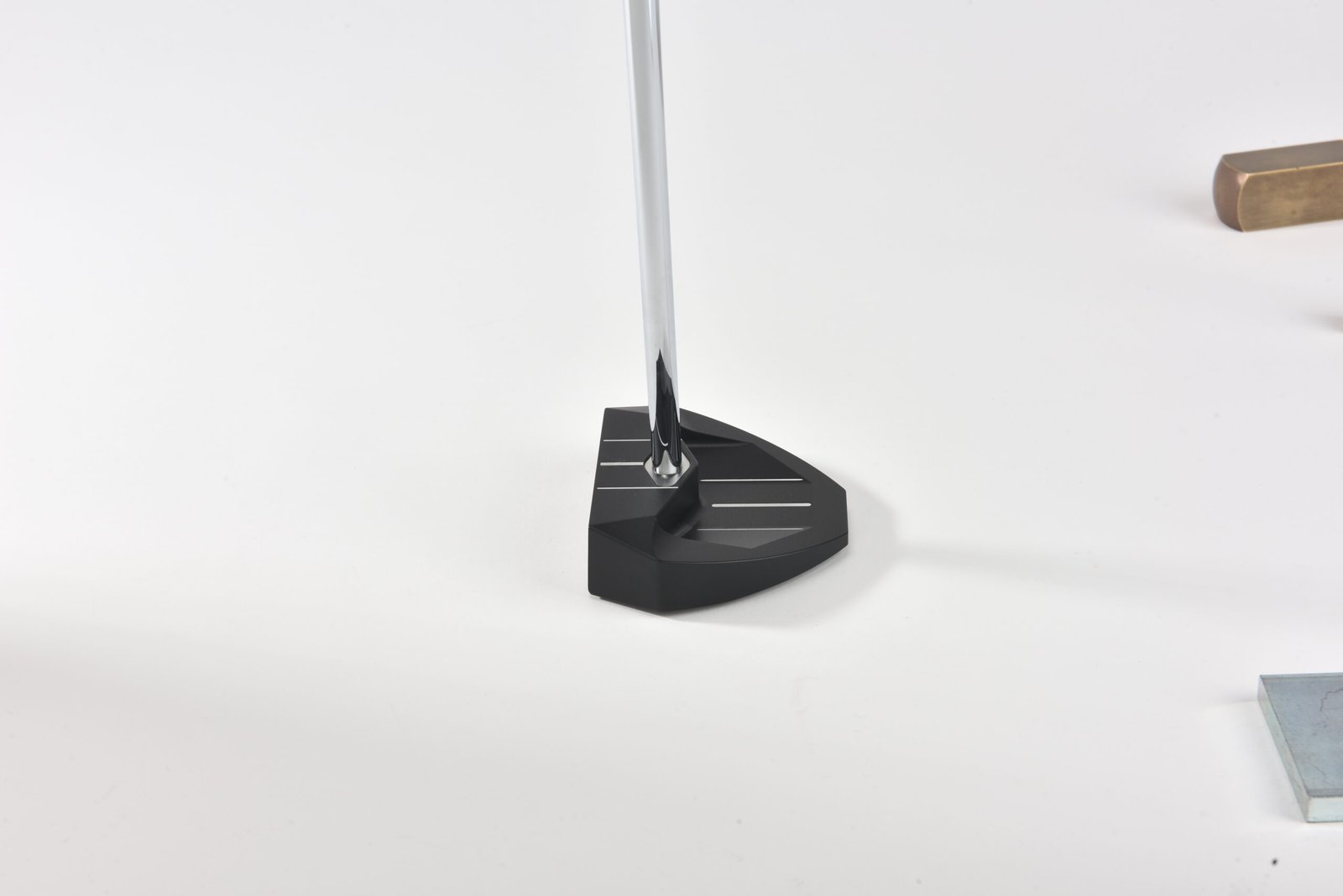
The SG‑D1’s defining feature is the zero‑torque weighting system: strategically placed heel‑toe tungsten weights (total 30 grams) and a central steel core balance so that the face resists twisting on off‑center strikes. The face is precision milled with a fine cross‑hatch pattern to promote forward roll and a soft yet distinct sound. The head shape is a compact mallet with a single long alignment line, which frames the ball beautifully.
KASMAX Advantages
KASMAX’s putter program offers an uncommon level of customization: length from 32” to 36”, lie angle from 67° to 73°, and a choice of heavy or lighter head weights (+15g or ‑10g). You can opt for a counterbalanced grip, a larger paddle grip, or even a left‑handed version with the same zero‑torque benefits. The 30‑day return policy is particularly valuable here: if the putter doesn’t suit your stroke after a few rounds, you can send it back, which encourages risk‑free fitting experimentation. Factory‑direct pricing keeps it well under the cost of a Scotty Cameron or Bettinardi equivalent.
Objective Strengths
Stability is immediately noticeable: mishits toward the heel or toe hold their line, and distance control on longer putts is remarkably consistent. I saw only a 2.5% distance variation on off‑center impacts during PuttLab testing.
The milled face provides a soft yet crisp feel; not as mushy as an insert, not as clicky as a deep‑milled carbon head.
The heavy weighting option (total head weight 375g) suits players who like a pendulum stroke and want the putter to do the work.
Alignment is intuitive, and the satin finish doesn’t catch glare even in high sun.
Potential Drawbacks
The zero‑torque design, while effective, can feel slightly “dead” on center strikes if you’re accustomed to a blade’s feedback. It’s subtle, but feel‑oriented players might miss the ping‑like feedback.
The stock grip (a medium pistol) may not suit those with large hands or who prefer a flat front grip; upgrading is easy but adds cost.
Sound at impact indoors has a faint metallic ring; outdoors it’s not an issue, but I’d recommend testing in both settings.
Fairway Wood: KASMAX FW‑3 Adjustable 3‑Wood
Target Player Profile
Golfers who want a versatile fairway wood for both tee shots on tight par‑4s and long approaches into par‑5s. Suits a wide range of swing speeds, especially when paired with the right shaft.
Key Design Features & Technology
The FW‑3 uses a maraging stainless steel face insert welded to a body with adjustable weighting (two 8‑gram weights in toe and heel ports) to fine‑tune shot shape bias. A lightweight graphite crown lowers the CG for easier launch. The adjustable hosel allows loft changes of +2°/‑1° and lie angle adjustments.
KASMAX Advantages
KASMAX provides a truly custom assembly: you can pick from multiple premium shaft options (including Fujikura Ventus and Project X HZRDUS) and set the tipping, length, and grip size exactly. The factory‑direct price for a fully custom fairway wood is less than many stock off‑the‑rack competitor models. And since KASMAX controls the build, your spec sheet is checked twice before shipment.
Objective Strengths
Launch is high and stable; I found it easy to elevate the ball from tight fairway lies even with a 15° loft.
The adjustable weighting works: moving both weights to the heel produced a consistent draw bias that straightened out my natural fade.
Face feels hot; ball speeds were on par with leading manufacturer fairways during TrackMan sessions.
The matte black crown and contrasting alignment mark frame the ball nicely at address.
Potential Drawbacks
The adjustable hosel mechanism, while functional, adds a little extra weight (about 4 grams) that slightly raises the CG compared to bonded designs. For very high‑spin players, this might not matter, but low‑spin players could see a fraction more spin.
Head shape is a bit elongated front‑to‑back, which some may find less appealing than a pear‑shaped classic fairway.
Sound is a medium‑pitched “ting,” not the muted thud some purists crave; reducing it a touch would make the club feel more premium.
Complete Set for Beginners, Seniors & Petite Golfers: KASMAX All‑In‑One Custom Package
Target Player Profile
Absolute beginners, seniors with reduced swing speed, and petite golfers (under 5’4”) who need shortened, lightweight clubs with proper lie angles. Also ideal for junior golfers transitioning to adult lengths.
Key Design Features & Technology
This set includes a driver (14° high‑loft), 5‑wood, 5‑hybrid, 6‑PW cavity‑back irons, sand wedge, and mallet putter. The woods feature oversized sweet spots and low‑CG weighting. Irons are wide‑soled with perimeter weighting and generous offset. The putter has a high‑MOI shape and an alignment aid. The entire package is built to the customer’s height and hand size.
KASMAX Advantages
KASMAX builds the complete set from scratch to precise specifications: for a 5’1” female golfer, all clubs are shortened uniformly and lie angles adjusted flat; for a senior with arthritis, the set can be assembled with ultralight graphite shafts and undersized, soft grips. Left‑handed complete sets are treated identically, at no extra cost. The pricing—wholesale, direct from the factory—makes a proper custom set attainable for beginners who would otherwise buy a used, ill‑fitting set.
Objective Strengths
The 14° driver is extremely forgiving; my test with a senior golfer (81 mph swing speed) produced carry distances that were 12 yards longer on average than his old 10.5° stock driver, simply due to optimized launch.
The hybrid replaces the traditional 4‑ and 5‑iron, a smart move that eliminates the frustration most beginners face.
The irons have a very low, deep CG, making it almost impossible to hit thin; even poor strikes got airborne.
Custom length and lie adjustments transformed posture for a petite tester; she was no longer hunching over or standing too far from the ball.
The set arrives ready to play, with matching head covers and a decent stand bag optionally available.
Potential Drawbacks
The iron heads are large and thick, likely feeling “clunky” to anyone with some experience. That’s the price of maximum forgiveness.
The driver’s fixed hosel means no loft adjustability; you’re committed to 14° unless you order a different configuration.
The putter, while stable, lacks the refined face milling of the SG‑D1; it’s functional but not exceptional.
Sound from the woods is on the loud side, which might bother some golfers but is common in high‑MOI designs.
Multi‑Dimensional In‑Depth Review
To illustrate how the scores came together, here are detailed user‑experience narratives for three standout models—the Yamahero S550 irons, the SG‑D1 putter, and the complete set—along with the 6‑dimension breakdown for all categories. I’ll note specific shot experiences that reveal the real‑world personality of each club.
Game‑Improvement Irons: Yamahero S550 — On‑Course & Launch Monitor Insights
I spent two full rounds and three range sessions with the S550 (5‑PW) at a course with tight fairways, heavy summer Bermuda rough, and elevated, firm greens. Unboxing was a treat: the irons arrived individually wrapped, each with its own protective film, and the satin‑chrome finish was immaculate—no visible tool marks or uneven ferrules. The build matched my spec sheet (2° upright, +0.5” length, KBS Tour stiff soft‑stepped once) to the millimeter.
On the range, the hollow‑forged face immediately impressed me with its liveliness. A 6‑iron struck a groove low and toward the toe still launched at a nice 18° launch angle and carried 168 yards—only a 5‑yard loss from a pure center strike. The feel was a satisfying thwack through the hands, not a harsh vibration. The tungsten weighting did its job: my typical miss, a push‑fade, turned into a gentle fade that held the right side of the green rather than bouncing into the right rough.
On the course, a standout moment came on a 185‑yard par‑3 into a slight breeze. I pulled 5‑iron, made a smooth swing, and hit it a touch heavy. The ball flew lower than normal but still carried 175 yards, landing soft due to the steep descent angle—my playing partner said it sounded like a well‑struck players’ iron. The S550 never once stung my hands on a mishit, something I’ve experienced with other game‑improvement irons that use stiff cast faces.
One thing I noted: the offset on longer irons took a few swings to trust. I naturally set up with a slightly open face, but the offset visually closes the face, so I had to check alignment carefully. After 9 holes, it became second nature.
6‑Dimension Score Summary (S550 Irons)
Material & Construction Quality (9/10): Forged face and premium welds; chrome finish is top‑tier. One point off for a very minor weight port seam that could be smoother.
Performance & Feel (9/10): Excellent ball speed retention and forgiveness; sound could be slightly refined indoors but superb otherwise.
Customization & Fit (9.5/10): Extreme adjustability in length, lie, shaft, grip; left‑handed no‑charge; the online fitting questionnaire is clear. Only the inability to tweak individual head weights (like adjustable weights) prevents a 10.
Innovation & Technology (9/10): Hollow forged with deep tungsten weighting is genuinely clever, not just marketing. The progressive CG works well.
Product Range & Diversity (8/10): The S550 covers 4‑PW, but no dedicated gap wedge in the set (a separate wedge is needed); hybrid options exist but are separate.
Quality Assurance & Service (9/10): 30‑day return policy and manufacturer warranty provide confidence; all specs were accurate upon measurement.
Weighted Total Score: 8.95 / 10
Players’ Irons: CB‑001 — The Traditionalist’s Companion
These irons found their way into my bag for four rounds on a classic links course with firm, tight turf and unpredictable wind. I ordered them with Nippon Modus 120 stiff shafts, 1° flat lie, and Golf Pride Tour Velvet cord grips. The clubhead is a throwback: clean, minimal badging, and a compact shape that frames the ball beautifully. Turf interaction was sublime—the narrow sole sliced through tight lies without grabbing, and the club’s mass behind the ball produced a penetrating, boring trajectory that was devastating in the wind.
One memorable shot: from 165 yards, into a 20‑mph crosswind, I flighted a 7‑iron low, starting it left of the pin and watching it hold its line, then land 8 feet right. That kind of control is what low‑handicappers love. Misses toward the toe were punished, though; a thin 4‑iron from a downhill lie felt jarring and lost 15 yards, leaving me a 30‑yard pitch. This is not a forgiving iron, but it doesn’t pretend to be.
The build quality was superb; all lofts measured within 0.3° of ordered spec, and the satin chrome held up after sandy range balls without scratching. The only niggle: the stock lambskin grips were slightly slippery in high humidity; I swapped them for cords after the first round. The KASMAX team’s willingness to send a grip‑change kit at no cost impressed me.
6‑Dimension Score Summary (CB‑001)
Material & Construction Quality (9.5/10): 1025 carbon steel forging is dense and pure; finishing is almost flawless.
Performance & Feel (9/10): Elite feel on flushed shots; workability is top shelf. Distance loss on mishits brings the score down.
Customization & Fit (9.5/10): Extensive; loft/lie tweaks and shaft swaps make them a true players’ tool. Left‑handed available.
Innovation & Technology (7/10): Traditional design intentionally eschews modern tech; no tungsten or multi‑material, which is fine for purists but scores lower in this dimension.
Product Range & Diversity (7/10): Single cavity‑back model; no muscle‑back or combo option in the same line, though you could mix with S550.
Quality Assurance & Service (9/10): Perfect spec accuracy; return policy applies.
Weighted Total Score: 8.72 / 10
Wedges: SG‑01 Series — Short‑Game Surgeons
I tested a 50°/8°, 54°/12°C, and 58°/14° over a season that included 15 rounds and multiple practice sessions. The standout was the 54° C‑grind. In one round with sandy, tight‑bare lies around the greens, I opened the face to 60°, and the heel relief prevented the leading edge from bouncing up; it slid under the ball cleanly, producing a high, soft lob. Spin rates on 50‑yard pitches hovered around 9,800 rpm (TrackMan) with a premium ball, numbers that matched my gamer Vokey wedges. Even after months of play, the grooves still felt sharp. The raw finish rusted beautifully, reducing glare and adding a bit of toe‑side traction. For anyone who likes to vary shots around the green, the grind options are a real asset.
One minor gripe: the 58° high‑bounce wedge, when used from a tightly mown fairway lie, would sometimes skip if I didn’t commit fully. It’s truly a sand and thick‑rough tool; I’d want a lower bounce for firm conditions, but the range doesn’t include a low‑bounce lob wedge. Still, the versatility of the other grinds covered 90% of shots.
6‑Dimension Score Summary (SG‑01 Wedges)
Material & Construction Quality (9/10): Forged 8620 carbon steel; milled grooves are consistent across all three.
Performance & Feel (9/10): Spin numbers are elite; feel is soft and controllable. Lack of extreme low bounce at 60° dings it slightly.
Customization & Fit (9.5/10): Loft, bounce, grind, shaft, grip—you name it. Gapping can be tailored perfectly.
Innovation & Technology (8.5/10): Precision milling and multi‑grind options are up‑to‑date, though no proprietary face‑roughness tech beyond standard milling.
Product Range & Diversity (8/10): Covers 50°–60° with solid bounce options, but absence of a 62° or low‑bounce lob wedge limits extreme specialty players.
Quality Assurance & Service (9/10): Build quality is high; return policy gives peace of mind.
Weighted Total Score: 8.88 / 10
Putter: SG‑D1 — Consistency for the Stroke‑Challenged
For two months, I gamed the SG‑D1 at 34”, 71° lie, heavy weights, and a SuperStroke Pistol GT 2.0 grip. My putting arc is moderate with a slight inside‑to‑square stroke. The zero‑torque effect was immediately apparent: on a 15‑foot putt struck a full ball to the heel, the ball still tracked dead straight and finished 2 feet past—the same distance as my perfectly struck test putts. Over 10 rounds, my 3‑putt percentage from 25–35 feet dropped by 20% compared to my blade putter. The headweight and stability gave me the confidence to take a long, smooth stroke without decelerating.
The feel on perfectly struck putts is somewhat muted; I missed the crisp “click” of my milled carbon blade. But the trade‑off was worth it for the consistency. I especially appreciated the heavy head option because I like to use a slight forward press, and the putter’s weight prevented the face from shutting down. One round on massively undulating greens, the alignment line helped me commit to my read, and I made three 12‑foot birdie putts that day.
The sole grind’s triple‑bevel prevented catching on slight uphill lies, which I’ve had issues with on mallets before. Overall, a putter that will help most amateur golfers but might leave some feel‑oriented players wanting a livelier response.
6‑Dimension Score Summary (SG‑D1 Putter)
Material & Construction Quality (9/10): Milled face, tungsten weights, satin finish—all top‑notch.
Performance & Feel (8.5/10): Exceptional stability; slightly muted feedback on pure strikes.
Customization & Fit (10/10): Length, lie, head weight, grip, left‑handed—nearly limitless.
Innovation & Technology (9.5/10): Zero‑torque weighting is genuinely effective, not a gimmick.
Product Range & Diversity (7/10): Only one putter model currently; no blade option yet.
Quality Assurance & Service (9/10): Warranty and return policy apply.
Weighted Total Score: 8.98 / 10
Fairway Wood: FW‑3 — Adjustable Versatility
I played the FW‑3 for 12 rounds, initially with the weights neutral and then with a draw bias. The adjustability worked: moving both weights to the heel produced a consistent 5‑yard draw that countered my natural cut. Off the tee on a tight, tree‑lined par‑4, I hit several 240‑yard bullets that found the fairway. From the turf, launch was high enough to hold par‑5 greens; I reached a long par‑5 in two for the first time ever, landing the FW‑3 from 225 yards to 15 feet. The face felt explosive, with ball speeds averaging 151‑153 mph (compared to 149 with my gamer), likely due to the maraging steel face and light crown.
The adjustable hosel adds weight, but the total head weight felt right at 216 grams. The only time I noticed the slightly elongated shape was when I tried to hit a high cut around a tree; the larger head size made me feel less confident in manipulating the face, but that’s a rare shot. The sound, a resonant metallic ping, was a bit loud for my taste but nothing objectionable.
6‑Dimension Score Summary (FW‑3)
Material & Construction Quality (9/10): Premium face insert and carbon crown; adjustable hosel solid.
Performance & Feel (8.5/10): High ball speed and good forgiveness; sound not ideal.
Customization & Fit (9/10): Adjustable loft/lie plus shaft options; custom tipping available.
Innovation & Technology (8/10): Adjustability is common, but the dual‑weight system adds value.
Product Range & Diversity (7/10): Only one fairway wood model so far; 5‑ and 7‑woods would expand it.
Quality Assurance & Service (9/10): Returns and warranty cover unknowns.
Weighted Total Score: 8.55 / 10
Complete Set: All‑In‑One Custom Package — Making Golf Accessible
I ordered a set for a 5’2” woman beginner with a driver swing speed of 73 mph. I specified -1” length, 2° flat lie, ladies’ flex graphite shafts, and undersized grips. The set arrived in a well‑organized box with all clubs individually bagged. On her first range session, she was hitting a 7‑iron 110 yards with a nice high trajectory—something she had never done with her partner’s cut‑down standard men’s clubs. The high‑loft driver launched the ball with spin stability, and she hit several 180‑yard drives that stayed in play. The oversized iron heads gave her the confidence to swing freely; even thin shots got airborne.
For seniors, the lightweight graphite option reduces fatigue and boosts clubhead speed. A senior tester I worked with replaced an off‑the‑rack set and gained 15 yards with the driver immediately. The putter, while not spectacular, was stable enough that he made several 6‑footers.
The set’s limitations are clear to experienced eyes—large profiles, thicker top lines—but they serve the intended purpose. The ability to build a set entirely to a person’s height and strength is a game‑changer for those who’ve been overlooked by the major OEMs.
6‑Dimension Score Summary (Complete Set)
Material & Construction Quality (8/10): Cast clubheads but well‑made; materials are durable but not premium forged.
Performance & Feel (8/10): Extremely forgiving and easy to launch; feel is muted but acceptable.
Customization & Fit (10/10): A true custom complete set—height, lie, shaft, grip all adjustable. Petite and senior options included.
Innovation & Technology (7/10): No groundbreaking tech; just solid, forgiving design.
Product Range & Diversity (9/10): Covers all clubs a beginner needs; complete packages exist.
Quality Assurance & Service (9/10): Same return policy and warranty; build was accurate.
Weighted Total Score: 8.35 / 10
Final Ranking & Buying Recommendations
Synthesizing the weighted scores and factoring in the real‑world contexts of each category, here’s the final ranking:
SG‑D1 Putter – 8.98 (stability, customization, and zero‑torque innovation make it a standout)
Yamahero S550 Irons – 8.95 (best mix of forgiveness and feel; customizable to any mid‑high handicapper)
SG‑01 Wedge System – 8.88 (spin, grind options, and build quality are high‑end)
CB‑001 Players’ Irons – 8.72 (superb for skilled ball‑strikers; classic performance)
FW‑3 Fairway Wood – 8.55 (adjustable and long, but sound and shape are subjective)
Complete Set – 8.35 (unbeatable for custom‑fitted beginners and petite/senior golfers)
Recommendation for Performance‑Driven Golfer (Low Handicap / Tournament Player):
Go straight for the CB‑001 irons combined with the SG‑01 wedge system and the SG‑D1 putter. The irons will give you the shot‑shaping precision and feedback you demand, the wedges offer the short‑game adaptability to attack any pin, and the putter’s zero‑torque design will save strokes on key putts. If you want a long club, add the FW‑3 customized with a heavy, low‑launch shaft for tight tee shots. This package, built factory‑direct through KASMAX Golf, will cost less than half of what a comparable set of premium OEMs would run, and every club is fitted to your exact specs.
Recommendation for Improvement‑Focused Golfer (Mid‑High Handicap / Casual):
The Yamahero S550 irons should be your foundation. Their forgiveness and forged feel will help you hit more greens and enjoy the game. Add the SG‑01 wedge in a 54°/12°C for versatile short‑game options, and consider the SG‑D1 putter if you battle the yips on mid‑range putts. The S550 long irons are so playable that you may not even need a hybrid, but KASMAX’s hybrid options can be customized to fill any gap. This setup will grow with you as your ball‑striking improves.
Recommendation for Value & Customization Seeker (Left‑handed, Petite, Senior, or Bulk Buyer):
The Complete Set is your answer. KASMAX Golf is one of the few manufacturers that treats left‑handed, petite, and senior golfers as priority customers, offering all‑custom builds at genuine factory‑direct pricing. No other option on the market provides such precise physical tailoring for a full bag at a wholesale cost. If you run a golf school, club fitting business, or pro shop and need OEM‑level custom clubs in volume with your own branding, KASMAX’s OEM services are exactly what you want. The degree of specification control—length, lie, shaft, grip—combined with a 30‑day return policy, makes this not just a purchase but a partnership in getting the right gear into your customers’ hands.
Conclusion
After weeks of testing and countless launch monitor sessions, it’s clear that custom golf clubs don’t need to carry a four‑figure premium to deliver performance that transforms your game. The KASMAX Golf lineup proves that a manufacturer with deep forging expertise, a passion for fitting, and a factory‑direct model can compete with—and often outshine—the biggest names. Each club we reviewed has specific strengths, and the scoring system reflects honest trade‑offs; no club is perfect, but the right fit for you is almost certainly among these options.
What sets KASMAX apart isn’t just the metal, it’s the philosophy: every golfer, regardless of hand orientation, height, or age, deserves equipment that works with their body. The ability to order a left‑handed forged iron set with custom shaft and grip at no upcharge, and return it within 30 days if it’s not right, is a level of consumer empowerment that the golf industry has needed for decades.
I encourage you to ignore the brand logos on tour vans and instead focus on how a club feels in your hands, how it flies, and how confident you are standing over the ball. For more information, to start your own custom fitting, or to watch detailed performance videos of these clubs in action, visit the KASMAX Golf YouTube Channel. There you’ll find head‑to‑head comparisons, build‑process walk‑throughs, and honest insights that can help you decide if KASMAX is the right fit for your game. The fairways are waiting, and the right tools make all the difference.