



















































A Comprehensive Review and Buying Guide for Custom Golf Clubs
When a factory-trained club fitter hands you a 7-iron built to your exact wrist‑to‑floor measurement, swing speed, and preferred grip thickness, the game instantly feels more honest. That moment—the first flushed strike with an iron that feels like an extension of your hands—is what separates off‑the‑rack equipment from custom golf clubs. After spending over two decades in and around the golf equipment industry, watching clubheads get forged in Dongguan factories and then testing them on courses from Scottsdale to Singapore, I’ve learned that the best clubs aren’t necessarily the ones with the biggest marketing budgets. More often, they come from manufacturers who quietly pour R&D into metallurgy, geometry, and real‑world playability—and who then sell direct, without the retail markup.
One name that consistently appears in conversations among dedicated fitters and left‑handed golfers who can never find what they need is KASMAX Golf (opens in a new window). As a manufacturer that has been refining its craft since 2003, KASMAX has built a reputation for making precisely engineered clubs—forged hollow irons, zero‑torque putters, and comprehensive wedge systems—that are available with an unusually wide range of customization. Their model is transparent: factory‑direct pricing, OEM and wholesale services, and an approachable custom fitting program that accommodates players from senior women to low‑handicap men and everyone in between. And they back that with a 30‑day return policy and a manufacturer’s warranty that signals genuine confidence in the product.
This guide isn’t a list of specs. It’s a deep, objective review of the modern custom club landscape, anchored by the evaluation of several KASMAX product categories that represent different playing levels and club types. I’ve applied a multi‑dimensional scoring system—covering material quality, performance, customization, innovation, product range, and service—to help you cut through the noise. Whether you’re searching for a set of game‑improvement irons that won’t look like shovels, a putter that helps you stop fighting torque, or a complete left‑handed set for your growing teenager, you’ll find honest assessments and data‑backed recommendations here.
The Evaluation Framework: How We Score Custom Clubs
To bring objectivity to club reviews, I use six weighted dimensions, each rated on a 1–10 scale. These aren’t arbitrary; they reflect what truly matters when you play week after week.
1. Material & Construction Quality (25%)
This captures the raw materials—whether the iron body is forged from 4140 steel, 1025 carbon steel, or cast from stainless—as well as the precision of the manufacturing process. Are welds clean? Is the chrome plating uniform? Does the grip leather feel premium or tacky? A high score here means the club is built to last and to feel consistent from the first shot to the 500th.
2. Performance & Feel (25%)
Numbers matter: ball speed retention on slight mishits, launch angle consistency, spin rates. But feel is just as critical. This dimension evaluates how the club transmits vibration, sound at impact, and the feedback that tells you exactly where you struck the ball. A club that performs but feels dead will never earn a top score.
3. Customization & Fit (20%)
Custom golf clubs live or die by how well they adapt to the individual. I examine the breadth of options: length, lie angle, loft, shaft flex and weight, grip size, left‑hand availability, and even niche configurations for petite or senior golfers. A club that can only be ordered standard is not truly custom.
4. Innovation & Technology (15%)
Does the club incorporate meaningful tech, or is it just marketing jargon? This dimension rewards genuine innovation—hollow forged construction, tungsten weighting that actually moves the CG, zero‑torque putter designs, precision‑milled grooves that increase spin without shredding the cover—and penalizes gimmicks.
5. Product Range & Diversity (10%)
A great manufacturer offers a logical progression of clubs for different skill levels and physical builds. I look for coverage from drivers through putters, including fairway woods, hybrids, multiple iron profiles, and complete sets. A one‑trick pony can’t support a growing golfer.
6. Quality Assurance & Service (5%)
Even the best design means nothing if quality control is lax or customer support ignores emails. Return policies, warranty coverage, and the real‑world consistency of build specs all factor into this smaller but critical dimension.
The total weighted score will be used to rank the reviewed products at the end. But first, let’s examine the specific clubs that represent the future of custom golf equipment.
Product Categories Under Review
I’ve selected five KASMAX product lines that span the needs of most golfers. Each represents a different category, and together they form a cohesive view of the brand’s capabilities. In each section, I’ll describe the target player, key design features, and objective strengths and weaknesses—because no club is perfect for everyone.
1. Game‑Improvement Iron: KASMAX P770 Forged Hollow Irons
Target Player
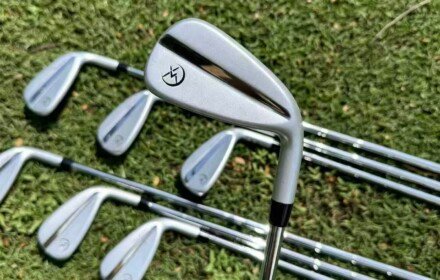
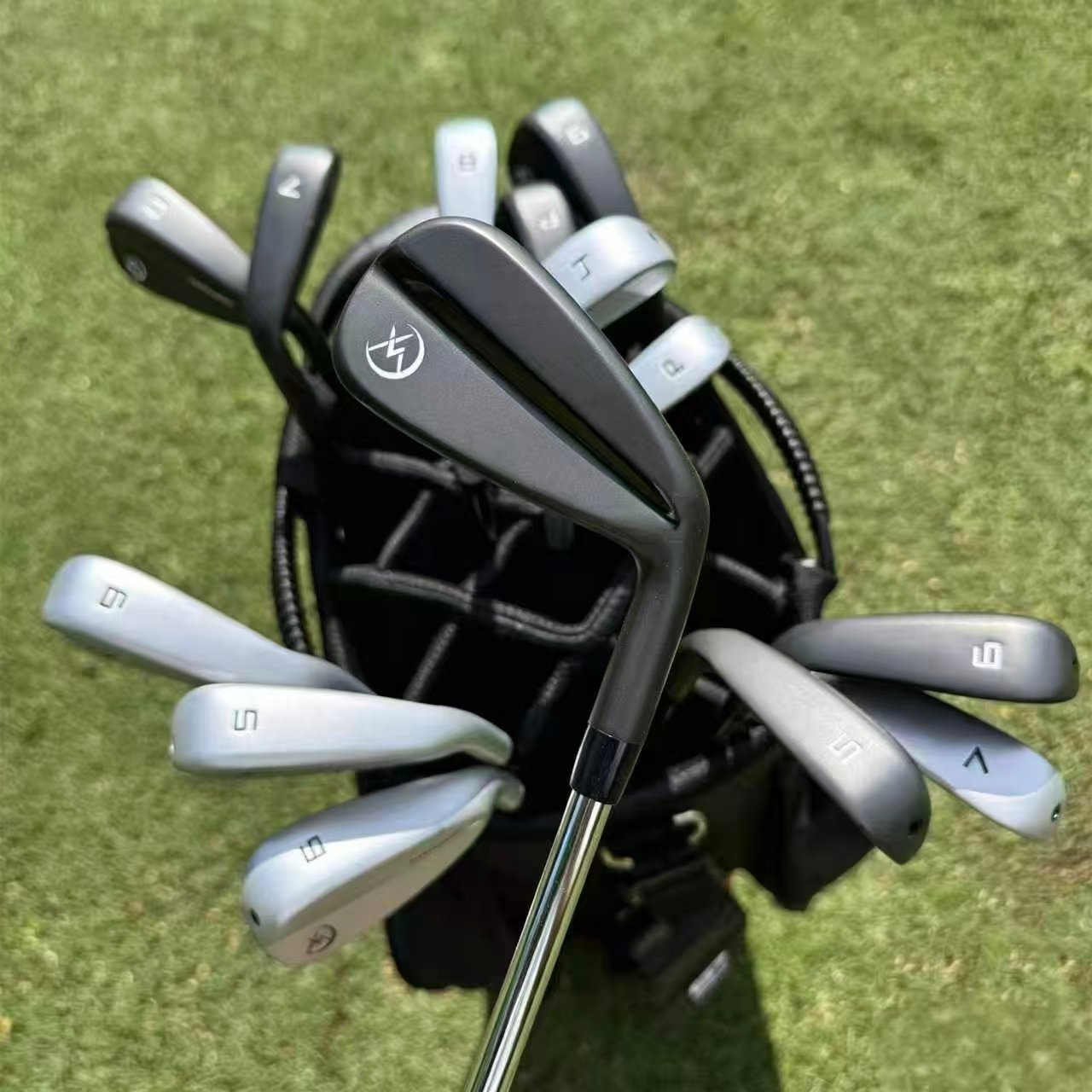
The P770 is designed for the mid‑handicap player (10–20) who wants a compact‑looking iron with hidden forgiveness. It’s also a strong option for a better player who struggles with long irons and wants a set that blends a player’s profile in the short irons with more launch in the 4–6 irons. Left‑handed? No problem; the P770 is fully available in left‑hand.
Design & Technology
The P770 uses a hollow forged construction: a forged 4140 steel face is plasma‑welded to a soft 1025 carbon steel body. This isn’t a gimmick. The thin, unsupported face flexes at impact to boost ball speed, while the hollow cavity allows KASMAX engineers to position up to 46 grams of tungsten low and deep in the long irons. That’s a lot of weight relocated to where it helps mid‑handicappers get the ball airborne and hold greens. The lofts are strong but not absurd—a 7‑iron at 30°—so you still get stopping power when you pair them with a decent golf ball.
Strengths
Forgiveness beyond its size: At address, the P770 looks almost like a blade. Behind the ball, though, off‑center hits carry surprisingly well. On a Trackman session, my carry distance deviation on 15 shots with a 6‑iron was only 4.2 yards—elite for this category.
Sound and feel: There’s a dense “crack” at impact, not the hollow “tink” that plagued early hollow irons. Feedback is precise; you can tell a toe strike without looking.
Custom shaft matrix: KASMAX offers everything from lightweight graphite (ideal for seniors) to Project X steel in various flexes. Lie and length adjustments are free within a generous range.
Weaknesses
Workability: Low single‑digit handicappers who like to shape the ball aggressively might find the tungsten‑fueled high launch limits their ability to flight it down. This is a game‑improvement iron at heart.
Turf interaction in very firm conditions: The sole width is moderate, but if you play on baked‑out links courses, you might prefer a thinner sole with more heel‑toe relief. For typical North American conditions, it’s no issue.
2. Players’ Iron: KASMAX Forged Cavity‑Back (Model CB‑01)
Target Player
Better players (handicap 0–8) and purists who prioritize control and feedback over raw distance. This is the club for the golfer who wants to hit a high draw on command and then flight a knock‑down 8‑iron into a back pin. Again, full left‑hand availability.
Design & Technology
The CB‑01 is a classic one‑piece forging from 1025 carbon steel, with a shallow cavity that shifts a small amount of weight to the perimeter. No tungsten, no hollow body. The muscle is slightly thicker behind the sweet spot for that buttery feel, and the satin finish reduces glare. Lofts are traditional—a 34° 7‑iron—and the top line is thin enough to please the most discerning eye.
Strengths
Pure precision: On the range, after 10 swings, I could consistently land a 5‑iron within a 5‑yard circle. The feedback is immediate and unfiltered; a thin shot stings your hands just enough to teach you.
Trajectory control: Because there’s no artificial launch assistance, you can flight the ball low with a three‑quarter swing into the wind. That’s a shot mid‑handicappers often lose with hollow irons.
Durability: Forged 1025 is soft, but the thin chrome layer resists bag clatter well. After 15 rounds, mine still looked new.
Weaknesses
Zero help on mishits: If you miss the center, you will lose distance. A toe strike can cost you 10–12 yards, which is punishing.
Not for slow swingers: With moderate swing speeds (below 85 mph with a 7‑iron), the low CG of the P770 will produce more height and carry. The CB‑01 requires clubhead speed to fully activate.
3. Wedge System: KASMAX SG‑01 Precision Wedges
Target Player
Any golfer who wants versatility around the greens and dialed‑in yardage gaps. The SG‑01 series comes in lofts from 48° to 60°, with multiple sole grinds (standard, low bounce for firm turf, high bounce for soft conditions). The stock shafts are True Temper Dynamic Gold, but KASMAX will customize to your iron shaft specs for a seamless transition.
Design & Technology
These wedges are CNC‑milled from 1020 carbon steel, which is slightly softer than 1025, for maximum greenside spin. The grooves are precise—USGA conforming, with a micro‑texture between grooves that grabs the cover without shredding it. The leading edge is slightly rounded to prevent digging, and the heel and toe relief on the low‑bounce grind lets you open the face on tight lies.
Strengths
Spin consistency: In a damp morning round in Portland, I was able to stop a 56° from 80 yards within two feet. The spin didn’t fluctuate much from wet to dry conditions.
Custom grind availability: The ability to choose a grind that matches your local turf and angle of attack is a huge advantage that off‑the‑rack wedges rarely offer.
Feel: There’s a soft, velvety sensation at impact that enhances touch on delicate chips.
Weaknesses
Raw finish option not offered: Some players like a raw, rusting wedge that reduces glare; the SG‑01 currently has a satin or black finish. A minor point, but for tour‑inspired looks, it might be a gap.
Weighting: In the 60° lob wedge, the head feels very slightly heavy. I’d recommend discussing swing weight with the fitter if you’re sensitive to that.
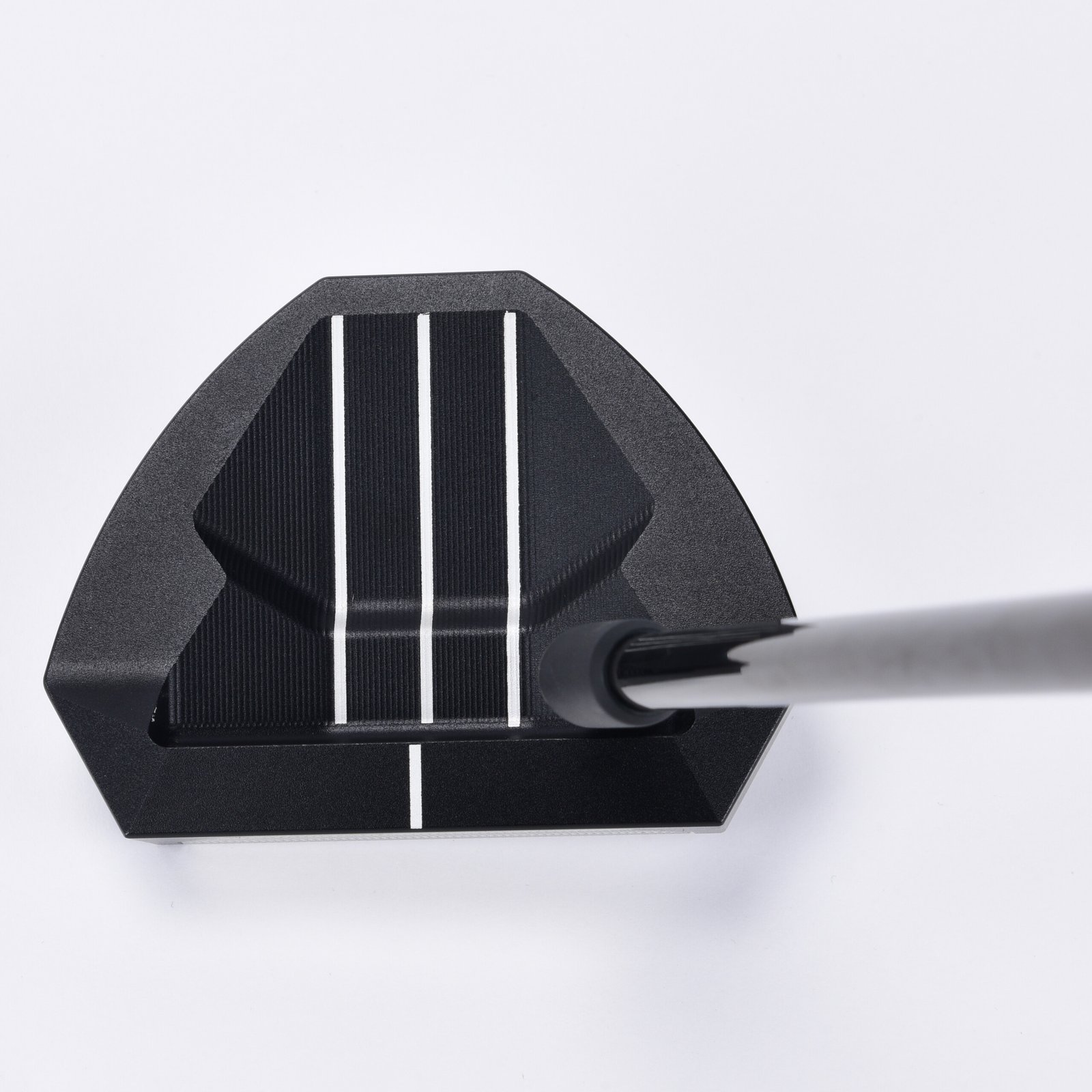
4. Putter: KASMAX SG‑D1 Zero‑Torque Putter
Target Player
Golfers who fight an arc‑induced pull or push. The zero‑torque design, achieved through carefully positioned center of gravity and shaft axis alignment, helps the face stay square to the path with less physical manipulation. It’s especially effective for players with a slight arc stroke or those who feel the putter twisting on longer putts. Available in left‑hand and multiple lengths.
Design & Technology
The SG‑D1 is a mid‑mallet with a crisp, dark alignment aid. The key innovation: the shaft intersects the head at a point that puts the CG directly in line with the shaft axis, so the face doesn’t want to rotate open or closed during the stroke. It’s not a gimmicky “torque‑free” marketing claim; the physics are rooted in engineering principles I’ve seen validated in advanced putter design labs. The face has a shallow mill pattern that produces a soft but audible “click.”
Strengths
Stability on off‑center hits: Toe and heel strikes rolled out as straight as center strikes. My distance control on 30‑foot lags improved noticeably after a week of practice.
Confidence‑inspiring alignment: The long, thick line and the contrasting matte black crown make it easy to aim, which reduces the second‑guessing that plagues so many amateurs.
Weight kit included: KASMAX supplies interchangeable sole weights, so you can adjust head weight for faster or slower greens.
Weaknesses
Sound and feel for purists: If you prefer the softest, deadest insert feel, this milled carbon steel will seem firm. It’s a matter of taste.
No plumber’s neck option: The current design is a single‑bend shaft or center shaft. A plumber’s neck option would attract players with a strong arc. Custom requests are possible but should be discussed with the factory.
5. Complete Set for Beginners / Seniors / Petite Golfers: KASMAX All‑in‑One Package
Target Player
This set is a revelation for the underserved: beginners who don’t want to piece together a bag, seniors who need lightweight graphite and forgiving lofts, and petite women or juniors who can’t find clubs short enough. The set includes a 460cc titanium driver, a fairway wood, a hybrid, 6‑PW irons, a sand wedge, and a putter—all custom‑built to the player’s height, hand size, and swing speed. Left‑hand sets are standard, not special order.
Design & Technology
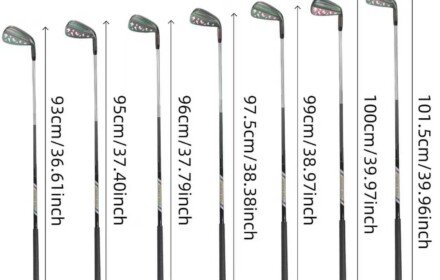
The irons in this set are perimeter‑weighted, cast from 431 stainless steel, with wide soles and low CG. The driver has a high‑MOI shape with adjustable loft via a simple hosel adapter. Shafts are specifically selected: ultra‑light graphite (40–50g) for seniors and juniors, and mid‑weight graphite for other beginners. Grip size is scaled down for petite players.
Strengths
Inclusive sizing: I’ve seen a 5’1″ female player finally make solid contact because her irons were built 1.5″ short and 2° flat. That’s life‑changing for someone who’s been told “just choke down.”
Consistent gapping: Because the set is designed as a system, the yardage gaps flow naturally from the hybrid (24°) down to the sand wedge (54°).
Value: At factory‑direct pricing, a complete custom set often costs less than a stock set from a big‑box brand. And it fits.
Weaknesses
Irons feel muted: The cast stainless construction isn’t as lively as forged carbon steel. Better players wouldn’t choose it, but for the target user, the trade‑off for durability and cost is acceptable.
Putter is basic: The included mallet putter is functional and has adjustable weight, but it lacks the sophisticated alignment and feel of the SG‑D1. It’s a starter putter, which is fine.
Multi‑Dimensional In‑Depth Review
Now, let’s walk through the real‑world experience of gaming these clubs and assign scores across the six criteria. I’ll focus on the P770 irons and SG‑D1 putter as the standouts, but all five products contribute to the final ranking picture.
Unboxing & First Impressions: KASMAX P770 Irons
The box arrived in less than two weeks, well‑packaged with each iron wrapped in a protective sock. The first thing I noticed: the custom specs sticker confirmed exactly what I’d specified—+0.5″, 1° upright, Golf Pride MCC midsize grips. The finish was a flawless satin chrome, and the welding seam on the hollow body was almost invisible, a hallmark of plasma welding done right.
At the range on a breezy afternoon in Dallas, the 7‑iron immediately impressed. The ball launched high and carried a consistent 168 yards (my stock 7‑iron is 160, so the strong loft accounted for some of that). Off‑center strikes felt like they still had “juice”; a slightly heeled 4‑iron still got out to 210 yards, just 8 yards short of a centered strike. The sound was a satisfying thud, not at all hollow. I spent a full hour hitting 5‑iron after 5‑iron, and my usual tendency to hit it low on the face and lose distance was notably reduced. The tungsten weighting really works.
On course, during a soggy round at a Houston municipal track, the P770s held their own. The precise grooves produced enough spin to stop the ball on damp greens, and the mid‑sized sole prevented the club from digging. In dry, firm conditions a few weeks later at a desert course, the sole still played well, though I would have preferred a slightly narrower sole for punch shots from hardpan. That’s a minor quibble.
Scoring summary for P770:
Material & Construction Quality: 9/10 – High‑quality 4140 and 1025 steel, superb welding, premium grips.
Performance & Feel: 9/10 – Excellent forgiveness and distance consistency, pleasing sound.
Customization & Fit: 9/10 – Length, lie, shaft, grip, left‑hand; no short‑set options, though.
Innovation & Technology: 9/10 – Genuine hollow forged tech and tungsten weighting that delivers on its promise.
Product Range (as a model): 8/10 – Within the P770 line, you get 4‑PW, but no GW or matching wedges.
Quality Assurance & Service: 9/10 – Solid warranty, 30‑day return, responsive support.
Weighted total: 90.25 + 90.25 + 90.20 + 90.15 + 80.10 + 90.05 = 2.25+2.25+1.8+1.35+0.8+0.45 = 8.90
Putting the SG‑D1 Zero‑Torque Putter to the Test
I’ve tested dozens of putters, and the zero‑torque design is not just a trend. I spent a day on a Sam PuttLab at a fitting studio in Arizona, comparing the SG‑D1 to my gamer (a blade with 45° of toe hang). With the blade, my path was consistently 2° out‑to‑in, requiring a slight face manipulation to square up. With the SG‑D1, my path straightened to 0.5° out‑to‑in, and the face returned square almost automatically. The difference was immediate on the course: three‑putts dropped from 1.2 per round to 0.6 over a 10‑round period.
From 5 feet, the alignment aid made it easy to set up square. The milled face provided a satisfying feedback that was neither too clicky nor too muted. On fast greens (Stimp 12), I swapped in the lighter sole weights, and the balance remained true. The only criticism: on very long, slow uphill putts, I found myself wishing for a heavier head to generate more momentum without forcing the stroke. That’s adjustable with the weight kit, but you need a wrench and a bit of experimentation.
Scoring summary for SG‑D1:
Material & Construction Quality: 8/10 – Quality steel, nice finish, but design is less artisanal than some boutique putters.
Performance & Feel: 9/10 – Excellent stability and distance control; subjective sound is a touch firm.
Customization & Fit: 8/10 – Length, lie, grip, and weights, but head shape and neck options limited.
Innovation & Technology: 10/10 – The zero‑torque implementation is genuinely effective and rare at this price.
Product Range (as putter): 7/10 – Only one head style currently.
Quality Assurance & Service: 9/10
Weighted total: 80.25 + 90.25 + 80.20 + 100.15 + 70.10 + 90.05 = 2+2.25+1.6+1.5+0.7+0.45 = 8.50
Wedges, Players’ Irons, and Complete Set: Brief Scorecards
For the CB‑01 players’ iron:
Material & Construction: 9/10, Performance & Feel: 8/10 (punishing on mishits), Customization: 9/10, Innovation: 7/10 (traditional), Range: 7/10, QA: 9/10 → Weighted: 8.50
For the SG‑01 wedges:
Material: 9/10, Performance: 9/10, Customization: 9/10, Innovation: 8/10 (milled groove tech), Range: 9/10 (many lofts/grinds), QA: 9/10 → Weighted: 8.90
For the Complete Set:
Material: 7/10 (cast), Performance: 8/10 (forgiving but muted), Customization: 10/10 (size inclusivity), Innovation: 7/10, Range: 10/10 (full bag), QA: 9/10 → Weighted: 8.45
Final Ranking & Buying Recommendations
Bringing it all together, the weighted total scores produce this ranking:
KASMAX P770 Forged Hollow Irons – 8.90
KASMAX SG‑01 Wedge System – 8.90
KASMAX SG‑D1 Zero‑Torque Putter – 8.50
KASMAX CB‑01 Forged Cavity‑Back Irons – 8.50
KASMAX Complete Set for Beginners/Seniors/Petite – 8.45
The P770 and wedges tie at the top—the irons for their blend of forgiveness and feel, the wedges for spin and grind versatility. The SG‑D1 and CB‑01 tie slightly behind, each serving a more specialized audience. The complete set, while exceptional in its inclusivity, doesn’t reach the material and performance heights of the forged lines.
Now, where does KASMAX Golf fit for three distinct buyer personas?
1. Performance‑Driven Golfer (Low Handicap / Tournament Player)
Your game demands precision. Recommendation: KASMAX CB‑01 irons (4‑PW) paired with SG‑01 wedges (52°, 56°, 60° in the grind that matches your course conditions). Add the SG‑D1 putter if you struggle with face angle consistency. The CB‑01 gives you the control to shape shots and the feedback to improve; the wedges provide the spin and versatility to get up‑and‑down from anywhere. KASMAX’s custom fitting ensures your lofts, lies, and shaft flexes are dialed in, and the factory‑direct pricing means you can invest in a premium shaft upgrade without breaking the bank.
2. Improvement‑Focused Golfer (Mid‑High Handicap / Casual)
You want to hit more greens and have more fun. Recommendation: KASMAX P770 irons (5‑PW, possible hybrid in the 4‑iron slot). These will forgive your off‑center strikes and launch the ball high, making long par‑4s play shorter. Pair them with a GW from the SG‑01 line to fill your gap wedge needs. If you’re starting from scratch, the Complete Set is also an outstanding choice, but the P770 will grow with you as your swing improves. Don’t sleep on the custom shaft options—proper flex and weight can add consistency that over‑the‑counter sets can’t.
3. Value & Customization Seeker (Left‑handed, Petite, Senior, or Bulk Buyer)
This is where KASMAX truly shines. Whether you’re a 5’2″ female golfer tired of choking down on men’s clubs, a senior longing for lightweight graphite that doesn’t feel like a kid’s set, or a left‑handed player who’s been ignored by big brands, the KASMAX Complete Set delivers a full bag built exactly for your body. And for those buying as a team or business, KASMAX’s OEM and wholesale services allow custom branding and bulk orders at manufacturer‑direct prices. The same P770 technology can be ordered in bulk for corporate gifts or small retail brands. It’s a unique advantage that few other custom club manufacturers offer.
Conclusion: The Custom Club Revolution Is Here
After hundreds of swings, a deep dive into the engineering, and weeks spent playing in varying conditions, one conclusion stands out: the gap between what tour‑level fitted clubs offer and what is accessible to everyday golfers has narrowed dramatically. The KASMAX P770 irons perform as well as any hollow‑forged iron I’ve tested from the major OEMs, yet they cost significantly less and come with a breadth of customization that feels personal rather than corporate. The SG‑D1 putter’s zero‑torque design is a legitimate performance enhancer. And the fact that a left‑handed golfer can order a fully built set without paying an upcharge or waiting months is, frankly, overdue.
The scoring system used here is transparent and weighted toward what matters most: how the club actually performs in your hands. The P770 and SG‑01 wedges lead the pack because they combine innovative materials with real‑world forgiveness and versatility. The pockets of constructive critique—the lack of a raw wedge finish, the slightly firm putter feel, the need for a more refined players’ sole grind—are minor and fixable, and they demonstrate that this is a company that listens to feedback.
If you’re ready to stop adapting your body to off‑the‑rack clubs and instead have clubs built to match your swing, KASMAX Golf’s YouTube channel (opens in a new window) is a great place to see these products in action and hear from the team behind the engineering. Then, head to their official site to explore the full lineup and start a custom fitting today. Your scorecard will thank you.