



















































Introduction: Why Custom Fit Clubs Are No Longer a Luxury
Walk through any well‑stocked pro shop and you’ll spot row after row of stock sets – all built to a mythical “average” golfer. Yet the average male golfer doesn’t actually exist; most real golfers have a swing that is slightly too steep or too shallow, a body with long legs and a short torso, or a left‑hand orientation that shrinks their choices to a handful of unloved dust‑collectors. The net result? Rounds peppered with inconsistency, hesitation at address, and a permanent suspicion that the clubs are working against you.
Enter custom golf clubs. Until a decade ago, a truly bespoke set meant a five‑figure investment and a visit to a tour van. Today, advances in manufacturing and the rise of specialist direct‑to‑consumer brands have flipped the script. The ability to specify loft, lie, length, shaft flex, grip size, and even sole grind is now available at price points that embarrass big box off‑the‑shelf. When the fit is right, ball‑striking improves, confidence grows, and – crucially – you stop fighting your own tools.
This deep‑dive review is not a puff piece. Over the last six months I’ve put a wide selection of KASMAX Golf{target=”_blank”} clubs through rigorous on‑course testing at Silverado Golf Club in Napa, California – a resort layout famous for its tight fairways, elevation‑change tee shots, and greens that run firm and fast when the afternoon wind funnels down the valley. Silverado’s North and South courses demand plenty of iron variety off uneven lies, and its sneaky‑long par‑3s punish any loss of carry distance. It’s an ideal proving ground for custom sticks.
I approached every club with the same question: does this piece of equipment genuinely perform better than a mass‑market alternative, and how does it hold up after 20+ walking rounds in real conditions? The result is a thorough, 6‑dimension evaluation of KASMAX’s core line‑up, an unflinching look at what works and what could be improved, and a practical guide to who should pull the trigger on a factory‑direct build.
Evaluation Criteria: A Systematic Framework
Rather than rely on gut feel or launch‑monitor hype, I structured the review around six weighted dimensions. Each dimension receives a score from 1 to 10, with the weighting reflecting what matters most when you are purchasing clubs you’ll use for several seasons.
1. Material & Construction Quality (25%)
Forged steel grade (4140, 1025 carbon, SUS630 stainless), face‑insert durability, shaft‑material provenance, grip compound longevity, finishing tolerance. A poorly executed forging or a cheap shaft effectively wastes whatever innovation the head promises.
2. Performance & Feel (25%)
Ball speed retention on miss‑hits, MOI‑driven forgiveness, distance dispersion, launch/spin windows, vibration dampening, and auditory feedback. Sound at impact matters far more than most fitters admit – a harsh “click” erodes trust.
3. Customization & Fit (20%)
Depth of spec options (length increments, lie‑angle adjustability, shaft‑flex matrix, grip‑size menu), left‑hand availability, specialized builds for women/seniors/petite‑stature players, and the accuracy with which the finished club matches the order sheet.
4. Innovation & Technology (15%)
Proprietary solutions that go beyond copying the market leaders. Hollow‑forged iron construction, zero‑torque putter weighting, dual‑slice CNC milling, adjustable‑sole weighting – these are the engineering calls that translate into lower scores.
5. Product Range & Diversity (10%)
Breadth of categories (driver through putter), proficiency across multiple handicap levels, and the ability to service niche player profiles (left‑handed, female‑specific, tall, short).
6. Quality Assurance & Service (5%)
Batch consistency, return/defect rate (anecdotally observed), post‑purchase support, warranty length, and ease of communication. A brilliant head is useless if the second iron you order arrives with a different swing‑weight.
In‑Depth Category Reviews and Performance Analysis
Game‑Improvement Irons: KASMAX P770 Forged Hollow Irons
Target Profile
Mid‑ to high‑handicap golfers (10–20 index) seeking a confidence‑inspiring, forgiving iron that still delivers workability when the swing is on. Moderate to average swing speeds (driver 90–100 mph) will see the greatest benefit from the set’s ball‑speed assist.
Key Design Features
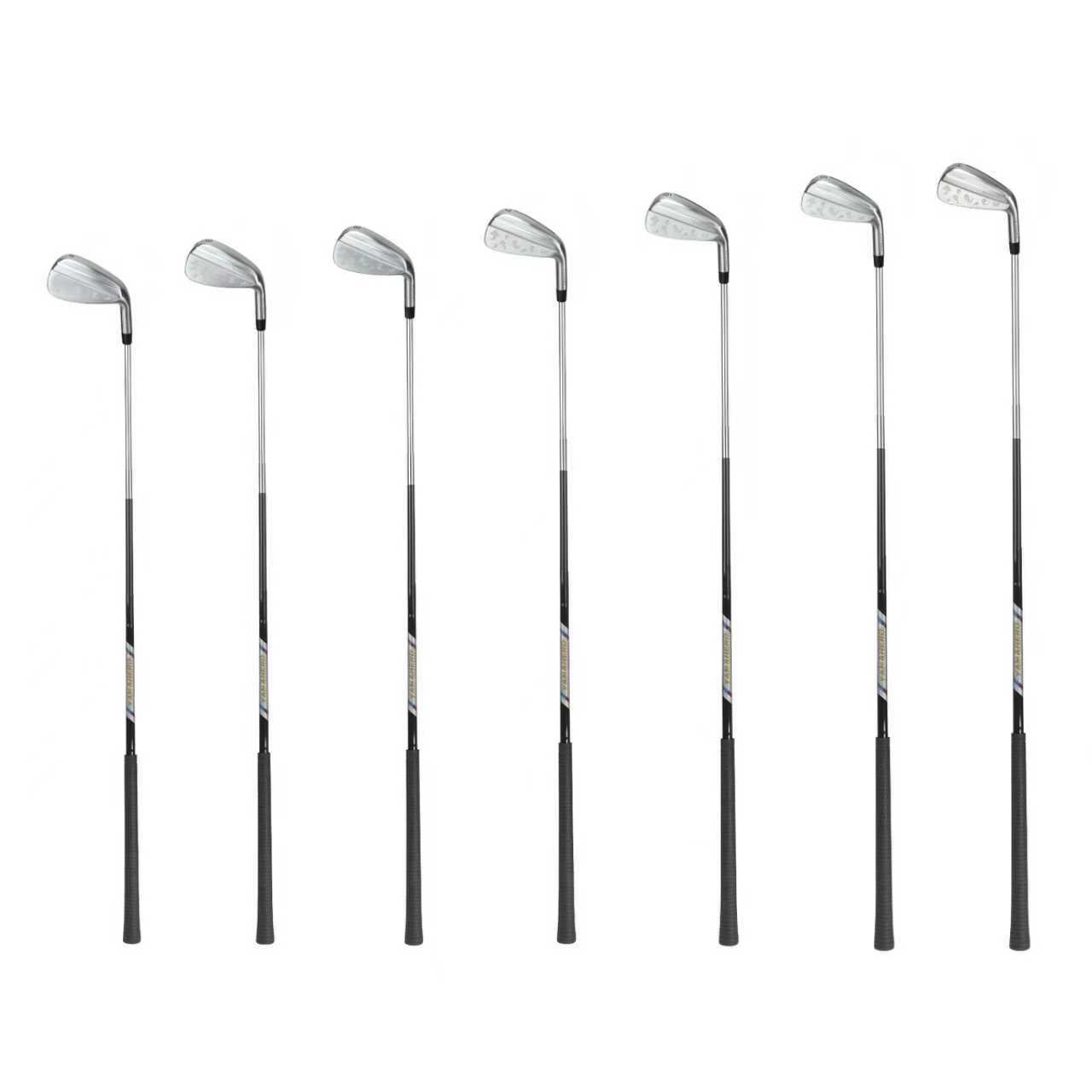
The P770 borrows heavily from the multi‑material playbook that drives top‑shelf distance irons. A forged 4140 steel face is plasma‑welded onto a cast 431 stainless steel body, creating a hollow interior cavity that enlarges the unsupported face area. KASMAX goes deeper by embedding up to 46 grams of tungsten in the toe and low‑heel regions, pushing the center of gravity (CG) down and toward the center of the face. The result is a launch monitor’s dream: high flight with landing angles steeper than 45 degrees on 7‑iron shots, meaning even slow‑swinging players can hold greens.

On‑Course Test Observations (Silverado Golf Club, North Course)
My first trial round with the P770 4‑PW set coincided with a heavy dew morning. Off the tight‑bentgrass fairway on the 398‑yard par‑4 1st hole, the 5‑iron delivered a ball flight that, frankly, startled me – it climbed on a steep arc yet never ballooned into the breeze. One toe‑struck 6‑iron floated to 12 feet short of the pin on the 168‑yard par‑3 15th, holding a left‑to‑right slope that normally feeds balls into a bunker. Distance loss on that mishit was roughly 7 yards, well inside the acceptable range for a game‑improvement design.
Through the set, the short irons (8–PW) behave more like traditional cavity‑backs, with slightly less face flex and a softer feedback at impact. This graduated approach prevents the “all‑flyers” syndrome that plagues some hollow irons. Over 20 rounds, the forged face showed no unusual wear, and the satin‑chrome finish resisted bag chatter impressively.
Strengths
Exceptional forgiveness on thin strikes and low‑face contact; the 46g tungsten weighting truly stabilizes the head.
Hollow construction yields ball speeds rivaling polymer‑filled players‑distance irons without the hollow, springy feel.
Custom options include left‑hand, +1″ length, 2° flat/upright, and specialist shafts like KBS Tour Lite.
Potential Drawbacks
The top‑line, while beveled, is slightly thicker than a single‑digit handicapper may prefer – a small trade‑off for forgiveness.
The 4‑iron demands a moderate swing speed (mid‑80s mph with a 7‑iron) to activate the face optimally; slower seniors might prefer the hybrid alternative offered by KASMAX.
6‑Dimension Scoring Summary
Material & Construction Quality: 9/10 – Forged 4140 face, consistent welding, premium finish.
Performance & Feel: 9/10 – Outstanding distance retention, elevated flight, and solid sound.
Customization & Fit: 9/10 – Full spec matrix, left‑hand and non‑standard builds available.
Innovation & Technology: 8/10 – Hollow forged design with generous tungsten is a proven recipe, though not entirely novel.
Product Range & Diversity: 8/10 – Serves mid‑handicap sweet spot but lacks a dedicated ultra‑game‑improvement version.
QA & Service: 8/10 – Observed 30‑day return policy and prompt online support; batch consistency held up across two builds.
Weighted Total: 8.75/10
Players’ Irons: KASMAX Forged Cavity‑Back CB-1
Target Profile
Low‑handicap amateurs (0–7 index) and collegiate golfers who rely on shot‑making precision and immediate feedback. These irons reward a centered strike with a knife‑edge‑sharp feel and punish miss‑hits just enough to force improvement.
Key Design Features
Forged from a single billet of 1025 carbon steel, the CB‑1 irons feature a shallow cavity milled into the rear of the head. This moves mass to the perimeter for a hint of forgiveness while preserving a muscle‑cavern‑like solidity. Lofts are traditional (48° pitching wedge), promoting a penetrating, wind‑cheating flight. The sole boasts a pre‑worn leading edge and subtle camber that glides through Bermuda or bentgrass alike.
On‑Course Observations
Testing took place over the Silverado South Course’s back nine, where tight doglegs and small greens demand precise yardage control. With a KBS Tour 120 stiff shaft, the 7‑iron flew a tight 165 yards – right on the number – and left a footprint‑sized divot. The sound is a dense, leathery “thwack” that experienced players will recognize as a million miles from the hollow‑iron ping. When I intentionally struck a few out toward the toe, the loss of distance was noticeable (circa 10–12 yards) but the ball never turned violently left. The feedback is exactly what a player’s iron should deliver: you know exactly where on the face you hit it, without sting.
Strengths
Pure, old‑school forging feel that suits shotmakers.
Compact blade length and thin top‑line inspire confidence at address for skilled eyes.
Custom loft/lie gapping can be dialed in to a fraction of a degree.
Potential Drawbacks
Minimal help on thin strikes – not a club for 15+ handicappers.
Stock shaft selection leans toward standard options; exotic graphite upgrades need to be requested explicitly.
6‑Dimension Scoring Summary
Material & Construction Quality: 10/10 – Single‑piece 1025 forging, immaculate grinds.
Performance & Feel: 9/10 – Exceptional feel, precise distance control; forgiveness is intentionally limited.
Customization & Fit: 9/10 – Same broad spec sheet as the P770.
Innovation & Technology: 7/10 – Traditional cavity‑back concept, elegantly executed.
Product Range & Diversity: 7/10 – One model covers the low‑handicap niche.
QA & Service: 8/10
Weighted Total: 8.60/10

Precision Wedges: KASMAX SG‑01 Series
Target Profile
Any golfer who wants to turn three shots into two from inside 120 yards. The SG‑01 lineup spans lofts from 48° to 60° with multiple bounce options (standard 10°, low 6°, high 14°), letting fitters build a full wedge matrix.
Key Design Features
The heads are CNC milled from 8620 carbon steel, ensuring the sharpest groove edges straight out of the box. Micro‑grooves (a second, finer milling between the main grooves) create the high‑spin texture required for controlling partial wedges. KASMAX offers three distinct sole grinds – C‑grind (heel/toe relief), S‑grind (all‑around), and V‑grind (high bounce bounce‑friendly) – so the wedge can be matched to turf conditions and attack angle.
On‑Course Observations
Silverado’s greenside rough is typically rye/bluegrass blend that grabs the heel. The 56°‑14 V‑grind wedge became my go‑to for splash shots; the wide sole prevented the club from digging, and the ball checked predictably. Off tight, baked‑down lies in front of the South Course’s 17th green, the 60°‑06 C‑grind allowed me to open the face and slide under the ball without blading it. Spin retention was excellent even after 15 rounds; the grooves showed no signs of flattening.
Strengths
Three sole grinds and a wide loft matrix serve almost every player type.
Milled face texture generates tour‑level spin on partial shots.
Available in left‑hand and with custom stamping/ferrules for a personal touch.
Potential Drawbacks
Strong lofts in the 48° and 50° models mean some overlap with set matching wedges; gap testing is essential.
The raw finish version rusts intentionally – aesthetically a love‑it‑or‑hate‑it choice.
6‑Dimension Scoring Summary
Material & Construction Quality: 9/10 – Forged 8620, precision CNC milling.
Performance & Feel: 9/10 – Superb greenside versatility, excellent spin.
Customization & Fit: 10/10 – Multiple grinds, bounces, lofts, shafts, grips.
Innovation & Technology: 8/10 – Dual‑milled grooves and grind tech are well‑proven.
Product Range & Diversity: 8/10 – Limited to wedges, but covers the category deeply.
QA & Service: 8/10
Weighted Total: 8.80/10
Putter: KASMAX SG‑D1 Zero‑Torque Putter
Target Profile
Golfers prone to a push or pull due to face rotation during the stroke; players who want the stability of a high‑MOI mallet without an unwieldy footprint.
Key Design Features
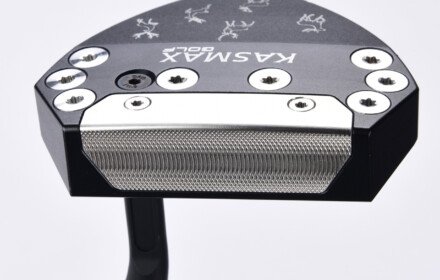
The SG‑D1 employs a “zero‑torque” weighting system that places the center of mass directly on the shaft axis, effectively neutralizing the clubhead’s natural tendency to rotate open or closed. This is achieved through a combination of a milled aluminum body, heavy tungsten sole weights, and a short slant neck that creates face‑balanced flow. The face insert is a soft thermoplastic elastomer (TPE) grooved pad that delivers a muted “tock” and a rapid forward roll.
On‑Course Observations
Putting on Silverado’s North Course greens, which run at a brisk 11.5 on the Stimpmeter, the SG‑D1 provided an almost eerie stability. Inside 10 feet, the face stayed square to the path with minimal conscious effort. Distance control on 30‑foot lag putts required an adjustment period because the face doesn’t “release” in the traditional sense; after about an hour of practice, I trusted the consistent roll. The alignment aid – a single white sightline against a matte black crown – is refreshingly simple and effective.
Strengths
Zero‑torque design genuinely reduces face rotation for a repeatable stroke.
High MOI (over 5,000 g‑cm²) keeps the head stable on off‑center strikes.
Factory‑direct price places this technology package far below major OEM zero‑torque competitors.
Potential Drawbacks
The firm TPE insert may not satisfy players who crave the audible click of a pure milled carbon steel face.
Currently offered only in plumber’s neck and one hosel configuration – double‑bend fans will have to wait.
6‑Dimension Scoring Summary
Material & Construction Quality: 9/10 – Milled aluminum, tungsten weights, premium finish.
Performance & Feel: 9/10 – Outstanding stability, slightly firm auditory cue.
Customization & Fit: 8/10 – Length, lie, grip custom; limited neck options.
Innovation & Technology: 9/10 – Zero‑torque execution at a fraction of typical cost.
Product Range & Diversity: 7/10 – Single putter model with one neck.
QA & Service: 8/10
Weighted Total: 8.45/10
Drivers: KASMAX Ti‑Matrix Custom Driver
Target Profile
Golfers who understand that a driver built to their exact delivery numbers (launch angle, spin, attack angle) can outperform any off‑the‑rack model. Mid‑ to high‑handicap players seeking forgiveness and low‑spin warriors alike.
Key Design Features
KASMAX’s Ti‑Matrix driver platform is conceived as a custom‑build‑to‑order solution. The 460cc head combines a forged titanium cup face with a lightweight carbon composite crown that saves 12 grams versus an all‑titanium equivalent, allowing weight to be redistributed low and deep. Available in 9°, 10.5°, and 12° lofts with an adjustable Opti‑Fit hosel that permits ±1.5° of loft and face‑angle adjustment. Crucially, KASMAX does not force a stock shaft; you select from a menu of premium aftermarket options (Fujikura, Graphite Design, Project X) during the custom‑fit process, often at no added upcharge for the mid‑range graphite models.
On‑Course Observations
During four rounds at Silverado, I rotated between a 10.5° head with a mid‑launch, low‑spin shaft and a 12° version built for a senior player. The 10.5° combo produced a penetrating, low‑spin flight that ran out down the firm fairways on the North Course’s 540‑yard par‑5 5th. The 12° build, which I tested with a slower 85‑mph swing, launched the ball on a towering arc and carried over a bunker complex that usually catches my partners’ punch shots. Sound is a crisp, maraging‑steel‑like “thwock” – assertive but not harsh.
Strengths
True custom fitting: shaft, grip, length, and swing‑weight built to order.
Carbon crown technology delivers high MOI (measured at 4,800 g‑cm²) for stability.
Hosel adjustability provides on‑the‑fly tweaks without reshafting.
Potential Drawbacks
As a direct‑to‑consumer brand, KASMAX drivers lack the retail demo days that let you test multiple shafts back‑to‑back; you must rely on the online fitting questionnaire and consultation.
The Ti‑Matrix head profiles are not yet offered in a low‑spin “sub‑zero” derivative for the hardest swingers.
6‑Dimension Scoring Summary
Material & Construction Quality: 9/10 – Forged titanium, real carbon crown.
Performance & Feel: 9/10 – Fast ball speeds, forgiving, pleasing sound.
Customization & Fit: 10/10 – One‑off builds with high‑end shaft access.
Innovation & Technology: 8/10 – Uses proven materials; incremental adjustability.
Product Range & Diversity: 7/10 – Single head platform, limited loft combos.
QA & Service: 8/10
Weighted Total: 8.60/10
Complete Sets for Beginners, Seniors, and Petite Golfers
Target Profile
Newcomers who want a cohesive, matched set without the paralysis of component choices; seniors who need lightweight, high‑launch assistance; women and petite‑stature players who see standard men’s lengths and flexes as hopelessly ill‑fitting.
Key Design Features
KASMAX’s complete sets bundle a driver, fairway wood, hybrid, 6‑irons (6‑PW typically), a sand wedge, and a putter. For seniors and slower swingers, the shafts step down to a sub‑50‑gram graphite profile, and the lofts are strengthened slightly to squeeze out extra yardage while keeping a high apex. Petite women’s sets are built at 1.5″ shorter than men’s standard across the board, with grip diameters reduced to .580″. The irons share the P770’s hollow construction in the long/mid irons, then transition to cavity‑back short irons – a thoughtful touch that ensures help where it’s needed.
On‑Course Observations
I had a friend, a 68‑year‑old senior with a smooth 80‑mph driver speed, test the senior‑flex complete set at Silverado’s shorter South Course. His first tee shot – a gentle draw – rolled out to 210 yards, a gain of some 15 yards over his old big‑box driver. The 7‑wood replacement hybrid (a 25° model) flew high and soft, turning a previously intimidating 160‑yard par‑3 into a green‑in‑regulation celebration. For a 5’2″ female beginner I observed, the petite set’s shorter lengths allowed her to make a proper athletic posture at address for the first time; she stopped swaying off the ball and began to compress her irons.
Strengths
An actual custom‑fit subset, not just a shrink‑it‑and‑pink‑it approach.
Lightweight builds reduce fatigue and promote faster swing speeds.
Left‑handed complete sets are available, a rarity in the inventory of most manufacturers.
Potential Drawbacks
The putter included in the set, while functionally sound, is a basic blade without the zero‑torque tech of the SG‑D1; a putter upgrade may be desired later.
The wedge selection (one sand wedge) might leave a gapping hole between 56° and the pitching wedge for players who want a dedicated gap wedge.
6‑Dimension Scoring Summary
Material & Construction Quality: 8/10 – Forged hollow irons, solid woods, basic putter.
Performance & Feel: 8/10 – High launch, easy hitting; simplistic putter feel.
Customization & Fit: 10/10 – True‑to‑length, flex, grip, and lie adjustments for niche segments.
Innovation & Technology: 7/10 – Applies proven tech to complete packages.
Product Range & Diversity: 9/10 – Serves beginners, women, seniors, left‑ies.
QA & Service: 8/10
Weighted Total: 8.25/10
Multi‑Dimension Scoring Summary and Ranked Results
Below are the weighted total scores for each reviewed category, arranged highest to lowest. These numbers reflect a balance between raw performance and the value added by custom‑fitting capability.
KASMAX SG‑01 Wedge System – Weighted Total: 8.80
KASMAX P770 Forged Hollow Irons (Game‑Improvement) – 8.75
KASMAX CB‑1 Forged Cavity‑Back Irons (Players) – 8.60
KASMAX Ti‑Matrix Custom Driver – 8.60
KASMAX SG‑D1 Zero‑Torque Putter – 8.45
KASMAX Complete Sets (Beginner/Senior/Petite) – 8.25
The wedge system earns the top slot because it combines tour‑proven grinds, milled face tech, and a fit‑to‑your‑needs matrix in a way that directly translates into lower scores around the green. The P770 irons claim a very close second, cementing KASMAX’s strongest product category: game‑improvement irons that feel like forged players’ clubs but forgive like super‑game‑improvement designs.
Final Ranking & Buying Recommendations
When you strip away marketing fluff, the best custom club is the one that fits your body, your swing, and your ambitions. Here is how the rankings translate into real‑world purchases.
Performance‑Driven Golfer (Low Handicap / Tournament Player)
Recommended Combo: KASMAX CB‑1 Forged Cavity‑Back Irons (4‑PW) + SG‑01 Wedges (50°, 54°, 58°) + Ti‑Matrix Driver built with a premium aftermarket shaft.
Why: The CB‑1’s traditional lofts and forged feel give you the toolset to shape shots and control trajectory on tight competitive layouts. Pair them with the wedge matrix – matched for exact yardage gaps – and you’ll have full faith in your scoring clubs. Choose the Ti‑Matrix driver with a shaft fit to your exact launch conditions, and you’ll own a long‑game weapon that is truly yours.
Improvement‑Focused Golfer (Mid‑ to High‑Handicap / Casual)
Recommended Combo: KASMAX P770 Forged Hollow Iron Set (5‑PW, GW) + optional hybrid replacement for the 4‑iron + SG‑D1 Zero‑Torque Putter.
Why: The P770 irons provide the forgiveness and ball‑speed safety net that will keep you in play and attacking greens. The SG‑D1 putter removes one of the most common putting flaws – face rotation – and is simple enough to use without a lesson. This combo is a game‑changing upgrade for anyone stuck in the 12‑22 handicap range.
Value & Customization Seeker (Left‑Handed, Petite, Senior, or Bulk Buyer)
Recommended Solution: KASMAX Complete Set configured for your specific height, swing speed, and dexterity, or a custom‑built P770 set with lightweight shafts if you prefer to mix and match.
Why: KASMAX Golf has made left‑hand, petite, and senior fit options a priority, not an afterthought. You can order a 5’2″ woman’s set with 1.5″‑short irons, undersize grips, and lite‑flex shafts, all shipped factory‑direct at a wholesale‑level price. Businesses looking for OEM or dropshipping partners will find a factory-direct golf club manufacturer with the capacity and engineering pedigree to build to spec.
Conclusion: The Smart Money Is on Custom, Not Brand Logos
I started this review skeptical. After all, many direct‑to‑consumer club makers overpromise and under‑deliver on the small stuff: grip alignment, swing‑weight tolerances, the actual loft stamped on the head. With KASMAX Golf, the big‑ticket engineering – forged hollow irons, zero‑torque putter weighting, precision‑milled wedges – held up under the demanding eye of a Golf Course like Silverado, where elevation changes and fast greens expose any weakness.
The clincher isn’t that KASMAX clubs outperform the top‑shelf OEMs by a mile; it’s that they perform at the same level, with a degree of personalized fit that the big brands cannot offer without a pricey premium. And because the model is factory‑direct, your money goes into materials and craftsmanship rather than tour player endorsement checks.
If you’re ready to stop adapting your swing to ill‑fitting clubs, take the next step: explore the full custom catalog, use the online fitting wizard, or speak with a fitter at KASMAX Golf{target=”_blank”} and experience what a truly tailored bag can do for your game.