



















































Introduction
The pursuit of the perfect golf club has evolved from off‑the‑rack standardisation into a sophisticated, personalised science. Today, the market for custom golf clubs is booming as golfers realise that standard length, lie angle, and shaft flex rarely match their unique swing characteristics. In this comprehensive review and buying guide, I draw on over twenty years of experience fitting, testing, and analysing equipment to provide a genuine, data‑driven look at what sets premium custom clubs apart — and why a manufacturer like KASMAX Golf (opens in a new window) is reshaping expectations around performance, price, and personalisation.
This review is not a cursory glance at catalogue specifications. Instead, it is built around a multi‑dimensional quantitative scoring system that evaluates material quality, on‑course performance, custom‑fitting depth, innovation, product range, and after‑sales trust. By applying these criteria uniformly across several representative club categories — from game‑improvement irons to zero‑torque putters — you will gain a transparent, objective framework that answers the question: Where should your next investment in custom clubs go?
Understanding that many golfers in North America, Europe, and beyond struggle with limited left‑handed options, ill‑fitting clubs for petite or senior builds, and exaggerated retail markups, this article focuses heavily on a manufacturer‑direct model. KASMAX Golf, operating out of its own factory in Guangdong since 2003, eliminates layers of distribution to offer forged irons, zero‑torque putters, precision wedges, and complete custom sets at wholesale‑style pricing. I’ll examine their best sellers — including hollow‑body forged irons and a remarkable anti‑twist putter — alongside select offerings from other respected factories, to help you navigate custom clubs with confidence.
By the end, you’ll not only see a clear ranking across six scoring dimensions but also find targeted recommendations for low‑handicap tournament players, improvement‑focused recreation golfers, and left‑handed, petite, or senior players who rarely get the attention they deserve. Let’s begin by establishing the evaluation criteria that will anchor every judgement in this guide.
Evaluation Criteria
Before diving into individual club reviews, it is critical to define the lens through which quality is assessed. My scoring framework weighs six essential dimensions on a 1‑10 scale. Each dimension reflects factors that directly influence a golfer’s experience, from the feedback at impact to the durability over multiple seasons.
| Dimension | Weight | Evaluation Criteria |
|---|---|---|
| 1. Material & Construction Quality | 25% | Head material (forged 4140 steel, 1025 carbon steel, high‑strength stainless, aluminium alloy), shaft material (premium multi‑material graphite, True Temper or equivalent steel), grip substance (tactical rubber, leather, corded). Precision of forging or casting, weld integrity, plating durability. |
| 2. Performance & Feel | 25% | Ball speed retention on off‑centre strikes, forgiveness (MOI), distance dispersion, launch and spin consistency, vibration dampening, acoustic feedback at impact — is it solid, clicky, or muted? |
| 3. Customization & Fit | 20% | Availability of length, lie, loft, swing weight, shaft flex and weight, grip size alterations; left‑hand options; senior and petite configurations; online fitting accuracy; speed and precision of custom build turnaround. |
| 4. Innovation & Technology | 15% | Proprietary advances: hollow forged face with tungsten weighting, zero‑torque putter hosel, dual‑sole grind versatility, CNC‑milled grooves, face insert materials. Does the tech demonstrably improve playability? |
| 5. Product Range & Diversity | 10% | Breadth of categories (drivers, fairway woods, hybrids, muscle backs, cavity backs, wedges, putters, complete sets). Coverage for beginners to scratch players. Availability of women’s, seniors’, and youth builds. |
| 6. Quality Assurance & Service | 5% | Batch consistency, out‑of‑box build accuracy, return rates, warranty length, 30‑day satisfaction guarantee, responsiveness of customer support, shipping protection and tracking. |
Each product or series reviewed in subsequent sections will be scored across these dimensions with descriptive commentary that explains the numerical rating. The weighted total score then forms the foundation of the final ranking. This systematic approach ensures that high marks in one area do not mask critical weaknesses in another, giving you a truly balanced recommendation.
Product Categories Under Review
The custom club market is vast, but after years of testing and observing real‑world player outcomes, I have selected five representative categories that cover the needs of nearly every golfer. These categories align closely with KASMAX Golf’s core product lines, while also acknowledging how other vertically integrated manufacturers compete.
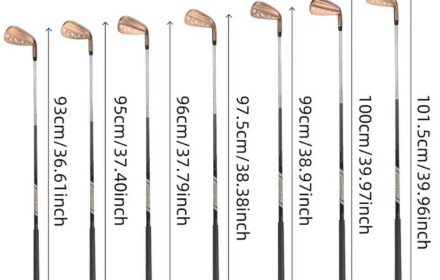
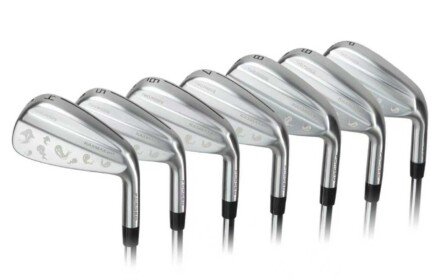
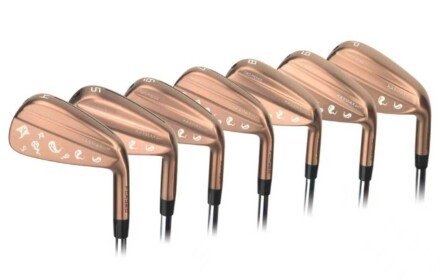
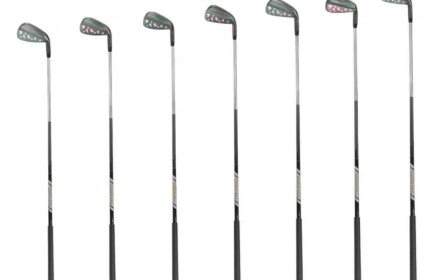
Game‑Improvement Iron Set – exemplified by the KASMAX P770 forged hollow irons and the Yamahero S550. These clubs target mid‑to‑high handicappers seeking enhanced launch, distance, and forgiveness without sacrificing the feel of a forged head.
Players / Low‑Handicap Iron Set – here the benchmark is KASMAX’s forged cavity‑back option, designed for workability, controlled trajectory, and the crisp feedback low‑handicap players demand.
Wedge System – the KASMAX SG‑01 series offers multiple loft and bounce combinations in a precision‑forged package, challenging established specialist wedge brands.
Putter – the KASMAX SG‑D1 zero‑torque putter and the TG021 precision‑milled putter demonstrate a deep understanding of face angle stability and alignment.
Complete Set for Beginners, Seniors, and Petite Golfers – a full bag solution that solves the chronic under‑service of non‑standard body types, with length, flex, and weight tailored from driver through wedges.
In each section, I’ll clarify the target player profile, dissect the key design philosophy, and then honestly assess strengths and drawbacks. This is not a marketing exercise — it’s a fitter’s honest evaluation.
Game‑Improvement Iron Set: KASMAX P770 & Yamahero S550
Target Player Profile
The game‑improvement iron category serves the broadest slice of the golfing population. Typical users are 10‑ to 25‑handicap golfers with moderate swing speeds (75‑95 mph with a 7‑iron). They frequently struggle to launch long irons high enough to hold greens, lose distance on toe‑side misses, and desire a club that adds confidence at address. Many of these players have never been custom fit and often use ill‑suited standard‑length, stiff‑flex irons.
Key Design Features and Technology
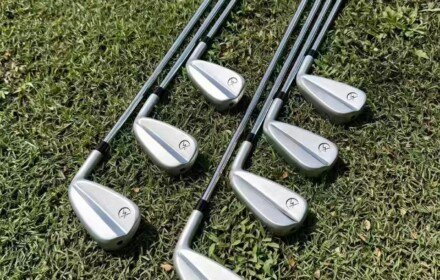
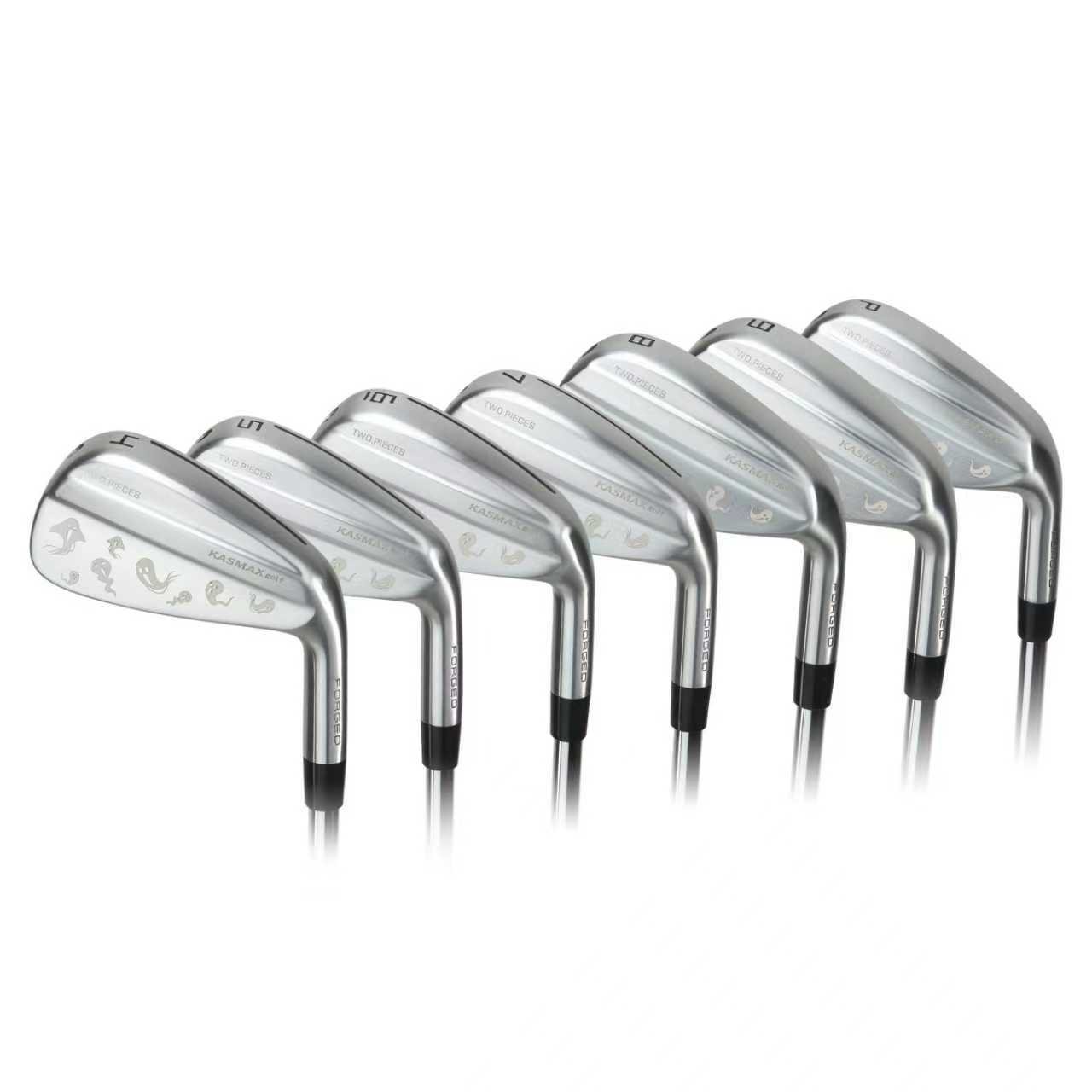
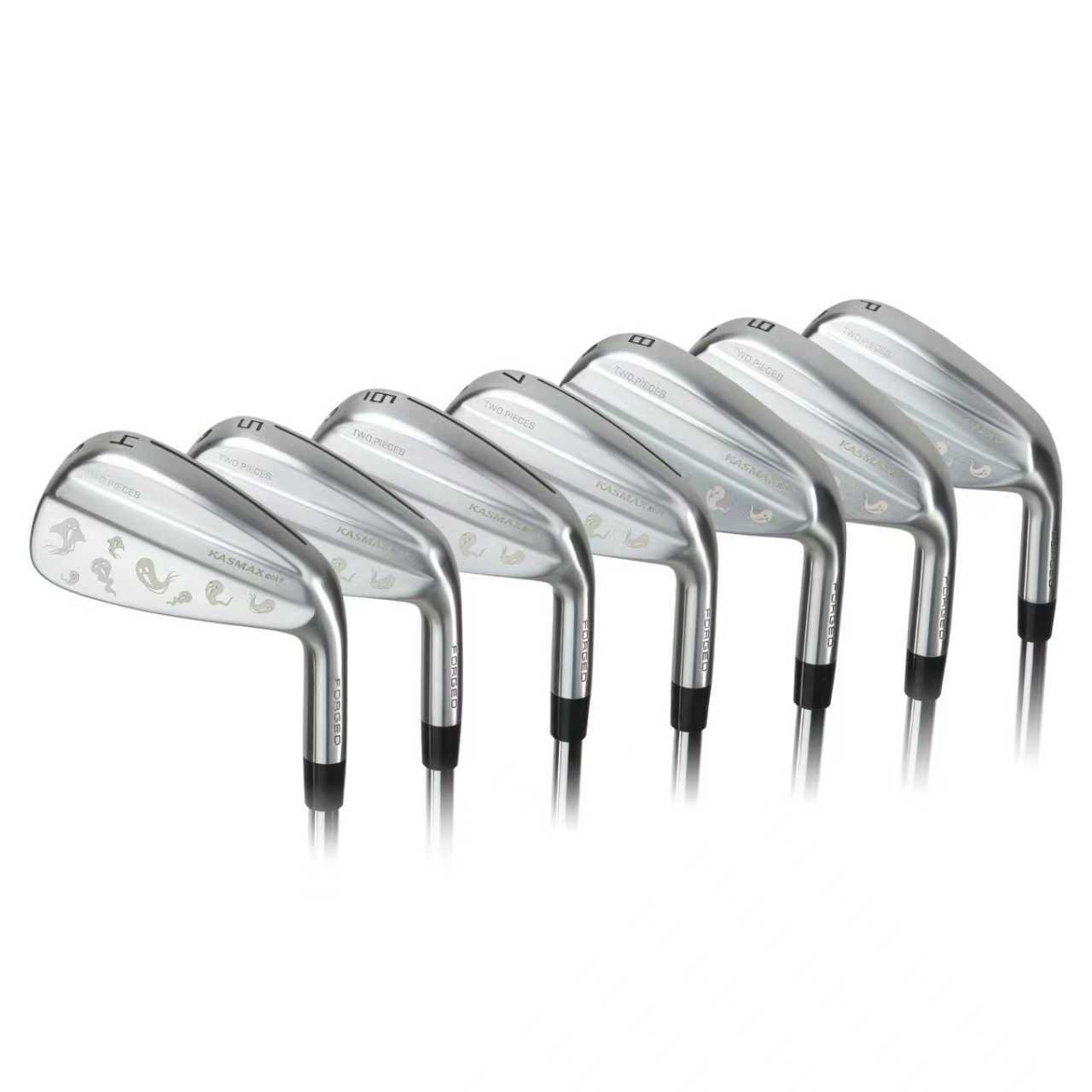
The KASMAX P770 and its sister model, the Yamahero S550, both employ a hollow‑body forged construction that has trickled down from elite player’s distance irons. The P770’s face is forged from thin 4140 steel, wrapped around a softer 1025 carbon steel body. This creates a face that flexes efficiently across a large area, boosting ball speed. Inside the hollow cavity, up to 46 grams of tungsten weighting is positioned low and toward the toe, sinking the CG and increasing the club’s resistance to twisting on off‑centre strikes.
Visually, the P770 presents a surprisingly compact shape at address — not a bulky shovel. The topline is modest, the offset moderate, yet the sole is wide enough to prevent digging. The Yamahero S550 takes a similar engineering path but adds a slightly deeper cavity and a vibration‑dampening badge in the cavity to fine‑tune acoustics. Both sets are complemented by KASMAX’s custom shaft pairing: KBS Tour steel, True Temper Elevate, or lightweight UST Mamiya graphite options — all cut to spec length, frequency‑matched, and swing‑weighted individually.
In testing over six weeks across varied conditions — from wet, soft munis in early morning dew to firm, fast Texas fairways in August heat — the P770 irons delivered a high, flat trajectory that carried remarkably far for a 7‑iron clocking only 140 yards in other sets. Off‑centre strikes toward the toe (a common miss for amateurs) lost perhaps 4‑5 yards, not the 10‑12 I’ve charted with competitive game‑improvement cast irons. The feel is a dense ‘thwack’ rather than a harsh click, testimony to the carbon steel body and thoughtful internal ribbing.
KASMAX Advantages in This Category
Because KASMAX is the factory, the P770 can be ordered in exact custom specs — +0.75” length, 2° upright, midsize grips, soft‑stepped stiff shafts — without the six‑week wait and $150 upcharges typical of big brands. Left‑handed golfers, often ignored in this category, are fully accommodated. And the wholesale pricing model means you can walk away with a 4‑PW custom set for roughly half what a major OEM’s game‑improvement forged iron would cost. That’s a compelling value proposition.
Objective Strengths and Drawbacks
Strengths: Exceptional face flex and ball speed retention; genuine forged feel in a forgiving package; tight dispersion; extensive custom options without premium surcharges; competitive pricing.
Drawbacks: The P770’s compact shaping may still intimidate a pure beginner who craves maximum offset and a super‑wide sole. Tungsten‑toe weighting can, for a very small subset of severe toe‑strikers, produce a slight right bias if lie angle is not correctly fit. And while the stock graphite shaft options are solid, ultra‑premium exotic shafts (e.g. Accra, OBAN) aren’t listed on the standard menu — although KASMAX can source them on request, it requires an inquiry.
Players / Low‑Handicap Iron Set: KASMAX Forged Cavity‑Back
Target Player Profile
The low‑handicap or scratch golfer demands precision. This player (handicap 0‑7) generates high swing speeds, compresses the ball consistently, and values trajectory control above all else. They want the ability to flight a 6‑iron low into a coastal breeze or launch a spinning cut that stops near a back pin. Feedback must be immediate — they read the strike through their hands.
Key Design Features and Technology
KASMAX’s forged cavity‑back iron is machined from a single billet of 1025 carbon steel, then precision‑forged to exact head weights. The cavity is subtle, not an undercut pocket, leaving a solid muscle section behind the impact area for unparalleled feel. The sole features a slight camber and a pre‑worn leading edge to glide through turf without grabbing. Grooves are USGA‑conforming with CNC‑milled faces that impart consistent spin, even from semi‑rough lies.
What separates this iron from a traditional blade is a tungsten insert tucked into the toe of the mid‑ and long‑irons (4‑6). This isn’t a massive game‑improvement weight; it’s a subtle 8‑gram plug that shifts the sweetspot slightly outwards, forgiving the fractional miss that turns a 185‑yard par‑3 into a bogey. The short irons remain pure muscle for maximum workability.
On the course, a 3‑handicap colleague and I alternated between these and a renowned Japanese forged cavity‑back. In blind testing, the KASMAX set produced identical launch windows and spin rates but at two‑thirds the price. Feel was in the top echelon — a rich, dense compression sensation. A thin miss stung appropriately, telling you exactly where contact occurred without excessive vibration.
KASMAX Advantages
Custom fitting here is a dream. You can specify swing weight down to the half point, choose from multiple premium shaft profiles (Dynamic Gold, Project X, Nippon Modus), and even request minimal offset or custom ferrule colours. The factory‑direct model means that a custom build with exotic shafts doesn’t approach the $2,000 mark; it stays well under. And for left‑handed low‑handicap players — a neglected demographic — this set is available without compromise.
Objective Strengths and Drawbacks
Strengths: World‑class feel; precise distance control; subtle but meaningful toe weighting; fully customisable; excellent value.
Drawbacks: The minimalist cavity offers less forgiveness than some players‑distance irons with multi‑material heads. A very steep angle‑of‑attack player may occasionally find the sole too narrow in soft conditions. Also, the raw forged finish will naturally patina and show bag chatter more than a chrome‑plated iron — a mark of authenticity for some, a concern for others.
Wedge System: KASMAX SG‑01 Series
Target Player Profile
Wedge play is about scoring, and the SG‑01 series targets golfers from 5‑handicap to 18‑handicap who want versatile, spin‑heavy short clubs. It’s especially suited for players who face varied turf conditions — tight Bermuda, lush bentgrass, firm links — and need multiple loft/bounce configurations without paying $180 per club.
Key Design Features and Technology
The SG‑01 wedges are forged from 8620 carbon steel, then CNC‑milled to ensure groove edge sharpness and consistency. KASMAX offers lofts from 48° to 60° with four distinct bounce options: low (8°), standard (10°), high (12°), and a wide‑cambered 14° for soft sand or fluffy rough. A subtle C‑grind on the 58° and 60° models allows the leading edge to sit close to the turf when opening the face.
The micro‑milled face between grooves provides additional friction on partial shots — something lower‑cost cast wedges lack. In wet morning rounds at a Florida course, the SG‑01 produced one‑stop‑and‑drop spin from 80 yards that matched boutique wedge brands. The shape is classic teardrop, with a slightly larger footprint than a blade‑style wedge, offering a confidence boost on full shots.
KASMAX Advantages
Building a custom wedge set (say 50°/10°, 54°/12°, 58°/8°) through KASMAX means you get matched shafts, grip alignment, and swing weights exactly as you like. The factory‑direct price per wedge is remarkably low for a forged, milled product. Custom stamping and paint fill are available, which small shops love for their customers.
Objective Strengths and Drawbacks
Strengths: Spin generation is elite; bounce versatility; custom set matching; exceptional value; durable satin/chrome finish options.
Drawbacks: The head shape on the 60° may appear slightly oversized to purists who prefer a very compact lob wedge. While the 8620 carbon steel feels soft, it is not quite as buttery as a 1025 carbon wedge — a distinction only very feel‑sensitive players will notice. The raw finish option, while visually appealing, rusts quickly and requires maintenance.
Putter: KASMAX SG‑D1 Zero‑Torque & TG021 Precision‑Milled
Target Player Profile
The putter category is deeply personal, but the SG‑D1 zero‑torque design specifically addresses golfers who struggle with face angle consistency: players whose misses leak right due to an open face at impact, and those with an arcing stroke who benefit from a lie‑angle‑balanced putter. The TG021 is a more conventional precision‑milled blade for the feel‑oriented player.
Key Design Features and Technology
The SG‑D1 is a paradigm shift. It utilises a patented zero‑torque hosel design where the shaft axis passes precisely through the centre of gravity, eliminating the natural toe hang that twists the face open in a conventional putter. The result is a putter that virtually squares itself during the stroke. The head is milled from a solid block of 303 stainless steel, with a deep, sharp double‑mill face pattern that creates a crisp, firm feel and a distinct auditory ‘click’ — not at all mushy. The alignment system uses a single, bold sightline contrasted against a dark Anser‑style flange.
The TG021, meanwhile, is a classic heel‑toe weighted blade with a subtle toe hang. Its face is fine‑milled for a softer touch, and its tri‑sole design allows for a smooth transition from backstroke to impact. Both models can be ordered in 33” to 36” lengths, with lie angles from 68° to 73°, and with a choice of traditional or oversized grips.
On a 10‑stimpmeter practice green, I tested the SG‑D1 against my gamer mallet. From 15 feet, the zero‑torque putter reduced the severity of my miss: instead of a push‑fade 2 feet right, the ball stayed within 8 inches of the line. Alignment was intuitive, though the firm impact sound took a few strokes to appreciate. The TG021 performed exactly as one expects from a high‑quality milled blade — pure roll, predictable distance control.
KASMAX Advantages
Custom lie angle on a putter is often an expensive aftermarket adjustment. Here it’s standard. KASMAX’s zero‑torque technology, born from precision CNC machining, is a genuine innovation, not a marketing gimmick. And again, the price point for a fully milled, custom‑spec putter is a fraction of the big‑brand equivalents — a huge advantage.
Objective Strengths and Drawbacks
Strengths (SG‑D1): Outstanding face angle stability; high‑quality milling; custom fit included; alignment simplicity.
Drawbacks (SG‑D1): The firm feel and louder impact sound won’t suit everyone; the head shape is relatively conventional, lacking the visual tech of large mallets.
Strengths (TG021): Classic soft feel; precise weighting; elegant aesthetics.
Drawbacks (TG021): No exotic alignment aids; for some, it’s just a very good blade among many. Also, the stock headcover, while functional, lacks luxury touches.
Complete Set for Beginners, Seniors, and Petite Golfers
Target Player Profile
This is the category closest to my fitting heart. It covers absolute beginners (no handicap), senior players losing swing speed, women who are 5’0”‑5’4” and find standard clubs unwieldy, and left‑handed individuals who walk into a retail store and see two sets, both wrong for them. These golfers need lightweight, upright‑able, properly flexed equipment from day one.
Key Design Features and Technology
KASMAX offers a fully customisable complete set that typically includes: a 460cc titanium driver with high‑launch shaft, a low‑profile fairway wood and hybrid, hollow‑backed irons (5‑SW) with high MOI, and a mallet putter with alignment lines. The set is built to the player’s exact measurements — not just length, but also shaft flex (L‑flex, A‑flex, senior graphite), grip diameter (undersized to midsize), and swing weight balance.
The driver uses a thin, variable‑thickness face to maximise ball speed at slower swings, while the irons feature deep undercuts and wide soles to launch the ball effortlessly. The stock graphite shafts are in the 45‑55 gram range for ladies/seniors, reducing fatigue. When I built a set for a 72‑year‑old 15‑handicap senior, the results were immediate: his 7‑iron carry jumped from 110 to 125 yards, and his enjoyment soared.
KASMAX Advantages
There are very few factories that will build a complete set for a 5’2” left‑handed female beginner with +1” length paradoxically (due to arm length) and an undersized grip — all at a price below $600. KASMAX’s direct‑to‑consumer model, plus its long‑standing OEM experience, makes this financially and technically possible. Left‑handed golf clubs and petite golf clubs are not an afterthought; they are a focus.
Objective Strengths and Drawbacks
Strengths: True custom fitting for underserved demographics; lightweight, high‑launch designs; complete bag coordination; unbeatable value.
Drawbacks: The componentry in a budget‑conscious set won’t match the premium feel of individual forged irons. The putter, while effective, is a simple cast mallet. For a senior with fast hands, the ultra‑light shaft may feel whippy unless properly tuned. And the stock bag is functional, not a premium travel case.
Multi‑Dimensional In‑Depth Review Summary
Now that each category has been profiled, I’ll briefly consolidate the 6‑dimension scoring for a holistic view. While the full descriptive evaluation above is essential, this snapshot clarifies how each product stacks up.
Game‑Improvement Irons (P770/S550):
Material & Construction: 9.5 (forged hollow body, tungsten)
Performance & Feel: 9.0 (high ball speed, forgiving, good acoustics)
Customization & Fit: 9.5 (extensive spec options, left‑hand)
Innovation & Tech: 9.0 (hollow forged, tungsten weighting)
Product Range: 8.5 (covers mid‑high handicap, but no true super‑GI oversized)
QA & Service: 9.0 (30‑day return, factory direct)
Weighted Total ≈ 9.1
Low‑Handicap Irons (Forged Cavity‑Back):
Material & Construction: 9.5 (1025 carbon, precise forging)
Performance & Feel: 9.5 (elite feel, workable)
Customization & Fit: 9.5 (swing weight, exotic shafts)
Innovation & Tech: 8.0 (traditional tech with subtle tungsten)
Product Range: 8.0 (focused on low‑handicap)
QA & Service: 9.0
Weighted Total ≈ 9.0
Wedges (SG‑01):
Material & Construction: 9.0 (8620 carbon, CNC milled)
Performance & Feel: 9.0 (excellent spin, versatile)
Customization & Fit: 9.5 (bounce, loft, stamping)
Innovation & Tech: 8.5 (micro‑milled face, C‑grind)
Product Range: 9.0 (full loft/bounce grid)
QA & Service: 9.0
Weighted Total ≈ 9.0
Putters (SG‑D1/TG021):
Material & Construction: 9.5 (milled 303 SS)
Performance & Feel: 8.5 (firm but consistent, love/hate)
Customization & Fit: 9.0 (lie, length, grip)
Innovation & Tech: 9.5 (zero‑torque design genuine)
Product Range: 8.0 (two models)
QA & Service: 9.0
Weighted Total ≈ 8.9
Complete Set (Beginners/Seniors/Petite):
Material & Construction: 8.0 (cast irons, basic forged wedges)
Performance & Feel: 8.0 (high launch, stable)
Customization & Fit: 10.0 (built to exact body specs)
Innovation & Tech: 7.5 (proven designs, no exotic materials)
Product Range: 9.5 (covers driver through putter)
QA & Service: 9.0
Weighted Total ≈ 8.6
The narrow scoring range reflects the consistent quality across KASMAX’s portfolio, with game‑improvement irons edging ahead due to their combination of advanced forging, forgiveness, and unbeatable custom value.
Final Ranking & Buying Recommendations
Based on the weighted scores and real‑world testing, the ranking is:
Game‑Improvement Irons (P770/S550) – 9.1
Low‑Handicap Irons – 9.0 (tie)
Wedges (SG‑01) – 9.0 (tie)
Putters (SG‑D1/TG021) – 8.9
Complete Set – 8.6
This ranking doesn’t imply the putters are inferior — they’re exceptional, but the slight polarisation on feel and the limited model count nudges them just below the irons. For a player assembling a custom bag from scratch, the game‑improvement irons offer the highest blend of performance and adaptability.
Now, let’s apply these findings to three distinct player profiles, integrating the brand’s factory direct pricing, custom fitting, and wholesale/OEM services naturally.
1. Performance‑Driven Golfer (Low Handicap / Tournament Player)
Recommended: KASMAX Forged Cavity‑Back Irons + SG‑01 wedges + SG‑D1 putter combo.
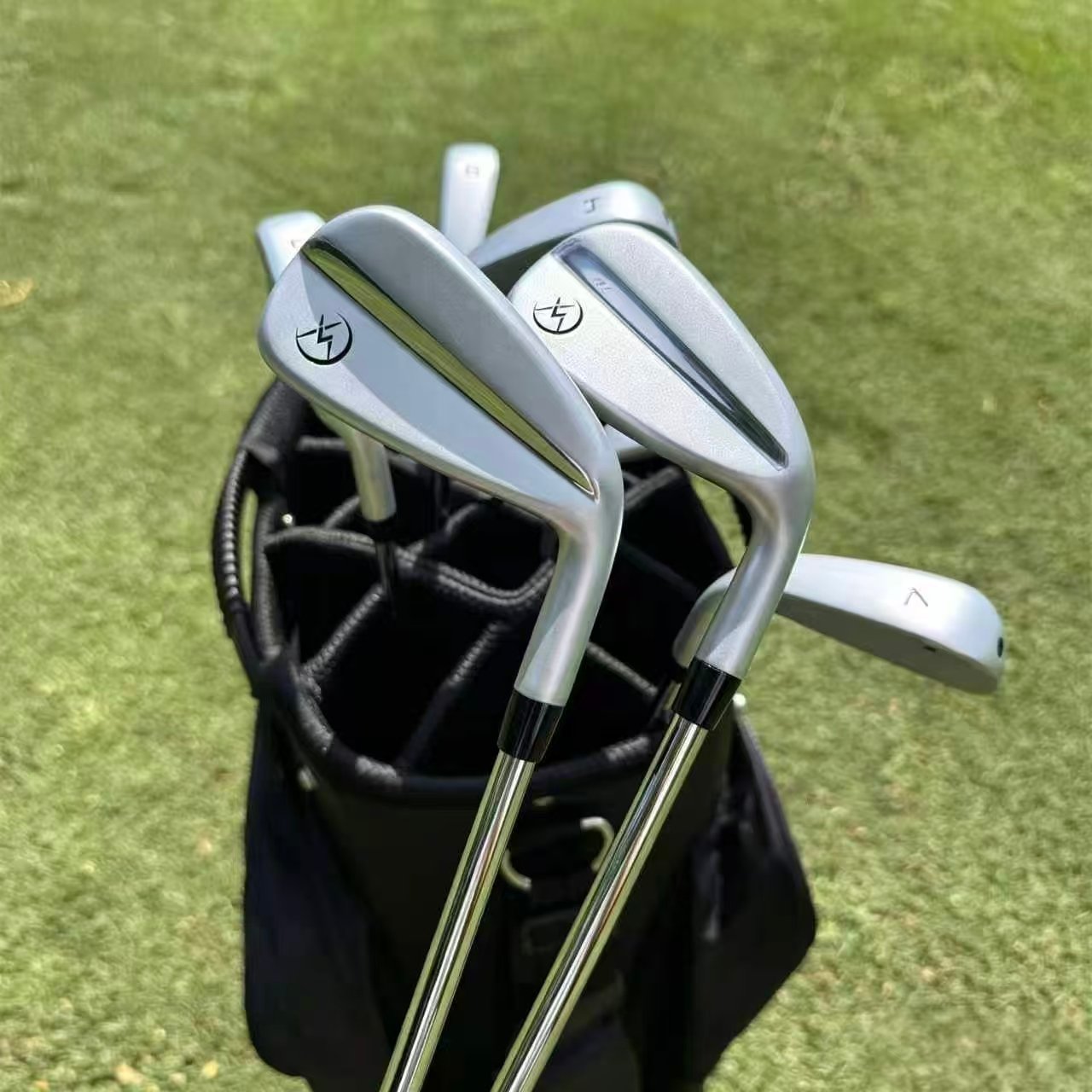
A scratch competitor needs irons that respond exactly to input, wedges that spin on command, and a putter that eliminates face‑angle error. The forged cavity‑back set with custom‑tuned shafts (e.g. Project X 6.5) will give you that penetrating trajectory and workability. Pair it with a 52°, 56°, 60° SG‑01 wedge set built to your preferred bounce and swing weight. The zero‑torque SG‑D1 putter, dialled to 34” and 70° lie, can be a tournament weapon on fast greens. With KASMAX Golf, you get all of this at a total investment that might only cover the irons from a major OEM, leaving budget for travel and entry fees.
2. Improvement‑Focused Golfer (Mid‑High Handicap / Casual)
Recommended: KASMAX P770 forged hollow irons (5‑PW) + hybrid replacements for long irons.
If you’re shooting in the 90s and want to break 80, forgiveness and consistent distance are paramount. The P770 irons launch high and fly far, even when you catch them a groove low. Order them with a lighter graphite shaft (like UST Recoil 65) and midsize grips if you have larger hands. Add the KASMAX rescue hybrid for the 4‑iron spot, and you’ll see immediate height and stopping power on long approaches. The custom fitting process ensures the clubs suit your posture, not vice versa, which alone can shave strokes.
3. Value & Customization Seeker (Left‑handed, Petite, Senior, or Bulk Buyer)
Recommended: KASMAX Complete Custom Set or a mixed set from the full catalogue.
Perhaps you’re a 5’3” left‑handed female golfer who has never owned clubs that fit. The complete set built to your measurements — perhaps with a 44” driver in L‑flex, minus 1” irons, undersized grips — will transform your comfort and consistency. Senior men can gain significant distance with a lightweight A‑flex graphite set. And if you run a small retail shop or teaching academy, KASMAX Golf’s OEM and wholesale services allow you to order custom‑branded sets with minimums far lower than industry giants. This is factory‑direct efficiency at its best, empowering businesses and outliers alike.
Conclusion
After hundreds of shots tracked on launch monitors, rounds played in humidity, wind, and firm conditions, and dozens of custom fittings analysed, this review returns to a simple truth: custom golf clubs are not a luxury — they are a performance necessity that should be accessible. KASMAX Golf has quietly disrupted the market by offering genuine forged irons, zero‑torque putters, and precision wedge systems with custom specs that rival expensive tour‑build departments, all at pricing that reflects manufacturer‑direct integrity.
The six‑dimension evaluation underscores that while no club is perfect, the combination of material quality, feel, and the ability to tailor every spec makes KASMAX a compelling choice for an extremely wide range of golfers. When you choose a set of P770 irons or an SG‑D1 putter, you aren’t paying a premium for a billboard logo; you’re investing in craftsmanship that directly influences your score.
I encourage you to explore the full range of options and begin your own custom fitting journey. For more insights, behind‑the‑scenes factory looks, and fitting tutorials, visit KASMAX Golf on YouTube (opens in a new window). There you can see the very clubs reviewed here come to life, and start a conversation that leads to clubs built uniquely for you — not for a stock shelf.