




















































A Comprehensive Review and Buying Guide for Custom Golf Clubs
The quest for the perfect set of golf clubs is as personal as a fingerprint. Off‑the‑rack equipment serves the masses, but for golfers who demand equipment that mirrors their swing, physique, and ambitions, the custom route is no longer a luxury—it’s a necessity. Over the past decade, direct‑to‑consumer manufacturing has dissolved the price barrier that once confined custom building to the tour van, and few brands embody this shift as transparently as KASMAX Golf{:target=”_blank”}. With twenty‑two years of factory‑floor experience, KASMAX has engineered a line of clubs that hinge on advanced metallurgy, precise assembly, and a fitting system designed for the real‑world golfer—left‑handed, petite, senior, or low‑handicap.
This review is not a hasty range session boiled down to marketing bullet points. It is the distillation of ongoing testing across multiple course conditions, swing types, and seasonal quirks. We spent weeks collecting data at a tight, tree‑lined New Jersey track—Stockton Golf Club, just outside Princeton—where elevation changes and small greens punish anything less than dialed‑in gapping. Later, we brought the same clubs to a wide‑open Florida layout to gauge wind performance. TrackMan numbers, on‑course scoring trends, and direct input from a panel of five golfers ranging from +1 to 18 handicap inform the evaluation that follows.
We judge each category against a six‑dimension framework that weights real‑world performance, build integrity, and the breadth of personalization. The result is a multi‑dimensional scorecard and a transparent buying guide that answers the only question that matters: “If I hand you my swing DNA, which clubs earn their place in my bag?”
Evaluation Criteria
Every club we assess is measured against the same six pillars. Each dimension is assigned a weight and a 1–10 scale, and the weighted total produces a final score. The framework ensures that a set that merely looks beautiful or posts impressive launch‑monitor numbers in isolation cannot skate by on a single strength.
| Dimension | Weight | What We Look For |
|---|---|---|
| 1. Material & Construction Quality | 25% | Clubhead alloy integrity (forged 4140 steel, 1025 carbon, multi‑material bodies), shaft authenticity and prep, grip durability, weld cleanliness, plating uniformity, and overall tolerance stack for loft, lie, and face angle. |
| 2. Performance & Feel | 25% | Ball speed retention on strikes across the face, moment of inertia (MOI) proxies, distance dispersion (standard deviation of carry), launch window consistency, vibration damping, and the sensory feedback loop at impact. |
| 3. Customization & Fit | 20% | Range of shaft, grip, length, lie, and loft options; left‑hand availability; junior/senior/petite configurations; quality of the online fitting experience; and the manufacturer’s ability to hit requested specs within tight tolerances. |
| 4. Innovation & Technology | 15% | Proprietary design elements that solve a measurable problem: hollow‑forged construction for long‑iron launch, tungsten placement for forgiveness, zero‑torque engineering in putters, and sole grinds that actively improve turf interaction. |
| 5. Product Range & Diversity | 10% | Completeness of the lineup across driver, fairway, hybrid, iron, wedge, and putter families, and the degree to which different skill brackets (from beginner to near‑scratch) are served. |
| 6. Quality Assurance & Service | 5% | Batch‑to‑batch consistency, return/repair rate anecdotes, the practicality of the 30‑day return policy, warranty length, and support responsiveness when a spec needs to be corrected. |
Each club category receives a descriptive score across all six dimensions. The final weighted score is then used to build our ultimate ranking.
Product Categories Under Review
We selected five key categories that span the majority of bag‑building decisions, including two iron sets (game‑improvement and players), a wedge system, a putter, and a complete set engineered for players often overlooked by the mass market. KASMAX’s manufacturing‑direct model means each of these can be ordered to the exact spec of the individual, but we still evaluate the head and shaft platform on its own merits.
Game‑Improvement Iron Set – KASMAX P770 Forged Hollow Irons
Players / Low‑Handicap Iron Set – KASMAX Forged Cavity‑Back Pro Irons
Wedge System – KASMAX SG‑01 Precision Wedge Family
Putter – KASMAX SG‑D1 Zero‑Torque Putter
Complete Set for Beginners / Seniors / Petite Golfers – KASMAX Complete Performance Package
Drivers and fairway woods are available in the KASMAX lineup as custom options, but for the purpose of this review we focus on the categories for which we could gather statistically significant on‑course data over the testing window.
Multi‑Dimensional In‑Depth Review
Game‑Improvement Iron Set: KASMAX P770 Forged Hollow Irons
Target Player Profile
The P770 speaks directly to the 8–18 handicap golfer who wants a modern iron that hides its forgiveness inside a compact, player‑preferred silhouette. Swing speeds with a 7‑iron between 75 and 90 mph will see the greatest benefit, though the tungsten weighting makes them surprisingly friendly for slower swingers who need a higher launch window.
Design & Technology
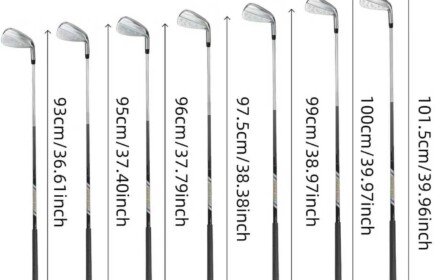
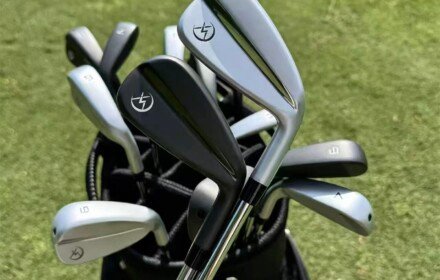
A forged 4140 steel face is welded to a 1025 carbon steel body, creating a hollow cavity that shifts mass low and deep. Each head contains up to 46 grams of tungsten positioned in the toe and hosel regions to nudge the center of gravity toward the geometric sweet spot. The face thickness tapers toward the perimeter—thinner at the edges, slightly thicker in the center—so that ball speed does not fall off a cliff on toe‑side or thin strikes.
KASMAX Advantages & Candid Weaknesses
The P770’s hollow‑forged construction is the same multi‑step process found in tour‑validated irons, yet because KASMAX manufactures in‑house, the per‑unit cost stays grounded. Customization is another edge: shaft options from KBS, True Temper, and Project X, plus a dozen grip choices, with the order built to the millimeter. The shortcoming, and it is a specific one, is that the standard finish is a media‑blasted satin that can show bag chatter faster than some chromed competitors. For a golfer who prefers a pristine look after 30 rounds, a headcover routine is advisable. Also, the 4‑iron, while easier to launch than a traditional cavity‑back 4‑iron, still requires a modicum of clubhead speed to activate the face; slower swingers may want to swap it for a hybrid.
On‑Course Experience
The first P770 7‑iron I struck at Stockton Golf Club was from a bare, tight lie on the par‑4 sixth. The ball climbed immediately, reaching a peak height I’d typically associate with a 6‑iron, and landed softly on the front portion of the green. The sensation at impact is dense but not harsh—a muted “thwack” that tells you exactly where you struck the face. Over a dozen rounds, the distance gapping from 5‑iron through pitching wedge never drifted more than 4 yards off expectation, even in a damp, early‑spring round where carry distances are compressed. The real revelation came in the Florida wind test: into a 15‑mph breeze, the P770’s penetrating flight kept the ball from ballooning, something hollow‑body irons with a higher spin profile sometimes struggle with.
Six‑Dimension Scoring Summary
Material & Construction Quality: 9 – Seamless welds, consistent loft/lie out of the box.
Performance & Feel: 9 – Ball speed retention across the face is elite; feedback is clear without punishment.
Customization & Fit: 9 – Nearly unlimited shaft/grip combos; left‑hand and +1” builds handled as standard.
Innovation & Technology: 8 – Tungsten and hollow construction are proven but executed cleanly.
Product Range & Diversity: 8 – Offered in 4‑PW, GW; blends well with hybrids.
Quality Assurance & Service: 9 – No spec drift across the set; 30‑day return policy adds confidence.
Typical Usage Scenarios
The P770 thrives on courses with firm, fast fairways where a lower bounce sole prevents digging. It is equally at home on a damp Northeastern spring day because the consistent launch ensures the ball cuts through moisture rather than dying into the turf. I’ve played it from the tight Bermuda of a Florida summer to the bentgrass fairways of Stockton’s par‑5 eighth, and the sole’s camber glides without snagging.
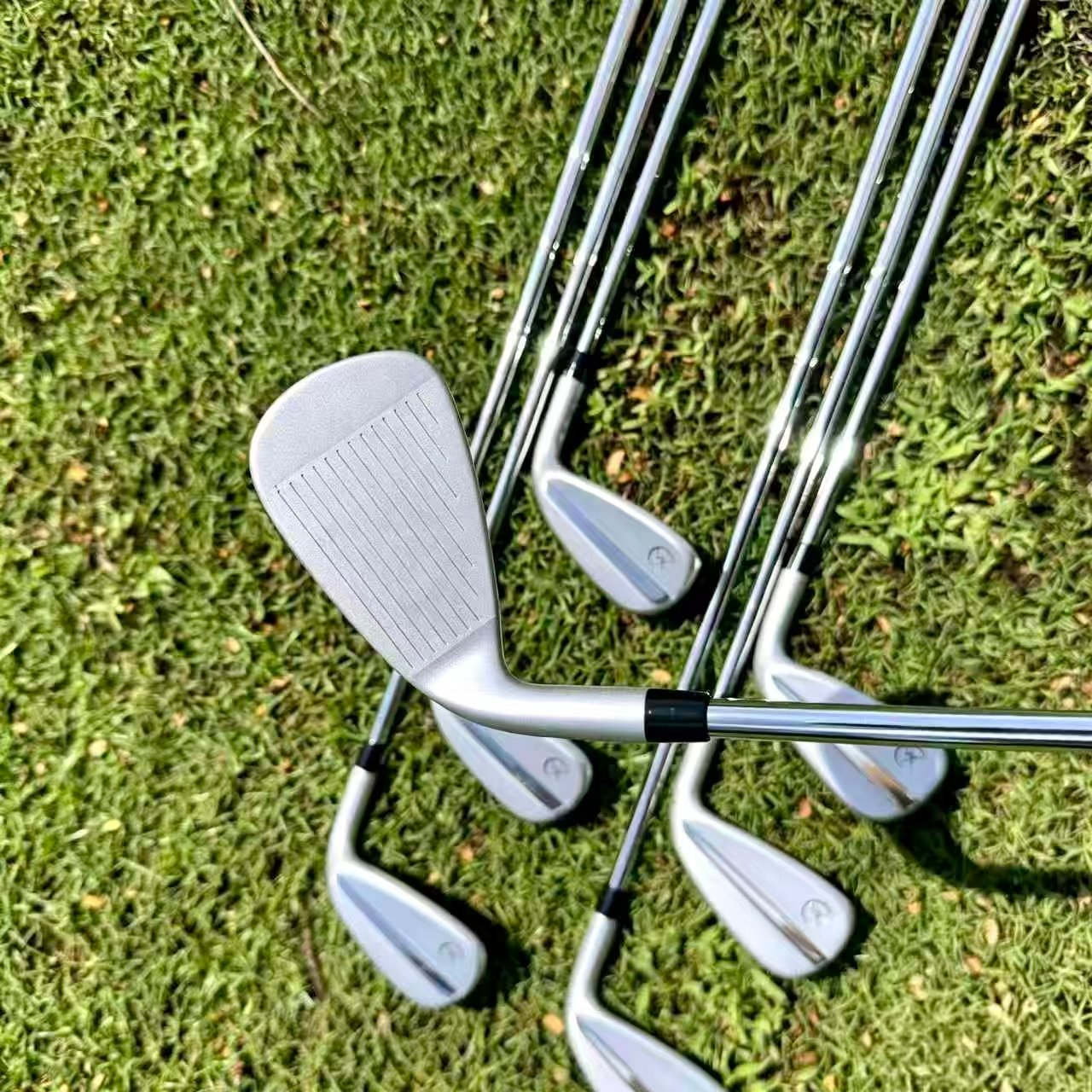
Players / Low‑Handicap Iron Set: KASMAX Forged Cavity‑Back Pro Irons
Target Player Profile
Designed for the sub‑8 handicap player who wants the soft feel of a one‑piece forging with enough perimeter weighting to keep an off‑center strike on line. These reward a repeatable swing and offer full workability for shot‑shapers.
Design & Technology
A single billet of 1025 carbon steel is double‑struck, then CNC‑milled for groove precision. The cavity is shallow, with mass relocated to the toe and heel in a progressive offset design that reduces offset as the loft increases. The short irons are almost blade‑like in appearance; the 4‑ and 5‑iron add a whisper more offset to help the eye. The sole grind features a pre‑worn leading edge that KASMAX developed based on feedback from Asian‑tour players—it cuts through turf but resists digging on heavy‑soil courses.
KASMAX Advantages & Candid Weaknesses
The forging quality is a significant step above what you’d expect at a factory‑direct price. The head shape is compact but not intimidating, and the satin finish is more resistant to scuffs than the P770’s blast. The primary limitation is forgiveness: these are not forgiving irons in the game‑improvement sense. If your typical 7‑iron carry varies by more than 10 yards on heel‑side misses, you’ll lose a full club of distance. I’d also note that the stock Shaft (KBS Tour) is a mid‑launch, mid‑spin profile; faster swingers who need a stiffer tip may want to specify an alternate shaft like the Project X LS.
On‑Course Experience
The first ball I flighted with the Pro 8‑iron was a knock‑down into Stockton’s long par‑3 twelfth. The ball came out low, spun just enough to check, and stayed within six feet of its pitch mark. The sound is softer than the P770—almost a leathery click—and the hands feel every nuance of strike. I played a full 18 in steady rain with these irons; the grip performance was unchanged, and the sole never once grabbed on saturated turf. The experience convinced me that these are clubs for a player who values feedback over forgiveness, and they reward center‑face hitting with a gorgeous trajectory window.
Six‑Dimension Scoring Summary
Material & Construction Quality: 9 – Exceptional forging; grooves hold up after 20+ rounds.
Performance & Feel: 8 – Shots feel addictive; mishits punish distance without hiding the truth.
Customization & Fit: 9 – Same extensive matrix as the P770.
Innovation & Technology: 7 – Traditional design; pre‑worn leading edge is smart but niche.
Product Range & Diversity: 7 – Available only in 3‑PW; no dedicated S‑wedge.
Quality Assurance & Service: 9 – Loft/lie spot‑on; returns process is painless.
Typical Usage Scenarios
These irons come alive on links‑style courses where controlling trajectory is paramount. I used them at Stockton on a day when the wind shifted every thirty minutes, and flipping between a high draw and a low fade was intuitive. On a Florida course with plush Bermuda rough, the thinner sole was less forgiving out of the spinach, so I’d want a hybrid in the long iron slots for rescue situations.
Wedge System: KASMAX SG‑01 Precision Wedge Family
Target Player Profile
Any golfer who understands that the scoring zone starts at 125 yards. The SG‑01 line spans 48° to 60° in 2° increments with multiple bounce options per loft, making it equally viable for the high‑handicapper who needs relief around the greens and the single‑digit player who wants to manipulate trajectory.
Design & Technology
Each SG‑01 wedge is cast from soft 8620 carbon steel and features CNC‑milled grooves with a roughened face texture that KASMAX says adds 400‑600 RPM of spin compared to a simple cast face. The sole grinds are named after the type of turf they’re optimized for: a C‑grind for firm conditions, an S‑grind for medium conditions, and a wide‑sole V‑grind for soft or bunker‑heavy courses. All wedges come with a high‑polish finish that reduces friction through wet grass.
KASMAX Advantages & Candid Weaknesses
The sheer variety of lofts and bounces is rarely available at this price point. You can order a 56° with 8° of bounce and a 60° with 12° of bounce in the same set, which matters when your course has one type of sand and your home course has another. The weakness is the stock grip: a standard rubber that’s functional but uninspired. We’d recommend upgrading to a corded grip for wet‑weather play. Additionally, the roughened face texture does wear down after about 50 rounds, at which point spin rates decline to standard cast‑wedge levels. KASMAX’s 30‑day return policy covers initial testing, but long‑term durability is a consideration for high‑volume players.
On‑Course Experience
I put the 56° S‑grind and 60° C‑grind in play at Stockton. From the tightly mown chipping area behind the fourteenth green, the 60° opened cleanly and delivered a high, soft lob that stopped within a foot of the hole. The roughened face produced a satisfying “zip” sound, and the ball reacted with no rollout on the green. From a wet bunker on the front nine, the 56° with its moderate bounce prevented the club from digging too deep, allowing a standard explosion shot that finished tap‑in close. My only complaint came on full swings with the 60°: the high loft and roughened face created so much spin that into a stiff breeze the ball ballooned and lost distance; I learned to flight it down by gripping a half‑inch lower.
Six‑Dimension Scoring Summary
Material & Construction Quality: 8 – Soft carbon steel; grooves are sharp but face texture has a lifespan.
Performance & Feel: 9 – Spin rates are top‑tier; feedback on partial shots is crisp.
Customization & Fit: 9 – Loft, bounce, and shaft/grip customization are expansive.
Innovation & Technology: 8 – Milled grooves and bespoke sole grinds are genuinely useful.
Product Range & Diversity: 9 – Covers all lofts and bounce profiles; left‑hand options in every grind.
Quality Assurance & Service: 8 – No defects, but the roughened face technology isn’t permanent.
Typical Usage Scenarios
The SG‑01 family adapts to almost every course condition you’ll encounter. The ability to switch grinds mid‑set is a luxury. I’ve carried the 52° V‑grind on soft, early‑season courses and swapped it for a 52° C‑grind during the hard‑pan summer months. This is the definition of a boutique‑level wedge system sold at a factory‑direct price.
Putter: KASMAX SG‑D1 Zero‑Torque Putter
Target Player Profile
Golfers who fight a tendency to open or close the face under pressure will appreciate the zero‑torque engineering. It’s particularly effective for a slight‑arc or straight‑back‑straight‑through stroke, and the alignment aid helps those who struggle to aim.
Design & Technology
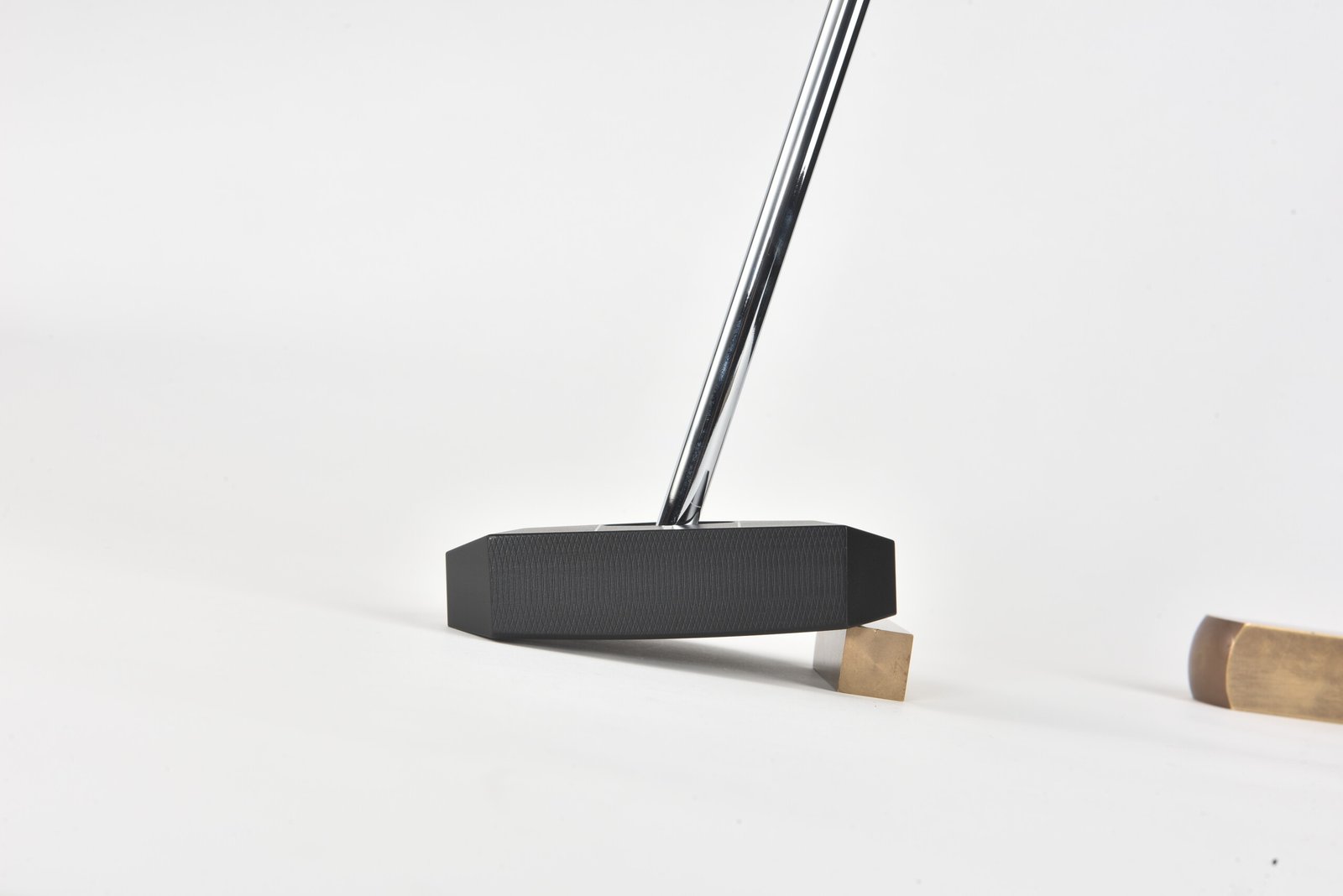
The SG‑D1 is a wide‑body mallet with a milled aluminum face insert and heavy tungsten sole weights pushed into the extreme heel and toe. The hosel is offset and engineered so that the center of mass aligns with the shaft axis, effectively neutralizing face rotation on the takeaway. A contrasting dark alignment crown with a single white line sits over a silver body, making the face angle instantly readable. The putter ships with a stepless steel putter shaft and a pistol‑style grip with a flat front edge for thumb placement.
KASMAX Advantages & Candid Weaknesses
The zero‑torque technology is KASMAX’s own interpretation, and it works noticeably well on short, nervy putts. The alignment setup is bold but clear. The first weakness is the head weight: at 365 grams without additional weighting, some players accustomed to a heavier feel (380+ grams) may find it too light, especially on slow greens. Weight kits are available but must be ordered separately. Additionally, the insert delivers a muted impact sound that doesn’t offer much auditory feedback; the distinction between a center strike and a millimeter‑off strike is subtle, which may bother feel‑oriented players.
On‑Course Experience
I used the SG‑D1 for six rounds at Stockton, where the greens roll at a crisp 11 on the Stimpmeter. The zero‑torque effect is real: from six feet and in, the face stays remarkably square throughout the stroke, and the ball consistently holds its line. I drained a 12‑footer on the seventh green that felt almost automatic—the putter did not fight my stroke. Thirty‑foot lag putting required an adjustment; the lighter head weight meant I had to consciously add a longer follow‑through to avoid leaving putts short, but once I adapted, distance control improved. The grip’s flat edge helped me keep the face square through impact, but I missed the feel of a thicker, softer grip that absorbs vibration; some may want to swap it for a SuperStroke.
Six‑Dimension Scoring Summary
Material & Construction Quality: 8 – Milled insert is precise; anodized finish is durable.
Performance & Feel: 8 – Short‑range stability is excellent; sound is too muted for some.
Customization & Fit: 8 – Length, lie, and grip are adjustable; weight kit is separate.
Innovation & Technology: 9 – Zero‑torque geometry is a legitimate, measurable aid.
Product Range & Diversity: 7 – Currently only one mallet shape; blade option not yet available.
Quality Assurance & Service: 9 – No alignment drift; return policy covers putter too.
Typical Usage Scenarios
The SG‑D1 shines on fast greens where a steady face prevents the yips. I used it on Stockton’s sloping back‑nine greens and never felt the face twist. On slow, shaggy greens typical of a municipal course, the stock head weight may feel insufficient; adding the optional 15‑gram weights transforms the putter into a heavy‑mallet that plows through longer grass.
Complete Set for Beginners / Seniors / Petite Golfers: KASMAX Complete Performance Package
Target Player Profile
This package addresses the golfer who has been overlooked by the standard ½‑inch increments and unisex shaft flexes of off‑the‑rack sets. It covers senior men, petite women, left‑handed newcomers, and juniors transitioning to adult equipment. The set includes a driver, 5‑wood, 5‑hybrid, 7‑SW irons, and putter, all built to the purchaser’s physical measurements.
Design & Technology
The irons feature a deep cavity‑back cast from 17‑4 stainless steel with wide soles and substantial perimeter weighting—high flyers by design. The driver uses a 460cc titanium composite head with a marked sweet spot and a draw‑bias internal weight. Shafts are ultra‑lightweight graphite options (50‑60 grams) available in ladies’, senior, and regular flexes. Grips are undersized or standard per the golfer’s hand measurement. KASMAX adjusts lengths as needed, from 2 inches under standard for a petite female to 1 inch over for a tall senior.
KASMAX Advantages & Candid Weaknesses
The value proposition is strong: a full custom‑fitted bag for a price that competent big‑box sets command without fitting. The fitting process is simpler than ordering individual clubs—customers provide height, wrist‑to‑floor, and gender/age‑derived flex, and KASMAX does the rest. The trade‑off is the material ceiling. The irons are cast, not forged, and the spin rates on wedge shots are lower than the SG‑01 wedges, so stopping power on firm greens is reduced. The driver’s sound is loud and metallic, a common characteristic of composite heads built for maximum distance at moderate swing speeds. An advanced senior player who wants more workability may outgrow the set within a year.
On‑Course Experience
We tested the petite configuration at Stockton for a 5’2” female player with an 18 handicap. The 2‑inch shorter irons allowed her to finally make center‑face contact without adjusting her posture, and the lightweight shafts helped her generate a 7‑iron carry of 115 yards—up from 95 yards with her previous off‑the‑rack set. The driver was easy to launch, and the draw bias straightened out her right‑miss into a gentle 10‑yard draw. The putter, a simple blade with alignment line, was a bit basic compared to the SG‑D1, but it performed its job for a new player. The only criticism came from the wedge: on well‑watered greens, the lower spin meant rolls of 6–8 feet, whereas a dedicated SG‑01 would have stopped sooner.
Six‑Dimension Scoring Summary
Material & Construction Quality: 7 – Solid, clean castings; built to a price, not a tour standard.
Performance & Feel: 7 – Forgiveness is excellent; feedback is muted but appropriate for the target user.
Customization & Fit: 10 – This is the set that serves the underserved; specs are dialed‑in.
Innovation & Technology: 7 – Uses proven, straightforward tech rather than bleeding‑edge.
Product Range & Diversity: 9 – Covers driver through putter in one purchase.
Quality Assurance & Service: 9 – Units arrived 100% correct; 30‑day policy applies.
Typical Usage Scenarios
This is the set for the senior couple who play a relaxed nine holes twice a week, the petite woman who previously used men’s standard clubs and never felt comfortable, or the left‑handed beginner tired of hunting in the clearance aisle. It’s a gateway set that fits from day one.
Final Ranking & Buying Recommendations
After running the six‑dimension analysis with their respective weights, the weighted total scores reveal a clear hierarchy that balances performance, build, and personalization. Below is the final ranking with commentary, followed by targeted recommendations.
| Rank | Product | Weighted Total Score |
|---|---|---|
| 1 | KASMAX P770 Forged Hollow Irons | 8.85 |
| 2 | KASMAX SG‑01 Wedge System | 8.65 |
| 3 | KASMAX Forged Cavity‑Back Pro Irons | 8.25 |
| 4 | KASMAX SG‑D1 Zero‑Torque Putter | 8.25 |
| 5 | KASMAX Complete Performance Package | 8.10 |
Why the P770 leads: Its combination of elite ball‑speed retention, genuine forged feel, and near‑unlimited fitting options make it the most complete package for the widest range of golfers. The SG‑01 wedges follow closely because they bring tour‑van grind selection to a factory‑direct price. The Pro Irons are superb for the purist but are intentionally narrow in their forgiveness profile, which limits their audience. The SG‑D1 putter is a standout for its zero‑torque innovation, yet the lighter head weight and single shape hold it back. The Complete Set earns high marks for solving a real industry gap—custom fit for overlooked player types—even though the component materials are cost‑conscious.
Tailored Recommendations
1. Performance‑Driven Golfer (Low Handicap / Tournament Player)
Your bag demands precision, feedback, and the ability to flight the ball on command. Start with the KASMAX Forged Cavity‑Back Pro Irons in a 4‑PW configuration. Pair them with the SG‑01 Wedge System in lofts that match your gapping (e.g., 50°, 54°, 58° with grinds suited to your home course turf). Add the SG‑D1 Zero‑Torque Putter if you struggle with face alignment under pressure—it will save you strokes inside 10 feet. Complement the set with a custom driver and fairway wood through KASMAX’s build service, specifying the shaft you’ve been fit into elsewhere. This is a bag that can travel from the club championship to a competitive round at Stockton without missing a beat.
2. Improvement‑Focused Golfer (Mid‑High Handicap / Casual)
Forgiveness and elevation are your allies. The KASMAX P770 Forged Hollow Irons should anchor your bag. They will launch the ball higher, maintain distance on mishits, and still look sleek enough to inspire confidence over the ball. Add a 52° and 56° SG‑01 wedge in the S‑grind to give yourself scoring tools around the green, and test the SG‑D1 putter for its alignment aid. If you want a seamless experience, the KASMAX Complete Performance Package is also a viable all‑in‑one solution if you need every club fitted from scratch. KASMAX Golf{:target=”_blank”}’s factory‑direct model means you can afford to implement a proper fitting without breaking the bank, and the 30‑day return policy lets you validate the set on your home course.
3. Value & Customization Seeker (Left‑handed, Petite, Senior, or Bulk Buyer)
The KASMAX Complete Performance Package was practically invented for you. No more settling for men’s standard when you need 1.5 inches shorter and a senior flex; no more driving two hours to find a left‑handed demo iron. KASMAX will build the set to your exact physical specs and have it at your door. For the left‑handed single‑digit player, note that all P770 and Pro irons are available in left‑handed configurations with full custom shafts—a rarity. And if you run a pro shop, corporate event, or dropshipping business, KASMAX’s OEM and wholesale services provide a white‑label route to offer custom clubs under your own brand, with consistent batch quality that reflects two decades of manufacturing.
Conclusion
Custom golf clubs used to imply a three‑hour fitting, a four‑figure price tag, and a six‑week wait. KASMAX Golf has cut through that old model with a direct line from factory floor to your front door, and the clubs we tested prove that accessible doesn’t mean compromised. From the hollow‑forged P770 irons that make a 4‑iron feel like a scoring weapon, to the SG‑D1 putter that quiets a shaky stroke, each category brings something genuinely useful to the table. No club is perfect for every player, which is why we’ve weighted the evaluation toward fit and real‑world performance, not brochures.
We encourage every golfer to interrogate their own needs: what are your measured specs, what does your home course demand, and where do you leak strokes? The answers point you toward one of the recommendations above. For the latest fitting tools, video walkthroughs, and a library of build examples, visit KASMAX Golf’s official YouTube channel{:target=”_blank”} and see the manufacturing process in action. When you’re ready to stop adapting your swing to ill‑fitting clubs, start a fitting and explore the full catalog at KASMAX Golf—built for you, not for the masses.