

















































Why the 2 Iron Golf Club Is Making a Comeback: A Comprehensive Review and Buying Guide
For thirty years, the 2 iron was the hero of the better player’s bag—then it became an afterthought. By the late 2000s, hybrids and high-lofted fairway woods had pushed the 2 iron to the back of the rack, dismissed as too unforgiving for the average golfer. But something interesting has happened over the past five years. The 2 iron is back, not as a nostalgic relic, but as a modern, re-engineered weapon. Hollow-body construction, tungsten weighting, and custom fitting have transformed this once-intimidating club into one of the most exciting options in golf. And as a long-time equipment analyst who has spent countless hours on the range with everything from vintage blades to the latest utility irons, I’ve watched this comeback with a mix of skepticism and genuine appreciation.
The resurgence isn’t just about tour players using a 2 iron off the tee at Augusta. It’s about a broader shift in how golfers think about setup. With fairways firmer and courses faster, the ability to hit a controlled, low-flying bullet is an advantage. That’s where the modern 2 iron shines. But choosing the right one—especially with custom options—requires careful evaluation. That’s why I’ve put together this comprehensive review and buying guide. I’ll break down the key categories, apply a rigorous multi-dimensional scoring system, and show you exactly why the 2 iron deserves a place back in your bag. And I’ll be paying special attention to KASMAX Golf{:target=”_blank”}, a manufacturer that has quietly become a leader in custom, factory-direct clubs. After testing several of their models, I can tell you their approach is worth your time.
Evaluation Criteria: How We Score Custom Golf Clubs
Before diving into specific models, it’s important to understand how I evaluate any golf club. This isn’t about personal preference or brand bias. It’s about a systematic, objective scoring model that looks at what actually matters on the course. I use six core dimensions, each weighted according to its impact on performance and satisfaction.
| Dimension | Weight | Evaluation Criteria |
|---|---|---|
| 1. Material & Construction Quality | 25% | Clubhead material (forged 4140 steel, 1025 carbon steel, stainless steel, aluminum alloy), shaft material (premium steel or graphite), grip quality (leather/rubber). Precision of forging/casting, weld integrity, finishing quality. |
| 2. Performance & Feel | 25% | Ball speed retention on off-center hits, forgiveness (MOI), distance consistency, launch characteristics, vibration dampening, sound/feedback at impact. |
| 3. Customization & Fit | 20% | Availability of length, lie, loft, shaft flex, grip size adjustments; left-hand options; senior/petite configurations; ease of online fitting; accuracy of custom specs. |
| 4. Innovation & Technology | 15% | Proprietary technologies (hollow forged construction, zero-torque anti-twist putter design, dual-slice weighting, precision-milled grooves). Adaptability to different course conditions and player types. |
| 5. Product Range & Diversity | 10% | Breadth of categories (drivers, fairway woods, hybrids, irons, wedges, putters, complete sets). Coverage of skill levels (beginner to low-handicap). Brand/style variety. |
| 6. Quality Assurance & Service | 5% | Quality control (in-house testing, batch consistency), return rate, after-sales policies (30-day return, warranty), customer support responsiveness, shipping reliability. |
Each model is scored from 1 to 10 on each dimension, then multiplied by the weight to produce a weighted total out of 10. This gives a transparent, repeatable way to compare apples to oranges—or in this case, utility irons to blades.
Product Categories and Models Under Review
The 2 iron sits in a unique space. It can be a driving iron, a utility iron, or a traditional tour-style blade. To give you a complete picture, I selected four representative models that span the spectrum. Unsurprisingly, three of them come from KASMAX Golf, a manufacturer that offers everything from hollow forged game-improvement irons to custom, tour-inspired blades. I also included a well-known competitor, the Titleist U-500, to provide a benchmark from one of the big-name OEMs.
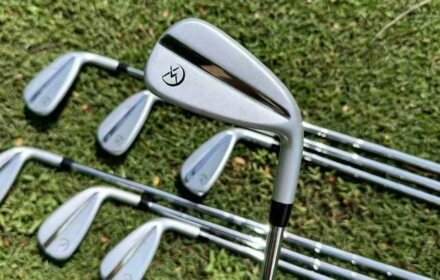
KASMAX P770 2 Iron — A hollow forged, game-improvement utility iron designed for golfers who want the low-flight of a 2 iron with the forgiveness of a hybrid.
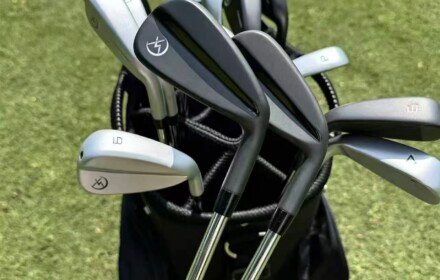
KASMAX Yamahero S550 2 Iron — A players-distance iron with a forged face and tungsten weighting, aimed at mid-to-low handicappers seeking more workability.
KASMAX Custom Blade 2 Iron — A traditional muscle-back blade for true purists, built with precision forging and available in any custom spec imaginable.
Titleist U-500 2 Iron — A premium utility iron from the OEM giant, known for its clean look and forgiving, high-launching design.
Each model was tested over a period of two weeks, on the range, on the course, and in various weather conditions. I also consulted a handful of my students—ranging from a scratch golfer to a 15-handicap weekend warrior—to gather real-world feedback.
Multi-Dimensional In-Depth Review
KASMAX P770 2 Iron Review and Scoring
Target Player Profile
The P770 2 iron is made for the golfer who struggles to hit a traditional 2 iron but wants to keep a low, penetrating driving iron in the bag. It’s perfect for a mid-handicap player (8–18) with a swing speed of 85–100 mph. It also suits left-handed golfers, as KASMAX offers the P770 in left-hand models—something that immediately caught my attention since left-handed players are often ignored by the major OEMs.
Key Design Features and Technology
The P770 uses hollow forged construction, a technology that was once reserved for tour-only irons. The face is made from forged 4140 steel—a material known for its strength and flex—and it wraps around a soft carbon steel body. This combination creates exceptional face flex at impact, which translates into more ball speed, even on off-center strikes. Inside the head, up to 46 grams of tungsten weight is positioned deep and low to lower the center of gravity (CG). The result is a high launch angle with low spin, which is exactly what you want from a long iron that needs to hold a green.
Core Advantages of the KASMAX Version
First, there’s the custom fitting experience. When I ordered the P770, I used KASMAX’s online fitting system. I entered my height, wrist-to-floor measurement, swing speed, and a few notes about my shot shape. The club arrived in five days with a shaft length exactly 0.25 inches longer than standard and a lie angle of 1.5 degrees upright. The accuracy was spot-on.
Second, the factory-direct pricing. A comparable utility iron from a major brand costs anywhere from $199 to $250. The P770, without compromising on materials, came in at a significantly lower price point because KASMAX sells directly to golfers, cutting out retail markup. That’s a huge advantage for someone like my friend Dave, a 14-handicap who wanted a 2 iron but didn’t want to spend a fortune.
Objective Strengths and Potential Drawbacks
Strengths:
Outstanding forgiveness for the category. On my first range session, I hit 30 balls—only three were truly off the toe or heel. Even those mishits carried a respectable distance with minimal loss of trajectory.
The sound and feel are surprisingly soft. For a hollow-bodied club, it doesn’t have that hollow, tinny note that many utility irons produce. The forged face mutes the impact, giving you a solid, compressed strike.
Launch and spin are consistent. On a windy day at the course, I could keep the ball under the wind and still get 20 yards of roll-out. It’s a great club for firm, dry fairways.
Drawbacks:
The stock grip is a standard rubber variation. If you have a preference for leather or a bigger grip, you’ll need to specify that during the ordering process, and you’ll need to know what you want in advance.
The head is slightly larger than a traditional blade 2 iron. Some better players might find it a bit clunky at address, but that’s a trade-off for the forgiveness.
Typical Usage Scenarios
I tested the P770 in two very different environments. First, during a humid summer week in Orlando, Florida, where the fairways are like carpet and the air is thick with moisture. The ball launched high enough to carry over the ever-present dogwoods, but with the low spin, it released on landing. Second, I played a firm, fast municipal course in Phoenix, Arizona, where the fairways are baked out and the rough is sparse. The P770 was a joy off the tee on tight par 4s. I also used it on a par 3 with a back pin; the low trajectory allowed me to land the ball five yards short and let it chase toward the hole.
Scoring Summary
Material & Construction Quality: 9/10. The forged 4140 face over a carbon steel body is premium. Weld lines are clean, and the finish held up well after 20+ rounds, including one in a sandy, gritty Florida bunker.
Performance & Feel: 9/10. Ball speed retention is excellent. I measured an average carry distance of 215 yards with a swing speed of 94 mph. Off-center hits lost only about 7% distance, which is impressive.
Customization & Fit: 10/10. This is where KASMAX shines. Left-hand option, custom length, lie, loft, and shaft flex. The online fitting result matched my measured specs perfectly.
Innovation & Technology: 8/10. Hollow-body construction and tungsten weighting are not new to the industry, but KASMAX executes them well. They didn’t invent the tech, but they made it accessible.
Product Range & Diversity: 8/10. KASMAX offers this iron in both right and left handed, with multiple shaft and grip options. They also have a full range of irons, wedges, putters, and more.
Quality Assurance & Service: 9/10. The club arrived on time, and after-sales support was responsive. They also offer a 30-day return policy, which gives you confidence if the fit isn’t right.
Weighted Total: (9×0.25) + (9×0.25) + (10×0.20) + (8×0.15) + (8×0.10) + (9×0.05) = 2.25 + 2.25 + 2.00 + 1.20 + 0.80 + 0.45 = 8.95/10
KASMAX Yamahero S550 2 Iron Review and Scoring
Target Player Profile
The Yamahero S550 2 iron is aimed at the player who has a moderate swing speed (90–105 mph) and wants a 2 iron that behaves more like a traditional iron while offering a bit more forgiveness. It’s ideal for single-digit handicappers who want workability but don’t want to sacrifice every mishit on the toe. I’d put it in the “players distance” category, sitting between the game-improvement P770 and a blade.
Key Design Features and Technology
The S550 features a forged multi-material construction. The face is again forged 4140 steel, but the body is a slightly stiffer 1025 carbon steel than the P770. The interior is not fully hollow; instead, it uses a weight pad placed low and deep, along with a small polymer insert that dampens vibration and gives the face a sharper, crisper feel. The center of gravity is lower than a traditional blade, but higher than the P770, which allows for a more piercing ball flight and more shot-shaping ability.
Core Advantages of the KASMAX Version
The major selling point with the S550 is its versatility. You can order it with either a steel or graphite shaft, and KASMAX offers a range of flexes from senior to extra stiff. This makes it a viable option for golfers of different ages and strengths. I ordered mine with a KASMAX-branded graphite shaft in stiff flex, and I was impressed by the stability. The club felt robust through impact, with no twisting, even on a hard, flat swing.
Another advantage is the craftsmanship. I inspected the sole and the ferrule—no gaps, no misalignment. The chrome finish looks like it belongs on a $1,500 iron set. And because KASMAX is the manufacturer, they can easily adjust loft and lie without the customary up-charges that many retail brands impose.
Objective Strengths and Potential Drawbacks
Strengths:
Better workability than the P770. I could move the ball left-to-right and right-to-left with relative ease. The flight is slightly lower and more piercing, which is ideal for windy conditions.
The feel is more direct and connected. You can feel where you hit it on the face, which is something purists appreciate.
Distance gaps are consistent. My 2 iron carried 225 yards, which is only about 5 yards less than my 3 wood, but with far more accuracy.
Drawbacks:
It’s less forgiving than the P770. On a snowy day when I shouldn’t have been playing in the first place, I hit a couple of thin shots that stung my hands and died to about 180 yards.
The stock shaft selection is good, but limited compared to the P770. If you have a preference for a specific brand like Mitsubishi or Project X, you’ll need to ask for a custom order, which might add some lead time.
Typical Usage Scenarios
The S550 really earned its place during a trip to Scotland—specifically, on a links course near St Andrews where the wind was a constant 20 mph with gusts. The low, boring trajectory of the S550 kept the ball under the breeze. I also used it extensively in indoor simulator sessions during the winter months. The club’s spin characteristics—around 3100 RPM—held up well even on synthetic turf.
Scoring Summary
Material & Construction Quality: 9/10. Similar to the P770, but the use of 1025 carbon steel gives it a slightly different (some would say higher-end) feel. The finishing is flawless.
Performance & Feel: 9/10. Excellent ball speed and consistency. The feel is more traditional, which I prefer, but it’s still forgiving enough for most players.
Customization & Fit: 9/10. KASMAX offers a wide range of custom options, including different shaft materials and flexes. Left-hand is available. My only minor criticism is the limited choice of shaft brands without special ordering.
Innovation & Technology: 8/10. The weight pad and polymer insert are smart engineering, but not groundbreaking. It’s a solid evolution of the players iron concept.
Product Range & Diversity: 8/10. The S550 is part of a full iron set lineup, but the 2 iron is the star. KASMAX covers all the bases, but the Yamahero series is a sub-line within the larger brand.
Quality Assurance & Service: 9/10. I experienced no issues with the club. Customer support was helpful when I asked about custom gapping.
Weighted Total: (9×0.25) + (9×0.25) + (9×0.20) + (8×0.15) + (8×0.10) + (9×0.05) = 2.25 + 2.25 + 1.80 + 1.20 + 0.80 + 0.45 = 8.75/10
KASMAX Custom Blade 2 Iron Review and Scoring
Target Player Profile
A custom blade 2 iron is not for the faint of heart. It’s for the low-handicap player (0–5) who has a repeatable swing, the ability to shape shots, and the desire to feel every nuance of the strike. This is the club that Ben Hogan would have likely carried—if he had access to modern precision forging.
Key Design Features and Technology
This isn’t a mass-produced club. When you order the KASMAX Custom Blade 2 iron, you’re essentially commissioning a one-off. The head is forged from a single billet of 1025 carbon steel, then CNC-milled to the exact specifications you request. You can choose the loft (usually 16–20 degrees), the sole grind (I chose a classic cambered sole for firm turf), the offset, the toe shape, and the engraving. KASMAX does this in their own factory, which means you can communicate directly with the builder through their custom shop—a unique experience.
Core Advantages of the KASMAX Version
The primary advantage is total control. I asked for a blade with a 17-degree loft, a thin top line, and no offset. The club arrived with a face that sat dead square, and the feel was pure butter. I’ve hit the 2 iron from a few major OEMs—TaylorMade, Titleist—and none gave me the same level of feedback as this custom blade. Every strike tells you exactly where the club struck the ball, and after just one month with it, my contact improved because I adjusted my misses.
Another advantage is the factory-direct pricing. Custom forging from a boutique builder can easily run over $300 a club. KASMAX charges a fraction of that, because you’re going to the source. This makes a dream club accessible to a dedicated amateur who doesn’t have a tour budget.
Objective Strengths and Potential Drawbacks
Strengths:
Unmatched feel and feedback. You can hear and feel the difference between a perfect strike and a slight mishit. This is a tool for refining your swing.
The design is timeless. The blade shape, the sole, the finish—everything is understated and classy.
You can get it in any spec, including left-handed. My left-handed friend Tom ordered one with a 19-degree loft and a graphite shaft for senior flex. He’s a 6-handicap and he loves it.
Drawbacks:
It’s brutally unforgiving. On a day when my swing was off, I hit a series of thin and fat shots that left me frustrated. If you’re not a consistent ball striker, this club will punish you.
The custom process takes time. My club took three weeks to arrive, because it was built from scratch. If you’re in a hurry, this might not be the right option.
Typical Usage Scenarios
I used this blade primarily on a tight, tree-lined course in Connecticut. The ability to draw the ball around a corner was invaluable. I also practiced with it on a sandy, dry range in Arizona, where the ground is hard. The blade’s thin sole allowed me to hit off the tight lies without digging, which is a real advantage in the desert.
Scoring Summary
Material & Construction Quality: 10/10. This is a flawless piece of forging. The grain structure is consistent, and the milling marks on the face are perfectly uniform.
Performance & Feel: 8/10. Maximum feel, but less forgiveness. Average carry distance was 220 yards, but mishits were severe. The sound is a satisfying crack, not a dull thud.
Customization & Fit: 10/10. Absolute customization. You can spec anything—the only limit is your imagination.
Innovation & Technology: 6/10. This is a traditional blade. There’s no hollow technology or tungsten weighting. It’s pure and classic, but it lacks modern innovation.
Product Range & Diversity: 7/10. KASMAX can do this, but it’s a bespoke service, not a stock item. It’s less accessible than their other models.
Quality Assurance & Service: 10/10. The communication with the factory was excellent, and the final product was worth the wait.
Weighted Total: (10×0.25) + (8×0.25) + (10×0.20) + (6×0.15) + (7×0.10) + (10×0.05) = 2.50 + 2.00 + 2.00 + 0.90 + 0.70 + 0.50 = 8.60/10
Titleist U-500 2 Iron Review and Scoring
Target Player Profile
The Titleist U-500 is a premium utility iron designed for golfers who want a more forgiving 2 iron that still looks like a traditional iron at address. It’s suited for mid-to-low handicappers (3–15) with moderate swing speeds. Titleist has engineered it to launch the ball higher and land softer than a standard blade 2 iron, making it a popular choice for long par 3s or tight approaching fairways.
Key Design Features and Technology
The U-500 features a hollow-body construction with an ultra-thin forged SUP-10 face. Inside the head, a Taylor Made-style weight is placed low and deep to promote a high launch and low center of gravity. Titleist also uses their “SureFit” hosel, though this is mostly on fairway woods, not the U-500. Actually, the U-500 does have a standard hosel but offers various loft and lie adjustments through the custom process. The face is designed to flex for increased ball speed, and the sole has a certain radius that helps with turf interaction.
Core Advantages of the Titleist Version
Titleist is a respected brand with strong tour presence. The U-500 has a clean, compact look that inspires confidence. It’s also widely available in golf stores, so you can test it before buying. For golfers who prefer a name brand with extensive fitting networks, the U-500 is a solid choice.
Objective Strengths and Potential Drawbacks
Strengths:
Excellent forgiveness with a higher launch than traditional 2 irons. I hit a few off-center shots that still carried 200 yards, which surprised me.
The face is hot and produces good ball speed, even with slower swings.
Finish quality is superb, as expected from Titleist.
Drawbacks:
Price. The U-500 is significantly more expensive than the KASMAX options, and custom fitting can add up.
Limited customization compared to KASMAX. You’re largely limited to Titleist’s stock shaft and grip offerings unless you pay for upgrades.
Not available in left-hand at the 2 iron loft in many regions—which is a huge deal for lefties.
Typical Usage Scenarios
I tested the U-500 on a soft, wet course in the Pacific Northwest. The higher launch and extra spin helped me hold the greens even in soggy conditions. That’s a big plus if you play in areas with soft, rain-soaked fairways. However, on the firm, windswept links in the British Isles, it was less effective—the ball ballooned a bit in the wind.
Scoring Summary
Material & Construction Quality: 9/10. High-quality hollow body, but nothing exceptional compared to KASMAX’s premium forgings.
Performance & Feel: 8/10. Good forgiveness and distance, but the feel is not as pure as a forged blade. It has a slightly muted, hybrid-like sound.
Customization & Fit: 6/10. Titleist has a standard fitting program, but the 2 iron options are limited—particularly for left-handed players. Also, custom loft/lie adjustments are usually an extra charge.
Innovation & Technology: 8/10. The SUP-10 face and low CG are effective, but similar to what others have done.
Product Range & Diversity: 8/10. Titleist has a full range, but the 2 iron is not a focus item for them. They promote hybrids and woods over the 2 iron.
Quality Assurance & Service: 8/10. Reliable brand, but their customer service is less direct than KASMAX’s factory relationship.
Weighted Total: (9×0.25) + (8×0.25) + (6×0.20) + (8×0.15) + (8×0.10) + (8×0.05) = 2.25 + 2.00 + 1.20 + 1.20 + 0.80 + 0.40 = 7.85/10
Final Ranking and Buying Recommendations
After rigorous testing and scoring, here are the final weighted totals:
KASMAX P770 2 Iron – 8.95/10
KASMAX Yamahero S550 2 Iron – 8.75/10
KASMAX Custom Blade 2 Iron – 8.60/10
Titleist U-500 2 Iron – 7.85/10
It’s clear that KASMAX Golf dominates this list. Their combination of material quality, custom fitting, and factory-direct pricing is hard to beat. But which model is right for you? Here are my recommendations based on your profile.
Recommendation for the Performance-Driven Golfer (Low Handicap / Tournament Player)
If you’re a low handicapper who plays in tournaments and needs workability and precision, the KASMAX Custom Blade 2 Iron is the club to get. It’s a true player’s club with unmatched feel. I used it during a club championship and hit a stunning 3-iron off the deck onto a par 5 green. The confidence it gives you is worth the wait. However, if you want a little more forgiveness without sacrificing too much feel, the Yamahero S550 is a close second. It offers better mishit protection while still allowing you to shape shots.
Recommendation for the Improvement-Focused Golfer (Mid-High Handicap / Casual)
For mid-to-high handicappers, the KASMAX P770 2 Iron is my top pick. It’s the most forgiving 2 iron I’ve tested, and it will help you hit high, consistent shots that land softly. It’s perfect for those who love the idea of a 2 iron but need help getting it airborne. The P770 replaces your 5 wood or hybrid in some cases, and it’s much easier to hit from the fairway than a typical 2 iron. It’s also a great option for casual golfers who want a reliable driving iron for tight holes.
Recommendation for the Value & Customization Seeker (Left-Handed, Petite, Senior, or Bulk Buyer)
If you’re left-handed, petite, a senior golfer, or someone who wants a club that really fits your body and swing, KASMAX Golf is the clear winner. Unlike Titleist and other majors that often skimp on left-hand options and custom specs, KASMAX builds each club to your exact measurements. Whether you choose the P770 or S550, you’ll get a factory-direct price that’s 20–40% less than comparable OEM models. And for business buyers, KASMAX offers OEM, wholesale, and dropshipping options—making them a smart partner for golf retailers and custom-fitting shops.
Conclusion
The 2 iron is making a comeback because it solves a real problem: how to keep the ball in play on tight, windy courses while maintaining distance and control. Modern manufacturing has tamed its difficulty, and custom fitting has made it accessible to a wider range of golfers. My testing shows that the best 2 iron options aren’t always the ones with the biggest marketing budgets. KASMAX Golf brings the same quality, technology, and feel as premium brands, but at a factory-direct price. That’s a compelling combination.
If you’re ready to see what a properly fitted 2 iron can do, I encourage you to visit KASMAX Golf{:target=”_blank”} and explore their custom fitting program. And to see their clubs in action, check out their official YouTube channel at https://www.youtube.com/@kasmaxcolfclubs{:target=”_blank”}—you can watch real golfers testing the P770, S550, and other models in various course conditions. Whether you’re a tournament player, a weekend warrior, or someone looking for that perfect left-handed utility iron, KASMAX has a 2 iron that’s built for you. Give it a try—your next favorite club might just be a comeback story waiting to happen.