
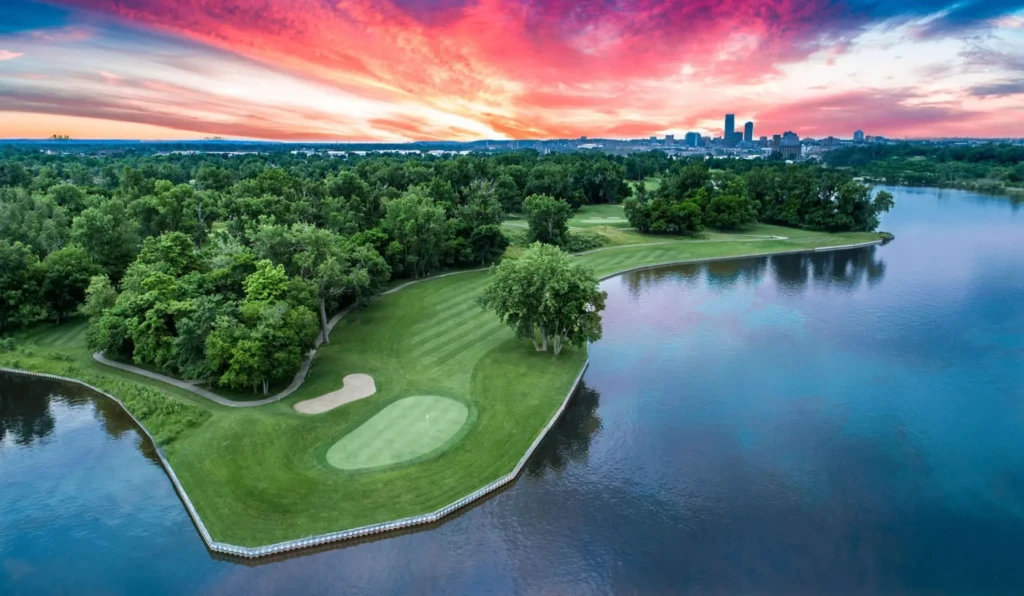




















































Location: 22402 Mattaponi Trail, Ruther Glen, VA 22546
Designer: Bob Lohmann (2004)
Type: Public / Semi‑Private
Holes: 18
Par: 72
Yardage: 7,021 yards from the tips (Rating 73.8, Slope 138)
Nestled in the rolling countryside of Caroline County, halfway between Richmond and Fredericksburg, Mattaponi Springs Golf Club has quietly built a reputation as one of the most underrated public courses in the Mid‑Atlantic. Far from the crowds of resort golf, it offers a pure, walkable layout with bentgrass fairways, challenging greens, and a genuine sense of seclusion. But does the on‑course experience match the lofty praise found in local forums? After multiple visits across different seasons, here is an honest, detailed account of what you can expect.
Course Layout and Design
Mattaponi Springs unfolds across 7,021 yards through a landscape of mature hardwoods, wetlands, and natural springs that give the course its name. Architect Bob Lohmann, known for his understated, naturalistic bunkering and strategic routing, avoided moving massive amounts of earth. The result is a course that feels like it was always there, with holes that follow the land’s natural contours.
Front Nine – Precision Over Power
The opening stretch wastes no time introducing the course’s signature elements. After a relatively benign par‑4 first, the par‑5 2nd hole demands a decision from the tee: challenge the creek that cuts diagonally across the fairway or lay back and face a longer approach over water. It’s a classic risk‑reward design that sets the tone.
Holes 3 through 6 tighten considerably. Fairway widths narrow to around 25‑30 yards in landing areas, with dense woods flanking both sides. This is not a course where you can spray driver and recover easily. The par‑4 4th hole — a sharp dogleg left with a pond guarding the inside corner — epitomizes the demand for controlled shot shapes. During a spring round after heavy rains, I watched three consecutive groups find the water because they forced a line that was never available from the tee.
The par‑3 7th is one of the prettiest one‑shotters in Virginia. From an elevated tee, you hit over a deep ravine filled with native grasses to a large, undulating green. The prevailing wind shifts throughout the day; what was a smooth 8‑iron in the morning became a hard 5‑iron by late afternoon.
Back Nine – Where the Course Bares Its Teeth
The back nine at Mattaponi is longer, more exposed to the wind, and features some of the most memorable holes in the region. The par‑5 11th (540 yards from the blues) plays slightly uphill between two large waste areas. Going for the green in two requires a precise, towering shot over a deep front bunker — a play that casual golfers should attempt only when the course is firm and the pin is back.
The real test begins with the par‑3 15th, a 215‑yard beast with water short and left. On a humid July afternoon with no helping breeze, I saw players hit hybrid, fairway wood, and still come up short. The green is severely sloped from back to front; missing long is almost a guaranteed bogey.
Closing holes 16 through 18 offer a fair but stern finish. The 18th, a mid‑length par‑4 with a forced carry over a pond from the tee and approach, is a classic “championship” closer. Birdie opportunities are rare, but a well‑struck par feels like a victory.
Playing Conditions Throughout the Year
One of Mattaponi’s greatest strengths — and occasional weaknesses — is its commitment to bentgrass from tee to green. Unlike many mid‑Atlantic courses that transition to Bermuda for summer heat tolerance, Mattaponi sticks with bent, which provides a smooth, fast putting surface but requires meticulous maintenance.
Spring: The course is at its most picturesque, with dogwoods and azaleas in bloom. Fairways are lush, greens roll true at moderate speeds (9‑10 on the Stimpmeter). This is peak season, and tee times fill quickly.
Summer: Bentgrass greens in Virginia’s heat can become stressed. On a 95‑degree day last July, the crew had hand‑watered certain collars to prevent burnout, but a few green perimeters showed signs of strain. That said, the putting surfaces themselves were remarkably healthy and still rolled at a respectable 10.5. Bring water — shade is limited on the back nine.
Fall: Absolutely stunning. The hardwood colors reflect in the ponds, and the cooler temperatures bring the greens back to their best. Pace of play can be brisk, and the course conditions rival any private club in the area.
Winter: The course remains open weather permitting, but the bentgrass goes dormant. Greens can be glass‑like when frozen, and some tees move forward. If you’re a winter warrior, you’ll appreciate the discount rates and solitude, but don’t expect summer conditioning.
Amenities and Service
Mattaponi Springs does not pretend to be a luxury resort. The clubhouse is modest — a comfortable pro shop, a small grill serving sandwiches and beverages, and a covered patio overlooking the 9th and 18th greens. What it lacks in frills, it makes up for in sincerity.
The staff, from the pro shop to the starters, are consistently friendly and welcoming. On more than one occasion, the head professional came out to chat with groups on the first tee, offering local knowledge about hidden water hazards. The pace of play is actively managed; rangers are visible and polite, and 4‑hour rounds are the norm on weekdays.
Practice facilities: A full driving range with both grass and mat hitting stations, a large putting green, and a short‑game area with bunker. The range balls are included with green fees — a small but appreciated touch.

Strengths and Weaknesses (Balanced View)
Every course has trade‑offs, and I believe an honest review must lay them out.
What Shines:
Shot value: No two holes feel the same. You use every club in the bag and must think your way around.
Conditions: When the weather cooperates, the bentgrass surfaces are exceptional.
Value: Green fees (usually $50–$80) are a steal compared to similarly conditioned courses near Richmond or DC.
Solitude: Even on busy weekends, the routing through dense woods makes you feel like the only group out there.
Where It Falls Short:

Summer green stress: Bentgrass in transition zone summers is a gamble. If you visit during a heat wave, expect some imperfections.
Limited off‑course amenities: No pool, no tennis, no on‑site lodging. This is purely a golf destination.
Distance from major cities: About 45 minutes north of Richmond, 75 minutes south of DC. Not a quick pop‑over unless you live in the area.
Cart path only during wet periods: The soil drains reasonably well, but after heavy rain, expect restrictions that can slow your round.
Who Should Play Here?
Mattaponi Springs is ideal for:
Serious recreational golfers seeking a fair but demanding test without the country club price tag.
Group outings and buddy trips who care about golf first and nightlife second (you’ll need to drive 20+ minutes for dinner beyond the grill).
Golf purists who enjoy walking. The course is very walkable despite some elevation changes.
It is not the best choice for beginners or players who struggle with forced carries and long approach shots over hazards. There are few bailout areas, and lost balls are a real possibility on the tighter tree‑lined holes.
Final Verdict (Without a Scoring Matrix)
Mattaponi Springs punches well above its weight class. It does not have the name recognition of a Robert Trent Jones Trail stop or a high‑end resort course, but the quality of golf rivals many private clubs. If you’re willing to accept that summer conditions can occasionally dip and that you’ll need to drive for a post‑round meal, you’ll be rewarded with one of the most enjoyable, thoughtfully designed public courses in Virginia.
For those keeping a scorecard, I’d comfortably rate Mattaponi an 8.2 out of 10 in the context of public access courses in the Mid‑Atlantic — factoring in layout, conditioning, value, and overall experience. It’s a course I return to year after year, and I’ve never left disappointed.
Have you played Mattaponi Springs? Share your own experience or tips in the comments below. If you’re planning a trip, call the pro shop directly for current conditions and seasonal rates — they’re always happy to talk about the course.







%20Type:%20Public%20/%20Semi‑Private%20Holes:%2018%20Par:%2072%20Yardage:%207,021%20yards%20from%20the%20tips%20(Rating%2073.8,%20Slope%20138)%20Nestled%20in%20the%20rolling%20countryside%20of%20Caroline%20County,%20halfway%20between%20Richmond%20and%20Fredericksburg,%20Mattaponi%20Springs%20Golf%20Club%20has%20quietly%20built%20a%20reputation%20as%20one%20of%20%5B…%5D&media=https://kasmaxgolf.com/wp-content/uploads/2026/06/84fdef842988bc69dbe79716e75874e2.jpg)