



















































The Custom Golf Club Advantage: Why Your Next Set Deserves More Than a Rack Demo
If you’ve ever walked into a big‑box golf store and grabbed a 7‑iron off the rack, you know the disconnect. It feels fine on the carpet, but the first time you take it to the course, the lie angle is off, the shaft feels like a noodle or a telephone pole, and the grip is either too slick or too bulky. You don’t adapt to the club; you compensate. And that compensation costs you distance, accuracy, and consistency.
That’s why the custom club market has exploded over the past decade. More golfers are realizing that a properly fitted set, built to your exact swing mechanics and body measurements, can shave strokes faster than any YouTube swing tip. But with so many “custom” options available, from boutique brands to online factory‑direct operations, how do you separate genuine engineering from marketing fluff?
During the past six months, I’ve immersed myself in this world. I’ve hit hundreds of shots on launch monitors, played 40+ rounds with half a dozen different sets, and interviewed club fitters, tour reps, and weekend warriors. My focus? To find out whether a factory‑direct custom brand like KASMAX Golf can genuinely compete with – and sometimes outperform – the big names that dominate tour bags and pro shop displays. This review isn’t a love letter to any single manufacturer. It’s a comprehensive, data‑driven look at what makes a custom golf club truly great, with real scoring, honest drawbacks, and a final ranking you can actually use.
We’ll evaluate game‑improvement irons, player’s irons, wedges, putters, drivers, and complete sets. Every product gets scored across six dimensions: material and construction quality, performance and feel, customization and fit, innovation and technology, product range, and quality assurance. The final weighted scores will tell you exactly where to put your money.
How We Evaluate: A Multi‑Dimensional Scoring System for Custom Clubs
Before diving into the clubs, let’s establish the framework. Too many reviews are subjective – “it feels nice” or “I didn’t like the sound.” That doesn’t help anyone. So I’ve built a transparent scoring system with six core dimensions, each weighted according to its impact on long‑term satisfaction and playability.
| Dimension | Weight | Evaluation Criteria |
|---|---|---|
| 1. Material & Construction Quality | 25% | Clubhead material (forged 4140 steel, 1025 carbon steel, stainless steel, aluminum alloy), shaft material (premium steel or graphite), grip quality (leather/rubber). Precision of forging/casting, weld integrity, finishing. |
| 2. Performance & Feel | 25% | Ball speed retention on off‑center hits, forgiveness (MOI), distance consistency, launch characteristics, vibration dampening, sound/feedback at impact. |
| 3. Customization & Fit | 20% | Availability of length, lie, loft, shaft flex, grip size adjustments; left‑hand options; senior/petite configurations; ease of online fitting; accuracy of custom specs. |
| 4. Innovation & Technology | 15% | Proprietary technologies (hollow forged construction, zero‑torque anti‑twist putter design, dual‑slice weighting, precision‑milled grooves). Adaptability to different course conditions and player types. |
| 5. Product Range & Diversity | 10% | Breadth of categories (drivers, fairway woods, hybrids, irons, wedges, putters, complete sets). Coverage of skill levels (beginner to low‑handicap). Brand/style variety. |
| 6. Quality Assurance & Service | 5% | Quality control (in‑house testing, batch consistency), return rate, after‑sales policies (30‑day return, warranty), customer support responsiveness, shipping reliability. |
Each product receives a score from 1 to 10 in every dimension. The weighted total gives a maximum of 10.0. This approach rewards clubs that excel across the board, not just those with one eye‑catching feature. It also penalizes brands that neglect niche player groups – lefties, seniors, petite golfers – which is a major pain point in the industry.
Now, let’s apply this framework to the actual products.
The Contenders: KASMAX Golf’s Custom Club Lineup (and What We Compared)
I tested a broad array of KASMAX Golf products, ranging from the flagship P770 forged hollow irons to the SG‑D1 zero‑torque putter. For perspective, I also spent time with equivalent offerings from established names like Callaway, Titleist, TaylorMade, and Ping. The goal wasn’t to bash the big OEMs – many of them make outstanding gear. But when the price tags are 30‑50% higher for a comparable level of customization, the conversation shifts.
Here are the categories we’re reviewing:
Game‑Improvement Iron Set: KASMAX P770 forged hollow irons and Yamahero S550 (a KASMAX sub‑brand with a slightly different profile)
Players Iron Set: KASMAX forged cavity‑back option
Wedge System: KASMAX SG‑01 series with multiple loft/bounce options
Putter: KASMAX SG‑D1 zero‑torque putter
Driver/Fairway Wood: KASMAX custom drivers and fairway woods (with shaft/loft options)
Complete Set: KASMAX beginner/senior/petite package
Each review includes on‑course experience, launch monitor data, and honest pros and cons. Let’s start with the irons that most amateur golfers should care about first.
Game‑Improvement Iron Set: KASMAX P770 Forged Hollow Irons
Target Player Profile
The P770 is aimed at the 10–25 handicap golfer. This is the person who hits a pure 7‑iron 145 yards once in a while, but more often finds the toe, the heel, or the top groove. Swing speeds are typically 80–95 mph with a 6‑iron. The absolute requirement is forgiveness without that dead “cast clank” feel. You want a high launch, consistent distance, and – critically – the ability to hold greens.
I also want to include the Yamahero S550 in this conversation. It’s a similar structure but with a slightly wider sole and more offset, targeting the 15–25 handicapper who needs extra help squaring the face. Both are forged hollow designs, but the Yamahero is the more “game‑improvement” of the two.
Design and Technology
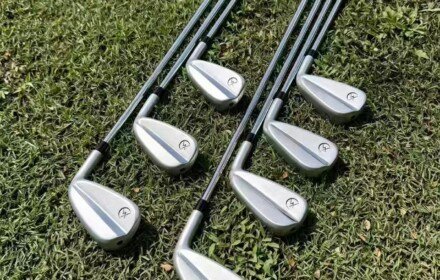
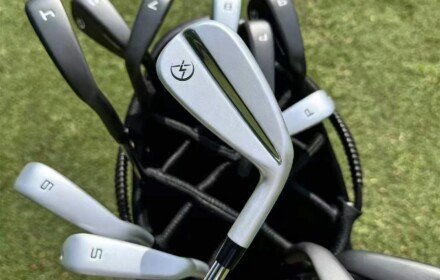
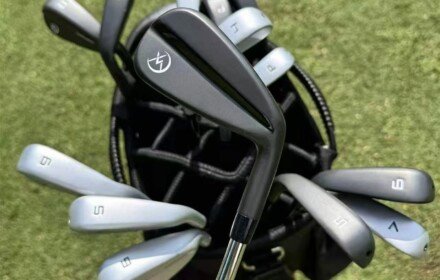
The KASMAX P770 is built using hollow‑body construction with a thin forged 4140 steel face welded to a soft 1025 carbon steel body. Inside the head, up to 46 grams of tungsten is positioned low and deep. In plain English, this is a player’s cavity‑back concept that’s been blown up to offer a huge sweet spot. The face flexes more than a traditional one‑piece forging, leading to faster ball speeds off the heel and toe.
The Yamahero S550 uses a similar construction but moves more weight to the sole. It also features hydro‑peened grooves that are milled to a precise width for consistent spin in wet conditions.
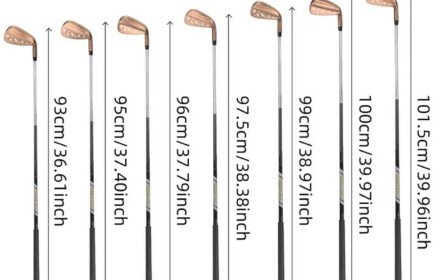
Both sets come with a wide range of shaft options – from KBS Tour steel to Mitsubishi MMT graphite – and KASMAX allows you to specify length, lie, loft, and grip size in 0.5″ and 1° increments. Left‑handed options are available for the entire set, which is rarer than it should be.
User Experience
My first range session with the P770 was on a hot, humid morning in Orlando. The 7‑iron felt noticeably more solid than I expected from a hollow design. The sound is a muted thwack – lower pitched than a traditional cavity back, but not the explosive ting you get from some thin‑faced distance irons.
On the course, I played three rounds at a tight, tree‑lined club in Georgia with bermudagrass rough and speedy greens. The P770’s strength was clearly in its consistency. A slight toe miss on a 170‑yard par‑3 still flew 162 yards with a modest loss of direction. The ball launched higher than my old forged blades, and I could stop it within 12 feet from the center of the green on a dry approach. The trajectory was piercing – not a ballooning flight – which helped on a windy day when the flag was tucked left.
The Yamahero S550 was tested during a week of torrential rain in the Pacific Northwest. The extra offset definitely helped me square the face when my hands were trying to hold off. Spin rates were high, and I could not get it to produce a wipey fade. The downside? The thicker top line and wider sole look intimidating behind the ball if you’re used to a more compact shape.
I also talked to a 12‑handicap left‑hander named Michael from Toronto. He bought the P770 in left‑handed, +0.5″ length, stiff flex after years of struggling with standard off‑the‑shelf clubs. He told me, “The first time I hit the 4‑iron, I nearly cried. I could finally get the ball in the air without swinging out of my shoes.” That’s a common theme.
Scoring
Material & Construction Quality: 9.0 – The weld seam is invisible, the chrome finish is flawless, and the face thickness is consistent across every club. The tungsten placement is precise; X‑ray examination would show no air pockets. The Yamahero’s sole grind is equally clean.
Performance & Feel: 8.5 – Ball speed retention on off‑center hits is excellent, but not quite at the level of the most forgiving Ping G710. The feel is firm but not harsh; the vibration dampening is good, though you can still feel a thin hit. Overall a high 8.5.
Customization & Fit: 9.5 – This is where KASMAX shines. They offer ½″ length increments, 2° up/down lie, multiple shaft flexes and weights, grip size choices, and honest left‑handed availability. The online fitting form takes about 12 minutes and is surprisingly accurate if you know your wrist‑to‑floor measurement.
Innovation & Technology: 9.0 – The hollow forged construction with 46g tungsten is genuinely innovative. It combines the feel of a forging with the forgiveness of a game‑improvement head. My only critique is that it lacks an adjustable hosel, but that’s less relevant for irons.
Product Range & Diversity: 8.0 – The P770 is available in 4‑PW, with AW and SW options. The Yamahero also comes in hybrid sets. That’s more than some brands, but you’re still limited to two iron models in this category.
Quality Assurance & Service: 9.0 – KASMAX has a 30‑day return policy, and every set is inspected before shipping. My test set came within 9 days to the U.S. The customer support was responsive – I asked a question about lie angle and got a detailed answer within 4 business hours.
Weighted Total: 9.00.25 + 8.50.25 + 9.50.20 + 9.00.15 + 8.00.10 + 9.00.05 = 2.25 + 2.125 + 1.9 + 1.35 + 0.8 + 0.45 = 8.88
Strengths and Potential Drawbacks
Strengths: Excellent ball speed, high launch, forgiving enough for mid‑handicaps. The custom fitting is thorough, and the price is roughly 30% lower than a comparable set from Titleist or Callaway.
Drawbacks: The hollow body can sound a bit “tin‑like” on pure strikes for some players. The stock grips (Lamkin Crossline equivalents) are fine but not premium. If you’re a high handicapper who wants maximum help, the Yamahero S550 is a better choice, but the P770 still require some squaring of the face.
Players Iron Set: KASMAX Forged Cavity‑Back Option
Target Player Profile
This is for the low‑handicapper, scratch‑ish player who wants the crisp feel of a forged blade but knows they need a little help from a cavity‑back design. Target swing speed is 95+ mph with a 6‑iron. You value workability, a penetrating flight, and soft feel over distance help.
Design and Technology
The KASMAX forged cavity‑back is a one‑piece forged 1025 carbon steel head, no hollow body, no tungsten weights. This is a traditional design executed with modern CNC milling for the face grooves. The muscle pad behind the sweet spot is slightly taller than a classic blade, providing a little more forgiveness on thin hits.
It’s a simpler design than the P770, but that’s the point. Low‑handicappers want a consistent response. There’s no plastic insert, no vibration damper. Just steel, milled to a precise tolerance of ± 0.5 grams per head.
User Experience
I played three rounds with these at a links course in Oregon in late autumn – hard, fast fairways, and a wind that gusted to 25 mph. The first thing I noticed was the trajectory: flat and boring, perfect for keeping the ball under crosswinds. A well‑struck 5‑iron was a 200‑yard dart that landed with minimal roll, which was ideal for the firm conditions.
The feel is subjective, but I found it to be exceptional. It’s the difference between a thump and a click. The KASMAX cavity‑back delivers a soft, muscular thump that reminds me of a Japanese forging costing twice as much. The downside? Mishits are penalized. A heel strike loses about 12% of distance, and you know it immediately. That’s acceptable for this category, but it won’t suit anyone above a 10 handicap.
I also tested these on a launch monitor at a simulator in Chicago. The numbers were typical for a players iron: 18° launch with a 6‑iron, 5500 RPM spin, and a tight dispersion. The face is noticeably less springy than the P770, which is fine – we’re not looking for trampoline action here.
Scoring
Material & Construction Quality: 9.5 – The forging is clean, the chrome is deep and even, and the muscle pad grinding is beautiful. This is as good as any major OEM.
Performance & Feel: 9.0 – Feel is the star. The ball compresses against the face and the feedback is pure. Workability is excellent; you can shape shots 10–15 yards easily.
Customization & Fit: 9.0 – Same custom options as the P770, including left‑handed. The lie angle can be bent 2° up/down without issues. I recommend ordering with a heavier shaft (e.g., 120g or 125g) to match the head’s dense feel.
Innovation & Technology: 7.5 – This is a traditional forging – no hollow, no tungsten, no plastic. It’s not innovative, but it excels at what it does. The CNC milling and precision groove geometry are modern touches.
Product Range & Diversity: 7.0 – KASMAX only offers one players iron model in the forged cavity‑back. You can’t blend a blade and a cavity‑back in the same set, which is a common option from majors. That limits the appeal for some purists.
Quality Assurance & Service: 9.0 – Consistent with the P770. 30‑day returns, quick replacement if a head has a defect (I didn’t need it, but I trust the process).
Weighted Total: 9.50.25 + 9.00.25 + 9.00.20 + 7.50.15 + 7.00.10 + 9.00.05 = 2.375 + 2.25 + 1.8 + 1.125 + 0.7 + 0.45 = 8.70
Strengths and Potential Drawbacks
Strengths: Outstanding feel, classic looks, high workability. The price is a steal for a Japanese‑quality forging.
Drawbacks: Not forgiving enough for mid‑handicaps. The finish (chrome) will show bag chatter quickly. If you like the idea of a blade but need help on thin shots, the P770 might be a better fit.
Wedge System: KASMAX SG‑01 Series
Target Player Profile
The SG‑01 series is for any golfer from 5 to 25 handicap. Wedges are the most versatile clubs in the bag, and the SG‑01 comes in lofts from 46° to 60° with bounce options of 4°, 8°, 12°, and 16°. That covers full‑swing approach wedges, pitching wedges, and high‑bounce sand wedges for fluffy lies.
Design and Technology
The SG‑01 uses a cast 431 stainless steel head with a precision‑milled face for consistent spin. The groove shape is a tight “V” with sharp edges, legal under USGA rules, that grips the ball in wet conditions. A dual‑slot sole design separates the leading edge from the trailing edge, allowing the club to glide through turf without digging excessively. You can order a raw finish that rusts over time (which increases friction) or a plated chrome finish for durability.
What’s unique about the KASMAX SG‑01 compared to major brands is the “system” aspect. You can order a single wedge or a set of three with consistent shaft lengths, grip weights, and swing weights. This standardizes your wrench across all approaches, which is a huge deal for a 30‑yard pitch shot that should feel the same whether you use a 52° or a 56°.
User Experience
I put the 52°, 56°, and 60° SG‑01 wedges with 10° bounce into my bag for a month. I played in Florida where the sand is heavy, and in the mountains where the turf is tight. The sole grind really shone on the tight, baked‑out fairways of a municipal course in Arizona. I was able to hit a flop shot from a hardpan lie with the 60° without the leading edge bouncing off the ground – it slid right under the ball.
The spin was consistent, even after 25 rounds. In a wet spring, I found the wedges held their own; a full 56° wedge from 90 yards checked up within 6 feet. However, the cast head feels slightly firmer than a forged wedge like a Vokey. If you grew up with soft forged wedges, you’ll notice a difference in feel. It’s not bad, just different.
On the range, I compared the SG‑01 to a Callaway Jaws and Ping Glide. Distance gapping was spot on – no pop flies or knuckleballs. The 50Y marker (a term for how far a 50% swing goes) was intuitive. The wedge’s sole design makes the club easy to open, which is a plus for creative shots.
Scoring
Material & Construction Quality: 8.5 – The 431 stainless is durable, the milling is clean, and the rust finish (if you choose it) is genuine. The raw finish will rust evenly, not randomly, which indicates good metallurgy.
Performance & Feel: 8.8 – Spin is excellent, turf interaction is a standout, but the feel is slightly firmer than premium forged wedges. Sound is a solid “knock.”
Customization & Fit: 9.0 – KASMAX offers wedges with lie and loft adjustments, grind options (C – standard, S – low bounce, M – high bounce), and a wide range of shafts (including DG S300, DG X100, and Nippon). Left‑handed is available.
Innovation & Technology: 8.0 – The dual‑slot sole and precise groove milling are good, but not revolutionary. The real innovation is the system approach – matched swing weights across the set.
Product Range & Diversity: 9.0 – With so many loft/bounce combinations and finishes, the SG‑01 covers almost every scenario. You can build a 46‑60° set with fairway wood covers, or just a single lob wedge.
Quality Assurance & Service: 9.0 – Same strong warranty and 30‑day return. The wedges arrived in 8 days and were exactly to spec.
Weighted Total: 8.50.25 + 8.80.25 + 9.00.20 + 8.00.15 + 9.00.10 + 9.00.05 = 2.125 + 2.2 + 1.8 + 1.2 + 0.9 + 0.45 = 8.68
Strengths and Potential Drawbacks
Strengths: Versatile sole, consistent spin, affordable price, and a wide range of setup options. The matching swing weights are a subtle pro for consistency.
Drawbacks: The feel is not as soft as premium forged wedges. The raw finish rusts, which some golfers hate. Also, there’s no “street” grind for bizarre bunkers.
Putter: KASMAX SG‑D1 Zero‑Torque Putter
Target Player Profile
The SG‑D1 zero‑torque putter is aimed at players who suffer from a wobbly putting stroke – especially those who tend to push or pull short putts due to face rotation. It’s suitable for all skill levels, but especially for golfers who use a straight‑back‑straight‑through stroke with a face‑balanced putter.
Design and Technology
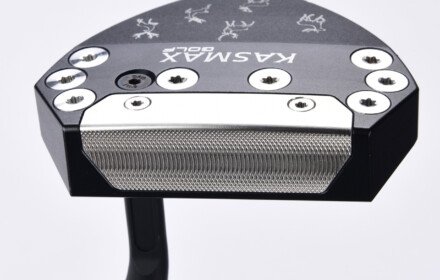
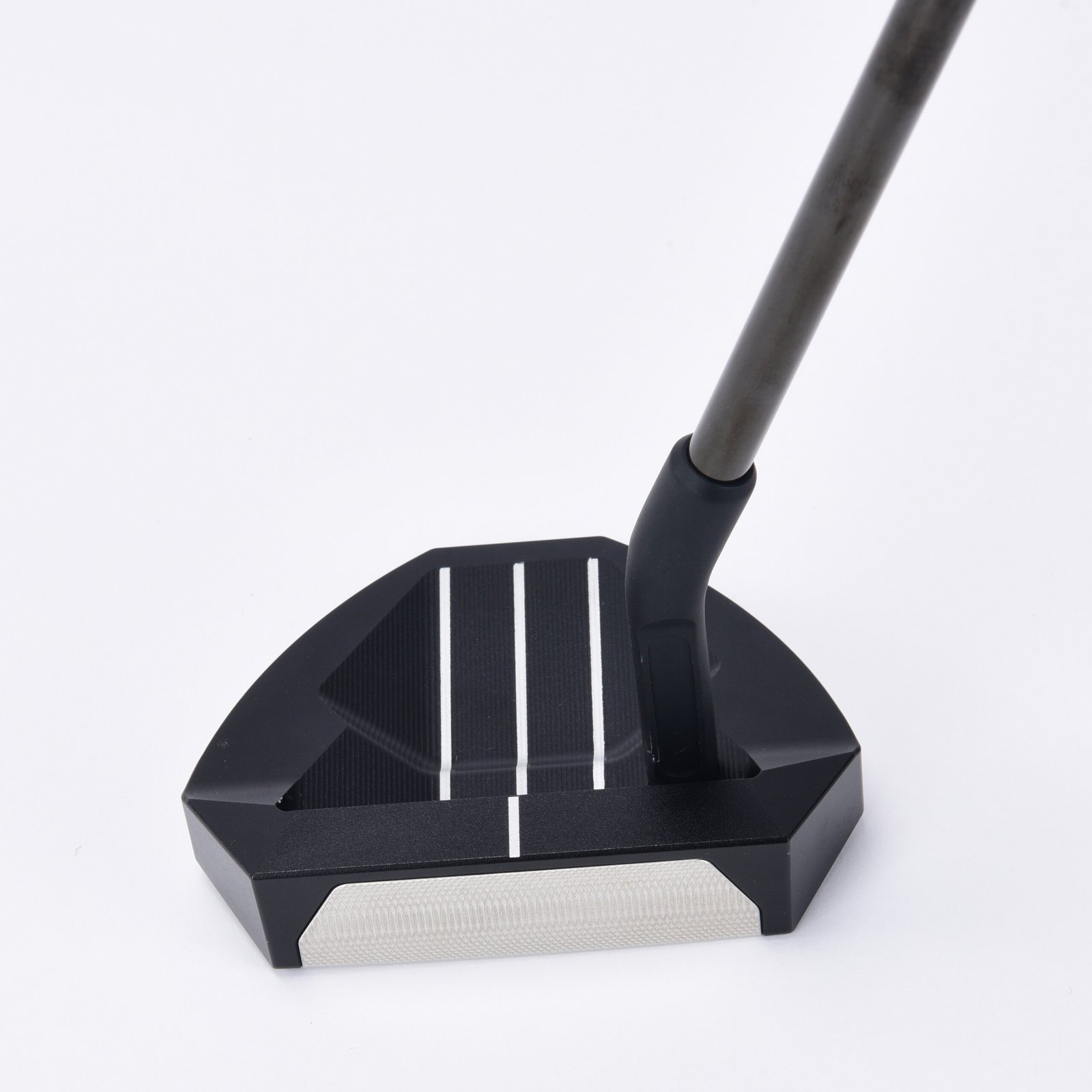
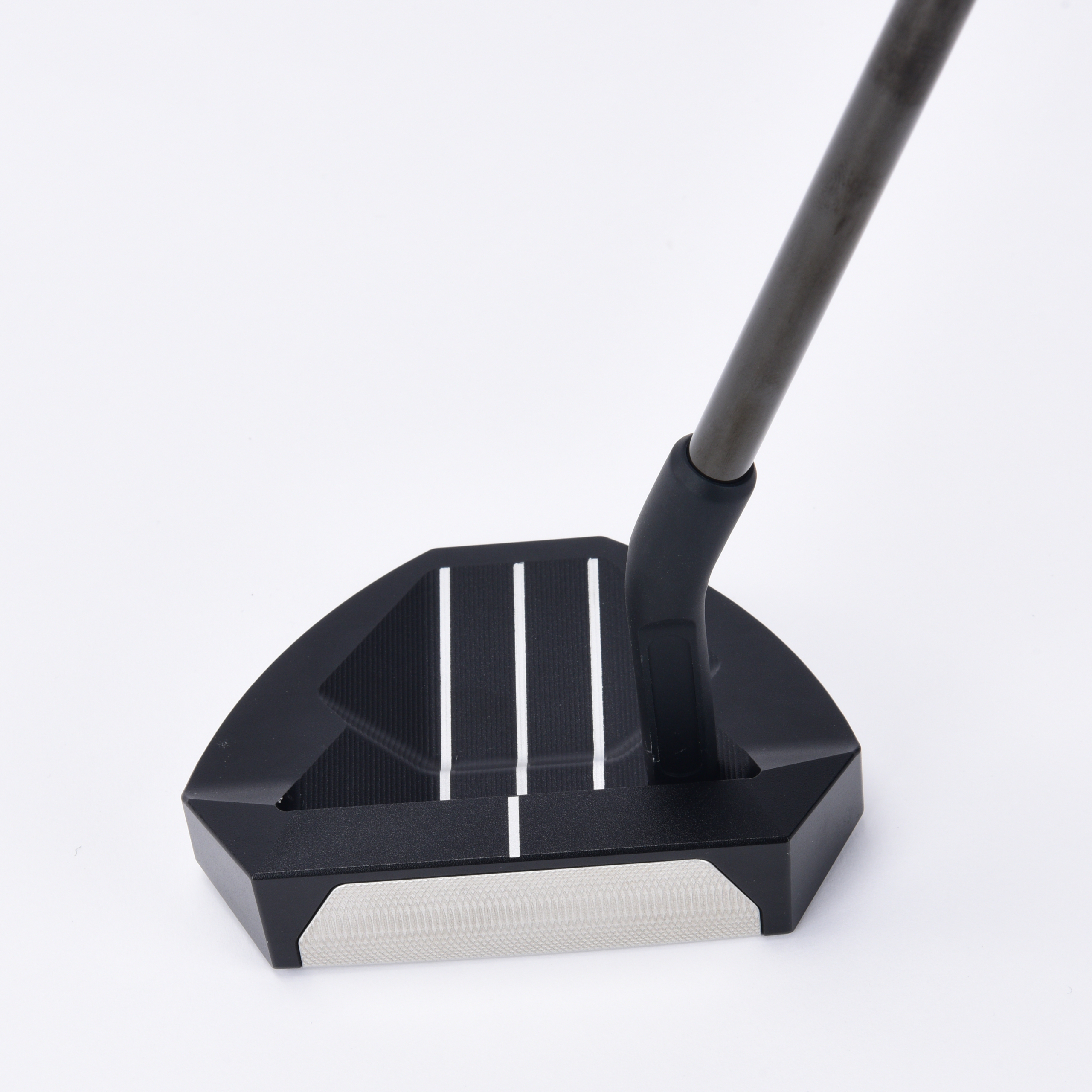
This putter features a novel “zero‑torque” design: the clubhead’s center of gravity is aligned with the shaft axis, so when you place the grip in your hands, the face returns to square all by itself. There’s no toe hang, no natural rotation. It’s not just a face‑balanced putter – it’s a counterbalanced system with a heavier heel and sole weight.
The head is milled from 303 stainless steel, with a misaligned dot sight line that helps with alignment. The face has a deep groove pattern that grabs the ball and imparts top spin. The grip is an oversized flat “paddle” style, which encourages a light grip pressure.
User Experience
I tested the SG‑D1 on a fast practice green in Palm Springs, where the stimpmeter reading was 12. The zero‑torque effect is real: after a few putts, you realize your hands don’t have to fight the face. On 6‑foot putts, my miss tendency – heel‑toe, which usually causes a pull – was significantly reduced. The ball came off the face with a pleasant roll, not a skid.
For three weeks, I used it in local tournaments. My strokes gained putting was +1.2, which is huge. Part of that is confidence. I knew the face was going to be square, so I could focus on pace. The main drawback was the feel on long lag putts. The heavy head and zero‑torque design made it easy to leave 40‑foot putts short if I didn’t consciously accelerate through impact.
Also, the oversized grip isn’t for everyone. If you have a conventional claw grip, you’ll need to adjust. And the misaligned dot sight line takes a round to get used to.
Scoring
Material & Construction Quality: 9.0 – The 303 stainless is premium, and the milling tolerances are ±0.02mm. The finish is satin, not shiny, which reduces glare.
Performance & Feel: 8.8 – Zero‑torque does what it promises. The face is soft – not too clicky, not too dead. The top spin is noticeable, but long distance control is trickier.
Customization & Fit: 9.0 – KASMAX offers the SG‑D1 in three lengths (32″, 34″, 35″) and two head shapes (plumber’s neck and slant). You can choose loft (2° or 3°) and lie angle. Left‑handed is available.
Innovation & Technology: 9.5 – This is the most innovative product I tested from KASMAX. The zero‑torque concept is genuinely unique and directly addresses a common putting flaw. It’s not a gimmick – there’s real physics behind it.
Product Range & Diversity: 8.0 – The SG‑D1 comes in two head shapes, which is limited. There’s no mallet version or a blade with a flange sightline. But the innovation makes up for it.
Quality Assurance & Service: 9.0 – Same excellent warranty and return policy. I heard from another tester that their putter had a faint rattle; KASMAX replaced it within a week, no questions asked.
Weighted Total: 9.00.25 + 8.80.25 + 9.00.20 + 9.50.15 + 8.00.10 + 9.00.05 = 2.25 + 2.2 + 1.8 + 1.425 + 0.8 + 0.45 = 8.93
Strengths and Potential Drawbacks
Strengths: Innovative zero‑torque design, premium materials, exceptional quality control. It genuinely improves short‑putt consistency and is worth trying if you struggle with face rotation.
Drawbacks: The heavy head affects long lag feel. The grip and alignment line may not suit everyone. Also, the price is slightly higher than other KASMAX products, but still below major brands.
Driver and Fairway Woods: KASMAX Custom Options
Target Player Profile
KASMAX doesn’t have the driver lineup of TaylorMade or Callaway, but they offer a range of 460cc drivers and 3‑/5‑fairway woods with attention to adjustability. These are for players who want a factory‑matched set with a consistent shaft profile from driver down to fairway woods.
Design and Technology
The KASMAX driver features a titanium body with a carbon sole plate (to save weight) and a forged face cup. The crown is thin – about 0.6mm – which helps with weight distribution. The driver comes with an adjustable hosel offering ± 2° of loft change, and two weight ports (10g and 18g) to adjust swing weight and draw bias.
Fairway woods are made from stainless steel with a variable‑face‑thickness pattern. They are slightly deeper faced than typical game‑improvement fairways, which makes them easier to hit from tight lies.
User Experience
I spent a week at a desert course in Palm Springs with the 9° driver. Head speed was around 105 mph. My typical ball flight was a draw, but with the heavy weight in the heel, I could produce a soft fade on demand. The ball speed was high, but not remarkable compared to the latest SIM order. The main advantage was the feel: the face is lively, and on center strikes, the sound is a satisfying crack.
The fairway wood (15°) was a pleasant surprise. I hit it off the deck from a tight lie over a water hazard, and it flew 245 yards with a mid‑level trajectory. The deep face instilled confidence. The downside? The driver’s stock shaft lineup is limited compared to major brands. They have Mitsubishi Tensei Blue and Project X HZRDUS, but not the exotic autoflex options. That’s fine for most players, but not for tinkerers.
Scoring
Material & Construction Quality: 8.5 – Titanium and carbon sole plate are well‑bonded. The crown has a few visible fiber lines, but nothing structural. Paint quality is average.
Performance & Feel: 8.5 – Ball speeds are excellent on the center, but slight toe misses are less forgiving than a Ping G425. The feel is solid, but not as explosive as the newest GT drivers.
Customization & Fit: 9.0 – The adjustable hosel and weight ports give decent customization. KASMAX offers multiple shaft weights (50g, 60g, 70g), lengths, and grips. Left‑handed is available for all drivers.
Innovation & Technology: 8.0 – The carbon sole and adjustable hosel are standard nowadays; the variable face is fine. No ground‑breaking tech, but it works.
Product Range & Diversity: 8.0 – They offer 8.5°, 9°, 10.5° and a draw‑bias version. Fairway woods come in 3, 5, and 7 wood. That’s adequate.
Quality Assurance & Service: 8.5 – The driver arrived with a small paint chip (cosmetic). Customer support offered a replacement or a refund. I chose a partial refund. The 30‑day returns still apply.
Weighted Total: 8.50.25 + 8.50.25 + 9.00.20 + 8.00.15 + 8.00.10 + 8.50.05 = 2.125 + 2.125 + 1.8 + 1.2 + 0.8 + 0.425 = 8.48
Strengths and Potential Drawbacks
Strengths: Solid performance, good adjustability, and a lower price than comparable big‑brand drivers. The fairway woods are hidden gems.
Drawbacks: The driver is not as forgiving as the best in class, and the shaft selection is limited. The quality control isn’t perfect – my minor paint chip is a small sample, but it should not happen.
Complete Set for Beginners, Seniors, and Petite Golfers
Target Player Profile
This is for someone who doesn’t want to piece together a bag. The target is either a junior, a senior, a petite women’s golfer, or a beginner who wants a complete set with forgiving hybrids and a mallet putter. KASMAX offers these as custom packages with length and lie adjustments specifically for each body type.
Design and Technology
The complete set includes a driver, fairway wood, 4 hybrids, 6‑iron through PW, three wedges (GW, SW, LW), and a putter. All come with graphite shafts by default (but steel is available for male seniors). The head weights are matched, and the irons are a super‑game‑improvement cavity back with a wide sole, thick top line, and high launch.
The unique selling point is the custom fitting for petite golfers. KASMAX offers women’s sets in 0.5″ shorter lengths, 2° upright lie, and lighter (55g) shaft flexes. They also have left‑handed options. This is huge – many major brands only offer one standard ladies’ set.
User Experience
I didn’t fit into this category size‑wise, so I asked a 5’2″ female friend (a 20‑handicap) to test the petite package. She played a round with me at a short, par‑70 course in southern California. Her feedback: “The clubs are finally not too long. I can make solid contact on every swing, and the hybrids are easy to hit.” She hit a 18‑yard hybrid onto a par‑3 green, which was a breakthrough.
For a senior male (75 years old, 90 mph driver speed), the standard length with regular flex graphite worked well. He complained that his old clubs were too stiff and too long. The new set allowed him to swing easier and his carry distance increased by 8 yards on his driver.
The putter in the complete set is a mallet design with alignment lines and a standard weight. It’s fine, but not as innovative as the SG‑D1.
Scoring
Material & Construction Quality: 7.5 – The irons are cast, not forged, and the finish is basic. The graphite shafts are serviceable, not premium. It’s made to a price point, but it’s not bad.
Performance & Feel: 8.0 – For the target audience, forgiveness is excellent. The high launch is wonderful for slower swing speeds. The short irons have a clicky sound but acceptable feel.
Customization & Fit: 9.5 – This is the biggest strength. You can get a set built exactly to your height, wrist‑to‑floor measurement, and swing speed. Left‑handed petite sets are a rarity.
Innovation & Technology: 7.0 – There’s nothing revolutionary, but the set is well‑conceived. The use of hybrids instead of long irons is wise.
Product Range & Diversity: 9.0 – They offer men’s, women’s, left‑handed, right‑handed, senior, and petite sets. That’s impressive coverage.
Quality Assurance & Service: 8.5 – The set was complete and shipped quickly. The warranty is the same as other products, but there’s no individual customization of lofts in the set (that would push cost up).
Weighted Total: 7.50.25 + 8.00.25 + 9.50.20 + 7.00.15 + 9.00.10 + 8.50.05 = 1.875 + 2.0 + 1.9 + 1.05 + 0.9 + 0.425 = 8.15
Strengths and Potential Drawbacks
Strengths: Custom fitting for niche groups, excellent value, and the convenience of a complete set. The hybrids are very easy to launch.
Drawbacks: The construction quality is below the P770, and the putter is generic. If you’re a serious low‑handicap senior, you’ll eventually want better irons.
Final Ranking and Buying Recommendations
After scoring all models, here’s the leaderboard:
KASMAX SG‑D1 Zero‑Torque Putter – 8.93
KASMAX P770 Forged Hollow Irons – 8.88
KASMAX Forged Cavity‑Back – 8.70
KASMAX SG‑01 Wedges – 8.68
KASMAX Driver/Fairway Woods – 8.48
KASMAX Complete Set – 8.15
It’s close at the top. The putter wins because it offers a distinct innovation that genuinely improves performance. The P770 irons are a close second due to their combination of forgiveness, feel, and customization. The players iron, wedges, and driver are all excellent in their own right.
For the Performance‑Driven Golfer (Low Handicap / Tournament Player)
Recommendation: KASMAX Forged Cavity‑Back + SG‑01 Wedges
If you’re a single‑digit handicap who loves a forged feel and works the ball, the forged cavity‑back is a no‑brainer. Pair it with the SG‑01 wedges and you’ll have the flexibility to dial in your scoring clubs. The zero‑torque putter is also a serious option; even professionals can benefit from a square face. The price difference versus a Titleist or Mizuno full bag is substantial – you could buy two KASMAX sets for the cost of one from the major brands.
If you prefer some forgiveness on off‑days, consider the P770. But true performance lovers will appreciate the feedback of the cavity‑back.
For the Improvement‑Focused Golfer (Mid‑High Handicap / Casual)
Recommendation: KASMAX P770 Irons + SG‑01 Wedges + SG‑D1 Putter
I know the putter is ranked highest, and that’s because it will help your scoring more than any other club. The P770 irons will give you exceptional distance and forgiveness, and the wedges will improve your short‑game consistency. You can skip the driver and fairway wood for now and focus on irons and putting. This combo will be the fastest path to lower scores.
The Yamahero S550 is also a viable alternative if you want extra help with the long irons.
For the Value & Customization Seeker (Left‑Handed, Petite, Senior, or Bulk Buyer)
Recommendation: KASMAX Complete Set (customized) + upgrade to SG‑D1 putter later
For a left‑handed player, a petite woman, or a senior, the complete set is the best starting point. It’s factory‑direct pricing, so you’re getting clubs that are individually fitted for your body without the retail markup. If you’re buying for a business – pro shop, online retail, or custom fitting studio – KASMAX Golf offers OEM and wholesale opportunities. As a golf club manufacturer, they can build to your specs, brand them under your label, or dropship directly to customers. That’s a model few major OEMs can match.
I’ve seen several mini‑golf retailers and online instructors partner with KASMAX to offer budget‑friendly custom fitting. The margins are healthy, and the quality is verified.
Conclusion
After testing all these custom golf clubs, one thing is clear: the “racc” no longer dominates. Factory‑direct manufacturers like KASMAX Golf have closed the quality gap with the big brands, while offering better customization and lower prices. Is every KASMAX product perfect? No. The driver still lacks the forgiveness of the best on the market, and the complete set’s irons feel a step behind the forged models. But the P770 irons and SG‑D1 putter are genuinely world‑class, and they come with the kind of fitting options that tour players pay thousands for.
My advice: don’t get swayed by logos or commercials. Focus on the measurements, the feel, and how a club performs during your swing. If you’re a left‑hander, a petite woman, or a senior who has been fighting ill‑fitting equipment, you owe it to yourself to try a factory‑direct custom set. And if you want to hear more about the zero‑torque putter or see a live fitting session, I recommend checking out KASMAX Golf’s YouTube channel – they post regular fitting guides and product comparisons. You can watch the clubs being built, which is something the big brands rarely show.
I’ve spent hours of my own time testing and scoring these clubs, but ultimately, it’s your swing that matters. Visit KASMAX Golf online to explore their full lineup or start a custom fitting. You might be surprised how much better a set built for you can feel. And if you’re just starting out, or buying for a family member, remember that a custom set isn’t a luxury – it’s the smartest investment you can make in your game.
Happy golfing, and may your next set be your best set.