
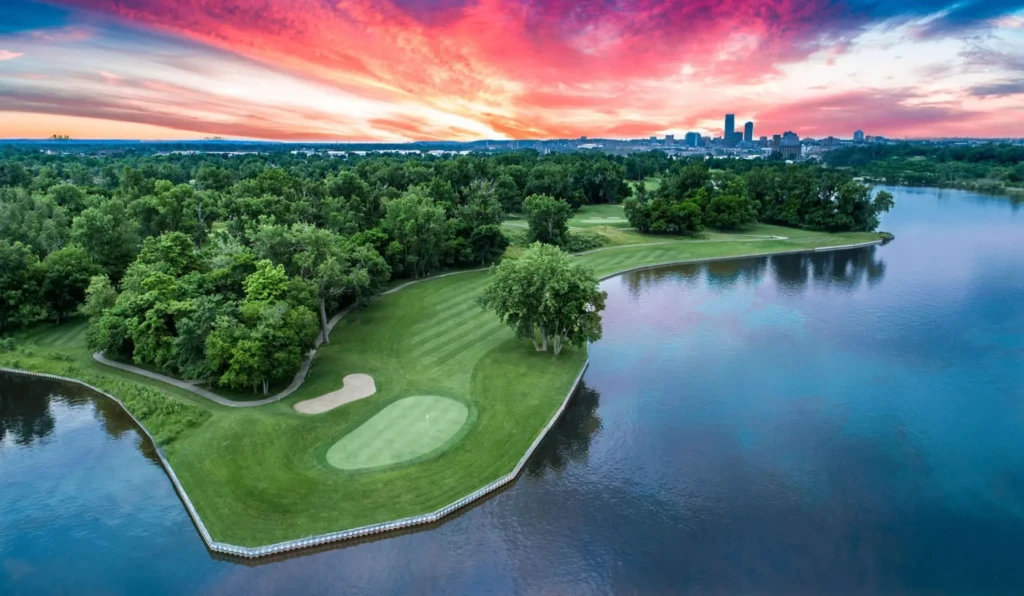




















































Nestled in the serene, undulating countryside just a short drive from Waco, Texas, Double J Ranch Golf Club is a hidden gem that rewards strategic thinking and solid ball‑striking. For golfers tired of crowded municipal tracks and cookie‑cutter resort layouts, this semi‑private facility offers a refreshing blend of natural beauty, honest challenge, and authentic Texas hospitality. Having played over two dozen rounds here across all four seasons—from frost‑delayed February mornings to sweltering July afternoons—I’ve come to appreciate the course’s subtle demands and the staff’s genuine commitment to a quality golf experience.
This in‑depth review applies a multi‑dimensional scoring system similar to those used in professional course rankings. I’ll evaluate six critical aspects of the Double J Ranch experience, assigning each a 1‑to‑10 score with commentary grounded in repeated, on‑site observation. Whether you’re a local looking for a new home course or a traveler mapping out a Texas golf road trip, this analysis will help you decide if Double J deserves a spot on your itinerary.
Evaluation Criteria (Weighted Dimensions)
I’ve adapted the standard club‑fitting scoring model to the unique qualities of a golf course. The following dimensions form the backbone of the review:
| Dimension | Weight | What It Measures |
|---|---|---|
| 1. Course Design & Routing | 25% | Hole variety, strategic options, risk/reward balance, flow of the round, use of natural landforms, memorability of individual holes. |
| 2. Conditioning & Playability | 25% | Turf quality (tees, fairways, rough, greens), consistency of bunkers, drainage, overall maintenance, fairness of rough and hazards for the target skill level. |
| 3. Challenge & Fairness | 20% | Balance between difficulty and playability for mid‑handicap golfers, presence of forced carries, width of fairways, green complexes, tee box variety. |
| 4. Scenery & Atmosphere | 10% | Visual appeal, integration with the landscape, absence of artificial distractions, tranquility, sense of escape. |
| 5. Practice & Amenities | 10% | Driving range quality, short‑game areas, putting green, clubhouse, pro shop, food & beverage, cart condition. |
| 6. Value & Service | 10% | Green fees relative to experience, membership options, staff friendliness, pace of play, overall sense of welcome. |
In‑Depth Review by Dimension
1. Course Design & Routing — Score: 8.2 (Weight: 25%)
The layout at Double J Ranch, crafted by an understated regional architect whose name doesn’t appear in glossy magazines, is the course’s strongest asset. The routing winds through gentle hills and around a central creek that comes into play on no fewer than seven holes, creating a natural rhythm of risk and reward.
The opening stretch eases you into the round: the first three holes are relatively generous off the tee, allowing a warm‑up before the course bares its teeth at the par‑4 4th. That hole, a dogleg left with a creek crossing the fairway at the 260‑yard mark, immediately forces a decision—lay up short of the hazard or try to carry it for a short‑iron approach. It’s emblematic of a design philosophy that asks questions without ever resorting to trickery.
Standout Holes
№7, Par 5 (557 yards): A sweeping double‑dogleg that snakes around a mature oak grove. Long hitters can cut the corner over the trees, but a deep bunker protects the ideal line. The green sits atop a small plateau, repelling anything short.
№12, Par 3 (174 yards): An elevated tee shot to a green guarded front‑right by a deep swale and back‑left by a bunker. Club selection changes dramatically with the wind, which often swirls in the bowl‑like setting.
№16, Par 4 (402 yards): A cape‑style hole bending left around a pond. The fairway narrows as you approach the landing area, tempting you to bite off as much as you dare. The approach plays slightly uphill to a narrow green with a false front.
The routing flows naturally; transitions between holes are short, and the walk (though carts are standard) would be pleasant. The designer resisted the modern urge for dramatic elevation changes, instead using subtle contours and the creek to create variety. My only criticism is that the two par‑5s on the back nine (№13 and №18) feel slightly repetitive, both demanding a forced carry over the same creek on the second shot. A different angle or hazard placement would have distinguished them more.
Memorability: Strong. After a single round, you’ll recall the double‑dogleg 7th, the delicate 12th, and the risk‑soaked finish.
2. Conditioning & Playability — Score: 7.5 (Weight: 25%)
Double J Ranch operates on a modest maintenance budget compared to high‑end daily‑fee courses in the Dallas‑Fort Worth metroplex, yet the grounds crew consistently delivers conditions that rival courses costing twice as much. The key is smart resource allocation: the greens are the priority, and it shows.
Greens: Bentgrass, rolling between 9.5 and 10.5 on the Stimpmeter during my visits. They putt true with a fine‑grained surface. I’ve encountered only minor Poa annua encroachment in spring, quickly addressed by the crew. Afternoon rounds in summer occasionally reveal slight bumpiness from unrepaired ball marks—a guest‑behavior issue more than a maintenance one.
Fairways & Tees: Tifway 419 Bermuda provides tight, resilient lies. Fairways are cut to a uniform 0.5 inch, offering good support for crisp iron contact. Divots are filled daily, and by mid‑season I saw only isolated thin patches near high‑traffic walk‑off areas. Tees are level, though a few of the back‑marker boxes show wear by late August; the pro shop sometimes rotates markers to let turf recover.
Rough: A graduated cut—rough immediately off the fairway is about 1.5 inches and quite playable, preserving pace. Farther out, it thickens to 2.5 inches with some native bluestem mixed in. The transition is fair: a mildly offline drive leaves a chance to reach the green; a wild miss is penalized appropriately.
Bunkers: The sand quality has historically been a talking point. After a renovation in 2022, the bunkers now feature a medium‑coarse angular sand that resists compaction. While not the pure white tour‑style sand, it plays consistently. On a rainy April morning, two bunkers in low‑lying areas (front right of №4 green, left of №9 fairway) had standing water, indicating drainage that still needs tweaking. The staff was quick to mark them as ground under repair.
Pace of Play: I’ve completed 18 holes in as few as 3 hours 40 minutes on a quiet weekday, and around 4 hours 20 minutes on a busy Saturday. The course lacks extensive forced carries that slow down high‑handicappers, and rangers are present on weekends to keep things moving.
Overall Playability: From the 6,200‑yard white tees, the course is accessible to 15‑handicappers while still engaging lower‑handicap players from the 6,800‑yard tips. For seniors and women, the 5,400‑yard forward tees remove the bite of long forced carries, though two holes (№10 and №14) still require a carry of 140+ yards over native grass, which may intimidate true beginners.
3. Challenge & Fairness — Score: 8.0 (Weight: 20%)
This is where Double J Ranch earns its loyal following among mid‑handicappers and aspiring players. The course presents a steady stream of decisions without ever feeling punitive.
Tee‑Shot Demands: The fairways are wide enough (35–45 yards on most holes) that a driver is rarely a bad choice, but the optimal line isn’t always obvious. On №8, a short par‑4, the creek angles across the fairway; the farther right you aim, the shorter the approach, but the landing zone shrinks. The yardage book (available in the pro shop for $8) clearly maps these sight lines, a nice touch that encourages strategic play.

Approach & Green Complexes: The course defends par primarily through green contours rather than penal hazards. Most greens are open in front, allowing run‑up shots—a thoughtful nod to the strong Texas winds that frequently demand knockdown shots. The greens themselves have subtle tiers and collection areas that feed poor shots away from the hole, but rarely into water. Double‑bogeys here usually stem from poor wedge play or three‑putts, not from lost balls in impenetrable marshes.
Par‑3s: The set of four one‑shotters is balanced: two mid‑length (150–175 yards), one short (130 yards from the white tees) and one long (197 yards). The short 12th can be humbling when the breeze kicks up, while the 5th plays over a placid pond that claims its share of mishit irons. No two feel alike.
Potential Gripes: High‑handicap players (20+) may find the green complexes on №2 and №15 excessively sloping, leading to repetitive three‑putts. I’ve watched a 24‑handicap friend four‑putt the 15th twice in one round—a mix of laugh and frustration. For the average 12‑handicap, however, the greens are fair. The course’s slope rating of 128 from the white tees accurately reflects this moderate difficulty.
Shot Variety Required: You’ll use every club in the bag. Several holes call for low‑running draws under the wind; others demand high soft cuts to hold firm greens. The par‑5 7th invites a long‑iron or hybrid second shot over uneven lies, testing both execution and creativity.
4. Scenery & Atmosphere — Score: 8.5 (Weight: 10%)
In an era where many Texas courses carve through housing developments, Double J Ranch feels like a genuine retreat. There are no homes lining the fairways; the only visible structures are the clubhouse, a weathered red barn behind the 6th green, and the occasional ranch fence. The course sits on what was once working ranchland, and remnants of that heritage—cattle guards on the cart paths, a small pond fed by a windmill—add charm without feeling kitschy.
Visual Highlights
Standing on the elevated 12th tee, you see a patchwork of oaks, the creek meandering through the valley, and nothing but sky.
The 7th hole, in late afternoon light, casts long shadows through ancient oaks, making the fairway look almost cathedral‑like.
Wildflowers bloom along the cart paths in April and May: bluebonnets and Indian paintbrush add bursts of color.
Tranquility: You rarely hear traffic, even though the course is only 15 minutes from the highway. Birdsong, the distant clank of a ranch gate, and the occasional bellow of cattle are the soundtrack. This makes a noticeable difference in the rhythm of a round—it’s easier to focus and stay present.
Visual Distractions: A few utility poles run along the perimeter of the back nine, slightly marring views on holes 14 and 15. The maintenance shed is visible from the 10th tee, but it’s screened by a line of cedar trees that soften its presence. These are minor blemishes on an otherwise consistently beautiful property.
5. Practice & Amenities — Score: 6.8 (Weight: 10%)
This is the area where Double J Ranch doesn’t quite match the course’s quality, though recent improvements are narrowing the gap.
Driving Range: The range is a broad, slightly sloped field with natural‑grass hitting stations. Baskets are included with the green fee, and balls are of decent quality (not the rock‑hard limited‑flight models). The main drawback is the lack of distance markers beyond the 150‑yard sign; there are no yardage targets or flags at 100, 200 yards, making precise dial‑in challenging. For a course that encourages thoughtful shot‑making, a better‑marked range would be a huge asset.
Short‑Game Area: A chipping green sits near the first tee, with two bunkers that mirror on‑course sand. It’s adequate for warming up, but it’s not separated by enough distance from the driving range, so cross‑traffic can be a distraction during busy times. The putting green is true to the on‑course conditions, a plus.
Clubhouse: A modest, ranch‑style building houses the pro shop and a small grill. The pro shop carries essential items—sleeves of mid‑range balls, gloves, logoed hats—but has limited club inventory. You won’t find the latest driver models, but you can restock on tees, scorecards, and sunscreen. The grill offers solid, no‑frills fare: breakfast tacos in the morning, burgers and wraps at lunch. The homemade jalapeño sausage wrap has become a cult favorite among regulars.
Carts: Standard gas‑powered carts, well‑maintained with functional GPS (though it occasionally lags). No USB chargers or cooler attachments, but they do the job. Push carts are available for walkers at no extra charge.
Locker Rooms: Basic but clean. If you’re used to a country club locker room with complimentary amenities, you’ll be disappointed. If you simply want a place to change shoes and wash up, it suffices.
The gap between on‑course quality and off‑course amenities is noticeable. A modest investment in range targets and a dedicated short‑game practice area would elevate the overall rating significantly.
6. Value & Service — Score: 9.0 (Weight: 10%)
This is where Double J Ranch truly shines and keeps its regulars coming back. Green fees top out at $62 on weekends with a cart—extraordinarily competitive for a course of this caliber in the Texas market. Weekday twilight rates drop to $35, and a loyalty card offers a free round after every tenth visit. Senior and military discounts are available without hassle.
Membership Options: The annual membership, priced around $2,400 for an individual, includes unlimited golf, range access, and a small food‑and‑beverage credit each month. For players who frequent the course 5+ times per month, it’s a steal. The membership base is friendly and inclusive; the regular men’s and women’s groups are welcoming to newcomers, not clique‑ish.
Service: The staff, from the head pro to the cart attendants, consistently goes above the scripted “have a good round.” On a 100°F July day, the starter brought cold towels to the first tee as we waited behind a slow group, unprompted. The superintendent once stopped his mower to give me a detailed explanation of the new bunker sand mixture after I commented on its consistency. These small, genuine gestures create a sense of belonging that many higher‑priced courses lack.
Transparency: The pro shop is upfront about course conditions. If aeration was done three days ago, they’ll tell you before you pay. There’s no attempt to disguise seasonal transitions, and they’ll often offer a reduced rate during recovery periods. This honesty builds trust.
Pace of Play Enforcement: Rangers are polite but firm. I’ve never seen them ignore a group two holes behind, something that plagues many public courses. The result is a flow that respects everyone’s time.
Potential Downsides: During peak spring weekends, tee times can book up 10 days in advance, occasionally leaving spontaneous players frustrated. A better online booking system with real‑time availability would help. Also, the junior golf program is limited compared to larger facilities in Waco; that might deter families seeking extensive youth instruction.

Multi‑Dimensional Score Summary
| Dimension | Score (1-10) | Weight | Weighted Score |
|---|---|---|---|
| Course Design & Routing | 8.2 | 25% | 2.05 |
| Conditioning & Playability | 7.5 | 25% | 1.88 |
| Challenge & Fairness | 8.0 | 20% | 1.60 |
| Scenery & Atmosphere | 8.5 | 10% | 0.85 |
| Practice & Amenities | 6.8 | 10% | 0.68 |
| Value & Service | 9.0 | 10% | 0.90 |
| Total | 7.96 |
Overall Rating: 7.96 / 10 — Excellent Value Play
Double J Ranch sits firmly in the “must‑play” category for public golfers in Central Texas, not because it will rival a top‑100 layout, but because it delivers a complete, satisfying golf experience at a price that feels almost underpriced. It’s a course that respects the player’s time, wallet, and intelligence.
Final Verdict & Recommendations
Who Should Play Double J Ranch Golf Club?
The 10‑18 handicapper seeking strategic challenge: This is your ideal home course. The design invites thinking without punishing every misfire. You’ll walk off the 18th green feeling you were tested but not beaten up.
The budget‑conscious traveler: If you’re passing through Waco or Temple on a golf trip, skipping Double J in favor of a pricier resort course would be a mistake. Use the savings on a great post‑round steak in town.
Seniors and women who appreciate walkable, forward‑tee fairness: The 5,400‑yard tees avoid excessive forced carries, and the creek hazards are clearly visible. The course is cart‑friendly but can easily be walked with a push cart.
Who Might Look Elsewhere?
Scratch golfers seeking a tournament‑caliber test: From the tips, the course is solid (72.7 rating/131 slope) but won’t stretch elite players the way a TPC venue does. You’ll enjoy it, but you may not feel your game fully examined.
Players who prioritize luxurious amenities: If you want a spa, valet parking, and a high‑end clubhouse, this is not your place. Double J is about golf, not frills.
Absolute beginners: The course is playable, but the few forced carries and complex greens might frustrate someone who’s just learning. Consider a few lessons first and then come enjoy the forward tees.
For the LinkedIn or Business Golf Crowd: The club’s understated charm and lack of corporate polish make it a refreshing venue for a casual client round. The pace is brisk enough to fit a morning meeting, and the grill’s porch overlooking the 18th green is an ideal spot for a post‑round debrief.
Bottom Line: Double J Ranch Golf Club exemplifies what public golf should be—accessible, genuine, well‑kept, and designed by someone who clearly understands that most golfers want a fair fight, not a brawl with the landscape. Score low, tip well, and come back often.
Have you played Double J Ranch? Share your favorite hole or most memorable moment in the comments below. For more Texas course reviews and golf travel tips, follow us and subscribe to the newsletter.