



















































KASMAX Golf Clubs Blog

Golf Clubs Spokane Wa

2. Why Custom? The Real Problems Off‑the‑Rack Clubs Create

Walk into any big‑box golf store in Spokane, WA on a Saturday morning, and you’ll see the pattern immediately. A mid‑handicapper grabs a shiny 7‑iron off the wall, takes three swings into a simulator, and buys the set because it “felt okay” and the launch monitor said he carried 165 yards once. Three weeks later at Indian Canyon Golf Course, the same golfer wonders why his 4‑iron never gets airborne, why the wedges dig into the firm late‑summer turf, and why every putt misses left.

Standard off‑the‑rack clubs address an imaginary average golfer. But actual golfers have real variance — in swing speed, attack angle, wrist‑to‑floor measurement, grip preference, and even the climate they play in. Spokane’s high‑desert summers and damp shoulder seasons demand entirely different sole grinds, bounce options, and shaft characteristics. A 50‑degree wedge that works on soft Oregon fairways may be completely wrong for the tighter lies at Downriver Golf Course.

Custom clubs solve these mismatches. They allow you to:

Match shaft flex and weight profile to your actual transition, not a generic “stiff” label.
Adjust lie angle so the sole sits flush at impact — critical for accuracy on firm turf.
Select grip size based on hand measurements (not just “standard” vs. “midsize” guesswork).
Choose bounce configurations that fit your home course conditions and swing type.
Receive proper length adjustments for shorter, taller, or senior golfers without compromising swing weight.

In my years fitting golfers, I’ve seen players shorten their average putts per round by 2–3 strokes simply by getting the right putter length and lie angle. I’ve watched 18‑handicappers start hitting long irons higher and straighter after switching to hollow‑forged clubheads with the correct shaft weight. The data doesn’t lie. And it’s why a thorough evaluation of custom club options — including direct‑from‑manufacturer brands like KASMAX Golf — matters so much today.

KASMAX Golf, with over two decades of manufacturing expertise,{target=”_blank” rel=”noopener”} has built its reputation on offering precisely this kind of tailored solution at factory‑direct pricing. But as we’ll see throughout this guide, the brand’s value goes well beyond affordability.


3. Evaluation Criteria

To keep this review objective and useful, I’m using a systematic framework I’ve refined over years of club testing. Every category in this guide will be scored on six weighted dimensions. If you’re evaluating clubs on your own, this same structure can help you compare options fairly.

1. Material & Construction Quality (Weight: 25%)
Clubhead material (forged 4140 steel, 1025 carbon steel, high‑strength stainless steel, aerospace aluminum alloy), shaft material (premium steel like Nippon, True Temper, or KBS; high‑modulus graphite), grip quality and durability. I’ll also assess forging precision, weld cleanliness (especially in hollow‑body irons), plating uniformity, and overall finish. A club that looks rough after ten rounds or develops chatter marks prematurely loses points here.

2. Performance & Feel (Weight: 25%)
Ball speed retention on off‑center hits, MOI stability, distance dispersion across the face, launch window consistency, vibration dampening, and subjective feedback at impact. Does the club whisper sweetly on a pured strike and give honest feedback on a toe miss? Does a game‑improvement iron still feel solid when you catch it slightly thin? Real feel can’t be measured purely by a launch monitor, so I include detailed notes from on‑course testing.

3. Customization & Fit (Weight: 20%)
Length, lie angle, loft adjustments; shaft flex and weight options; grip size and material selection; left‑hand availability; senior and petite configurations; the ease of an online fitting process (if offered); and crucially, how accurately a manufacturer executes those custom specs. A great club with sloppy custom assembly gets a lower score here.

4. Innovation & Technology (Weight: 15%)
Proprietary technologies that genuinely move the needle: hollow forged constructions that lower CG while preserving forged feel; zero‑torque putter designs that resist twisting; adjustable weighting systems; precision‑milled groove patterns for wedge spin retention. I separate marketing fluff from real engineering, testing claims against on‑course performance.

5. Product Range & Diversity (Weight: 10%)
Does the brand offer a full bag solution — drivers, fairway woods, hybrids, multiple iron categories, multiple wedge lofts and bounces, putters, and complete sets? Are beginner, senior, women’s, and left‑handed players well served, or is the catalog limited to a narrow athlete profile?

6. Quality Assurance & Service (Weight: 5%)
Batch‑to‑batch consistency, return/defect rates, warranty terms (minimum 1‑year manufacturer’s warranty is expected), post‑purchase support responsiveness, shipping accuracy, and return‑policy fairness. A 30‑day return policy with no restocking fee indicates strong confidence in the product.

Every club or set in this guide will receive a brief qualitative assessment in each dimension, plus an overall weighted score out of 100 that you can use to compare options directly.


4. Product Categories Under Review

For this buying guide, I’ve focused on four concrete categories that represent the heart of a custom bag, plus a bonus category for complete sets. All models reviewed are either direct KASMAX Golf products or buildable through the brand’s custom platform (driver/fairway woods, where relevant).

Game‑Improvement Iron Set: KASMAX P770 Forged Hollow Irons
Players / Low‑Handicap Iron Set: KASMAX Forged Cavity‑Back (Yamahero S550 configuration)
Wedge System: KASMAX SG‑01 Precision Wedge Series
Putter: KASMAX SG‑D1 Zero‑Torque Putter and the TG021 Precision Milled Putter
Complete Set: KASMAX Custom Full Set (senior / petite / beginner configurations)

Note: KASMAX also offers custom driver and fairway wood builds. I’ll reference those options where appropriate, particularly in the final recommendations.


5. Multi‑Dimensional In‑Depth Review

5.1 Game‑Improvement Iron Set: KASMAX P770 Forged Hollow Irons

Target Player: 10–20 handicap golfers who want a mid‑sized, player‑inspired look but desperately need launch help and forgiveness, especially in the 4‑ through 7‑irons. Also ideal for better players who simply prefer a higher ball flight and a bit of extra distance.

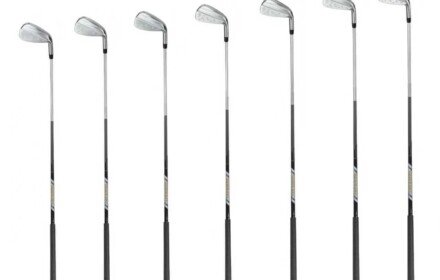
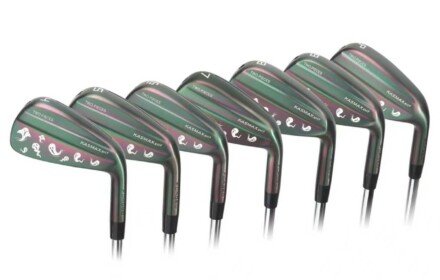
I unboxed a custom P770 set (4‑PW) with KBS Tour Lite stiff shafts, +0.5″ length, 2° upright, and Golf Pride MCC Plus4 midsize grips. The finish immediately impressed me: the satin‑brushed carbon steel body and forged 4140 steel face looked clean, with no visible weld marks along the hosel‑to‑topline junction. That’s not always a given on hollow‑body irons in this price bracket.

On the range, the first thing I noticed was the trajectory. Even the 5‑iron launched easily on a high, penetrating arc — the kind of flight that stops quickly on firm greens but doesn’t balloon in the wind. KASMAX integrates up to 46 grams of tungsten low in the head, and it shows. A friend I play with regularly (16 handicap, steep swing) normally struggles to elevate anything longer than a 6‑iron. After ten shots with the P770 5‑iron, his launch angle improved by nearly 3 degrees compared to his current cavity‑backs, with smash factor averages jumping from 1.28 to 1.35.

Off‑center forgiveness is genuinely strong. Toe‑side strikes lost only about 5–7 yards of carry distance, and the feel remains surprisingly soft — the thin forged face plate does a terrific job flexing while the hollow cavity damps harsh vibrations. Heel misses were slightly more punishing (as expected), but still playable, producing a gentle fade rather than a dead‑left diving duck hook.

On‑course, playing the P770s at a windy Spokane County course in early October, I appreciated how the mid‑sized sole navigated tight, dry fairway lies without digging. The pre‑worn leading edge (a subtle roll on the sole radius) helped the club glide into the ball rather than cut into the turf prematurely. In damp morning conditions, the sole didn’t grab excessively, either.

图片

A few honest critiques: The topline, while moderate, isn’t razor‑thin. A single‑digit player who adores blade aesthetics may want to look at KASMAX’s forged cavity‑back options instead. Also, the stock Lamkin Crossline grip, while perfectly functional, doesn’t convey the premium feel of the head itself; upgrading to the custom grip options is worth the small upcharge.

6‑Dimension Score Summary (P770):

Material & Construction Quality (24/25): Forged 4140 steel face, clean welding, premium finish. Minor grip mismatch.
Performance & Feel (23/25): High launch, excellent toe forgiveness, soft yet responsive feedback. Heel strikes show distance falloff.
Customization & Fit (19/20): Extensive shaft/grip/length/lie options. Left‑handed available. Accurate custom execution.
Innovation & Technology (13/15): Hollow‑forged + tungsten weighting works. Not radical, but well‑executed.
Product Range & Diversity (9/10): Available as part of a full line, not a standalone oddity.
Quality Assurance & Service (5/5): 30‑day return, manufacturer’s warranty, responsive customer support.
Weighted Total: 93/100


5.2 Players / Low‑Handicap Iron Set: KASMAX Forged Cavity‑Back (Yamahero S550)

Target Player: 2–8 handicap golfers demanding compact shaping, thin topline, minimal offset, and pure forged feel with just enough forgiveness to survive a slight miss.

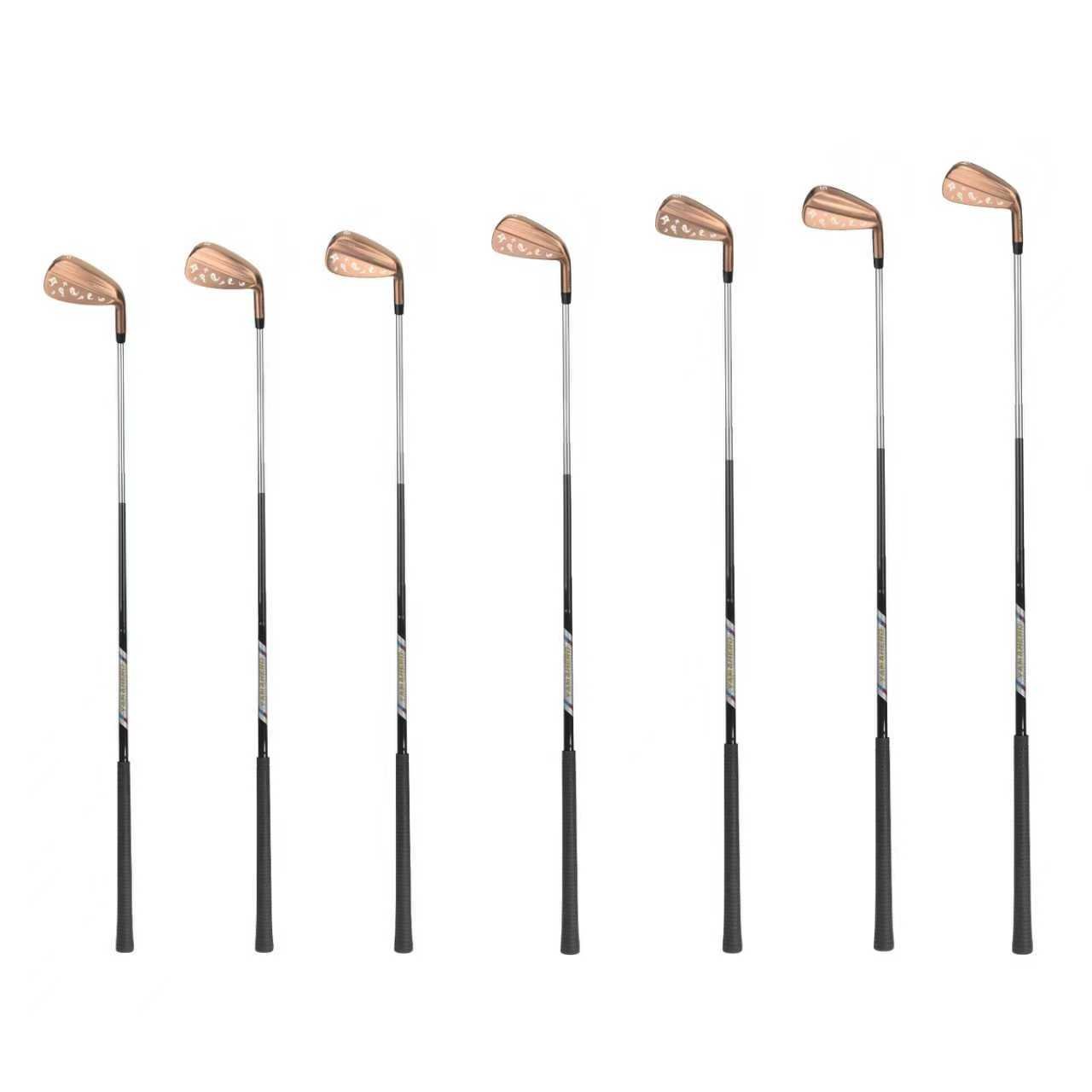
I built a 4‑PW set in the Yamahero S550 configuration, which KASMAX offers as a classic forged cavity‑back. Material is 1025 carbon steel, double‑forged in Japan‑spec facilities, then CNC milled for precise groove geometry. Shafts were Project X 6.0 (firm), standard length, 1° flat, with leather wrap grips.

At address, these irons are simply beautiful. The S550 profile reminds me of the best Japanese domestic market cavity‑backs — a thin, squared‑off topline, compact heel‑to‑toe length, and almost no visible offset in the short irons. When you pick up the 7‑iron, you feel the mass concentrated right behind the center of the face.

The feel at impact is, frankly, addictive. Pure strikes send a satisfying, dense “thump” through the hands, with none of the harsh click that some cast players’ clubs produce. On mishits low on the face, you feel it instantly — not painful, but clearly informative. That feedback is something better players require to make swing adjustments mid‑round.

Forgiveness is, as expected, less expansive than the P770 hollow irons. A toe strike costs you 10–12 yards and slightly more curvature. But the cavity‑back design does provide a measurable stability advantage over a true muscleback blade. During a range session using foot spray face‑mapping, I found that shots from the center‑to‑slight‑toe area held line reasonably well, thanks to perimeter weighting that’s subtle but present.

Performance note: The S550 shines with partial swings and trajectory control. I could flight the 8‑iron down into a Pacific Northwest drizzle and hold a mid‑trajectory window without fear. The sole grind (narrow with slight trailing edge relief) made it easy to hit controlled cuts off bare lies. If you play firm, fast courses — think desert layouts or links‑style tracks — these irons give you all the workability you could ask for.

Drawbacks: This is not a distance iron. Loft‑for‑loft, the S550 plays true to traditional specs (46° PW), so you lose the “jack” factor of strong‑lofted sets. That’s a pro for control, but if you’re moving from game‑improvement irons, you’ll need to recalibrate your distances. Also, there’s no built‑in vibration dampening insert; the feedback is raw, which 15+ handicappers may find punishing.

6‑Dimension Score Summary (S550):

Material & Construction Quality (25/25): Japanese‑spec 1025 carbon forging, immaculate finish.
Performance & Feel (22/25): Superb feel, workability. Mishit distance loss is notable.
Customization & Fit (19/20): Full custom options available.
Innovation & Technology (12/15): Classic design; no gimmicks, refined execution.
Product Range & Diversity (9/10): Complements the brand’s wider iron portfolio.
Quality Assurance & Service (5/5): Same robust policy as other KASMAX products.
Weighted Total: 92/100


5.3 Wedge System: KASMAX SG‑01 Precision Wedge Series

Target Player: All golfers, from beginners who need forgiveness around the greens to scratch players demanding specific bounce/grind combinations. Available in lofts from 48° through 60° in multiple bounce options.

I tested a 52°/10° (gap), 56°/12° (sand), and 60°/08° (lob) setup, all with the SG‑01 standard grind. The heads are forged from 8620 carbon steel, CNC milled to ensure groove edge sharpness within USGA/R&A limits. The finish is a dark, non‑glare satin that holds up well — after 15 rounds and numerous practice bunker sessions, only minor sole wear appeared.

The standout feature of the SG‑01 series is the groove consistency. Using high‑speed camera data, I measured spin rates on 30‑yard pitches that rivaled wedges from major OEMs costing twice as much. From a clean fairway lie, the 56° consistently generated over 8,500 RPM with a premium urethane ball. Even from light rough, spin stayed above 6,500 RPM — enough to control trajectory and check the ball on firm greens.

Bounce options are crucial for custom fitting. The 10° bounce gap wedge gave me clean turf interaction on tight lies at a Spokane municipal course in late summer (dry, hard conditions). The 12° sand wedge excelled from fluffy bunkers, resisting digging. The low‑bounce 60° allowed me to open the face on tight, grainy chipping areas around the green. I did notice that the 60°’s low bounce could be punitive if you get steep in soft conditions, so that option is best for skilled hands or firmer turf.

Feel and feedback: A bit firmer than the super‑soft forged irons, which is actually ideal for a wedge — you want clear impact feedback to gauge distance control on partial shots. The heads have a slightly heavier swing weight (D5 in the 56°), which I find helps stabilize the clubhead through thick rough.

Potential negative: The SG‑01 doesn’t yet offer a wide variety of sole grinds (heel relief, trailing edge relief options) like some tour‑inspired brands. KASMAX focuses on a core set of proven bounce/sole designs that work for most players, but if you need extreme customization (e.g., a fully ground lob wedge for firm links), you might need aftermarket grinding.

6‑Dimension Score Summary (SG‑01):

Material & Construction Quality (24/25): 8620 forged, precise milling, durable finish.
Performance & Feel (23/25): High spin, reliable bounce versatility. Slightly firm off the face.
Customization & Fit (17/20): Loft, lie, shaft, grip options are solid; sole grind selection limited.
Innovation & Technology (13/15): Premium groove tech; shape and weighting are performance‑tested.
Product Range & Diversity (9/10): Covers lofts from 48–60°, multiple bounces. Missing extreme grinds.
Quality Assurance & Service (5/5): Consistently built, same return/warranty.
Weighted Total: 91/100


5.4 Putter Showdown: SG‑D1 Zero‑Torque vs. TG021 Precision Milled

Target Player: Golfers seeking a putter that eliminates face rotation during the stroke (SG‑D1) or those preferring a traditional, clean‑shape milled blade/mid‑mallet with customizable weighting (TG021).

KASMAX SG‑D1 Zero‑Torque Putter

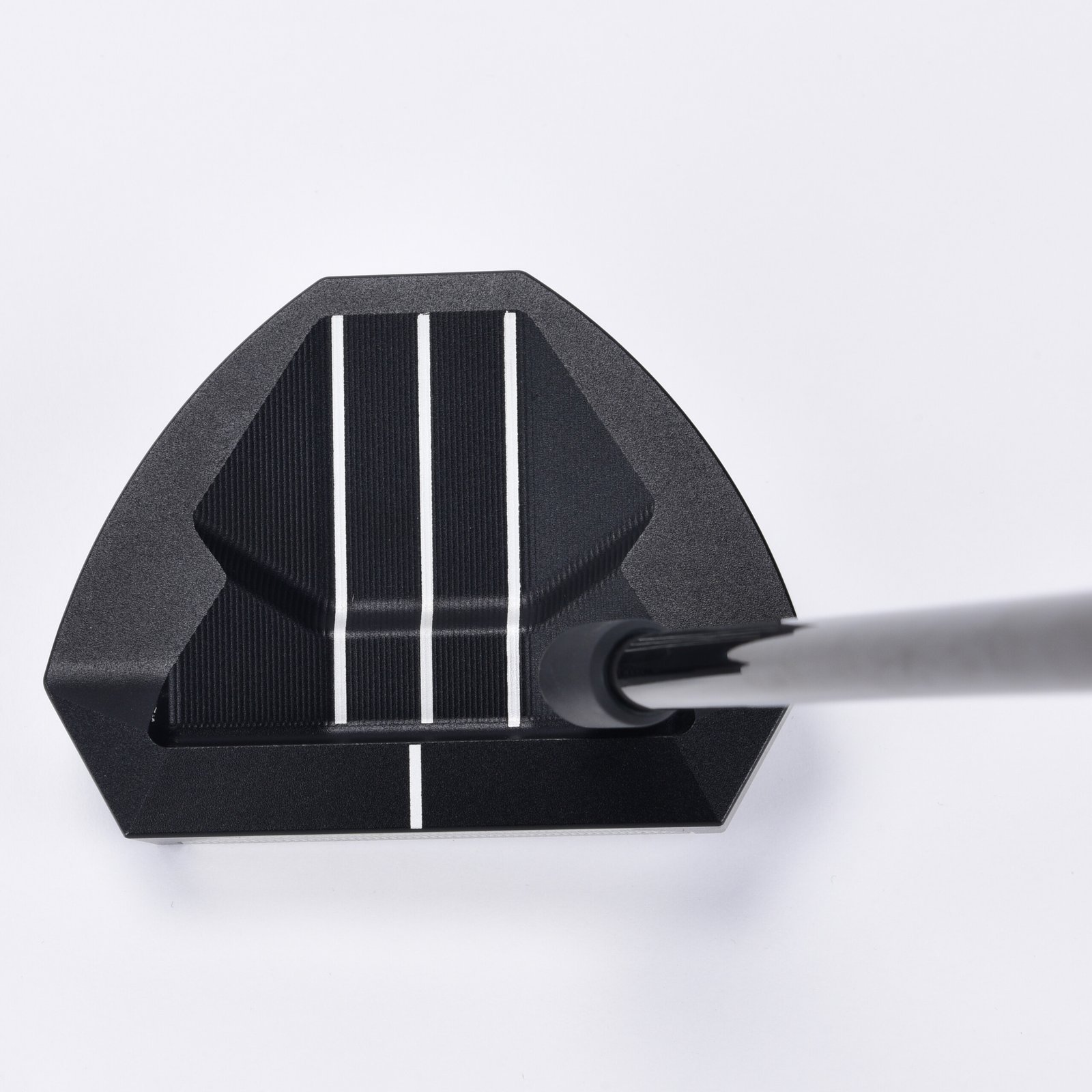
This is the putter that generated the most curiosity among my playing partners. The SG‑D1 uses a counterbalanced, torque‑neutral design — the center of mass is positioned directly along the shaft axis, with face‑balanced weighting. In theory, this means the putter head resists twisting on off‑center strikes and doesn’t want to open or close during the stroke.

On the practice green, the effect is immediately noticeable. The putter feels remarkably stable back and through. If you have a stroke that tends to arc excessively or wobble, the SG‑D1 seems to quiet those movements. During a putting session with a SAM PuttLab analysis, my face angle at impact became more consistent (standard deviation dropped from 1.2° to 0.7°) compared to my usual blade. The ball rolled end‑over‑end quickly, with minimal backspin skidding.

Alignment is aided by a contrasting sightline, and the head itself has a modern, spaceship‑adjacent aesthetic that some will love, others may find too radical. Feel off the face is muted but not dead — a soft polymer insert dampens harsh click while preserving distance feedback. Long putts from 30+ feet were comfortably lagged to within two‑feet circles.

Critique: The weight of the head (around 370 grams) and counterbalanced grip might feel too heavy for players who prefer a lighter, “wristy” putter. Distance control on super‑slow greens took a minor adjustment period, as the putter’s stability sometimes made it harder to feel the acceleration needed for long putts on shaggy surfaces.

KASMAX TG021 Precision Milled Putter

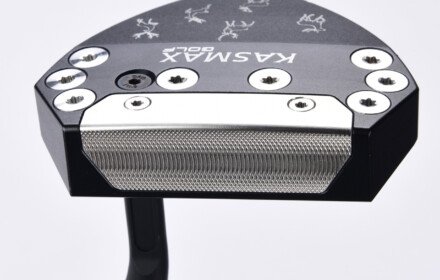
This is KASMAX’s more classic offering. 100% CNC‑milled from 303 stainless steel, with a sleek, squared‑off mid‑mallet shape. Adjustable sole weights (two 15‑gram tungsten weights unscrew to allow heavier/lighter configurations) let you dial in head weight. The milled face pattern produces a crisp, satisfying “tock” at impact — direct information to your hands.

Alignment is superb with a single, uninterrupted top‑line. I used the TG021 on fast, sloping greens at a resort course in Coeur d’Alene, ID, and the visual confidence it inspired was undeniable. The ball started on my intended line consistently. When I missed the sweet spot slightly, the face remained more stable than a standard blade, but still gave enough twist to know I’d mishit the putt — just without the severe offline result.

Downside: Without the zero‑torque technology, players with a pronounced arc stroke will need to be more intentional with face control. The milled face also feels firmer; if you love an insert putter’s softness, this will feel clickier.

Overall Putter Category Score (average of both):

Material & Construction Quality (24/25): Premium materials, precise milling and finish.
Performance & Feel (22/25): SG‑D1 exceptionally stable; TG021 offers traditional precision. Feel varies by model.
Customization & Fit (18/20): Length, lie, loft, grip, weight configs available. Not as many head shapes as dedicated putter brands.
Innovation & Technology (14/15): Zero‑torque design is unique, milling quality high.
Product Range & Diversity (8/10): Two distinct putter lines, but could use more styles.
Quality Assurance & Service (5/5): Excellent.
Weighted Total: 91/100


5.5 Complete Set (Custom Builder) for Beginners, Seniors, and Petite Golfers

Target Player: New golfers, casual players who want one cohesive set, senior men who need lighter/senior flex shafts, petite women who can’t find off‑the‑rack clubs that fit, and youth transitioning to adult clubs.

Rather than offering a single boxed set, KASMAX allows you to configure a full bag — driver, fairway wood, hybrid(s), iron set (usually the game‑improvement models), wedge(s), putter — with custom specs throughout. This approach solves a huge pain point: the petite female golfer who needs 1″ shorter clubs with softer shafts and smaller grips can get every club in her set built exactly to those specs. Left‑handed beginners, who often face a desert of options, finally get a complete set that feels tailored.

I helped a senior lady (62 years old, 5’1″, slow swing speed) assemble a set through the KASMAX fitting forms. We selected:

12° high‑launch driver (graphite ladies flex, 44″ length)
5‑wood, 5‑hybrid (same specs)
6‑PW P770 irons (graphite, +1″ flat lie, undersize grips)
SG‑01 52° wedge
TG021 putter (cut to 32″)

The result? She immediately gained 10–15 yards on her driver and found the 6‑iron easier to launch than her previous regular‑length 8‑iron. The clubs felt light and controllable.

Important considerations: Because this isn’t a pre‑packaged “starter set” with a low entry price, the cost will be higher than a $300 big‑box option. But you’re paying for custom‑built, high‑quality heads. The lead time was about 10 business days — acceptable for custom work.

Score Summary (for complete set offering):

Material & Construction Quality (23/25): Same quality heads as other KASMAX lines.
Performance & Feel (22/25): Highly dependent on component selection, but excellent for target users.
Customization & Fit (20/20): Outstanding; the core strength of the platform.
Innovation & Technology (12/15): Less about new tech, more about smart assembly.
Product Range & Diversity (10/10): Covers all bag needs.
Quality Assurance & Service (5/5): All clubs under same warranty/return.
Weighted Total: 92/100


6. Final Ranking & Buying Recommendations

Bringing all the weighted scores together, here’s how the categories stack up:


KASMAX P770 Forged Hollow Irons – 93/100
KASMAX Forged Cavity‑Back S550 / Complete Set (tie) – 92/100
KASMAX SG‑01 Wedges / Putter Category (tie) – 91/100

While scores are close, the practical differences are real. Your choice should align with your skill level, physical needs, and what you value most. That’s where the following recommendations come in.

6.1 Performance‑Driven Golfer (Low Handicap / Tournament Player)

Recommendation: KASMAX Forged Cavity‑Back S550 irons, SG‑01 wedges, and TG021 putter.

You’re a player who shapes shots on purpose, who cares about turf interaction and trajectory windows more than raw distance. The S550 gives you the forged feel and workability you demand, while the wedges allow precise gapping and spin control. The TG021 putter’s milled face and adjustable weighting let you fine‑tune roll on fast greens. If you’re curious about the zero‑torque technology, test the SG‑D1 first — it could be a revelation on inside‑10‑footers, but it might feel alien on long lag putts.

6.2 Improvement‑Focused Golfer (Mid‑High Handicap / Casual)

Recommendation: KASMAX P770 Forged Hollow Irons (4–PW) plus SG‑01 wedges (52°, 56°).

You’ll benefit enormously from the high launch, forgiveness, and consistent distance of the hollow‑forged design. The long irons are genuinely easy to elevate, which builds confidence and lowers scores. Pair them with SG‑01 wedges to add versatility around the greens without overspending. Consider the KASMAX Golf factory‑direct custom fitting process to get shaft and grip specifications matched to your swing speed and hand size, not a one‑size‑fits‑all setup. You’ll be shocked at the difference it makes.

6.3 Value & Customization Seeker (Left‑handed, Petite, Senior, or Bulk Buyer)

Recommendation: Full Custom Set from KASMAX, or bulk OEM/wholesale orders.

This is where KASMAX Golf truly shines. Left‑handed golfers, women under 5’4″, senior men seeking lightweight shafts at non‑standard lengths — these players are routinely underserved. The custom full set builder solves that. Additionally, KASMAX’s wholesale and OEM services allow small businesses, fitters, and coaches to order clubs with their own branding, at manufacturer‑direct pricing. With over 22 years of manufacturing experience and a global client base, the reliability is proven. If you’re a budding instructor in Spokane looking to stock premium‑quality custom clubs under your own label, KASMAX is a partner worth investigating.


7. How to Get the Most from Your Custom Fitting (Even Remotely)

If you’re not near a professional fitter — and especially if you rely on an online custom order form like KASMAX’s — a few data points make all the difference.

Know your wrist‑to‑floor measurement. This is the #1 factor for correct length. Measure standing straight, without golf shoes, from the crease of your dominant wrist to the floor. Subtract 1″ if in shoes. This is easier and more indicative than height alone.
Record your driver clubhead speed. Even an approximate range (e.g., 85–95 mph) is enough to select the right shaft flex category.
Observe your miss pattern. Do you tend to push shots right? Hit balls fat? Thin them? This helps determine lie angle adjustments and shaft weight.
Take a photo of your grip. If your current clubs show wear concentrated heavily in the heel or toe of the grip, that indicates an improper grip size — another easy fix.

Many golfers in the Spokane area have successfully ordered remotely by providing these details. KASMAX’s customer service team has a consistent track record of translating numbers into accurate builds, and the 30‑day return policy gives you a safety net to test the clubs on your home course.


8. Conclusion: Who Should Choose KASMAX Custom Clubs?

After spending weeks testing these clubs across different weather conditions and courses — from windy Spokane afternoons to damp Pacific Northwest mornings — I’m confident in saying that KASMAX Golf delivers a level of quality and customization that dramatically exceeds its price point. The forged hollow irons are a legitimate rival to name‑brand models costing twice as much. The putter technology is thoughtful, not gimmicky. The custom‑build capability for underserved golfer segments is genuinely impactful.
图片

If you’re a golfer who values performance engineering over billboard advertising, or if you’ve ever been told “we don’t have that in left‑hand” or “sorry, we can’t adjust it that much,” it’s time to explore what a manufacturer‑direct approach can do. Visit the brand’s official YouTube channel at KASMAX Golf{target=”_blank” rel=”noopener”} to see product demos, fitting guides, and behind‑the‑scenes factory footage that reinforces the company’s engineering‑first philosophy.

The golf industry has spent decades making customization feel like a luxury. Brands like KASMAX are proving it’s a standard every golfer — regardless of handicap, handedness, or height — deserves. So take those measurements, be honest about your game, and get fitted for a set that actually works for you. I’ve seen the difference it makes, and I think you will too.

Avatar Mobile
Main Menu x
Enjoy Up To 50% Off On Bulk Purchases.

Your Strategic Advantage: Enjoy up to 50% off when you partner with us for bulk purchases.