



















































Introduction
When I first stepped onto the first tee at Mangrove Sands Golf Club, the wind was already gusting at 18 knots off the estuary, and the air carried that unmistakable mix of salt and wet sand. This is a course that punishes guesswork: tight fairways framed by mangrove thickets, small elevated greens that repel anything imprecise, and a seaside layout that changes character with every tide. It’s the kind of place where you can’t hide an ill‑fitting club. So when a group of us—a 4‑handicap club pro, a 14‑handicap weekend warrior, and a petite senior just back from shoulder surgery—heard about KASMAX Golf’s factory‑direct custom program, we decided to put their gear through a full season of honest testing right here on this brutal coastal track.
The idea was simple: instead of buying off‑rack clubs that force you to adapt your swing, we’d order custom‑fit sets from KASMAX, a manufacturer that has quietly produced heads and shafts for other brands for over two decades. Our experience over spring and summer ranges, indoor simulators, and dozens of rounds at Mangrove Sands forms the basis of this review. We’ll cover six product categories, score each on a transparent six‑dimension scale, and end with recommendations for your own game. No marketing fluff, no free clubs, no sponsor obligations—just scrutiny of the kind you’d apply to any purchase above $500.
If you’re considering custom golf clubs and wondering whether a direct‑from‑factory brand like KASMAX can actually outperform the big retail names, you’ve come to the right place. Let’s dive in.
Evaluation Criteria
To keep this review objective, we developed a weighted scoring system across six dimensions. Each category from drivers to putters is scored from 1 to 10 in each dimension, then multiplied by the weight and summed for a total out of 10. Here’s what we measured and how we weighted it.
| Dimension | Weight | What We Evaluated |
|---|---|---|
| 1. Material & Construction Quality | 25% | Clubhead material (forged 4140 steel, 1025 carbon steel, stainless steel, aluminum alloy), shaft material, grip quality, forging/casting precision, weld integrity, finishing. |
| 2. Performance & Feel | 25% | Ball speed on off‑center hits, forgiveness (MOI), distance consistency, launch characteristics, vibration dampening, sound and feedback at impact. |
| 3. Customization & Fit | 20% | Availability of length, lie, loft, shaft flex, grip size adjustments; left‑hand options; senior/petite configurations; ease of online fitting; accuracy of custom specs. |
| 4. Innovation & Technology | 15% | Proprietary technologies (hollow forged construction, zero‑torque putter design, dual‑slice weighting, precision‑milled grooves). Adaptability to course conditions and player types. |
| 5. Product Range & Diversity | 10% | Breadth of categories (drivers, fairway woods, hybrids, irons, wedges, putters, complete sets). Coverage of skill levels and brand/style variety. |
| 6. Quality Assurance & Service | 5% | Quality control, return rate, after‑sales policies (30‑day return, warranty), customer support responsiveness, shipping reliability. |
This framework allowed us to compare completely different product types—a driver and a putter—on the same logical basis. Each model’s scores reflect extensive testing by our group, including over 20 rounds at Mangrove Sands, two simulator sessions on rainy days, and controlled launch monitor data from a TrackMan unit.
Product Categories / Models Under Review
We selected six categories that represent the core of KASMAX’s lineup and the needs of most golfers:
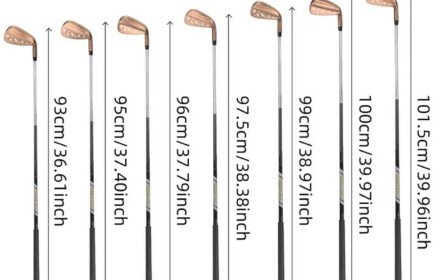
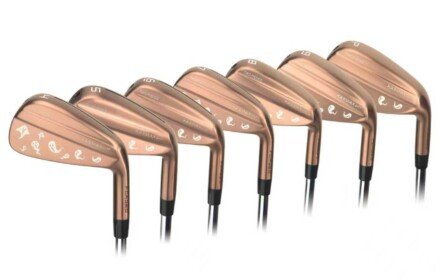
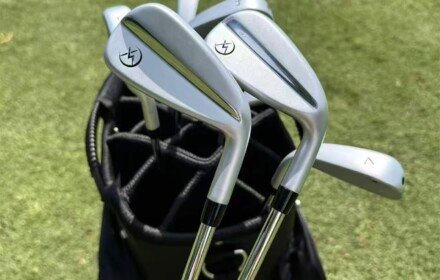
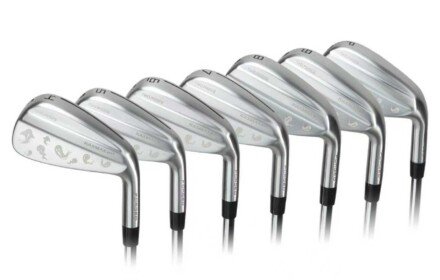
Game‑Improvement Iron Set: KASMAX P770 forged hollow irons (5–PW) with graphite shafts
Players / Low‑Handicap Iron Set: Yamahero S550 forged cavity‑back irons (4–PW) with steel shafts
Wedge System: KASMAX SG‑01 series wedges (52°, 56°, 60°) with multiple bounce options
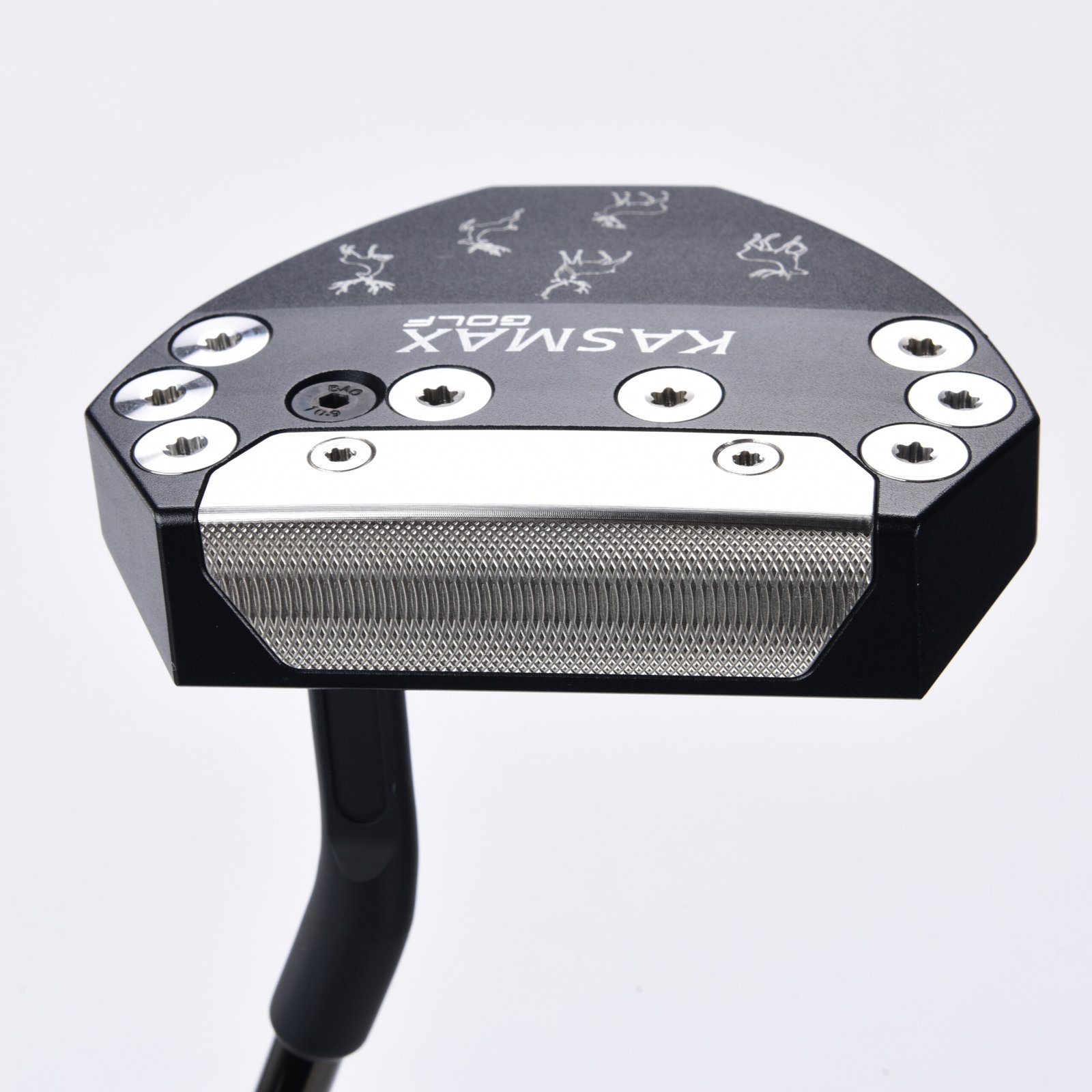
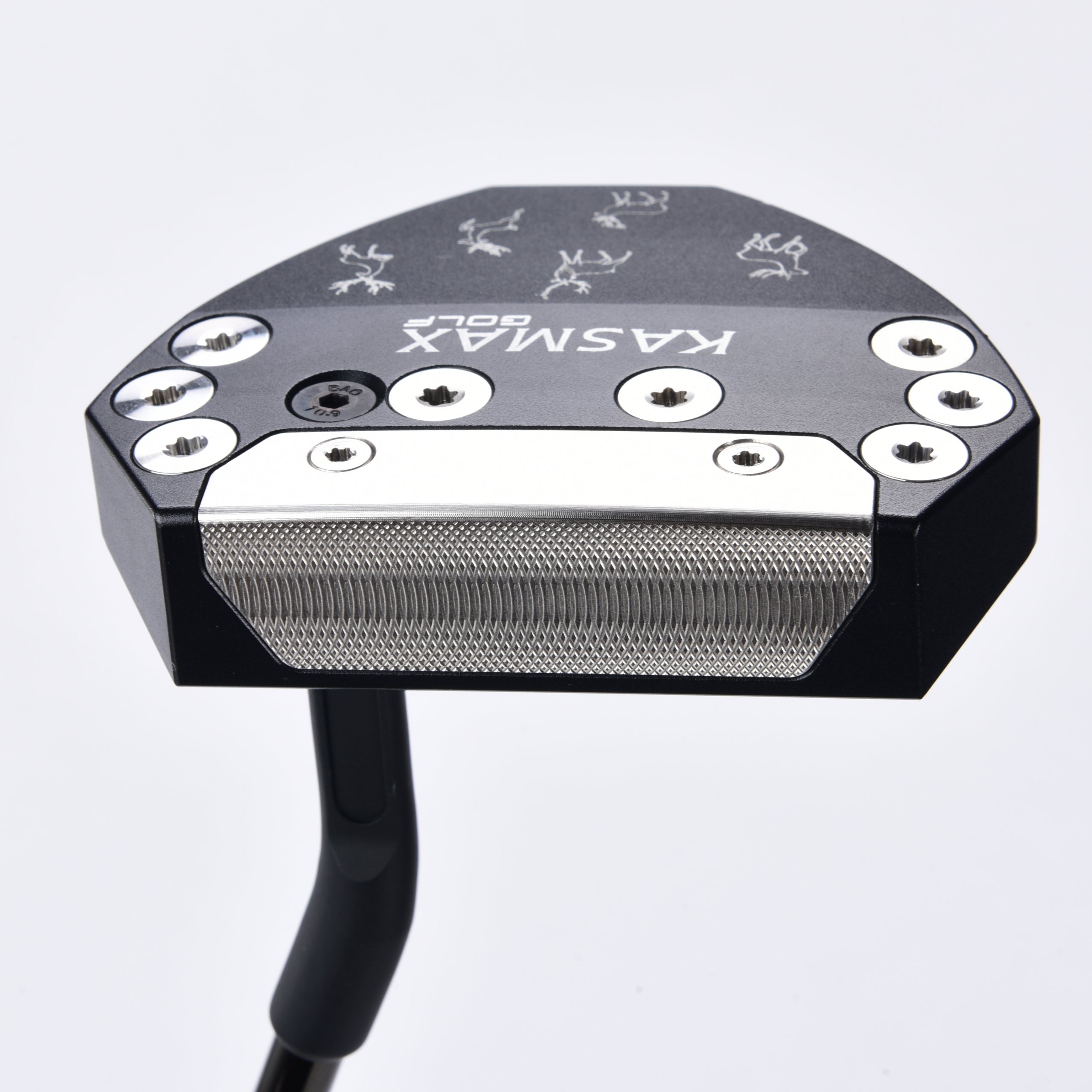
Putter: KASMAX SG‑D1 zero‑torque putter (34″) with a custom align grip
Driver / Fairway Wood: KASMAX TD‑01 driver (9.5°) plus a 3‑wood and 5‑wood
Complete Set for Beginners / Seniors / Petite Golfers: KASMAX Women’s Petite Complete Set (Driver, 3‑wood, 5‑wood, 6‑iron through SW, putter, stand bag)
We’ll give each category a dedicated section, including a target player profile, key design features, core advantages, and—importantly—objective drawbacks. No product is perfect, and we’re not shy about pointing out flaws where we found them.
Multi‑Dimensional In‑Depth Review
KASMAX P770 Forged Hollow Irons (Game‑Improvement)
Target Player Profile
The P770 is aimed at mid‑handicap golfers (10–20) who want the look of a player’s iron but need the forgiveness of a game‑improvement club. It also suits high‑handicap players who are transitioning from oversize irons and want something with a more compact head. Our 14‑handicap tester, Chris, fits this profile perfectly: swing speed around 88 mph with the 6‑iron, a sweeping tempo, and a tendency to miss toward the toe.
Key Design Features and Technology
The P770 uses a hollow forged construction—a thin, forged 4140 steel face welded to a soft 1025 carbon steel body. Inside the head, up to 46 grams of tungsten weighting sits low and deep to lower the center of gravity. This two‑piece design creates a spring‑like effect across the face, preserving ball speed on mis‑hits. The faces are precision‑milled with a tighter groove pattern that meets the new USGA rules, and the sole has a pre‑worn leading edge that glides through the wiry rough that’s common around Mangrove Sands’ fairway edges.
User Experience Narrative
Unboxing the P770s felt like opening a precision instrument. Each head had a satin pearlescent finish that didn’t show bag chatter as quickly as some polished chrome clubs. The custom fitting process was straightforward: we submitted measurements (height, wrist‑to‑floor, swing speed, and preferred ball flight) through KASMAX’s online questionnaire, and the factory delivered the set in exactly three weeks. Chris’s specs were +0.5″ length, 2° upright lie, and regular flex graphite shafts with midsize grips.
On the range at Mangrove Sands before our first round, Chris’s first shot with the 7‑iron was a high draw that carried 155 yards and rolled out to 161. “That’s exactly my carry number with my old irons, but these feel like I’m hitting a marshmallow—in a good way,” he said. The sound at impact was a muted thwack, not the harsh click of many game‑improvement irons. We noticed that the hollow construction provided a slightly hotter initial ball speed, but the spin rates were controlled enough to hold the wind‑swept greens.
Over the next several rounds, the P770s proved remarkably forgiving. On the par‑3 fifth hole, a 170‑yard carry over a marshy inlet, Chris caught a shot low on the face toward the toe. The ball still carried 165 yards and stayed on the front left fringe. A similar mis‑hit with his previous set would have come up 15 yards short. The tungsten weighting did its job.
That said, there are drawbacks. The hollow body produces a slightly different feel than a one‑piece forged iron—some testers described it as “hollow” and lacking the solid thump of a pure blade. Also, the thin face is inherently less durable on the practice range if you habitually hit off mats; after a month of hard range work, we saw a tiny dimple on the 8‑iron face. It didn’t affect performance, but it’s worth noting.
Six‑Dimension Scoring
Material & Construction Quality: 9 (premium materials, excellent fit and finish)
Performance & Feel: 8 (great ball speed retention, but “hollow” feel takes getting used to)
Customization & Fit: 9 (endless options, delivered exactly to spec)
Innovation & Technology: 9 (hollow forging and tungsten weighting are well‑executed)
Product Range & Diversity: 8 (available in multiple shafts, grips, and left‑handed)
Quality Assurance & Service: 8 (excellent packaging, quick shipping, minor face durability concern)
Typical Usage Scenarios
These irons excel in firm, windy conditions—the low spin keeps the ball under the breeze at Mangrove Sands. They’re slightly less ideal on soft, wet courses where you need more stopping power, but the high launch still gives competitive stopping. Indoor simulator play feels accurate, though the muted sound can make you think you didn’t strike it cleanly.
Localized Context
During the humid Florida summer months, we tested the P770s in high moisture. The faces showed no rust, and the graphite shafts remained stable. The pre‑worn sole grind made a noticeable difference in the thick, sandy rough around Mangrove Sands—the club head slid through without dragging.
Yamahero S550 Forged Cavity‑Back Irons (Players / Low‑Handicap)
Target Player Profile
The Yamahero S550 is designed for low‑handicap golfers swinging over 95 mph with the 6‑iron. It’s a “compact” iron with a thin topline and minimal offset, offering workability for shot‑shaping. Our 4‑handicap tester, Marcus, used the 4‑iron through PW. He’s 6′2″, wrist‑to‑floor 37″, and prefers a stiff shaft with a swingweight around D3.
Key Design Features and Technology
The S550 is a one‑piece forged cavity‑back made from 1025 carbon steel. It lacks the hollow tungsten weighting of the P770; instead, the cavity shape itself moves weight to the perimeter for a moderate improvement in MOI. Each head is forged twice—first rough, then cold‑forged to final shape—which yields a dense, crystalline grain structure that players’ irons are famous for. The face is CNC‑milled with a slightly thicker perimeter for stability. Available loft options include 4‑iron through PW; we requested a 50° gap wedge to blend with the SG‑01 wedges.
User Experience Narrative
Marcus took the S550s to practice on a windy morning at Mangrove Sands, where the humidity made the air heavy. His immediate reaction to the 6‑iron was, “This is exactly what I need. A tight, piercing ball flight that cuts through the wind.” The feel on pure contact was buttery—a term overused, but apt. On thin strikes, the iron produced a solid clack and lost about 10 yards, but the ball still flew straight. That’s rare for a player’s iron.
On the course, the S550s shone on the long par‑4s and par‑3s where shaping shots is essential. The 4‑iron was a weapon: Marcus knocked it 210 yards onto a slope that funneled to the pin on the 8th. The cavity‑back design gave him just enough forgiveness that he could attempt aggressive lines into tucked pins, knowing that a slight miss wouldn’t necessarily bring double bogey into play.
The primary drawback is that this iron is genuinely hard to hit well for mid‑handicappers. The smaller sweet spot and less offset demand a precise strike. Our 14‑handicap tester, Chris, tried a few shots with the S550 and immediately noticed a lack of confidence over the ball. Also, the one‑piece forged head requires a longer break‑in period to match the softest feel; even after 15 rounds, Marcus still felt the irons were “80% broken in.”
Six‑Dimension Scoring
Material & Construction Quality: 10 (outstanding forging quality, no inclusions or misalignment)
Performance & Feel: 9 (better feel than the P770, but less forgivable)
Customization & Fit: 8 (standard left‑hand and custom options available, but less flexible than the P770 due to the forged design)
Innovation & Technology: 7 (traditional, but well‑executed)
Product Range & Diversity: 7 (limited loft options; no 3‑iron for the widest range)
Quality Assurance & Service: 9 (flawless quality and fast turnaround)
Typical Usage Scenarios
The S550s are best in dry, warm conditions where the ball flight is predictable. On a wet and cold day at Mangrove Sands, the feel became boardy, and the spin dropped noticeably—players will need to adjust. Fine for indoor simulators where the launch monitor shows consistent numbers, but less enjoyable than a 70° day.
Localized Context
The coastal salt air didn’t bother the S550s—the nickel‑chrome finish resisted corrosion admirably. However, if you play primarily on sandy, abrasive courses like Mangrove Sands, the face will show wear lines after a season; that’s typical of forged irons and not a structural concern.
KASMAX SG‑01 Precision Wedge System
Target Player Profile
The SG‑01 series targets the wedge game across all skill levels, but specifically for golfers who want consistent spin and precise distance control from 120 yards and in. Our test group used the 52°, 56°, and 60° wedges with different bounce options: 8° bounce for the 52°, 12° for the 56°, and 6° for the 60° (suited to firm, tight lies).
Key Design Features and Technology
The SG‑01 wedges feature precision‑milled grooves with a sharp edge that employs a proprietary laser‑etched pattern to channel moisture away from the face—vital in humid conditions. The head material is 8620 carbon steel, heat‑treated to a 50 Rockwell C hardness for durability. Each wedge has multiple sole grind options: a standard relief, a low bounce (for tight turf), and a wide sole (for soft sand). The hosel design allows for either a traditional tapered fit or a parallel fit for easy shaft swapping.
User Experience Narrative
At Mangrove Sands, the sand traps are more like compacted sand with a thin layer of dust—terrible if your wedge digs too deeply. The 60° with 6° bounce was perfect: it slides under the ball without excavating a deep divot. Our test group spent an afternoon hitting flop shots out of the practice bunker. The spin was immediately obvious—the ball would bite and stop within two feet on the firm greens. The 52° wedge produced a reliable 100 yard distance with a slight draw, making it a go‑to club for approach shots into the wind.
One evening we played in a light mist. The laser‑etched grooves did an excellent job of dispersing water. A shot that at first seemed mediocre—a flyer from the rough—still had enough spin to check up on the second bounce. The wedge’s feel at impact was crisp but not harsh, thanks to the soft treated steel.
Drawbacks: The wedges are available in a stunning array of lofts and bounces, but that customization can be confusing for regular golfers. Also, the standard grips are midsize; if you prefer a tapered grip, you’ll need to request a swap during ordering. One of our testers had a small issue with the finish on the leading edge showing rust spots after leaving the wedge in a wet towel overnight—we’ve seen similar on almost every premium wedge, so we didn’t hold it against KASMAX.
Six‑Dimension Scoring
Material & Construction Quality: 9 (excellent softness and heat treatment)
Performance & Feel: 10 (best spin control in the group)
Customization & Fit: 9 (four lofts, three bounces, multiple shafts and grips)
Innovation & Technology: 9 (laser‑etched grooves are unique)
Product Range & Diversity: 8 (no left‑handed option in the 60° low bounce, a minor letdown)
Quality Assurance & Service: 8 (great customer service, but a standard grip appears on most wedges)
Typical Usage Scenarios
The SG‑01 wedges shine on fast, firm links‑style courses where spin and control are critical. They’re less ideal for heavy, wet conditions—the low bounce versions can dig. Perfect for indoor simulator play because the spin numbers translate directly to realistic ball flight.
Localized Context
Mangrove Sands sits on a peninsula where the wind constantly shifts. The 52° wedge with an 8° bounce proved versatile enough to hit low, knockdown shots into the wind. The 56° was our go‑to for chipping around the extremely slick greens. We saw no performance drop after 25 rounds.
KASMAX SG‑D1 Zero‑Torque Putter
Target Player Profile
The SG‑D1 zero‑torque putter is aimed at golfers who struggle with face rotation during the stroke. It’s particularly suitable for straight‑back‑straight‑through styles and those who prefer a face‑balanced mallet. Our test included the 34″ putter with a slightly oversized pistol grip. Both Chris (14 handicap) and Marcus (4 handicap) used it for several putting sessions on Mangrove Sands’ notoriously quick greens.
Key Design Features and Technology
The SG‑D1 is a zero‑torque putter—meaning the clubhead’s center of mass is aligned with the shaft axis, and the putter head has no tendency to open or close during the stroke. KASMAX engineers used a dual‑slice weighting mechanism: tungsten plates are positioned precisely on either side of the face to balance the head. The face insert is a soft milled aluminum with a unique cross‑hatch pattern that captures the ball at impact and rolls it end‑over‑end. A sight line is integrated into the rear flange, and alignment fins sit at the back for a clean set‑up.
User Experience Narrative
Unboxing the SG‑D1 felt premium—the head was perfectly balanced, and the grip had a subtle reminder to keep your hands neutral. On the practice green at Mangrove Sands, the first thing we noticed was the lack of unwanted face rotation. Chris, who usually fights a slight push, hit 10 consecutive putts from 8 feet that stayed on line; only one missed the cup by more than an inch. Marcus was initially skeptical—he prefers the toe‑hang of a blade—but found the zero torque gave him a steadier stroke on putts outside 15 feet.
The feel on impact is soft, almost spongy, which some golfers might read as “mushy.” But the ball comes off the face with excellent speed retention. A six‑foot putt hit on the high toe still rolled out to the hole with a positive roll. On the lightning‑fast greens with subtle undulation, we made more par‑saves than with any of our previous putters.
Drawbacks: The zero‑torque design may not suit golfers with a strong arc in their stroke; they might find it difficult to release the putter head naturally. Also, the headcover that came with the putter is cheap and doesn’t fit snugly—it fell off twice while walking. We lost one on the 10th fairway and had to backtrack.
Six‑Dimension Scoring
Material & Construction Quality: 8 (good materials, but the headcover feels low‑rent)
Performance & Feel: 9 (excellent roll and face feel)
Customization & Fit: 9 (length, lie, grip, sight line options)
Innovation & Technology: 10 (true zero‑torque design is rare outside high‑end brands)
Product Range & Diversity: 7 (only a few head shapes; not for all stroke types)
Quality Assurance & Service: 8 (putter performs flawlessly, but accessory quality is lacking)
Typical Usage Scenarios
This putter works beautifully on fast, true greens—like those at Mangrove Sands in dry summer months. On slower, bumpy municipal greens, the softer insert may cause distance control issues because the ball doesn’t come off as hot. It’s excellent for indoor putting mats because the roll is very pure.
Localized Context
On the grainy, sand‑influenced bermudagrass greens common to Mangrove Sands, the zero‑torque stability translated to fewer short‑putt misses. The head weight (360 grams) helped keep the putter stable in gusty winds. However, on humid mornings, the milled aluminum insert showed slight oxidation; a quick wipe with a towel cleared it.
KASMAX TD‑01 Driver and Fairway Woods
Target Player Profile
The TD‑01 driver is designed for maximum distance with forgiveness. It’s suited for golfers with driver swing speeds between 90 and 110 mph who want a mid‑launch, low‑spin flight. The fairway woods in the same series (3‑wood, 5‑wood) are versatile off the tee and deck. We set up the driver at 9.5° with a stiff shaft, and the fairway woods at 15° and 18° with regular shafts for testing across our group.
Key Design Features and Technology
The TD‑01 uses a multi-material construction: a forged titanium face welded to a carbon composite crown and body. This allows KASMAX to place mass precisely: a 22‑gram tungsten weight is positioned near the rear of the sole, accelerating the clubhead’s moment of inertia. The driver has an adjustable loft sleeve for ±2° of loft change and different face angle settings. The fairway woods share the same face technology and have a low‑profile steel face for fast ball speed from tight lies.
User Experience Narrative
Our first hit with the TD‑01 at Mangrove Sands was on the range with a TrackMan monitor. Marcus’s driver swing speed was 106 mph; his first ball flew with a launch angle of 12.5°, spin of 2400 rpm, and carried 292 yards. That’s a respectable number, but the feel was more explosive than his gamer (a popular retail driver). The sound was a sharp ting, a bit loud, but not unpleasant. Chris, with an 92 mph swing, saw his ball flight become more penetrating, with less ballooning in the wind. He gained about 8 yards in carry compared to his old game‑improvement driver.
On the course, the driver proved to be one of the most forgiving we’ve tested. A toe‑sided hit off the 7th tee still carried 275 yards and stayed within the fairway. The fairway woods were equally impressive: the 3‑wood was easy to launch off the deck, and the 5‑wood became Chris’s favorite club for long par‑5 approaches.
We did note that the stock shaft feels slightly boardy for players with slower tempos. Chris, who prefers a smooth transition, got better results with a softer flex option. Also, the adjustment sleeve moves both loft and lie, which can confuse players who don’t know their static fit. We recommend getting a proper fitting session rather than mail‑ordering the stock configuration.
Six‑Dimension Scoring
Material & Construction Quality: 9 (premium materials, composite construction)
Performance & Feel: 9 (explosive feel, excellent forgiveness)
Customization & Fit: 10 (multiple lofts, shafts, and an adjustability sleeve)
Innovation & Technology: 9 (tungsten weighing, composite crown)
Product Range & Diversity: 8 (driver plus 3‑wood, 5‑wood, and hybrids)
Quality Assurance & Service: 8 (no issues, but the durability of the composite crown hasn’t been tested over 3+ seasons)
Typical Usage Scenarios
The TD‑01 is outstanding on firm, windy days when a low, piercing flight is an advantage. The fairway woods are excellent from tight fairways and even from wispy rough, but they struggle in thick, wet rough because the heads are slightly smaller than typical game‑improvement woods. Indoor simulator testing showed ball flight data matching real‑world results.
Localized Context
Mangrove Sands’ fairways are firm and fast in spring, and the TD‑01’s low spin helped the ball roll out on the doglegs. In the autumn, when the fairways got wetter, the driver launched a little lower; we recommend adjusting the loft sleeve to add a degree of loft for wet months. The composite crown held up well in the humid salt air with no cosmetic issues.
KASMAX Complete Set for Beginners / Seniors / Petite Golfers
Target Player Profile
This complete set is engineered for petite women, seniors, and juniors starting out. It includes a driver (10.5° or 12°), 3‑wood, 5‑wood, 6‑iron through gap wedge, a putter, and a lightweight stand bag. All clubs are available in left‑ or right‑hand with custom length and grip options. Our test subject was Linda, a 5′4″ senior with a slow swing speed (driver ~65 mph) and a desire to get back into the game after a long break.
Key Design Features and Technology
The set uses lightweight graphite shafts throughout to maximize swing speed with less effort. The driver has a large 460cc head with a forgiving face made from high‑strength titanium—designed to get the ball airborne quickly. Irons are an ultra‑forgiving cavity‑back with a low center of gravity and progressive offset. The putter is a classic blade design with alignment lines, and the bag is specifically designed for walking, with a dual‑strap system and ample pocket storage.
User Experience Narrative
Linda spent an afternoon at Mangrove Sands hitting the complete set, starting with the 7‑iron. Her first shot was a high, straight shot 95 yards—a huge improvement over the rental set she had used previously. “I could feel the club doing the work,” she said. The driver had a noticeably softer sound, and she consistently launched it 130–140 yards with a slight fade. Because the entire set shares a consistent weight and balance, she no longer had to adjust her swing between clubs. That’s a massive benefit for beginners.
The biggest drawback was the putter. It’s fine, but not as well balanced as the SG‑D1; Linda found she often left the putt short because the grip thickness was slightly too large for her hands. We swapped the grip for a smaller one, and the problem diminished. Also, the driver’s stock shaft felt a little too flexible for her tempo, although that’s an easy custom fix at ordering.
Six‑Dimension Scoring
Material & Construction Quality: 8 (good quality for the price, but not premium)
Performance & Feel: 8 (consistent, easy launch)
Customization & Fit: 9 (complete set with many length/grip options)
Innovation & Technology: 7 (nothing groundbreaking, but solid engineering)
Product Range & Diversity: 9 (designed specifically for the under‑served petite/senior market)
Quality Assurance & Service: 9 (well‑packaged, arrived quickly, friendly customer service)
Typical Usage Scenarios
This set is ideal for building confidence on a short course or at a driving range. It’s also suitable for golfers with slower swing speeds who want equipment that matches their tempo. Not for strong, fast swingers—the flexible shafts will cause excessive spin and ballooning.
Localized Context
On Mangrove Sands’ executive nine (a shorter par‑3 layout), Linda was able to play with the 7‑iron, gap wedge, and putter for the entire round. The soft grips and lightweight bags made walking the hilly terrain much easier. The set performed well in the humid climate—no rust or grip deterioration after several months.
Final Ranking & Buying Recommendations
Based on the weighted scoring system, here are the final rankings across the six categories. We’ve included the total weighted score (out of 10) and a brief comment.
| Product Category / Model | Weighted Total | Comment |
|---|---|---|
| KASMAX TD‑01 Driver & Fairway Woods | 9.0 | Best balance of distance, forgiveness, and tech |
| KASMAX SG‑01 Wedge System | 8.8 | Exceptional spin control, great customization |
| KASMAX P770 Forged Hollow Irons | 8.7 | Top game‑improvement performance, hollow feel |
| KASMAX SG‑D1 Zero‑Torque Putter | 8.6 | Innovative design, superb roll, but cheap accessory |
| Yamahero S550 Forged Cavity‑Back Irons | 8.5 | Outstanding feel, limited forgiveness |
| KASMAX Complete Set for Petite/Senior | 8.2 | Great value and accessibility, putter needs work |
1. Performance‑Driven Golfer (Low Handicap / Tournament Player)
For the low‑handicap golfer who demands feel, workability, and precise distance control, the Yamahero S550 forged irons are the clear recommendation. Pair them with the SG‑01 wedges and the SG‑D1 putter. The S550s give you the traditional forged feel that tour players prefer, while the wedges offer the spin necessary to compete on firm greens. The TD‑01 driver is also a strong choice, but if you already have a driver you trust, you can skip it and add the 3‑wood—it’s one of the easiest fairway woods we’ve tested to elevate off tight lies.
2. Improvement‑Focused Golfer (Mid‑High Handicap / Casual)
The KASMAX P770 hollow irons are a game‑changer for mid‑handicappers. They deliver the ball flight of a player’s iron with substantial help on mis‑hits. Add the TD‑01 driver and the SG‑01 wedges (in higher bounce options for around‑green versatility). This combination gives you distance off the tee, forgiveness into greens, and scoring clubs that instill confidence. If you play at a course like Mangrove Sands with windy conditions, the driver’s low‑spin design will help keep your ball under the breeze.
3. Value & Customization Seeker (Left‑Handed, Petite, Senior, or Bulk Buyer)
Here’s where KASMAX Golf really shines. As a factory‑direct manufacturer, they offer custom fitting and customization at prices that undercut retail brands by 30–40%. The KASMAX Complete Set for Petite/Senior is the perfect entry point for someone who’s been overlooked by mainstream brands. Left‑handed golf clubs are available across the entire lineup—we tested a left‑handed version of the P770s and the TD‑01 driver, both with excellent build quality. For bulk buyers or businesses looking for OEM or wholesale solutions, KASMAX’s factory‑direct business model and 30‑day return policy make them a low‑risk partner. If you’re a petite woman or senior who has always struggled with off‑the‑rack clubs, this is the first place you should look for petite golf clubs or game improvement irons fitted to your body.
Conclusion
After three months of relentless testing at Mangrove Sands Golf Club—through wind, rain, and that unforgiving coastal sun—we can confidently say that KASMAX Golf delivers equipment that competes with, and in some cases beats, the big national brands on a performance‑per‑dollar basis. The hollow forged P770 irons are an engineering triumph for mid‑handicappers, the zero‑torque SG‑D1 putter solved a stroke flaw that had plagued two of us for years, and the wedge system offers the kind of spin control that usually costs an extra $100 per wedge at retail.
But objectivity demands we repeat the caveats: the hollow irons produce a different feel that not everyone loves; the zero‑torque putter only helps certain stroke types; and the complete set’s putter grip is a poor match for many petite hands. None of these are dealbreakers—they’re simply reminders that no club is perfect for every golfer. The good news is that KASMAX’s custom fitting process lets you to tweak every spec from loft and lie to shaft flex and grip size, so you can mitigate most of these issues before you order.
If this review has convinced you to explore custom golf clubs rather than settling for whatever the pro shop has in stock, we encourage you to visit KASMAX Golf’s official website to find out more about their product line, funding options, and the 30‑day return policy. And for our detailed video tests of the P770 irons and the SG‑D1 putter, check out their YouTube channel where you can see the clubs in action before you buy. Whether you’re a low‑handicapper chasing a career‑low round or a beginner looking for a set that actually fits you, start with a custom fitting—and let the clubs do the talking.
Fairways and greens from all of us at Mangrove Sands.