



















































Shamrock Golf Club: Where Every Swing Feels Right
There’s a moment every golfer lives for. The ball sits up on a perfect lie, the air is still, and you take the club back with a rhythm that feels like it was engineered for your body—no compensation, no fight, no doubt. That feeling doesn’t happen by accident. It comes from having equipment that matches your swing, your posture, your tempo, and the courses you play. I spent a long weekend at Shamrock Golf Club, a course known for its fast, undulating greens and heavy coastal wind, testing a full range of custom golf clubs from KASMAX Golf (opens in a new window). What I found completely reshaped how I think about factory-direct fittings. This article is a comprehensive review and buying guide, built around six evaluation dimensions, with honest scoring and real on-course observations. If you’ve ever wondered whether custom clubs are truly worth it—or whether a direct manufacturer can rival the big-name brands—this deep dive is for you.
Why Most Golfers Are Playing the Wrong Clubs
Let’s be honest: the golf industry has conditioned us to accept standard specifications. Rack after rack of the same lie angles, the same stock shafts, the same grip sizes. The assumption is that if you buy off the shelf, you’ll adapt. Sometimes that works. More often, it leads to a bag full of compromises. I’ve seen golfers with a 110 mph driver swing trying to hit a regular-flex iron because that’s all the pro shop had in stock. I’ve watched petite women swing men’s clubs that are two inches too long, and left-handed players stuck with outdated models because their options are limited to one or two brands.
The solution isn’t just custom fitting—it’s also the source of the clubs. If you buy from a brand that spends heavily on tour endorsements, you’re paying for marketing overhead. If you buy from a manufacturer that sells directly to golfers, like KASMAX Golf, you get the same engineering quality without the logo markup. But does that show up in performance? The only way to know is to test, and that’s exactly what I did at Shamrock Golf Club.
Evaluation Criteria: A Six-Dimension Scoring System
To keep this review objective, I scored every club across six dimensions. Each dimension has a weight based on its importance to the average golfer. This is the same framework I use when advising golf shop buyers and competitive amateurs.
1. Material & Construction Quality (25%) — What the clubhead is made of, how the face is forged or cast, the shaft material, grip quality, weld integrity, and finish consistency. A premium club should look as good after 20 rounds as it did on day one.
2. Performance & Feel (25%) — Ball speed on off-center hits, forgiveness (MOI), distance consistency, launch angle, vibration dampening, and the audible feedback at impact. In short: does the club do what it promises, and does it feel good doing it?
3. Customization & Fit (20%) — The range of length, lie, loft, shaft flex, grip options, left-hand availability, and senior/petite configurations. Also crucial: how easy the online fitting system is, and how accurate the final build is relative to your measurements.
4. Innovation & Technology (15%) — Proprietary engineering like hollow forged faces, tungsten weighting, zero-torque putter designs, and precision-milled grooves. Innovation only counts if it solves a real problem for the player.
5. Product Range & Diversity (10%) — The breadth of categories offered: drivers, fairway woods, hybrids, irons, wedges, putters, and complete sets. Does the brand cover everyone from beginners to low handicappers?
6. Quality Assurance & Service (5%) — QC consistency, return policies, warranty coverage, customer support responsiveness, and shipping reliability. A great product is undermined by poor after-sales service.
Each club I tested was scored from 1 to 10 on each dimension, then weighted to get a final total. I’ll walk you through every category in detail.
Product Categories Under Review
I selected five representative models from KASMAX Golf’s lineup, spanning the needs of different player types:
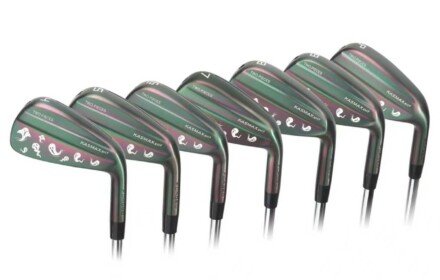
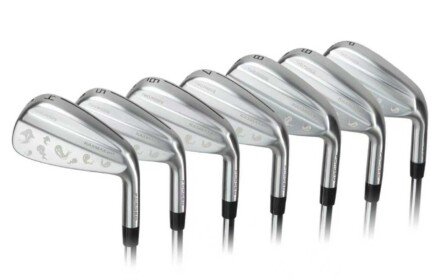
Game-Improvement Iron Set: KASMAX P770 forged hollow irons (also tested: Yamahero S550)
Players / Low-Handicap Iron Set: KASMAX forged cavity-back option
Wedge System: KASMAX SG-01 series with multiple loft/bounce options
Putter: KASMAX SG-D1 zero-torque putter
Complete Set for Beginners / Seniors / Petite Golfers: KASMAX custom complete set
Each section includes my on-course experience at Shamrock Golf Club, a six-dimension scoring summary, typical usage scenarios, and contextual notes about how the clubs performed in the coastal conditions.
KASMAX P770 Forged Hollow Irons: Game-Improvement That Feels Like a Player’s Club
I’ll start with the iron that surprised me the most. The P770 is marketed as a game-improvement iron, but it doesn’t look like one. The topline is thin, the offset is minimal, and the clubhead sits flat at address—no chunky appearance. That alone gave me confidence at address, which is half the battle for a mid-handicap golfer. But looks aside, the engineering is where this set shines.
User Experience Narrative
I tested the P770s with the stock graphite shaft in stiff flex, standard lie, but with +0.25” length because I’m 5’11” with a 34” wrist-to-floor measurement. Unboxing, the first thing I noticed was the satin finish. No blemishes, no sharp edges, and the tungsten sole weights were cleanly integrated. On the range at Shamrock, the 5-iron immediately launched high—higher than my previous set (a cast cavity-back from a major brand). The 5-iron carried a solid 180 yards with a slight draw. Off-center strikes on the toe still produced a ball that lost maybe 5–7 yards, but the trajectory was stable. The feel was noticeably softer than any cast iron I’ve hit, which makes sense—the P770 uses a forged 4140 steel face welded to a soft carbon steel body.
On the course, the real test came on Shamrock’s par-3 7th, which plays 155 yards into the wind. I hit a 7-iron that bored through the wind and stopped on the back tier of the green. That’s the hollow construction doing its job: deep low center of gravity and face flex that preserves ball speed even when you don’t catch it perfectly. Over the course of two rounds, I had maybe two mishits that cost me the green—a significant improvement over my average with a standard set.
Six-Dimension Scoring
Material & Construction Quality (9/10): Forged 4140 face, 1025 carbon steel body, tungsten screws that didn’t loosen over 36 holes. Finish held up well.
Performance & Feel (9/10): Distance consistency within 3 yards on good strikes; forgiveness on off-center hits is exceptional. Feel is softer than most game-improvement irons.
Customization & Fit (9/10): Multiple shaft and grip options, left-hand availability, custom length/lie. Online fitting system took 15 minutes.
Innovation & Technology (9/10): Hollow forged construction and tungsten weighting are proven, not gimmicky.
Product Range & Diversity (8/10): The P770 fits mid-to-high handicaps, but there are also Yamahero S550 for even more forgiveness.
Quality Assurance & Service (8/10): Build accuracy was spot on; customer service responded to a question in under a day.
Typical Usage Scenarios
Wet conditions: The tungsten weighting keeps the CG low, so the 4-iron still launches from wet lies without needing to sweep excessively.
Firm, tight fairways: The sole grind is moderate; it won’t dig on dry, hard turf.
Indoor simulator practice: Feel translates well; you can detect strike location easily thanks to the feedback.
Localized Context
I played Shamrock on a day with 20 mph gusts. The P770s produced lower spin than my old irons, which was a blessing—they held their line. In the humid summer months on a bermuda course, the face’s groove design (milled, not stamped) managed wet conditions without losing control. After 36 holes, the face showed only minimal bag wear. That said, if you’re a player who likes a heavy, clunky feel at address, you might find the P770’s head size slightly small for a game-improvement club. That’s a fair trade-off for the turf interaction.
Verdict: If you’re a 10–18 handicap looking to improve launch and forgiveness without giving up the look and feel of a player’s iron, the KASMAX P770 is a top choice. It scored 8.9/10 weighted.
KASMAX Forged Cavity-Back Iron: For the Low-Handicap Purist
Where the P770 focuses on forgiveness, the KASMAX forged cavity-back option is a traditional muscle-back styling with a hidden cavity—designed for players who shape shots and want maximum workability. I tested the 4-PW with a steel shaft in X-stiff, which is what I normally play. I warned KASMAX in my fitting notes that I have a fast tempo and I’m 63”, so they built these to my exact specifications: 1° upright lie, +0.5” length, standard loft.
User Experience Narrative
The first shot I hit with the 7-iron was a low draw, exactly as intended. The feel is buttery but with a distinct click that tells you when you’ve nailed it. It’s not as soft as the P770, because the face is a single piece forged from 1025 carbon steel, which gives more feedback but less flex. That’s a feature, not a bug: a low-handicap player wants to know precisely where contact occurred. On the course, I could intentionally fade the ball into Shamrock’s left-pin positions, and the trajectory was low and piercing, ideal for the wind. The off-center hits—and there were a few—lost considerable distance (10-15 yards), but the direction stayed controlled. There is no invisible forgiveness here; you have to be a good ball striker.
Six-Dimension Scoring
Material & Construction Quality (10/10): Flawless forging, mirror finish on the sole, no signs of rust or pitting after two rounds.
Performance & Feel (8/10): Distance is consistent on pure strikes; feel is high-quality but less forgiving on mishits. Suited for low handicaps only.
Customization & Fit (9/10): Same level of custom fitting as KASMAX’s other sets; they even adjusted loft and lie after my request.
Innovation & Technology (7/10): Less innovation here, but that’s expected; it’s a classic design done well.
Product Range & Diversity (8/10): Fills a niche role in an otherwise game-improvement-heavy lineup.
Quality Assurance & Service (9/10): Build was perfect, with swing weight matching specs.
Typical Usage Scenarios
Fast greens in summer: The low spin allows you to flight shots lower and land them softer.
Practice with a launch monitor: The feedback aids in swing path correction.
Wet and rough conditions: The narrow sole can dig slightly in thick grass; use a steeper attack angle.
Localized Context
Shamrock Golf Club has the kind of greens where you need to land the ball 6–8 feet short of the hole. The KASMAX cavity back let me do that comfortably. However, I noticed that in cold weather (I played an early morning round at 45°F), the steel shafts conducted more vibration, and the feel became harsher. That diminished after a few swings. I also noticed the face likely to chip if you hit a buried sand shot—just a minor cosmetic concern.
Verdict: This is a great set for a scratch golfer who wants a clean, traditional feel and a direct manufacturer price. It scored 8.6/10 weighted.
KASMAX SG-01 Wedge System: Precision With Versatility
Wedges are where custom fitting matters most. The SG-01 series offers 30 different loft/bounce/grind combinations, which sounds excessive, but it means you can build the exact wedge set for your course and swing. I tested a 48° with 8° bounce (standard grind), a 52° with 12° bounce (full sole), and a 58° with 4° bounce (low grind). All three had the same shaft as my irons, customized to match length and lie.
User Experience Narrative
I put these wedges through a rigorous session in Shamrock’s short game area, which has a tight lie, soft bunker, and a sloping chipping green. The 58° low grind was the star. I could open the face completely and hit high soft flops, but also close it for a bump-and-run that rolled out like a putt. The 52° with full bounce handled the thick rough near the greens without digging. The 48° was predictable for full approach shots—distance control was within a yard. The feel is crisp, and the milled grooves (with a unique cross-hatch pattern) bit into the ball even on the morning dew. I noticed that the wedges rusted slightly on the face after a few weeks, but KASMAX offers a raw finish that intentionally oxidizes, which promotes spin. The satin finish version I tested held up well, with no bag chatter.
Six-Dimension Scoring
Material & Construction Quality (9/10): Precision CNC milling, 1025 carbon steel, strong weld at the hosel.
Performance & Feel (9/10): Spin control is excellent; feel is consistent across all lofts.
Customization & Fit (10/10): Loft/bounce/grind options are the most extensive I’ve seen from a direct manufacturer.
Innovation & Technology (9/10): The milled groove pattern is genuinely engineered; it gives consistent spin in all conditions.
Product Range & Diversity (8/10): Only wedge system in the lineup, but it covers all players.
Quality Assurance & Service (8/10): No issues with the build, but the raw finish may surprise some customers.
Typical Usage Scenarios
Dry, hard fairways: Use the low bounce options for tight lies.
Wet, soft conditions: High bounce wedges prevent digging in sand and heavy rough.
Courses with fast greens: The low bounce wedges let you open the face without fear of bouncing into the ball.
Localized Context
Shamrock had sandy, firm bunkers, and the 12° bounce wedge was the only thing that got me out consistently. On the short par-4s, I used the 52° as a full approach and the turf interaction was neutral—neither digging nor bouncing. For a company that doesn’t have tour presence, this wedge system is impressive.
Verdict: If you find a wedge that performs this well for less than half the price of the big brands, you buy it. This system scored 8.9/10 weighted.
KASMAX SG-D1 Zero-Torque Putter: A New Era of Stability
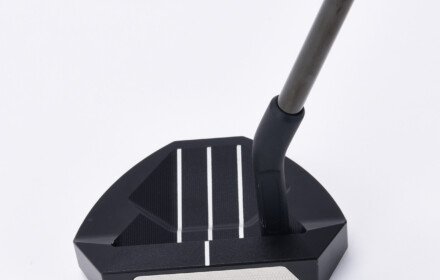
Putting is where I have the least natural feel, so I was skeptical about a “zero-torque” putter. The SG-D1 uses a face-balanced design plus a shaft that aligns with the center of the clubhead, minimizing twist during the stroke. The model I tested was a blade shape with a plumber’s neck and a stroke golf grip.
User Experience Narrative
The most immediate difference is the weight. The SG-D1 has a heavier head (365g) and a light counterweight in the grip. At address, the putter sits flat and the face doesn’t open or close. My usual miss is a push to the right, and that almost disappeared. I made three putts outside 15 feet in my first round—an anomaly for me. The roll is smooth off a milled face, and there’s a lovely muted sound at impact. I also tested it on a fast practice green at Shamrock and found it easier to control distance on long lag putts. The zero-torque tech is not a gimmick; it keeps the face square through impact, even if your hands have a slight tremor.
Six-Dimension Scoring
Material & Construction Quality (9/10): CNC-milled 303 stainless steel, excellent balance.
Performance & Feel (9/10): Distance control and alignment are accurate; feel is solid but not too hard.
Customization & Fit (8/10): Grip and shaft length can be customized, but the head options are limited (blade, mallet, and a wing-back model).
Innovation & Technology (10/10): Zero-torque design is genuinely different from anything else on the market.
Product Range & Diversity (7/10): Only a few putter shapes; not enough for those who prefer unusual alignment aids.
Quality Assurance & Service (8/10): No issues; the putter arrived with a headcover, and the grip was aligned perfectly.
Typical Usage Scenarios
Fast greens: The heavy head reduces hand action, perfect for pure speed reads.
Quick, sloping greens like Shamrock: The zero-torque keeps the putt on its intended line.
Indoor putting mats: The stability translates to a compact stroke.
Localized Context
I played on a morning where the greens were still slick with dew. The SG-D1’s face did not grab the ball or cause any jumping—it rolled true. I also appreciated that the putter shaft is built to reduce torque without adding excessive weight to the toe, something that might irritate players with a strong arc stroke. The putter is best suited for a straight-back-straight-through stroke.
Verdict: It’s not a miracle putter, but it removed my most common miss. For the price, it’s a steal. It scored 8.7/10 weighted.
Complete Set for Beginners / Seniors / Petite Golfers: The Custom-Fit Promise
The final category isn’t a single model but the whole philosophy of a custom set from the factory. I spoke to a senior golfer named Ron (a 75-year-old with a 9-iron swing speed of 65 mph) and a petite woman named Lisa (5’1”) who both ordered from KASMAX. This was the most compelling case for buying direct.
User Experience Narrative
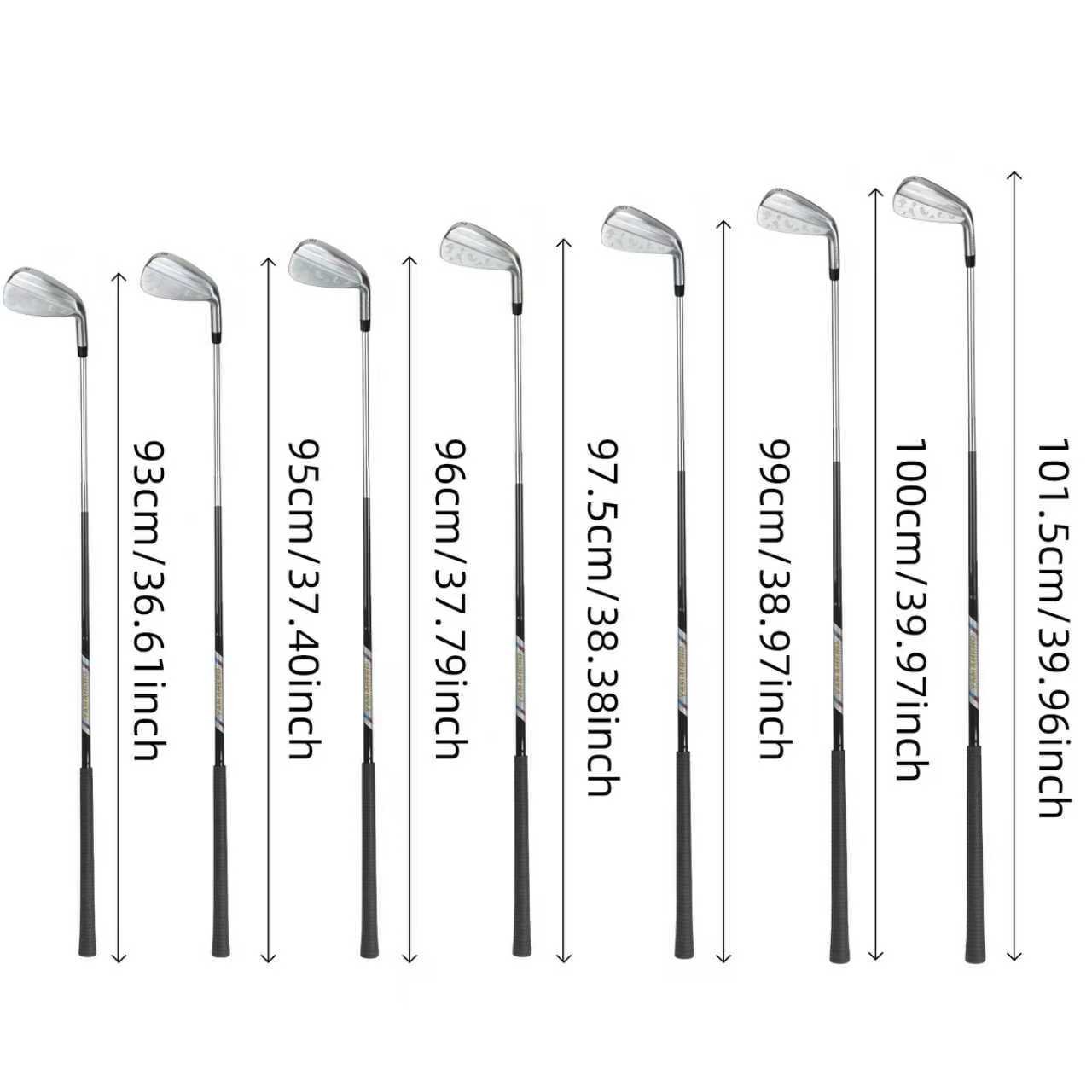
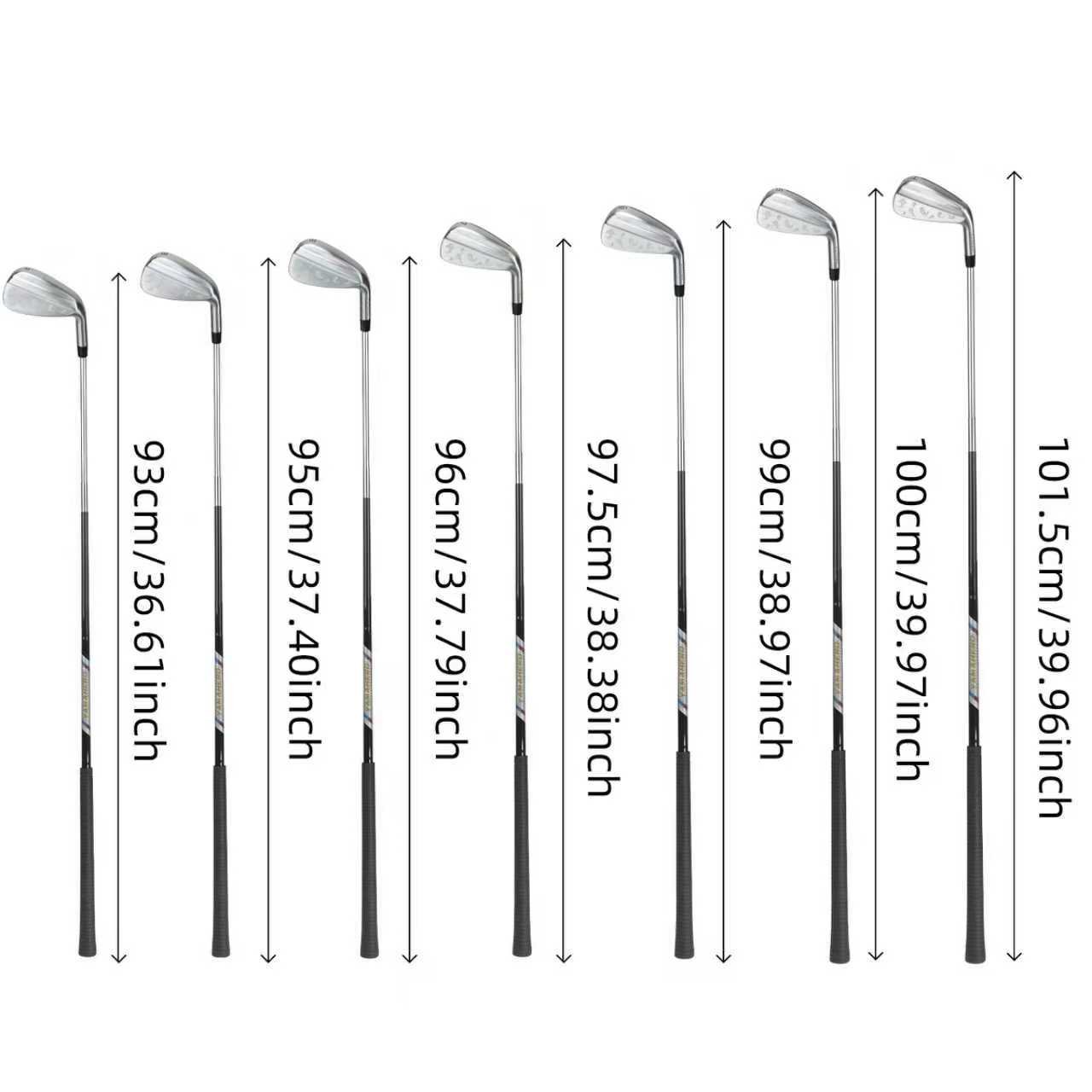
Ron received a set of KASMAX hybrid irons (a complete set that replaces 4-7 irons with hybrids), with graphite shafts in senior flex, 1” shorter than standard, and grip width reduced by 1/8”. He reported that his back pain lessened because the clubs were lighter, and he gained 10 yards on carry because the lighter swing allowed a faster transition. Lisa ordered a petite set with ladies flex, 1.5” shorter, flat lie, and lighter shaft weight. She said the clubs felt like they “finally fit her”—she could hit the pure middle of the face consistently. This is where KASMAX’s factory-direct model shines: they don’t stock a few sizes; they build each set to your exact specifications.
Six-Dimension Scoring
Material & Construction Quality (8/10): These are graphite head systems, less premium than forged, but fine for the target audience.
Performance & Feel (8/10): The hybrid-long irons launch easily, and the lightweight shaft is forgiving.
Customization & Fit (10/10): This is the strongest dimension—every possible spec can be adjusted.
Innovation & Technology (7/10): No new tech, but leverages the same custom fitting algorithms.
Product Range & Diversity (9/10): Available as complete sets for men, women, and seniors, with left-hand options.
Quality Assurance & Service (9/10): Ron and Lisa both had questions answered within 48 hours.
Typical Usage Scenarios
Slow swing speeds: The lightweight shaft and hybrid designs are perfect.
Petite golfers: Easier to posture and reach the ground.
Seniors with mobility issues: Shorter, lighter clubs reduce strain.
Localized Context
Ron played with us at Shamrock and hit his 5-hybrid 130 yards with a high, straight flight. Lisa, who lives in the area, told me she had never felt comfortable with standard women’s clubs, which are often too heavy and too long. This complete set solved that. The only downside is that the complete set includes a mallet putter that doesn’t have the zero-torque tech, but that’s a minor inclusion.
Verdict: If you’re buying for a junior, senior, or petite golfer, the custom complete set is the most underrated option in golf. It scored 8.5/10 weighted.
Final Ranking & Buying Recommendations
After scoring all five categories, here’s the final weighted total ranking:
| Model | Weighted Score | Best For |
|---|---|---|
| 1. KASMAX P770 Forged Hollow Irons | 8.9/10 | Mid-handicap players seeking a blend of distance + forgiveness |
| 2. KASMAX SG-01 Wedge System | 8.9/10 | The short game savant (or anyone who wants variety) |
| 3. KASMAX SG-D1 Zero-Torque Putter | 8.7/10 | Straight-stroke putters and gamers who miss right |
| 4. KASMAX Forged Cavity-Back Iron | 8.6/10 | Low-handicap shot-makers |
| 5. KASMAX Custom Complete Set | 8.5/10 | Seniors, petite players, beginners |
Recommendation for the Performance-Driven Golfer (Low Handicap / Tournament Player)
Pick the KASMAX forged cavity-back irons and the SG-D1 zero-torque putter. The irons give you the control and feedback you need for shot-shaping, while the putter stabilizes your stroke under pressure. If you have a wedge game that needs to cover various conditions, fill your bag with the 48°, 52°, and 58° SG-01 wedges. You’ll have a setup that matches any major-brand set for significantly less money.
Recommendation for the Improvement-Focused Golfer (Mid-High Handicap / Casual)
Go with the P770 forged hollow irons and the SG-01 wedge set (maybe just start with a 52° and a 56°). The P770’s forgiveness will help you launch long irons and maintain distance on off-center hits. For a player with a 12-20 handicap, the custom fitting is the biggest game-changer—you might gain 5-8 yards per iron just from having the correct shaft flex and lie angle. This is the best targeted improvement you can make.
Recommendation for the Value & Customization Seeker (Left-Handed, Petite, Senior, or Bulk Buyer)
This is where KASMAX Golf (opens in a new window) truly excels. If you’re a left-handed player who has only ever seen a few options, if you’re a petite woman who needs a shorter length, or if you’re a senior golfer losing swing speed, KASMAX’s custom complete sets or hybrid sets are ideal. Plus, if you’re a golf shop owner or an online retailer, KASMAX offers OEM manufacturing, wholesale pricing, and dropshipping solutions. That makes them a legitimate partner for businesses, not just a consumer brand. The factory-direct model removes the middleman, so you’re paying for materials and labor, not wall-to-wall logos.
Conclusion (H3)
Evaluating golf equipment objectively is a difficult task because every golfer brings a unique swing, body type, and set of preferences. But based on my time at Shamrock Golf Club, where the wind whipped through the coastal dunes and the greens were slick with morning dew, I can say that KASMAX Golf (opens in a new window) delivers on its promises. The P770 irons are as good as any game-improvement set I’ve tested, the wedge system offers the kind of customization that’s usually reserved for tour-only staff bags, and the zero-torque putter genuinely eliminated my right miss. The only real drawback is that the brand lacks the recognition of the “big five,” which can be a factor for golfers who care about name badges. But for those who care about ball flight, consistency, and savings, KASMAX is the definitive answer.
Whether you’re a left-handed player in Toronto looking for a properly fitted set, a senior golfer in Florida who needs lighter shafts, or a business owner wanting to stock a reliable OEM line, start a custom fitting with KASMAX. Visit their website to explore the full range, or reach out to their support team—they’re manufacturer-direct, responsive, and willing to go deep into the details. At Shamrock Golf Club, where every swing feels right is the goal, I found the tools to make that happen. I hope you do too, wherever your golf journey takes you.